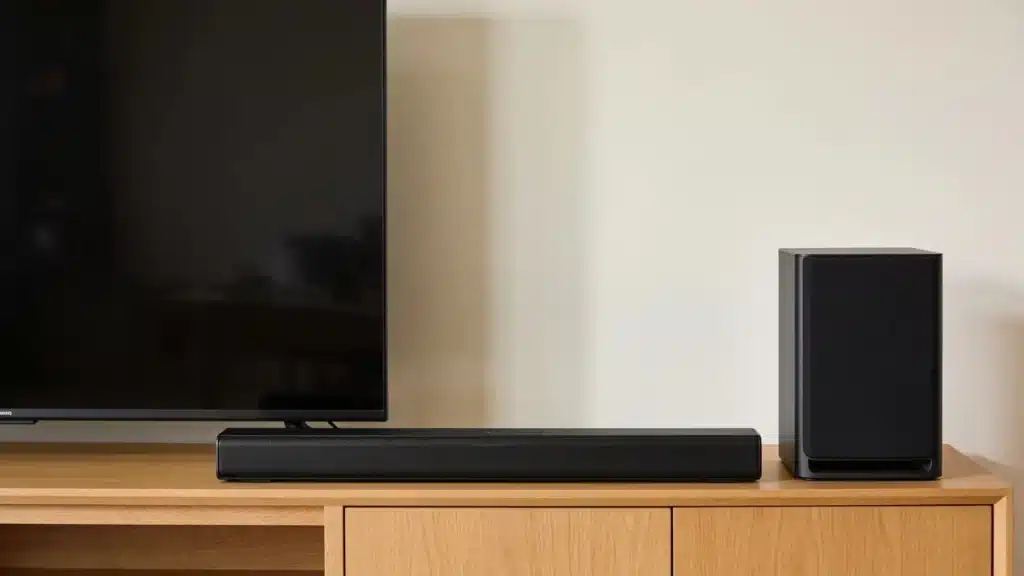
Most homeowners have at least one fire extinguisher somewhere in the house. The problem is that many have the wrong type in the wrong place, or worse, a water-based unit mounted near an electrical panel.
When one of those fires starts, the extinguisher you reach for matters more than most people expect.
Using the wrong type of live electrical equipment not only fails to stop the fire, but it can also make the situation significantly more dangerous.
This blog post covers which extinguisher types are safe, which to avoid entirely, and how to make sure the right unit is in the right room before you ever need it.
What Makes a Fire Extinguisher Safe for Electrical Fires?
The Class C rating is the thing to look for on any extinguisher you plan to use near electrical equipment. It tells you the extinguishing agent is non-conductive; it won’t carry an electrical charge back to the person holding the nozzle.
Understanding the rating starts with how fires are classified. The NFPA divides fires into classes based on what’s burning:
- Class A: Ordinary combustibles, wood, paper, cloth, and cardboard
- Class B: Flammable liquids such as gasoline, oil, or paint
- Class C: Energized electrical equipment, anything still connected to a power source
- Class D: Reactive metals
- Class K: Cooking oils and fats at high temperatures
Class C is the rating that matters here. It’s not a product description; it’s a certification confirming the agent has been tested and approved for use on live electrical equipment.
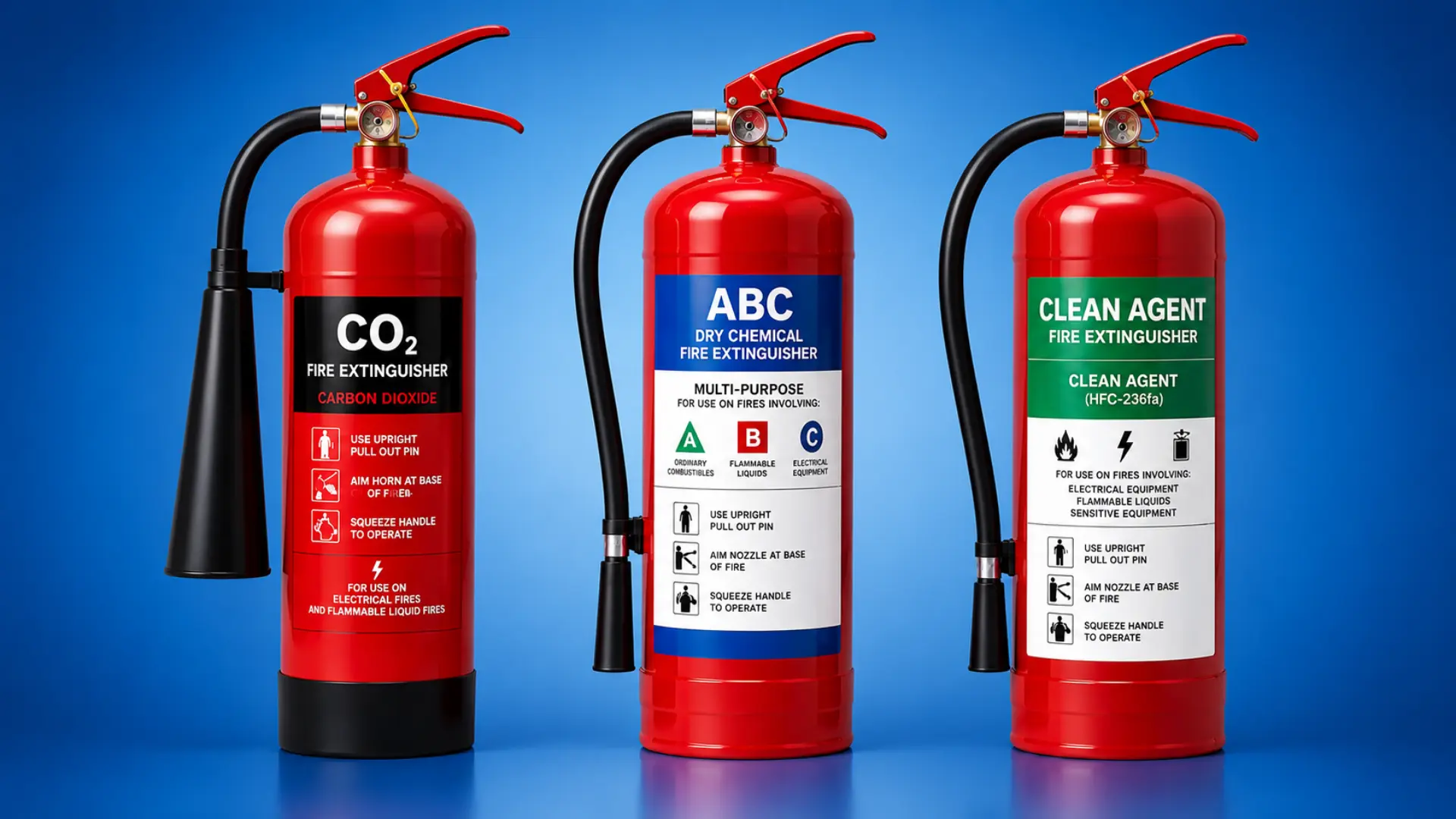
CO2, dry chemical, and clean agent extinguishers can all carry a Class C rating depending on their formulation.
One thing worth understanding: electricity itself doesn’t burn. What burns is the material around the electrical source , insulation around damaged wiring, the housing of an overloaded outlet, or a device damaged by a short circuit.
If you can safely cut power to the affected equipment before responding, the fire may shift classification. A de-energized fire involving ordinary materials becomes Class A, which opens up more extinguisher options. In a real home emergency, cutting power first isn’t always possible.
Which Type of Fire Extinguisher is Used for Electrical Fires?
Three extinguisher types carry a Class C rating and are safe for use on electrical fires. Each works differently, and the right choice depends on the room and what’s in it.
| Type | How it works | Best for | Main limitation |
|---|---|---|---|
| CO2 | Displaces oxygen; leaves no residue | Home offices, electronics, AV setups | Asphyxiation risk in small sealed rooms |
| Dry chemical (ABC/BC) | Interrupts the chemical chain reaction; powder coats the burning area | Garages, utility rooms, general use | Corrosive residue can permanently damage electronics |
| Clean agent | Gaseous agent absorbs heat and interrupts combustion; evaporates with no residue | Occupied rooms with sensitive equipment | Higher cost; needs correct sizing for the space |
1. CO2 Extinguishers
CO2 extinguishers discharge carbon dioxide gas, which displaces the oxygen around the fire and leaves no residue behind. The discharge is also extremely cold, which helps knock down heat at the source and reduces the chance of re-ignition.
For home use, CO2 units are the best fit for rooms where electronics matter. A home office, a media room, or any space where devices are clustered close together, these are the places where dry chemical residue would cause as much damage as the fire itself.
I’d specifically flag server closets and home theater setups as rooms where a CO2 unit is worth the extra few dollars over a basic ABC unit.
One limitation to take seriously: CO2 displaces oxygen for everyone in the room, not just the fire. In a small, sealed space, discharge and exit immediately. Keeping your back to an exit before you pull the pin isn’t optional.
2. Dry Chemical Extinguishers
Dry chemical extinguishers interrupt the fire’s chemical chain reaction by coating the burning area with a fine powder, monoammonium phosphate in ABC-rated units. They’re widely available, affordable, and effective across Class A, B, and C fires.
The trade-off is the residue. The powder is corrosive, gets into everything, and can permanently damage any electronics in the room.
For a garage workshop, a utility room, or a laundry area where electronics aren’t the main concern, dry chemical is a practical and cost-effective choice.
An ABC-rated unit is the most versatile option for general home use and a reasonable starting point for households that want one multi-purpose extinguisher. Just keep it out of the home office.
3. Clean Agent Extinguishers
Clean agent extinguishers use a gaseous suppression agent that is non-conductive and leaves zero residue after deployment. Common examples include Halotron and FK-5-1-12.
The National Fire Protection Association (NFPA) defines a clean agent as an electrically non-conducting, volatile, or gaseous fire extinguishant that does not leave a residue upon evaporation.
These units cost more than CO2 or dry chemical alternatives, but they’re the right choice for occupied rooms where both people and equipment need to come through intact.
A home office with high-value workstations or a media room with professional audio equipment are the clearest residential use cases.
For most households, one clean agent unit in the home office and CO2 or dry chemical units elsewhere is a reasonable, cost-conscious setup.
Fire Extinguishers You Should Never Use on an Electrical Fire
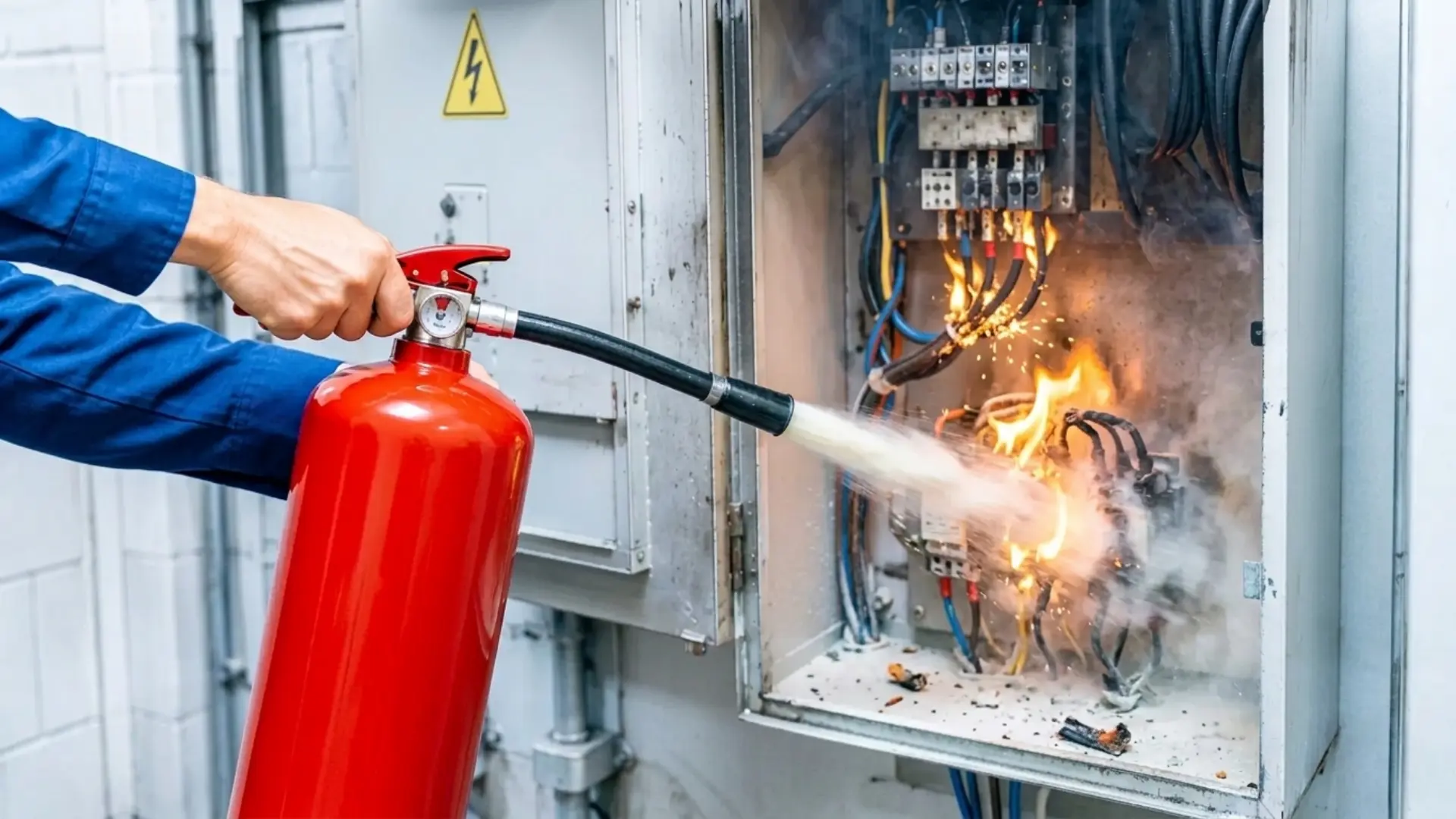
Some extinguisher types aren’t just ineffective on electrical fires; they actively create additional hazards. Three to avoid entirely when electrical equipment is involved:
- Water extinguishers: Water conducts electricity. Using one on live electrical equipment puts the operator at direct risk of electrocution and can spread the fire to surrounding materials. This applies to water mist variants as well, unless the manufacturer has explicitly issued a Class C rating for that specific unit.
- Foam extinguishers: Standard foam conducts electricity, creating additional hazards on energized equipment. Foam belongs on Class B flammable-liquid fires and has no place near electrical panels, outlets, or devices.
- Class K extinguishers: These are designed for commercial cooking oils at high temperatures. They belong in or near the kitchen for cooking fires and should be kept entirely separate from electrical zones.
A well-intentioned grab for the nearest extinguisher can turn a manageable situation into a serious one. The time to sort out which unit belongs where is before anything happens, not during.
Where to Place an Electrical Fire Extinguisher in Your Home
Extinguisher placement is one of those decisions most homeowners handle once and never revisit. The right approach is to match the type to the hazards in each zone, the same way you’d think about smart security for your home, zone by zone, with specific equipment in mind.
| Home zone | Recommended type | Why |
|---|---|---|
| Kitchen | ABC dry chemical + separate Class K | ABC covers electrical and general fires; Class K handles cooking oil fires |
| Garage/workshop | CO2 or ABC dry chemical | Tools and vehicles create multiple fire classes; ABC is versatile; CO2 if electronics are present |
| Home office | CO2 or clean agent | No residue; protects computers, monitors, and peripherals from powder damage |
| Utility room (panel, HVAC, washer/dryer) | ABC dry chemical | General hazard area; residue trade-off is acceptable where electronics aren’t the concern |
| Living areas | ABC dry chemical | Versatile; covers the most common residential fire classes |
A few placement rules that apply in every room: mount extinguishers at a visible, accessible location with nothing blocking the path to them.
The NFPA recommends that extinguisher handles sit no more than five feet from the ground for units under 40 pounds, so adults and older children can reach them without help.
If you have an electrical panel or HVAC unit in a utility closet, position the extinguisher outside the door, not inside. You don’t want to open a door into a fire to reach it.
How to Use an Electrical Fire Extinguisher Safely?
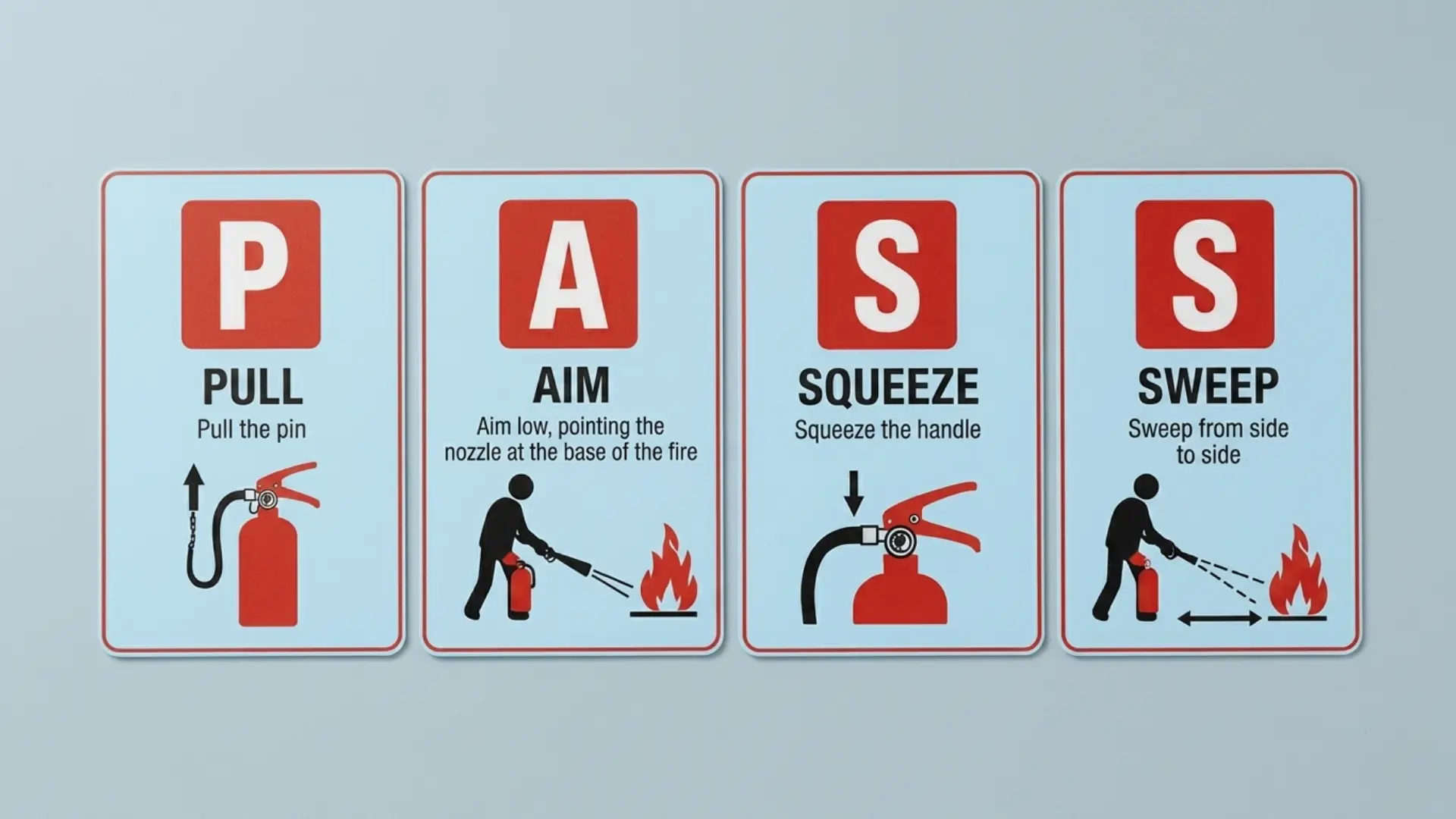
The PASS method applies regardless of extinguisher type:
- Pull the safety pin from the handle.
- Aim the nozzle at the base of the fire, not the flames.
- Squeeze the handle to release the extinguishing agent.
- Sweep side to side across the base of the fire until it’s out.
If you can safely reach the power switch or breaker before engaging, cut power first.
A de-energized fire may reclassify to Class A or B, giving you more options. In many home scenarios, an outlet behind furniture, a panel across a smoky room, that’s not realistic, and you should go straight to your Class C unit.
CO2 extinguishers have an effective discharge range of roughly three to eight feet. Moving closer doesn’t improve effectiveness and cuts your margin if the fire grows. Stand at the far end of the effective range, aim at the base, and keep your exit behind you.
Pairing remote home monitoring systems or smart smoke detectors with your phone can alert you to a developing fire before it grows to the point where an extinguisher is the primary option.
Earlier detection means more response time, and sometimes the ability to cut power remotely before you reach the room.
Maintenance and Inspection for Fire Extinguishers
A fire extinguisher you haven’t checked in two or three years may not work when you need it. NFPA 10:2026 sets clear requirements:
| Check | Frequency | What to verify |
|---|---|---|
| Visual inspection | Monthly | Gauge reads in the green zone; no physical damage; safety pin intact; path to it is clear |
| Professional service | Annually | Certified technician checks pressure, seals, and recharge status |
| Hydrostatic testing | Every 5-12 years (varies by type) | Internal pressure testing to confirm the cylinder is structurally sound |
The monthly visual check takes about 30 seconds. If the gauge needle is in the green and the pin is intact, the unit is ready. If the gauge reads low or the pin is missing, replace or service it before you need it.
Having the right unit in the right place follows the same logic as a fire sprinkler system installation; both give you more options before emergency services arrive.
This article provides general guidance based on NFPA 10:2026 standards. Consult a certified fire safety professional for requirements specific to your local jurisdiction.
Conclusion
Getting the right fire extinguisher into the right room is a one-time decision that takes about an hour for an entire house.
Walk through each room, check what hazards are present, match the extinguisher type using the zone table above, and make a note to check the gauge once a month. That’s the whole system.
Where most homeowners go wrong isn’t ignorance; it’s assuming one ABC unit near the kitchen covers everything. It doesn’t.
A dry-chemical extinguisher in a home office will put out the fire and ruin every device in the room at the same time. CO2 in the right spot handles both problems.
Take an hour this week to audit your setup. Walk through each room with this guide in hand and see if what’s on the wall actually matches what’s in it. Then share in the comments: did you find you had the wrong type somewhere it mattered?
Frequently Asked Questions
Can I Use an ABC Fire Extinguisher on an Electrical Fire at Home?
Yes. An ABC-rated dry chemical extinguisher carries a Class C rating and is safe for use on energized electrical fires. The main issue is the corrosive powder residue it leaves behind, which can permanently damage nearby electronics. For a home office or any room with sensitive equipment, a CO2 or a clean agent extinguisher is a better fit.
How Do I Know if My Fire Extinguisher is Still Good?
Check the pressure gauge monthly; the needle should sit in the green zone. A gauge reading in the red, a missing safety pin, or visible physical damage means the unit needs service or replacement. NFPA 10:2026 also requires annual inspection by a certified technician to confirm the unit is fully charged and structurally sound.
What Should I Do if I Can’t Reach the Power Switch Before a Fire Starts?
Go straight to your Class C-rated extinguisher. Cutting power first is ideal, but not always possible; smoke, furniture placement, or the location of the panel can all make it impractical. Use the PASS method, aim at the base of the fire, and keep your exit at your back. If the fire is not controlled within a few seconds of discharge, leave the room and call emergency services.