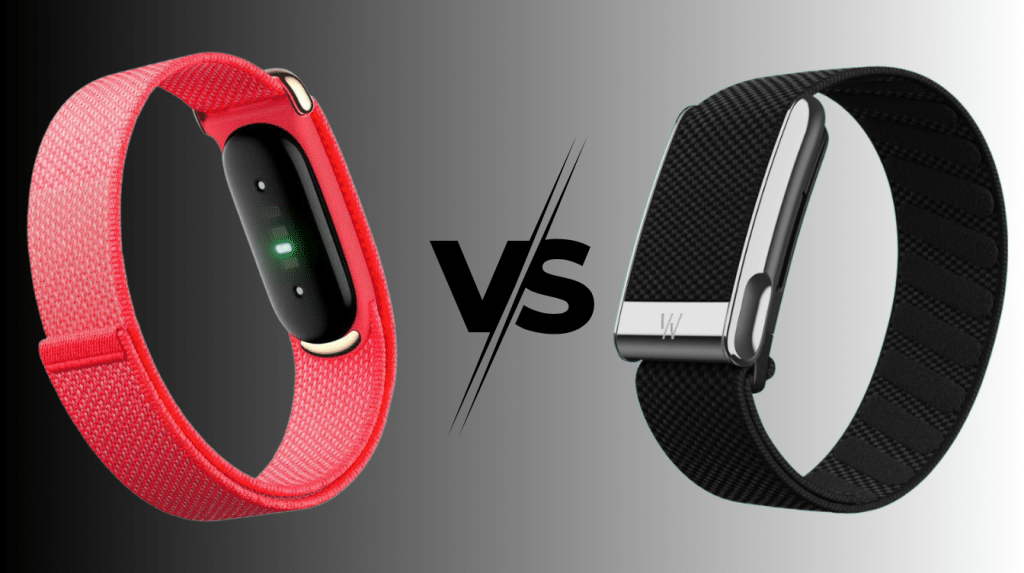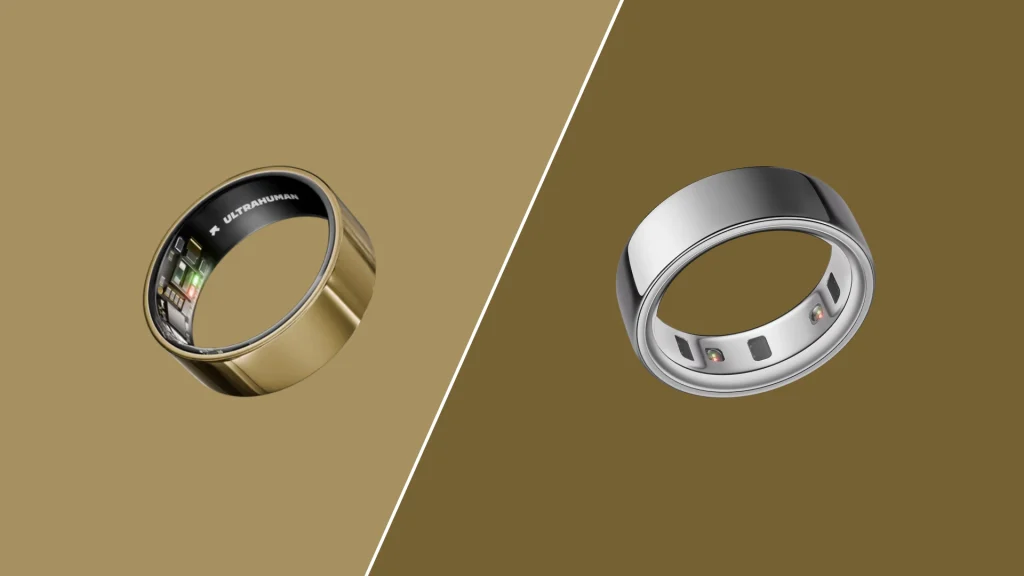
Smart rings have become a popular way to stay connected with personal health, and Ultrahuman vs Oura ring is now one of the most talked about comparisons in this space.
Both devices offer a sleek design and promise meaningful insights into sleep, recovery, and daily habits.
At first glance, the two rings look nearly identical: titanium bands, no screen, PPG sensors on the inner surface, and companion apps that translate raw biometrics into daily scores.
But after spending time with wearables across the fitness tech space, the differences that actually shape your daily experience become clear fast.
The way each ring presents data, the overall experience of wearing it daily, and the long-term value all shape how useful it feels over time.
This is where the difference becomes more noticeable, making the choice less about specs and more about everyday experience and comfort.
About Ultrahuman Ring
Ultrahuman Ring is a smart wearable developed by Ultrahuman, a health tech company based in Bengaluru, India, founded in 2019.
The brand focuses on building a connected ecosystem around metabolic health, sleep, and recovery, combining hardware and data-driven insights.
The Ultrahuman Ring, especially the Ring Air launched in June 2023, is designed to track key health metrics such as sleep cycles, heart rate variability, temperature, stress levels, and movement using built-in sensors.
Unlike many competitors, the product emphasizes a distraction-free experience with no screen, relying on its app to deliver insights and recommendations.
In 2026, Ultrahuman introduced the Ring Pro, its third-generation flagship, featuring a redesigned PPG sensor architecture, a dual-core processor, up to 15 days of battery life, and an AI health layer called Jade that delivers real-time personalized insights.
Currently, it’s available for pre-order, and the shipment is scheduled to begin around mid-May 2026.
The company positions the ring as a tool for people seeking greater control over their health, offering advanced features such as circadian rhythm tracking and metabolic insights.
The Ultrahuman Ring Air in-depth review covers real user experiences, battery performance, and app accuracy.
Oura Ring: An Overview
Oura Ring is a smart wearable created by Oura Health, a company founded in Finland in 2013.
The brand focuses on sleep, recovery, and overall wellness through simple and easy-to-understand data.
The first Oura Ring was introduced in 2015, and since then, it has undergone multiple updates, with the latest versions offering improved sensors and greater accuracy.
The ring tracks important health metrics like sleep stages, heart rate, body temperature, activity, and readiness levels. It is designed to look like a regular ring, making it comfortable to wear all day and night.
Over time, it has gained popularity among athletes, professionals, and everyday users seeking a reliable, polished health-tracking experience.
Core Differences Between Ultrahuman vs Oura Ring
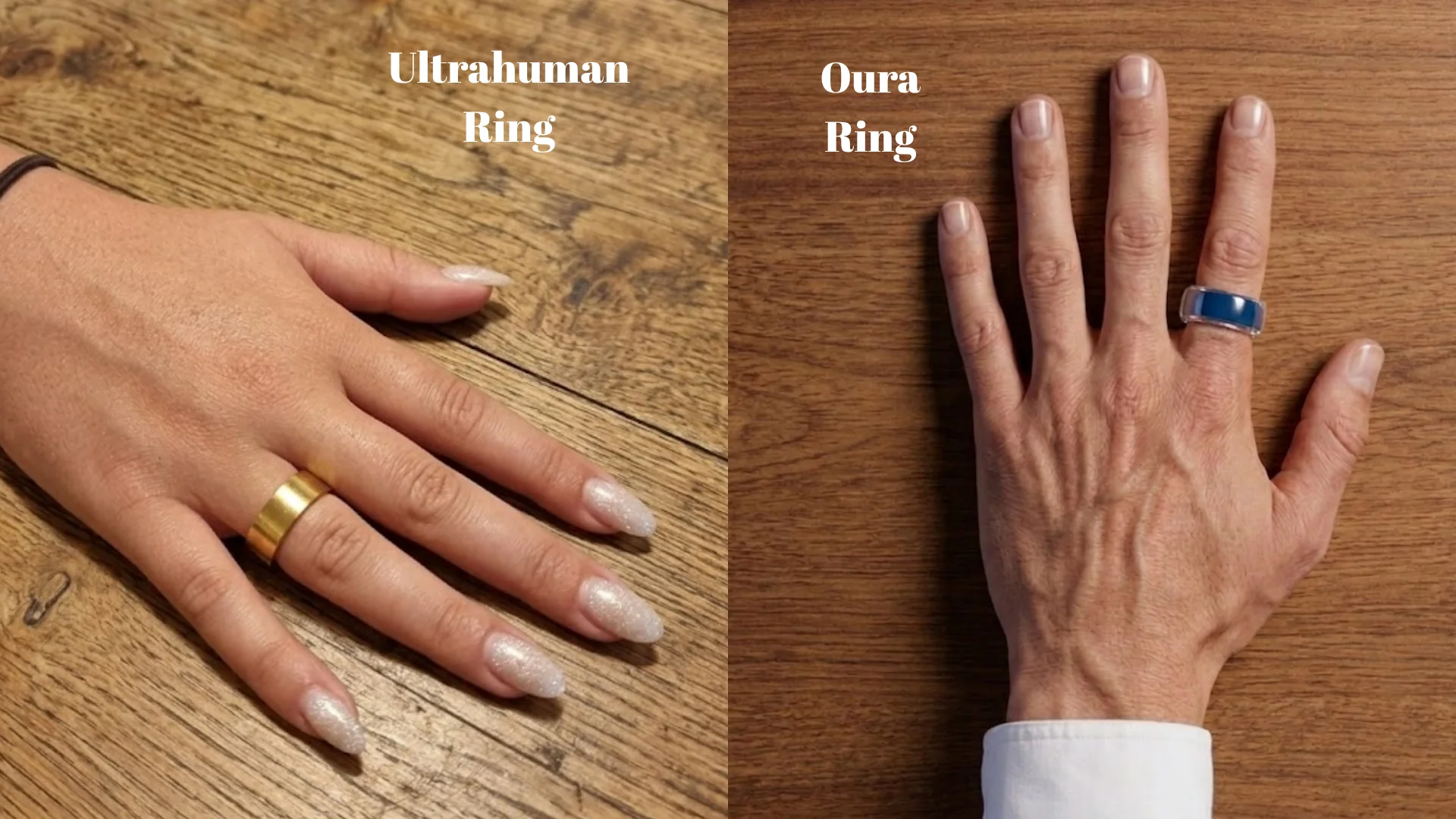
When comparing Ultrahuman vs Oura ring, the differences go beyond just basic tracking. Both devices are built with advanced sensors and premium materials, but they are designed for different user types.
1. Design & Comfort
Both rings are built using titanium, but the feel and finish are slightly different.
Ultrahuman Ring Air uses fighter jet-grade titanium with tungsten carbide coating and a smooth inner epoxy layer, making it lightweight.
Oura Ring also uses titanium with a premium finish and comes in multiple styles, like Horizon and Heritage. In daily use, both are comfortable enough to wear 24/7, including during sleep.
Ultrahuman is slightly lighter and thinner, which many users notice over time, while Oura feels more polished and jewelry-like.
After testing multiple wearables over the years, I always take seriously that the wrong size is uncomfortable during sleep tracking, which is the whole point of owning one of these.
2. Health Tracking
Health tracking is where both rings compete closely. Ultrahuman vs Oura ring comparison shows that both track heart rate, heart rate variability, skin temperature, sleep stages, and movement.
Ultrahuman adds extra layers like circadian rhythm tracking, stress rhythm score, and recovery insights through its app ecosystem.
Oura, on the other hand, focuses heavily on sleep accuracy and readiness scores, offering one of the most reliable sleep tracking experiences available.
After using data-heavy wearable apps for years, I have noticed one clear pattern.
Most people check every detail for a few days, then slowly shift to just looking at a simple score each morning. That is where Oura’s three-score system feels easier to stick with in daily life.
At the same time, I personally appreciate going deeper into the data when needed. If I want to understand why my HRV dropped after a bad night or track sleep debt over time, Ultrahuman gives me that level of detail.
3. App Experience: Simple vs Data Overload
The biggest difference in Ultrahuman vs Oura ring comes from how data is shown.
Ultrahuman’s app is packed with detailed metrics, including recovery scores, sleep index, stress rhythm, and additional tools through PowerPlugs.
This gives more control but can feel overwhelming for beginners. Oura’s app is much simpler and focuses on three main scores: sleep, readiness, and activity.
The interface is clean, easy to understand, and designed for everyday users who do not want too much complexity.
4. Pricing Model & Subscription
Pricing is one of the biggest deciding factors when comparing Ultrahuman vs Oura ring, especially over the long term.
Ultrahuman follows a one-time payment model, with the Ring Air typically priced around $349 and newer models priced at $399- $479, depending on the version and bundle.
There is no mandatory subscription, so users get full access to core health data without extra monthly costs.
Oura, on the other hand, starts at around $349-$499 for the ring but also requires a monthly subscription of about $5.99 to unlock full insights.
If you are still deciding whether Oura’s subscription justifies the cost, a detailed breakdown of its value across different use cases can help you decide.
Without it, features are limited. Over time, Oura can cost over $500, while Ultrahuman stays closer to its upfront price, making it more budget-friendly long term.
5. Battery Life and Charging
Battery performance is similar, with only small differences. Ultrahuman vs Oura Ring shows that Ultrahuman Ring Air offers 4-6 days of battery life with a full charge, depending on usage.
Oura Ring typically lasts around 5 to 7 days, making it slightly better in real-world usage.
Charging styles also differ. Ultrahuman uses a simple charging puck, while Oura uses a dock-style charger that is quick and easy to use.
Both take around 1.5 to 3 hours to fully charge. In everyday use, both rings are reliable, but Oura has a slight edge in battery consistency.
I have observed that for everyday users who already charge their phone every night, both the Ring Air and Oura Ring 4 feel equally practical in daily use.
Real User Reviews on Ultrahuman vs Oura Ring

Reddit discussions highlight a clear split in how users experience smart ring performance.
Oura is consistently praised for accurate sleep tracking and easy-to-read health insights, making it a strong pick for recovery-focused users.
Many users mention its data reliability, especially when compared with devices like the Apple Watch. However, the required subscription remains a common concern.
On the other hand, Ultrahuman stands out for its design, battery life, and no-subscription model.
Users appreciate its overall build and additional features like caffeine tracking, but some feel the data presentation can be confusing or less refined.
Hardware reliability also comes up, with reports of replacements and connectivity issues.
Overall, Reddit users suggest choosing based on priorities: Oura for accuracy and simplicity, Ultrahuman for flexibility and cost savings.
The US Patent Ban: What Buyers Need to Know
In March 2024, Oura filed a complaint with the US International Trade Commission (ITC) alleging Ultrahuman infringed on its patent for a specific internal layered arrangement of smart ring components.
In 2025, the ITC issued final exclusion and cease-and-desist orders, effectively banning Ultrahuman from importing and selling its Ring Air in the United States.
The Ring Air disappeared from Amazon, Best Buy, and major US retailers by October 2025.
Ultrahuman responded with the Ring Pro, a fully redesigned device built specifically to work around the disputed patent claims.
US Customs and Border Protection cleared the Ring Pro for import in March 2026, and US preorders are now open with shipping set for May 15, 2026.
However, Oura has stated the CBP decision is narrow and does not resolve its broader patent case in the Eastern District of Texas, so legal uncertainty remains.
Ultrahuman vs Oura vs Samsung Ring
Here’s a key comparison of the Ultrahuman Ring Air, Oura Ring Gen 4, and Samsung Galaxy Ring to help you decide.
| Attribute | Ultrahuman Ring Air | Oura Ring Gen 4 | Samsung Galaxy Ring |
|---|---|---|---|
| Brand Origin | 2023, India | 2024, Finland | 2024, South Korea |
| Key Focus | Metabolic health, recovery | Sleep & readiness (enhanced) | Ecosystem + AI health |
| Sensors | HR, HRV, temp, movement (6-axis), SpO2 | HR, HRV, temp, SpO2, sleep stages, accelerometer | HR (PPG), sleep, temp, accelerometer (no SpO2) |
| Sleep Tracking | Advanced circadian insights | Industry-leading accuracy | Good, improving |
| App Experience | Data-heavy, analytical | Clean, beginner-friendly | Samsung Health integrated |
| Subscription | No subscription | Required ($5.99/mo) | No subscription |
| Battery Life | 4-6 days typical | 5-8 days | Up to 7 days (5-7 typical) |
| Charging Time | 2-3 hours | 80-100 min | ~90 min |
| Build Material | Titanium | Titanium | Titanium |
| Weight | 2.4g average | 4-6g | 2.3-3.0g |
| Compatibility | iOS & Android | iOS & Android | Best with Samsung |
| Price Range | $349 | $349-$499 + subscription | $399-$450 |
Who Should Buy the Ultrahuman vs Oura Ring?
Choosing between the Ultrahuman Ring vs Oura Ring depends on how much detail and control are needed for health tracking.
Ultrahuman Ring is a better fit for people who like going deeper into their data and want more control without paying a monthly fee.
It is also a stronger option for women’s health tracking.
Ultrahuman offers features like Cycle and Ovulation tracking, circadian health insights, and glucose monitoring integrations that go beyond what Oura currently provides, which also makes it female-health-friendly.
It suits fitness-focused users, biohackers, and anyone interested in understanding patterns like recovery, stress, and daily performance in detail.
On the other hand, Oura Ring works well for people who prefer a simple and easy experience. It is ideal for users who mainly care about sleep tracking and want clear scores without dealing with too much data.
The app is cleaner and easier to follow, which makes it good for beginners.
In short, Ultrahuman is for those who want more depth and flexibility, while Oura is for those who want comfort, simplicity, and a more guided experience.
Conclusion
After following both brands closely and observing how users actually live with them over time, I see the Ultrahuman vs Oura decision coming down to a few simple things.
It really depends on how much you plan to engage with your data and how long you plan to use the ring as part of your daily routine.
Ultrahuman stands out for its detailed insights and no subscription model, while Oura delivers a smoother app experience with a strong focus on sleep and recovery.
Both rings are well-built, comfortable, and reliable for daily use, making them solid choices in the smart ring space.
The main difference comes down to how the data is presented and how much you pay over time.
By now, the key features, pricing, and performance gaps should be clear.
Have you used Ultrahuman or the Oura ring? Share your experience in the comments below. Your input can help others understand what to expect before making a decision.
Frequently Asked Questions
Why are People Getting Rid of Their Oura Rings?
Some users stop using Oura due to the monthly subscription, limited features without it, or a preference for simpler devices. Others switch to alternatives offering similar data without ongoing costs.
What Ring Does Jennifer Aniston Wear For Sleep?
Jennifer Aniston has been linked to using the Oura Ring for sleep tracking. Many celebrities prefer it for its comfort, discreet design, and focus on sleep and recovery insights.
What Do Cardiologists Think Of the Oura Ring?
Cardiologists generally see Oura as a helpful wellness tool. It tracks heart rate and trends, but it is not a medical device and should not replace professional diagnosis.
Are Ultrahuman Rings Banned in the US?
Ultrahuman rings are not banned in the US. They are available for purchase and use, though availability may vary based on shipping, demand, and regional distribution channels.