Project management software is changing fast, and it is no longer just a place where teams move tasks around. Many tools now predict delays, spot resource gaps, create reports, and warn teams before problems become bigger.
That matters if you handle events, vendors, budgets, deadlines, approvals, or weekly stakeholder updates.
The latest project management software news shows a clear shift toward smarter planning, faster decisions, and more automatic support across major platforms.
I have been watching this space closely, and the change feels bigger than a normal feature update cycle.
I will be telling you about the latest updates, market changes, future trends, and platform moves shaping this software right now.
Before looking at each major update, let us first understand how this market is moving so quickly.
Project Management Software is Moving into Its AI Era
The AI in Project Management market is experiencing robust expansion.
According to recent analysis, it grew from USD 4.33 billion in 2024 to USD 5.32 billion in 2025 and is projected to reach USD 14.14 billion by 2030, expanding at a strong CAGR of 21.77%.
That outpaces the broader project management software market, which grows at roughly 15% annually by most estimates.
The gap matters. AI-powered features are pulling in a disproportionate share of platform investment because they address real operational pain.
Automating repetitive coordination work, surfacing data in real time, and flagging risks before they become delivery problems. Cloud deployment is a major reason for the rapid adoption.
Most organizations now default to cloud-based solutions because they are easier to spin up, cheaper to maintain, and do not require a months-long IT rollout.
Juggling vendors, timelines, stakeholders, logistics, and deliverables is structurally similar to the complex, multi-dependency projects these tools were designed around.
The practical result is fewer last-minute surprises and a clearer picture of what is coming before it arrives.
Solid event coordination workflows have always required visibility across many moving parts. The new tools make it easier to build and maintain visibility.
AI Agents are the Real Story This Year
There is a meaningful difference between an AI feature and an AI agent, and it changes how you should evaluate any platform update right now.
An AI feature responds when you trigger it. It summarizes a document, suggests a deadline, or generates a status report. An AI agent monitors project conditions and acts without a prompt.
When a dependency slips, an agent reassigns the downstream task before the manager notices. When a milestone is reached, the stakeholder update is sent without anyone drafting it.
When a team member’s workload spikes, it flags the risk before the delivery date moves. The two agent capabilities that moved from pilot to standard availability today:
- Predictive risk scoring: Systems that monitor task-level activity and update project risk scores in real time, surfacing issues before they affect delivery.
- Autonomous task assignment: Agents that read team capacity, assign tasks accordingly, and adjust timelines when priorities shift, without a manager initiating each step.
What the Major Platforms are Actually Shipping?
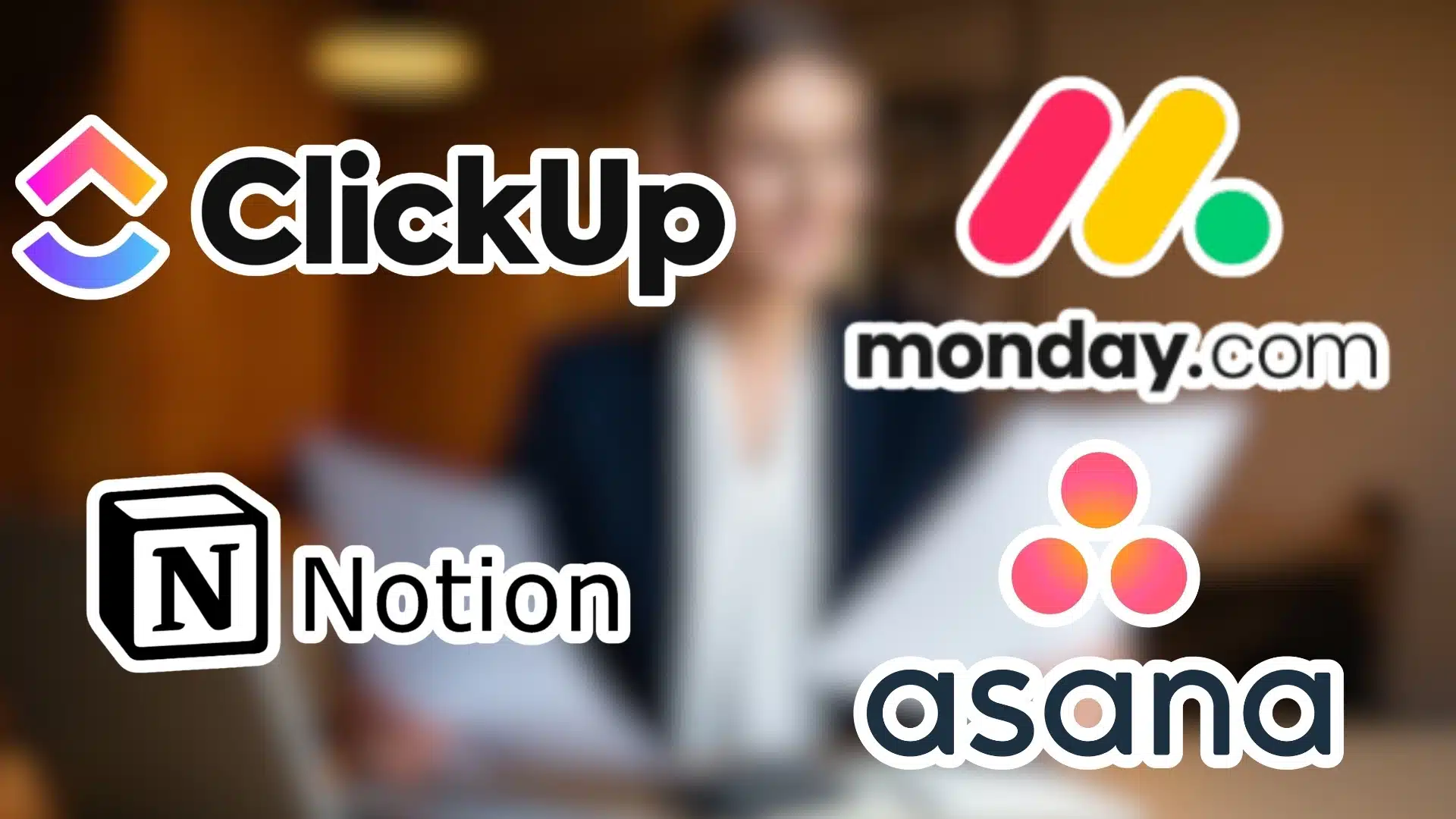
The competitive AI landscape in today’s world has four platforms making very different bets. Here is how they break down.
1. ClickUp: Raw Power, Steep Setup
ClickUp’s AI layer, ClickUp Brain, is the most technically capable of the big three right now.
The workspace Q&A function genuinely works: ask “What’s blocking the design team?” and it returns an answer pulled from your actual tasks and docs, not a generic summary.
ClickUp 4.0, the company’s major 2026 update, centers on a converged workspace that connects tasks, Docs, Chat, and AI in a single environment.
The Super Agents feature ships autonomous cross-workspace workflows that carry context and memory across projects without being reprompted each time.
The honest downside: ClickUp’s interface is still the most demanding to configure.
Its workspace hierarchy runs deep (Workspace, Space, Folder, List, Task, Subtask, Checklist), and the AI features reward teams that have built clean data structures.
If your workspace is a mess, the AI will not clean it up. It will just work faster on a messy foundation.
2. Asana: The Structured Approach
Asana’s angle is project scaffolding. Smart Projects, their AI-generated project plans from a plain-language brief, is the feature getting the most traction.
You describe what you’re building, and Asana returns a full project structure: tasks, dependencies, milestones, and suggested owners. For teams that constantly start from scratch, it’s genuinely useful.
AI Teammates, currently in beta, let you build custom AI agents with specific instructions, connect them to project data, and have them handle recurring tasks autonomously.
It is more accessible than ClickUp’s setup and is built for non-technical users via AI Studio, but it is still early-stage.
3. Monday.com: Seven AI Products, One Platform
Monday.com has taken the broadest approach: they’ve built seven distinct AI products inside one platform. The central AI assistant works across boards, docs, and people data.
Their newest release has AI attend meetings and automatically create action items from the conversation. If it works reliably at scale, it removes one of the most consistent handoff failures in project work.
Monday.com also announced infrastructure in early 2026 that allows AI agents to sign up, authenticate, and operate directly inside the platform.
That is a larger strategic bet than a typical feature rollout because it repositions AI as an active participant in workflows, not just an assistant. Monday’s edge is ease of use.
It consistently wins on adoption speed among non-technical teams, and its visual automation builder makes setting up AI-triggered workflows accessible to people who’ve never written a rule in their life.
4. Notion: Documentation Meets Project Work
Notion keeps closing the gap between where work is documented and where it’s tracked. Its AI Q&A now answers questions across your entire workspace, specs, meeting notes, PRDs, and roadmaps.
For knowledge-heavy teams whose work lives in written artifacts, Notion has made a strong case for consolidation.
The limitation is still scale: performance softens with large databases, and there are no native Gantt charts or resource management features.
That is probably the most honest version gap in the market right now. Notion is genuinely strong for documentation-first teams, but requires workarounds for anyone who needs structured timeline management.
Platform Comparison at a Glance
Each platform makes a different trade-off between power and accessibility. This table reflects the state of each tool based on the features covered above.
| Platform | AI standout feature | Best for | Main limitation | AI pricing (approx.) |
|---|---|---|---|---|
| ClickUp | Workspace Q&A, Super Agents | Technical teams with clean data structures | High setup complexity | ~$5-7/user/month add-on |
| Asana | Smart Projects (AI-built project plans) | Teams start projects frequently from scratch | AI Teammates are still in beta | Bundled in Business+ at $24.99/user/month* |
| Monday.com | Meeting AI, 7 built-in AI products | Non-technical teams, fast adoption | Breadth over depth in AI features | $8/user/month add-on* |
| Notion | Workspace-wide AI Q&A | Documentation-heavy, knowledge-first teams | No native Gantt or resource management | ~$10/user/month add-on |
Note: Pricing can change at any time. Always check the official pricing page of each platform before buying or upgrading.
Async Tools are Closing Real Coordination Gaps
Remote and hybrid work permanently changed what project management software must do.
The latest wave of updates has moved past the basic collaboration problem and into the alignment problem: keeping distributed teams informed without scheduling constant synchronous meetings.
The features addressing this most directly today are:
- Meeting transcription with task creation: Converts recordings into structured tasks automatically, cutting the gap between decisions made in meetings and work that actually gets assigned
- AI-generated project digests: Delivers daily or weekly status summaries without a manager compiling them manually
- Smart notification filters: Trims notification volume by routing only the items that require human attention
Most major platforms support Kanban, Scrum, and Waterfall views within the same workspace, which removes the methodology lock-in that used to complicate tool selection.
Teams running hybrid event production face this coordination challenge acutely, with in-person logistics, remote stakeholders, and vendor timelines all running in parallel. The async updates above apply directly.
Why Security Has Moved to the Top of Buying Decisions?
Project management software buyers now rank security as their top concern, ahead of usability, integrations, and price.
That is a significant shift from 2 years ago, and it reflects a real change in what these platforms hold.
Project management platforms now hold more sensitive information than they used to: financial data, strategic plans, client deliverables, and personnel records.
Vendors that cannot clearly explain their data handling are losing deals to those that can. The features now expected at the mid-market level:
- Single Sign-On (SSO): Standard across all major paid tiers
- Role-based access controls: Granular permissions at the task, project, and workspace level
- Audit logging: Full history of access and changes across all projects
- Data residency options: Control over where data is stored, important for European buyers and regulated industries
Trends Shaping Project Management Software Ahead

Three structural shifts are likely to define this category through 2027, changing how teams create content, manage brand visibility, and use AI tools across search, engagement, and customer communication.
1. Platform Consolidation
A PMI study estimates the average investment waste due to poor project performance at 11.4%. A major driver is tool fragmentation: teams managing work across disconnected platforms lose context at every handoff.
Buyers are responding by favoring platforms that consolidate project management, documentation, resource planning, and async communication in one place.
If you are managing event logistics across three or four separate tools, that fragmentation cost is real and measurable.
Teams looking to streamline their event registration process will find the consolidation trend directly relevant, since registration workflows are among the first places where fragmentation creates coordination failures.
2. ESG Integration
Platforms are adding sustainability tracking at the project level: carbon metrics alongside budget data, DEI benchmarks at the portfolio level, and ESG reporting built into standard dashboards.
For organizations with reporting obligations, this has moved from a future roadmap item to an active procurement criterion.
3. Value Management Offices Replacing Traditional PMOs
A PMO tracks whether projects are on time and on budget. A VMO asks whether the organization is running the right projects at all.
It evaluates work through a business outcome lens, with broader authority over portfolio prioritization.
Several platforms are actively repositioning their portfolio features to support this shift, and more enterprise buyers are requesting it during procurement.
Conclusion
The AI capabilities in this round of project management software news are real and documented. The efficiency gains are not theoretical.
The barrier for most teams is not the software itself but the organizational investment required to configure it well and build consistent workflows around it.
Teams that have made that investment report measurable improvements: less coordination overhead, fewer missed handoffs, and better visibility across complex projects.
The teams that have not tend to be running the same stack they had 18 months ago and expecting different results.
If your current tools have not been evaluated recently, the gap between what you are using and what is available now is wide enough to affect delivery quality.
Start with a clear picture of where your coordination breaks down and use that as your filter for what to evaluate next.
Found this useful? Share it with your team or leave a comment with the PM software question you are still working through.
Frequently Asked Questions
How Much Do AI Features Typically Add to a Project Management Software Subscription?
Most platforms charge between $5 and $10 per user per month as an AI add-on. Asana bundles AI into its Business+ plan rather than charging separately.
Monday.com’s AI add-on runs as a separate monthly fee on top of any paid tier. Verify current pricing directly with each vendor before purchasing, as rates in this category change frequently.
What is the Biggest Adoption Barrier for AI Agents in Project Management Tools?
Setup complexity is the main obstacle. AI agents perform best when workspace data is clean, and workflows are followed consistently.
Teams with messy or inconsistent project data get inconsistent results. The platforms that handle this well walk users through workspace structure before activating agent features.
What Distinguishes a Value Management Office from a Traditional PMO?
A PMO monitors delivery metrics: on time, on budget. A VMO asks whether the right work is being prioritized in the first place.
It evaluates projects through a business outcome lens and typically holds broader authority over portfolio decisions. Several PM vendors are redesigning their portfolio features to support this approach.