The future of cloud computing is the shift from a cost-saving IT utility to the foundational operating layer of every business.
Over the next decade, AI native infrastructure, quantum as a service, edge computing, and sovereign cloud will reshape how organizations store, process, and act on data.
Cloud computing used to be a back-office decision, but today, it is a board-level priority.
I have spent years studying how technology infrastructure evolves, and the shift happening right now in cloud is unlike anything I have seen before.
It is no longer just about storage or servers. It is about how companies build products, serve customers, improve security, and stay competitive in a rapidly changing digital economy.
This blog breaks down what the next 10 years could look like and the major innovations expected to shape the future of cloud computing.
Why Cloud Computing Will Matter More in the Next 10 Years?
Cloud computing has moved well past its early promise of cheaper IT. It is now the platform that makes everything else possible, from AI models to real-time analytics to global app deployment.
According to McKinsey, more than 95% of organizations run cloud environments today, with public cloud workloads rising from 32% in 2018 to over 52% by 2025.
As industries continue moving toward automation and connected devices, cloud systems will support everything from smart factories to online healthcare and financial services.
That number is still climbing. What is changing is not adoption, but the depth.
Companies are no longer just moving files to the cloud. They are rebuilding core operations around it.
Understanding the benefits and disadvantages of cloud computing helps explain why adoption keeps climbing.
Flexible storage, computing power, and access to advanced technologies without heavy infrastructure costs make cloud platforms attractive across every industry.
The businesses that treat cloud as an infrastructure choice will fall behind those that treat it as a competitive strategy. Over the next decade, the gap between those two groups is going to get very wide.
Predictions for Cloud Computing Over the Next Decade
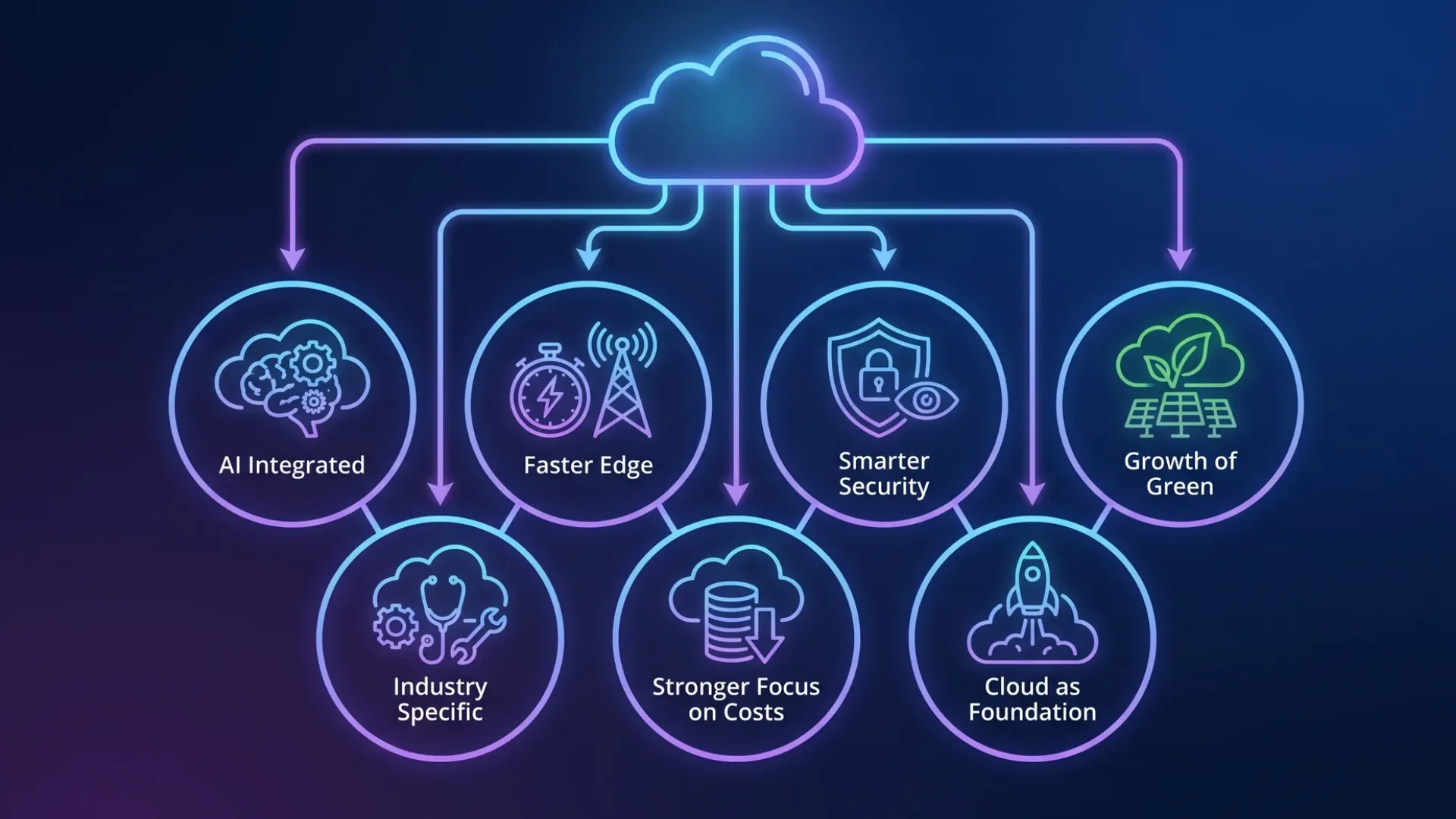
Cloud computing is expected to become more advanced, intelligent, and deeply connected to everyday business operations over the next decade.
1. AI Integrated Cloud Platforms
Artificial intelligence will become a core part of cloud platforms instead of an optional feature.
Cloud providers are already adding AI tools for automation, analytics, customer support, and software development.
Over the next decade, businesses may use cloud-based AI to improve decision-making, reduce manual work, and personalize customer experiences.
Gartner predicts that AI-native development platforms will help 80% of organizations transition large software teams into smaller, AI-augmented units by 2030.
AI-powered cloud services will also help companies process large amounts of data faster.
2. Faster Edge Computing Services
This will reduce delays and improve performance for applications that need instant results.
Industries such as healthcare, transportation, retail, and manufacturing may rely heavily on edge computing in the future.
Smart devices, connected vehicles, and real-time monitoring systems will all benefit from quicker data processing.
Cloud and edge systems will likely work together, creating faster and more reliable digital experiences for businesses and everyday users.
3. Rise of Multicloud and Hybrid Cloud
More companies are expected to use multiple cloud providers instead of depending on one platform.
Multicloud and hybrid cloud strategies give businesses greater flexibility, better performance, and stronger backup options.
A company may store sensitive data in a private cloud while running applications on public cloud platforms. This approach can also reduce the risk of downtime and vendor dependency.
Choosing the right cloud deployment models is becoming one of the most important decisions companies make as they scale their digital operations.
Over the next decade, businesses will focus on managing workloads across different cloud environments to improve efficiency, security, and long-term scalability.
4. Smarter Cloud Security Systems
Cloud security will become more automated as cyber threats continue to grow.
Companies will use AI driven security tools to monitor systems, detect suspicious activity, and respond to threats faster.
Automation can help reduce human errors and improve protection across large cloud environments.
Identity management, data encryption, and continuous monitoring will likely become standard security practices.
5. Growth of Green Cloud Computing
Sustainability will play a larger role in cloud computing decisions over the next decade.
Large data centers consume significant amounts of energy, especially as AI and digital services continue expanding.
Cloud providers may invest more in renewable energy, energy-efficient hardware, and low-carbon operations. Businesses may also compare providers based on environmental impact before making purchasing decisions.
Green cloud computing could become an important factor for companies trying to reduce operating costs while meeting sustainability goals and environmental regulations.
6. Faster Development With Serverless Technology
Serverless computing and containers will continue changing how applications are built and deployed.
Developers will spend less time managing servers and more time focusing on building features and improving user experiences.
Serverless systems automatically scale based on demand, making applications more flexible and cost-efficient. Containers will also help businesses move applications between cloud environments more easily.
Together, these technologies can speed up software development, reduce maintenance work, and support faster updates for modern digital applications.
7. Expansion of Industry-Specific Clouds
Industry-specific cloud platforms are expected to become more common as businesses demand customized solutions.
Industry clouds can provide built-in compliance tools, specialized analytics, and services designed for specific business operations.
This approach may help organizations adopt cloud technology more quickly while meeting industry standards.
Over time, cloud providers will likely create more targeted solutions for different sectors and business requirements.
8. Stronger Focus on Cloud Costs
Many organizations are already struggling to manage rising cloud expenses caused by unused resources and inefficient workloads.
Over the next decade, businesses may invest more in cloud cost optimization tools and financial planning strategies.
Teams will carefully monitor usage, automate resource management, and improve efficiency to control spending.
Cloud costs will no longer be handled only by IT departments because the financial impact affects overall business performance.
9. Increased Interest in Quantum Cloud Services
Quantum computing may become more visible through cloud platforms in the coming years.
Most businesses are unlikely to own quantum computers directly because the technology is expensive and highly specialized.
Instead, cloud providers may offer access to quantum computing tools through online services.
Researchers and large organizations could use these systems for advanced simulations, scientific research, and complex problem-solving.
10. Cloud as the Foundation of Innovation
Cloud computing is expected to become the foundation for future digital innovation across almost every industry.
Businesses will use cloud platforms to support AI, automation, connected devices, data analytics, and remote collaboration.
New technologies will likely depend on cloud infrastructure to operate efficiently at scale.
Companies that invest in cloud innovation may gain faster access to new tools and business opportunities.
Real Users’ Opinions About the Future of Cloud Computing
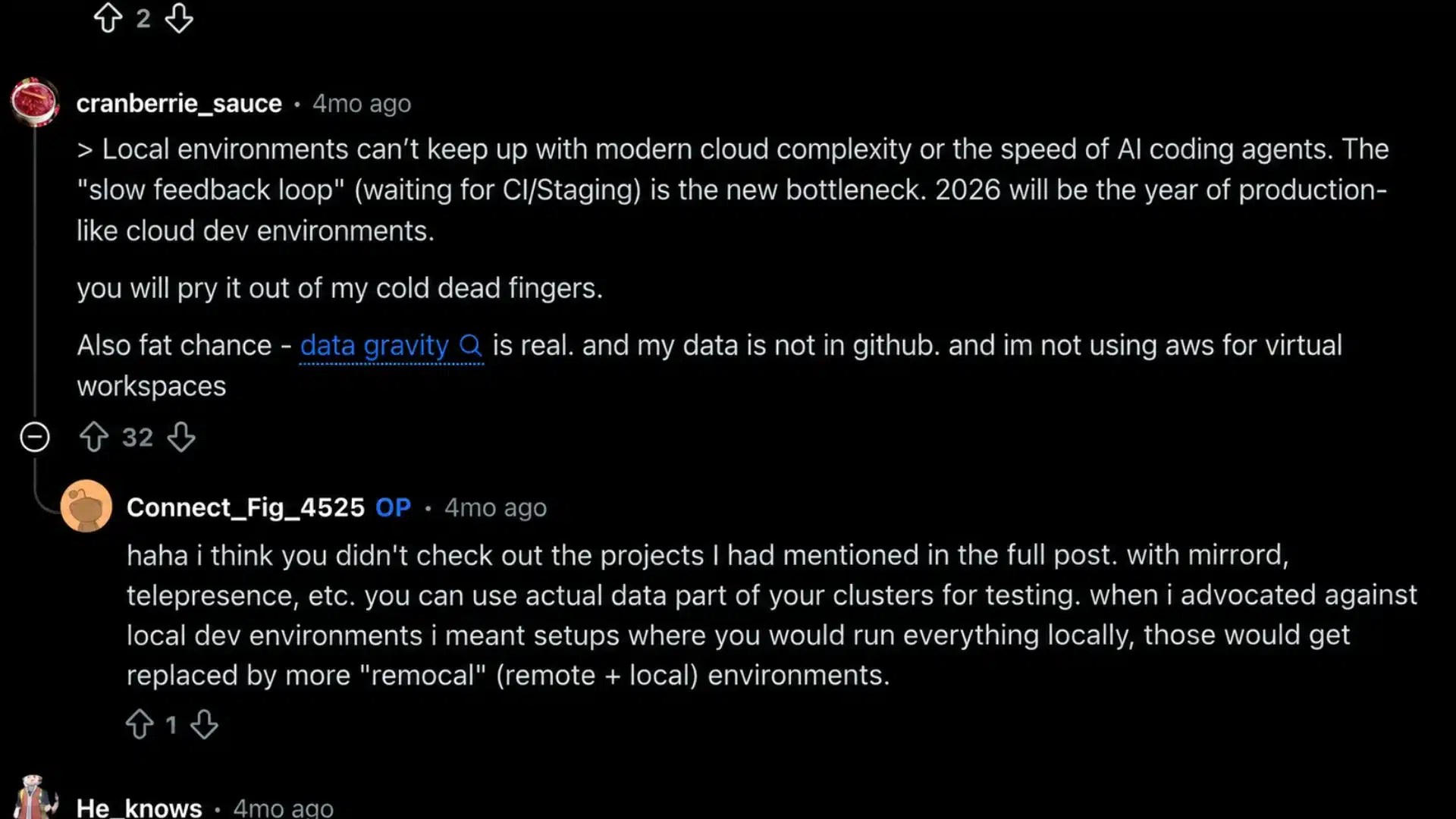
Reddit users had mixed but insightful reactions to these cloud computing predictions for 2026.
Many agreed that the AI hype phase is cooling down, with businesses now demanding measurable ROI instead of blindly adopting every new AI tool.
Several developers also supported the idea that Kubernetes is becoming less visible to developers as platforms focus more on smoother developer experiences.
The biggest debate centered around local development environments.
Some users strongly argued that local setups will never disappear because they are faster, cheaper, and easier for day-to-day coding.
Others felt hybrid “remote + local” workflows using tools like Telepresence and mirrord could become the future for handling complex cloud infrastructure.
Open source fatigue was another point that resonated with many commenters, especially teams tired of constantly switching between trendy tools without long-term stability.
How Businesses and Professionals Should Prepare for the Future?
Businesses and professionals should prepare for the future of cloud computing by focusing on adaptability, digital skills, and long-term technology planning.
Companies need to invest in modern cloud systems that can support AI tools, automation, data analytics, and remote operations.
Strong cloud security practices and cost management strategies will also become more important as cloud usage continues to grow.
Businesses that delay modernization may struggle to compete in a faster digital economy.
Professionals should build skills in cloud platforms, cybersecurity, DevOps, AI integration, and data management because these areas are expected to see high demand in the coming years.
The future workplace will rely heavily on cloud-based technologies, so staying updated with new trends and certifications can help both businesses and individuals remain competitive, flexible, and prepared for future technological changes.
Challenges Facing the Future of Cloud Computing
Cloud computing is growing quickly, but it also comes with several challenges that businesses and technology providers will need to manage over the next decade.
- Cybersecurity Risks: Cloud environments store large amounts of sensitive business and customer data, making them a major target for cyberattacks, ransomware, and data breaches.
- Rising Cloud Costs: Many businesses struggle with unexpected cloud expenses caused by poor resource management, unused services, and increasing AI workloads.
- Data Privacy and Compliance: Different countries have strict rules about where data can be stored and processed. Businesses using global cloud services may face challenges in meeting privacy laws and compliance requirements.
- Vendor Lock-In: Companies that rely heavily on a single cloud provider may find it difficult and expensive to switch platforms later. This can limit flexibility and increase long-term dependency on a single vendor.
- Skills Gap in Cloud Technology: The demand for professionals with cloud computing, cybersecurity, AI, and DevOps skills is growing faster than the available workforce. Many organizations may struggle to find qualified talent.
- Energy Consumption and Sustainability: Large cloud data centers require huge amounts of electricity, especially as AI adoption increases. Cloud providers will face pressure to improve energy efficiency and reduce environmental impact.
Conclusion
The future of cloud computing is shaping a world where businesses can work faster, scale smarter, and adapt more easily to changing technology demands.
From AI-powered cloud platforms and edge computing to stronger security and greener infrastructure, cloud innovation is expected to influence nearly every industry over the next decade.
Companies that invest in modern cloud strategies today may be better prepared for future competition, customer expectations, and digital transformation.
Cloud computing is no longer just about storage or servers. It is becoming the foundation for innovation, business growth, and connected digital experiences.
What are your thoughts on the future of cloud computing? Share your experience, predictions, or concerns in the comments below and join the conversation.
Frequently Asked Questions
What is FinOps and Why Does it Matter for Cloud Cost Management?
FinOps is a financial management approach that helps businesses monitor, optimize, and control cloud spending. It improves cost visibility, reduces waste, and helps teams make smarter cloud investment decisions.
What are the 4 Types of Cloud Computing?
The four main types of cloud computing are public cloud, private cloud, hybrid cloud, and multicloud. Each model offers different levels of flexibility, security, scalability, and infrastructure control for businesses.
What is the Salary of an MBA in Cloud Computing?
The salary for professionals with an MBA in cloud computing varies by experience, skills, and location. In the United States, average salaries often range from $100,000 to $160,000 annually in management roles.