Typing a few words and waiting for them to appear can quickly reveal that something is wrong with your keyboard response.
If you are searching how to fix keyboard delay, the problem may be linked to settings, drivers, connections, or the device itself.
A slow response can interrupt work, gaming, and everyday tasks, making even simple typing feel frustrating. I have noticed that many keyboard issues are solved by checking the right areas before replacing anything.
You will find practical troubleshooting steps here that explain common causes, useful fixes, and ways to prevent the delay from returning.
Understanding what affects keyboard performance helps you save time and avoid unnecessary expenses. Start with the basics and try the recommended fixes today.
How to Tell If Your Keyboard Has a Delay Problem
Before changing settings or replacing the keyboard, check whether the delay is actually coming from the device. Knowing how to fix keyboard delay starts with identifying signs of slow or delayed response during typing, gaming, or wireless use.
Check Keyboard Delay Symptoms:
- Letters appearing after pressing keys
- Keys responding slower than expected
- Short freezes or pauses while typing
- Input delay during gaming
- Wireless keyboard lagging slower than usual
Once you confirm these signs, you can check whether the delay is caused by software settings, hardware problems, or connection issues. This tracks with NIST latency findings, which show that shared wireless bands can add measurable delay to a signal.
Quick Answer: Why Is My Keyboard Lagging?
Keyboard delay can happen for several reasons. The cause may be related to system settings, drivers, performance issues, wireless connections, or physical keyboard problems.
Staying current here matters too, since federal cybersecurity guidance lists outdated software among the most common causes of everyday performance problems.
| Possible Cause | What Happens |
|---|---|
| Software settings | Keyboard features or response settings slow down input |
| Driver problems | The keyboard cannot communicate properly with the operating system |
| System performance issues | Background applications delay keyboard response |
| Wireless connection problems | Bluetooth interference or weak signals affect performance |
| Hardware issues | Battery problems, damaged parts, or dust affect typing |
Checking when the delay happens can help identify whether the problem comes from the keyboard itself or the device connected to it.
How to Fix Keyboard Delay Caused by Software and Hardware Problems
Keyboard delay can come from incorrect settings, outdated drivers, connection issues, or physical hardware problems. Follow these troubleshooting steps in order, starting with software fixes before checking the keyboard itself.
Step 1: Adjust Windows Keyboard Settings
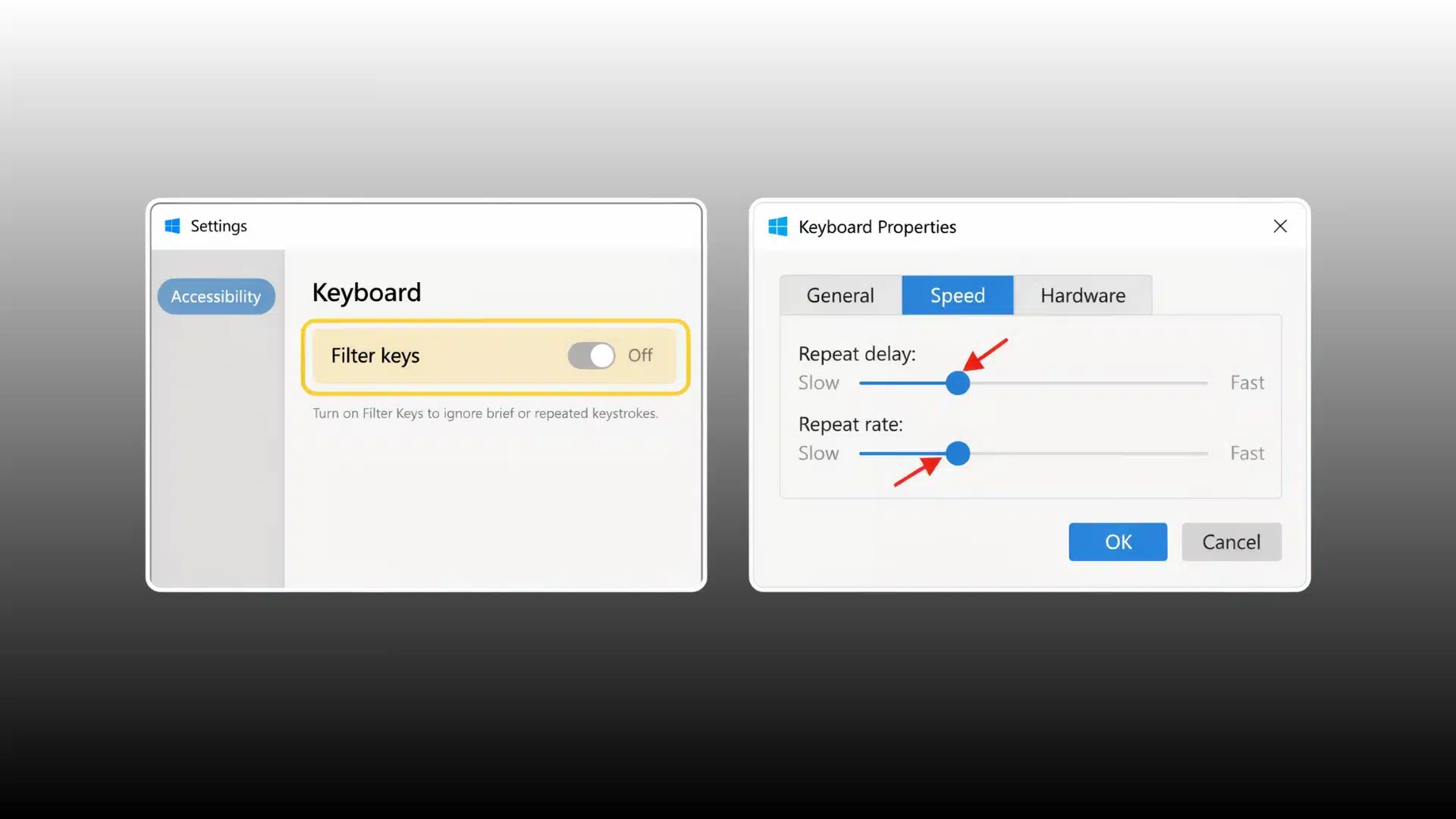
Windows accessibility and response settings can sometimes make typing feel slower than normal. Check these settings first:
- Open Settings > Accessibility > Keyboard
- Turn off Filter Keys if it is enabled, as it can ignore quick or repeated keystrokes
- Open Control Panel > Keyboard
- Set Repeat delay to Short and Repeat rate to Fast
- Click Apply and test typing in a text box
Changing one setting at a time helps identify which adjustment fixes the delay.
Step 2: Update Keyboard Drivers and System Software
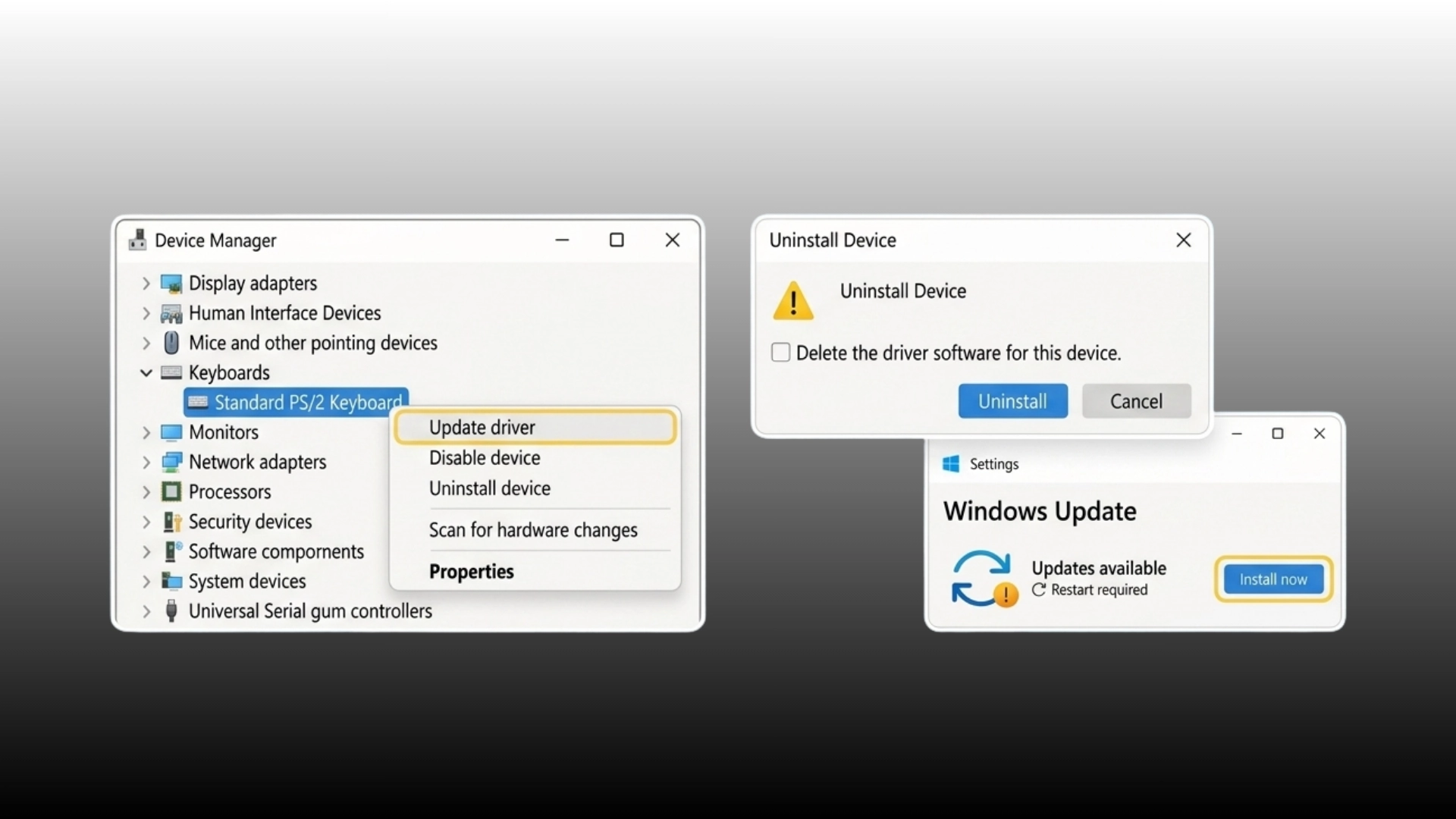
Outdated drivers can prevent your keyboard from communicating properly with your computer. Update them using these steps:
- Open Device Manager and expand the Keyboards section
- Right-click your keyboard and select Update driver
- Allow Windows to search for the latest driver version
- If the issue continues, uninstall the keyboard device and restart your computer
- Install any pending Windows updates and restart again
A fresh driver installation can resolve many keyboard response problems caused by software conflicts. The same logic applies to refreshing graphics card drivers, since an outdated one can just as easily drag down overall system response.
Step 3: Check Wired and Wireless Keyboard Connections
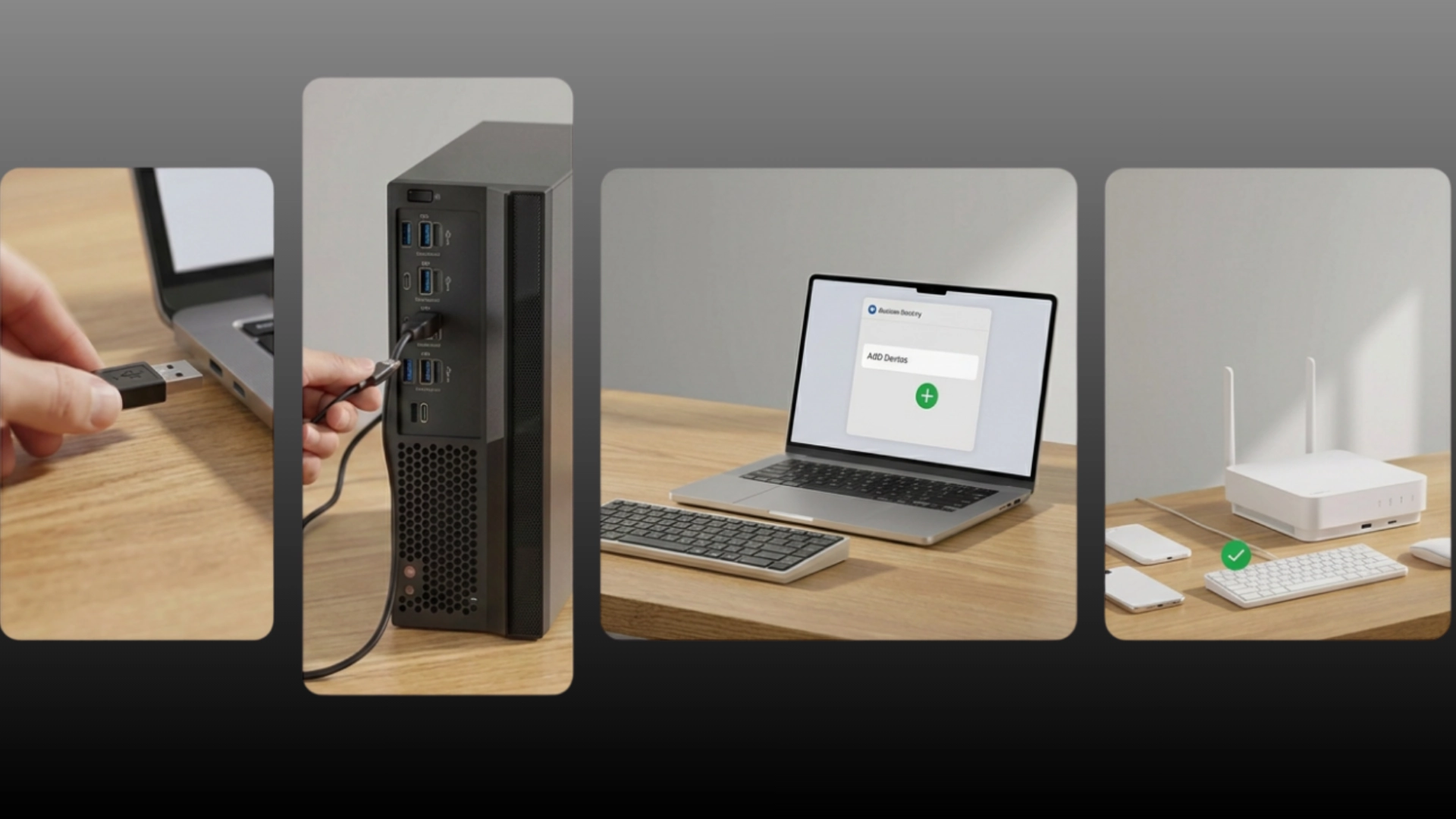
Connection problems are common causes of keyboard delay, especially with external keyboards. Knowing the different USB cable types can also help you rule out a mismatched or worn connector. Check these points:
- Disconnect and reconnect the USB cable to ensure a secure connection
- Try another USB port, preferably one connected directly to your computer
- Restart Bluetooth and remove, then reconnect, wireless keyboards
- Keep wireless receivers away from other devices that may cause interference
- Test the keyboard on another computer to check whether the problem follows the device
If the keyboard works correctly on another device, the issue is likely related to your original computer setup.
Step 4: Improve Wireless Keyboard Performance
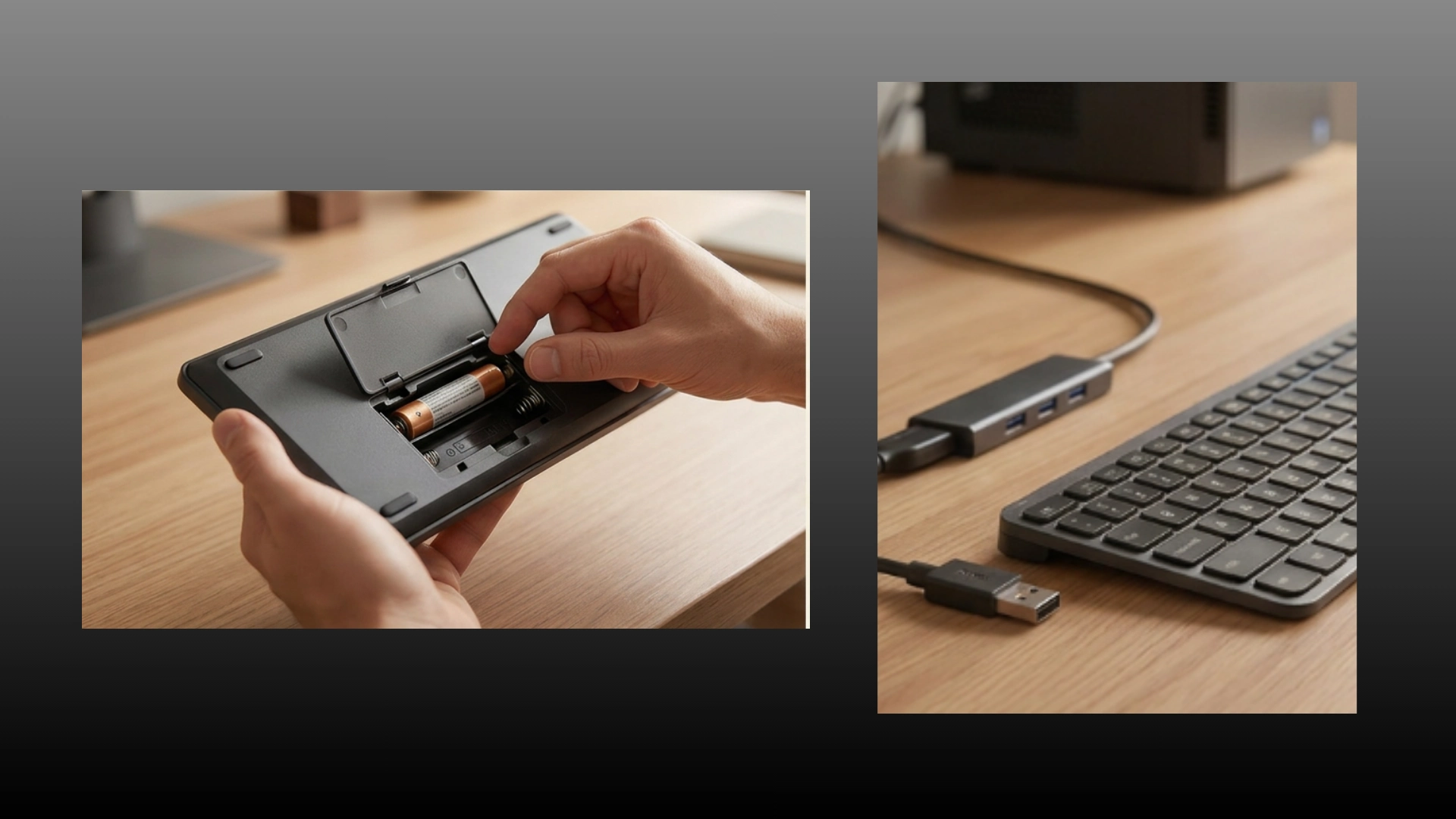
Wireless keyboards can lag because of weak signals, low battery, or poor receiver placement. Improve performance by following these steps:
- Replace batteries even if the current charge level appears normal
- Move the USB receiver closer to the keyboard
- Avoid placing the receiver near routers or other wireless devices
- Reduce the number of connected Bluetooth devices when possible
- Update keyboard firmware if the manufacturer provides an update
These small adjustments can often fix wireless keyboard delays without changing system settings. If interference keeps returning, moving to a dual-band router setup can free up a clearer wireless channel.
Step 5: Check for Hardware-Related Keyboard Problems
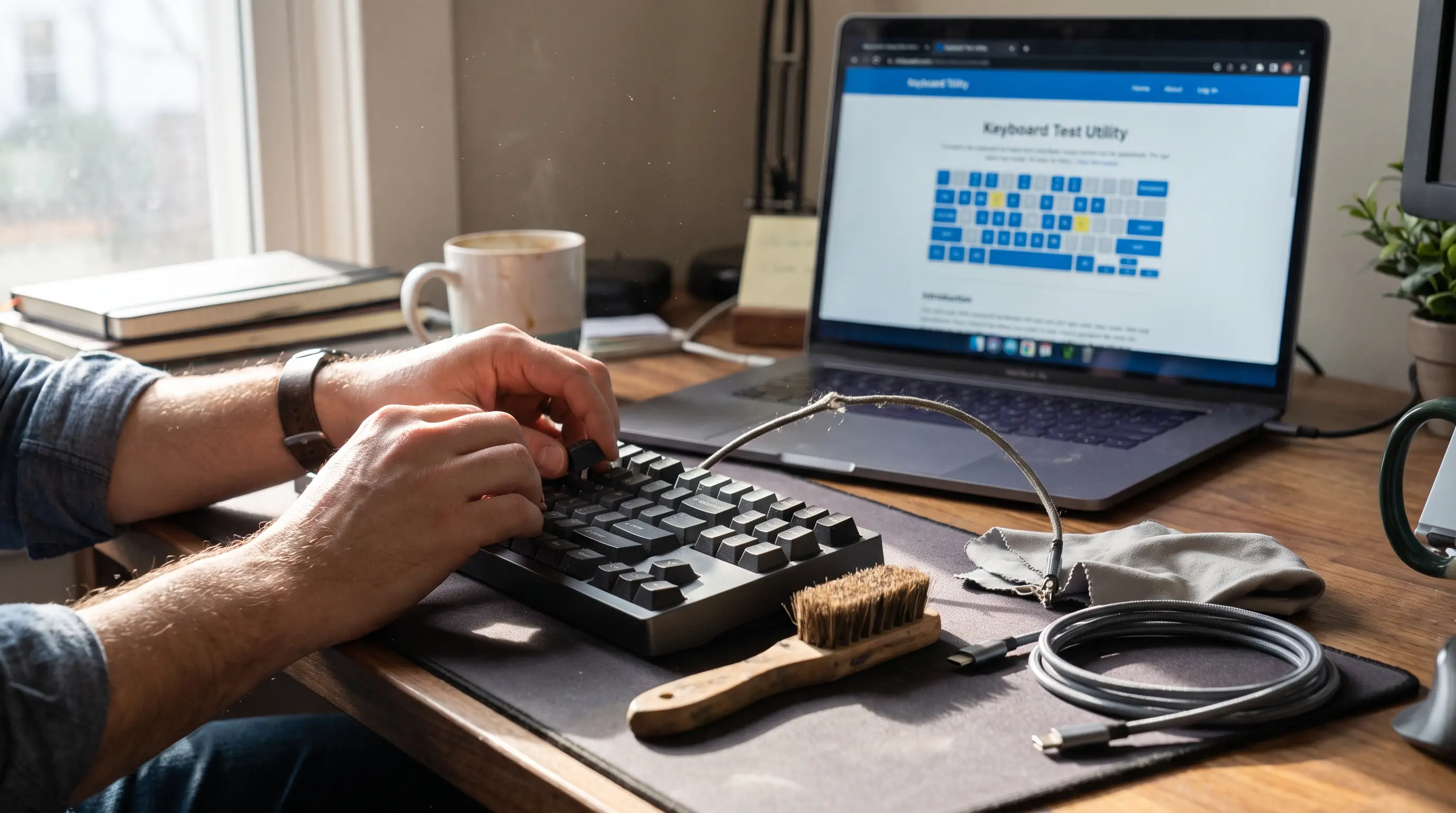
If software and connection fixes do not work, the keyboard itself may be causing the delay.A keyboard that fails the same way on multiple devices is more likely experiencing hardware failure. Check for these issues:
- Look for damaged cables, loose keys, or physical damage
- Clean dust and debris from between the keys
- Check whether multiple keys respond inconsistently
- Test the keyboard on another device
- Consider replacement if the delay continues across different computers
Following these troubleshooting steps in order helps identify whether keyboard delay comes from settings, software, connections, or hardware. Start with simple fixes before considering replacement options.
Reduce Keyboard Lag During Gaming
Gaming requires faster input response than normal typing, so even a small delay can feel noticeable during competitive gameplay.
Common causes include wireless latency, incorrect keyboard settings, high system usage, or game-related input buffering.
| Fix | Why It Helps |
|---|---|
| Check keyboard polling rate settings | Higher polling rates can improve response speed on supported gaming keyboards |
| Use a wired connection | Removes additional wireless signal delay |
| Close unnecessary background apps | Frees system resources that may affect input response |
| Update keyboard firmware | Fixes performance issues from outdated software |
| Check in-game input settings | Some games add processing delay through settings |
Testing each gaming-related fix individually helps identify the exact cause of keyboard lag. Small adjustments to settings, connections, or system performance can noticeably improve input response.
What Reddit Communities Say About Keyboard Delay
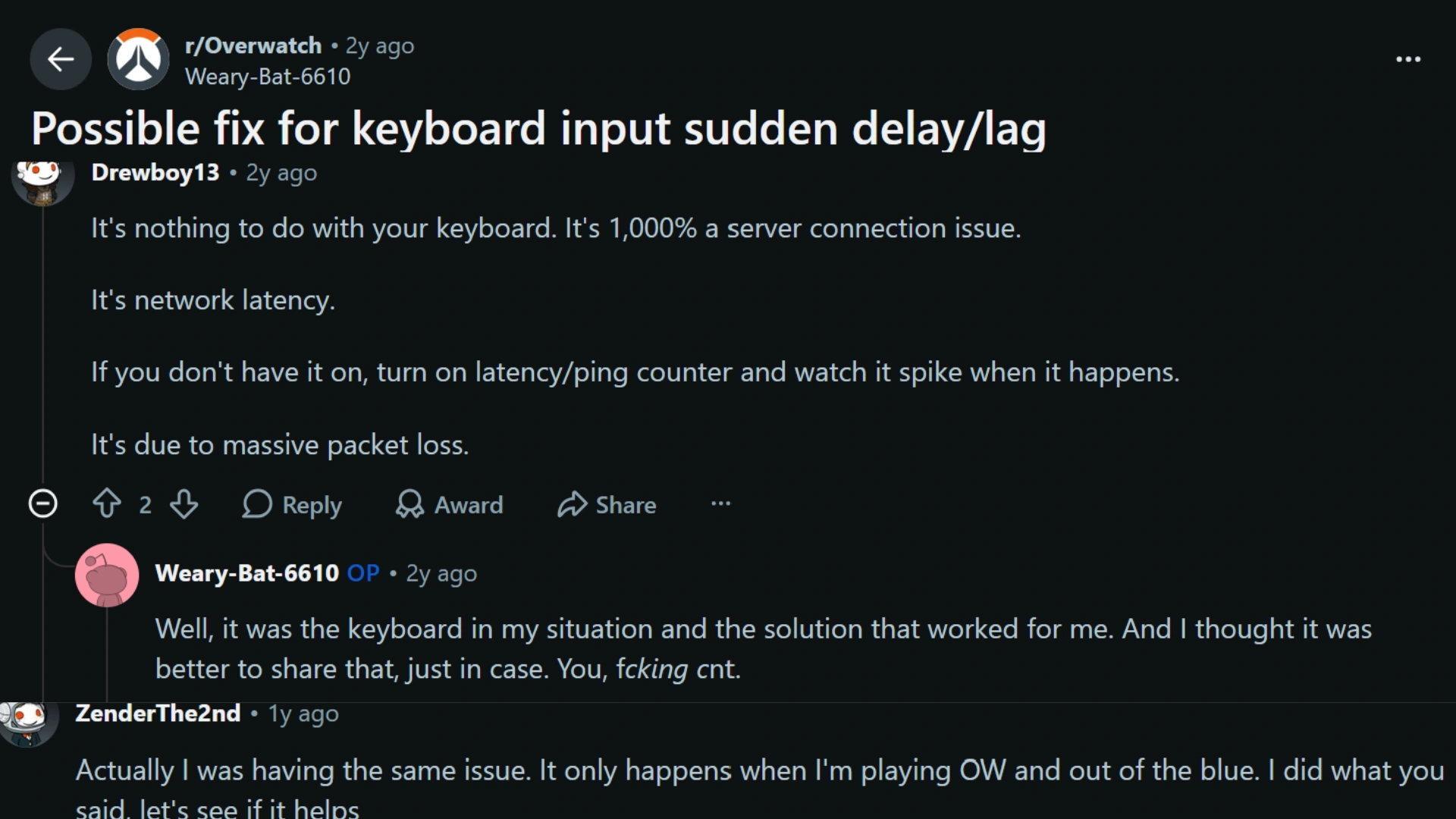
Online Reddit communities are full of people describing this same issue, and their experiences often confirm the fixes covered above rather than reveal new ones.
One widely referenced gaming community thread described keyboard input that felt delayed only during gameplay, unrelated to internet speed.
Adjusting the Windows repeat delay setting to its fastest option fixed it for the original poster and several others who replied with the same result, even after one commenter insisted it was purely a network problem.
A detail worth adding to your own checklist: a few threads also point to checking Human Interface Device settings in Device Manager, which covers keyboard-related drivers that Device Manager doesn’t always group under “Keyboards.” Treat community fixes as a useful starting point, not a guaranteed solution.
How to Prevent Keyboard Delay in the Future
Preventing keyboard delay is easier than fixing it repeatedly. A few simple maintenance habits can help keep your keyboard responsive, reduce connection problems, and avoid future typing interruptions.
- Keep keyboard drivers updated
- Replace wireless batteries before they become completely drained
- Clean dust and debris from keys regularly
- Avoid unnecessary Bluetooth interference
- Keep your operating system updated
- Close programs that use excessive system resources
Following these preventive steps helps maintain consistent keyboard performance and reduces the chances of recurring lag. Regular updates, cleaning, and proper connections can extend your keyboard’s lifespan.
Know When Your Keyboard Needs Replacement
Before buying a new keyboard, check whether the issue points to hardware failure. These signs can help you decide if replacement is a better option than further troubleshooting.
| Warning Sign | What It Means |
|---|---|
| Keys feel loose, sticky, or fail to return properly | Physical components may be worn out or damaged |
| Multiple keys respond inconsistently | Internal switches or circuits may be failing |
| Keyboard has the same delay on different devices | The problem is likely with the keyboard itself, not your computer |
| Visible physical damage | Cracks, spills, or broken parts can affect performance |
| Frequent disconnections after troubleshooting | Internal connection issues may require replacement |
If the keyboard shows multiple hardware-related problems or continues lagging on different devices, replacing it is often more practical than trying additional software fixes.
Final Fix
Keyboard delays can turn simple tasks into frustrating moments, but the cause is often easier to solve than it seems.
I found that most issues come down to settings, drivers, connections, or hardware problems that you can check step by step.
If you know how to fix keyboard delay, you can restore faster typing without replacing your device too quickly.
I recommend starting with basic checks, updating software, improving connections, and testing hardware before making bigger changes.
These fixes can save time and help you get a smoother experience for work, chats, and gaming, so you avoid unnecessary replacements. Try these tips today and share your results or questions in the comments.
Frequently Asked Questions
Is Some Keyboard Delay Normal, Even on a Working Keyboard?
Yes. A tiny amount of delay, usually a few milliseconds, is normal due to USB polling and signal processing. It only becomes a problem when it’s noticeable while typing.
Can Overheating Cause Keyboard Input Delay?
Yes, overheating can slow overall system performance and may affect input response. When a computer reduces performance due to heat, background processes and system responsiveness can become slower, making keyboard input feel delayed.
How Can I Measure My Keyboard’s Actual Input Latency?
Online keyboard latency testers measure the time between a keypress and when the input is registered. These give a rough number, though results vary by browser and system.
Does a Laptop’s Built-In Keyboard Lag Differently Than an External One?
Built-in laptop keyboards connect internally rather than through USB, so they typically respond faster. External keyboards depend more on connection type and driver quality.