Choosing between the Dyson V8 and V11 sounds simple until price, power, and daily use start pulling in different directions.
The V8 has the appeal of a lighter cordless vacuum that still handles crumbs, dust, stairs, and quick cleanups without feeling excessive.
The V11 feels like the tempting upgrade, promising more suction, longer runtime, and a smarter way to clean.
But the better choice is not always the newer one. It depends on your floors, pets, budget, and how often dirt pushes your vacuum to its limit.
This Dyson V8 vs V11 comparison will help sort the real differences from the nice extras, so you can decide which model actually makes sense before spending more than needed or getting stuck in another confusing spec hunt.
Dyson V8 vs V11: Overview
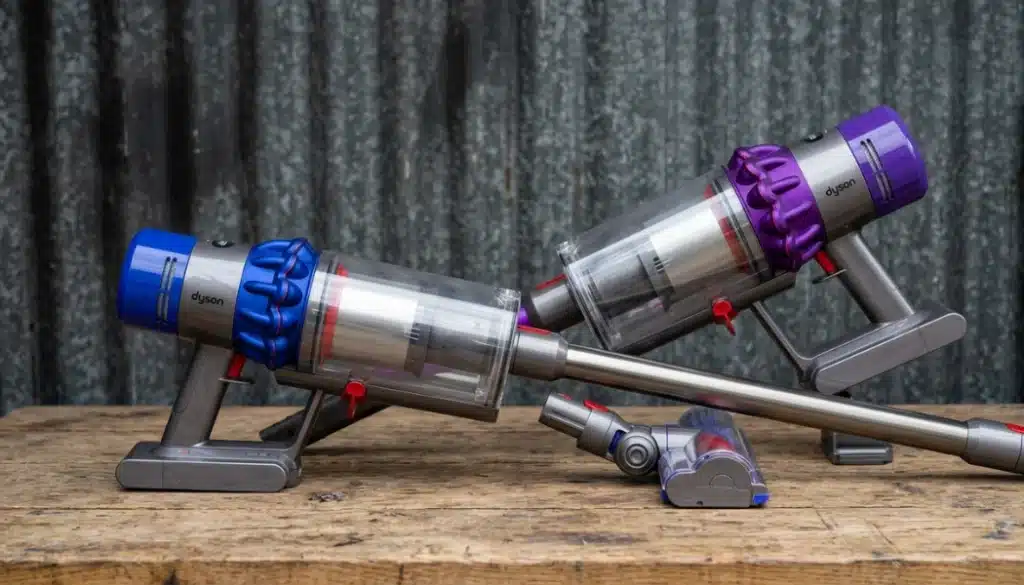
The Dyson V8 and Dyson V11 are cordless stick vacuums designed for quick cleaning, handheld use, and everyday messes at home.
The V8 is the lighter and simpler option. It works well on hard floors, stairs, cars, small apartments, and basic pet hair pickup. It also makes sense if budget matters more than extra features.
One thing worth knowing upfront: Dyson refreshed the V8 platform in 2025 with the V8 Cyclone, which brings improved suction and longer battery life while keeping the same lightweight frame.
If you are also considering a cheaper Dyson model, comparing the V7 can help you see whether the V8 is worth the step up.
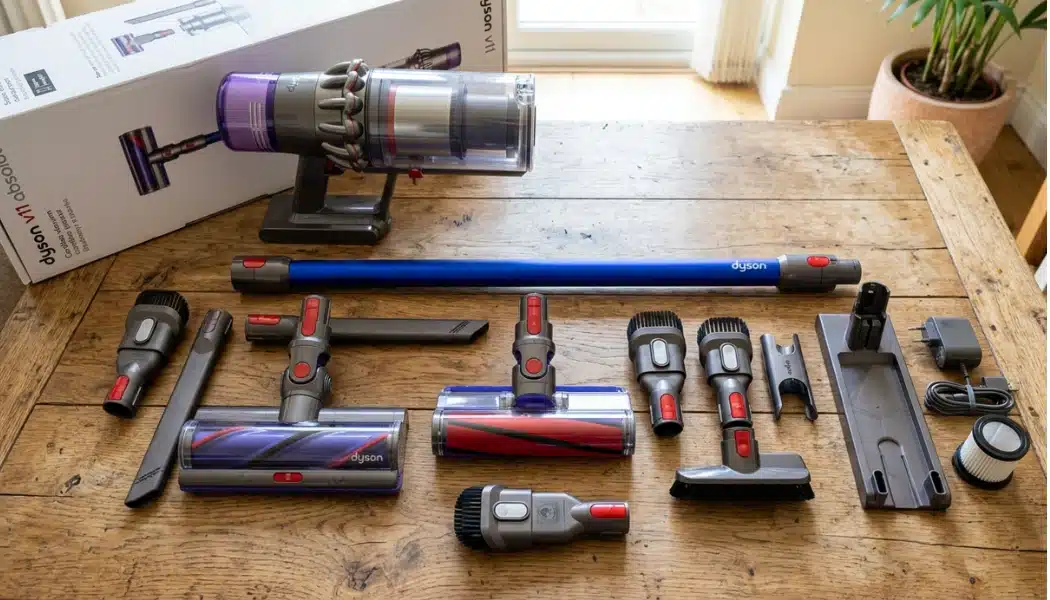
The Dyson V11 is stronger and smarter, with higher suction, up to 60 minutes of runtime, an LCD screen, and cleaning modes that adjust power in real time.
It fits larger homes, carpets, rugs, pet hair, and deeper dust pickup. The V8 is the value pick, while the V11 is better for stronger whole-home cleaning.
Dyson V8 vs V11 Specs: Main Differences at a Glance
The Dyson V8 and V11 look similar, but the main differences show up in suction power, runtime, bin size, and smart features.
| Feature | Dyson V8 | Dyson V11 |
|---|---|---|
| Release period | Original V8 launched in 2016; V8 Cyclone (updated version) released in 2025 | Launched in 2019 |
| Max suction | Up to 115 AW on standard V8 models; up to 120 AW on the V8 Cyclone | Up to 185 AW |
| Motor | Capable of daily dust, crumbs, and light pet hair | Stronger motor with inline design for deeper carpet and pet hair pickup |
| Runtime | Up to 40 minutes (original); up to 60 minutes on V8 Cyclone | Up to 60 minutes |
| Dust bin | Around 0.53 to 0.54 L | Around 0.74 to 0.77 L |
| Weight | About 5.5 to 5.8 lbs | About 6.6 lbs |
| LCD screen | No | Yes |
| Auto suction | No | Yes, on supported cleaning heads |
| Filtration | Whole-machine HEPA filtration | Whole-machine HEPA filtration |
| Best for | Smaller homes, quick cleaning, tighter budgets | Carpets, pets, larger homes, stronger cleaning |
Both models use whole-machine HEPA filtration, capturing 99.97% of particles as small as 0.3 microns, a meaningful detail for allergy sufferers.
The V11 has the higher performance ceiling, but the V8 still makes sense for everyday cleaning and lower budgets.
What Changed with the V8 Cyclone?
If you are shopping for a V8 today, you will likely encounter both the original V8 and the newer V8 Cyclone. The Cyclone is Dyson’s 2025 refresh of the platform.
It keeps the same lightweight design and ergonomic feel, but brings a stronger motor, improved suction, and a longer battery life that now matches the V11’s 60-minute claim in standard mode.
The V8 Cyclone also introduces a swappable battery; one of the bigger complaints about the original V8 was its permanently installed battery.
For buyers deciding between the V8 and V11 today, the V8 Cyclone significantly closes the runtime gap, so the V11’s remaining main advantages are its higher suction, larger bin, Auto mode, and LCD screen.
If you find the original V8 at a steep discount, it can still be a solid pick. But if you are buying at current retail prices, the V8 Cyclone is the version worth comparing to the V11.
Suction Power and Cleaning Performance Compared
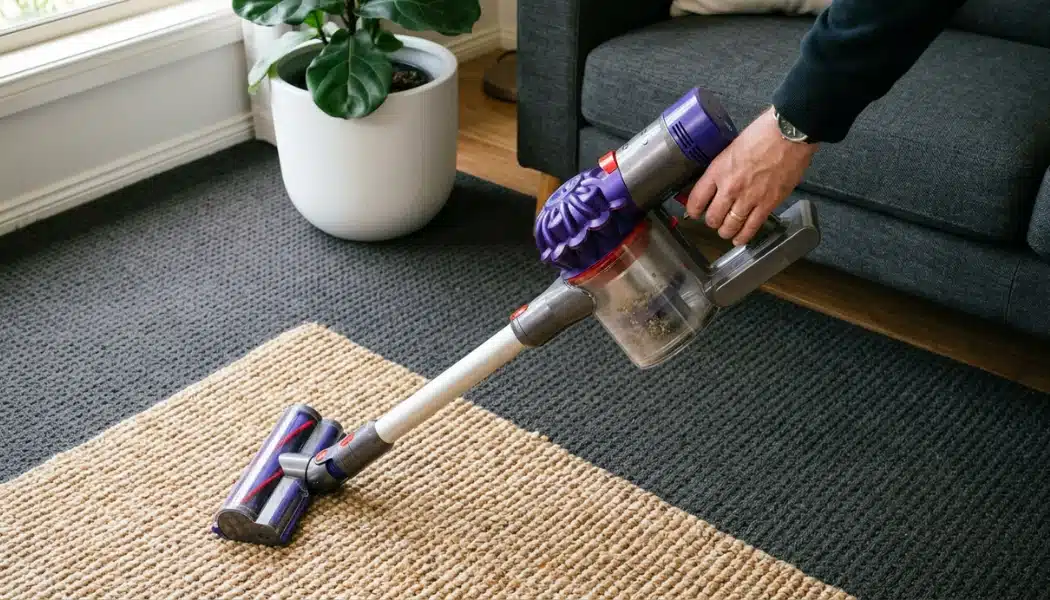
The Dyson V11 has a clear edge in suction and deep cleaning. Its stronger motor removes more dust, hair, and debris from carpets, rugs, and floor gaps.
A big reason is its inline design, where the motor, dustbin, and cleaning head sit in a straight line. This improves airflow compared to the V8’s older layout.
Auto mode also adjusts power based on floor type, making it useful for homes with mixed flooring.
The Dyson V8 still handles daily dirt, crumbs, hard floors, stairs, and low-pile carpets well.
However, thicker carpets and heavier debris may require Boost mode or extra passes. Both models use whole-machine HEPA filtration, so neither releases fine particles back into the air.
For pet hair, both work well with a motorized attachment, though the V11 is better suited to multi-pet homes thanks to its stronger suction and larger bin.
Battery Life, Runtime, and Charging
Battery life matters when cleaning larger rooms, carpets, stairs, cars, or multiple areas in a single session.
The Dyson V8 and V11 both handle daily cleaning well, but the V11 gives more time between charges, especially when cleaning mixed floors or using stronger suction.
- Dyson V8: Runs up to 40 minutes in standard mode. Max mode can drop runtime to about 7 minutes, though newer V8 Cyclone versions may last longer. The newer V8 Cyclone extends this to up to 60 minutes in standard mode, which puts it on par with the V11 for runtime, if not for suction.
- Dyson V11: Runs up to 60 minutes and uses Auto mode to adjust suction by floor type, helping save power when full suction is not needed.
Both usually take about 4.5 to 5 hours to recharge. The V8 suits smaller homes and quick jobs, while the V11 fits longer sessions.
If you are curious about the V12, it adds Auto mode and a removable battery design along with laser dust detection.
Weight, Design, and Maneuverability
The Dyson V8 is the lighter vacuum and feels easier to move during quick daily cleaning. It weighs about 5.5-5.8 lbs, while the Dyson V11 weighs about 6.6 lbs.
That difference may sound small, but it becomes noticeable when cleaning stairs, lifting the vacuum above your head, or using it as a handheld for cars and furniture.
The V8 feels more agile and less tiring, which makes it a better fit for smaller homes, apartments, and users who want a simpler vacuum to grab often.
The V11 feels heavier, but its inline design gives it better balance during floor cleaning. It also feels more stable in longer sessions.
Because the weight is distributed more evenly along the wand rather than concentrated near the handle, it tracks steadily during longer floor sessions and does not feel as front-heavy as the spec difference might suggest.
The V8 wins for ease of handling, while the V11 feels stronger and more controlled on the floor.
Dyson V8 Absolute vs Animal: Which Version Should You Buy?
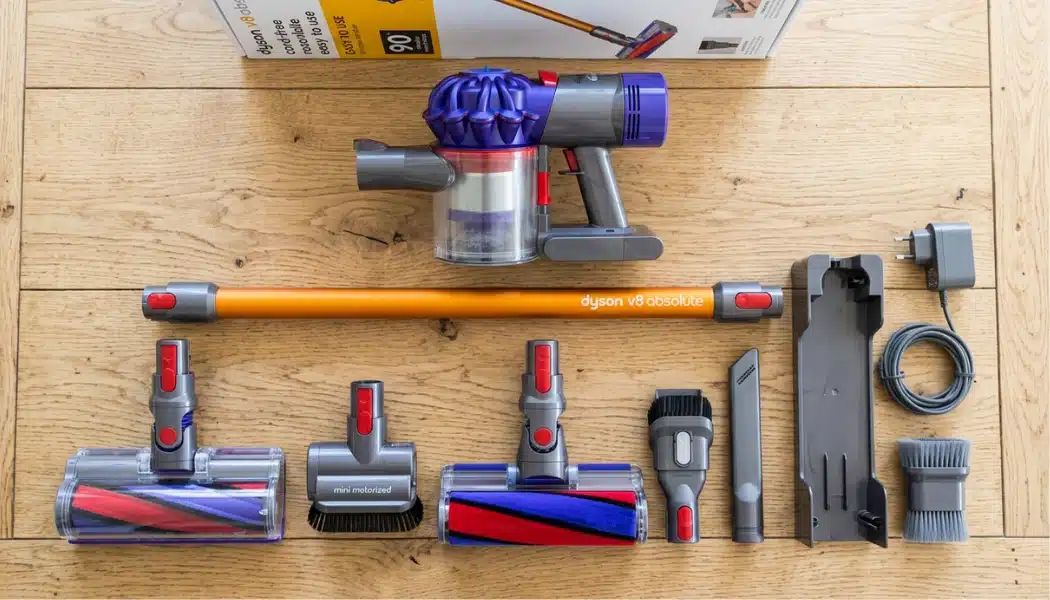
The Dyson V8 Absolute and V8 Animal have the same motor, suction power, battery life, bin size, and main vacuum body.
The real difference is the attachment set, which affects how well each version fits your floors.
| Feature | V8 Absolute | V8 Animal |
|---|---|---|
| Core motor | Same | Same |
| Suction power | Same | Same |
| Battery life | Same | Same |
| Soft roller head | Included | Not included |
| Carpet cleaning head | Included | Included |
| Mini motorized pet tool | Included | Included |
| Best for | Hard floors and carpets | Carpets and pet hair |
| Typical price | Usually higher | Often lower |
The soft roller head included with the V8 Absolute makes a genuine difference on hard floors like hardwood and tile. It picks up larger debris that the standard motorized head can push around rather than capture.
Choose V8 Absolute if your home has hardwood, tile, and carpets. Choose V8 Animal if you mostly clean carpets, rugs, and pet hair, and want the lower-priced option.
Dyson V8 vs V11 Maintenance and Longevity
Both the Dyson V8 and V11 are fairly easy to maintain if you keep up with filter washing, bin emptying, brush bar cleaning, and blockage checks.
Dyson recommends washing cordless vacuum filters about once a month, which matters because a clogged filter can reduce suction and shorten battery life.
The V8 is simpler because it has fewer smart parts and no screen, which can make basic upkeep feel easier.
The V11 adds an LCD screen that can show runtime and maintenance alerts, so it gives clearer feedback when something needs attention.
Both models have replaceable parts, including filters, batteries, and cleaner heads, which help extend long-term use.
The V8 is easier to live with if you want simple care. The V11 is better if you like reminders and more control.
The V8 Cyclone’s swappable battery is also worth factoring in here; replacing a battery on the original V8 requires a screwdriver, while the Cyclone makes it a click-in swap.
Dyson V8 vs V11 Price Comparison: Which One Gives Better Value?
Prices shift regularly, but the Dyson V8 typically ranges from $300 to $470, while the V8 Cyclone sits in a similar range depending on the retailer. The Dyson V11 typically runs $400 to $630.
The V8 is the better value for daily dust, crumbs, hard floors, small messes, and light pet hair without paying extra.
1. Who Should Buy the Dyson V8?
The Dyson V8 fits buyers who want simple cordless cleaning without paying for extra features.
- Best for apartments, small homes, stairs, cars, and quick cleanups.
- Works well on hard floors, low-pile rugs, crumbs, dust, and light pet hair.
- Good for users who prefer lighter handling and easier storage.
- Makes sense for tighter budgets, first Dyson buyers, or backup vacuum use.
- If you are buying new today, look at the V8 Cyclone, the updated battery and suction close a lot of the gap with the V11 at a lower price than the V11 commands
Choose the V8 if price, weight, and everyday cleaning matter more than stronger suction, longer runtime, and smart controls.
2. Who Should Buy the Dyson V11?
The Dyson V11 fits buyers who want stronger cordless cleaning with fewer compromises.
- Best for larger homes, heavy carpets, rugs, and longer cleaning sessions.
- Works better for multiple pets, daily shedding, fine dust, and deeper debris.
- Good for users who want Auto mode, an LCD screen, and clearer battery feedback.
- Makes sense for buyers who want stronger suction, a larger bin, and fewer recharge breaks.
Choose the V11 if power, runtime, pet hair pickup, and convenience matter more than price or lighter handling.
Conclusion
The Dyson V8 vs V11 decision should come down to your floors, pets, budget, and how often you clean.
I would choose the V11 if your home has thick carpets, heavy pet hair, or larger rooms. You get stronger suction, a larger bin, Auto mode, and better feedback during longer cleaning sessions.
The V8 still makes more sense if you want a lighter vacuum for daily messes, stairs, cars, and hard floors.
If you are buying today, check the V8 Cyclone because its better runtime and swappable battery make it more competitive.
Before you order either one, compare current prices, included tools, and the return window from the seller.
Have pets, carpets, hard floors, or a mix of everything? Tell us, share with us in the comments below.
Frequently Asked Questions
Can Dyson V8 Attachments Be Used with the V11?
Most Dyson V8 attachments do not fit the V11 directly because the tool connection is different. Some tools may work with an adapter, but it is better to check Dyson’s accessory compatibility before relying on older attachments.
How Long Does the Dyson V8 Battery Last Before Needing Replacement?
A Dyson V8 battery often lasts around two to four years with normal use. Runtime will slowly drop as the battery ages. If the vacuum starts losing charge quickly, a replacement battery can help extend its life.
Is the Dyson V8 Cyclone Worth Buying over the Original V8?
Yes, the Dyson V8 Cyclone is usually the better pick if you are buying new. It has stronger suction and longer battery life than the original V8 while keeping the lightweight design.
The original V8 still makes sense if it is much cheaper, but the V8 Cyclone is the better long-term choice for most buyers.
Is the Dyson V11 Still Worth Buying Now that the V12 Exists?
The V11 can still be a good purchase, especially at a discounted price.
The V12 adds laser dust detection, a Piezo sensor for automatic suction adjustment, and a more compact body, but those features come at a higher price. If you don’t need those, choose V11 over V12.