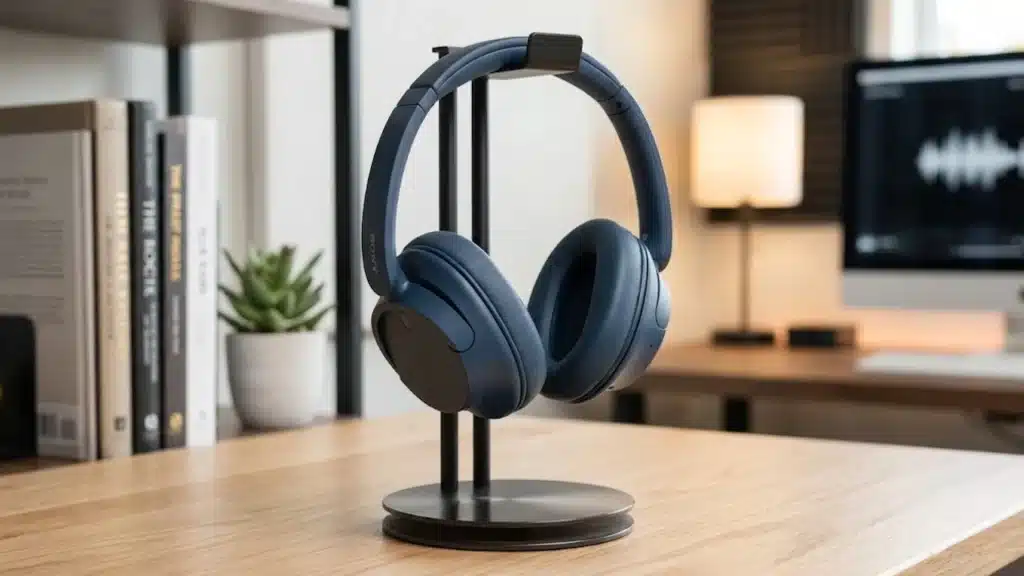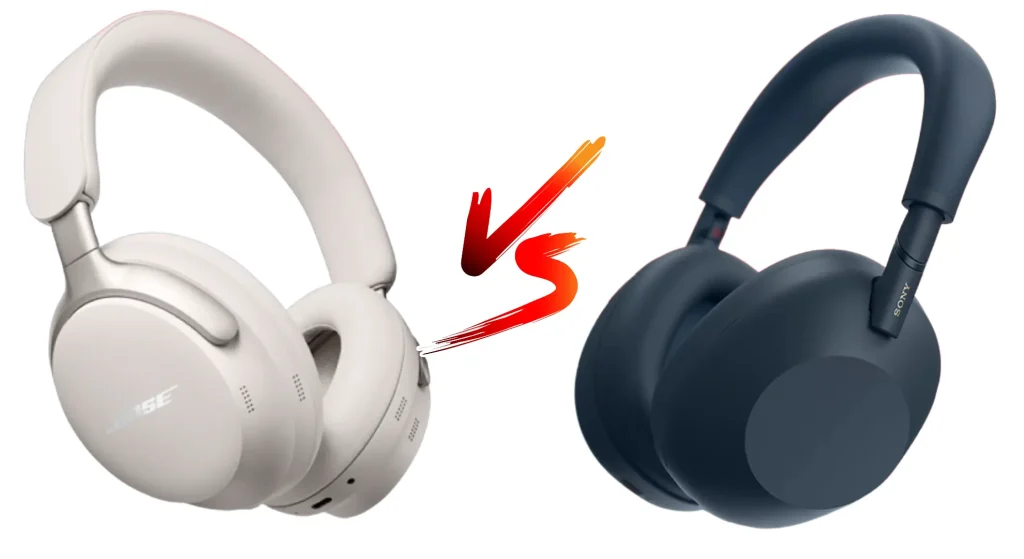
Picking the right pair of premium headphones can be confusing when two popular models offer impressive features. The question behind Bose vs. Sony headphones is not only about brand names but about finding the features that fit your routine.
You may be comparing comfort, sound quality, battery life, and noise cancellation before making a purchase.
I have noticed that small differences between Bose QuietComfort Ultra and Sony WH-1000XM5 can change the overall listening experience.
They are widely used for travel, work, calls, and everyday music. It helps you focus on the features that matter most and choose headphones that suit your listening habits.
Bose vs Sony Headphones: Quick Comparison
Before diving into the details, here’s the short version. This table lays out how Bose and Sony stack up across the categories that matter most, so you can spot your priorities at a glance before reading the full breakdown below.
| Feature | Bose | Sony |
|---|---|---|
| Sound | Neutral, studio-accurate | Warmer, bass and treble forward |
| Noise cancellation | Stronger passive seal | Slightly better active reduction |
| Comfort | Softer, more padded | Improved, still a bit thinner |
| Battery | About 24 hours with ANC on | About 30 hours with ANC on |
| Calls | Solid, bone-conduction sensing | Stronger mic array |
| EQ | Basic 3-band | Detailed 10-band |
| Codecs | aptX Adaptive and aptX Lossless | LDAC |
| Price (flagship) | Around $429 | Around $449 |
A spec sheet only tells part of the story. It can’t show you how a headphone feels after five hours on a flight, or how it holds up during noise cancellation for travel days packed with layovers and time zone changes. Here’s how each one holds up in daily use.
Bose vs. Sony Headphones: Performance Breakdown
This is where the real differences between Bose and Sony show up. How a pair of headphones actually sounds, feels, and holds up through a long day is what determines whether you’ll love them or regret the purchase.
1. Sound Quality
Bose and Sony take different approaches to sound. Bose focuses on a balanced, natural output that keeps music closer to the original recording with a studio-like feel.
Sony offers a warmer profile with stronger bass and treble for a more energetic listening experience.
Its 10-band EQ provides more customization than Bose’s 3-band setup. Sony suits bass-heavy genres like hip-hop and electronic, while Bose fits acoustic and classical tracks better.
Sony also supports LDAC on Android, whereas Bose’s aptX Lossless requires compatible Snapdragon-powered devices.
2. Comfort and Design
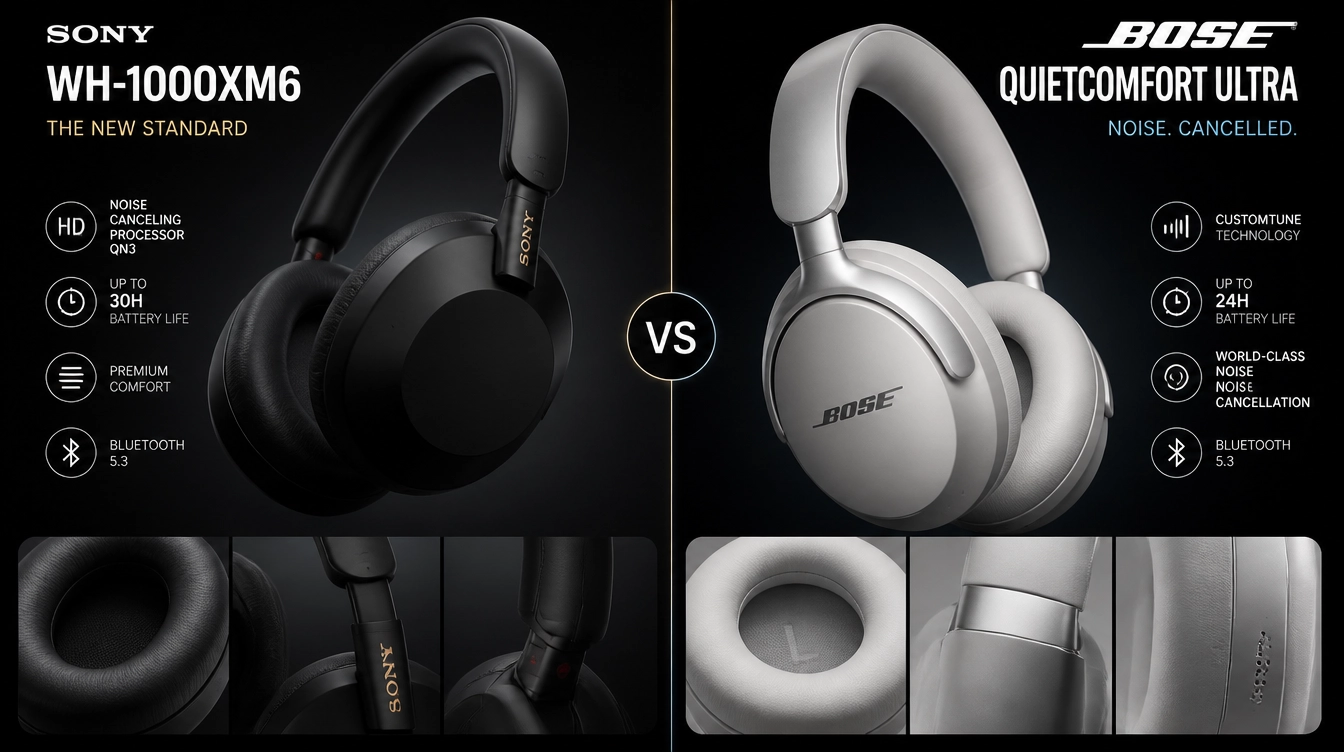
Bose continues to lead on comfort, a strength that traces back to its original QuietComfort headphones. Thicker padding and a lighter clamping force make it a headphone you can wear for hours without thinking about it, which is part of why it holds up so well on long flights and full workdays.
While Sony has improved with better cushioning and foldable designs, its slightly shallower earcups may feel less comfortable for larger ears over time.
For long work sessions, travel, or all-day listening, Bose remains the more comfortable choice overall.
3. Battery Life and Charging
Sony has the clear edge here, running about 30 hours with ANC enabled compared to roughly 24 hours for Bose. Some Bose models also don’t let you fully disable ANC, which limits how much extra runtime you can squeeze out when the battery is tight.
Sony’s quick-charge feature adds convenience for anyone who travels often or tends to forget to charge overnight. Since both models run on lithium-ion batteries
It’s worth following FAA carry-on battery guidance and packing them in your carry-on rather than checked luggage. If fewer charging interruptions matter to you, Sony is the better fit.
4. Call Quality and Microphones
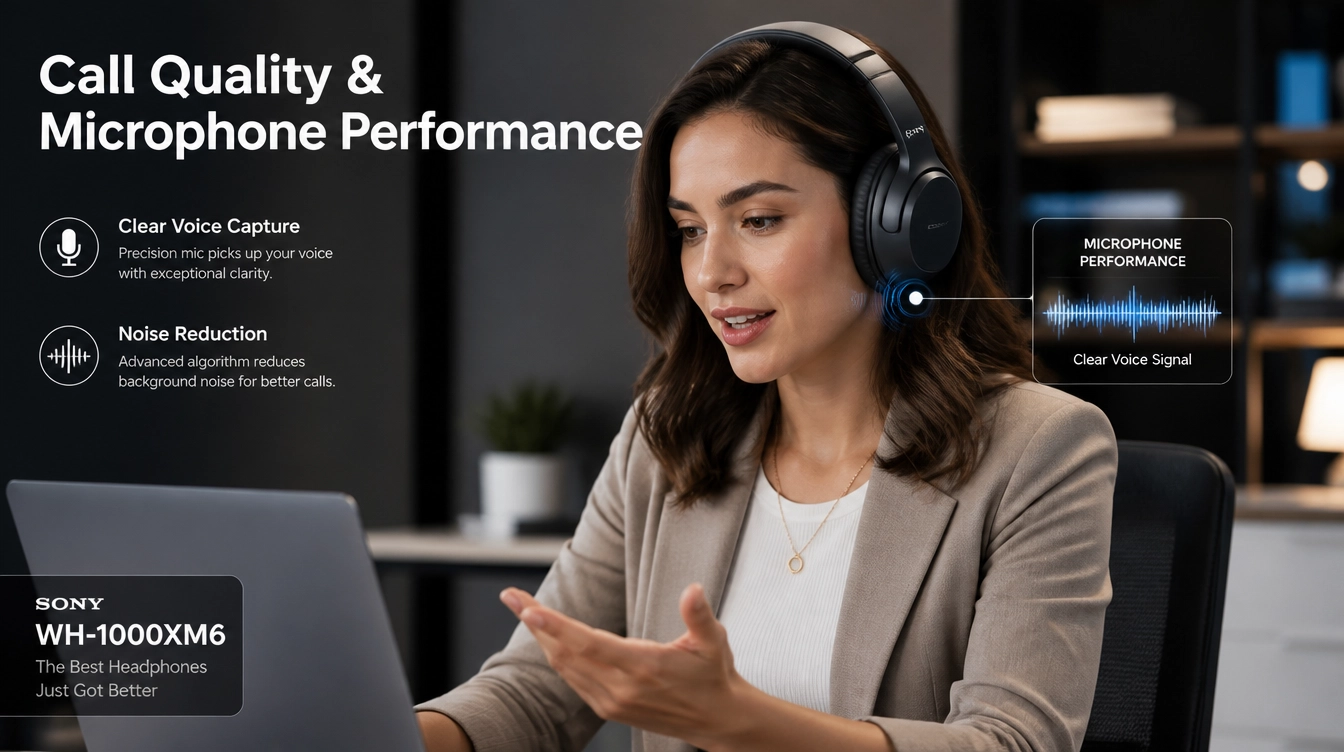
Sony’s larger microphone array and beamforming technology give it an advantage on calls, especially in noisy environments where it can separate your voice from background sound more effectively.
Environments loud enough to challenge a microphone often sit at levels linked to hearing loss over time, which is one more reason strong noise isolation matters beyond call clarity.
Bose uses bone-conduction sensing, which performs well in quiet spaces but can struggle with wind and surrounding sounds. For home office calls, both options work well. However, Sony is the better choice for frequent outdoor calls or conversations in noisy public places.
5. Features and Apps
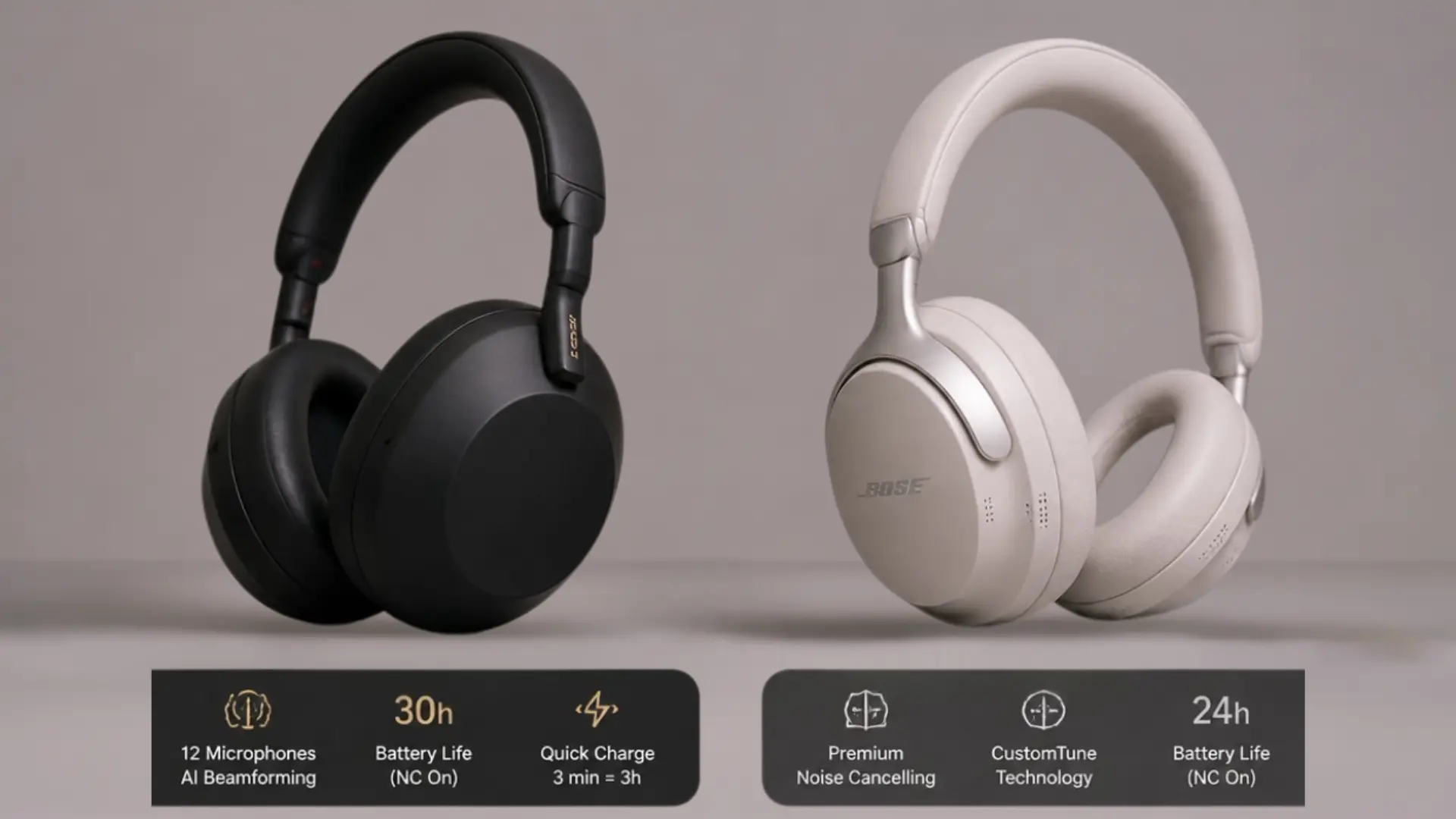
Sony’s Sound Connect app offers a deeper experience with a 10-band EQ, detailed ANC controls, and location-based profile switching, giving users more control over sound and noise cancellation settings.
Bose takes a simpler approach with the Bose Music app, offering fewer adjustment options, which some users may prefer for a cleaner and easier setup experience.
Both apps support features such as multipoint Bluetooth and spatial audio on compatible flagship models.
Bose also has an advantage with Snapdragon Sound and aptX Lossless support on compatible Android devices, although availability depends on the smartphone’s chipset and manufacturer support.
Bose vs Sony Headphones: Pros and Cons
Both Bose and Sony offer premium headphones with strong noise cancellation, impressive audio quality, and useful features. However, their strengths differ, making each model better suited to different types of listeners.
Bose Headphones:
| Pros | Cons |
|---|---|
| Excellent comfort for long listening sessions | Fewer EQ controls compared with Sony |
| Strong noise isolation from the earcup design | Shorter battery life on some models |
| Balanced and natural sound profile | ANC options can be limited on certain models |
| Often available at lower prices during sales | Fewer extra features than similarly priced Sony |
Sony Headphones:
| Pros | Cons |
|---|---|
| Longer battery life for extended use | Ear cushions may feel less comfortable for some users |
| Detailed EQ controls through the companion app | Fit may vary for users wearing glasses |
| Strong microphone performance for calls | Touch controls may take time to adjust to |
| LDAC support for higher-quality Bluetooth audio | Sound tuning may need adjustments for some listeners |
Sony headphones are better suited for users who want more control over sound, advanced features, and longer battery performance.
The companion app provides more customization options for different listening preferences. For anyone who prefers an in-ear fit over a full headphone, Bose’s true wireless earbuds are worth a look too.
Real User Discussions About Bose vs Sony Headphones
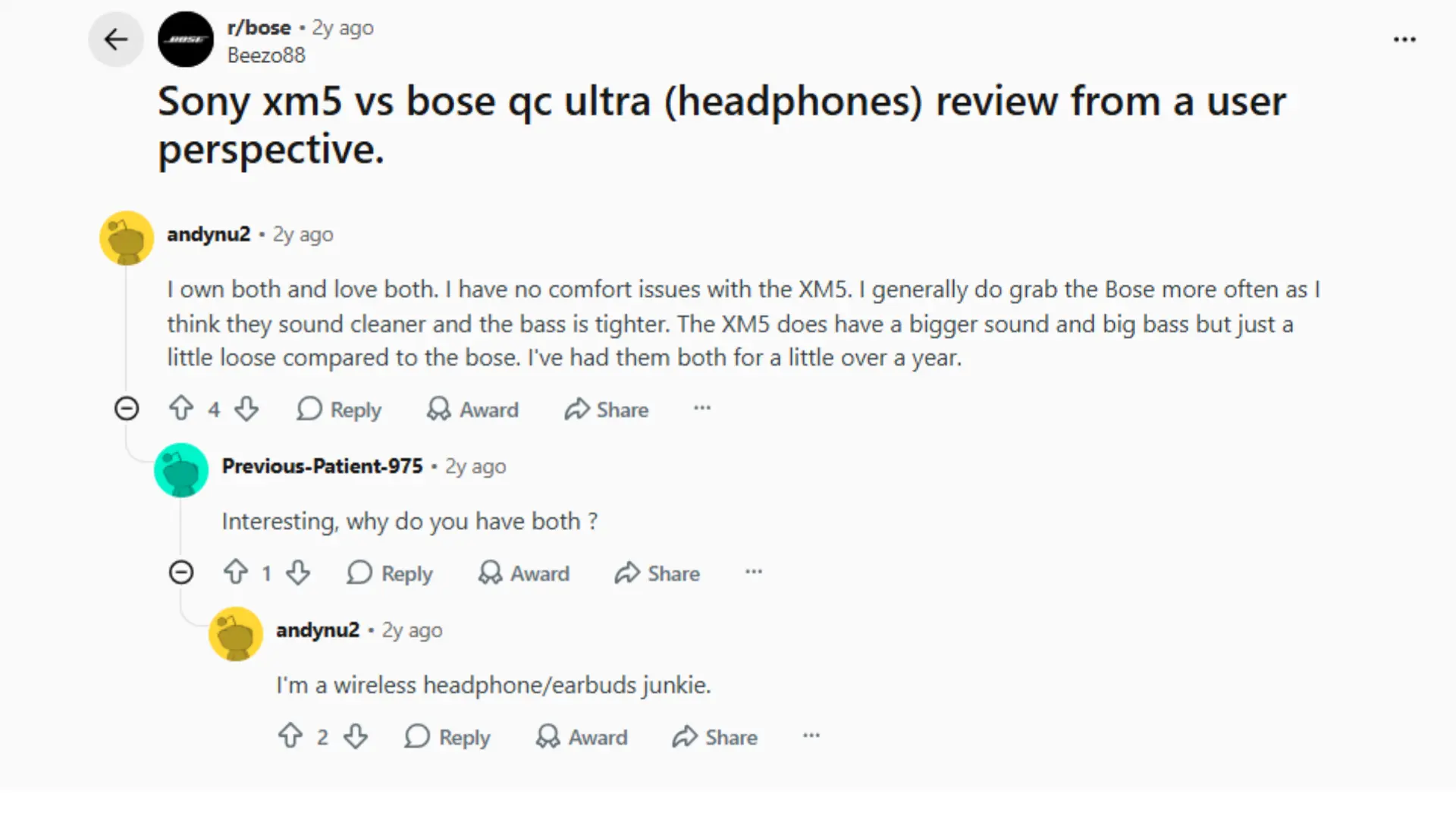
Reddit discussions show that the choice between Bose and Sony often depends on personal preferences and daily use. Some users prefer Sony for sound customization and features, while others choose Bose for comfort, fit, and noise cancellation performance.
One Reddit user who compared the Bose QuietComfort Ultra and Sony WH-1000XM5 shared that Bose had the advantage in comfort, mentioning that the ear pads felt softer and better suited for long listening sessions.
The same user preferred Sony’s sound after adjusting the EQ settings and liked its customization options. Another user comparing both models said Bose stood out for comfort and noise cancellation, while Sony offered strong sound quality and features.
They eventually kept the Bose because comfort was the most important factor for their daily use.
Are Bose or Sony Headphones Better for Most Buyers?
There is no single winner because Bose and Sony focus on different strengths. Bose QuietComfort Ultra prioritizes comfort and noise cancellation, while Sony WH-1000XM5 offers more customization, battery life, and smart features.
Choose Bose QuietComfort Ultra If:
- Frequent travel matters because of strong ANC and comfort.
- Noise cancellation is the main priority for blocking background sounds.
- Long listening sessions require a lightweight and comfortable fit.
- Simple controls and fewer settings are preferred.
Choose Sony WH-1000XM5 If:
- Sound customization matters with detailed EQ controls.
- Longer battery life is needed for extended use.
- Audio settings are adjusted for different music styles.
- Smart features like Speak-to-Chat and Adaptive Sound Control are useful.
Bose is the better choice for comfort and noise cancellation, while Sony is stronger for customization and features. The right option depends on personal listening habits and daily use.
Final Verdict
Choosing between Bose and Sony comes down to the features that matter most in your daily routine. I found that Bose QuietComfort Ultra stands out for comfort and noise cancellation, while Sony WH-1000XM5 offers more control, longer battery life, and smart features.
The Bose vs Sony headphones comparison shows that the right choice depends on how you listen, travel, and work. You can make a better buying decision by matching each headphone’s strengths with your needs instead of focusing only on specifications.
I hope this comparison helps you pick a model with confidence. Share your experience or your favorite headphones in the comments, and check out our other audio guides.
Frequently Asked Questions
Which Blocks More Noise?
Sony tests slightly ahead on active noise reduction, but Bose’s passive seal closes much of that gap in real-world use, especially for glasses wearers.
Are these Headphones Good For Gaming?
Both can work for casual gaming through Bluetooth or wired connections, but neither is designed as a dedicated gaming headset due to limited gaming-focused features.
Do Sony and Bose Headphones Have Water Resistance?
Neither headphone is designed for heavy water exposure or workouts. They do not have an official water resistance rating, so they should be protected from rain, sweat, and moisture.
Do Both Headphones Support Wired Listening?
Yes, both models include a 3.5mm audio connection for wired listening. This can be useful when traveling, saving battery, or connecting to devices without Bluetooth support.