Choosing the wrong printing method for event badges or labels is a quiet problem until it isn’t.
A badge that fades under venue lighting, a barcode that won’t scan at peak check-in, a wristband that smudges in outdoor heat: these are not equipment failures. They are specification failures made weeks earlier.
After coordinating print setups across dozens of events, the pattern I keep seeing is the same: the right printer was available, but the wrong media or method was chosen at the planning stage.
This guide compares direct thermal vs thermal transfer printing by examining how each method works, where each performs well, and where it falls short.
The goal is a clear, practical answer for event planners deciding on print technology for badges, wristbands, labels, and barcodes.
What is Direct Thermal Printing and How Does It Work?
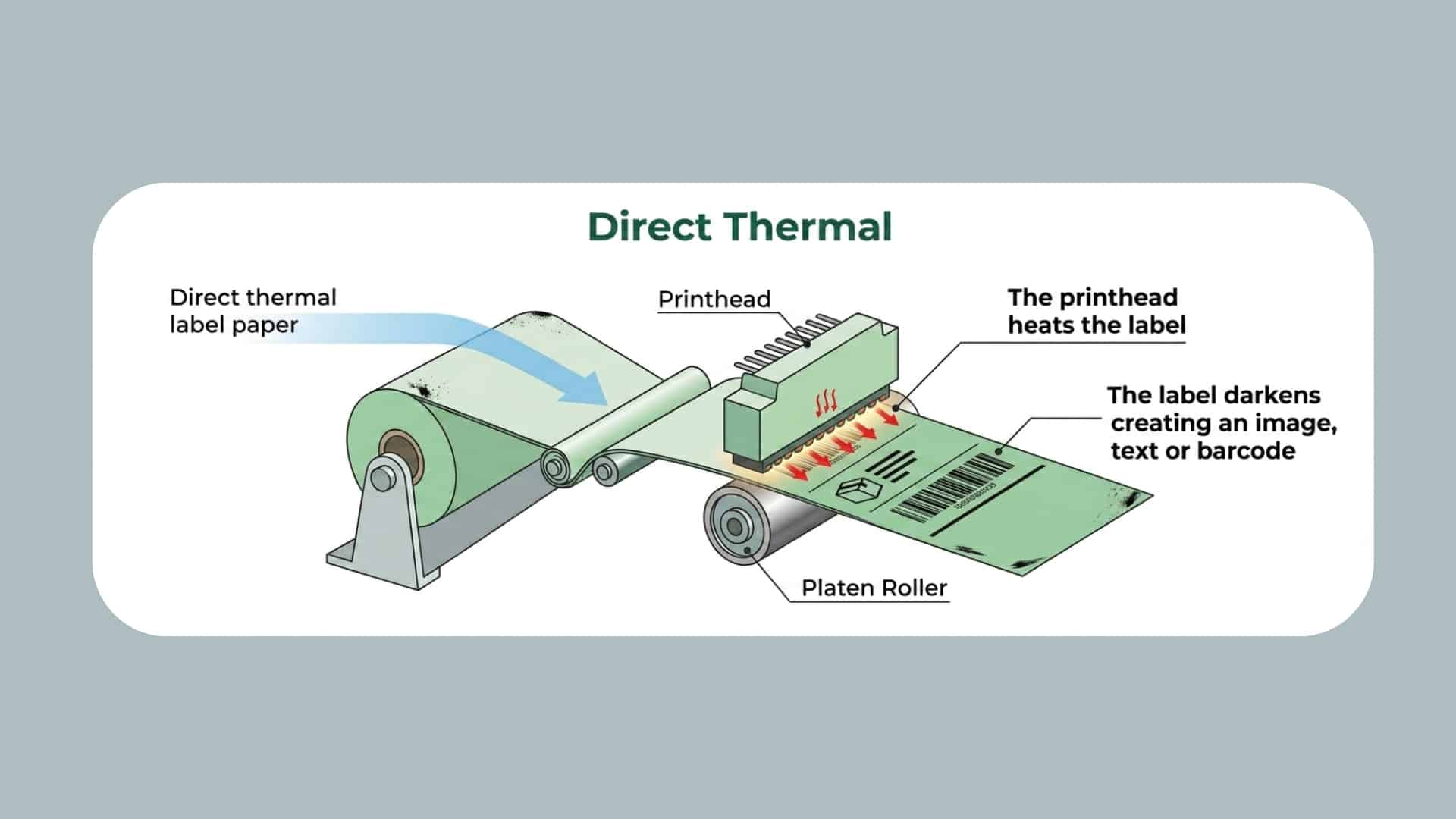
Direct thermal printing is a label printing method that produces images on heat-sensitive media without ink, toner, or ribbon.
A thermal printhead moves across the coated label surface and applies heat to selected areas. Where heat is applied, the coating reacts and darkens, forming text, barcodes, images, or badge details.
Setup is fast. You load the label roll and print. There are no ribbons to thread and no consumables beyond the label stock itself.
Direct thermal works well for shipping labels, receipts, visitor badges, food labels, and temporary barcodes.
The trade-off is durability. Because the label surface stays chemically reactive after printing, it remains sensitive to heat, light, moisture, friction, and certain chemicals.
Print can fade or darken over time, which becomes a real issue for barcodes that need to be scanned weeks or months after printing.
Understanding your event registration workflow before selecting a printer type can prevent mismatches between label durability and how long your credentials actually need to hold up.
What is Thermal Transfer Printing and How Does It Work?
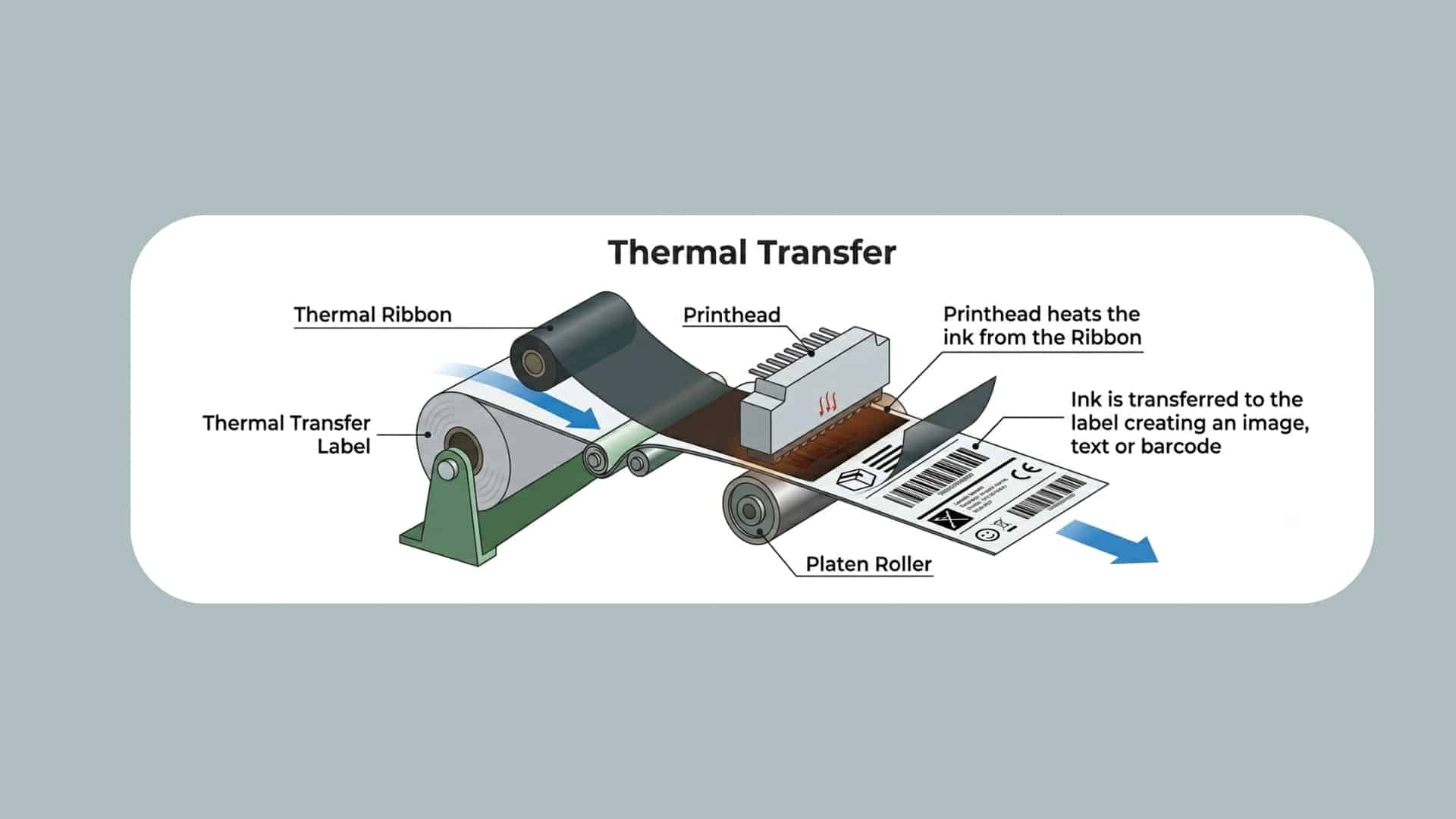
Thermal transfer printing is a label printing method that uses three components: a thermal printhead, a ribbon, and label material.
Because the image comes from bonded ribbon ink rather than a chemically reactive coating, thermal transfer labels hold up significantly better under real-world conditions.
The durability of the final label depends on which ribbon type you use and what label stock you pair with it.
- Wax ribbons work well for standard paper labels in indoor, controlled environments. They are the lowest-cost ribbon option.
- Wax-resin ribbons offer better scratch and smudge resistance for labels that face moderate handling or moisture.
- Resin ribbons are used with synthetic label stock for maximum durability in outdoor use, chemical exposure, or extreme temperature environments.
Thermal transfer works well for product labels, asset tags, warehouse labels, outdoor labels, and long-term barcodes. It costs more because ribbons must be replaced, but the trade-off is print that lasts.
If you’re comparing print technology more broadly, a laser vs inkjet printing comparison covers how heat-based methods like these differ from ink-based alternatives for general office use.
Direct Thermal vs Thermal Transfer: Main Differences
Direct thermal and thermal transfer printing both use heat, but they do not create labels in the same way. The main differences are printing method, ribbon use, label lifespan, and durability in different conditions.
1. Printing Method
Direct thermal printing creates the image directly on heat-sensitive label material.
The printer’s thermal printhead heats selected areas of the label, and the coated surface reacts by turning dark. This forms the text, image, barcode, or badge details without ink, toner, or ribbon.
Thermal transfer printing uses heat differently. A ribbon sits between the printhead and the label. When the printhead heats the ribbon, the ink melts onto the label surface.
2. Ribbon Requirement
Direct thermal printing does not require a ribbon. The only main consumable is the direct thermal label roll, badge roll, or receipt paper.
This makes setup faster and reduces supply management. Thermal transfer printing requires a ribbon. The ribbon must match the label material and the intended use.
Wax ribbons are often used for basic paper labels; wax resin ribbons offer better durability, and resin ribbons are used for stronger synthetic labels.
3. Print Durability
Direct thermal labels remain chemically reactive after printing.
Exposure to sunlight, heat above roughly 150 degrees Fahrenheit, moisture, and certain cleaning chemicals can cause the print to fade or darken prematurely.
Abrasion from handling is another weak point: the surface stays reactive and can smudge or degrade under friction, which affects barcode readability.
Thermal transfer print is usually more durable because the ribbon ink bonds to the label surface.
With the right ribbon and label material, it can resist smudging, fading, abrasion, moisture, and chemical exposure better than direct thermal printing.
This makes it a better option when labels must remain clear in tougher conditions.
4. Label Lifespan
Direct thermal is best for short-term labels that only need to last through shipping, check-in, food service, ticketing, or temporary tracking.
Thermal transfer is better when labels must stay readable for months or years.
This matters for asset tags, product labels, warehouse labels, medical device identification, compliance labels, outdoor labels, and long-term barcodes.
The final lifespan depends on ribbon type, label stock, storage, and exposure.
5. Material Options
Direct thermal printing needs media with a heat-sensitive coating. Most direct thermal labels are paper-based, though some coated synthetic direct thermal materials are available.
Still, the material choices are more limited than thermal transfer.
Thermal transfer printing works with a wider range of label materials, including paper, polyester, polypropylene, vinyl, and other synthetic stocks.
This gives more flexibility for labels that need stronger adhesive, greater tear and moisture resistance, outdoor durability, or a more polished label finish.
6. Cost and Supplies
Direct thermal usually has lower supply costs because it does not need ribbon. It also reduces storage needs, roll changes, and setup mistakes during busy events or warehouse operations.
Thermal transfer requires both labels and ribbons, so supply costs are higher.
However, it can offer better value when durable labels reduce reprints, unreadable barcodes, or failed identification later. For sustainability claims related to waste and disposal, follow the FTC Green Guides.
7. Maintenance and Printhead Wear
In direct thermal printing, the label material comes into direct contact with the printhead on every print. Dust, adhesive residue, and friction from the label surface accelerate printhead wear if cleaning is skipped.
According to SATO’s technical guidance, thermal ribbons in thermal transfer printing act as a buffer between the printhead and the label.
This can extend printhead life when combined with ribbons that include a back-coating to reduce static and friction. Thermal transfer printers require correct ribbon loading and ribbon-to-media matching.
The setup takes more attention, but the ribbon buffer provides real protection for the printhead over high-volume runs.
8. Print Color and Branding
Direct thermal printing usually produces black print on white or pre colored label stock.
If an event badge or product label needs color branding, the color design usually has to be pre-printed on the label before variable details are added.
Thermal transfer printing is also commonly used for black printing, but colored ribbons are available for some applications.
It gives more flexibility for durable branding, product labels, warning labels, and specialty label designs, depending on the printer, ribbon, and material used.
Direct Thermal vs Thermal Transfer: Comparison at a Glance
This table gives a quick side-by-side look at how direct thermal and thermal transfer printing differ. It can help you compare cost, durability, material options, and best use cases before choosing the right method.
| Feature | Direct Thermal Printing | Thermal Transfer Printing |
|---|---|---|
| Printing method | Uses heat on a specially coated label material | Uses heat to transfer ink from a ribbon onto the label |
| Ribbon required | No | Yes |
| Best for | Shipping labels, receipts, visitor badges, temporary barcodes | Product labels, asset tags, warehouse labels, outdoor labels |
| Print durability | Lower durability | Higher durability |
| Print lifespan | Better for short-term use | Better for long-term use |
| Material options | Mostly heat-sensitive paper or label stock | Paper, polyester, polypropylene, vinyl, and other synthetic materials |
| Supply cost | Lower because no ribbon is needed | Higher because the ribbon must be replaced |
| Best choice when | Labels only need to last a short time | Labels need to stay readable for months or years |
For a broader look at where thermal printing fits within the wider landscape of event tools, the current event technology trends guide covers how printing hardware choices connect to check-in software and attendee tracking.
Direct Thermal vs Thermal Transfer Pricing: What Costs More?
When comparing direct thermal vs thermal transfer, direct thermal usually has the lower ongoing cost for short-term printing.
As of now, standard 4” x 6” direct-thermal shipping labels typically cost $0.01 to $0.04 per label, depending on volume and material quality.
This makes direct thermal a cost-friendly option for shipping labels, receipts, visitor badges, and other labels that do not need to last long.
Standard thermal transfer labels often cost $0.02 to $0.06 per label, while ribbon costs can add approximately $0.005 to $0.02 per label, depending on ribbon type, print coverage, and label size.
The setup may also require more attention, as the ribbon must match the label material.
For short-term use, direct thermal is usually cheaper, with total consumable costs often ranging from $10 to $40 per 1,000 labels.
Thermal transfer printing may range from $25 to $80 or more per 1,000 labels, depending on the label stock and ribbon selected.
Note: Label and ribbon prices vary by supplier, order volume, label size, material, and market conditions.
Direct Thermal Printing: Pros and Cons
Direct thermal printing is fast and cost-effective for shipping labels, receipts, badges, and name tags. It is best for short-term use because the print is less durable.
| Pros | Cons |
|---|---|
| No ribbon required; supply costs are lower | Print can fade or darken from heat, sunlight, or moisture |
| Fast setup with only the label roll to load | Best for short-term use only |
| Fewer supplies make on-site printing easier to manage | Label surface remains reactive, susceptible to abrasion and friction |
| Compact printers suit mobile event setups | Usually limited to black print on pre-colored stock |
| No ribbon waste after printing | Requires heat-sensitive label material |
| The printhead is simple to clean and maintain | Direct label-to-printhead contact increases wear if cleaning is irregular |
Thermal Transfer Printing: Pros and Cons
Thermal transfer printing is better for labels, badges, and barcodes that require greater durability and longer-lasting readability.
It is commonly used for product labels, asset tags, warehouse labels, outdoor labels, staff credentials, and long-term barcode labels.
Pros:
- Print lasts longer because ribbon ink bonds to the label surface.
- Labels can better resist smudging, fading, moisture, abrasion, and sunlight when the right ribbon and material are used.
- It supports a wider range of label materials, including paper, polyester, polypropylene, vinyl, and other synthetic stocks.
- It is better for outdoor use, multi-day events, asset tracking, and long-term identification.
- The ribbon can help reduce direct friction between the label and printhead.
Cons:
- Ribbon adds an extra supply cost.
- Setup takes more time because the ribbon must be loaded correctly.
- The ribbon must match the label material, or print quality can suffer.
- Used ribbons create extra waste after printing.
- The printer setup can be slightly more complex for teams that need fast onsite badge printing.
What Does This Mean for Event Badge and Wristband Printing?

Most single-day indoor events are better served by direct thermal printing. It is quick, compact, cheaper to run, and easier for registration staff to manage during a rush.
Thermal transfer makes more sense when badges or wristbands need to last longer, face sunlight, moisture, heat, or heavy handling.
It is also the safer choice for multi-day events, outdoor festivals, RFID credentials, staff passes, and VIP badges that must stay sharp and scannable.
The simple rule is this: use direct thermal when the badge only needs to last one day in a controlled space.
Use thermal transfer when the print needs to stay readable beyond 24 to 48 hours or survive tougher event conditions.
Direct Thermal vs Thermal Transfer: Which One Should You Choose?
The right choice between direct thermal vs thermal transfer comes down to three things: how long the label needs to last, where it will be used, and how much wear it may face.
Choose direct thermal for shipping labels, receipts, visitor badges, food labels, and temporary barcodes. It sets up faster, costs less, and needs no ribbon.
Choose thermal transfer for product labels, warehouse labels, asset tags, outdoor labels, healthcare labels, and chemical labels.
It is the stronger choice when labels are exposed to sunlight, moisture, heat, friction, or prolonged storage.
For events running RFID badge and wristband tracking, the substrate durability that thermal transfer provides is worth factoring into your printer selection early in the planning process.
In simple terms, direct thermal printing is better for quick, low-cost printing. Thermal transfer is better when label life, print strength, and material choice matter more.
Conclusion
Choosing between direct thermal vs thermal transfer printing is not about which technology is better overall. It is about matching the method to the event.
For single-day indoor events where speed, simplicity, and cost efficiency are priorities, direct thermal delivers.
For multi-day events, outdoor applications, or credentials that need to stay readable long after the last session ends, thermal transfer is the right tool.
Most event teams benefit from understanding both, even if they primarily use one.
Knowing when to switch, or when to run both in parallel at a complex event, separates planners who handle printing smoothly from those who are troubleshooting at peak check-in.
Have a question about which setup fits your event? Drop it in the comments below.
Frequently Asked Questions
Can the Same Printer Handle Both Direct Thermal and Thermal Transfer?
Yes, but only if the printer supports both modes. Many thermal transfer printers can also print in direct thermal mode without a ribbon. Before buying or renting, check the printer specifications.
Do Thermal Transfer Labels Require Special Storage Conditions?
Thermal transfer labels do not need strict storage conditions, but they should be stored properly.
Keep them away from extreme heat, direct sunlight, moisture, and humidity. Unlike direct thermal labels, thermal transfer labels are not heat reactive in the same way.
Is Direct Thermal Printing Suitable for QR Codes and Barcodes Used for Session Scanning?
Yes, direct thermal printing produces accurate barcodes and QR codes at standard event resolutions (203-300 dpi), and both 1D and 2D symbologies scan reliably when the badge is fresh.