Stage left vs stage right sounds simple until someone walks confidently in the wrong direction during a live event.
I have seen speakers miss their marks, camera operators scramble to adjust angles, and stage crews pause mid-show because one instruction meant two different things to different people.
Together with center stage, these directions create the positioning system used by actors, directors, lighting crews, and event teams during rehearsals and live performances.
Even small mistakes can disrupt timing, movement, and audience focus in ways most people never notice from their seats.
Movements become easier to follow, scripts stop looking intimidating, and performances suddenly feel more connected once these theatre terms begin to make sense.
Theatre is not only about acting or memorizing lines, because understanding stage direction is what helps bring scenes to life.
What are Stage Directions in Theatre?
Stage directions are the standardized terms used in theatre to describe where performers should stand, move, enter, or exit during a production.
They give everyone involved a common language, be it actors, directors, stage managers, lighting designers, or backstage crews.
Without that shared vocabulary, productions would rely on vague gestures and repeated verbal clarifications. Direction would slow down, rehearsals would drag.
And on show day, even a small miscommunication about position can ripple into missed cues, wrong lighting angles, or a performer standing in the wrong pool of light at the worst possible moment.
Stage directions are important because they:
- Help actors memorize their positions and timing during rehearsals
- Guide directors in planning scene compositions and sight lines
- Inform lighting, sound, and set-change cues that depend on actor positioning
- Provide a consistent written record in scripts and stage diagrams, so performances stay repeatable from the first rehearsal to closing night
The most important stage directions are stage left, stage right, upstage, and downstage. Everything else in the positioning system builds on those four terms.
What Does Stage Left vs Stage Right Mean?
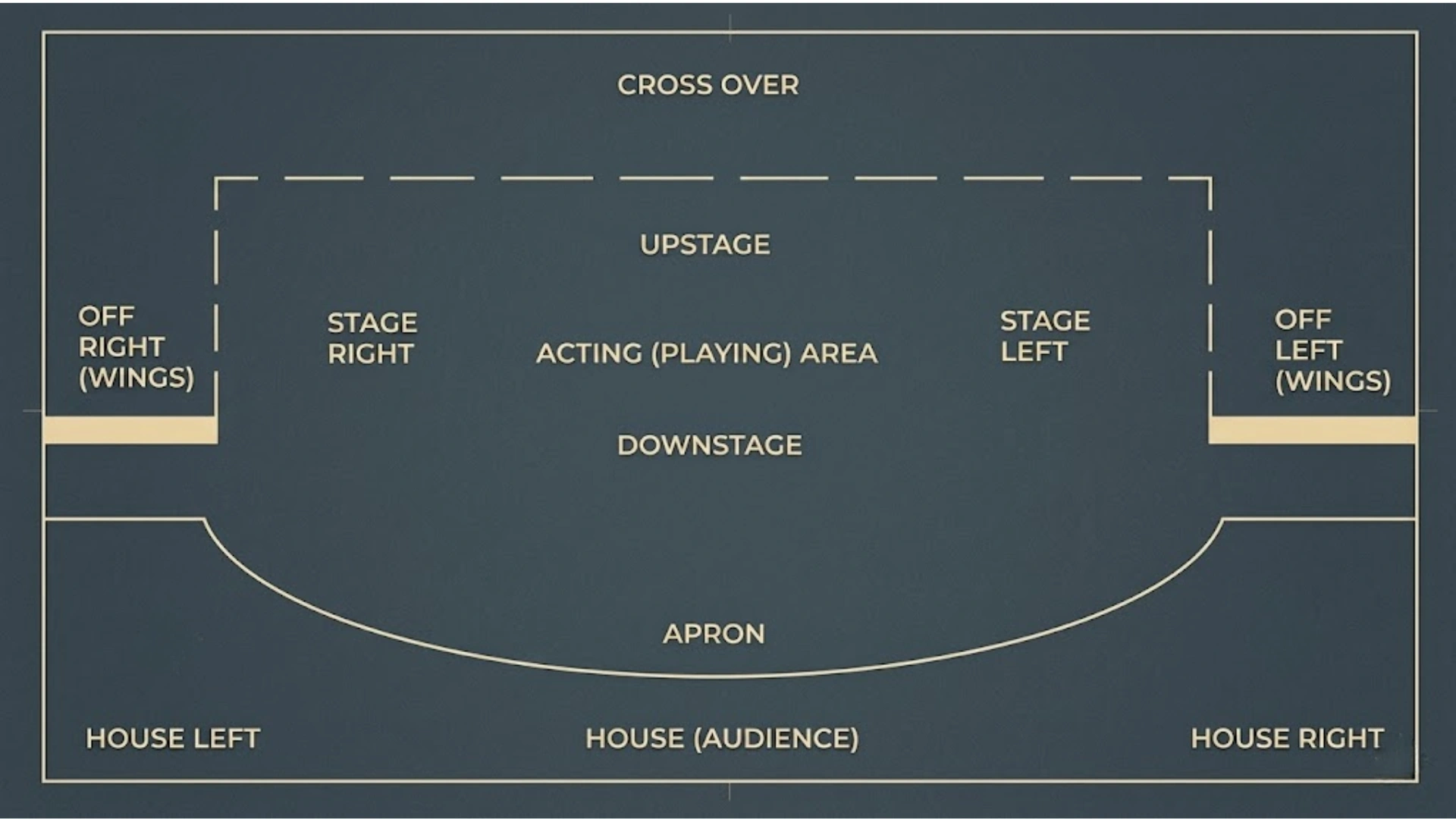
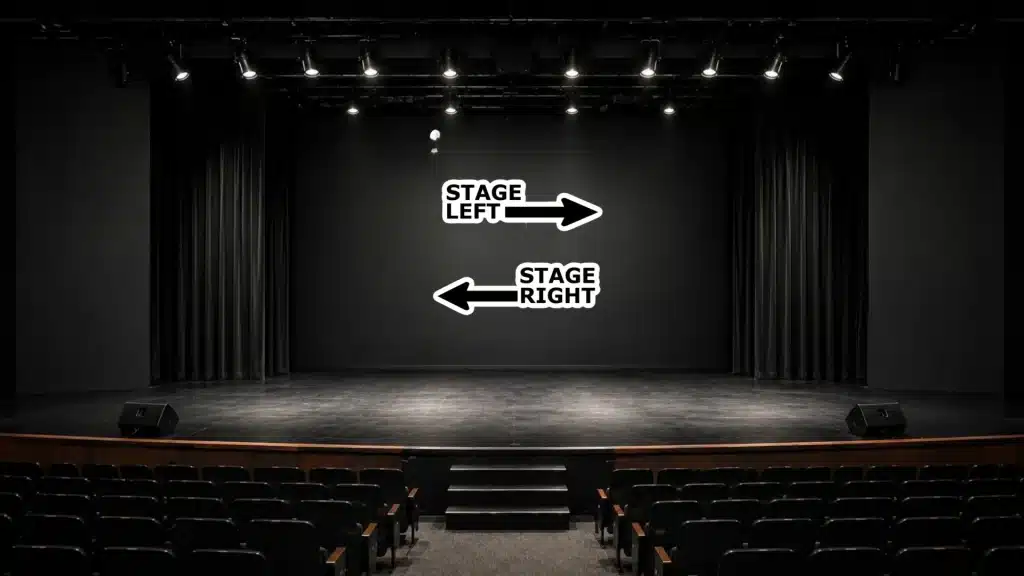
Stage left is the area to the performer’s left when standing on stage and facing the audience. Stage right is to the performer’s right.
This is the standard convention in theater and applies across venues, productions, and event types.
Most confusion happens because stage left sits on the audience’s right, and stage right sits on the audience’s left.
The two perspectives are mirror images. Productions use the performer’s viewpoint as the reference frame because actors execute the blocking.
Directors, stage managers, and AV crews all work from the same orientation, which keeps communication clean during rehearsals and load-in.
A quick memory trick: if you’re standing on stage facing the audience, the hand holding your script points toward stage left.
Upstage vs Downstage: Meaning, History, and Theatre Use
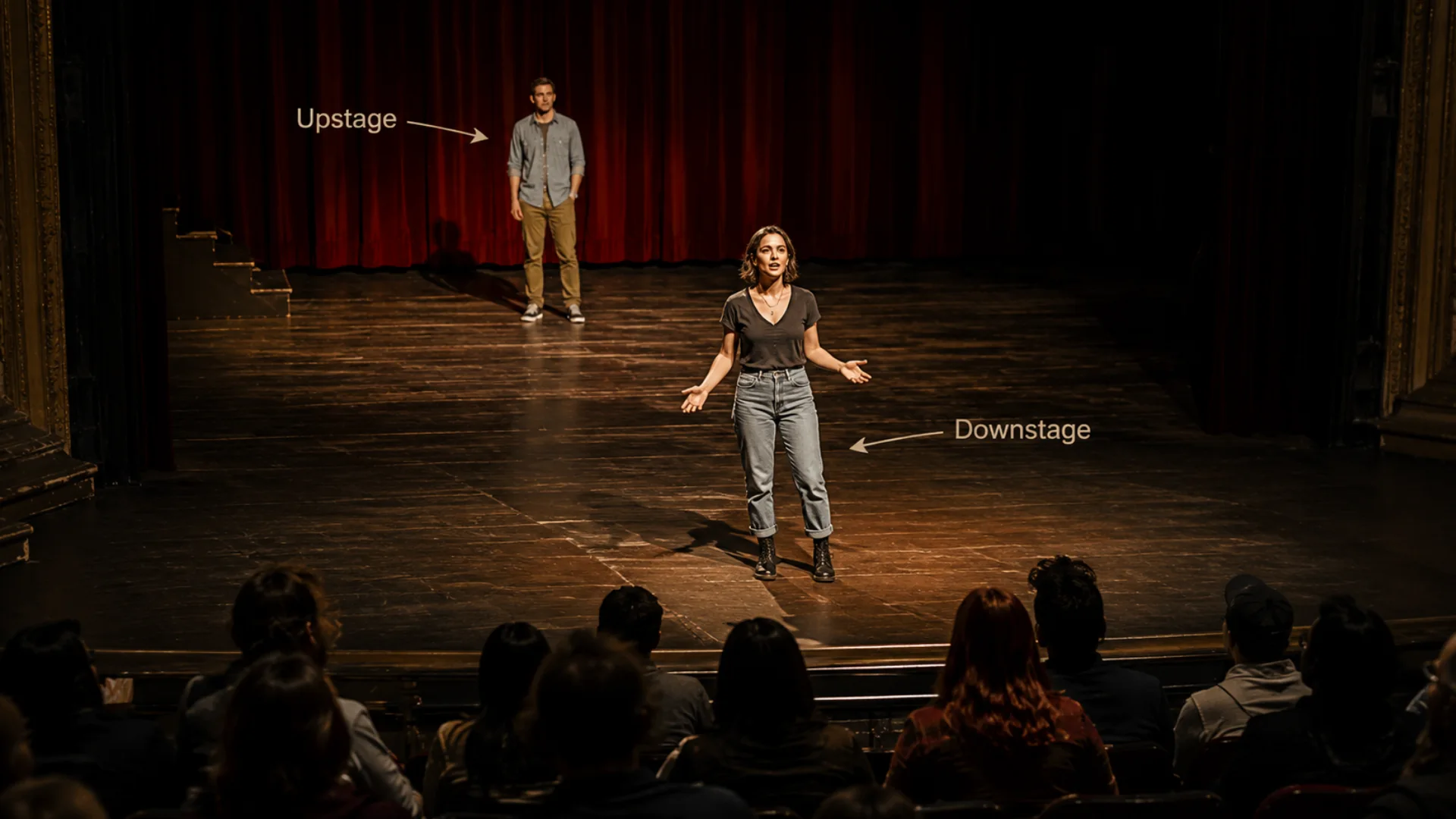
Upstage is the area farthest from the audience, toward the back wall or cyclorama. Downstage is closest to the audience, near the front edge of the stage.
When an actor moves upstage, they move farther away from the viewers, which can slightly reduce audience focus and visibility.
Moving downstage brings actors closer to the audience, making expressions, emotions, and important dialogue easier to notice.
Downstage positions are often used during dramatic or emotional moments because they naturally attract more attention.
The terms upstage and downstage come from the early days of theatre when stages were built on a slope called a raked stage.
The back part of the stage was physically higher, so actors had to walk upward to move away from the audience and downward to move closer.
This historical design is why the names are still used today. Directors also use these positions to control audience focus, emotional intensity, visibility, and character power during scenes.
The Nine-Stage Positions For Every Professional Event
Most stages can be divided into a 3×3 grid, three columns (left, center, right) crossed with three rows (downstage, center, upstage).
That produces nine positions, each with its own abbreviation used in blocking scripts, stage plots, and lighting plots.
| Position | Abbreviation | Location on stage |
|---|---|---|
| Downstage Left | DSL | Front of stage, actor’s left |
| Downstage Center | DSC | Front of stage, middle |
| Downstage Right | DSR | Front of stage, actor’s right |
| Center Left | CSL | Middle depth, actor’s left |
| Center Stage | CS | Middle of the stage |
| Center Right | CSR | Middle depth, actor’s right |
| Upstage Left | USL | Back of stage, actor’s left |
| Upstage Center | USC | Back of stage, middle |
| Upstage Right | USR | Back of stage, actor’s right |
For corporate event management teams, conferences, or award shows, this grid creates a shared language for placing podiums, screens, tables, and cameras.
A stage plot calling for “podium at DSC” or “award table at USR” stays clear and easy for every production team member to follow.
Some larger productions expand into a 15-square grid with added far-left and far-right positions, but the 9-position model works for most theater and live event productions.
How to Read Position Abbreviations in a Script?
In blocking notes and scripts, stage positions appear as two-letter or three-letter codes.
- The first part tells you the depth (DS for downstage, US for upstage, CS for center stage)
- The second part tells you the side (L for left, R for right, or C for center)
So DSR is downstage right, USL is upstage left, and CS is simply center stage.
When you see a direction like “cross to DSC,” it means the actor should move to the front-center area of the stage. “Enter USL” means entering from the back-left wing.
Once you internalize those two-part codes, reading a blocking chart or stage plot becomes quick work.
Why Blocking Matters in Stage Directions?
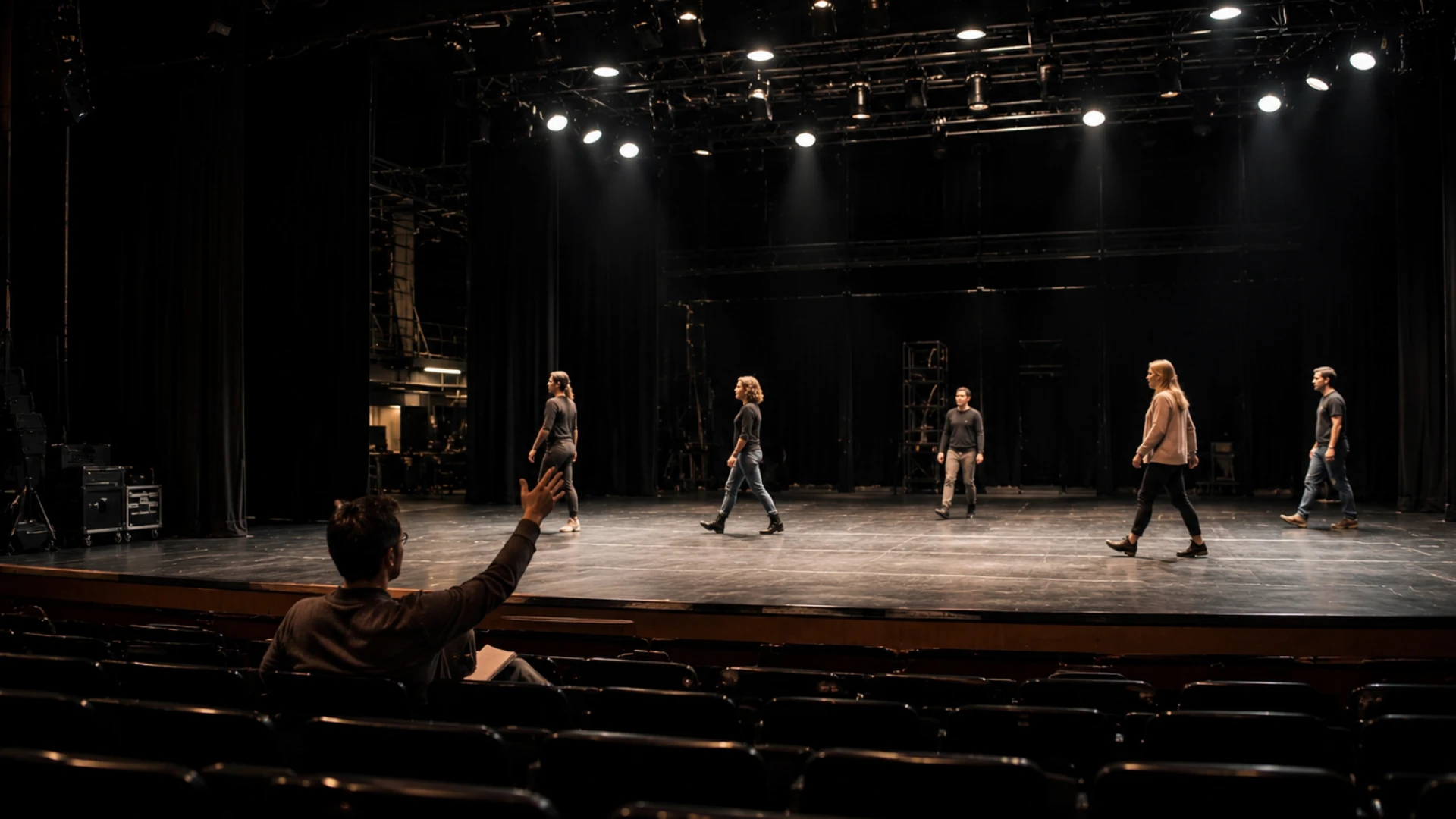
Blocking in theatre is the planned movement and positioning of actors during a scene.
Directors use blocking to decide where actors should stand, walk, sit, or interact on stage to support the story and keep scenes visually clear for the audience.
Stage directions help organize these movements by giving actors exact locations and paths to follow during rehearsals.
For example, a director may say, “Cross from upstage left to downstage center,” which tells the actor to move diagonally closer to the audience.
These instructions help create smooth scene transitions and improve timing between actors.
Blocking also affects emotion and audience focus throughout a performance.
The distance between characters can show tension, conflict, closeness, or intimacy, while stage positioning can suggest authority or weakness.
Actors placed downstage often receive more attention, while balanced movement across the stage helps maintain visual harmony and keeps the audience engaged during important moments.
Common Stage Direction Mistakes to Avoid
Adding stage direction clarity to your event planning checklist takes less than a line, and it saves real time on show day.
- Confusing stage left with house left: AV crews and venue staff often default to the audience perspective, which leads to misplaced monitors, cameras, and performer entrances.
- Giving blocking notes without context: Crew members may follow different directional systems if the performer’s perspective isn’t established before rehearsals or load-in.
- Mixing up upstage and downstage: Props, lecterns, and stage elements can end up in the wrong position when setup teams work from the audience side.
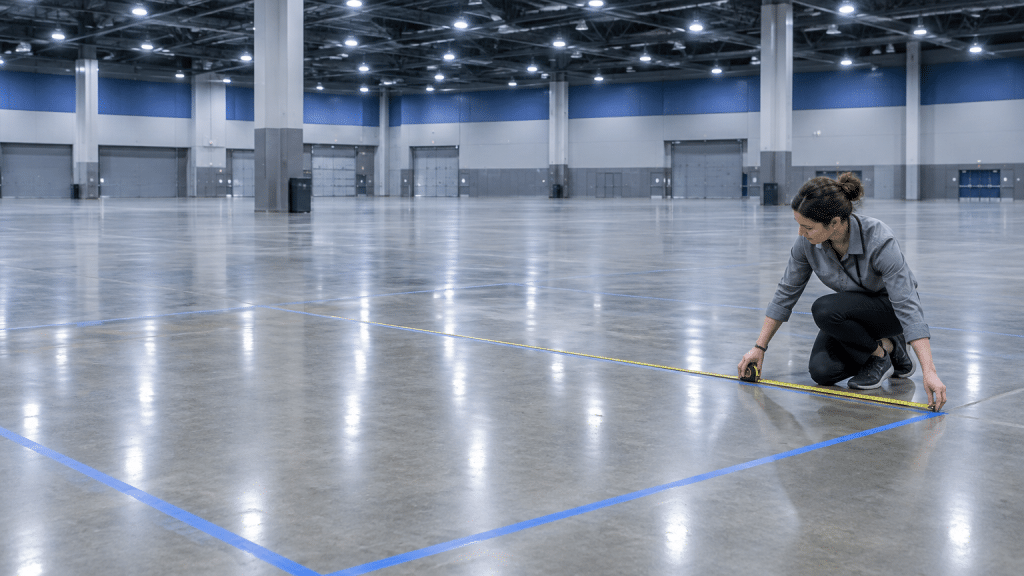
- Skipping floor markers: Tape labels such as “UPSTAGE” or “DOWNSTAGE EDGE” help temporary crew members avoid positioning mistakes during setup.
- Not briefing non-theater crew: Photographers, audio engineers, and broadcast teams may not use theater terminology regularly. A five-minute orientation at load-in prevents communication errors that would otherwise surface mid-show.
Stage Directions in Different Theatre Types
The nine-position grid works cleanly for a traditional proscenium stage, where the audience sits on one side, and the stage faces them directly. Other theatre configurations require some adaptation.
1. Proscenium Stage
A proscenium stage is the most common theatre layout, where the audience sits directly in front of the performance area and views the stage from one direction only.
In this setup, all nine stage positions are clearly defined and easy to follow.
Most students learn stage directions using this format because many school productions, theatres, and scripts are designed around the traditional proscenium stage structure.
2. Thrust Stage
A thrust stage extends out into the audience so that viewers sit on three sides.
Stage directions still apply, but productions typically designate a primary audience side first, then orient all positional terms from there.
The back wall of the stage (farthest from the primary audience) functions as upstage, and the thrust tip closest to the audience becomes downstage.
Left and right follow from that established orientation.
3. Arena or Theatre-in-the-Round
Arena staging places the audience on all four sides.
Terms like “downstage” and “upstage” become less meaningful because there is no single direction closer to or farther from the audience.
Productions in arena configurations often substitute clock positions like 12 o’clock, 3 o’clock, and so on, or use custom notation agreed upon before rehearsals begin.
Stage left and stage right may still apply as compass directions, but every production must establish its own convention explicitly.
4. Black Box Theatre
A black box is a flexible, reconfigurable space. The audience can be placed in almost any configuration relative to the performance area.
Before using standard stage direction terms in a black box production, the director and stage manager must establish a reference point and communicate it clearly to the entire company.
Assuming the nine-position grid applies without clarification is one of the most common sources of confusion in black box work.
How Stage Directions Apply to Live Event Production?
Theater students learn stage directions in rehearsals, but the same system runs across live corporate productions.
Event teams use stage positions to build stage plots, brief crews, and coordinate speakers, lighting rigs, and AV setups. Strong event coordination starts with a shared vocabulary.
Speaker blocking shapes the audience experience. A keynote too far upstage loses presence, while poor positioning affects camera angles, teleprompter sightlines, and how the room reads authority.
Getting blocking right during rehearsal prevents larger problems during the live show.
Lighting and AV crews rely on stage positions for cue sheets, spotlight tracking, LED placement, and load-in coordination.
The same position grid appears in stage plots, giving venue crews a shared reference for microphone drops, monitor placement, and camera positions.
Tips for Remembering Stage Directions
Getting these terms to stick takes a little practice, especially if your background is not in performance. These reminders are worth keeping on hand for new crew members and first-time performers alike.
- Learn from the actor’s perspective: Stage left and stage right are always based on the actor facing the audience, not the audience’s view.
- Memorize the main stage areas: Practice identifying upstage, downstage, center stage, and corner positions on a stage diagram.
- Use stage maps during practice: Drawing a simple stage layout helps students remember movement and positioning faster.
- Practice physical movement: Walk across an empty space while calling out positions like downstage center or upstage right to build muscle memory.
- Understand common abbreviations: Learn short forms like USL (Upstage Left) and DSR (Downstage Right), often used in scripts.
- Watch theatre performances carefully: Observe how actors move and position themselves to control audience attention and emotion.
- Repeat rehearsal instructions out loud: Saying directions during practice improves recall and reduces confusion during live performances.
Conclusion
Understanding stage left vs stage right, and upstage vs downstage, becomes much easier once the actor’s perspective and the history behind these theatre terms are clear.
Learning how different stage positions affect audience focus, visibility, and emotion can also help students feel more confident in theatre classes and performances.
Whether preparing for a school play, studying theatre production, or simply learning the basics of acting, knowing these directions is an important first step.
With regular practice, stage positioning will start to feel natural during rehearsals and performances.
Have you ever used stage directions in a theatre class or production? Share your experience, favorite memory, or learning tips in the comments below.
Frequently Asked Questions
Do Stage Directions Change in Thrust, Arena, or Black Box Theaters?
The terms stay the same, but productions often assign a primary audience side first, so stage directions remain clear for performers and crews.
What is the Weakest Position on Stage?
Upstage corners are often considered the weakest positions on stage because actors are farthest from the audience, making expressions, movement, and emotional connection less noticeable during important scenes.
Why Do People Say Exit Stage Left?
The phrase “exit stage left” comes from theatre stage directions and usually means leaving a situation quietly, suddenly, or awkwardly, often after embarrassment, conflict, or an uncomfortable moment.