An app that crashes at the wrong time can waste your effort and break trust, even if everything looked fine at first.
Software quality assurance helps prevent these issues by checking if apps and systems work the way users expect every single time.
It works closely with software testing, bug tracking, and performance checks to make sure products are stable and easy to use.
I will be telling you about what software quality assurance is, how it works, why it matters, and how it improves user experience.
When quality checks are done right, apps feel smooth, safe, and reliable, which keeps users happy and builds long-term trust.
But before moving ahead, it helps to understand how this process shapes every product you use today.
What is Software Quality Assurance (SQA)?
Software Quality Assurance (SQA) is a systematic process that ensures software meets defined standards, requirements, and quality benchmarks throughout its lifecycle.
It covers both the development process and the final product, applying structured quality checks at every stage of the Software Development Life Cycle (SDLC), from initial planning through coding, testing, and ongoing maintenance.
The primary goal is to prevent defects early rather than catching them after they reach users.
In simple terms, SQA works like a quality checklist for building software, where every step is reviewed to ensure consistency, reliability, and performance.
By enforcing standards and continuous monitoring, SQA helps deliver software that is stable, secure, and aligned with user expectations.
How Does Software Quality Assurance Work?
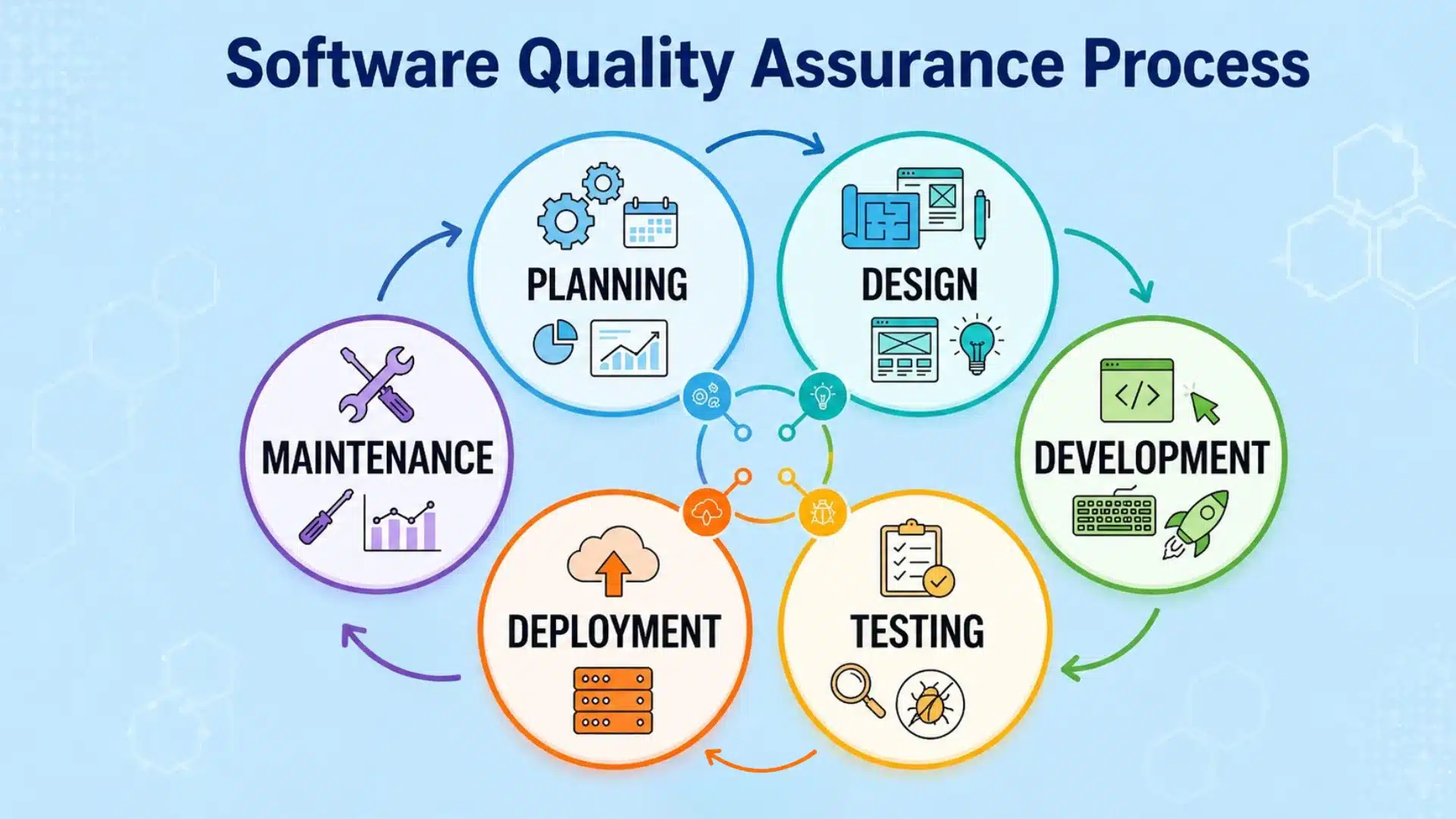
SQA runs continuously throughout the entire software development lifecycle. It starts at the planning stage and continues even after the product ships.
1. Planning
Planning is the first step in the SQA process, where quality standards and expectations are clearly defined.
Teams identify project requirements, set quality benchmarks, and choose the right methodologies and tools. This stage also includes risk analysis and defining testing strategies.
A well-structured plan ensures that everyone understands the quality goals before development begins.
Strong requirement gathering techniques at this stage make a measurable difference in how clearly the entire team understands what the software needs to do before anyone writes a line of code.
2. Design
The design phase focuses on preventing issues before they happen. Teams review system architecture, workflows, and technical specifications to identify potential risks early.
By validating design decisions, SQA ensures that the structure supports performance, scalability, and security. This step reduces the chances of major errors during development.
Clear documentation and design reviews help maintain alignment between teams.
Fixing issues at this stage is faster and more cost-effective, which improves overall efficiency and keeps the project on track.
3. Development
During development, SQA ensures that coding standards and best practices are followed consistently.
Developers write code based on defined guidelines, while QA teams monitor the process through code reviews and static analysis.
This step focuses on maintaining clean, efficient, and error-free code. Following proper coding standards reduces bugs and improves maintainability.
From working with development teams across different software categories, I regularly see that teams that skip standardized code reviews during this phase tend to pay for it during testing.
4. Testing
Testing is the process of validating that software works as expected. QA teams perform different types of testing, such as functional, performance, and security testing.
The goal is to identify defects and verify that all features meet requirements. Testing ensures that the software performs well under different conditions and provides a smooth user experience.
Using structured test data management during this phase helps teams run more consistent tests and catch edge-case defects earlier.
Using the right test data management tools during this phase helps teams run more consistent tests and catch edge-case defects earlier.
5. Deployment
In the deployment phase, SQA ensures that the software is ready for release. Final checks are performed to confirm that all requirements are met and no critical issues remain.
This includes validating configurations, environment setup, and system compatibility. Teams may also perform user acceptance testing to ensure the product meets business needs.
A smooth deployment process reduces risks and ensures that users receive a stable and fully functional product without unexpected issues.
6. Maintenance
Maintenance focuses on continuous improvement after the software is released. SQA teams monitor performance, track user feedback, and identify new issues.
Updates, patches, and enhancements are applied to keep the software reliable and secure.
This phase ensures that the product adapts to changing requirements and continues to meet quality standards over time.
Continuous monitoring at this stage helps maintain user satisfaction and extends the software’s useful lifecycle.
Core Principles of Software Quality Assurance
It is built on a set of core principles that guide the maintenance of quality throughout the entire development process. These principles ensure consistency, reliability, and continuous improvement.
- Customer Focus: Ensures the software meets user needs, expectations, and usability standards. Quality is defined by how well the product satisfies end users.
- Process Standardization: Uses defined processes, frameworks, and guidelines to maintain consistency across development and testing activities.
- Continuous Improvement: Focuses on regularly analyzing performance and improving processes to enhance overall software quality over time.
- Prevention Over Detection: Prioritizes identifying and preventing defects early instead of fixing them after they occur.
- Team Involvement: Encourages collaboration between developers, testers, and stakeholders to maintain quality at every stage.
- Data-Driven Decisions: Relies on metrics, reports, and performance data to evaluate quality and make informed improvements.
- Compliance and Standards: Ensures software follows industry standards, regulations, and best practices for reliability and security.
Common Software Quality Assurance Techniques

SQA uses several structured methods to catch issues at different stages of the development process. Each technique serves a specific purpose depending on where it is applied in the SDLC.
- Formal Technical Reviews (FTRs): A structured peer review where team members examine software artifacts such as requirements documents, design specifications, or code modules. The goal is to surface defects before they carry into the next development phase.
- Code Walkthroughs: A developer presents their code to the team for an informal review. These sessions are less rigid than formal inspections but are effective for early error detection and spreading code familiarity across the team.
- Software Audits: Independent evaluations that verify whether development processes and deliverables conform to established standards, regulations, or internal guidelines. Audits are especially common in regulated industries.
- Static Analysis: Automated scanning of source code without actually running it. Tools flag syntax errors, security vulnerabilities, and code style deviations early in development, before testing even begins.
- Software Inspections: The most formal SQA review technique. A trained moderator leads a structured team examination using a defined checklist, and all findings are formally documented for follow-up.
Skipping even one layer of review, particularly at the end-to-end testing stage, can create downstream costs that are far harder to manage once the product is in users’ hands.
Benefits & Challenges of Software Quality Assurance
It brings structure and reliability to the development process, but it also comes with certain limitations.
While it helps improve product quality and reduce risks, it requires time, resources, and proper planning to execute effectively.
| Benefits | Challenges |
|---|---|
| Improves software reliability | Requires time and planning |
| Reduces the cost of fixing defects | Needs skilled QA professionals |
| Enhances user experience | Can increase initial costs |
| Ensures compliance with standards | Managing changing requirements |
| Detects issues early | Tool and setup complexity |
| Builds customer trust | Coordination across teams |
Standards and Compliance in Software Quality Assurance
Software quality assurance ensures that software is built following established guidelines, regulations, and industry best practices.
Common frameworks like ISO 9001 and ISO/IEC 25010 define quality benchmarks for performance, usability, and maintainability.
Following these standards allows teams to create software that meets both technical and legal requirements.
Compliance is especially important in industries like finance, healthcare, and e-commerce, where data protection and accuracy are critical.
By aligning with recognized standards, teams reduce risks, avoid costly errors, and improve trust with users and stakeholders.
It also helps in audits and certifications, making the software more credible and easier to manage over time.
Conclusion
Software quality assurance is more than just testing. It is a structured approach that ensures software meets standards, performs reliably, and delivers a smooth user experience.
From planning and design to testing and maintenance, every stage contributes to maintaining quality.
Understanding what software quality assurance is helps build a strong foundation for creating stable and secure applications.
It also highlights why preventing defects is always better than fixing them later.
Whether working on a small project or a large system, applying SQA practices makes a real difference in performance and trust.
Have you ever worked with software quality assurance or faced challenges during development? Share your experience in the comments below.
Frequently Asked Questions
What is the Difference Between QA and SQA?
QA (Quality Assurance) focuses on overall quality processes, while SQA (Software Quality Assurance) is specific to software development, ensuring standards, testing practices, and lifecycle quality control are properly followed.
Is QA Harder than Coding?
QA is not harder than coding, but it requires a different skill set. It involves analytical thinking, attention to detail, understanding test cases, and identifying defects rather than building features.
What is the Average Salary of a QA Engineer?
The average salary of a QA engineer in the US ranges from $70,000 to $110,000 annually, depending on experience, skills, location, and whether the role involves automation or manual testing.