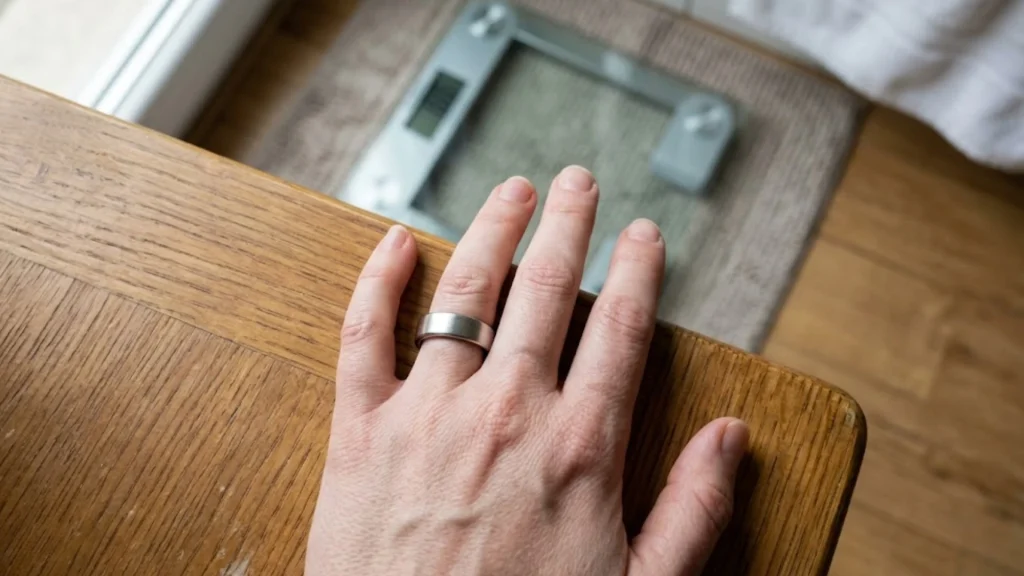
If the Ultrahuman Ring has started spinning during workouts or sliding while sleeping, weight loss is usually the reason. It happens more often than expected.
Even a drop of around 10 to 15 pounds can reduce finger size by one full size, sometimes more. That is when the fit starts feeling off and a bit annoying in daily use.
In this Ultrahuman ring fit after weight loss guide, the focus stays on what actually matters right now: how to check the size at home, and what can be done without rushing into a new ring. It also looks at replacement options that can help if the size change is noticeable.
Why Fit Changes After Weight Loss
When weight drops, fat is reduced across the whole body, including the fingers. It is not just the waist that changes.
Fingers hold more soft tissue than expected, so even a small drop can reduce the ring size by 1 or 2 sizes.
Two things drive this change. Firstly, fat loss around the fingers; secondly, reduced fluid retention. At higher body weight, the body tends to hold more water in the hands.
As weight goes down, the extra fluid reduces, making the fingers slimmer. These two changes do not always happen together, so the fit can feel normal for a while, then suddenly loosen.
Smart rings react more to this than regular rings. They need steady skin contact for accurate readings. A loose fit can affect tracking.
Common signs include rotation, sliding, or no light mark on the skin. Before getting into sizing, it helps to understand how the ring performs overall, and the Ultrahuman Ring Air review breaks that down in detail.
How Fit Affects Tracking Accuracy
A little movement is normal. The ring may rotate slightly with hand motion, and that is expected.
The problem starts when it spins more than 2 to 3 mm without resistance, slides off easily, or lifts when you bend your finger. That is when sensor contact begins to break.
Fit matters because the sensors rely on steady skin contact along the inner surface. They use light to read data, and even a small gap can let outside light interfere.
This often shows up as inconsistent heart rate, missing HRV data, or sleep tracking that does not match how you feel. Light and REM sleep are affected the most since they depend on subtle signals.
If your data starts looking unreliable, check the fit first. Finger choice also matters, especially after weight changes, as it can impact how consistently the sensors perform.
Choosing the Right Size After Weight Loss
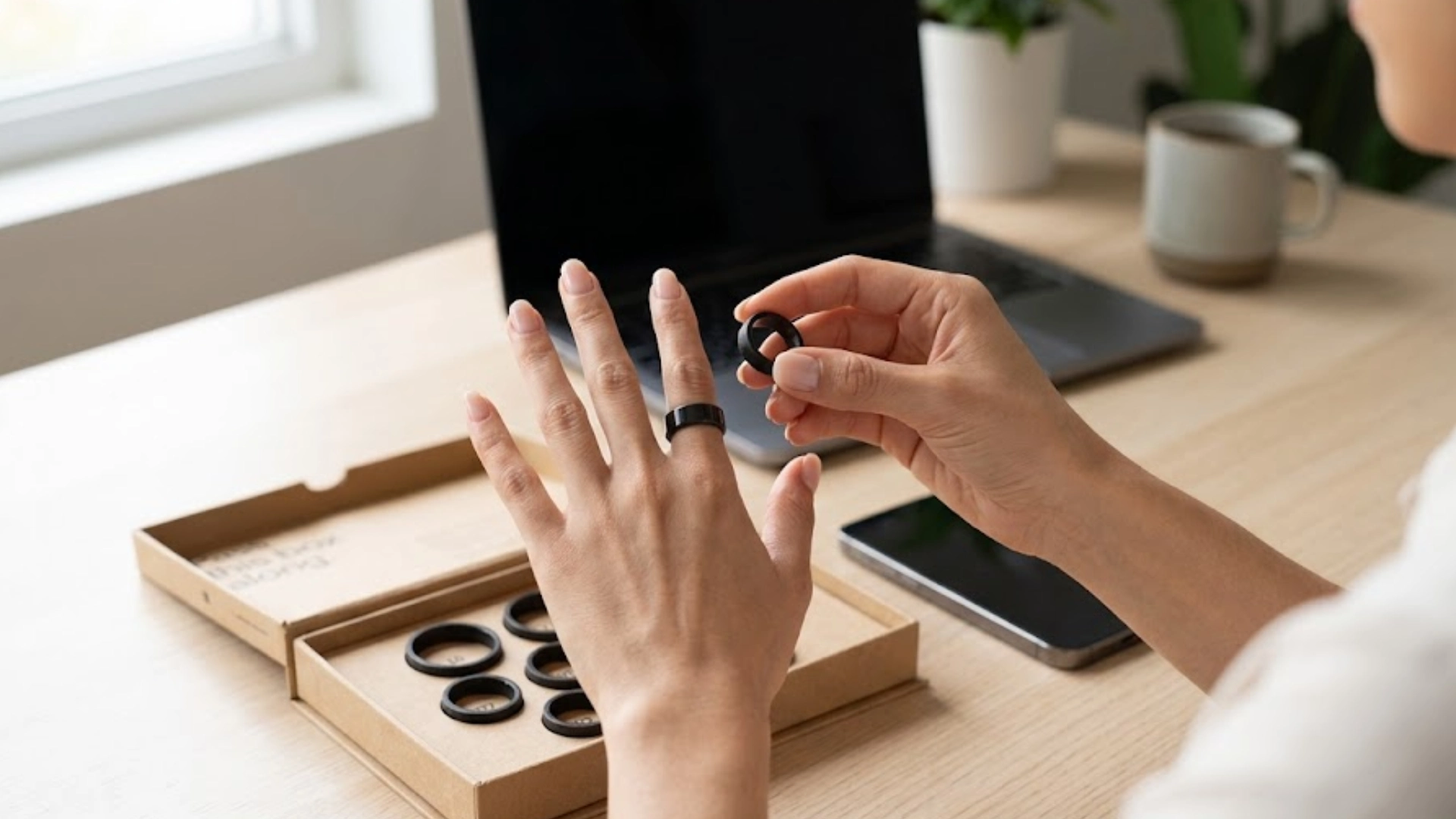
- Start with the Ultrahuman sizing kit and wear each sample ring for a full day. If available, compare with your old kit to see size changes.
- Avoid measuring after workouts or early morning. A midday check gives a more accurate size. Use paper or the app, but take multiple readings.
- Check knuckle vs base size. A wider knuckle can make the ring feel tight while wearing, but loose at rest.
- If still losing weight, wait until it stabilizes before buying a new size to avoid repeat changes.
- Try different fingers on both hands. Fit varies, and the right finger can improve comfort and tracking.
What to Do If the Ring Feels Loose
If your ring starts feeling loose, you do not need to rush into resizing. A simple ring adjuster can help. It is a small silicone insert that sits inside the band and reduces the gap without any permanent change.
Avoid quick fixes like tape or padding. They can affect sensor contact and trap moisture, which impacts comfort and tracking. Wearing a loose ring is also risky, as it can slip off during workouts or while sleeping.
Before buying anything, try switching fingers. The middle finger often offers a better fit and still supports accurate readings.
Can You Get a Replacement, and Does Ultrahuman Cover It
Ultrahuman does not offer resizing. The ring is a sealed device, so changing its size is not possible without affecting the hardware. That makes replacement the only real option.
There are two paths. If UltrahumanX was purchased with the ring, it includes a one-time replacement for weight loss cases. This applies only if the plan was added within the allowed period after purchase. It can save a high cost, though the process may take some time.
If UltrahumanX is not available, you will need to buy a new ring at full price. There is no trade-in or discount for size changes.
This is why getting the right size early and planning ahead during weight loss matters.
If you’re also following the broader legal side of things, the Ultrahuman ban and lawsuit guide covers the current status and what options users may have.
Conclusion
Getting the right fit after weight loss is not just about comfort; it directly affects how well the ring performs. A loose ring can lead to unreliable data, missed insights, and a frustrating experience overall.
In this Ultrahuman ring fit after weight loss guide, the key takeaway is simple: check your size properly, avoid quick fixes that affect the sensors, and replace only when needed.
Small steps like switching fingers or using a sizing kit can save both time and money. Waiting for the weight to stabilize before buying a new size also makes a big difference.
Have you noticed your ring data feeling off lately? Drop your experience or questions in the comments below.
FAQs
1. Does Weight Loss Always Change Ring Size?
Not always, but it is very common. Even a small weight loss can reduce finger size, especially if there was more fat or fluid retention earlier.
2. Can a Loose Ring Still Track Data Properly?
It can still collect data, but accuracy may drop. Sensors need proper skin contact, so a loose fit can lead to inconsistent readings.
3. Is Switching Fingers a Good Long-Term Solution?
It works well as a temporary fix. Many people use the middle finger while weight is still changing, then switch back or resize later.
4. How Much Weight Loss Changes Ring Size?
It varies, but even 10 to 15 pounds can reduce ring size by one full size in some cases.
5. Should a New Ring Be Bought Immediately After Weight Loss?
It is better to wait until the weight is stable for a few weeks. Buying too early can lead to needing another size soon.