Running out of supplies mid-event is one of those situations that feels entirely preventable in hindsight. You had the data. You had the history.
But without a structured stock management process in place, the gap between what you ordered and what you actually needed only becomes visible when it’s too late.
Event professionals deal with this more than most people realize. Badge stock, wristbands, printer consumables, scanning equipment, and branded materials all require the same careful attention that retail inventory gets in other industries.
If your stock management approach is still reactive, driven by gut feel, or based on last-minute orders, this guide will give you a clearer framework to work from.
We’ll cover the definition, the principles that hold up under pressure, and the specific strategies that help teams improve.
What is Stock Management?
Stock management is the end-to-end process of overseeing a business’s inventory, from purchasing and receiving, through storage and movement, to final sale or use.
The goal is to keep enough stock to meet demand without overstocking and incurring unnecessary costs.
The terms stock management, inventory management, and stock control are often used interchangeably across industries because all three describe the same underlying function: keeping the right items available in the right quantities at the right time.
Understanding the distinction between stock management as a process and as a software system helps operations teams decide where to invest first
Types of Stock
Any stock management system needs to account for four standard inventory categories, each with different tracking and replenishment requirements:
- Raw materials: Inputs used in production that have not yet been transformed. Shortages here can halt production entirely, regardless of how much finished stock is available.
- Work-in-progress (WIP): Items that have entered production but are not yet complete. WIP tracking matters most in manufacturing and custom production environments.
- Finished goods: Products ready for sale or use. These require demand-driven replenishment and are most directly tied to customer experience and revenue.
- MRO supplies: Maintenance, repair, and operations items that support business functions but are not part of the end product ,consumables, tools, and equipment accessories.
Why Stock Management Matters for Businesses
Poor stock management creates real financial losses. Research from IHL Group and supply chain analysts shows that businesses lose billions of dollars every year due to overstocking, stockouts, and rising carrying costs.
For event professionals, the impact is immediate. Running out of badge stock at a 3,000-person conference can slow check-ins, frustrate attendees, and force last-minute fixes. Ordering far more badge paper than needed leads to wasted storage space and unnecessary expenses.
Both problems usually come from the same issue: limited visibility into current inventory and future demand.
Studies also show that overstocking can raise storage and holding costs by 20 to 30 percent, while repeated stockouts often damage customer trust and future sales.
That is why organizations with strong stock management processes consistently perform better, reduce waste, and avoid costly disruptions.
Key Principles of Effective Stock Management
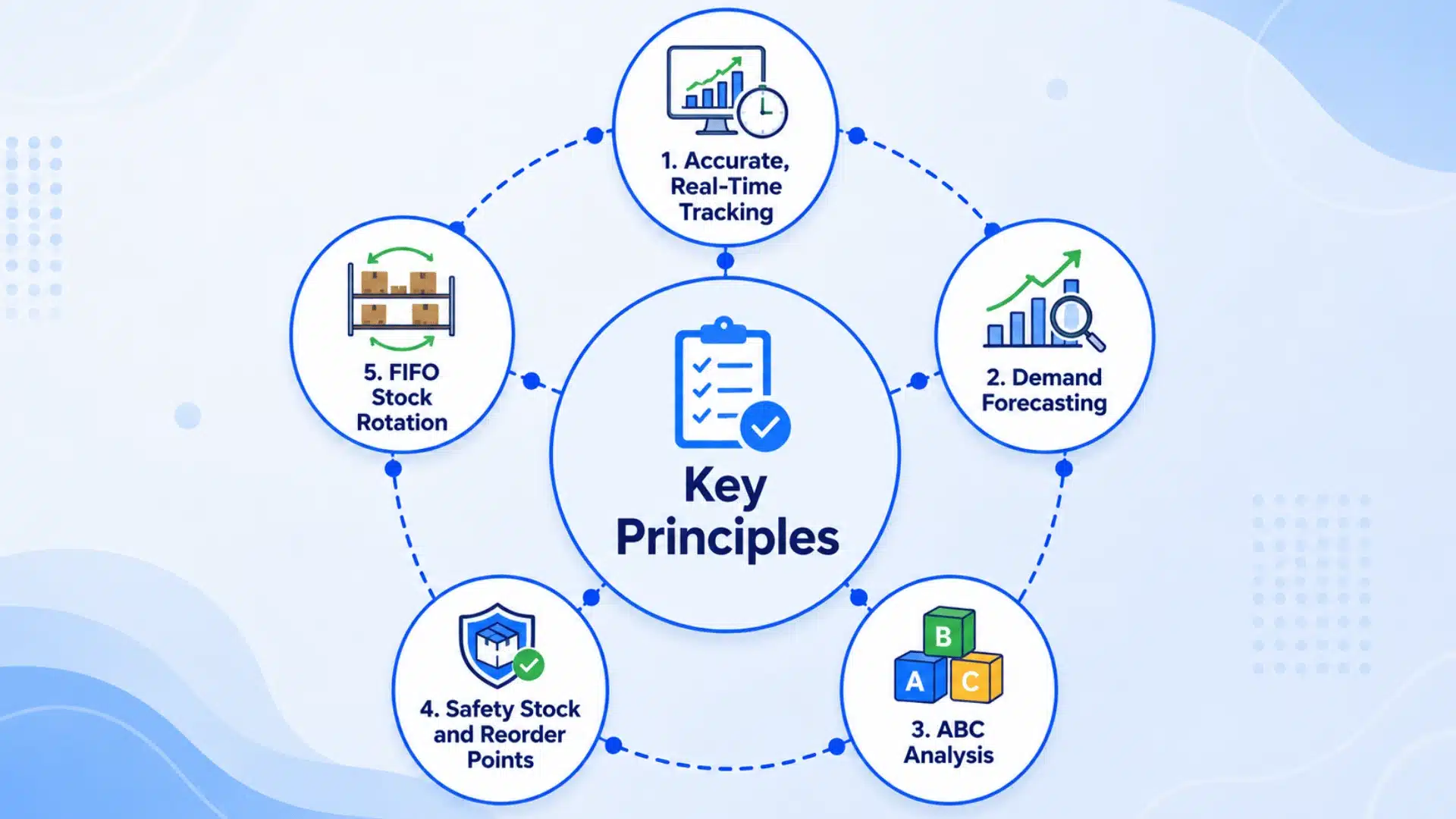
Good stock management doesn’t require a massive software budget. It requires a consistent approach built on a few well-understood principles. These are the ones that matter most.
1. Accurate, Real-Time Tracking
Effective stock management starts with accurate inventory visibility. Every stock movement should be recorded immediately so teams always know current inventory levels.
Real-time tracking reduces errors, prevents shortages, and improves decision-making across purchasing and operations. Many businesses discover large stock discrepancies when switching from manual spreadsheets to live systems.
The issue is rarely missing data. The real problem is delayed updates and inconsistent tracking processes that create costly gaps in inventory accuracy.
2. Demand Forecasting
Demand forecasting helps businesses order the right quantity at the right time. By studying historical trends, seasonal demand, and customer behavior, teams can reduce unnecessary stock while maintaining availability.
Strong forecasting improves cash flow and lowers storage costs without affecting service quality. In event operations, forecasting may include analyzing attendance patterns, event schedules, and supplier lead times.
Using past data to guide future purchasing decisions creates more stable and predictable inventory planning.
3. ABC Analysis
ABC analysis organizes inventory based on value and operational importance. Class A items are high-value products that require strict monitoring and frequent reviews.
Class B items need moderate attention, while Class C items have a lower financial impact and require simpler controls. This method helps businesses focus resources where mistakes would be most costly.
Applying ABC analysis to an event planning checklist improves oversight by prioritizing critical event supplies, equipment, and materials that directly affect event execution and budgeting.
4. Safety Stock and Reorder Points
Safety stock serves as a buffer that protects businesses from sudden demand increases or supplier delays. Clear reorder points ensure new stock is ordered before inventory reaches critical levels.
This approach reduces emergency purchasing, prevents operational disruptions, and supports better supplier relationships.
Businesses that define minimum stock thresholds gain more control over inventory planning and avoid last-minute decisions that often increase costs and create unnecessary pressure on purchasing teams.
5. FIFO Stock Rotation
FIFO, or First In First Out, means older stock is used before newly received inventory. This method prevents waste, reduces obsolescence, and improves stock organization.
FIFO is especially important for perishable goods, but it also benefits products affected by design changes, expiration dates, or evolving branding.
Event materials, printed assets, and technology accessories can quickly become outdated if older inventory is ignored. A consistent FIFO process keeps stock usable and minimizes dead inventory losses.
How to Manage Stock Effectively?
Accurate inventory control helps event teams avoid shortages, reduce waste, improve purchasing accuracy, and maintain smooth operations during high-demand periods and fast-paced event schedules.
- Set Stock Thresholds: Define minimum stock levels, maximum capacity limits, and reorder points for every regularly used inventory item. Use historical demand data to guide purchasing decisions instead of relying on assumptions or inconsistent manual judgment.
- Perform Routine Stock Audits: Conduct regular inventory counts to verify that physical stock matches recorded quantities. Frequent audits help identify missing items, untracked consumption, supplier delays, or operational process gaps before they affect upcoming events.
- Integrate Inventory Platforms: Connect inventory management systems with registration and event management platforms to automatically reflect inventory usage updates. Shared data improves reporting accuracy, reduces manual reconciliation work, and supports faster purchasing decisions with real-time visibility.
- Use Automated Replenishment Tools: Implement systems that continuously monitor inventory levels and trigger alerts when stock reaches predefined thresholds. Combining automated replenishment with supply chain automation improves real-time visibility, reduces shortages, and removes repetitive monitoring tasks for busy event operations teams.
- Strengthen Supplier Communication: Maintain consistent communication with vendors to improve lead-time planning and prepare for potential disruptions early. Strong supplier coordination enables teams to quickly adjust purchasing schedules while identifying improved technology solutions for inventory-tracking equipment.
How to Improve Stock Management?

Improving stock management is an ongoing process that depends on better data, stronger forecasting, and consistent procedures. Start with visibility.
- Real-time inventory tracking often improves stock accuracy compared to manual methods by reducing delays in updates and human entry errors.
- Improve forecasting by reviewing historical demand data and adjusting reorder points based on actual purchase patterns rather than estimates. Technology supports the process but cannot replace it.
The strongest inventory systems succeed when teams already follow clear procedures, assign ownership, and review stock regularly.
For event professionals, understanding how event technology hardware connects with badge printers, kiosks, and scanners also improves supply tracking.
That information strengthens post-event analysis and helps create more accurate stock plans for future events.
Stock Management Tools Worth Knowing
Technology supports the process but cannot replace it. That said, the right tool reduces the manual work that causes most stock management failures. Common categories include:
- Inventory Management Software (e.g., Net Suite, Cin7, Unleashed): Tracks stock levels, automates reorder alerts, and integrates with accounting and sales platforms.
- Event Management Integrations: Platforms that connect badge printing, kiosk hardware, and scanner tracking with back-end stock records. For event professionals, understanding how event technology hardware connects with printers and scanners also improves supply tracking and post-event analysis.
- Demand Forecasting Tools: Standalone or embedded modules that analyze historical purchase patterns and seasonal trends to generate reorder recommendations.
Common Stock Management Mistakes
Most stock management failures trace back to a handful of recurring mistakes. These are worth knowing because they tend to feel like isolated incidents until you recognize the pattern.
- Relying on Manual Tracking: Spreadsheets and manual counts create lag. They also introduce human error at every step. When your counts are off, every decision downstream is built on faulty data.
- Ignoring Demand History: Ordering based on what you think you’ll need rather than what past patterns show is one of the most common causes of both overstocking and stockouts.
- Skipping Safety Stock: Teams that order exactly what they forecast, with no buffer, have no room for supplier delays or demand spikes. A small safety stock investment prevents large operational disruptions.
- Treating All Items Equally: Without prioritization, you spend the same energy managing your highest-risk items as you do low-value consumables. ABC analysis exists precisely to fix this.
- Inconsistent Audit Schedules: Audits that happen only when something goes wrong aren’t really audits. They’re incident responses. A consistent cycle count schedule keeps discrepancies small and correctable.
Conclusion
Stock management is an operational discipline that rarely gets attention until something breaks.
The principles are straightforward: know what you have, know what you need, and build a process that keeps those two numbers close together through accurate data, regular audits, and demand-driven ordering.
Incremental improvement produces measurable results quickly.
Better forecasting, clearer thresholds, and even a modest investment in tracking technology can significantly reduce the friction caused by stock surprises, whether that is a shortage at a live event or excess inventory tying up budget for months.
Start with one category, establish your baseline numbers, and build from there.
What is the biggest stock management challenge your team is dealing with right now? Share your thoughts in the comments.
Frequently Asked Questions
Which Software is Used for Stock Management?
Businesses use stock management software to track inventory levels, automate replenishment, manage supplier orders, and monitor stock movement in real time. Common features include barcode scanning, reporting dashboards, forecasting tools, and integration with accounting or event management platforms.
How Often Should You Conduct a Stock Audit?
Most businesses perform cycle counts throughout the year rather than relying solely on annual inventory audits. High-value and fast-moving items usually require more frequent checks to maintain accurate stock records.
What Causes Inventory Shrinkage?
Inventory shrinkage occurs when actual stock levels differ from recorded inventory levels due to theft, damage, administrative errors, supplier errors, or untracked usage. Regular audits and real-time tracking systems help reduce shrinkage and improve stock accuracy.