If earbuds keep falling out after ten minutes, or the inside of your ear aches by the second commute, the problem isn’t your ears, it’s the fit.
Most earbuds are sized for a statistically average adult ear, and that average leaves many people out.
People with naturally smaller ears deal with tips that slip, ANC that underperforms because a poor seal kills noise cancellation fast, and pressure from housings that sit too wide against the concha.
I’ve reviewed enough audio gear to say this clearly: a smaller ear is not a harder ear to fit. It just needs a different kind of earbud.
The models in this guide are the ones worth recommending to someone with that problem, chosen on housing geometry, weight, tip variety, and real comfort across extended sessions, not just spec sheets.
Key Features to Look for in Small Earbuds
Earbuds for small ears are compact, lightweight wireless earbuds with smaller housings, narrower nozzle diameters, and XS ear tip options that fit shallower ear canals comfortably.
Choosing the right earbuds for small ears goes beyond size alone. Fit, comfort, and performance all come down to a few key design factors that directly affect everyday use.
- Ear Tip Material and Size Range: Silicone ear tips generally work better for small ear canals, offering a secure seal without deep insertion. Look for multiple sizes in the box, including clearly labeled small and extra small options.
- Housing Weight: Lightweight earbuds improve long-term comfort. Staying under 6 grams per bud reduces pressure on the ear, helping prevent fatigue. Most well-fitting models for small ears range from 4.5 to 5.5 grams.
- Nozzle Angle and Design: An angled nozzle helps earbuds sit naturally without forcing deep insertion. This reduces discomfort and pressure on cartilage, making them more suitable for extended listening sessions in smaller ears.
- Nozzle Diameter: Narrower nozzles fit better in smaller ear canals and require less stretching of the opening. This factor, separate from ear tip size, plays a key role in overall comfort and stability.
- IPX Rating: An IPX4 rating is sufficient for daily use, protecting against sweat and light splashes. For workouts or outdoor use, higher ratings like IPX5 provide better resistance against moisture and exposure.
- ANC Performance Consistency: Active noise cancellation depends heavily on seal quality. Adaptive systems from brands like Sony and Apple adjust to the shape of the ear, offering more consistent results than fixed noise-cancellation setups.
Best Small Earbuds for Comfort and Fit
Finding earbuds that actually fit small ears can feel frustrating, but a few models consistently stand out by balancing compact design, comfort, and stable performance during long listening sessions.
1. Sony LinkBuds S
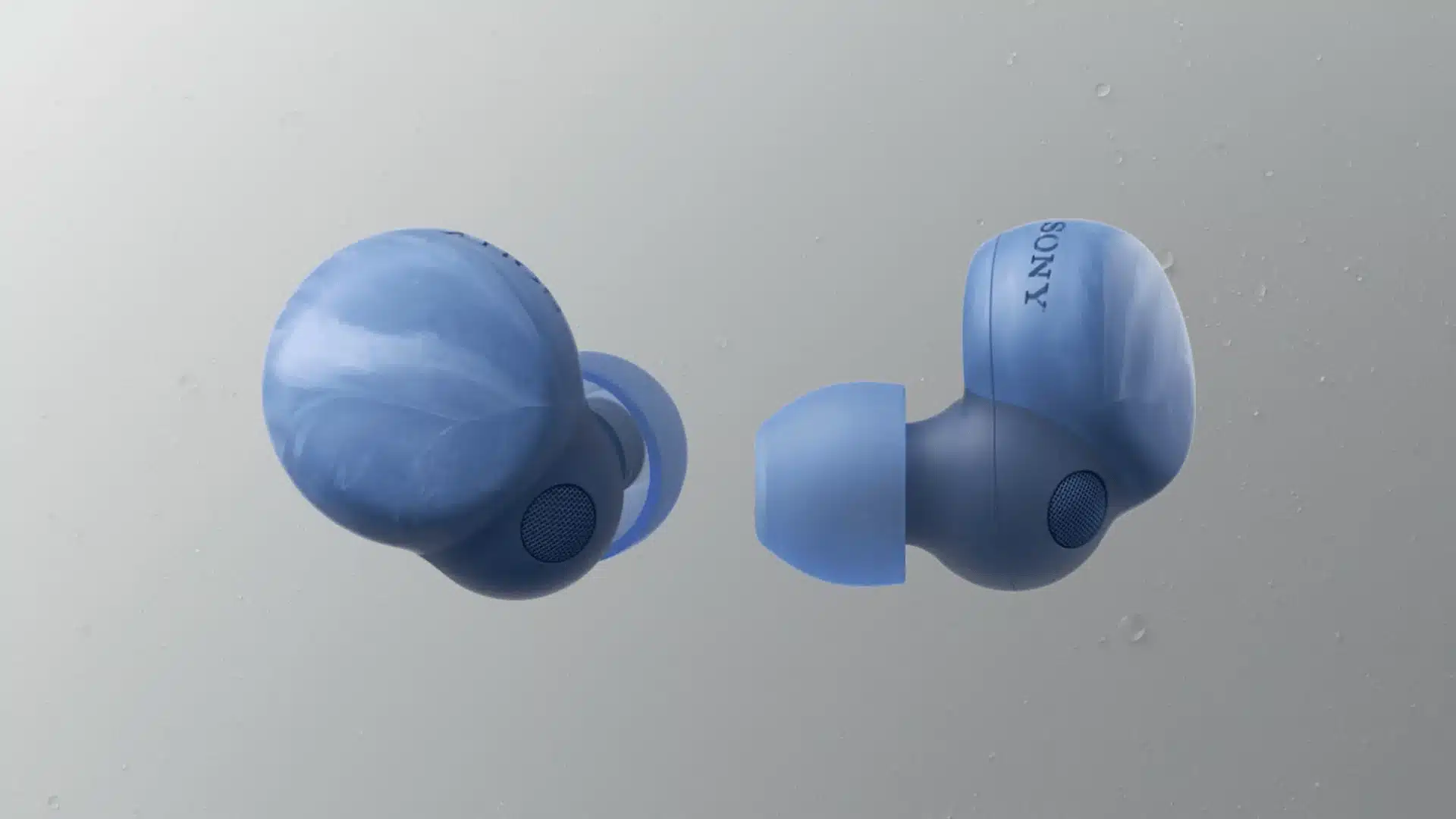
Price: $129.99 to $199.99
Sony LinkBuds S stands out as one of the most reliable options for small ears, thanks to its lightweight design and angled nozzle that keeps the earbuds from going too deep into the ear canal.
This results in a comfortable fit, even during long listening sessions. The secure seal also helps the noise cancellation perform consistently, staying stable even when you are moving around.
On top of that, the sound quality remains balanced, making it a solid choice for music, podcasts, and calls. Each earbud weighs just 4.8g and features a 5mm dynamic driver. It also comes with an IPX4 rating for basic water resistance.
- Pros: Extremely lightweight fit, strong and consistent ANC, balanced sound, reliable call quality
- Cons: Battery life is average, and premium pricing compared to some alternatives
2. JLab JBuds Mini
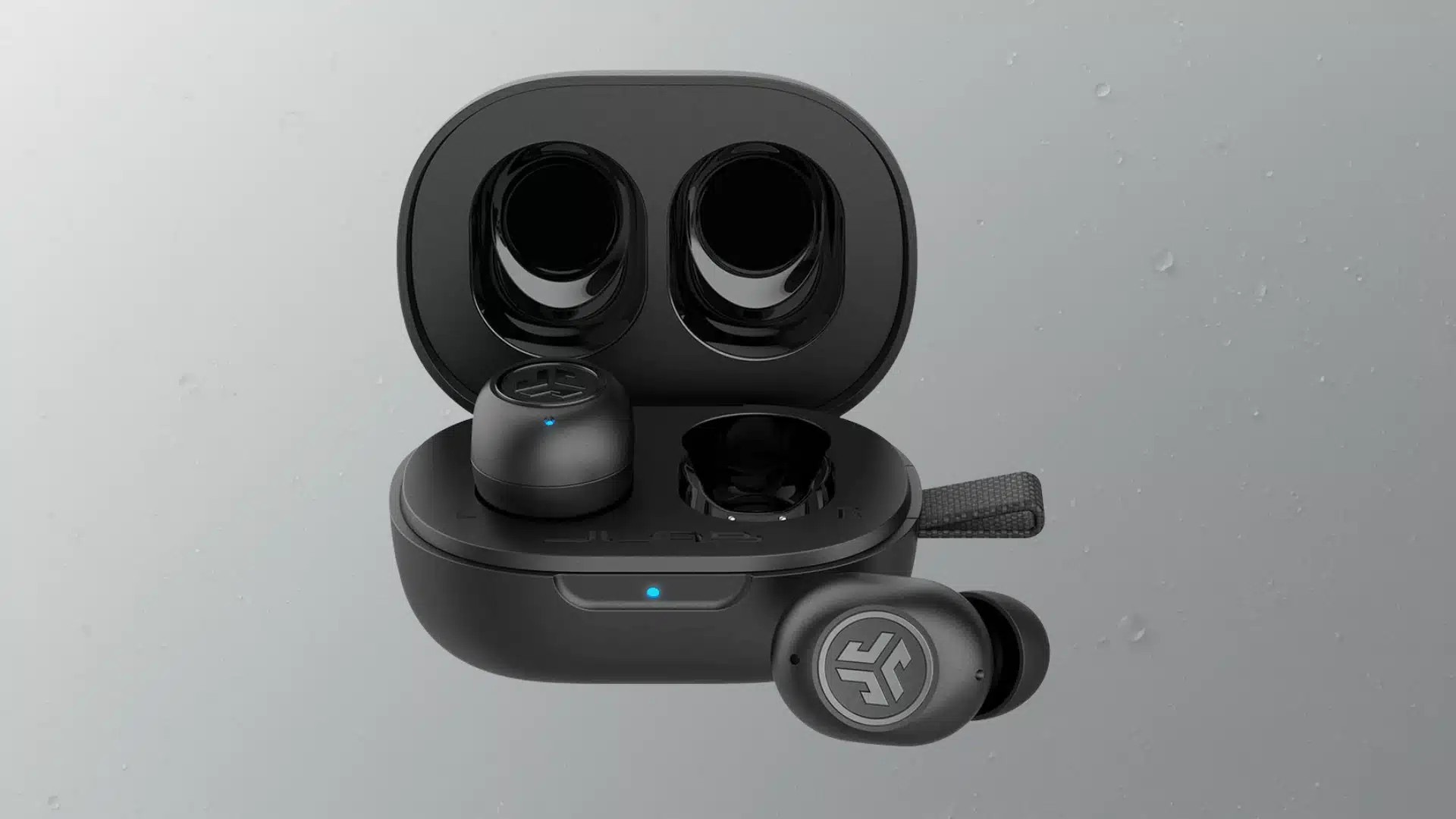
Price: $39.99 to $49.99
JLab JBuds Mini is one of the smallest true wireless earbuds available in the US market, making it a strong choice for people who find even compact earbuds too bulky.
Its ultra-compact build, paired with a tiny keychain-style charging case, makes it easy to carry and use on the go. Despite the lack of active noise cancellation, the earbuds still offer solid passive isolation for daily use.
The sound profile delivers decent clarity with a slight punch, which works well for casual listening. Each earbud weighs about 4g and features a 6mm dynamic driver.
The compact design helps it sit comfortably in smaller ears, and it also features an IP55 rating for better dust and water resistance.
- Pros: Ultra small earbuds and case, very affordable, good passive isolation, IP55 sweat resistance
- Cons: No ANC, sound quality is not as refined as premium models, and shorter battery life
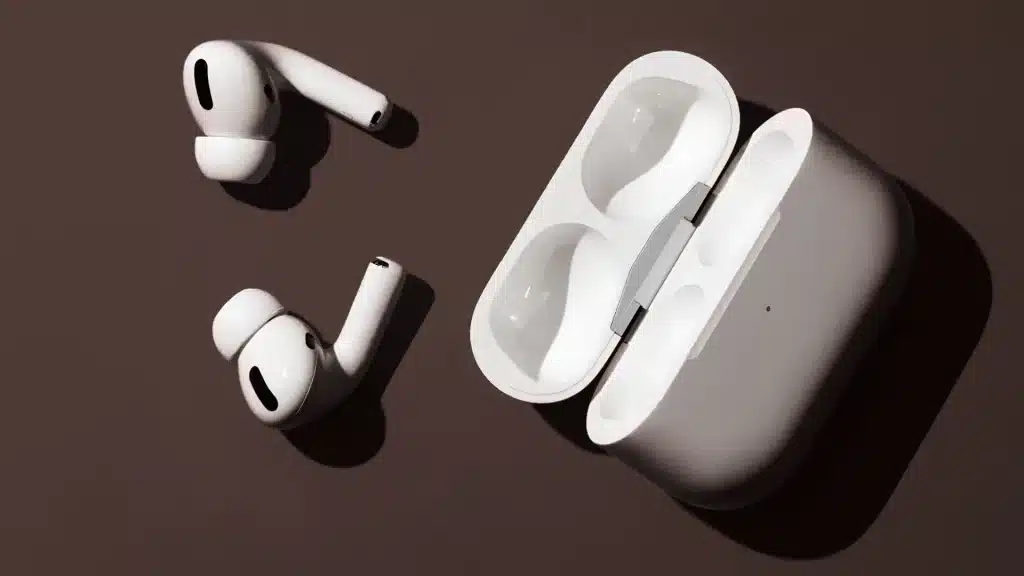
3. Apple AirPods Pro 3
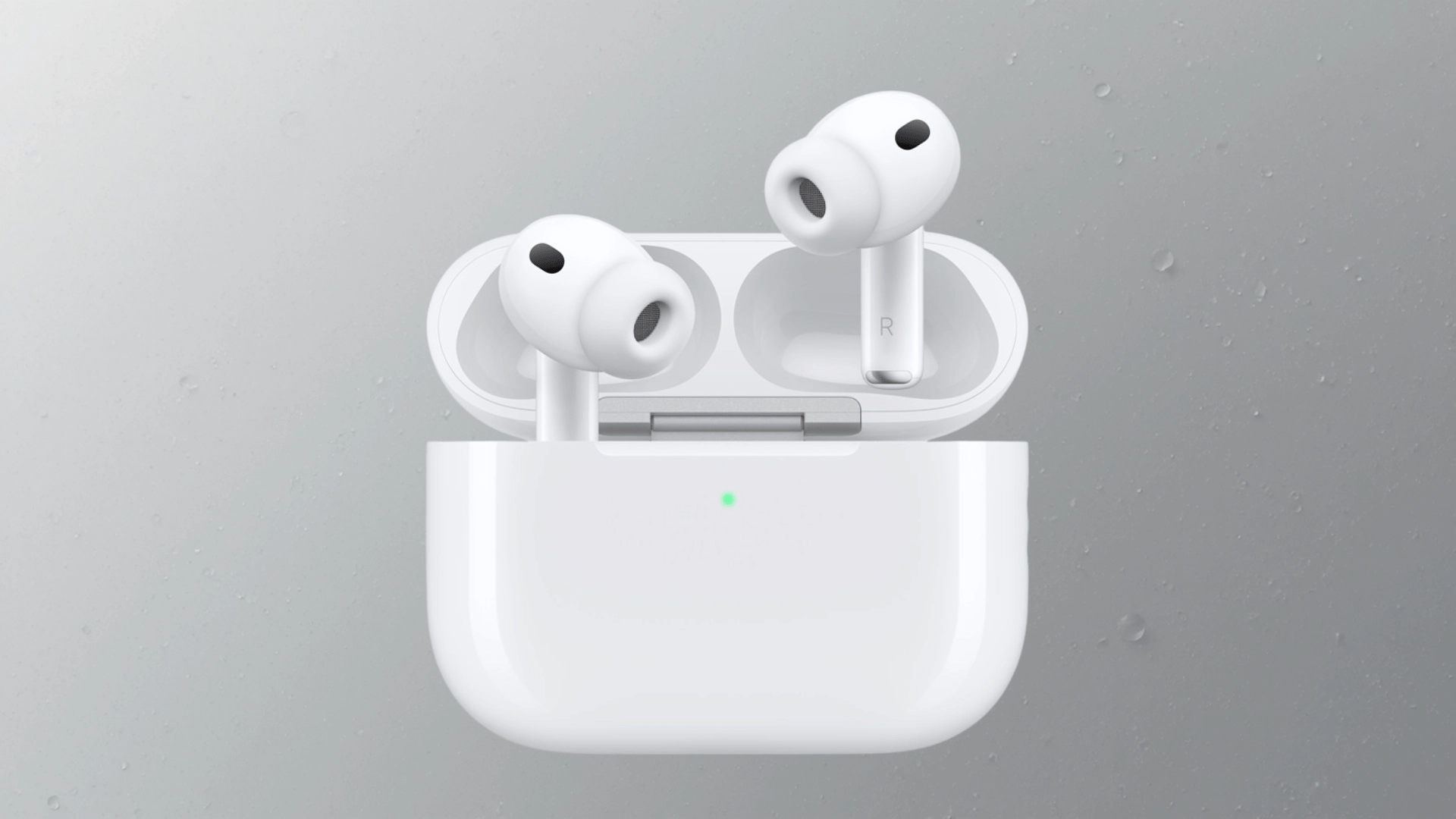
Price: $249
The AirPods Pro 3 is a strong choice for small ears, especially if you already use Apple devices. The inclusion of extra-small ear tips makes a noticeable difference in achieving a better fit, while the rounded housing helps avoid pressure points during extended use.
Noise cancellation has also improved, delivering a more consistent experience, and features like seamless device switching and spatial audio add extra value for Apple users.
Each earbud weighs around 5.3g and uses a custom Apple high-excursion dynamic driver with a dual-layer diaphragm.
The design follows a compact stem-style form factor, and the case can also function as a hearing aid accessory. It comes with an IP54 rating for both the earbuds and the case, offering protection against dust and water.
- Pros: Excellent fit with smaller ear tips, top-tier ANC, smooth Apple ecosystem integration, strong call quality
- Cons: Expensive, limited features for Android users, battery life is good but not class-leading
4. 1MORE ComfoBuds Mini
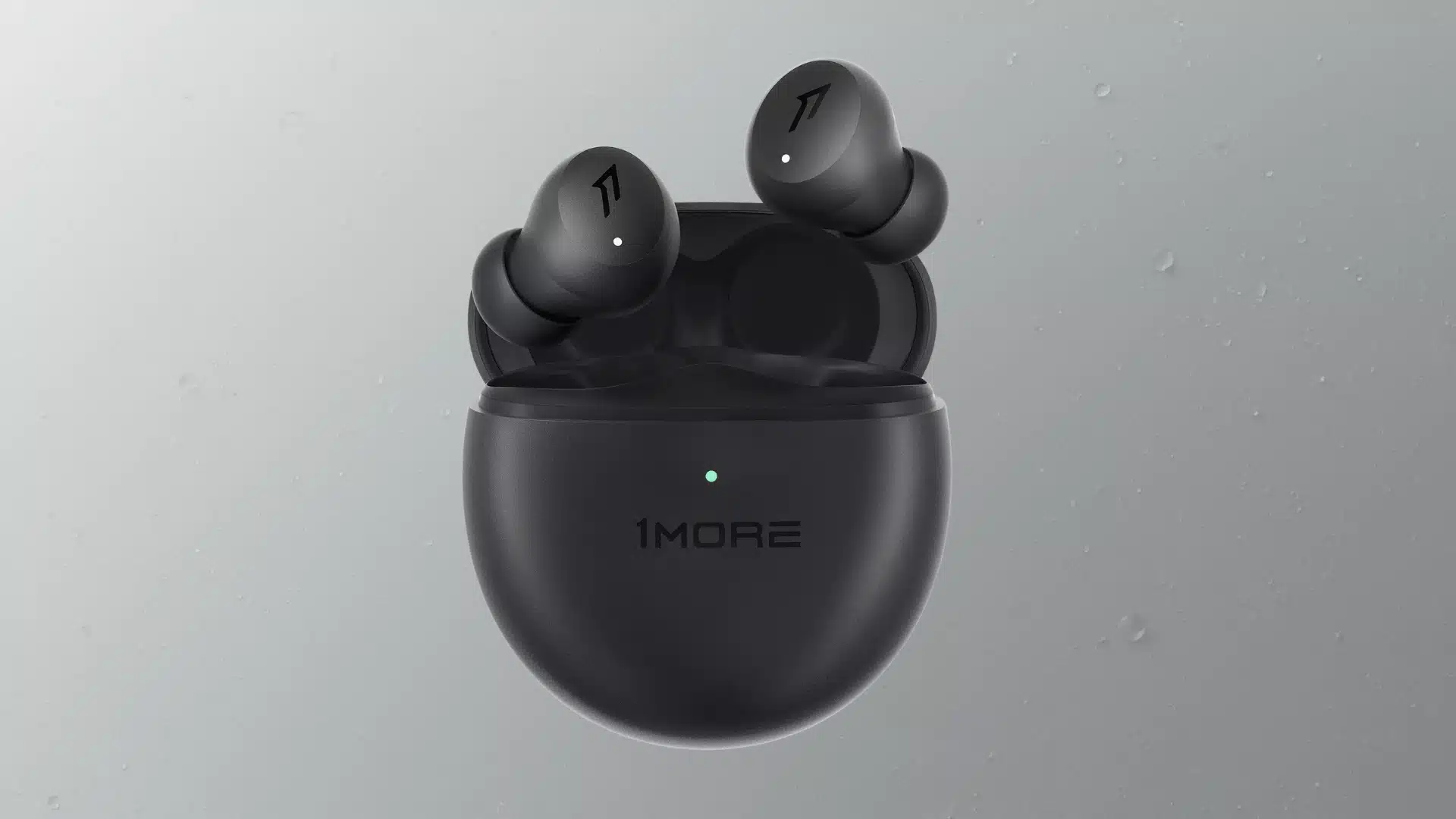
Price: $55.99 to $99.99
1MORE ComfoBuds Mini focuses on comfort, making it a great option for long listening sessions. Its compact, lightweight design allows it to sit comfortably in the ears without causing fatigue over time.
Despite its small size, it includes active noise cancellation that performs well for everyday use, even if it does not match the strength of premium models.
The sound profile stays balanced, which works well for music, calls, and general use. Each earbud weighs just 3.6g, making it one of the lightest ANC options available, and it features a 10mm dynamic driver.
The compact build helps it fit well in smaller ears, and it also has an IPX5 rating, offering solid protection against sweat and water.
- Pros: Very compact and comfortable, includes ANC at a lower price, and wireless charging support
- Cons: ANC is moderate, call quality is average, and app customization is limited
5. Sony WF-C700N
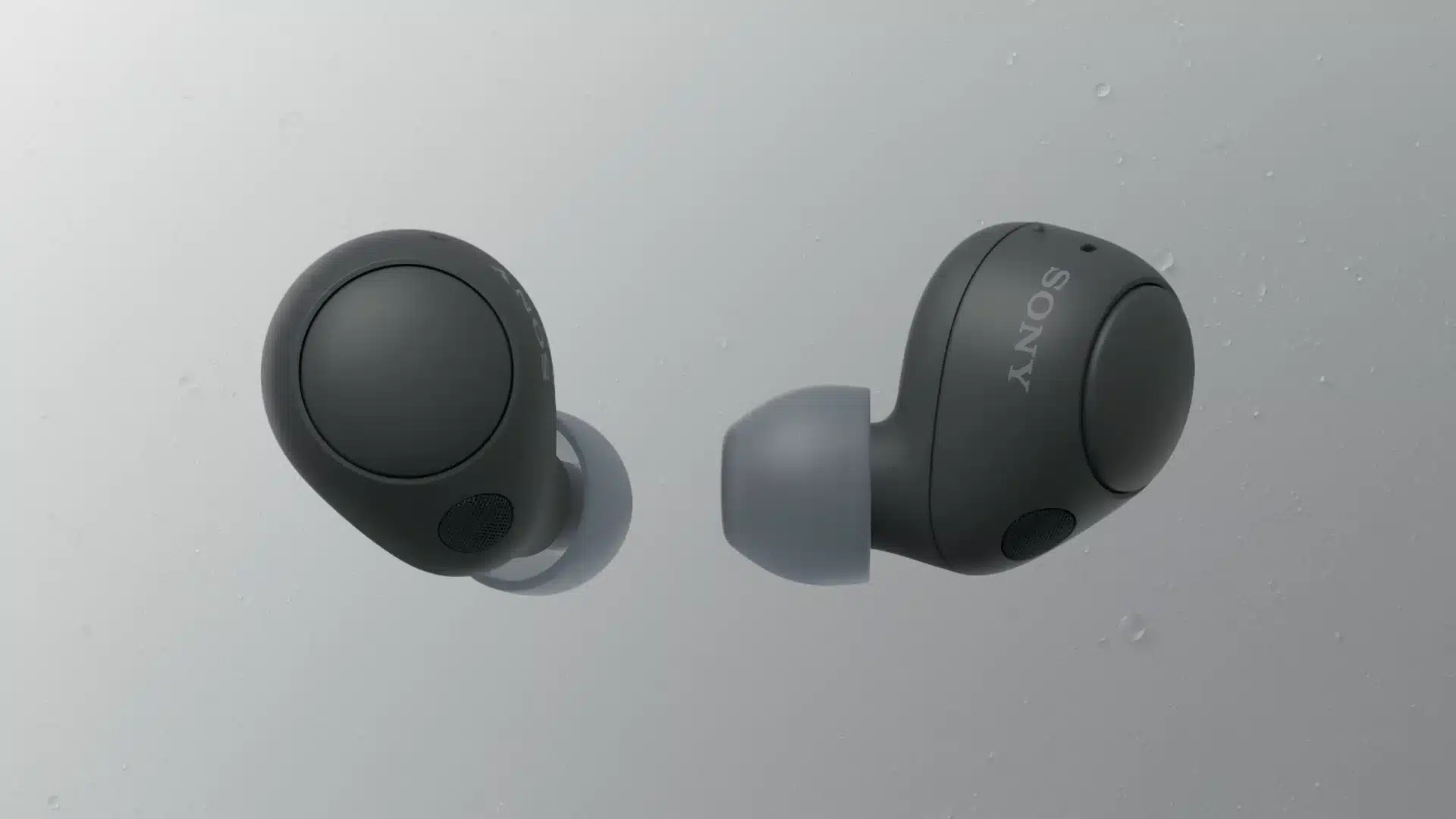
Price: $99.99 to $119.99
Sony WF-C700N is a solid addition to this list, especially compared to older budget options. It features a compact design with active noise cancellation, making it a strong mid-range choice for everyday use.
The fit works well for smaller ears, staying secure without feeling bulky, while Sony’s tuning delivers a clean and enjoyable sound profile. This makes it suitable for both casual listening and daily commuting.
Each earbud weighs around 5g and comes with a 5mm dynamic driver. The compact design helps it sit comfortably in smaller ears, and it carries an IPX4 rating for basic water resistance.
- Pros: Compact design with ANC, good sound quality, stable fit, solid battery performance
- Cons: The case is slightly bulky, and ANC is not as strong as flagship models
6. Soundcore Space A40
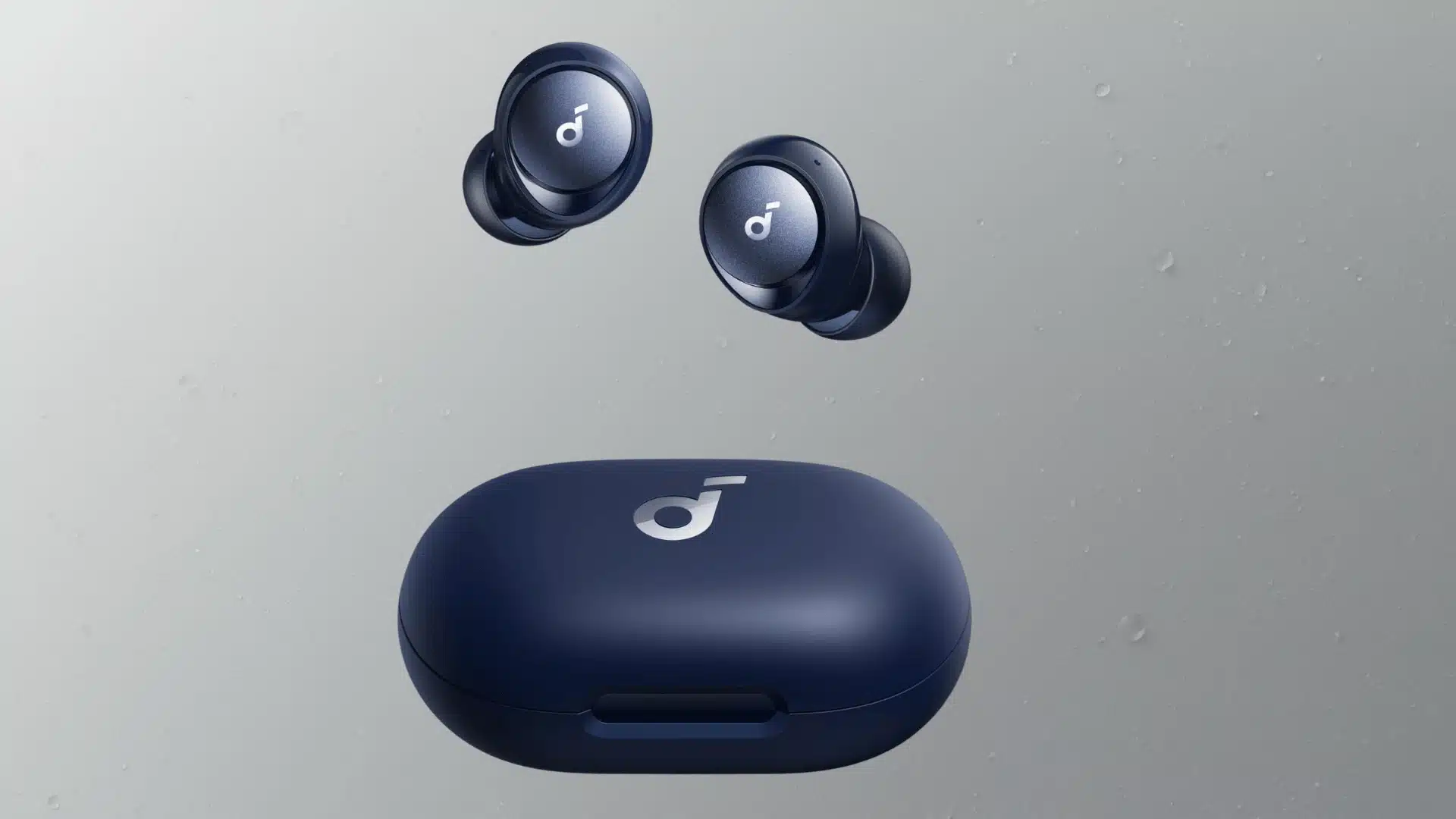
Price: $54.99 to $99.99
Soundcore Space A40 offers a feature-packed experience at a competitive price, making it a strong option in its category.
It comes with active noise cancellation, multipoint connectivity, and support for high-quality audio streaming, covering most modern needs.
The earbuds are compact, though the fit can feel slightly deeper in the ear, so trying different ear tips is important to get the most comfortable seal. The companion app adds extra value by allowing detailed sound customization.
Each earbud weighs around 5.1g and features a 10.2mm dynamic driver. The compact design helps it fit securely in smaller ears, and it also carries an IPX4 rating for basic water resistance.
- Pros: Strong value for price, good ANC performance, customizable sound, multipoint connectivity
- Cons: Fit may feel deep for very small ears, design not as compact as the top options
7. Nothing Ear (a)
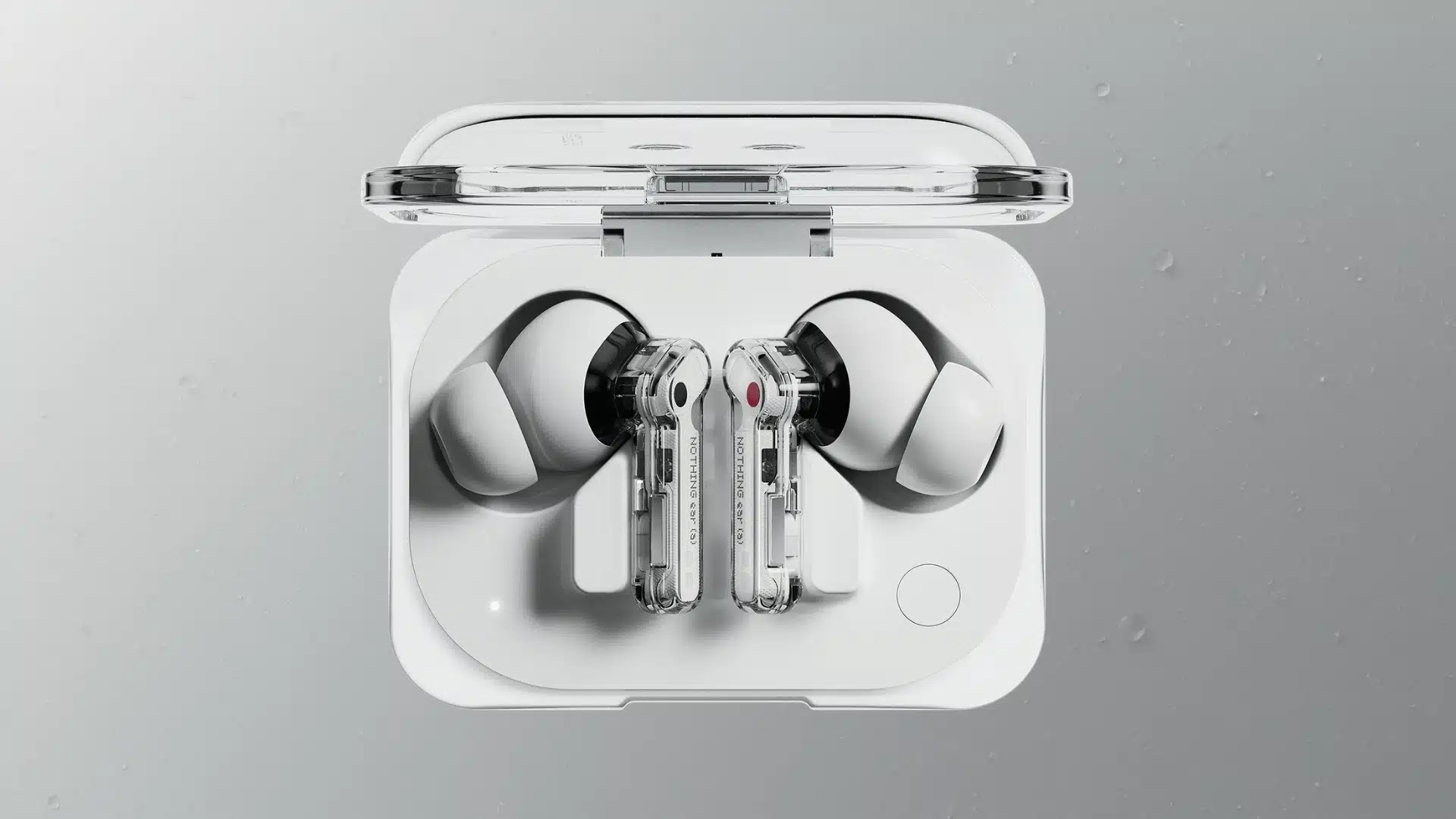
Price: $55.99 to $99.99
Nothing Ear (a) is a strong option for small ears due to its compact stem-style design that sits flush against the concha without adding outward pressure.
Released in 2024, it combines a lightweight build with active noise cancellation at a price lower than many rivals in the same segment. The angled nozzle aligns naturally with the ear canal, helping achieve a secure seal without deep insertion.
ANC performance is solid for its price range, and the Nothing X app allows useful EQ customization. It also supports multipoint connectivity for switching between devices.
Each bud weighs 4.8g and includes an 11.6mm dynamic driver. It also comes with an IP54 rating for dust and water resistance.
- Pros: Lightweight compact design, good ANC for price, small-ear friendly fit, multipoint support, strong app
- Cons: Stem design not for everyone, ANC weaker than top-tier, bass-heavy tuning not for neutral users
How to Test Fit Before Buying?
One of the most common questions I get from readers with smaller ears is how to tell whether a seal is actually good before spending money on a second pair. The answer is more practical than most people expect.
- Start with the smallest included tip: Most boxes include 3 to 4 tip sizes. For small ears, start at the smallest, not the medium that most people default to.
- Insert at a slight downward angle: Do not push straight in. Angle the nozzle slightly downward toward the floor of your ear canal, following its natural path.
- Tug the earlobe gently downward while inserting: This widens the canal slightly and helps the tip seat cleanly without forcing it deeper.
- Test with audio, not silence: Play a bass-heavy track. A poor seal sounds thin and lacks low-end weight. A good seal sounds fuller and more consistent. This is more reliable than trying to feel the seal physically.
- Walk around for 5 minutes: A fit that holds during movement is the only fit that matters for real-world use. If you need to readjust after a short walk, try the next tip size up or a different model entirely.
If none of the included tips work, aftermarket tips from brands like Comply or Spinfit are worth trying before giving up on a model entirely. The housing may still be the right fit for your concha even if the included tips do not seal well.
Real User Opinions on Small Earbuds
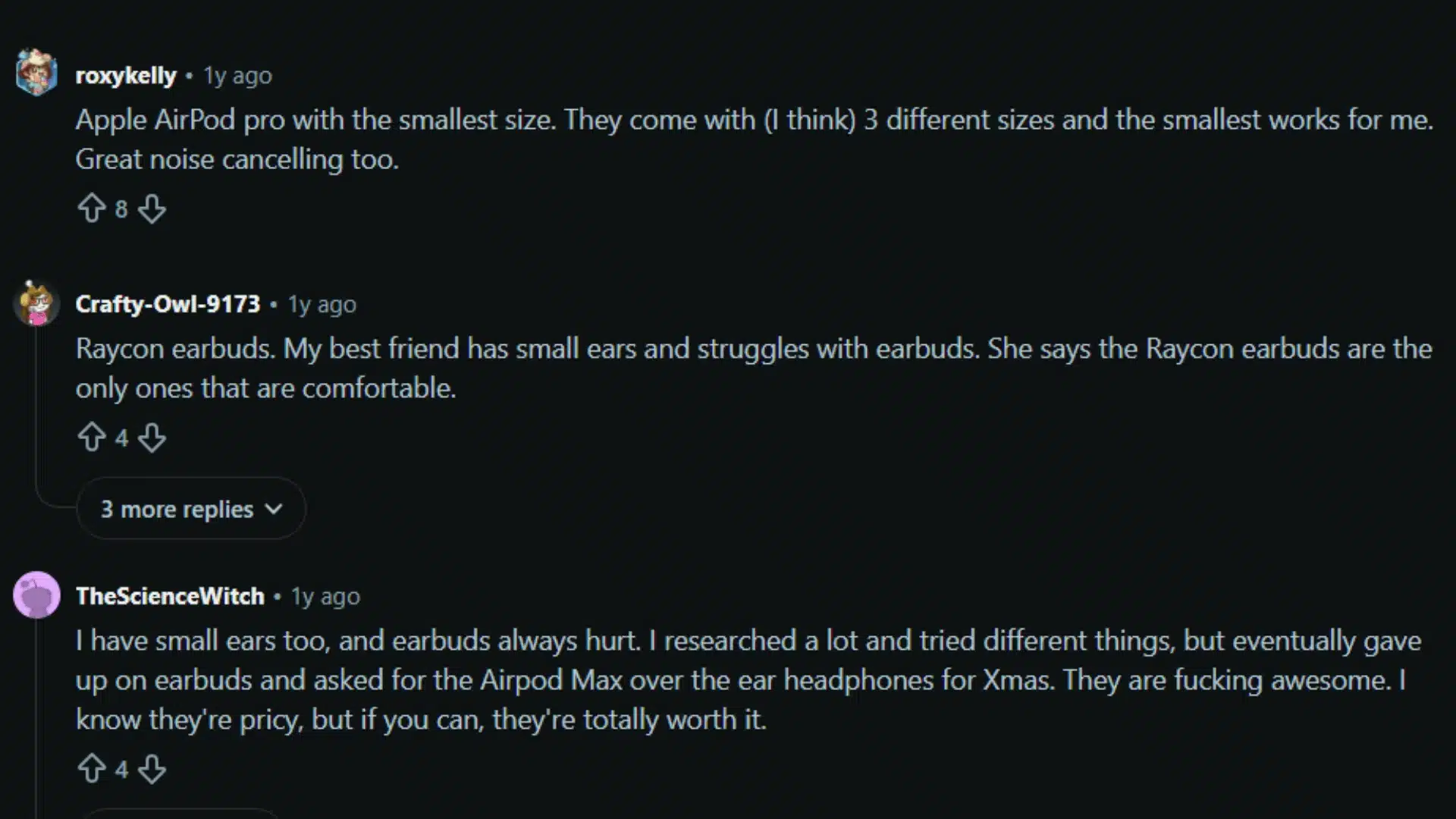
Across Reddit and audio communities, the conversation around earbuds for small ears is surprisingly consistent. Most users highlight fit as the biggest challenge, not sound quality.
Many users report that even premium earbuds fail because they feel too bulky or cause pressure after short use.
Sony LinkBuds S and AirPods Pro models are frequently recommended as safe options, mainly because of their smaller housings and reliable fits.
Some users also suggest JLab JBuds Mini as a budget-friendly option that actually feels compact enough for smaller ears.
Another common takeaway is that ear tip size alone does not solve the issue. Users often mention trying multiple tip sizes and still struggling, which aligns with the importance of housing shape and weight.
Overall, the community prefers lightweight, compact earbuds over feature-heavy models.
Conclusion
Finding earbuds for small ears is less about tip size and more about how the entire design sits inside the ear.
Shape matters. Angle matters. Even a gram or two can decide whether a pair feels secure or starts to irritate after a short session.
Sony LinkBuds S stands out for getting the balance right. Each bud is light, the nozzle sits naturally, and the fit stays stable without constant adjustment. Noise cancellation enhances the experience without requiring a deeper seal.
For a more affordable option, JLab JBuds Mini keeps things simple and compact, making it easier for smaller ears to handle daily use without pressure buildup.
Open-ear designs like Shokz also deserve attention. No insertion, no fatigue, just a different way to listen that works surprisingly well for long hours.
If you’ve found a small-ear earbud that works better than what’s on this list, share it in the comments.
Frequently Asked Questions
Do Foam Ear Tips Fit Better than Silicone for Small Ears?
Not always. Silicone tips seal better at lower insertion depths and are easier to find in XS sizing. Foam can apply more lateral pressure on smaller canals. Try silicone first, then foam if you can’t get a secure seal.
Can ANC Earbuds Damage Ears if They Fit Tightly?
No, but pressure discomfort can occur if the housing is too large. Proper fit should feel secure, not tight or painful.
Are Small Earbuds Good for Workouts?
Yes, but stability matters more than size. Look for lightweight earbuds with a secure fit and an IPX4 rating or higher for sweat resistance.
Do Smaller Earbuds Affect Sound Quality?
Smaller earbuds do not, by default, reduce sound quality. Fit plays a bigger role than size. A proper seal improves bass and clarity more than driver size alone.