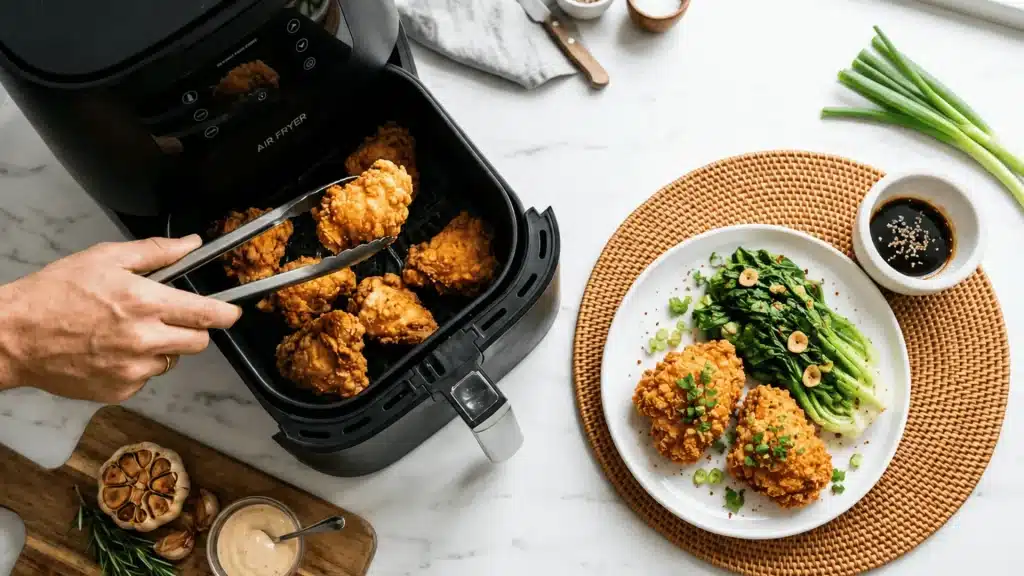
Cooking with an air fryer should be easy, yet many beginners end up with soggy fries, uneven chicken, or food that cooks too fast on the outside.
The good news is that most of these problems come from a few simple mistakes that are easy to fix.
Learning how to use an air fryer properly can completely change the way meals turn out, from crispier textures to faster cooking and easier cleanup.
Once the basics are clear, the appliance becomes one of the most useful tools in the kitchen.
This blog post breaks everything down into simple, beginner-friendly air fryer instructions, including setup, cooking tips, temperature rules, cleaning methods, and common mistakes to avoid for consistently better results.
How Does an Air Fryer Work?
An air fryer is a compact countertop appliance that cooks food using rapid hot-air circulation rather than submersion in oil.
A heating element generates heat, and a high-speed fan distributes that heat evenly around the food in the basket. The result is a crispy, browned exterior that mimics deep-fried texture using a fraction of the oil.
Most models operate between 180 and 400 degrees Fahrenheit, though some newer models reach 450F, and range in capacity from 3.5 to 7 quarts.
Because the cooking chamber is small and enclosed, heat builds up faster than in a conventional oven, which is why cook times are shorter.
Think of it as a miniature convection oven built specifically for speed and crispiness. That compact design is its biggest strength, though it does mean cooking in batches for larger households.
How to Use an Air Fryer: Step-by-Step Instructions
The 7 steps below are based on the experiences of experienced air fryer users who have spent years helping beginners get past the learning curve. Follow them in order the first time, and you will have a solid baseline for every cook after.
Step 1: Unbox and Inspect
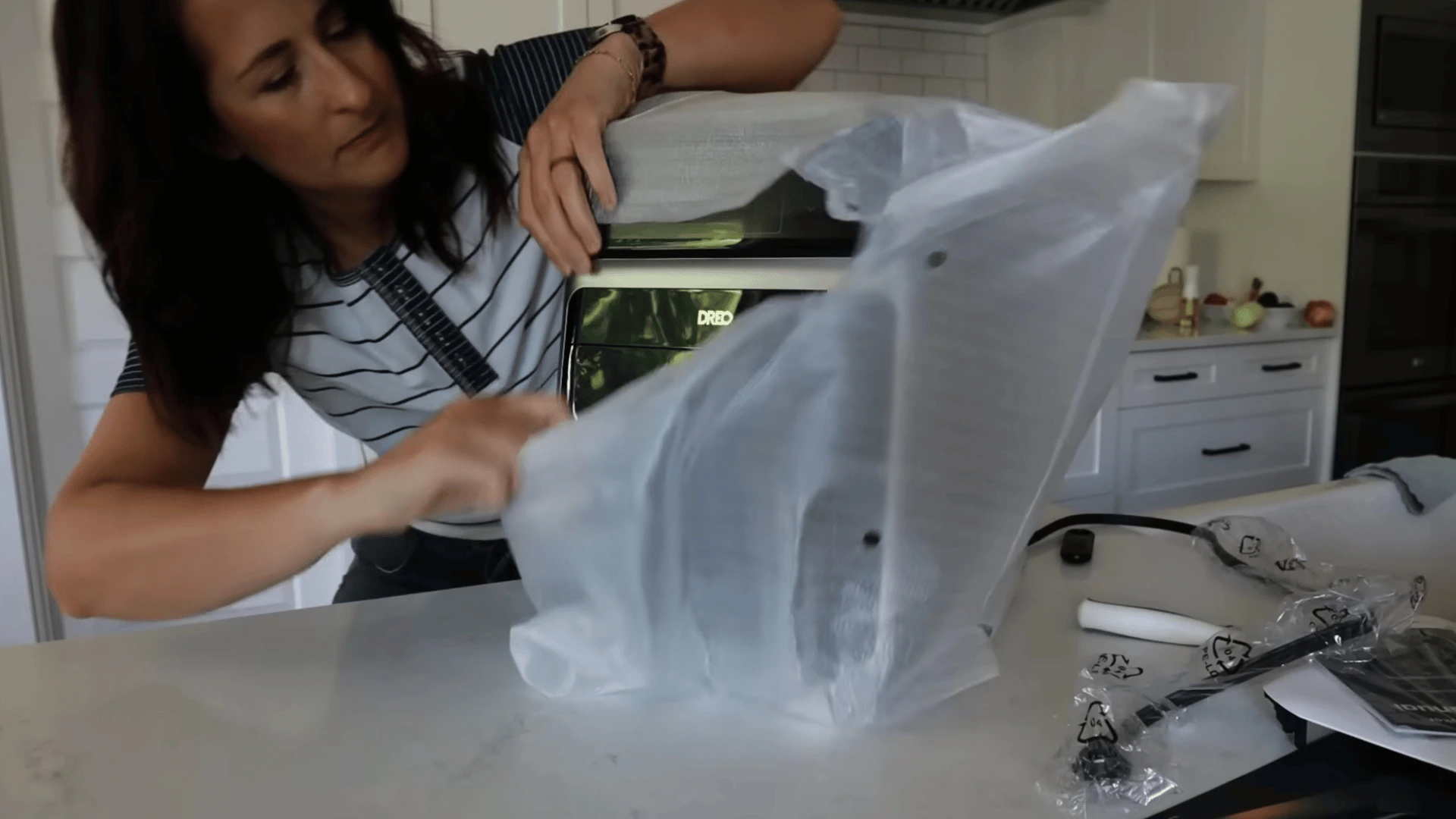
Remove all packaging from the unit and check inside the basket. Manufacturers sometimes leave cardboard or plastic inserts inside the cavity.
Pull everything out, then wash the basket and tray with warm, soapy water. Let both pieces dry completely before reassembling the unit.
A quick inspection at this stage prevents burning plastic or cardboard during your very first cook.
Step 2: Run a Dry First Use
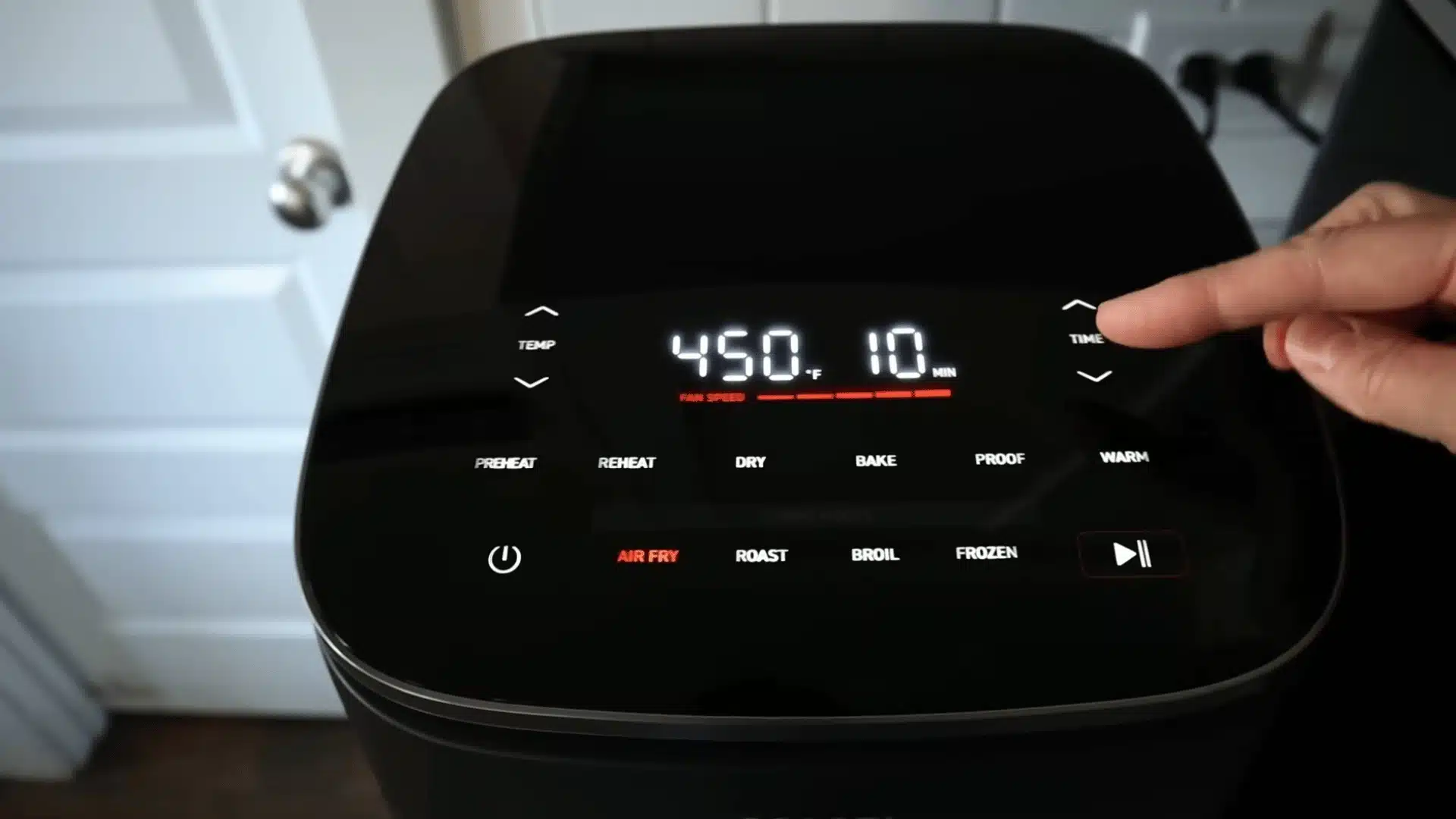
Before cooking any food, plug in the unit and set the temperature to its maximum setting. Run it empty for 10 minutes.
This burns off factory oils left on the heating element during manufacturing. A slightly unusual smell during this step is completely normal and will not carry over into your food.
After the cycle ends, let the unit cool before moving to the next step.
Step 3: Ignore the Preset Buttons
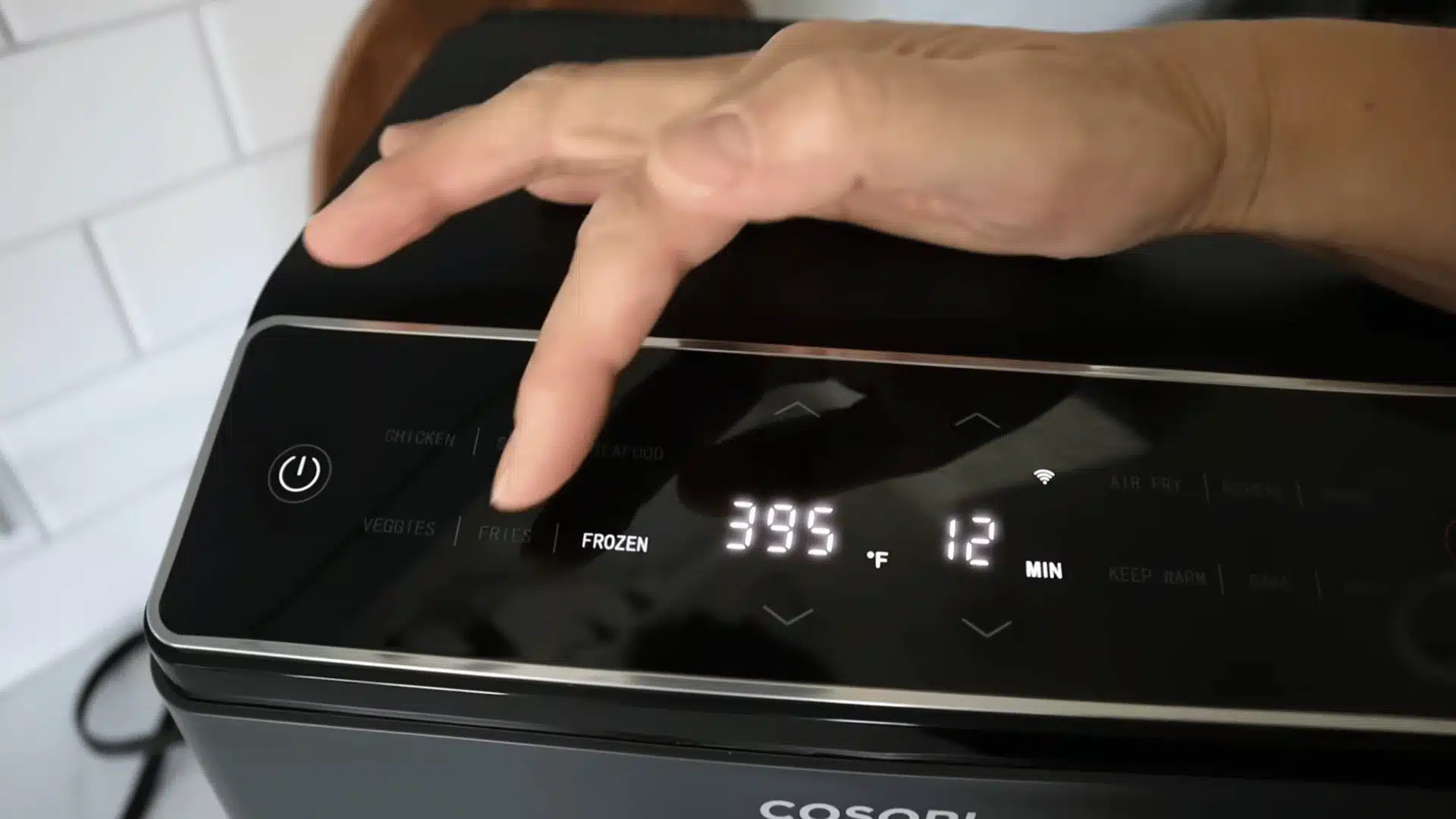
Most air fryers ship with preset buttons labeled things like “roast,” “bake,” “fries,” or “chicken.” These presets only automatically adjust time and temperature.
You can still change both manually, so the presets are not doing anything you cannot do yourself. Stick with the “Air Fry” mode, set your own temperature, and set your own time.
That level of control produces more consistent results than relying on factory defaults.
Step 4: Prep Your Food Correctly
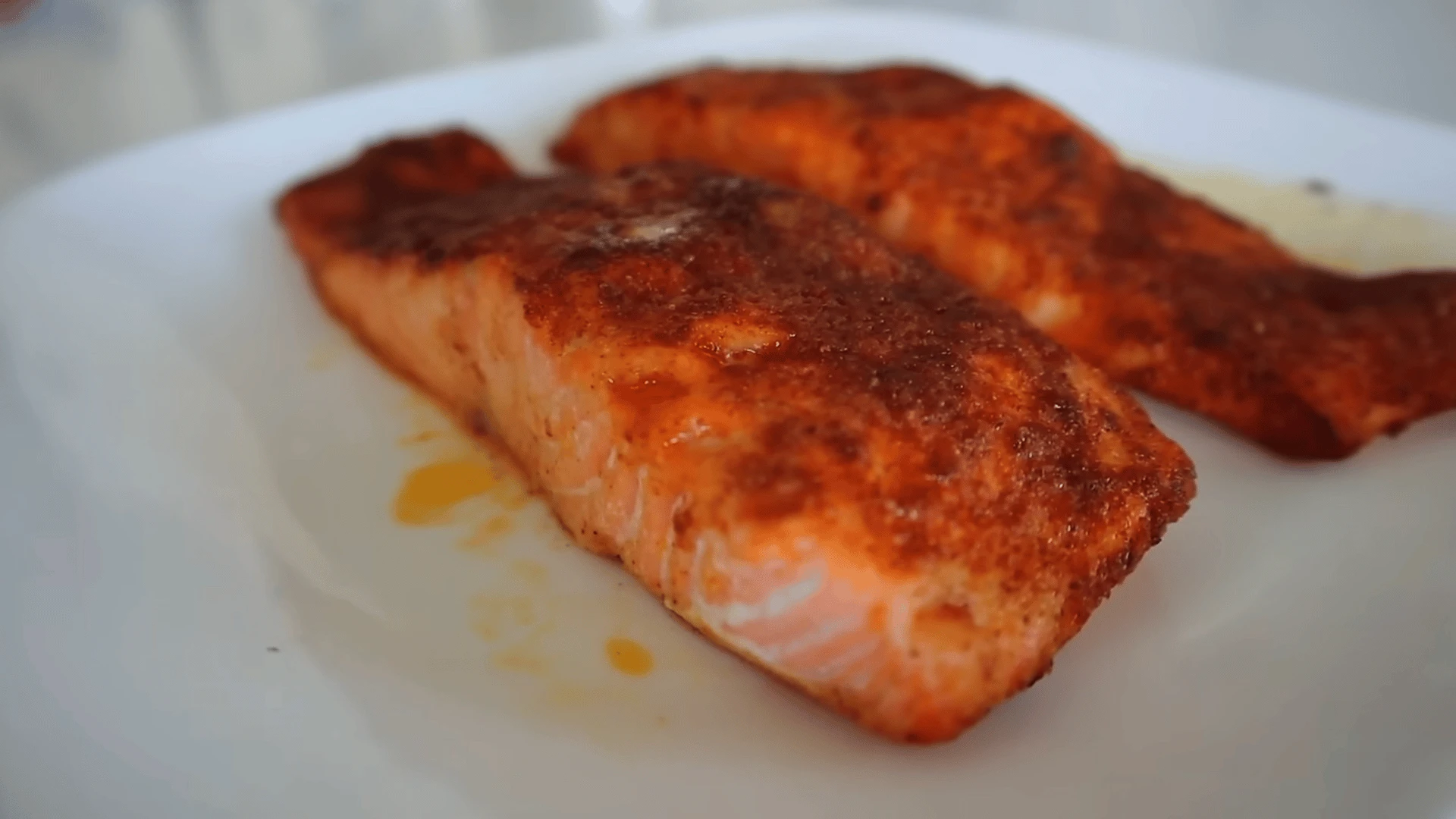
Pat the food dry with a paper towel before it goes into the basket. Moisture on the surface creates steam, which works against the crispiness the air fryer is designed to produce.
Cut ingredients into evenly sized pieces so everything finishes at the same time. A light coat of oil, around one to two teaspoons, brushed or sprayed on, is enough for most proteins and vegetables.
More oil than that tends to create smoke and soggy results.
Step 5: Set the Temperature and Time Using the Conversion Rule
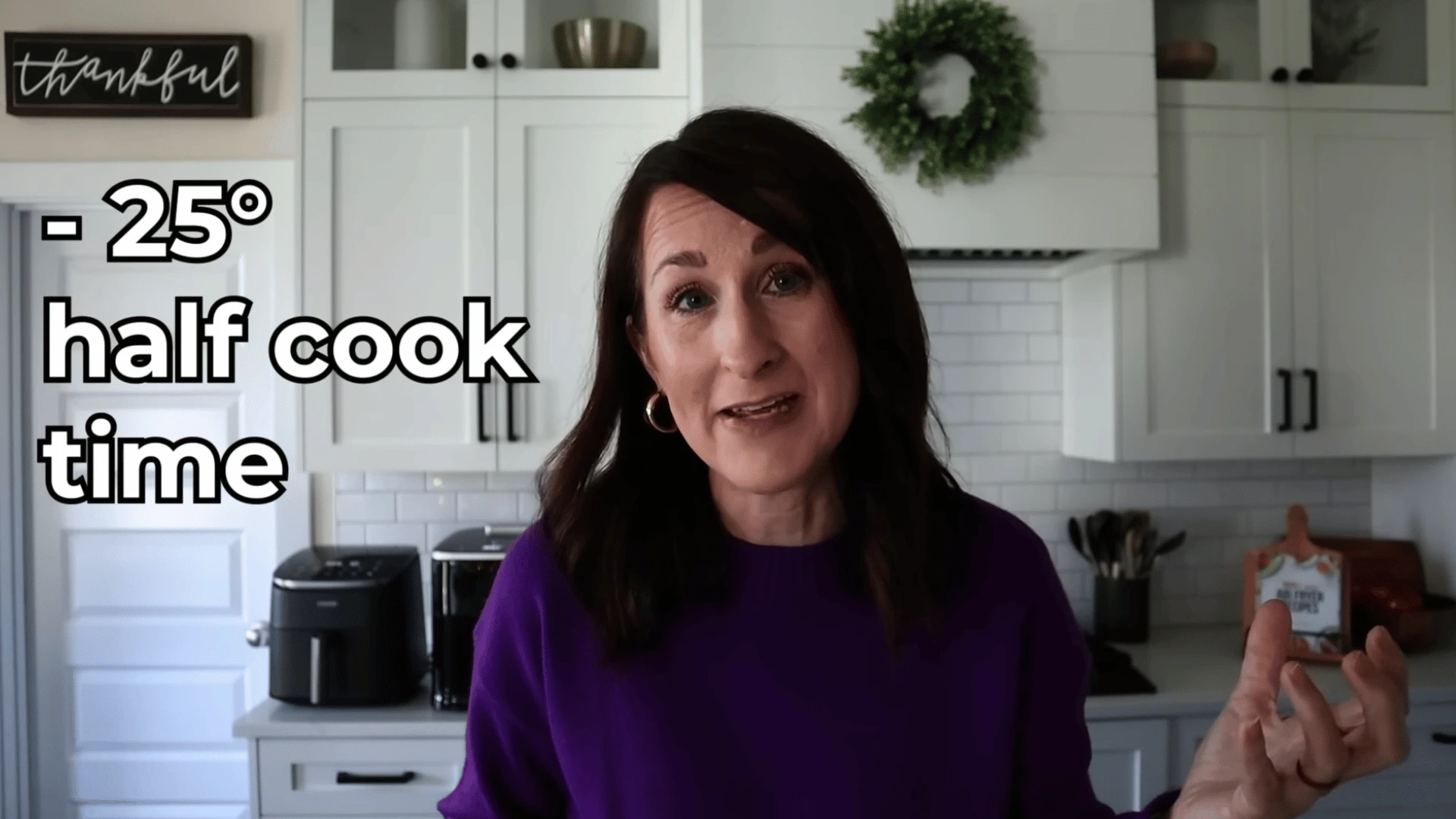
If you are following a standard oven recipe, drop the temperature by 25 degrees Fahrenheit and reduce the cook time by approximately 20 percent.
So a recipe calling for 400F for 25 minutes in a conventional oven roughly translates to 375F for 20 minutes in the air fryer.
Treat those numbers as a starting point, not a guarantee, and check the food a few minutes early the first time you make a new dish.
Step 6: Shake or Flip Halfway Through
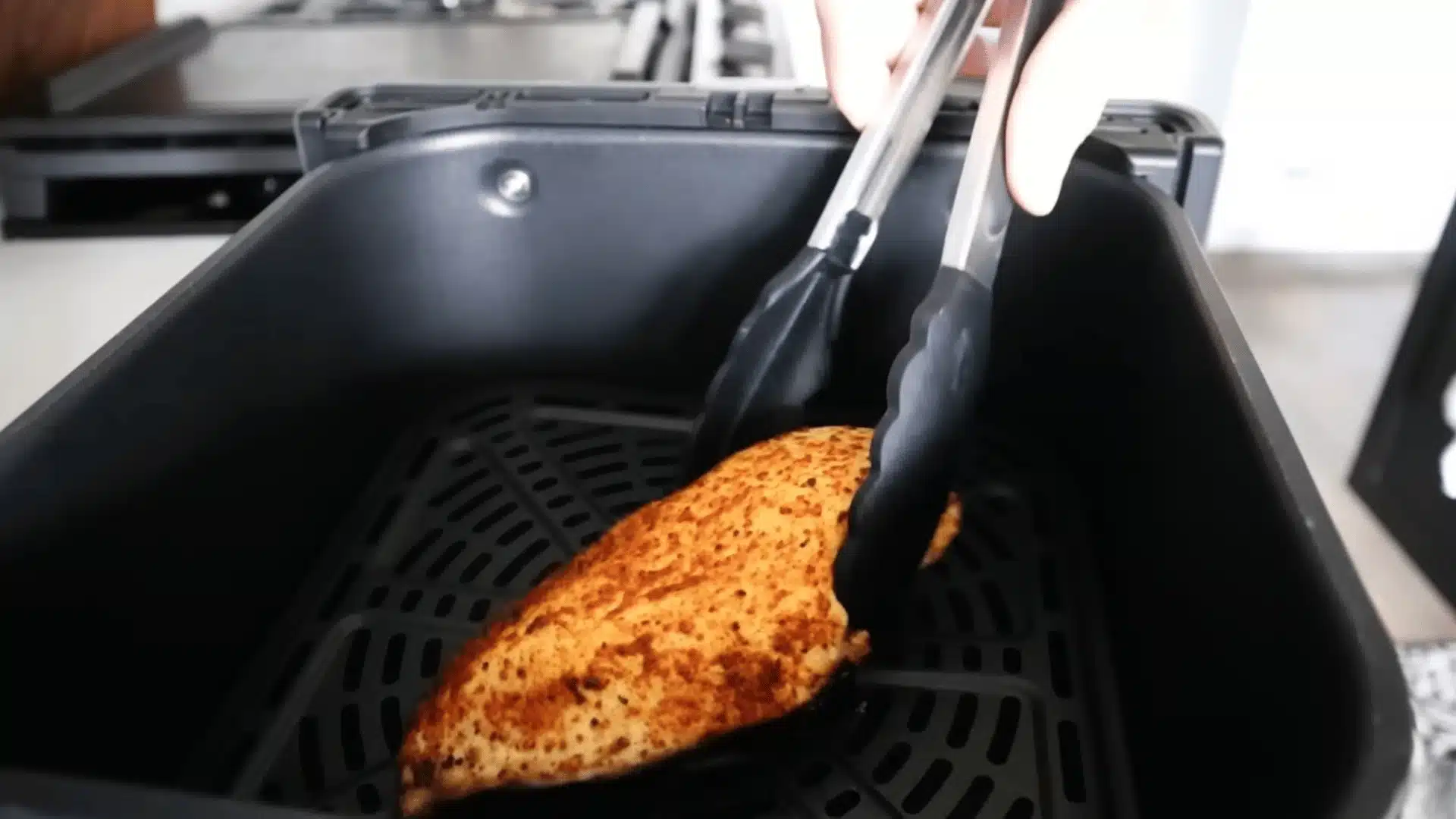
About halfway through the cook time, open the basket and either shake it or flip larger pieces with tongs.
Air circulates around the food, but pieces resting flat on the basket floor receive direct heat from only one side without intervention.
A quick shake or flip at the midpoint yields a golden crust on both sides, rather than a pale, undercooked underside. This single habit makes a visible difference in almost every cook.
Step 7: Check Internal Temperature, Not Just Cook Time
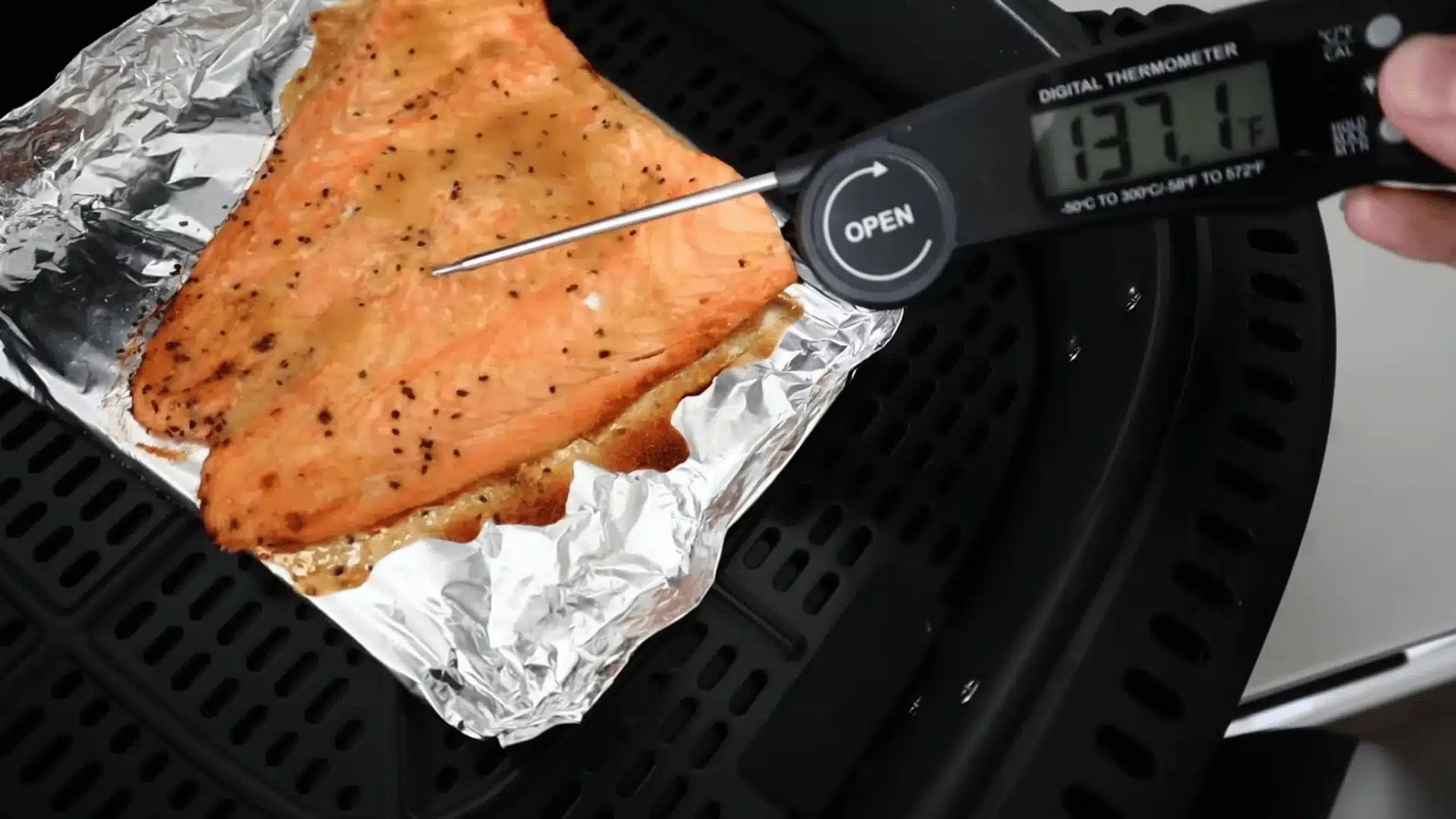
Cook time is a guide. The internal temperature of the food is what actually tells you it is done. Use an instant-read thermometer every time until you know your machine well.
Chicken needs to reach 165 degrees Fahrenheit internally. Steak varies by preference, from around 130F for medium-rare up to 160F for well done.
Pork reaches food safety at 145F, and most baked goods are done internally at 190F to 210F. A printed temperature reference sheet stuck inside a kitchen cabinet makes this step effortless.
For a clearer look at each step in action, you can watch this full tutorial by Empowered Cooks below.
Best Foods to Cook in an Air Fryer with Temperature & Time
Air fryers handle far more than frozen fries. Chicken thighs, salmon, steak, bacon, shrimp, roasted vegetables, bread rolls, and quesadillas all produce excellent results.
Frozen convenience foods crisp up fast because they already contain fat. Fresh proteins benefit from a light oil coat before seasoning.
Avoid wet batters since liquid coatings drip before setting, use breadcrumbs or seasoned flour instead.
| Food | Temp (°F) | Time | Flip? |
|---|---|---|---|
| Chicken thighs | 400°F | 22–25 min | Yes, halfway |
| Salmon fillet | 375°F | 10–12 min | No |
| Frozen fries | 400°F | 15–18 min | Shake halfway |
| Bacon strips | 350°F | 8–10 min | Yes, halfway |
| Broccoli florets | 375°F | 10–12 min | Shake halfway |
| Steak (medium) | 400°F | 10–14 min | Yes, halfway |
| Frozen nuggets | 400°F | 10–12 min | Shake halfway |
Always check the internal temperature before serving.
Air Fryer Tips for Crispy and Even Results
Small adjustments before and during cooking can improve texture, crispiness, and consistency without changing the recipe itself.
- Preheat for better crispiness: Always preheat when cooking proteins or foods that need a crispy exterior. Most air fryers heat up in 3 to 5 minutes, helping food sear rather than steam.
- Skip preheating for some foods: Preheating matters less when reheating leftovers or cooking naturally fatty foods since they crisp more easily on their own.
- Keep food in a single layer: Avoid overlapping pieces inside the basket. Proper airflow cooks food evenly, while overcrowding creates soft or undercooked spots.
- Cook in smaller batches: Two smaller batches usually deliver better texture and color than one overloaded basket.
- Use a pump-style oil sprayer: Refillable pump sprayers coat food evenly without the propellants found in aerosol sprays that may damage nonstick coatings over time.
- Apply only a light oil coating: One to two teaspoons of oil is enough for most fresh ingredients and helps the seasoning stick properly.
- Pat ingredients dry first: Remove excess moisture from vegetables and proteins with a paper towel before cooking to reduce steaming and improve crispiness.
- Check temperature with a thermometer: An instant-read thermometer gives more accurate results than relying only on cooking time, especially for meat and seafood.
How to Clean an Air Fryer the Right Way?
Cleaning the air fryer after every use is the single habit that keeps it performing well in the long term. Wait for the unit to cool completely, then remove the basket and tray.
Wipe out any loose debris with a dry paper towel first. Apply a grease-cutting dish soap directly to the basket, let it sit for ten minutes, then wipe again and rinse with hot water.
For the interior of the unit, use a damp cloth to wipe down the walls and the area around the heating element.
Avoid abrasive scrubbers, which scratch nonstick coatings and accelerate wear. Most baskets are technically dishwasher-safe, but handwashing extends the nonstick coating considerably.
If you cook sticky or heavily marinated foods, a 10-minute soak before washing lifts residue without scrubbing.
Things You Should Never Put in an Air Fryer
Some foods and materials can damage your appliance, create smoke, or become a safety hazard.
- Wet batter: Liquid coatings like tempura or pancake batter drip through the basket before setting, creating a mess and uneven cooking. Use dry coatings instead.
- Leafy greens: Spinach or kale fly around the basket from the fan, hit the heating element, and can burn.
- Cheese (uncontained): Melted cheese drips through the basket and burns onto the heating element. Use cheese only as a topping on enclosed foods.
- Large whole roasts: Oversized cuts block airflow, leading to uneven cooking.
- Aerosol cooking sprays: Propellants in aerosol cans degrade nonstick coatings over time. Use a pump sprayer.
- Styrofoam or plastic containers: These melt at cooking temperatures and release harmful chemicals.
Common Air Fryer Mistakes Beginners Make
Getting good results consistently requires knowing what to avoid, not just what to do.
- Overcrowding the basket: When food is stacked, hot air cannot circulate and food steams rather than crisps. Single layer only, run two batches if needed.
- Skipping the dry-pat step: Surface moisture is the most common reason air-fried food comes out soggy. Pat everything dry before adding oil or seasoning.
- Not adjusting for oven recipes: Applying conventional oven temperatures directly results in overcooked exteriors and undercooked centres. Always convert down by 25°F and reduce cook time.
- Forgetting to clean after each use: Grease and residue left in the basket smoke at high heat, affecting flavour and shortening the nonstick coating’s life. A quick clean after every session prevents this
Conclusion
The air fryer is a genuinely useful kitchen tool, but it requires a small amount of upfront knowledge.
The dry first run, the 25-degree temperature conversion, the internal thermometer check, and the halfway shake are not complicated steps.
They are just the difference between food that consistently comes out well and food that is hit-or-miss. Once those habits are in place, you can cook almost anything in it, and the results become predictable.
Get comfortable with the temperature conversion rule first, then start experimenting with fresh proteins and vegetables rather than staying in the frozen-food lane.
Your specific model may run slightly hotter or cooler than average, so the first few cooks are really about learning its personality.
Have a dish you are planning to try first in your air fryer? Drop it in the comments and share how it goes.
Frequently Asked Questions
Can I Put Aluminum Foil or Parchment Paper in the Air Fryer?
Yes, but with conditions. Perforated parchment paper works well and keeps the basket cleaner. Solid aluminum foil that covers the basket floor blocks airflow and reduces crisping. If you use foil, leave the sides open or use a perforated version.
Why Does My Air Fryer Smoke During Cooking?
Smoke usually comes from fat dripping onto the heating element or from food residue left in the basket from a previous cook. A small amount of water added to the bottom tray under the basket reduces smoke when cooking fatty foods like bacon or sausage.
Can You Reheat Leftovers in an Air Fryer?
Yes, air fryers are excellent for reheating foods like pizza, fries, fried chicken, and sandwiches because they restore crispiness better than microwaves.