There is nothing more frustrating than filling a kettle for tea or coffee and spotting white flakes floating in the water. At first, it seems harmless.
Then the kettle starts taking longer to boil, strange marks appear inside, and drinks no longer taste quite right.
I have lived in areas with hard water, and keeping a kettle clean has always taken more attention than most people expect.
The good news is that learning how to descale a kettle properly is much easier than many expect.
A few simple ingredients and a little time can make an old kettle look and work much better again.
In this blog, you will get to know different methods to descale a kettle and tips to keep the kettle clean without putting extra effort.
What is Limescale in a Kettle?
Limescale in a kettle is the white, chalky buildup that forms inside the kettle over time.
It usually appears when water contains high levels of minerals like calcium and magnesium, commonly known as hard water.
Every time the kettle boils water, small mineral deposits are left behind, and these deposits slowly turn into thick limescale.
Limescale is not usually dangerous, but it can affect the taste of tea or coffee and make the kettle work harder to boil water.
Regular descaling helps keep the kettle clean, improves performance, and extends its lifespan.
Signs Your Kettle Needs Descaling
Limescale buildup does not happen overnight, but a kettle usually gives clear signs when it needs cleaning. Ignoring these signs can affect water quality, boiling speed, and the overall performance of the kettle. Here are the most common indicators to watch for:
- White Chalky Marks: White or cloudy deposits inside the kettle are one of the first signs of limescale buildup.
- Floating White Flakes: Small flakes or particles in boiled water often mean mineral deposits are breaking loose from the kettle walls.
- Slower Boiling Time: A kettle with heavy limescale takes longer to heat water because the buildup affects heat transfer.
- Strange Taste in Drinks: Tea or coffee may start tasting dull or slightly metallic when mineral deposits collect inside the kettle.
- Louder Boiling Noise: Excess limescale can make the kettle sound unusually loud or rumble more during boiling.
- Auto-Shutoff Misfires: Heavy scale can interfere with the thermostat sensor, causing the kettle to switch off too early or not at all.
How to Descale a Kettle with White Vinegar
Common methods include using vinegar, citric acid, lemon juice, or commercial descalers to dissolve stubborn buildup safely and effectively.
Step 1: Add Vinegar and Water to the Kettle
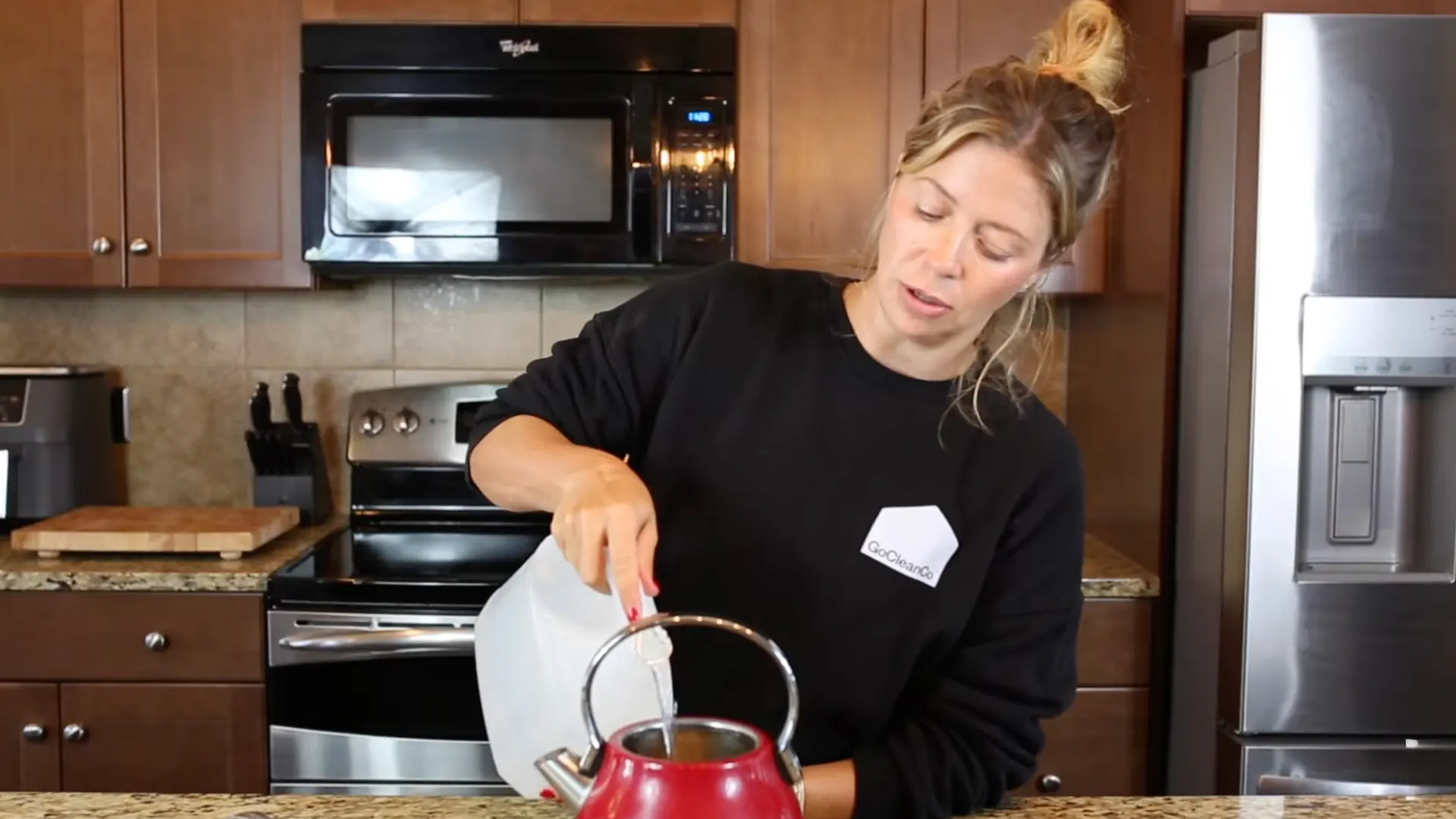
Start by pouring a small amount of white vinegar directly into the kettle. There is no need to measure exactly because the mixture does not have to be perfect.
After adding vinegar, pour in enough water to cover the mineral buildup inside the kettle.
This simple combination helps break down hard water stains and limescale naturally without using harsh cleaning chemicals.
Step 2: Boil the Mixture and Let it Soak
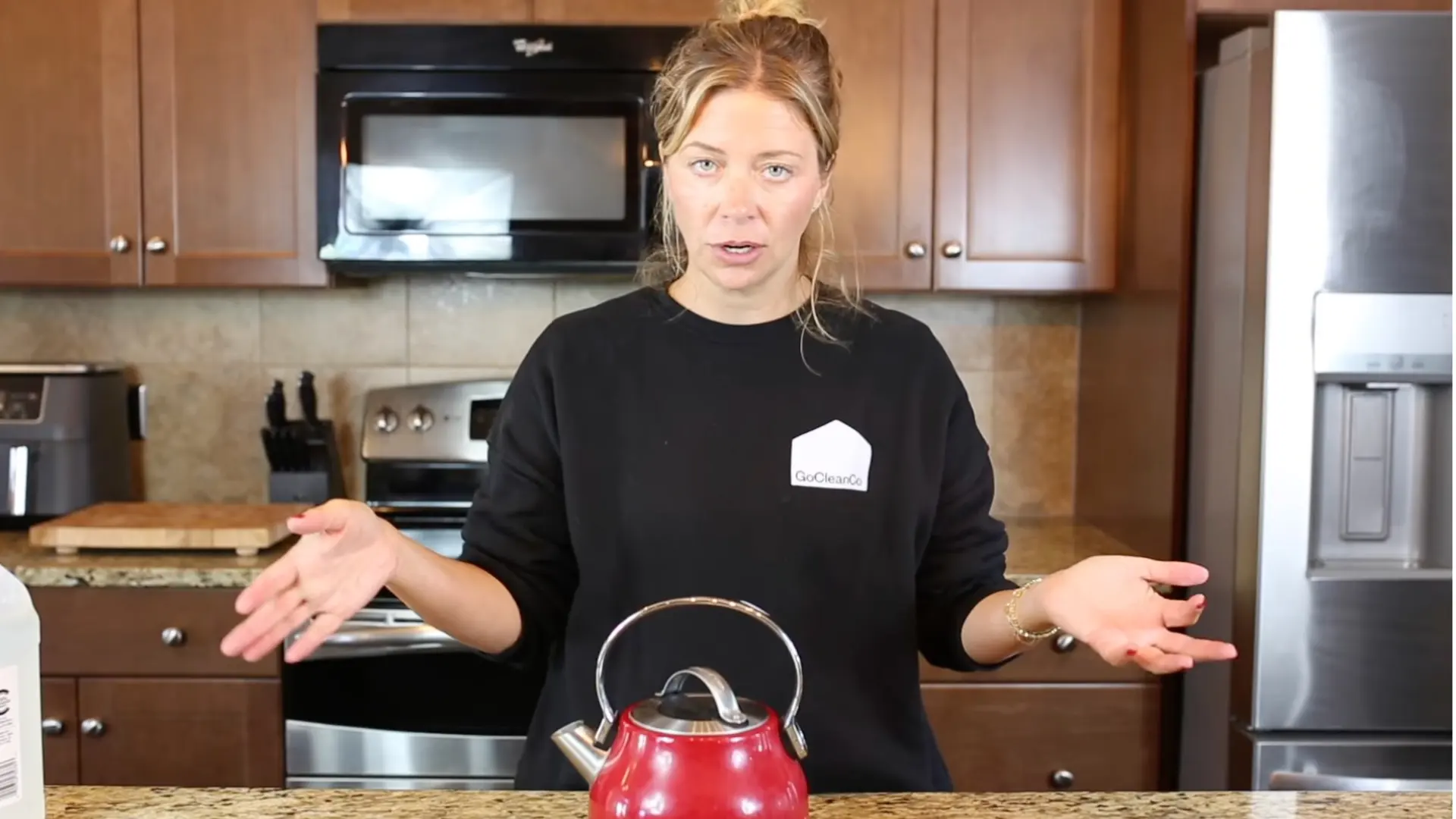
Turn the kettle on and allow the vinegar and water mixture to come to a full boil. Heating the solution helps loosen stubborn mineral deposits much faster than soaking alone.
Once the kettle finishes boiling, leave the mixture inside for at least 20 minutes.
You can leave the kettle for much longer, which helps remove buildup without extra scrubbing.
Step 3: Clean the Outside of the Kettle
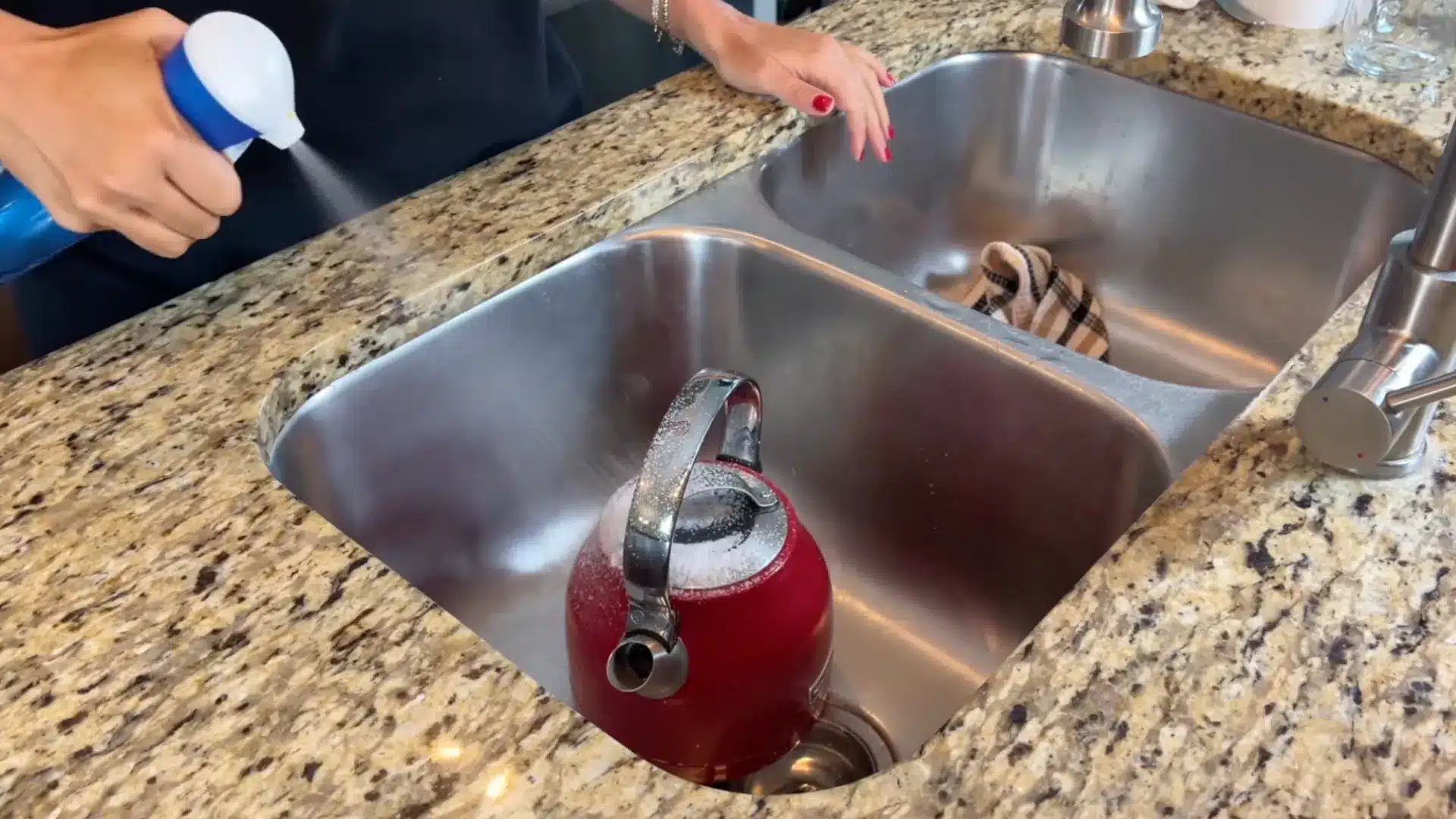
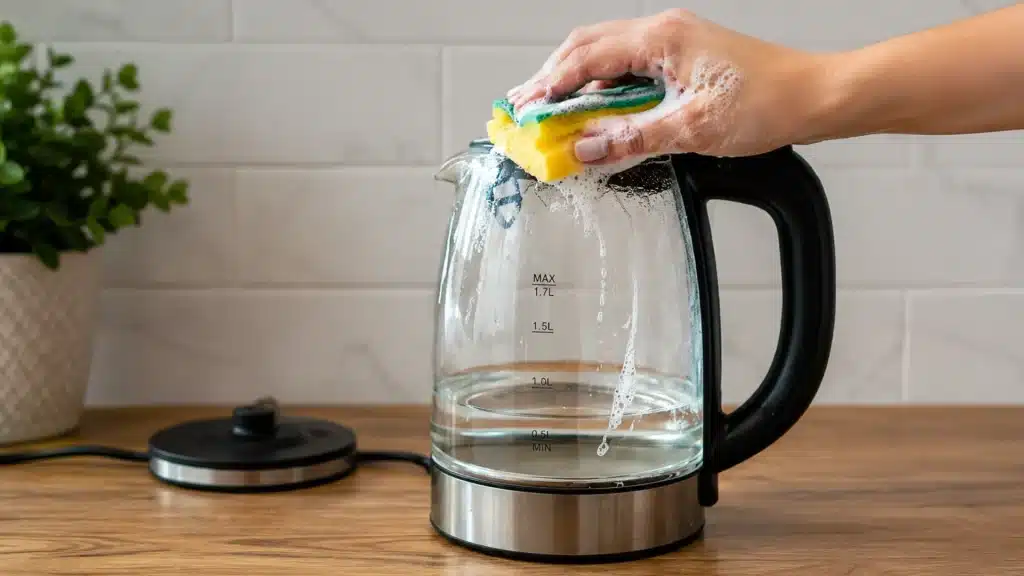
While the inside is soaking, clean the outside of the kettle to remove grease, splatter, and dirt.
Spray the surface with a grease-cutting cleaner like Dawn Power Wash and let it sit briefly. Use a soft sponge or cloth to scrub around the handle, lid, and small crevices.
This helps restore the kettle’s shine and removes sticky kitchen residue.
Step 4: Empty the Kettle and Check the Results
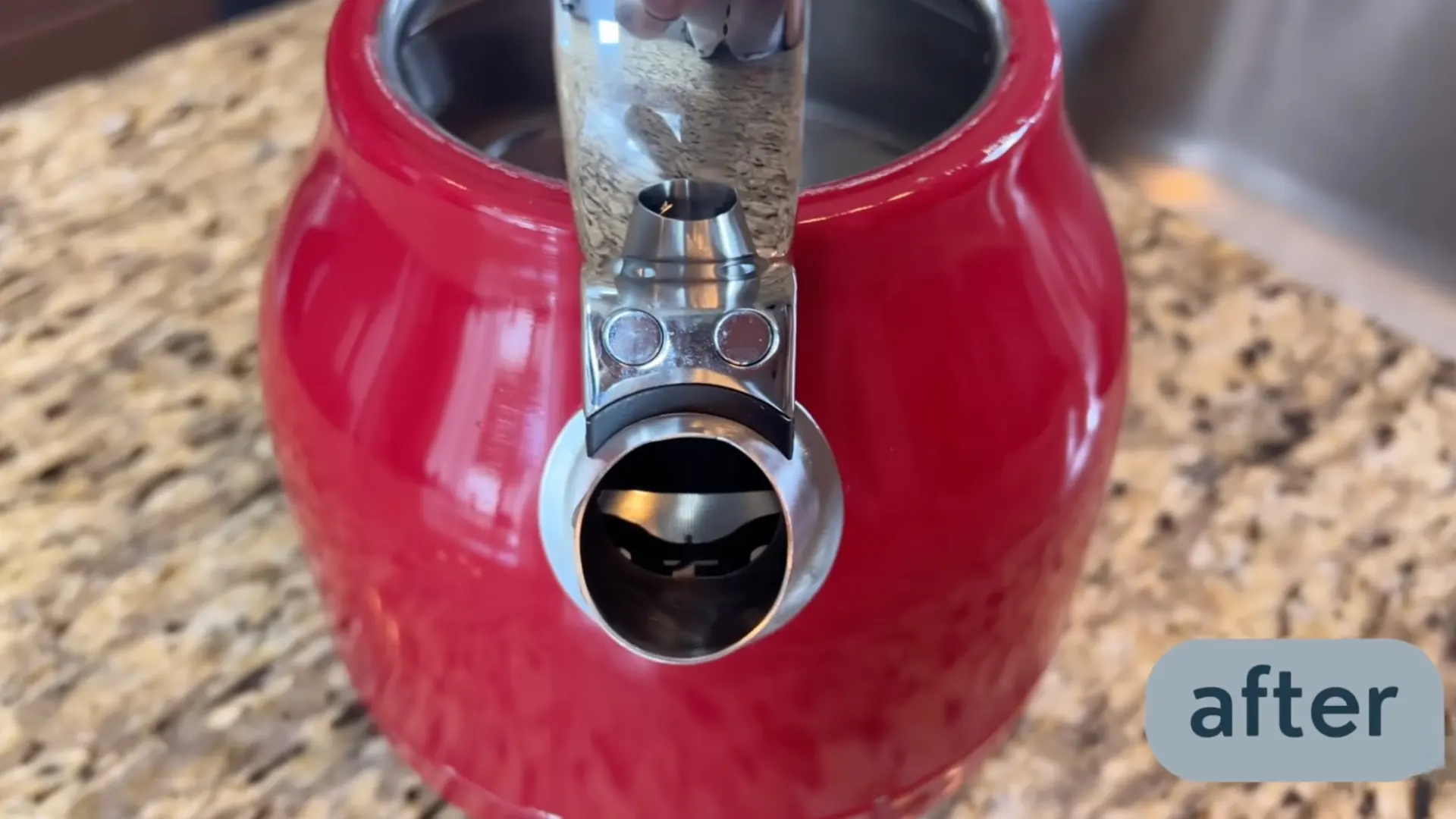
After soaking, pour out the vinegar solution carefully into the sink. Most of the limescale and hard water stains should already be dissolved.
The inside will look noticeably cleaner without heavy scrubbing. If any small spots remain, gently wipe them away with a soft sponge.
Avoid using rough scrubbers that could scratch the kettle interior.
Step 5: Rinse the Kettle Thoroughly
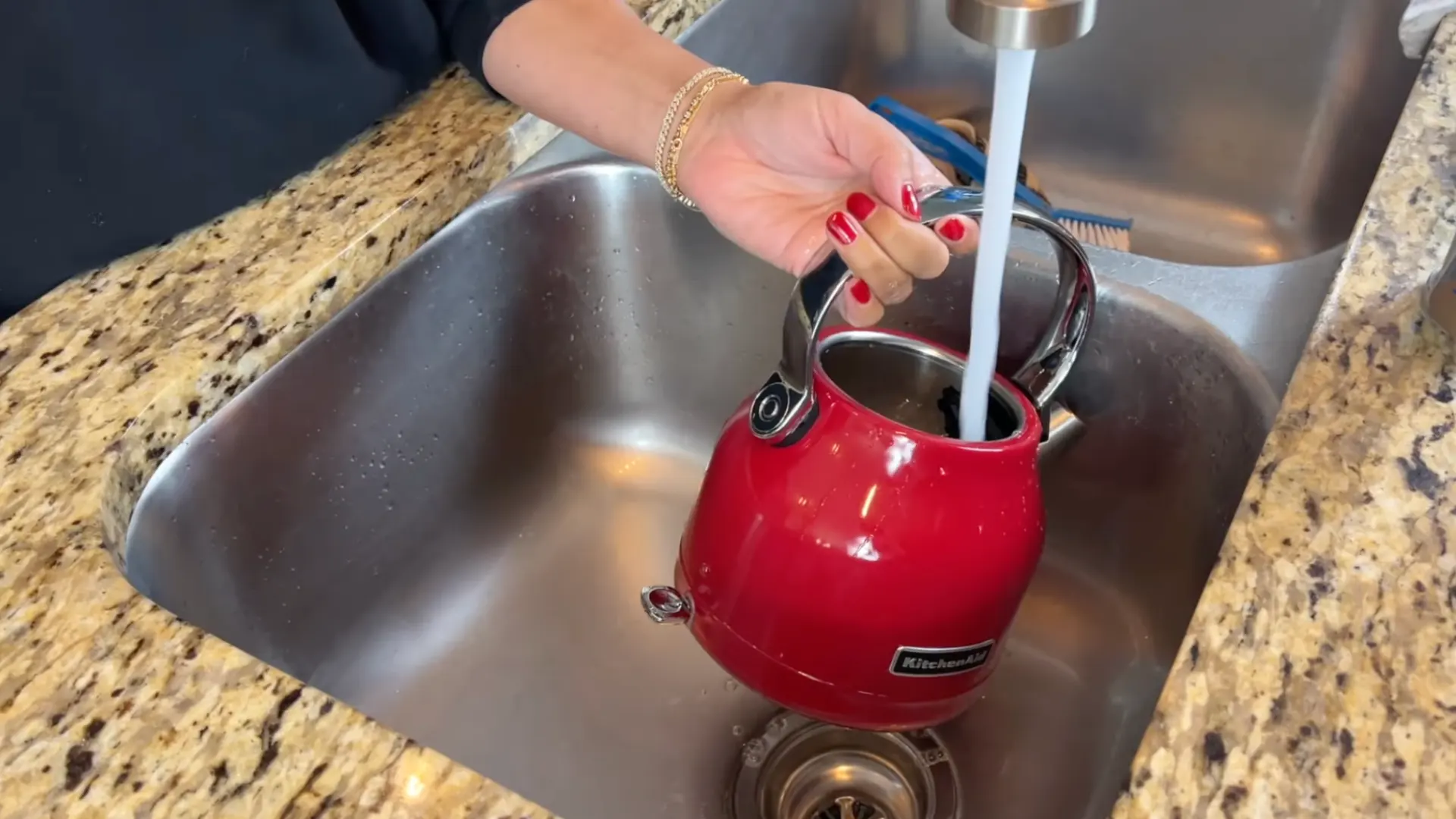
Rinse the kettle several times with clean water to remove any remaining vinegar smell or taste. For better results, fill the kettle with fresh water, boil it once, and discard the water.
Repeat if needed. This final step makes sure the kettle is clean and ready for making tea or coffee without any leftover vinegar flavor affecting the taste.
This tutorial is based on a helpful video by GoCleanCo. You can check out the original video on their YouTube channel here or watch it below.
Other Methods to Descale a Kettle
Citric acid and lemon juice are two popular methods that can remove limescale safely while keeping the kettle fresh and clean. Both options are easy to use, affordable, and commonly recommended for regular kettle maintenance.
The same principles apply when you want to descale your coffee maker, where mineral buildup causes similar problems in the heating system.
1. Citric Acid
Citric acid is one of the most effective ways I consider to descale a kettle, especially when dealing with thick limescale buildup.
It works quickly to break down mineral deposits without leaving behind a strong smell like vinegar often does.
Instructions:
- To use it, fill the kettle with water and add one to two tablespoons of citric acid powder.
- Boil the mixture, let it sit for about 20 to 30 minutes, then empty and rinse the kettle thoroughly.
Citric acid is commonly used because it cleans efficiently, rinses easily, and helps keep stainless steel kettles looking clean and polished after descaling.
2. Lemon Juice
Lemon juice is a natural and beginner-friendly way to descale a kettle while leaving a fresh smell behind.
The mild acidity in lemon juice helps dissolve light to moderate limescale buildup without using strong chemicals.
Instructions:
- Mix lemon juice with water and fill the kettle halfway. For sliced lemons, boil the mixture three times for the best results; for bottled lemon juice, one boil is sufficient
- Let it sit for around 30 minutes before rinsing thoroughly.
Fresh lemons and bottled lemon juice both work. Note that lemon juice is milder than citric acid powder; for stubborn or thick scale, citric acid will deliver better results.
3. Baking soda
Baking soda (bicarbonate of soda) is a gentler option suited to lighter scale or plastic kettles where strong acid solutions are not recommended.
Instructions:
- Fill the kettle halfway with water and add 1 tablespoon of baking soda.
- Boil the mixture, then leave it to sit for one hour.
- Empty and rinse well. For any remaining deposits, scrub lightly with a paste of baking soda and water using a soft brush, then rinse again.
Quick Comparison: Which Method Should You Use?
| Method | Best for | Smell | Cost |
|---|---|---|---|
| White vinegar | Light to moderate scale | Strong, dissipates after rinsing | Very low |
| Citric acid | Moderate to heavy scale | Mild | Low |
| Lemon juice | Light scale, sensitive households | Fresh | Low |
| Baking soda | Light scale, plastic kettles | Neutral | Very low |
| Commercial descaler | Heavy scale, fast results | Varies by product | Medium |
Community Recommendations to Descale a Kettle
Many Reddit users recommend simple household ingredients as the best way to descale a kettle.
Vinegar remains one of the most popular choices because it is cheap, effective, and easy to use.
Several users suggested boiling a mix of vinegar and water, letting it soak, and rinsing thoroughly afterward.
Others preferred lemon juice because it removes limescale without leaving a strong smell or unpleasant taste behind.
Citric acid also received strong praise from users who wanted fast results and less odor compared to vinegar.
Some people mentioned that regular cleaning prevents thick buildup and makes descaling much easier over time. A few users even recommended filtered or softer water to reduce future limescale problems.
Overall, Reddit discussions show that vinegar, lemon juice, and citric acid are the most trusted and commonly recommended descaling methods.
How Often Should You Descale a Kettle?
How often a kettle needs descaling depends on water hardness and how frequently it is used.
- Hard water areas (above 200 mg/l calcium carbonate): descale every 2 to 4 weeks.
- Soft water areas: once every 1 to 3 months is usually enough.
- Kettles used several times a day need more frequent cleaning than those used occasionally.
Descaling as soon as white marks, flakes, or slower boiling appear, rather than waiting for heavy buildup, makes the whole process faster each time.
Commercial Kettle Descalers: Are They Worth It?
Commercial kettle descalers are worth considering when a kettle has heavy limescale buildup that natural methods cannot remove easily.
These products are specially designed to break down mineral deposits faster and often require less soaking time compared to vinegar or lemon juice.
Many commercial descalers are also made to reduce strong smells and leave less residue after rinsing.
They can be useful in homes with very hard water or for kettles used multiple times a day.
Popular examples include
In my experience, commercial descalers earn their price in homes with very hard water, where natural methods need repeating every couple of weeks.
For everyone else, vinegar or citric acid covers it without the extra cost. Always follow label instructions carefully and rinse the kettle thoroughly before use.
Common Descaling Mistakes to Avoid
Many kettle descaling issues happen because of simple mistakes like poor rinsing, harsh scrubbing, or skipping key areas where limescale builds up the fastest.
- Using steel wool: Rough scrubbers can scratch the kettle interior, giving limescale more places to cling and build up over time.
- Skipping extra rinses: A single rinse is usually not enough after descaling. Boil and discard fresh water at least twice to remove leftover taste and smell.
- Mixing ingredients: Adding baking soda with vinegar or lemon juice cancels out the cleaning effect, making the descaling process less effective.
- Overfilling the kettle: Descaling liquid expands while boiling. Filling past the three-quarter mark can cause messy overflow from the spout.
- Ignoring filters: Limescale often gathers around the mesh filter and spout area, so both should be cleaned carefully during every descaling session.
Tips to Prevent Limescale from Coming Back Quickly
Limescale can return fast if a kettle is used daily, especially in hard water areas. Simple habits can slow down mineral buildup and keep the kettle cleaner for longer. These tips can also help improve boiling performance and reduce the need for frequent deep cleaning.
- Empty the Kettle After Use: Leaving water sitting inside the kettle allows minerals to settle and form limescale faster.
- Use Filtered Water: Filtered water contains fewer minerals, which helps reduce calcium and magnesium buildup inside the kettle. The same benefit applies to any hot drink appliance, including an automatic coffee machine, where scale buildup in internal pipes is harder to reach.
- Avoid Overfilling the Kettle: Boil only the amount of water needed to reduce leftover water and mineral residue.
- Wipe the Interior Regularly: A quick wipe with a soft cloth helps remove light deposits before they become thick limescale.
- Descale the Kettle Frequently: Regular descaling prevents heavy buildup and makes cleaning much easier over time.
- Clean the Spout and Filter: Mineral deposits often collect around the spout and the removable filter, so these areas should be cleaned regularly.
- Keep the Lid Open After Boiling: Allowing the kettle to air dry can reduce moisture buildup and slow down scale formation inside.
Conclusion
Knowing how to descale a kettle properly can make a big difference in both performance and cleanliness.
Whether using vinegar, citric acid, lemon juice, or a commercial descaler, the process is simple and does not take much time.
Small cleaning habits can also help prevent limescale from building up too quickly in the future.
A clean kettle lasts longer, works better, and stays more hygienic for daily use. The best part is that most descaling methods use affordable ingredients that are already available at home.
Have you tried any of these methods or have another favorite way to descale a kettle?
Share your experience and tips in the comments below to help other readers keep their kettles clean and working properly.
Frequently Asked Questions
Can Descaling a Kettle Remove Rust Spots?
Descaling can help remove light rust stains caused by mineral buildup, but deep rust damage may not fully disappear. If rust keeps returning, the kettle may need replacement.
Why Does My Kettle Still Smell After Descaling?
A lingering smell usually happens when the kettle is not rinsed enough after cleaning. Boiling fresh water once or twice and emptying it can help remove any leftover odor.
Is It Safe to Descale a Plastic Kettle?
Yes, plastic kettles can usually be descaled safely with vinegar, lemon juice, or citric acid. Always check the manufacturer’s cleaning instructions before using strong solutions.