Your watch just became your doctor’s best assistant. I’ve tracked many smartwatch releases, and the Apple Watch Series 11 is one of the few that genuinely made me pause.
It can now detect patterns of high blood pressure passively, over 30 days, without a cuff or a clinic.
High blood pressure affects over 1.3 billion people worldwide, and most don’t know they have it.
That makes daily health monitoring more important than ever, especially for people balancing busy routines, stress, poor sleep, and limited time for regular medical checkups.
Whether you’re a runner chasing a PR, a professional who skips checkups, or someone managing their health more seriously, the Series 11 was built for you.
This blog post covers every feature, spec, and honest trade-off worth knowing before you buy.
What’s New in Apple Watch Series 11?
The Apple Watch Series 11 builds on the slim, comfortable design introduced with the Series 10, but the biggest upgrades are under the hood.
Apple improved the battery to deliver a true 24-hour experience, added optional 5G cellular connectivity, and strengthened the aluminum display with a ceramic-coated Ion-X glass for better scratch resistance.
Health tracking also takes a major step forward with hypertension notifications and the new Sleep Score feature in watchOS 26.
Apple kept the S10 chip from the previous generation, making this the first recent model without a processor upgrade.
Instead, the focus shifts toward smarter sensors, software improvements, and AI-powered tools like Workout Buddy and the new Liquid Glass interface.
Apple Watch Series 11: Design, Display, and Color Options
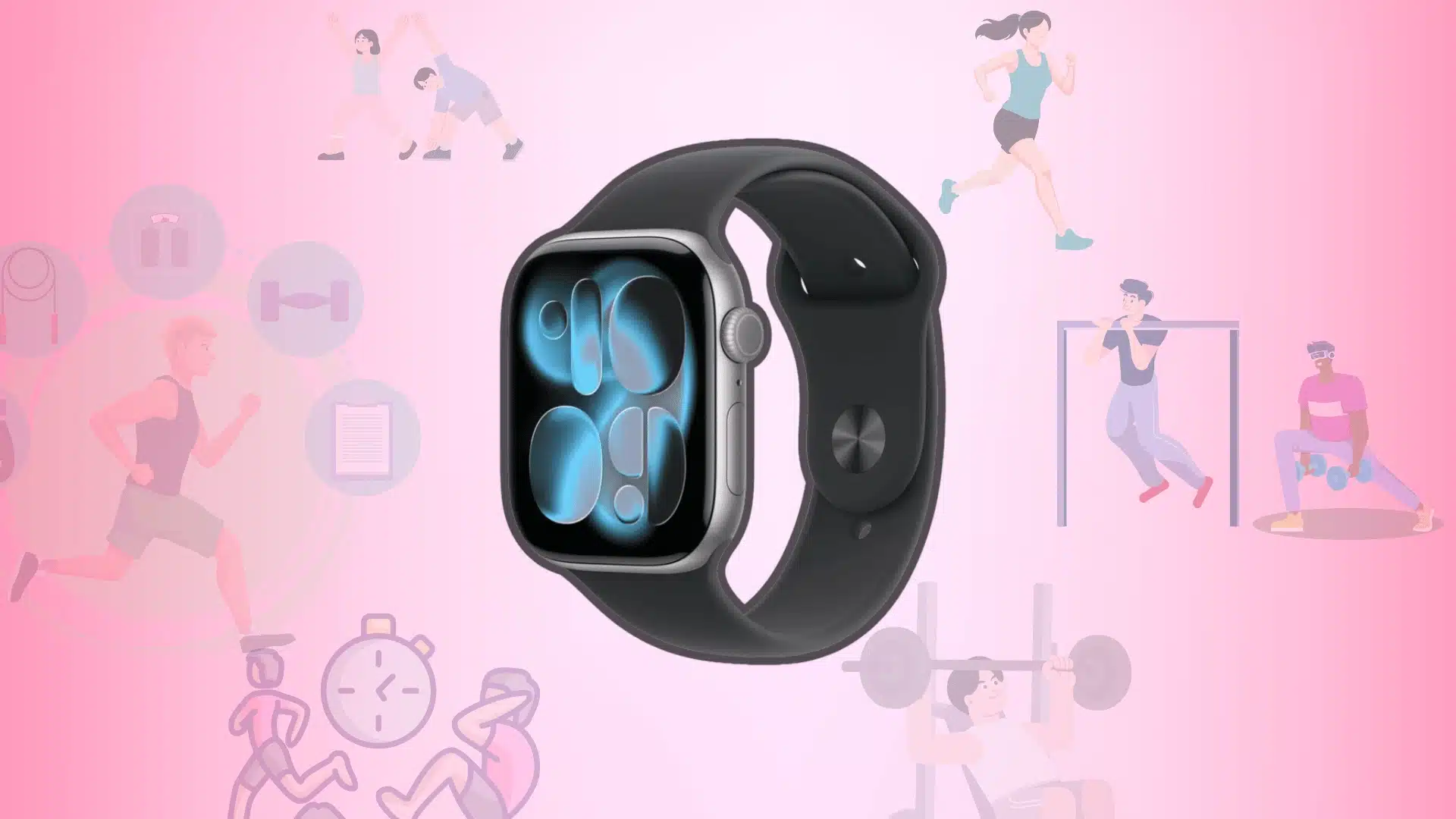
The Apple Watch Series 11 keeps the slim 9.7mm design introduced with the previous generation and remains available in 42mm and 46mm sizes.
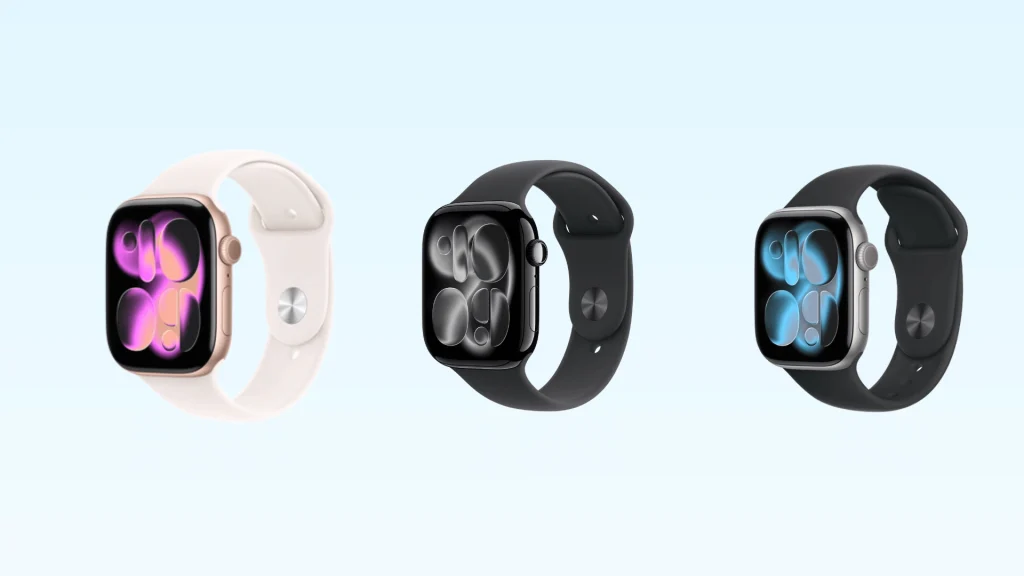
Aluminum models come in space gray, jet black, rose gold, and silver, while titanium versions are offered in natural, gold, and slate finishes with sapphire crystal protection.
The biggest hardware improvement is the updated aluminum display.
Apple added a ceramic coating to the Ion-X glass using a physical vapor deposition process, making the screen twice as scratch-resistant as the earlier model during everyday wear and workouts.
The watch also carries 50-meter water resistance, IP6X dust resistance, and introduces watchOS 26 features like the Liquid Glass interface and new Flow and Exactograph watch faces.
Apple Watch Series 11 Health Features and Wellness Upgrades
These upgrades make health tracking more proactive and insightful while building on the reliable foundation of previous Apple Watch models.
1. Hypertension Notifications
The headline health addition uses the optical heart sensor to detect long-term trends suggestive of high blood pressure.
Instead of displaying exact blood pressure readings, it analyzes blood vessel responses and heartbeat patterns over 30-day periods and alerts users if patterns linked to hypertension are detected.
Apple developed this feature using machine learning trained on research involving more than 100,000 participants, followed by clinical validation studies.
2. Sleep Score
A new daily wellness metric combines sleep duration, bedtime consistency, interruptions, breathing patterns, and sleep stages into a single easy-to-understand score ranging from 0 to 100.
This feature helps users quickly understand overall sleep quality without studying complex sleep data every morning.
The Apple Watch Series 11 also provides personalized recommendations and bedtime insights that can help improve sleeping habits over time.
3. Core Health Tools
The Series 11 continues offering advanced health tools such as ECG monitoring, blood oxygen tracking, sleep apnea detection, crash detection, fall detection, and wrist temperature sensing for overnight health analysis and cycle tracking.
These features work together to provide a more complete picture of daily health and physical condition.
Apple has also improved sensor accuracy and background monitoring to deliver faster alerts and more reliable readings throughout the day.
Apple Watch Series 11 Battery Life: What to Expect
The standard battery life rating is 24 hours with GPS, which includes 300 time checks, 90 notifications, 15 minutes of app use, a 60-minute workout with Bluetooth audio, and 6 hours of sleep tracking.
That’s a modest but real improvement over the Series 10. Enable Low Power Mode, and that number extends to 38 hours under similar conditions, minus some active features.
Fast charging is probably the spec that matters most in daily use. Fifteen minutes on the Apple Watch Magnetic Fast Charger to USB-C Cable delivers around 8 hours of use.
For anyone who forgets to charge overnight, a short morning top-up on the charger handles most situations.
Independent runner testing from The Run Testers confirmed that the Series 11 lasts well over a day in real conditions, including a long run, without needing a midday charge. The improvement is noticeable if you’re upgrading from a Series 8 or earlier.
If you want the full picture on how long Apple Watches actually last across generations, that breakdown is worth reading before you decide.
Apple Watch Series 11 for Running and Workout Tracking
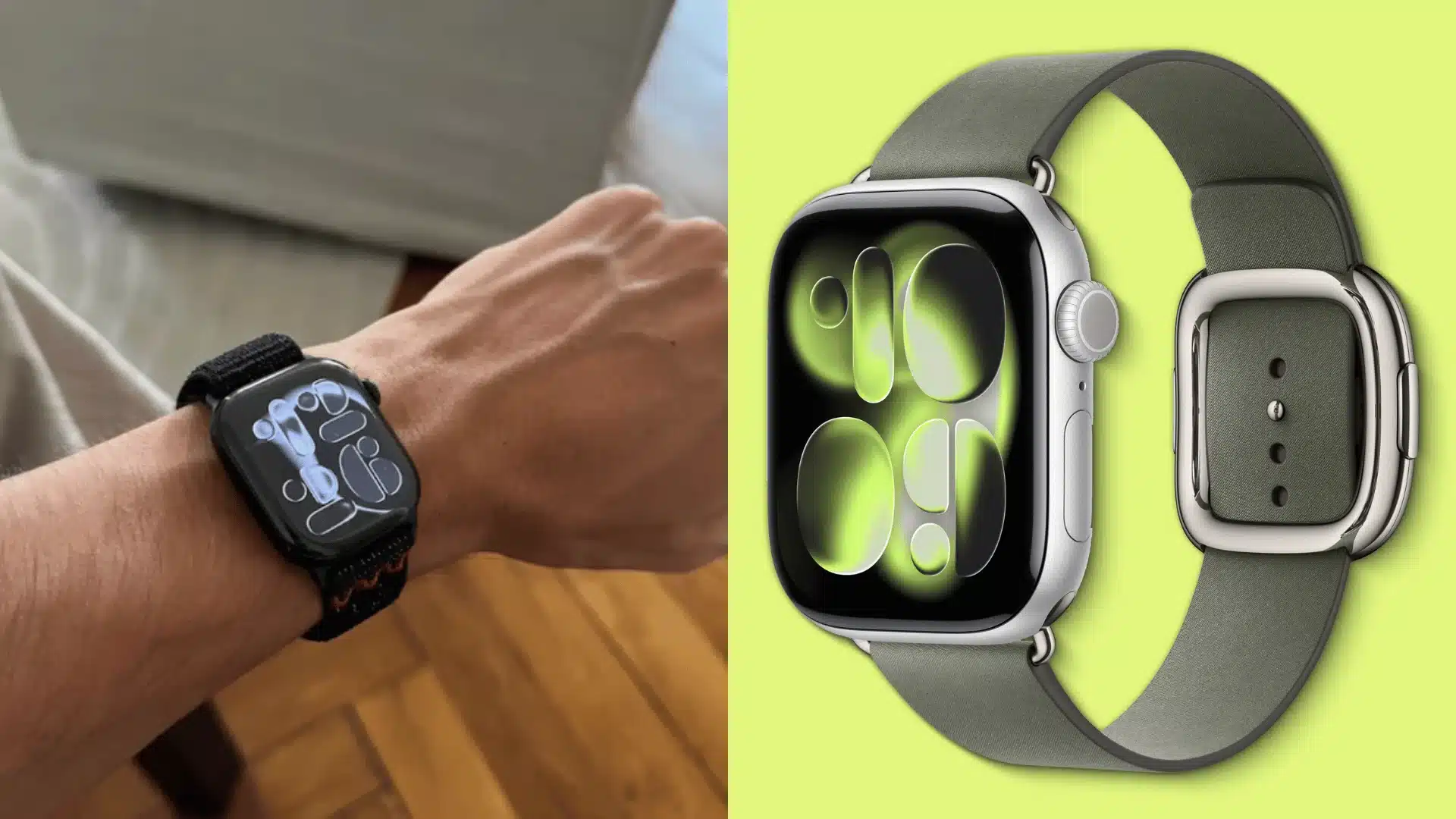
The Apple Watch Series 11 adds several meaningful upgrades for runners, with Workout Buddy standing out as the biggest new feature.
Powered by Apple Intelligence, it tracks pace, heart rate, distance, and workout progress in real time, then delivers spoken coaching through Bluetooth headphones using Apple Fitness+ voice models.
The redesigned Workout app also improves navigation with faster access to Pacer, Race Route, Workout Views, and Custom Workouts created on iPhone.
Runners also get Heart Rate Zones, cadence alerts, and power metrics for deeper training insights.
The main drawback is GPS accuracy in dense tree cover since the watch still uses single-band positioning, and there is still no dedicated lap button for interval training.
Apple Watch Series 11: Price and Availability
Apple Watch Series 11 is available now. Pricing starts at $399 for the 42mm GPS aluminum model, rising to $429 for the 46mm GPS version.
Adding GPS + Cellular costs an extra $100, while titanium models command a premium starting around $699.
Apple also offers special education pricing for students and educators, lowering the entry price to $359.
The GPS-only model connects to your iPhone via Bluetooth, while the GPS + Cellular variant provides standalone connectivity for calls, messages, and music without needing your iPhone nearby, a great option for runners and outdoor workouts
Apple Watch Series 11 vs Series 10
Here’s a quick look at how the Apple Watch Series 11 compares with the previous generation across core hardware, battery performance, and health-focused upgrades.
| Specs | Apple Watch Series 11 | Apple Watch Series 10 |
|---|---|---|
| Battery Life | Up to 24 hours | Up to 18 hours |
| Chip | S10 | S10 |
| Health Features | Hypertension alerts, Sleep Score | Standard health tracking |
| Display | Ceramic-coated Ion-X glass | Standard Ion-X glass |
| GPS | Single-band GPS | Single-band GPS |
| Connectivity | GPS + 5G Cellular | GPS + LTE Cellular |
| Sizes | 42mm, 46mm | 42mm, 46mm |
| Water Resistance | 50m | 50m |
Not sure which Apple Watch model you have? This post walks you through exactly how to check before comparing against the Series 11.
Who Should Buy the Apple Watch Series 11?
The Apple Watch Series 11 works best for users who want stronger health tracking, improved battery life, and smarter fitness support without switching to a larger sports-focused smartwatch.
Users upgrading from a Series 8 or older model will notice the biggest difference in durability, wellness tracking, and day-to-day performance.
Runners and active users benefit from Workout Buddy, cadence alerts, and improved workout customization, while health-focused users gain tools like hypertension notifications, Sleep Score, ECG monitoring, and sleep apnea detection.
The tougher ceramic-coated display also makes daily wear more practical.
For most users, the Series 11 strikes a strong balance between fitness tracking, health monitoring, communication, and everyday convenience in one lightweight smartwatch.
Conclusion
The Apple Watch Series 11 is the right upgrade for anyone on a Series 8 or older.
The larger display that arrived with the Series 10 carries forward, the battery life genuinely improved, and the ceramic-coated glass makes the aluminum model far more practical for daily wear.
If you’re already on a Series 10, the upgrade is harder to justify. The chip is the same, the design is the same, and most software features work on older models, too.
For everyone else, this is a well-rounded watch that earns its place.
Which Series 11 feature matters most to you? Drop a comment below and let us know if it’s the health tracking, the running upgrades, or something else entirely.
Frequently Asked Questions
Is Apple Watch Series 11 Compatible with Android?
No. The Apple Watch requires an iPhone running iOS 18 or later. It cannot pair with Android devices or non-Apple phones.
Does Apple Watch Series 11 Have a Temperature Sensor?
Yes. The Series 11 includes a wrist temperature sensor used primarily for overnight tracking. It detects variations from your baseline temperature rather than measuring absolute body temperature, and it feeds into cycle tracking and sleep data.
How Does Apple Watch Series 11 Compare to the Ultra 3?
The Apple Watch Ultra 3 suits endurance athletes with dual-band GPS, longer battery life, and a rugged titanium build, while the Series 11 feels lighter, slimmer, and better for daily wear.