Ever poured a glass of tap water and wondered what’s actually in it? For most households, the answer isn’t simple.
Tap water can contain everything from chlorine and lead to emerging contaminants like PFAS, many of which you can’t see, smell, or taste. Thus, water filter pitchers have become one of the fastest-growing kitchen essentials.
But not all pitchers work the same way; some only improve taste, while others remove harmful contaminants.
A smaller group removes PFAS and heavy metals with lab-tested proof. Picking the wrong one means paying for a filter that does not actually address your water issues.
This guide breaks down the best water filter pitchers based on real performance, usability, and long-term value, so you can finally choose the right one for your home with confidence.
Best Water Filter Pitchers: At a Glance
The table below adds an estimated cost-per-gallon column based on filter replacement pricing, a figure most pitcher roundups omit but that significantly affects long-term value.
| Pitcher | Best for | Key contaminant focus | Filter life | Est. cost/gallon | Key strength | Main limitation |
|---|---|---|---|---|---|---|
| Clearly Filtered | Maximum protection | PFAS, lead, heavy metals, chemicals | 100–200 gal | ~$0.50–0.65 | Broadest contaminant coverage | Slow filtration, high cost |
| Epic Pure | Balanced performance | PFAS, lead, chlorine, fluoride | 150 gal | ~$0.45–0.55 | Strong performance and usability | Not the fastest filter |
| ZeroWater | Measurable purity | Dissolved solids (0 TDS), PFAS | 25–100 gal | ~$0.30–0.80 (varies by hardness) | Verified 0 TDS, NSF 42/53/401 | Very short life in hard water |
| Brita Elite | Everyday use | Chlorine, taste, lead | 120 gal | ~$0.18–0.25 | Affordable, reliable, widely available | No PFAS removal |
| Aquagear | Mid-range protection | Lead, fluoride, heavy metals | 150 gal | ~$0.35–0.45 | Strong balanced filtration | Limited PFAS focus |
| PUR Plus | Budget option | Lead, chlorine, basic contaminants | 40–100 gal | ~$0.20–0.35 | NSF-certified lead removal | Shorter filter life |
| LifeStraw Home | Well water safety | Bacteria, parasites, microplastics | 100 gal | ~$0.40–0.50 | Biological protection | Limited chemical removal |
| Waterdrop Chubby | Low maintenance | Chlorine, THMs, metals | 200 gal | ~$0.15–0.20 | Longest filter life | Mid-level filtration only |
| LARQ PureVis | Hygiene focus | Bacteria + basic chemicals | 40–60 gal | ~$0.60–0.80 | UV-C self-cleaning | High price, limited chemical removal |
What to Look for in a Water Filter Pitcher?
Choosing a water filter pitcher becomes easier when you focus on a few key performance factors that directly affect water quality, usability, and long-term cost.
- Contaminant coverage: Check what the filter removes, such as chlorine, lead, PFAS, or heavy metals. Basic filters improve taste, while advanced ones target a wider range of harmful substances found in tap water.
- NSF certifications: Look for NSF/ANSI ratings like 42, 53, 401 , or P473. These confirm independent testing for specific contaminants, which matters because manufacturers’ claims and real performance often differ.
- Filter lifespan: Compare how long filters last, typically 40-200 gallons. A longer lifespan reduces replacement frequency and lowers overall costs over time.
- Flow rate: Faster filtration improves convenience, while slower systems often provide deeper contaminant removal. A balance between speed and performance is ideal for daily use.
- Size and fit: Ensure the pitcher fits your fridge and household needs. Standard sizes work for most users, but poor fit or awkward design reduces actual usage.
- Taste and minerals: Some filters only improve taste, while others remove most dissolved minerals. Choose based on whether you prefer natural mineral taste or cleaner, neutral water.
- Maintenance: Regular cleaning and timely filter changes are essential. Poor maintenance can reduce performance and affect water quality over time.
The EPA’s drinking water resource hub outlines which contaminants are regulated and at what levels, helping you match your filter choice to your actual risk.
How Filter Pitchers Compare to Other Filtration Options?
Water filter pitchers are the most convenient entry-level water filtration solution, but they differ significantly from faucet filters, under-sink systems, and reverse osmosis setups in performance, cost, and installation requirements.
| Feature / Factor | Water Filter Pitcher | Faucet Filter | Under-Sink System | Reverse Osmosis (RO) |
|---|---|---|---|---|
| Installation | None | Easy, attaches to the tap | Requires plumbing installation | Professional or complex install |
| Cost | Low | Low–Moderate | Moderate-High | High |
| Filtration Strength | Basic to advanced | Moderate | Strong | Very strong |
| Contaminant Removal | Chlorine, lead, PFAS (varies) | Chlorine, lead (limited) | Broad contaminant range | Broadest removal (incl. dissolved solids) |
| Flow Speed | Slow (gravity-fed) | Instant | Instant | Slow to moderate (tank refill) |
| Portability | High | Low | None | None |
| Maintenance | Simple filter swaps | Cartridge replacement | Periodic servicing | Filter + membrane maintenance |
| Water Waste | None | None | None | Produces wastewater |
Pitchers are best for affordability, portability, and ease of use, while more advanced systems, such as under-sink filters and RO units, offer stronger purification at a higher cost and with greater complexity.
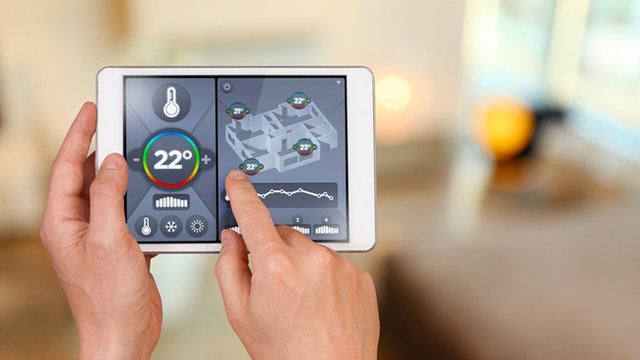
If you’re planning a broader home upgrade, it’s worth considering how a pitcher fits alongside other connected home investments, such as the best home automation system that integrates smart water and appliance monitoring.
Best Water Filter Pitchers Reviewed
A detailed review of the top-performing water filter pitchers based on contaminant removal, usability, and long-term value.
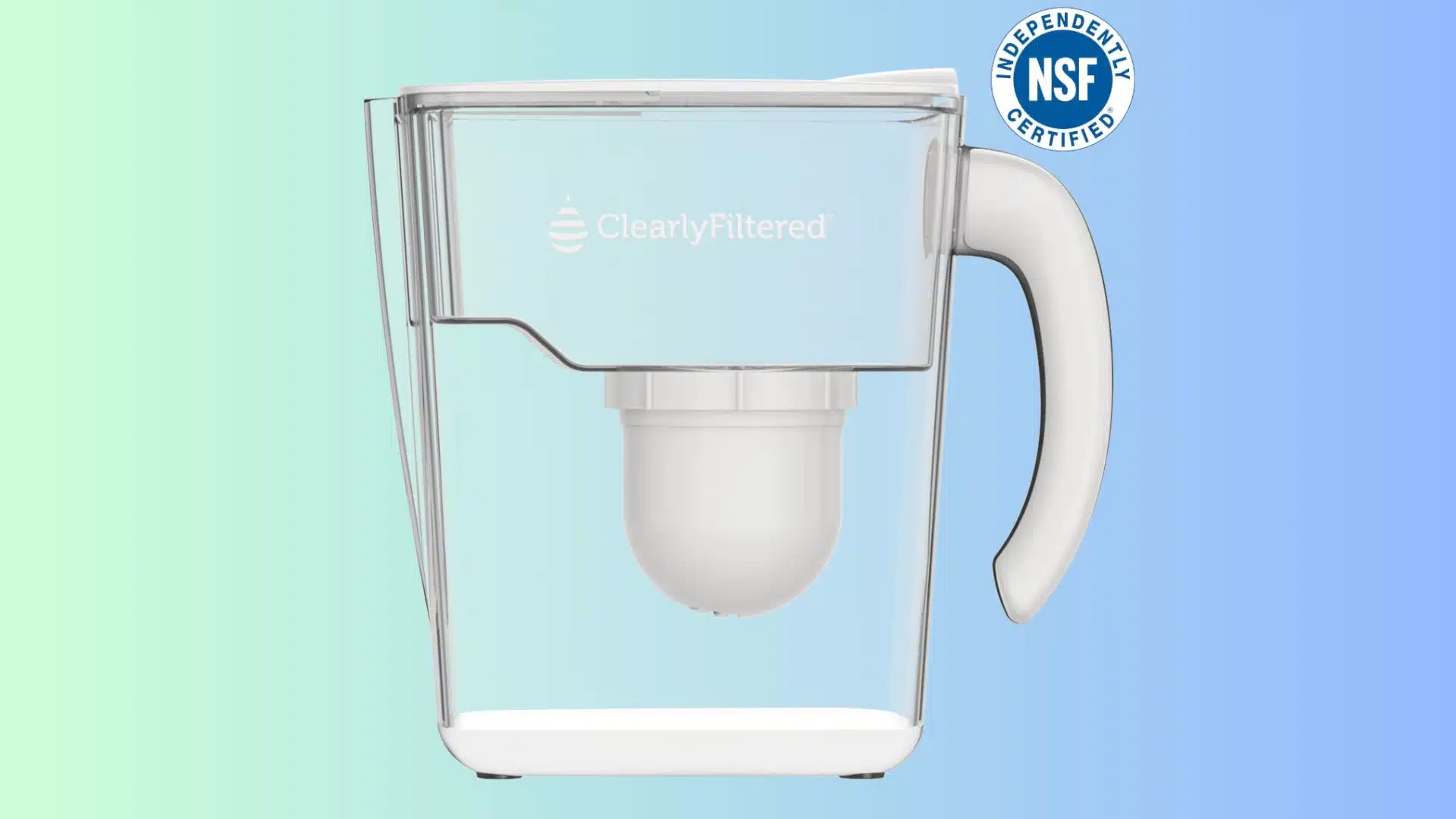
1. Clearly Filtered Pitcher
Price: $90 ($100 MSRP)
Best for: Users prioritizing maximum contaminant removal and verified lab-tested performance.
Clearly Filtered Pitcher is a premium water filtration option known for its broad range of contaminant removal and strong independent lab testing support.
It carries NSF/ANSI P473 certification for PFAS, which puts it in a short list of pitchers with independently verified PFAS removal rather than manufacturer-only claims.
Independent testing shows a strong reduction of chlorine, THMs, and heavy metals down to non-detect levels, making it one of the most comprehensive pitcher filters available.
Slower filtration speed and higher cost per gallon are the main trade-offs, especially for large households with high daily water usage. Despite this, it remains one of the most thorough consumer-grade filtration pitchers.
Strengths:
- Extremely broad contaminant coverage
- Strong PFAS and heavy metal reduction
- Backed by independent lab testing
- Lifetime warranty
Limitations:
- Slow filtration speed
- High cost per gallon
- Premium price point
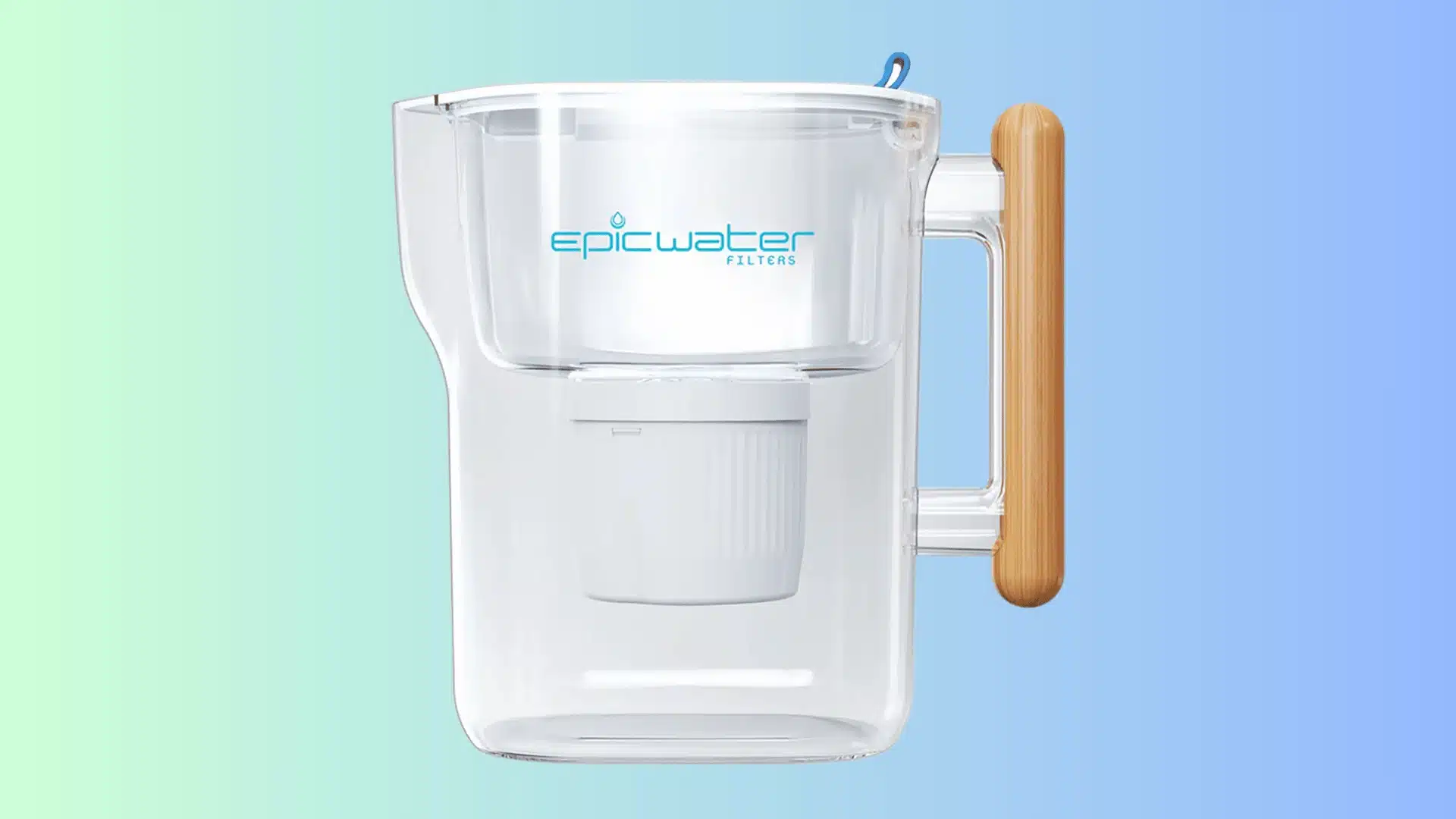
2. Epic Pure Pitcher
Price: $84
Best for: Users wanting strong PFAS protection with balanced daily usability.
Epic Pure sits between budget and premium filters, with strong contaminant reduction without the filtration delay of ultra-high-end models.
Its activated carbon block targets PFAS (PFOA, PFOS), lead, chlorine, fluoride, pesticides , and microplastics with high reduction rates.
PFAS contamination has become a growing concern in municipal supplies since the EPA finalized maximum contaminant levels for 6 PFAS compounds in 2024; the EPA’s PFAS resource page provides current health risk guidance.
A 150-gallon filter life provides a good balance between performance and replacement frequency.
Some trace chemical findings appear in independent tests, though levels remain within safety guidelines.
Strengths:
- Strong PFAS and lead reduction
- Long 150-gallon filter life
- Good balance of speed and performance
- Easy-to-use design
Limitations:
- Higher cost than basic pitchers
- Some trace findings in lab tests
- Not the fastest filtration option
3. ZeroWater 10-Cup Pitcher
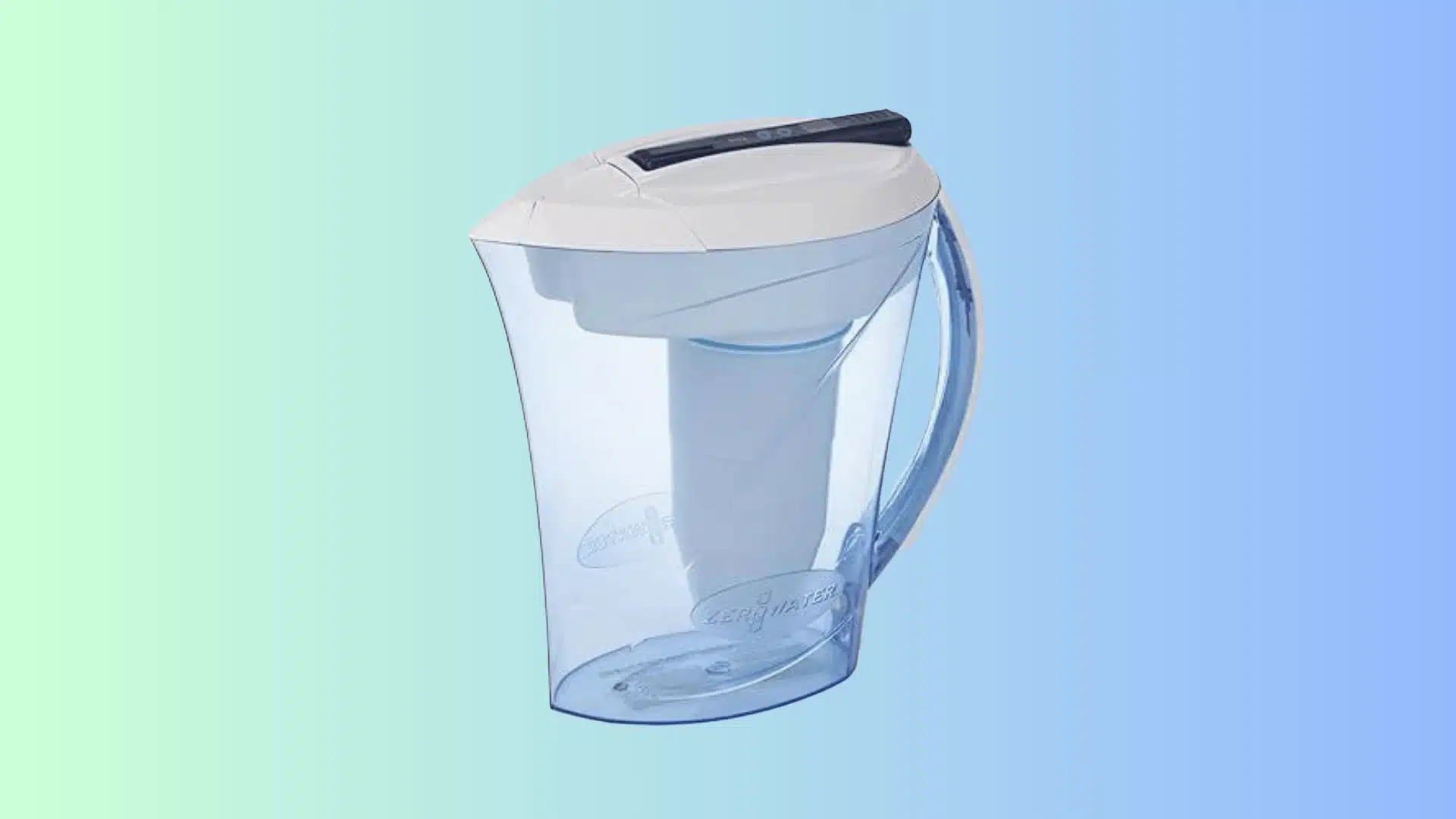
Price: $37.99
Best for: Users wanting measurable 0 TDS water quality.
ZeroWater uses a 5-stage ion exchange system to remove nearly all dissolved solids from tap water.
The built-in TDS meter lets you confirm when water reaches 0 TDS, which makes performance verification straightforward.
NSF certifications for this model include 42, 53, and 401, covering chlorine, lead, and PFAS reduction, making it one of the few pitchers certified across all three standards.
The downside is filter life. In hard-water areas, filters deplete quickly, increasing replacement costs significantly. Removing all dissolved minerals also affects taste; the water can feel flat compared to carbon-based filtered water.
Strengths:
- Achieves 0 TDS with the meter
- Very high contaminant removal
- Easy performance verification
Limitations:
- Short filter life in hard water
- Removes beneficial minerals
- Flat taste for some users
4. Brita Elite 10-Cup Elite Filter Pitcher
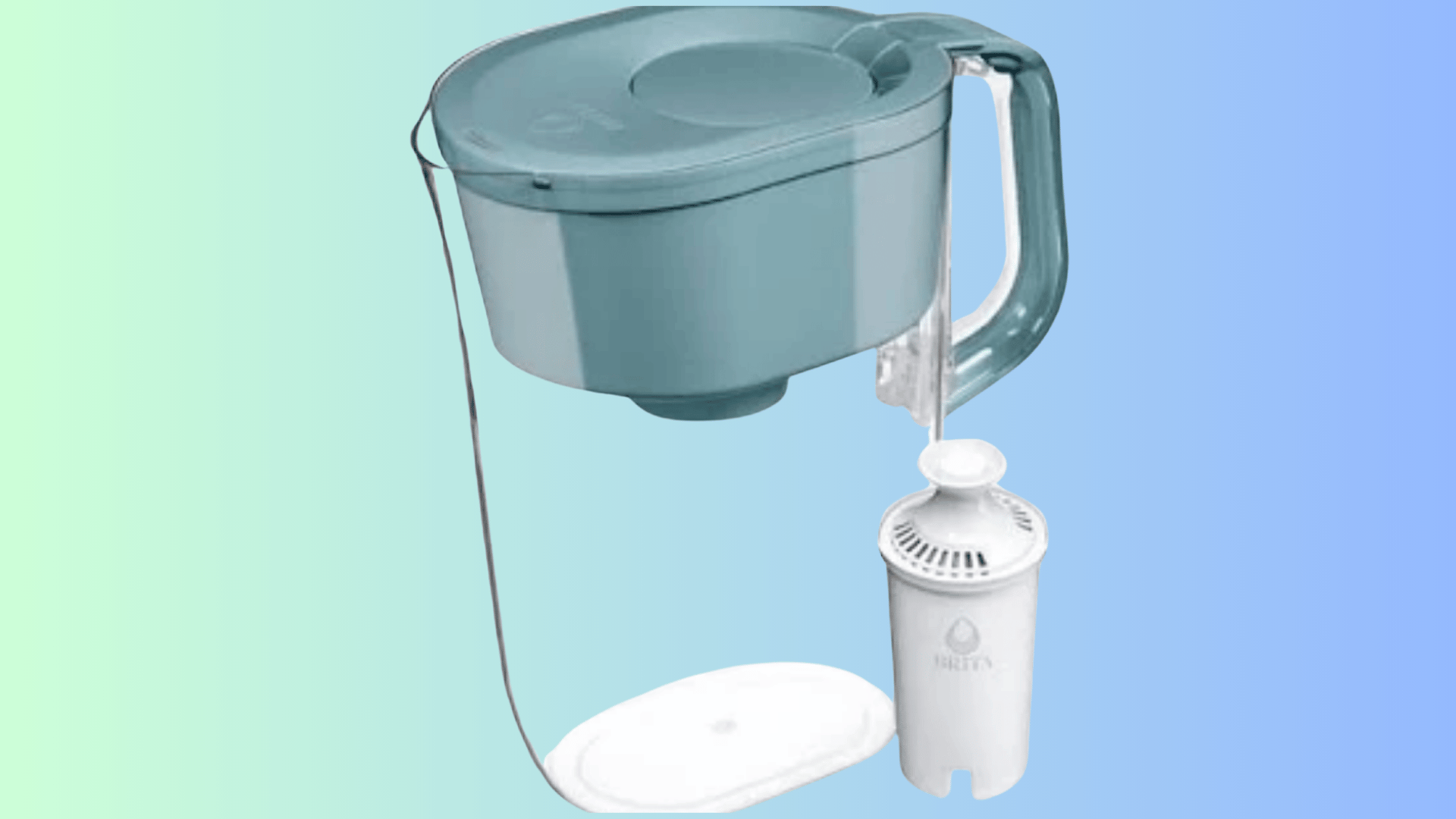
Price: $41.99
Best for: Everyday municipal water improvement.
Brita Elite is the most widely used pitcher in this review category, and for straightforward municipal water improvement, it earns that position.
The Elite filter uses activated carbon and ion-exchange media to reduce chlorine taste and odor and remove select heavy metals, including lead.
NSF/ANSI 42 and 53 certifications are solid for what this pitcher promises: better-tasting, lead-reduced tap water. The 120-gallon filter life reduces replacement frequency.
What it does not do is address PFAS, fluoride, or most emerging contaminants, which means it is genuinely suited for lower-risk municipal water but not a fit for households with confirmed PFAS concerns.
Strengths:
- Improves taste and odor effectively
- NSF certified for chlorine and lead reduction
- Long 120-gallon filter life
- Easy availability and low cost
Limitations:
- No PFAS or advanced contaminant removal
- Basic filtration compared to premium pitchers
- Not ideal for high-risk water areas
5. Aquagear Pitcher
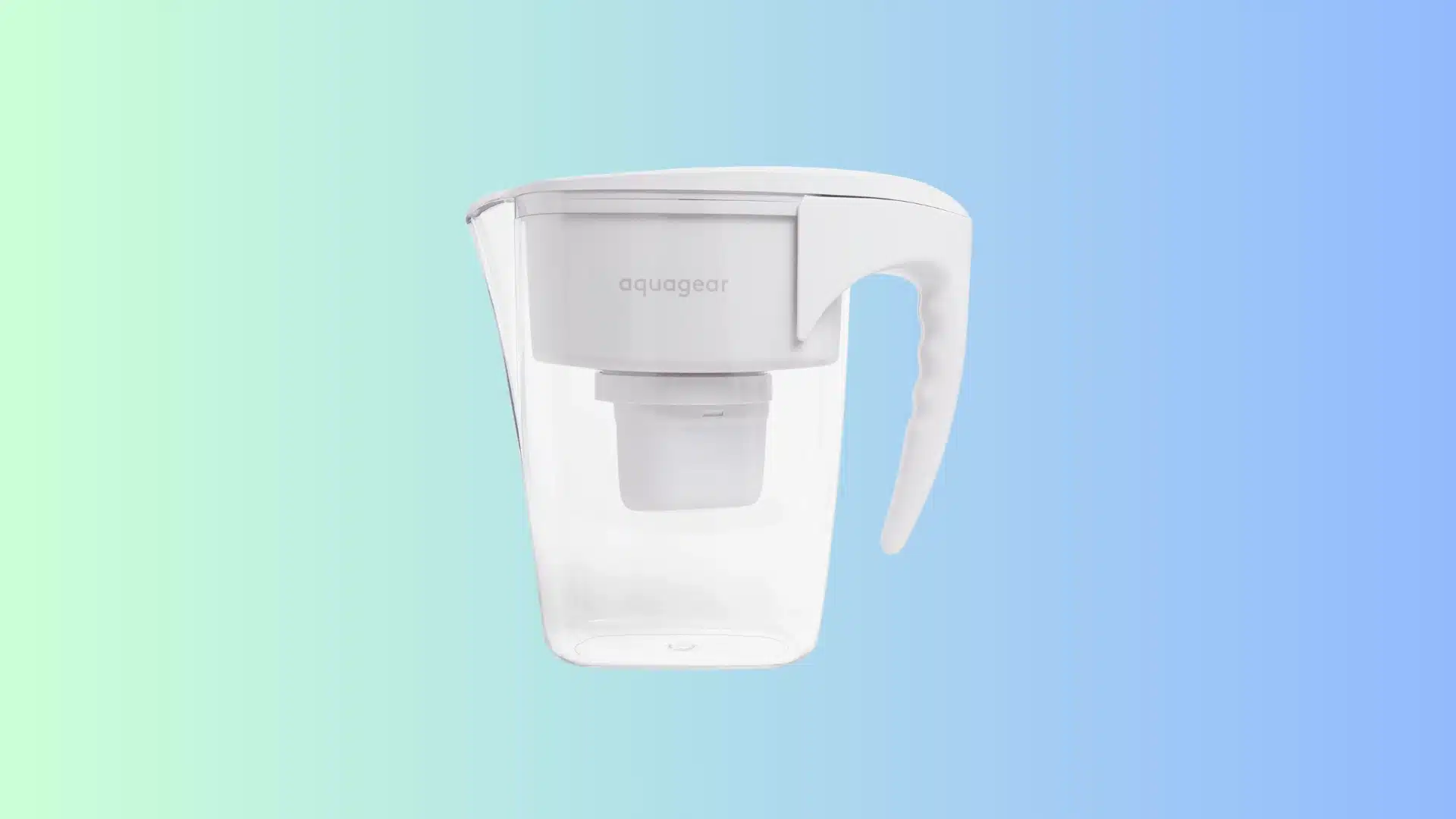
Price: $69.95
Best for: Users needing reliable heavy metal and fluoride reduction in a mid-range pitcher.
Aquagear Pitcher is designed for users who want stronger-than-basic filtration without moving into high-cost premium systems.
A triple-stage filter uses dense activated carbon and ion-exchange media to reduce lead, fluoride, chlorine, and several heavy metals commonly found in municipal water supplies.
Long filter life of around 150 gallons helps reduce replacement frequency while maintaining consistent performance over time.
Independent comparisons often place Aquagear above standard budget pitchers because of its stronger focus on contaminant reduction.
Strengths:
- Strong lead and fluoride reduction
- 150-gallon long filter life
- Consistent taste improvement
- Mid-range performance balance
Limitations:
- Limited PFAS-focused removal
- Slower filtration compared to basic pitchers
- Higher cost than entry-level models
6. PUR Plus Pitcher
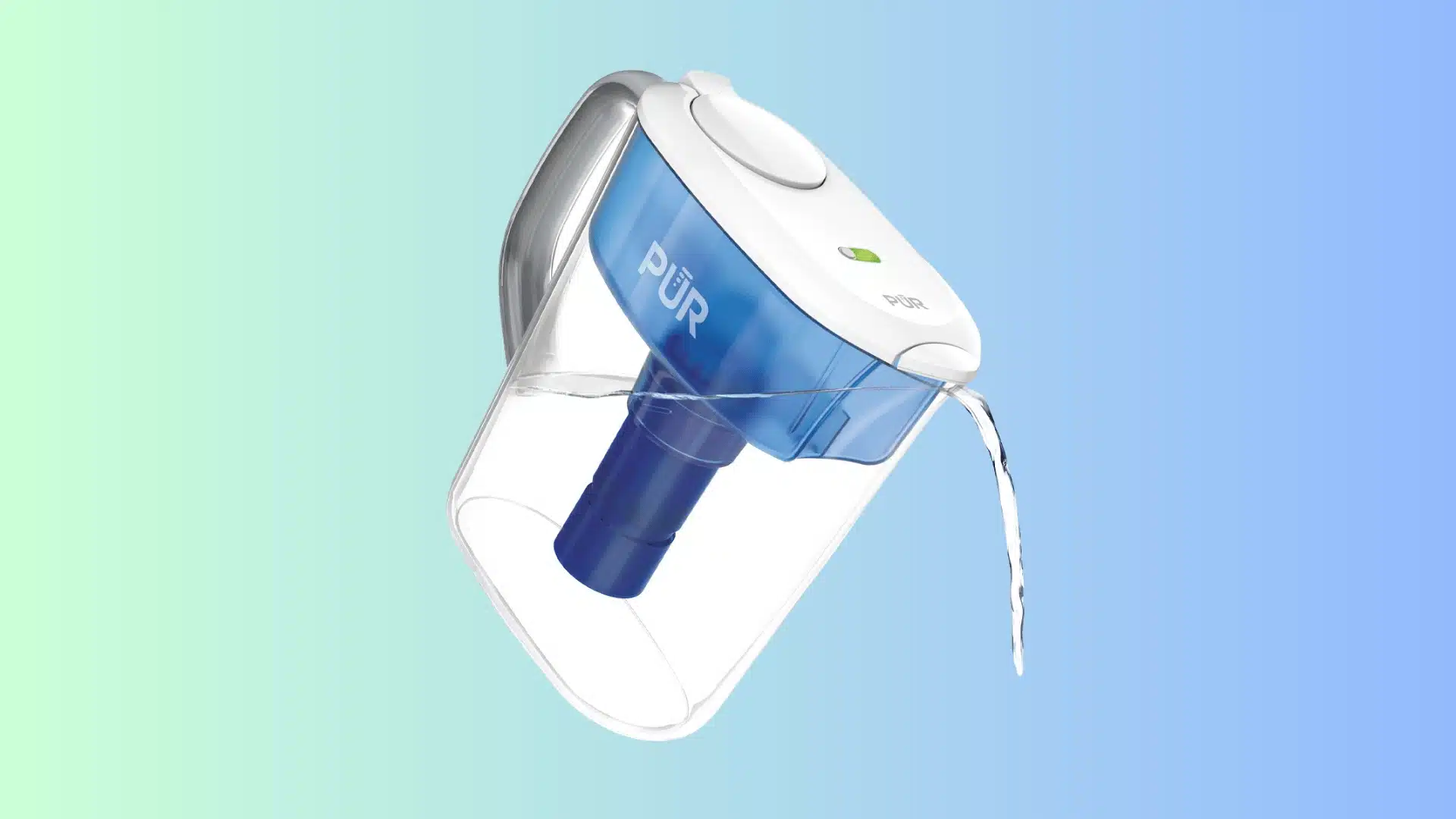
Price: $39.99
Best for: Budget users wanting certified basic protection and better-tasting tap water.
PUR Plus Pitcher is a budget-friendly filtration option designed primarily to improve tap water safety by reducing certified lead levels. Compact design and easy availability make it a common choice for first-time filter users.
Activated carbon and ion-exchange filter media help reduce chlorine, lead, and over 70 selected contaminants, improving both taste and basic water quality.
NSF/ANSI 53 certification supports its lead-reduction claims, making it a trusted, low-cost option for households concerned about plumbing-related contamination.
A shorter filter lifespan than that of premium pitchers increases replacement frequency, raising long-term costs despite the low upfront price.
Strengths:
- NSF certified for lead reduction
- Improves chlorine taste and odor
- Affordable and widely available
- Simple and easy to use
Limitations:
- Shorter filter life
- Limited advanced contaminant coverage
- Not ideal for PFAS concerns
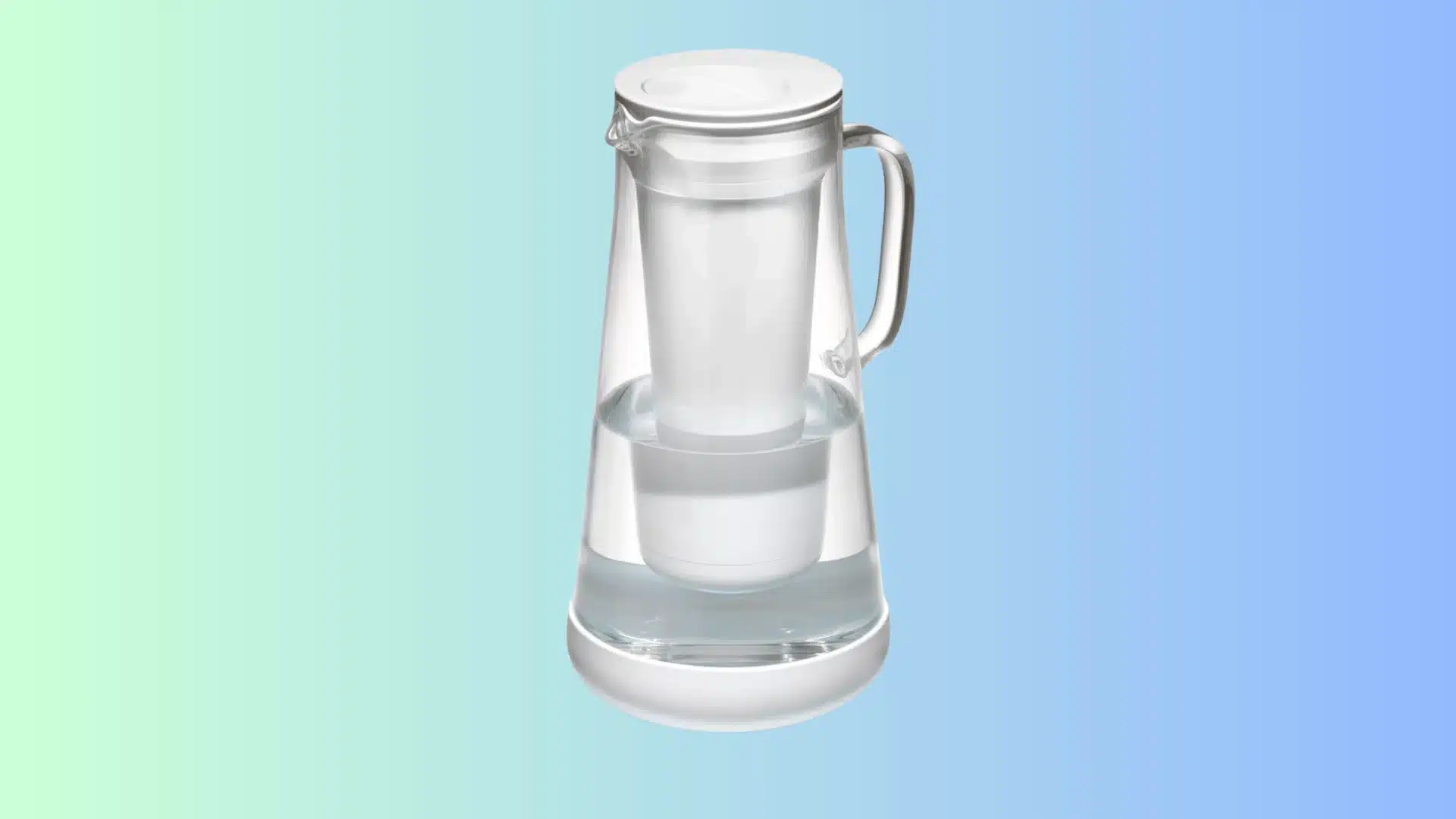
7. LifeStraw Home Pitcher
Price: $44.95
Best for: Well water users and households needing protection against biological contamination.
LifeStraw Home Pitcher uses a dual-stage filtration system that combines a hollow-fiber membrane, which removes bacteria, parasites, and microplastics, with activated carbon to improve taste by reducing chlorine.
Strong performance in biological protection makes it suitable for households that use well water or for areas with occasional microbiological risks. Membrane filtration adds extra safety not found in standard carbon-only pitchers.
Limited chemical contaminant coverage means PFAS, fluoride, and many dissolved inorganic compounds are not fully addressed. Slower filtration speed can also affect daily convenience in larger households.
Strengths:
- Removes bacteria, parasites, and microplastics
- Strong for well water safety
- Improves taste and chlorine levels
- Dual-stage filtration system
Limitations:
- Limited PFAS and chemical removal
- Slower filtration speed
- Not ideal for high chemical contamination
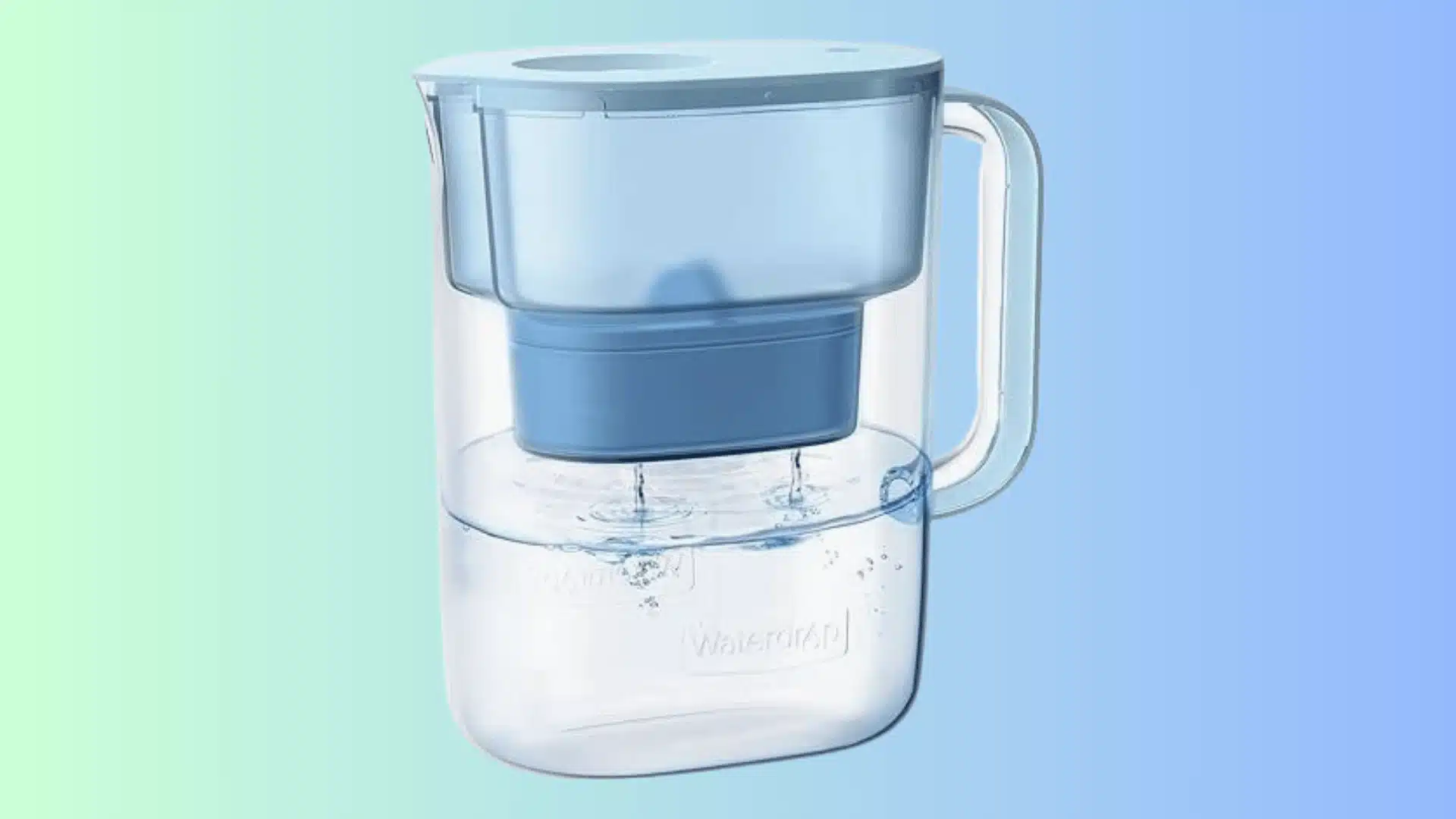
8. Waterdrop Lucid 10-Cup Water Pitcher Filter System PT-07
Price: $29.99
Best for: Users prioritizing long filter life and low maintenance over advanced purification.
Waterdrop Chubby Pitcher is designed for convenience and long-term use, with an emphasis on extended filter life and consistent everyday performance.
Multi-stage carbon filtration reduces chlorine, THMs, and select heavy metals, improving taste and general tap water quality.
Extended 200-gallon filter life makes it one of the lowest-maintenance pitchers available, reducing the need for frequent replacements, and the wide-mouth design improves refilling speed and usability in daily kitchen routines.
Limited advanced contaminant coverage means PFAS and broader emerging pollutants are not its primary focus. Filtration strength is better balanced for taste improvement than for high-end purification performance.
Strengths:
- Long 200-gallon filter life
- Easy refill and user-friendly design
- Good chlorine and taste improvement
- Low maintenance requirements
Limitations:
- Limited PFAS and advanced contaminant removal
- Mid-level filtration strength
- Not suited for high-risk water concerns
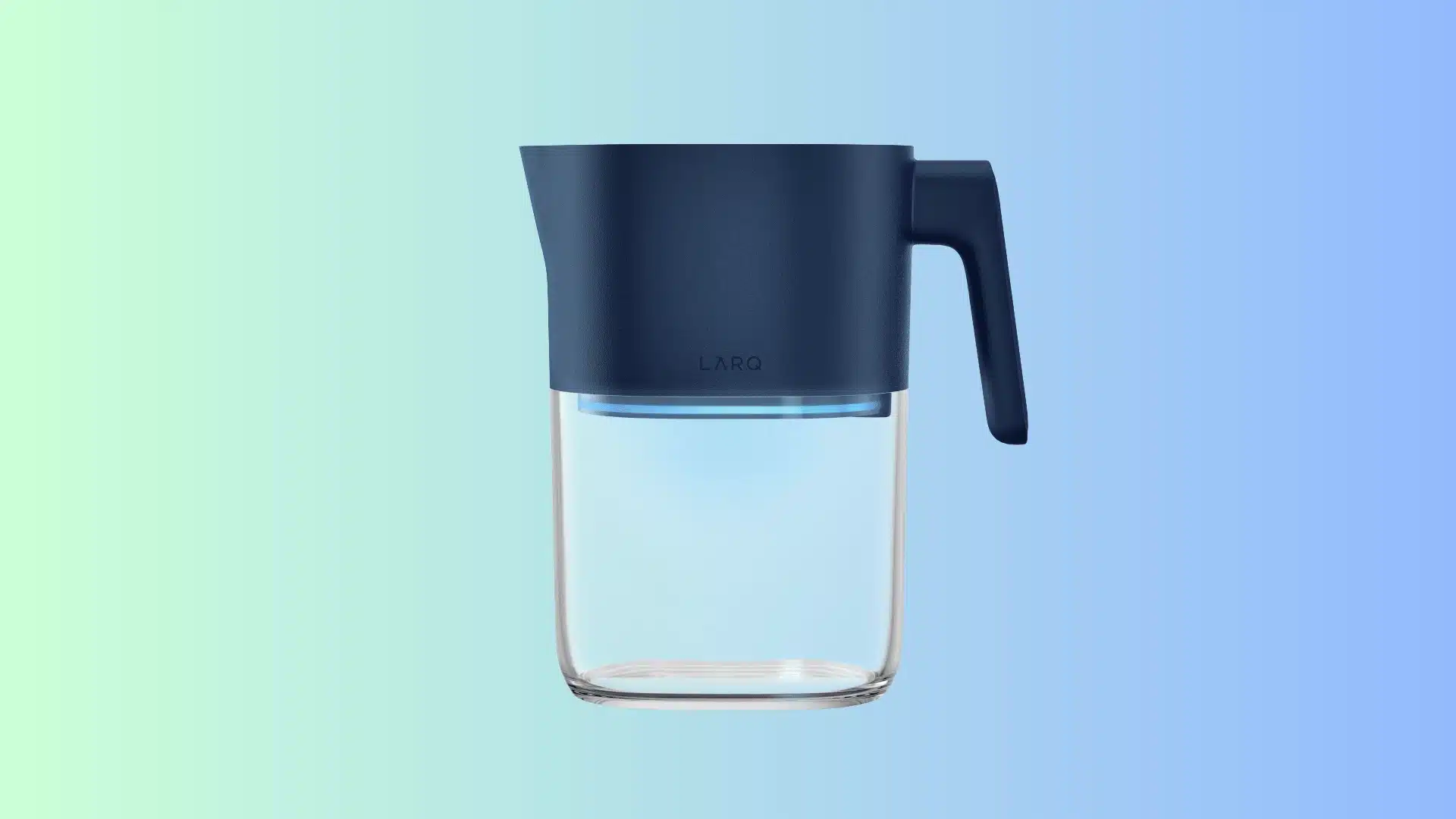
9. LARQ PureVis Pitcher
Price: $139 ($168 MSRP)
Best for: Users prioritizing hygiene, smart features, and bacterial protection.
LARQ PureVis combines standard carbon filtration with UV-C LED purification.
The UV-C system neutralizes bacteria and viruses inside the pitcher, reducing the risk of microbial growth in stored water between uses.
The built-in carbon filter reduces chlorine, mercury, and other common contaminants. A self-cleaning UV cycle runs automatically, which is a feature not found in any other pitcher in this category.
The higher price reflects UV-C technology rather than deeper filtration performance.
For households where tap water quality is acceptable but stored water hygiene is a concern, think second homes, vacation properties, or pitchers that sit unused for days at a time; this is a practical fit.
For PFAS or heavy metal removal, look elsewhere.
Strengths:
- UV-C self-cleaning technology
- Reduces bacteria and viral contamination
- Improves taste and chlorine levels
- Modern smart design
Limitations:
- Limited PFAS and heavy metal removal
- Higher cost than standard pitchers
- Focuses more on hygiene than deep filtration
How to Maintain a Water Filter Pitcher?
Proper maintenance keeps a water filter pitcher working and prevents bacterial growth, odor issues, and reduced filtration performance.
The same attention to detail applies when you bring smart home gadgets into your kitchen; consistent upkeep is what separates a well-functioning connected home from one that slowly stops working.
- Replace filters on schedule: Follow the manufacturer’s gallon rating or time limit. Delayed replacement reduces effectiveness and allows contaminants to pass through.
- Clean the reservoir weekly: Wash the pitcher body and lid with mild soap and warm water to prevent residue, algae, or biofilm buildup.
- Rinse new filters before use: Flush each new cartridge for 2-3 minutes to remove loose carbon dust and activate proper filtration flow.
- Avoid stagnant water: Refill the pitcher regularly. Water left sitting for long periods develops a stale taste and increases microbial risk.
- Dry components properly: Air-dry the lid and reservoir after washing. Moisture trapped in enclosed spaces promotes mold growth.
- Store correctly when unused: Empty and clean the pitcher if it will not be used for several days.
A consistent routine is enough. Neglecting any one of these steps over time compounds into noticeably worse water quality.
Water Filter Pitchers vs Bottled Water: Which is Better?
Water filter pitchers are more cost-effective than bottled water for daily household use.
A one-time pitcher purchase with regular filter changes costs far less than repeatedly buying bottled water; in most cases, the cost per gallon is 5-10 times lower, depending on the model.
Pitchers also reduce plastic waste and offer a more sustainable long-term option.
Water quality consistency in bottled water varies by source and brand, while a filter pitcher lets you treat your own tap water based on what your local water report actually shows.
Bottled water still makes sense for travel or emergencies. For everyday drinking, filter pitchers are the more practical and economical choice for most households.
Common Mistakes to Avoid When Buying a Water Filter Pitcher
Most poor pitcher purchases come down to a few avoidable errors.
- Assuming all pitchers filter equally: Different pitchers target different contaminants. Some only improve taste. Others reduce lead, PFAS, or heavy metals. Performance varies widely.
- Ignoring filter replacement costs: A low upfront price can be misleading if replacement filters are expensive or deplete quickly. Always calculate the cost per gallon over 12 months.
- Not checking your local water quality report: Without knowing what is in your tap water, it is difficult to choose a filter that addresses the relevant contaminants.
- Skipping regular maintenance: Poor cleaning or delayed filter changes reduce filtration effectiveness and can affect water quality over time.
- Choosing based only on brand name: Well-known brands are not always the best fit for your water conditions. Certifications and independent test data matter more than name recognition.
Conclusion
At the end of the day, there isn’t a single “perfect” water filter pitcher for everyone; there’s only the one that fits your water, your habits, and what you actually care about removing.
What matters most is not just buying a filter but choosing one that you’ll consistently maintain and trust over time. Even the best-performing pitcher won’t help much if it’s ignored or used incorrectly.
So now the question shifts to you: what matters more in your kitchen right now, maximum protection, simplicity, or a balance of both?
Drop your thoughts, experiences, or even the pitcher you’re currently using. It’s always interesting to see what actually works in real homes beyond lab tests and specifications.
Frequently Asked Questions
Can Water Filter Pitchers Be Used for River, Lake, or Rainwater in Emergencies?
Water filter pitchers are not designed for untreated natural sources. River, lake, or rainwater can contain bacteria, parasites, sediment, and chemical runoff that exceed what standard pitcher filters can safely handle.
Does Water Temperature Affect Pitcher Filter Performance?
Very cold water can slow down filtration speed, while unusually warm water may slightly reduce filtration efficiency. Most pitchers perform best with cold or room-temperature tap water.
Are Pitcher Filters Suitable for Medical or Special Dietary Water Needs?
Standard water filter pitchers are not certified to meet medical-grade requirements, such as those for dialysis or strict low-contaminant diets. Professional medical guidance is necessary in such cases.
Does Tap Water Pressure or Altitude Affect Filtration?
Water filter pitchers rely on gravity, so tap pressure has no impact on performance. Altitude does not directly affect the filter, though it may slightly influence the water’s natural taste profile before filtration.
How Do I Know if My Water Contains PFAS?
Request your annual Consumer Confidence Report from your water utility; it is required by law for community water systems in the US.
Since the EPA finalized PFAS maximum contaminant levels in 2024, municipal utilities must now test and report PFAS levels.
You can also order independent water testing kits from certified labs if you want a more detailed breakdown.
What is the Difference Between NSF 53 and NSF P473 for PFAS?
NSF 53 covers health-related contaminants, including lead, and since 2024 has included PFOA/PFOS testing.
NSF P473 is a dedicated certification specifically for PFAS reduction. If PFAS removal is your primary goal, verify that the pitcher carries P473, not just NSF 53.