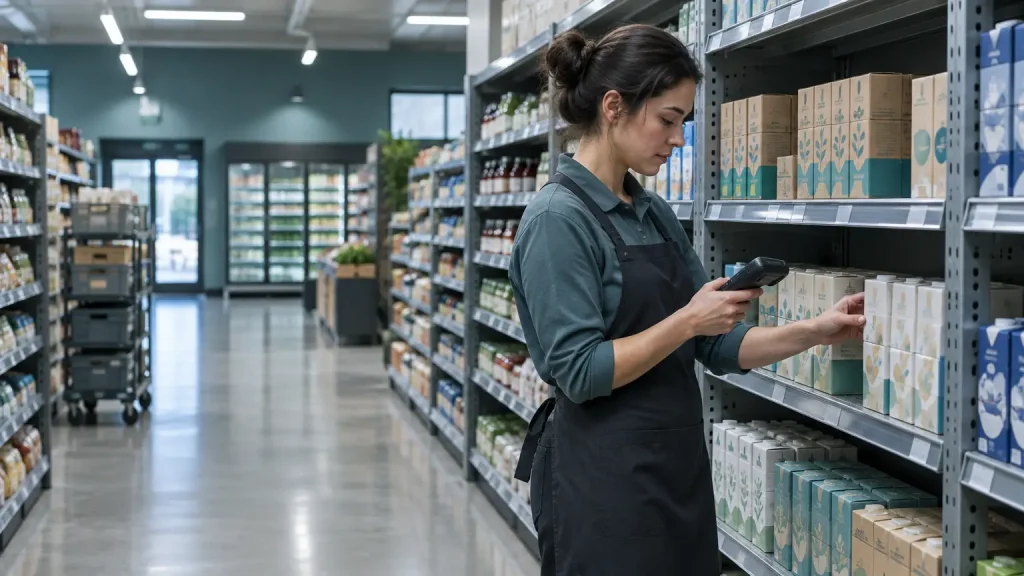
For retail operations teams, replenishment is one of the most time-consuming parts of the job. Someone has to decide how much of each product every store needs, check that orders reach suppliers on time, deal with late deliveries, and fix the gaps when shelves run empty. In a chain with dozens of stores and thousands of products, this quickly becomes a full-time workload for several people, and it still leaves room for costly mistakes.
AI-driven replenishment tools change how this work gets done. Instead of building orders by hand or relying on fixed reorder rules, operations teams let the system calculate order quantities automatically and step in only when something needs attention. The result is less routine work, more consistent stock levels and more time for the issues that actually need human judgement.
Below are five AI-driven replenishment tools worth considering, with a focus on what they mean for the people who run retail operations day to day.
What operations teams should look for
Operations teams care about slightly different things than finance or IT. When comparing tools, these questions matter most:
- How much manual work does it remove? The best tools generate orders automatically and ask people to review only the exceptions.
- Does it reflect store reality? Shelf space, delivery schedules, pack sizes and shelf life all affect what a store can actually receive and sell.
- How clear are the alerts? Teams need to see quickly which stores or products are at risk and why.
- Can it balance stock across locations? Moving surplus from one store to another is often faster and cheaper than placing a new order.
- How easy is it to use? A system that only specialists can operate creates new bottlenecks.
1. Blue Yonder
Blue Yonder is a large supply chain software provider with a long history in retail. Its platform covers demand forecasting, replenishment, allocation, warehouse management and many other supply chain functions, and it is used by major retailers around the world.
For operations teams, Blue Yonder’s strength lies in its coverage of the full supply chain. Replenishment decisions can be connected to warehouse capacity, transportation and supplier planning, which is valuable for large, complex networks.
Key features:
- Machine learning-based demand forecasting
- Automated store and warehouse replenishment
- Allocation and flow planning across the supply chain
- Broad integration with other supply chain and execution systems
Best for: Large retailers with complex supply chains that want replenishment tightly linked to warehouse and logistics operations.
Things to consider: As an enterprise platform, it usually involves a substantial implementation effort. Smaller chains may find it more extensive than they need.
2. ToolsGroup
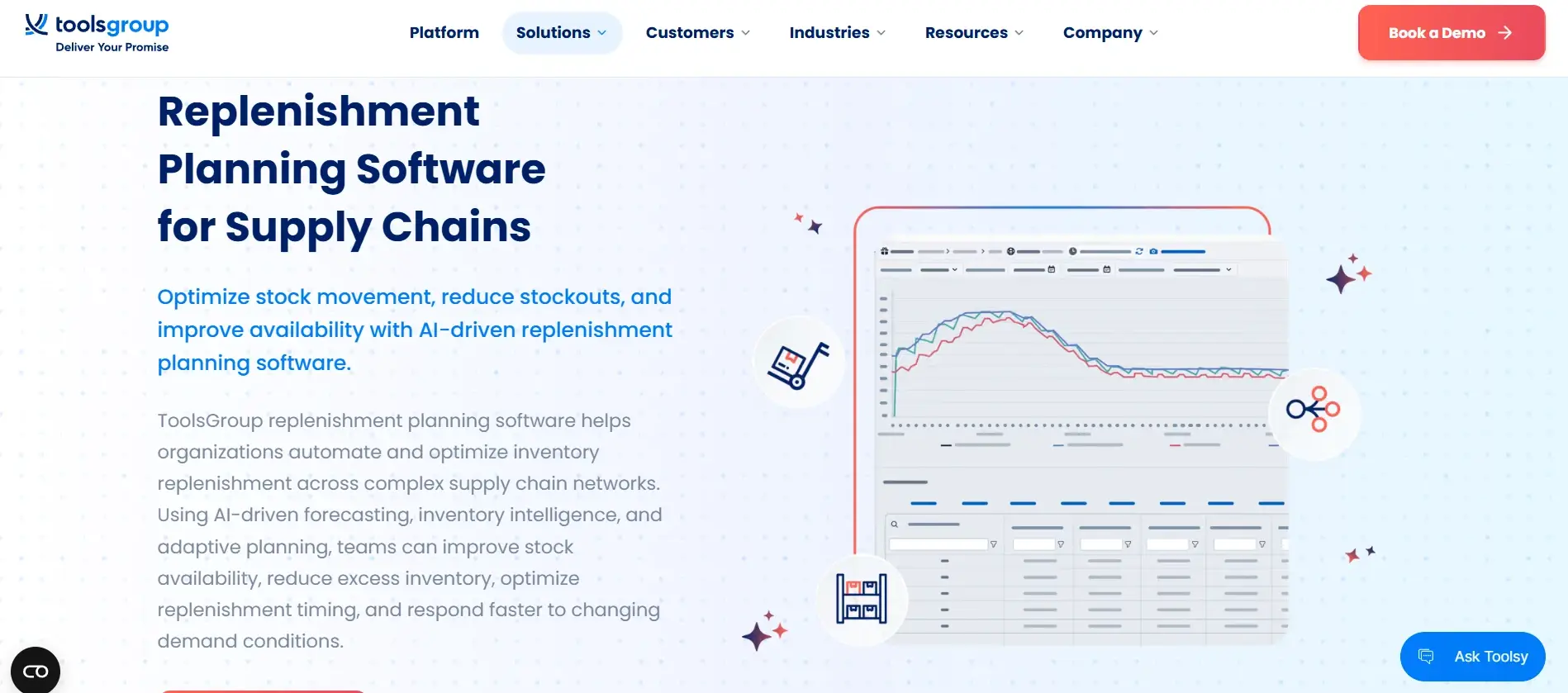
ToolsGroup provides supply chain planning software with a strong focus on probabilistic forecasting and inventory optimization. Its retail solutions cover demand forecasting, replenishment and allocation, with an emphasis on handling uncertain or irregular demand.
Its approach is particularly useful for products with volatile or intermittent sales, where traditional forecasting methods struggle. Instead of predicting a single number, ToolsGroup models a range of likely outcomes and sets stock levels to meet target service levels.
Key features:
- Probabilistic demand forecasting
- Service-level-driven inventory optimization
- Replenishment for stores and distribution centres
- Planning for long-tail and slow-moving products
Best for: Retailers and distributors with wide assortments and many slow or irregular-selling products, where setting the right safety stock is a key challenge.
Things to consider: Its analytical depth is a strength, but teams may need time to become comfortable with service-level-based planning if they’re used to simpler methods.
3. LEAFIO AI
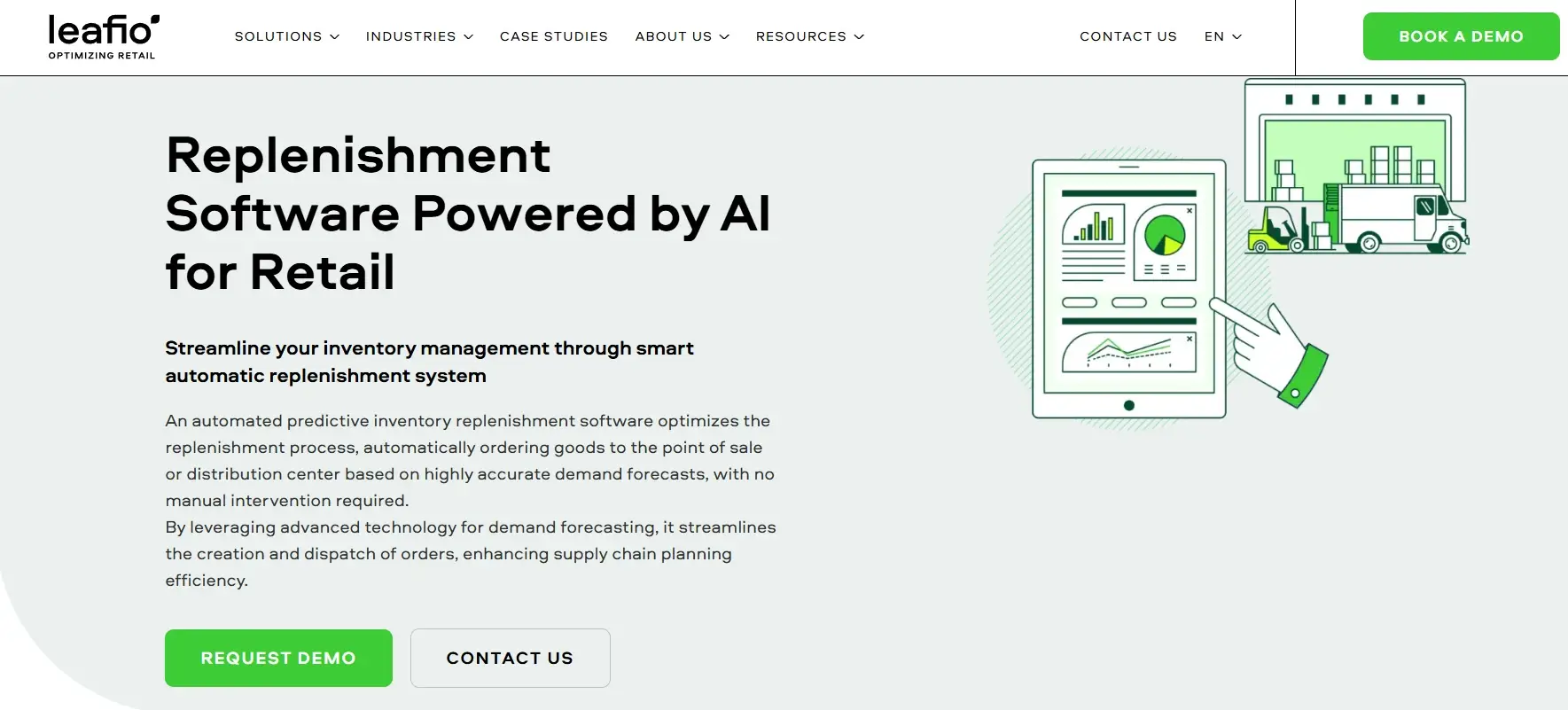
LEAFIO AI is a retail-specific platform that combines inventory replenishment, demand forecasting, shelf management and store operations. It serves physical retail chains in grocery, pharmacy, DIY, fashion and specialty retail, and plans stock at both store and distribution centre level.
For operations teams looking to reduce manual ordering, LEAFIO AI provides replenishment planning software with AI that generates orders for each product and store automatically, based on forecast demand, shelf capacity, delivery schedules and supplier conditions. Teams spend their time on flagged exceptions rather than routine order building, which makes it possible to manage a large network with a relatively small team.
Key features:
- AI demand forecasting at store and product level
- Automated ordering for stores and distribution centres
- Shelf capacity and planogram data built into order calculations
- Support for perishables and shelf life limits
- Stock rebalancing between stores
Best for: Mid-sized and large brick-and-mortar retail chains whose operations teams want to cut manual ordering and keep store stock aligned with shelf space, especially in fast-moving and fresh categories.
Things to consider: The platform is designed for physical retail, so businesses selling only online may prefer a tool built around e-commerce platforms.
4. Slimstock (Slim4)
Slimstock’s Slim4 is an inventory optimization and replenishment tool used across retail, wholesale and manufacturing. It is known for being relatively straightforward to implement and for its focus on practical, day-to-day inventory decisions.
Slim4 forecasts demand, calculates optimal order quantities and safety stock, and highlights products that need attention. Its interface is designed for planners and buyers rather than data specialists, which makes it approachable for operations teams.
Key features:
- Demand forecasting with seasonality and trend detection
- Automated order proposals and safety stock calculation
- Exception-based alerts for planners
- Integration with a wide range of ERP systems
Best for: Retailers and wholesalers that want a practical, planner-friendly replenishment tool connected to their existing ERP.
Things to consider: Slim4 serves many industries, so store-level retail specifics such as planogram-aware ordering are not its primary focus.
5. Oracle Retail
Oracle Retail offers a suite of applications for merchandising, planning and supply chain management, including AI-supported forecasting and inventory planning. It is widely used by large retailers that already rely on Oracle systems for other parts of their business.
For operations teams, the main advantage is integration within the wider Oracle ecosystem. Replenishment can draw directly on merchandising, pricing and store data held in the same environment.
Key features:
- AI-supported demand forecasting
- Inventory planning and replenishment across locations
- Close integration with Oracle merchandising and financial systems
- Support for large, multi-format retail operations
Best for: Large retailers already invested in Oracle’s technology stack who want replenishment connected to their broader merchandising systems.
Things to consider: It’s most valuable within the Oracle ecosystem. Retailers not already using Oracle applications may face a larger integration effort.
Quick comparison
|
Tool |
Main strength |
Best suited for |
|---|---|---|
|
Blue Yonder |
End-to-end supply chain coverage |
Large retailers with complex networks |
|
ToolsGroup |
Probabilistic forecasting for irregular demand |
Wide assortments with many slow sellers |
|
LEAFIO AI |
Store-level retail replenishment with shelf awareness |
Brick-and-mortar chains cutting manual work |
|
Slimstock (Slim4) |
Planner-friendly inventory optimization |
Retailers and wholesalers on common ERPs |
|
Oracle Retail |
Integration with Oracle merchandising |
Large retailers within the Oracle ecosystem |
Making the switch work for your team
Choosing a tool is only part of the job. How operations teams introduce it matters just as much.
Start with a pilot. Run the new system in a group of stores or categories and compare results with your current process. This builds confidence and highlights any data issues early.
Clean up the basics. Accurate stock records, pack sizes, lead times and delivery schedules are essential. Most replenishment problems after go-live trace back to poor master data.
Redefine roles. When orders are generated automatically, planners move from building orders to managing exceptions and improving settings. Making this shift explicit helps teams adapt.
Involve store teams. Store staff see problems first, such as damaged deliveries, missing stock or shelves that don’t match the planogram. A simple way to feed this back improves results.
Track a few clear metrics. Availability, stock levels, waste and the time spent on ordering show whether the new tool is delivering.
AI-driven replenishment gives retail operations teams a way out of repetitive manual ordering. By automating routine calculations and highlighting only what needs attention, these tools improve stock availability, reduce excess and free people to focus on higher-value work. The right choice depends on the size of your network, your existing systems and how closely you need replenishment tied to store realities. With the right tool and a careful rollout, operations teams can manage more stores with less effort and far fewer surprises on the shelf.