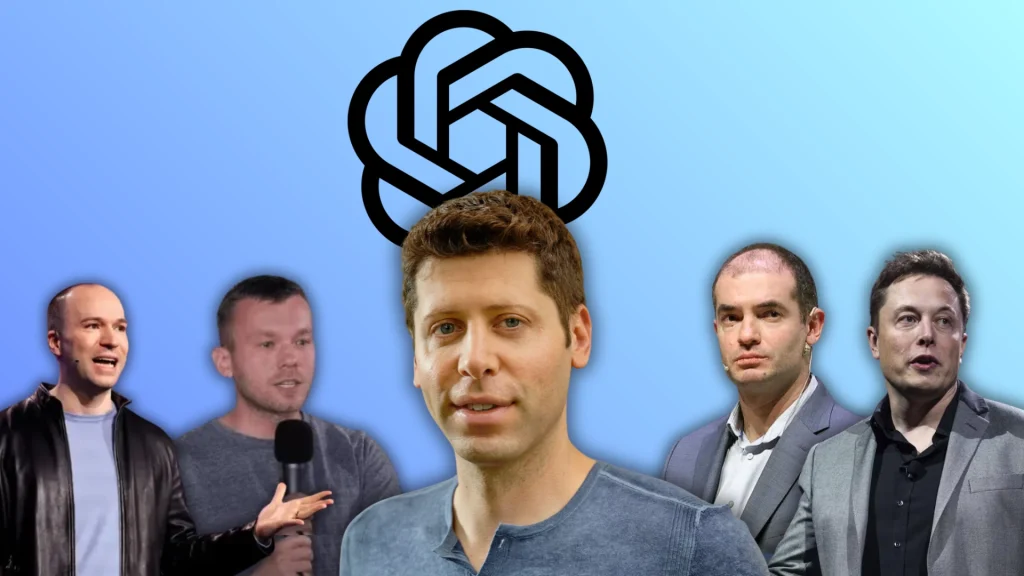
Search “who created ChatGPT,” and the answers scatter: OpenAI, Sam Altman, Elon Musk, or some nameless research team. The short version is straightforward.
OpenAI built ChatGPT, and Sam Altman runs the company today, but that single line skips the more interesting story of how a research project became a chatbot now used by over 900 million people each week.
Here you will trace that path from the start: the founding team who launched OpenAI in 2015, the researchers who actually trained the model, what Altman did and did not build with his own hands, and who owns and governs OpenAI now that it has grown into one of the most valuable private companies in the world.
OpenAI Created ChatGPT: The Short Answer
OpenAI is the company that built and released ChatGPT. It is a San Francisco-based AI research company founded in December 2015, initially as a nonprofit lab before evolving into a more complex structure that now includes a nonprofit foundation and a for-profit public benefit corporation underneath it.
ChatGPT launched to the public on November 30, 2022. It reportedly reached around 100 million users within two months, one of the fastest adoption curves any consumer product has recorded.
By early 2026, that number had grown past 900 million weekly users, based on usage figures OpenAI has shared publicly.
Sam Altman has served as CEO since 2019 and led the decision to release ChatGPT, but he did not write the code himself. That distinction matters more than it sounds, and it is worth unpacking.
Who Created ChatGPT: Inside the Research and Training Process
Naming founders explains who started the company. It does not explain who actually trained the software that became ChatGPT, and that is a different group of people entirely.
No single founder wrote ChatGPT’s underlying model by hand. It came out of a two-step process built by OpenAI’s research and engineering teams. First, OpenAI trained a large language model called GPT-3.5 on a massive body of text pulled from books, websites, and other written material.
Then researchers refined it using reinforcement learning from human feedback, or RLHF, a method where human trainers rated model responses so the system could learn which answers were actually useful, a process still tripped up by common fine-tuning mistakes at many companies.
John Schulman was one of the researchers who helped develop OpenAI’s early RLHF techniques. He left OpenAI for Anthropic in August 2024, then moved again in early 2025 to become Chief Scientist at Mira Murati’s Thinking Machines Lab, underscoring how quickly senior researchers move between AI labs right now. Wojciech Zaremba, another OpenAI co-founder, has stayed with the research team throughout.
Hundreds of additional researchers, engineers, and human labelers contributed to the version of ChatGPT that eventually shipped, far more people than the handful of names that usually get credit in headlines.
Meet the Founding Team Behind Who Founded OpenAI
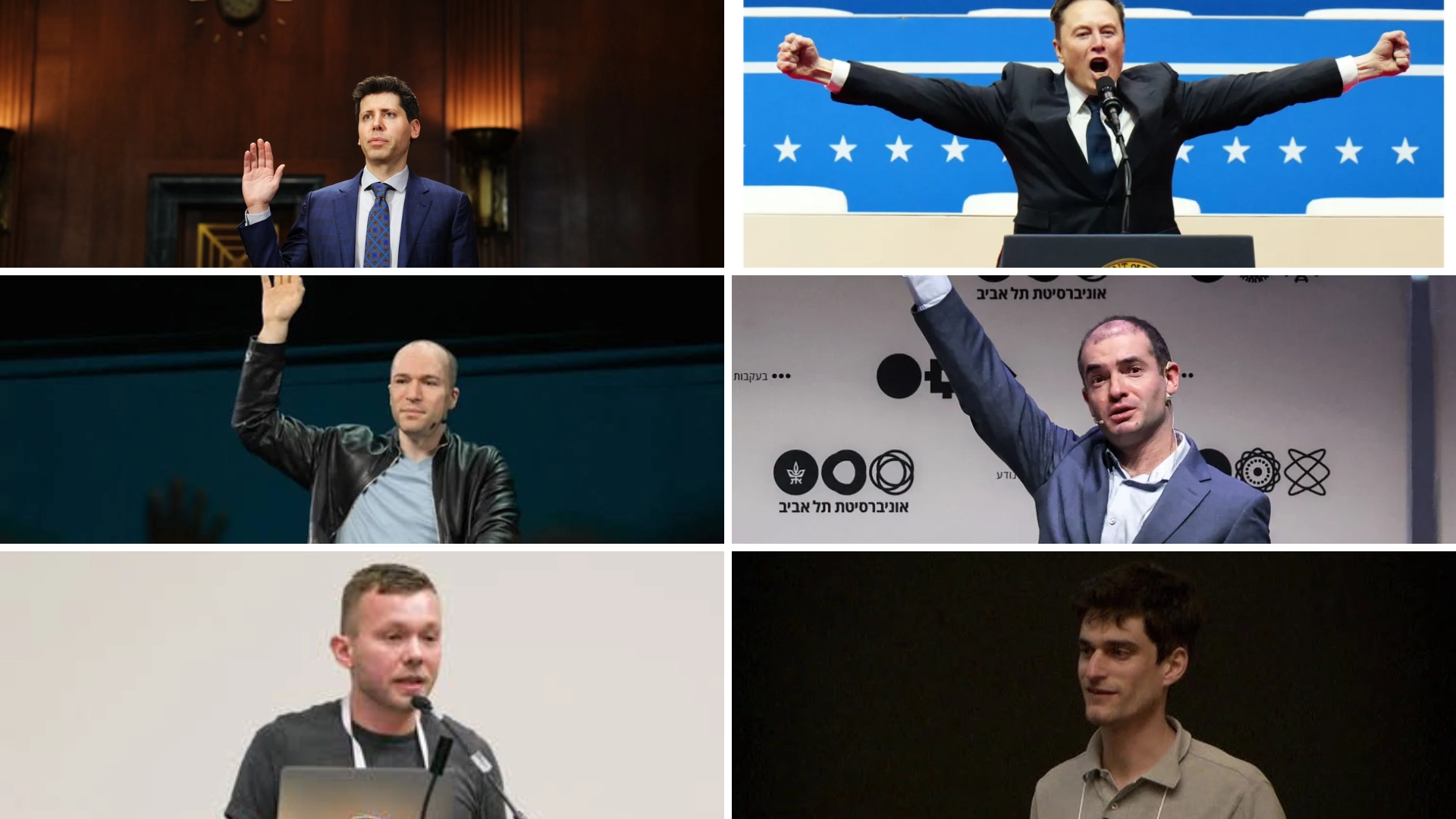
OpenAI was not started by one person working alone. Here is who was in the room when OpenAI was founded in 2015, and where each of them stands now.
|
Founder |
Role at Founding |
Role Today |
|---|---|---|
|
Sam Altman |
Co-chair |
CEO of OpenAI |
|
Elon Musk |
Co-chair, early investor |
Left the board in 2018; now runs xAI |
|
Greg Brockman |
Co-founder, CTO |
President of OpenAI |
|
Ilya Sutskever |
Co-founder, Chief Scientist |
Left OpenAI in 2024; now runs Safe Superintelligence Inc. |
|
Wojciech Zaremba |
Co-founding researcher |
Still leads research at OpenAI |
|
John Schulman |
Co-founding researcher |
Left OpenAI in 2024, now Chief Scientist at Thinking Machines Lab |
Several early OpenAI figures have since founded competing labs or moved into new roles across the industry, which says something about how fluid AI talent has become since ChatGPT’s launch, part of how AI is reshaping daily life.
Sam Altman’s Role in Building and Launching ChatGPT
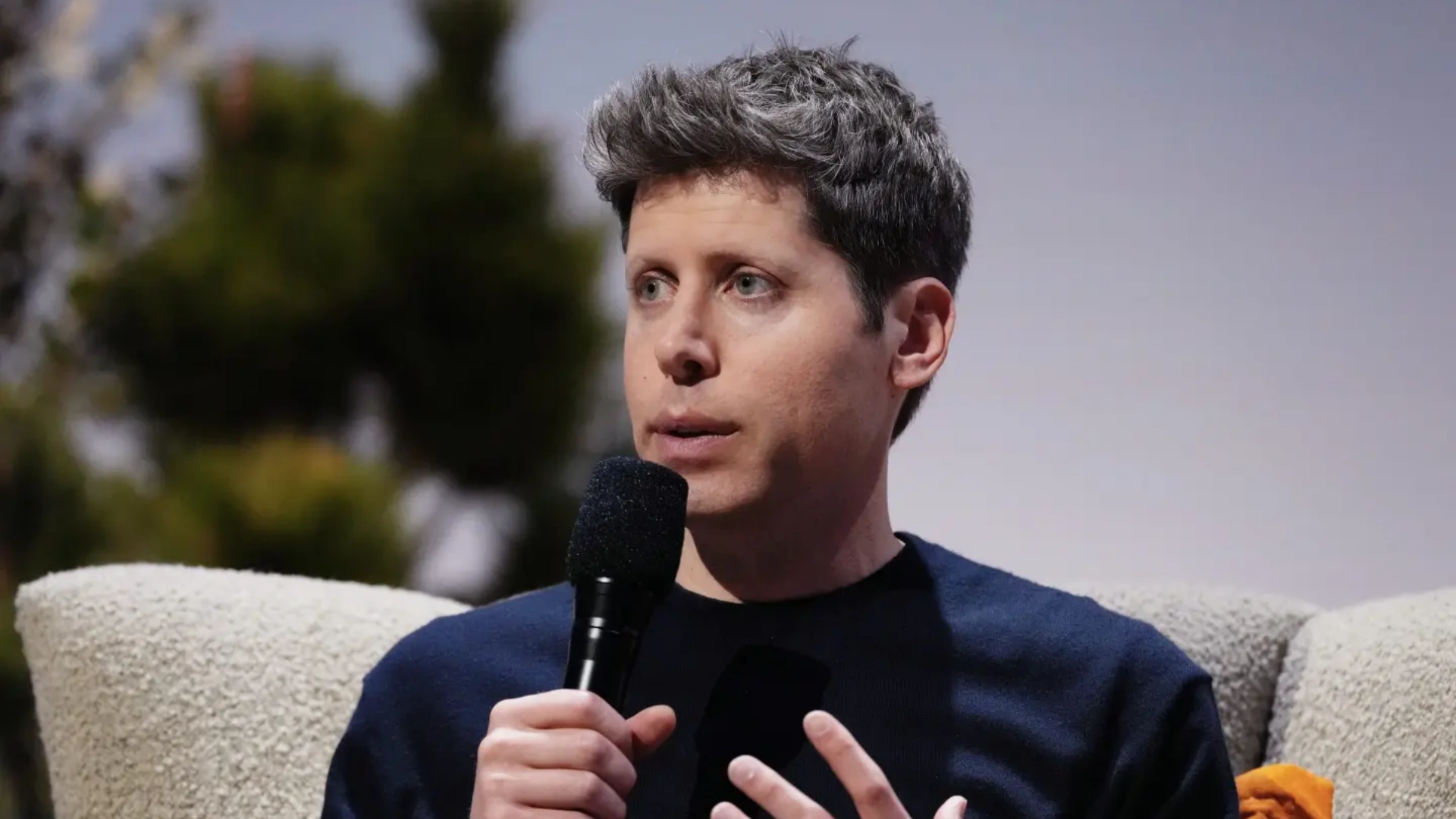
Image Source: Fortune
Sam Altman did not personally write the code behind GPT-3 or ChatGPT. His role focused on leadership and strategy: backing OpenAI’s decision to release ChatGPT publicly in 2022, negotiating the company’s partnership with Microsoft, and representing OpenAI before lawmakers, the press, and the public.
Before OpenAI, Altman spent five years as President of Y Combinator, the startup accelerator behind Airbnb and Dropbox. That background is probably why so many people assume he is a hands-on engineer.
He is not, and OpenAI’s own leadership has said as much in interviews. His value to the company has always looked more like a strategist and dealmaker than a coder, mirroring how businesses are changing across the industry.
He became OpenAI’s CEO in 2019 and remains in that role today, apart from a widely reported five-day removal by the board in November 2023, after which he was reinstated with a new board led by Bret Taylor.
Who Owns and Governs OpenAI Now
ChatGPT’s ownership structure is more complicated than a typical tech company, and understanding it helps explain why OpenAI makes the decisions it does.
OpenAI was founded as a nonprofit in 2015. After a long-running debate about converting fully to a for-profit company, OpenAI restructured on October 28, 2025, keeping a nonprofit, the OpenAI Foundation, in control of a for-profit public benefit corporation, OpenAI Group PBC. Bret Taylor, the former Salesforce co-CEO who stepped in as board chair during the 2023 leadership crisis, now chairs both the Foundation and the Group board. (Internal link placeholder: link “public benefit corporation” to an explainer on how PBC structures work.)
Microsoft remains OpenAI’s largest outside investor and its main cloud and technology partner, a relationship that has shaped nearly every major product decision OpenAI has made since 2019. Sam Altman remains CEO, and Greg Brockman remains President, the same two roles they have held through most of the company’s growth.
This structure matters for anyone asking who really controls ChatGPT. It is not one founder, and it is not Altman alone. It is a nonprofit board answering to a mission statement, overseeing a for-profit company that answers to investors, and that tension shows up in almost every OpenAI decision that makes headlines.
Common Misconceptions About ChatGPT’s Creation
A few questions about ChatGPT’s origin keep resurfacing in search results, usually from confusion with other AI companies or founders. Here are direct answers.
- Did women help build ChatGPT? Yes. No single person created ChatGPT, and women researchers and leaders at OpenAI played a real role in shipping it, including Mira Murati, who served as CTO during the 2022 launch.
- Was ChatGPT built outside the United States? No. OpenAI is headquartered in San Francisco, California, with additional offices in Dublin, London, and Paris.
- Is Grok a version of ChatGPT? No. Grok is a separate chatbot built by Elon Musk’s company, xAI, founded in 2023. It competes with ChatGPT; it is not related to it. (Internal link placeholder: link “xAI” to a comparison article if one exists.)
None of this changes who actually built the product or who runs the company behind it today.
Timeline: From OpenAI’s Founding to ChatGPT’s Launch
A quick timeline makes the sequence of events easier to follow than a wall of dates in prose.
|
Date |
Event |
|---|---|
|
December 2015 |
OpenAI founded as a nonprofit research lab |
|
February 2018 |
Elon Musk leaves the OpenAI board |
|
June 2020 |
GPT-3 released, OpenAI’s first large-scale commercial model |
|
November 30, 2022 |
ChatGPT launches as a free public preview |
|
November 2023 |
Sam Altman briefly removed and reinstated as CEO, Bret Taylor becomes board chair |
|
August 2024 |
John Schulman leaves OpenAI, later becomes Chief Scientist at Thinking Machines Lab |
|
October 28, 2025 |
OpenAI Foundation completes its restructuring, keeping nonprofit control over OpenAI Group PBC |
|
February 2026 |
ChatGPT passes 900 million weekly active users |
Roughly seven years passed between OpenAI’s founding and ChatGPT’s public release, most of it spent on model research rather than product work.
Final Takeaway
Strip away the noise and the picture holds up. OpenAI created ChatGPT through years of research most people never see;
Sam Altman turned that research into a public product and now leads the wider company; and a small founding group set the direction back in 2015, long before the chatbot had a name. Leadership has shifted since then.
Ilya Sutskever, John Schulman, and others have moved on to build elsewhere, while Bret Taylor now chairs the board Altman answers to. None of that changes who founded OpenAI or why the company still gets credit for the product.
If you are curious how the tools you use daily actually came to exist, that habit of checking the source is worth keeping. Got questions about any part of it? Drop them below.
Frequently Asked Questions
Why is ChatGPT Called ChatGPT?
ChatGPT gets its name from “Chat Generative Pre-trained Transformer.” The “Chat” part refers to its conversational format, while “Generative Pre-trained Transformer” describes the type of AI model technology behind its responses.
Was ChatGPT the First AI Chatbot?
No. Earlier chatbots existed before ChatGPT, including rule-based systems and other AI assistants. ChatGPT became notable because it combined advanced language models with a simple conversational interface, allowing millions of people to interact with AI.
Why Was ChatGPT Released as a Public Preview?
OpenAI released ChatGPT as a public preview to gather user feedback, study real-world interactions, and improve the system before expanding access and features.
Can ChatGPT Create New Ideas or Only Repeat Information?
ChatGPT can generate original combinations of words, suggestions, and responses based on patterns learned during training. It does not think or create ideas the same way humans do.
Does Sam Altman Personally Own ChatGPT?
No. Sam Altman does not personally own ChatGPT. He holds a leadership role and compensation tied to OpenAI’s performance, but OpenAI Group PBC owns ChatGPT, and the nonprofit OpenAI Foundation controls it.