Have you ever noticed how the phone in someone’s hand often says something about their life stage?
A teenager proudly holding the latest iPhone, a busy professional relying on a powerful Samsung.
A parent choosing a phone that simply works every day. Moments like these reveal a quiet pattern behind technology choices.
Phone brand choice by age and gender is not random, but it grows from habits, identity, comfort, and the way people connect with the world.
Some chase style while others want reliability, and many just want a device that fits their life without effort and supports everyday needs.
The Smartphone Market at a Glance
The global smartphone market is dominated by a few major brands, with Apple, Samsung, and Xiaomi leading shipments worldwide.
According to IDC, smartphone market share data, Samsung held about 18.8 percent of the global market, Apple followed with 18.2 percent, and Xiaomi captured roughly 13.3 percent worldwide.
In the United States, Statcounter Global Stats reported that Apple dominated the mobile vendorwith about 55 to 60 percent of the market, while Samsung typically held around 25 to 30 percent.
Beyond technology, brand choice is increasingly tied to identity, lifestyle, and ecosystem loyalty, which helps explain why many consumers repeatedly purchase the same brand.
Data from the Pew Research Center Mobile Fact Sheet show that 96% of U.S. adults own a cellphone, while 90% own a smartphone.
The study also reports that about 15% of adults rely on smartphones as their primary means of accessing the internet.
Phone Brand Preferences by Age Group
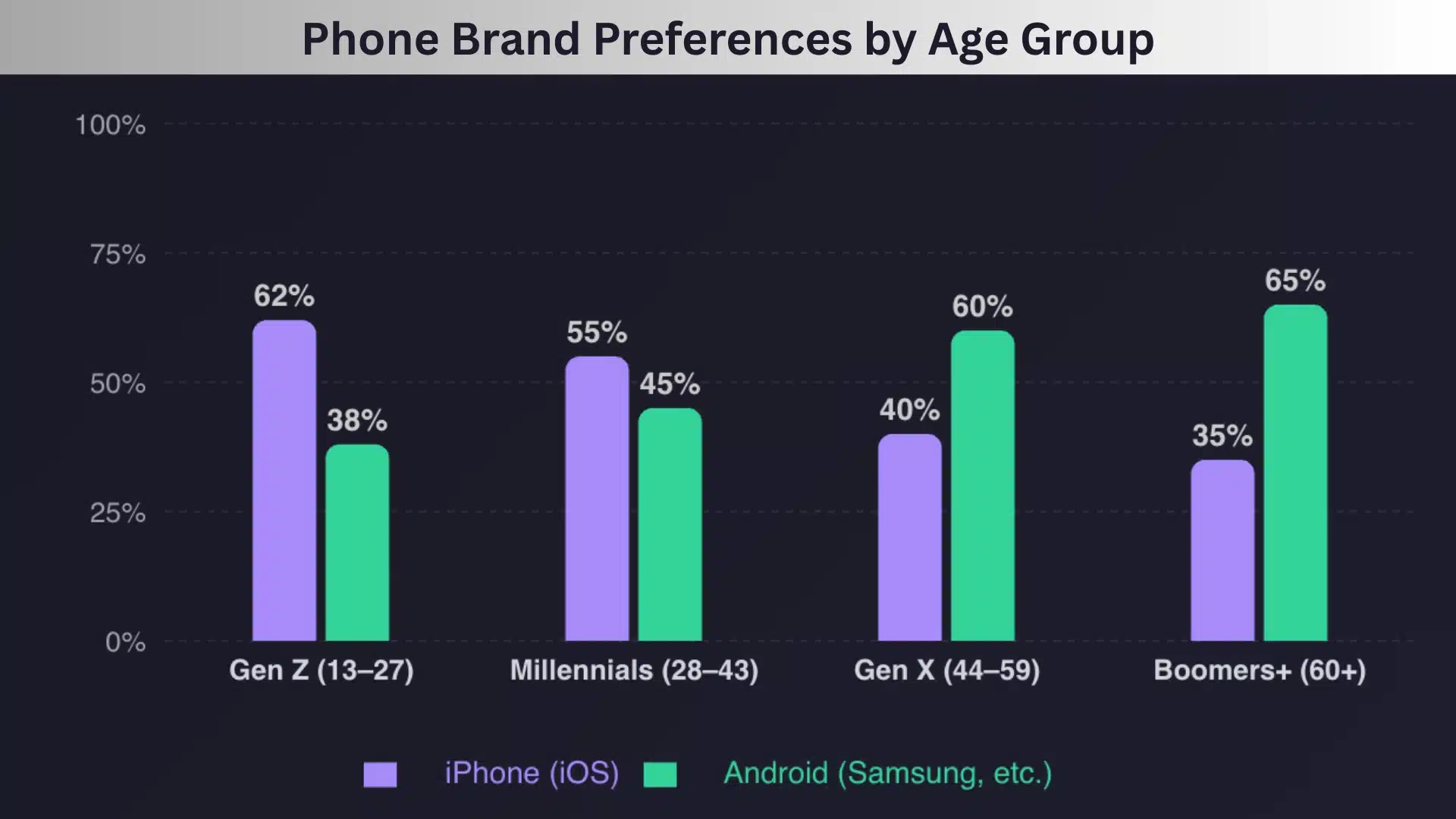
Age influences smartphone decisions in many ways, and different generations prioritize different features, from trend-driven designs to practical reliability and everyday usability.
Note: The data for the chart has been sourced from Statista, Mintel, and TechRT.
1. Gen Z Users (Ages 13 – 27)
Gen Z often prefers phones that reflect style and social identity. Premium brands attract strong attention in this age group.
Social media trends and peer influence play a large role in purchasing decisions.
Camera quality matters greatly, given the constant sharing of photos and videos. Design and brand image also matter. Many younger consumers show a stronger preference for iPhones.
2. Millennials (Ages 28 – 43)
Millennials are among the largest groups of smartphone users. Phones serve both personal and professional needs.
Many prefer devices that deliver strong performance and smooth multitasking. Productivity features matter to the audience.
Integration with laptops, smartwatches, and tablets also influences decisions.
3. Generation X (Ages 44 – 59)
Generation X tends to approach phone purchases more practically.
Reliability becomes more important than brand trends. Long battery life is a common priority, and thus, many users in this group choose Android over iPhone.
Instead of chasing new designs, this generation often focuses on dependable devices that support daily communication and work tasks.
4. Baby Boomers (Ages 60+)
Baby Boomers often prioritize simplicity when choosing smartphones. Easy navigation and clear interfaces make devices more comfortable to use.
Many prefer phones that offer larger screens for better visibility.
Accessibility tools such as voice assistance and adjustable text sizes also help. Straightforward features often influence brand preference more than complex specifications.
Phone Brand Preferences by Gender
Research from the SCIRP study on determinants of mobile phone brand choice shows that factors such as price, battery capacity, quality, and fashion influence brand preferences.
Among women, camera quality, stylish design, and smooth usage frequently shape purchasing decisions.
A phone that captures clear photos, feels comfortable to use, and offers a clean interface often becomes the preferred choice.
These factors have helped Apple attract a strong female audience in many markets. Among men, interest often shifts toward technical performance.
Features such as powerful processors, gaming capability, hardware specifications, and device customization become important.
Because of this, Samsung and several other Android brands have gained popularity among users.
The Intersection of Age and Gender
Age and gender together influence smartphone brand preference patterns. When both demographics intersect, certain smartphone brands consistently appear as popular choices.
| Age Group | Women | Men |
|---|---|---|
| Gen Z | Apple, Samsung, Nothing | Samsung, Apple, OnePlus, Xiaomi |
| Millennials | Apple, Samsung, Google Pixel | Samsung, Apple, Google Pixel, OnePlus |
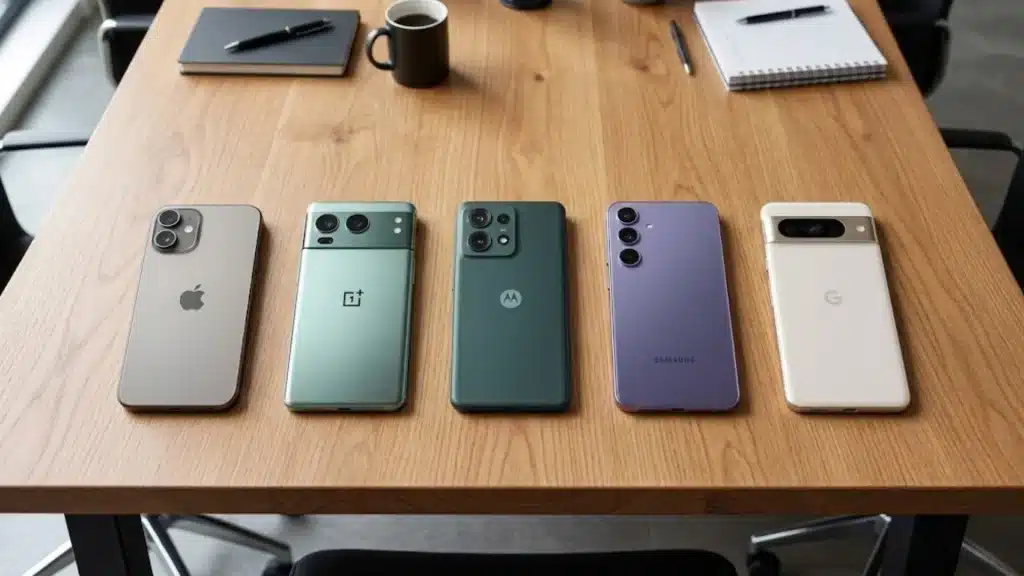
| Generation X | Apple, Samsung, Motorola | Samsung, Motorola, Apple, Google Pixel |
| Baby Boomers | Apple, Samsung | Samsung, Motorola |
Future Trends to Watch For in Phone Brand Preferences
Smartphone preferences will continue to shift as new technologies and user priorities evolve.
One key aspect to watch is Gen Z’s strong preference for the iPhone, which will remain as this generation enters adulthood and gains greater purchasing power.
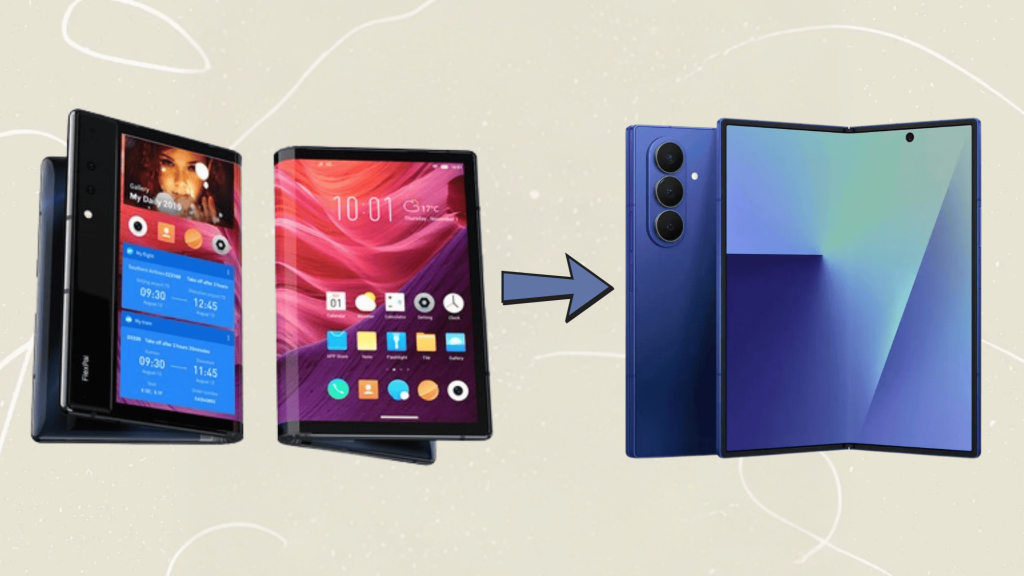
At the same time, foldable phones and premium Android models are creating new competition across age groups.
AI-powered smartphones are also changing expectations, with younger users adopting AI features quickly while older consumers focus on practical benefits.
Questions such as “Is iPhone safer than Android?” are becoming more common as security awareness grows.
Sustainability is another rising influence, as buyers increasingly consider environmental impact and ethical production when choosing future devices.
Conclusion
Phone brand choice by age and gender reveals clear patterns in smartphone selection. These preferences often reflect lifestyle, comfort with technology, and daily usage needs.
Younger users often follow trends and design appeal, while older groups focus more on reliability and ease of use.
Gender-based preferences also influence priorities such as camera quality, performance, and customization.
Some users value pleasing, while others prioritize technical capabilities and flexibility.
Because of these patterns, smartphone companies design products and marketing strategies that target specific demographic groups.
Brands also benefit by creating products that better serve different audiences and by evolving with changing consumer expectations.
What patterns have you noticed? Share your thoughts in the comments below.