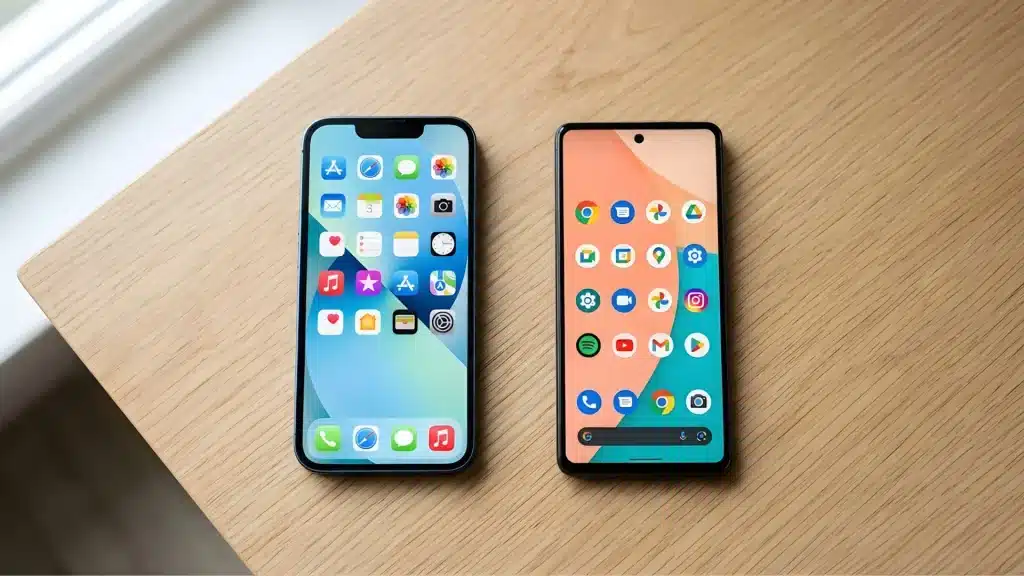
Smartphones sit at the center of daily life, quietly holding elements of everything that happens.
Photos from important moments, private messages, banking apps, work documents, and personal notes all live inside one small device.
Because so much is stored there, many people begin asking an important question: Is iPhone safer than Android when it comes to protecting personal data?
At the same time, discussions about: Are people leaving Apple for Android? add another layer to the security debate.
Headlines about data breaches and hacked accounts only deepen those growing concerns. Such reports naturally make anyone question if their own device is truly secure.
Understanding these security differences becomes a deeply personal decision about trust and digital safety.
Understanding iPhone Security Working
Apple designs iPhone security around a tightly controlled ecosystem.
Hardware and software are built together, which creates strong system boundaries and limits weak points that attackers could target.
Because iOS is closed source, outside parties cannot freely alter the operating system.
Apps are installed only through the Apple App Store unless a device is compromised.
Since the EU’s Digital Markets Act (DMA) enforcement in 2024, Apple is legally required to allow third-party app stores and sideloading in the European Union.
iPhones also rely on file-level encryption to protect stored data and on a secure enclave to safeguard sensitive information such as passwords and biometric data.
Face ID and Touch ID add another layer of protection. Frequent automatic updates quickly fix newly discovered security flaws.
How Android Security Works?
Android security is built on an open source architecture, which gives developers flexibility and encourages innovation.
This openness allows for faster code review and the identification of weaknesses, and makes users believe that Android is better than the iPhone.
Android runs on many brands, and each manufacturer controls its own update schedule.
As a result, security patches may roll out at different times, and older or budget devices sometimes receive updates more slowly.
In many cases, brands may eventually discontinue updates for certain models once official support periods end, as with the Galaxy S10 andPixel 4.
To reduce risks, Android includes Google Play Protect, which scans apps for harmful behavior and sends malware alerts.
Users can also install additional antivirus, VPN, and firewall apps for stronger protection.
Is iPhone Safer than Android?
Choosing between iPhone vs Android often comes down to security concerns. Both platforms offer strong protections, but they approach safety in different ways.
- Privacy: iPhone limits tracking by default with strict app permissions, while Android offers flexible controls that require more user management.
- Data Protection: Both use encryption, but Apple delivers uniform security across devices, whereas Android protection can vary by brand and model.
- Stolen Device: iPhone uses Activation Lock and Find My, while Android provides Find My Device and factory reset protection.
- Account Safety: Both support biometric locks and two-factor authentication, with safety largely shaped by user behavior.
Comparing Threat Models in iPhone vs Android
Understanding how threats target each platform helps clarify the real security differences. Both systems face different risk patterns due to their design and market share.
| Aspect | iPhone (iOS) | Android |
|---|---|---|
| Malware Targeting | It has been less targeted due to a closed ecosystem and a strict app review process. | Larger global user base makes Android a bigger target for malware developers and harmful apps. |
| App Store Control | Apps are reviewed under strict guidelines before approval. | Google Play Protect scans apps, but an open ecosystem increases exposure risk. |
| User Responsibility | Many protections are enabled automatically. | Greater control requires more user awareness and careful management. |
| Advanced Spyware | High-profile threats like Pegasus have targeted iOS devices. | Similar advanced spyware has also targeted Android devices. |
| Common Tactics | Phishing links, malicious profiles, and targeted exploits. | Phishing apps, trojans, and remote access malware. |
Common Misconceptions about iPhone and Android
Many people assume one platform is completely secure while the other is unsafe, and these misunderstandings often come from marketing claims or outdated information.
- iPhones Cannot Get Viruses: iOS devices are harder to infect, but they are not immune to malware, phishing, or advanced spyware attacks.
- Android Is Always Unsafe: Android includes strong security features, and many modern devices offer high levels of protection when properly updated.
- Open Source Means Insecure: Android’s open-source nature enables faster bug detection, but it can also increase exposure if not managed well.
- Apple Protects Everything Automatically: User behavior, such as clicking suspicious links, still plays a major role in security.
- Security Depends Only on the Operating System: Updates, app choices, passwords, and two-factor authentication significantly influence overall safety.
Real User Insights: Is iOS More Secure Than Android?
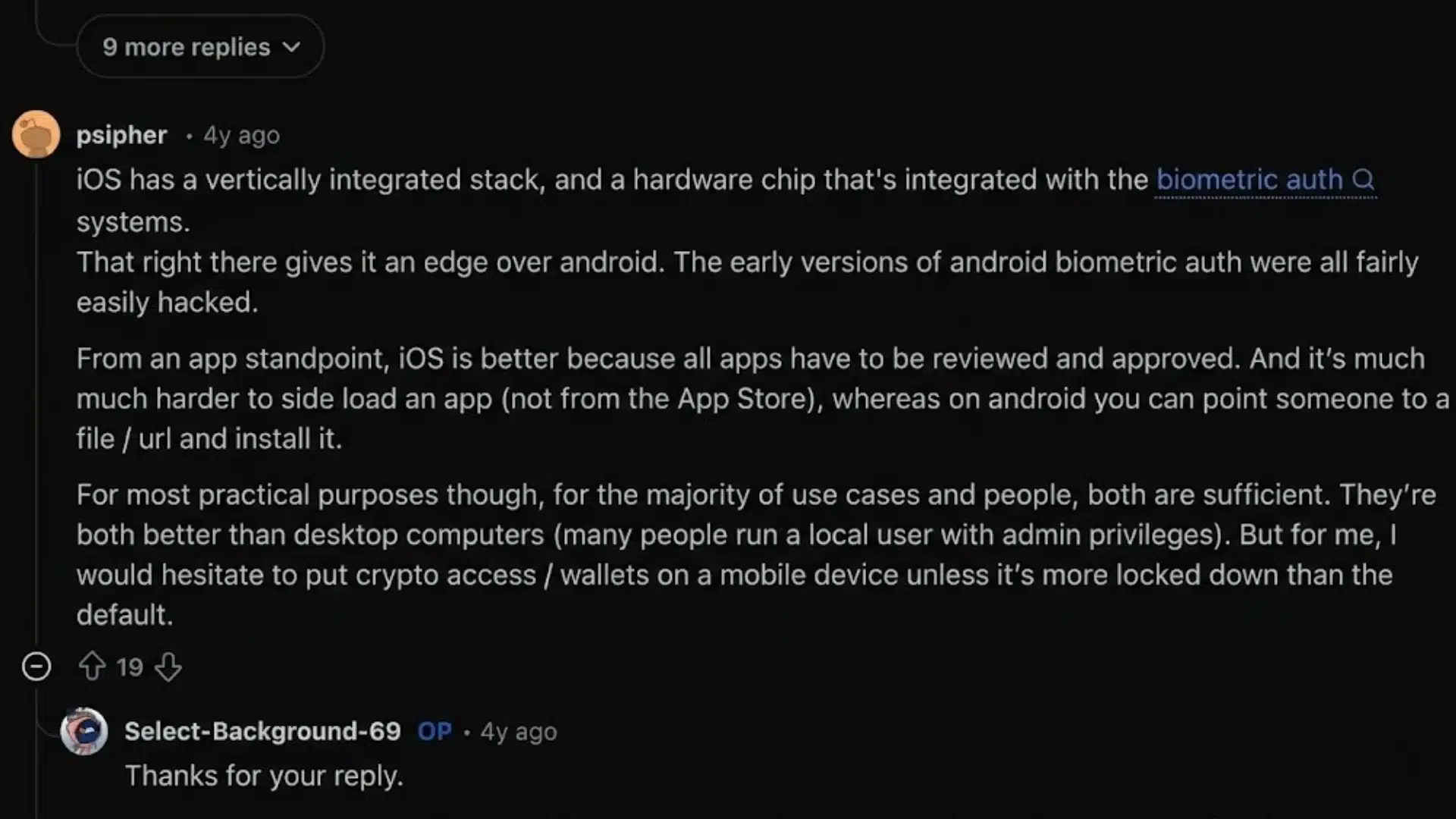
Reddit users seem divided, but a pattern does appear. For most everyday users, both platforms offer strong security.
Many believe iOS feels more secure due to Apple’s tight hardware and software integration, Secure Enclave, strict app review process, and limited sideloading.
Several users argue that Android, especially from certain manufacturers, can introduce extra risk through custom skins and preloaded apps.
However, others point out that open source Android can be hardened with custom ROMs like GrapheneOS, potentially making it even more secure than iOS.
Some also question whether Apple’s closed ecosystem truly guarantees privacy, noting telemetry data and past security incidents.
Conclusion
In the end, the question: Is iPhone safer than Android? does not have a simple yes or no answer.
Both platforms offer strong security features, including encryption, biometric locks, and regular updates.
However, user habits remain one of the most important factors in overall safety.
Installing trusted apps, avoiding suspicious links, enabling two-factor authentication, and keeping devices updated can make a major difference in either system.
Prioritizing one between the two should depend on personal security priorities, comfort with settings, and update reliability.
What matters most to you when it comes to smartphone security? Share your thoughts in the comments below and join the discussion.