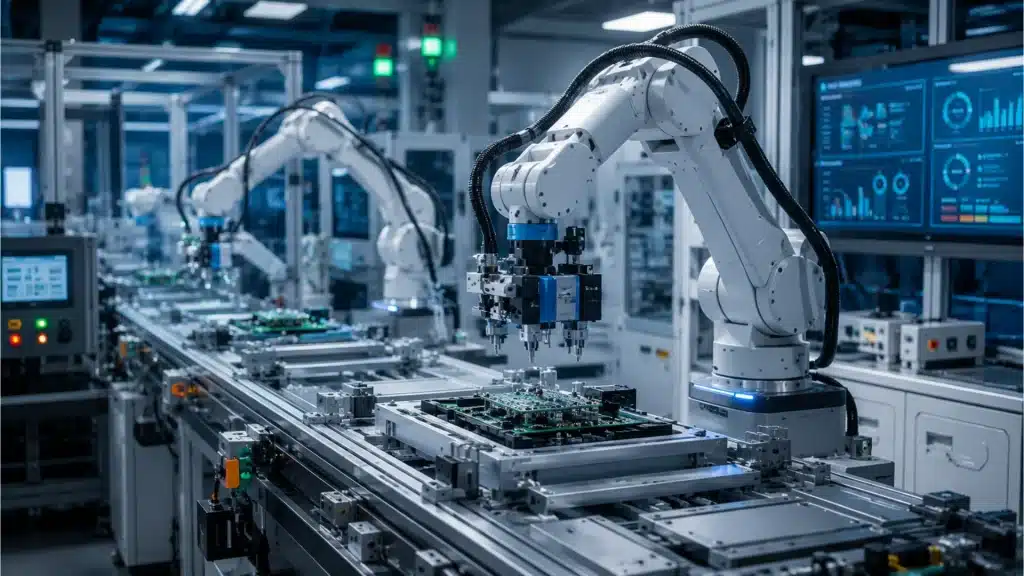
Industrial automation sounds impressive until the system slows down, the data doesn’t align, or the production team still has to fix problems by hand.
That is where many businesses realize automation is not just about adding machines. It is about building a setup that actually works with the way the facility runs every day.
The right system can make production feel smoother, faster, and easier to control. The wrong one can cause delays, confused operators, and expensive fixes that surface after installation.
It also affects how teams monitor equipment, respond to issues, track output, and keep daily operations moving without constant manual intervention.
Before investing in industrial automation systems, it helps to understand what sits behind the technology, how the main parts work together, and what separates a useful setup from one that only looks good in a proposal.
What Industrial Automation Systems Are Actually Made Of?
Industrial automation systems are built from connected parts that control machines, collect data, and help operators monitor production.
The main components usually include PLCs, SCADA systems, HMIs, sensors, and robotics.
A PLC works like the control brain, sending commands to machines and production equipment. SCADA systems help teams monitor and control processes from a central screen.
HMIs give operators a clear view of machine status, alarms, and instructions.
Sensors track conditions such as temperature, pressure, speed, motion, and position, so the system can respond to real-time conditions.
Robotics handles repetitive or physically demanding tasks such as welding, sorting, packing, or material handling.
Understanding the role of robotics in automation helps buyers set realistic expectations before evaluating vendors. Together, these parts create an integrated system that supports the process, the people, and the business goal.
Main Types of Industrial Automation and Controls
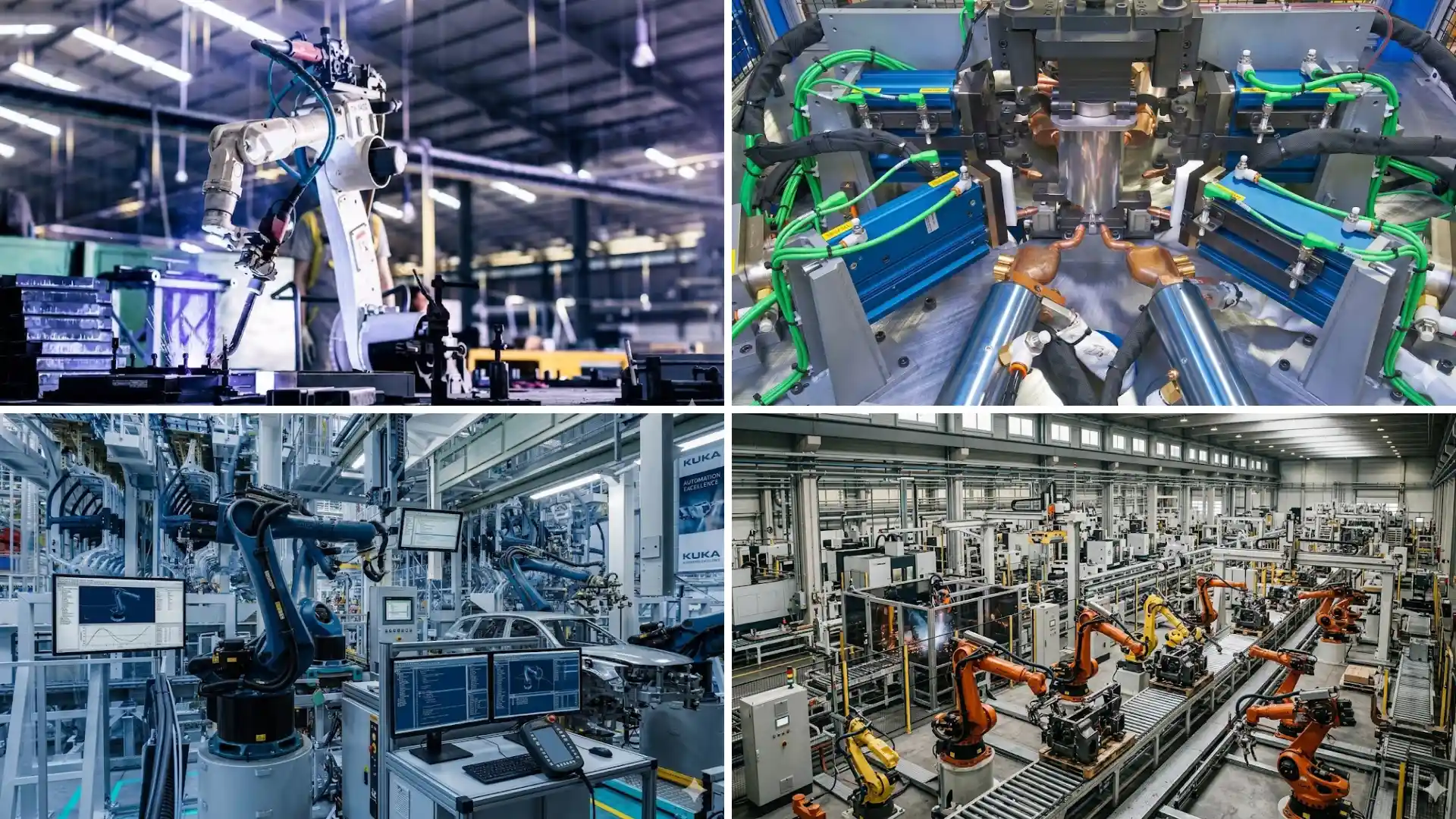
Industrial automation and controls refer to the hardware, software, and engineering used to manage automated processes. These systems help companies improve speed, consistency, safety, and production visibility.
Before choosing a system, buyers should understand the main types of automation.
Each one fits a different production setup, so the right option depends on how often products change, how much volume the facility handles, and how much flexibility the business needs.
- Fixed automation: Works best for high-volume, stable production. It delivers fast, consistent output but is hard to change once built.
- Programmable automation: Suits batch production because it can be reprogrammed for different products. However, changeovers may take time.
- Flexible automation: Fits mixed products and changing demand. It adapts more easily than fixed systems, but requires more robust planning and integration.
- Integrated automation: Connects machines, controls, software, sensors, robotics, and data systems into one setup for better visibility and smoother process control.
The right choice depends on production volume, product variety, budget, floor space, labor needs, and quality goals. A reliable automation partner should review these factors before recommending equipment.
Industries That Use These Systems the Most
Industrial automation systems are used across many sectors, but each industry uses them differently.
The goal is not always speed. In some facilities, automation is about safer workflows, cleaner records, better product quality, fewer manual checks, or stronger traceability.
That is why the setup should match the operating environment.
A packaging line, a pharmaceutical batch process, a warehouse, and a utility plant may all use automation, but they do not need the same controls, software, sensors, or support model.
1. Manufacturing
Manufacturing is a key area for industrial automation because many tasks are repetitive and output-driven. Automation supports assembly, packaging, inspection, labeling, material handling, and tracking.
It improves consistency, reduces errors, stabilizes cycle times, and enables operators to monitor machines via sensors, PLCs, and HMIs. Companies can start with one bottleneck, then expand gradually.
2. Automotive
Automotive production relies on automation for high-volume output and strict quality control. Robots and control systems handle welding, painting, part handling, testing, and assembly.
Automation improves speed, repeatability, and verification while reducing small variations that can affect quality. Machine and sensor data also help teams spot downtime, defects, and maintenance needs early.
3. Food and Beverage
Food and beverage automation improves speed, safety, cleanliness, and consistency. It supports filling, sealing, labeling, weighing, sorting, packaging, and inspection.
Automated systems reduce direct product contact, improve portion accuracy, and support hygiene needs. They also make changeovers between flavors, package sizes, or product types faster, more controlled, and less disruptive.
4. Energy and Utilities
Energy and utility automation helps teams monitor equipment, manage process conditions, and reduce manual field checks across large or remote sites.
These systems track pressure, temperature, flow, voltage, alarms, and equipment status.
SCADA provides operators with a central view, helping them respond to alerts, detect problems earlier, reduce downtime, and manage complex operations with greater visibility.
5. Pharmaceutical
Pharmaceutical automation supports production, batch tracking, inspection, packaging, labeling, and controlled process management.
It helps maintain quality, traceability, data integrity, and audit-ready records.
Automated controls reduce manual documentation errors, monitor critical variables, and keep processes within defined limits, which is essential when product quality and regulatory compliance are closely connected.
6. Logistics and Warehousing
Logistics and warehousing automation help move, sort, scan, pick, pack, and track goods more efficiently.
Systems like conveyors, barcode scanners, robotics, sortation tools, and warehouse software improve speed, accuracy, and inventory visibility.
Automation also reduces manual handling, supports faster order fulfillment, and improves safety by limiting heavy lifting and repetitive tasks.
The NIST Manufacturing Extension Partnership provides automation guidance for manufacturers evaluating technology options without vendor bias.
Advantages and Disadvantages of Industrial Automation Systems
Industrial automation systems can deliver clear operational gains, but they also entail planning, cost, and support challenges.
Comparing both sides helps you decide whether automation fits your process, team, and long-term production goals.
| Advantages | Disadvantages |
|---|---|
| Automation can improve productivity by maintaining steadier production with fewer delays. | The upfront investment can be high because equipment, engineering, and training add cost. |
| Quality control improves when sensors, cameras, and controls detect issues earlier. | Integration can be difficult when new systems must connect with older machines or software. |
| Teams spend less time on repetitive, heavy, or physically demanding work. | Maintenance still requires skilled support, spare parts, updates, and regular checks. |
| Safety can improve when machines handle hazardous or high-risk tasks. | Operators need training before they can confidently use and troubleshoot the system. |
| A well-planned system can make future upgrades and expansion easier. | Poor design can make the system less flexible when production needs change. |
Common Technologies Used in Industrial Automation
Industrial automation relies on several interconnected technologies that enable machines to run, operators to respond, and managers to track performance across the facility.
- PLCs: Programmable logic controllers control machines, motors, valves, conveyors, and other production equipment.
- SCADA systems: Supervisory control and data acquisition systems help teams monitor and control processes from a central interface.
- HMIs: Human-machine interfaces provide operators with a clear screen for machine status, alarms, settings, and instructions.
- Sensors: Sensors track temperature, pressure, speed, motion, position, flow, weight, and other process conditions.
- Robotics: Robots perform tasks such as welding, picking, packing, sorting, inspection, assembly, and material handling.
- Machine vision: Cameras and vision systems check parts, labels, defects, alignment, dimensions, and packaging accuracy.
- Industrial software: Software platforms support production tracking, reporting, maintenance planning, quality records, and system integration.
- Digital twins: Virtual replicas of physical equipment or production lines let teams simulate process changes and test configurations without interrupting live operations. Adoption is accelerating as part of broader Industry 4.0 strategies.
Companies That Offer Industrial Automation Solutions
For buyers, researching industrial automation systems often means comparing companies that can provide equipment, software, engineering support, and long-term service.
Some providers focus on full factory automation, while others specialize in robotics, controls, process automation, or system integration.
- Siemens: A strong fit for connected production, IT, and OT integration, and scalable factory systems. It suits companies that want automation tied to wider digital transformation.
- Rockwell Automation: Manufacturers often choose it for automation hardware, software, and lifecycle services in one place, including Allen-Bradley, FactoryTalk, and LifecycleIQ Services.
- ABB: A major option for robotics and automated production. Its portfolio covers industrial robots, collaborative robots, autonomous mobile robots, controllers, software, services, and application solutions.
- Emerson: Commonly known for process automation, measurement, control systems, and instrumentation. It is especially relevant for oil and gas, power, chemicals, pharmaceuticals, and other process-heavy environments.
What to Look for in an Automation Services Partner
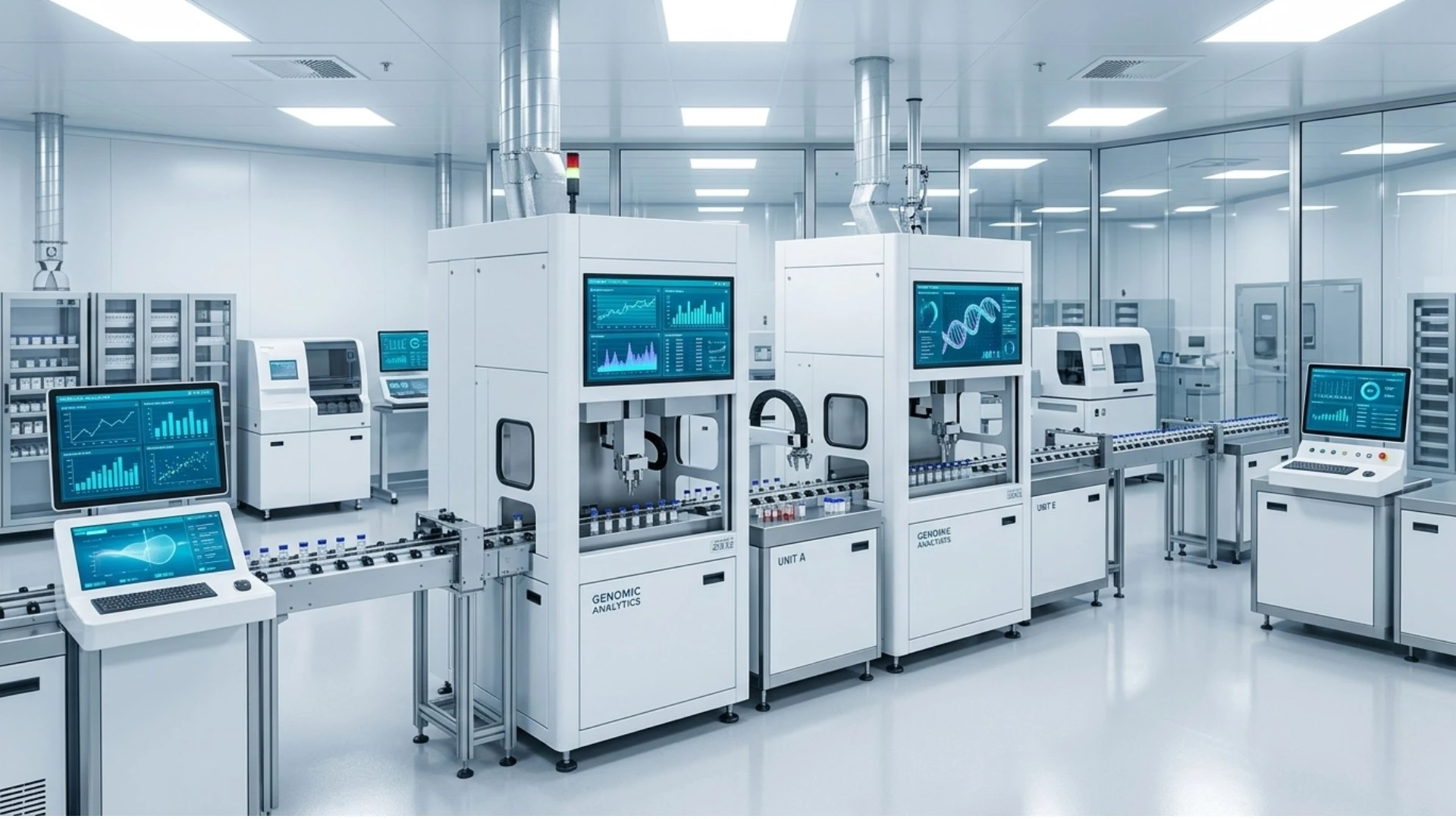
Choosing an automation services partner is usually more important than choosing one piece of hardware.
The partner will shape the quality of the system’s design, installation, integration, testing, and post-launch support. Before comparing vendors, focus on the qualities that affect long-term performance, not just the quoted price.
1. Industry Experience
Start with industry experience because every sector has its own operating reality.
A vendor does not need to have solved your exact problem before, but they should understand your environment type, compliance needs, production flow, and risk points.
Food production, pharma, automotive, logistics, and laboratory automation each present distinct constraints, so choose a partner who can adapt automation to your specific setting.
2. Integration Capability
Integration capability matters because many automation projects fail when the hardware works, but the full system does not communicate well.
Ask how the partner connects PLCs, SCADA, HMIs, sensors, robotics, enterprise software, lab systems, and reporting tools.
A strong partner should understand both machine-level control and higher-level data flow, so the final system works as one connected operation.
3. Certifications
Certifications can help filter out serious providers because they show commitment to professional standards and safer project delivery.
Look for signs such as CSIA certification for system integrators or A3 certification for robotic integration. These credentials do not guarantee success on their own, but they show the vendor follows recognized practices.
They also align with OSHA’s robot safety guidelines for industrial environments.
4. Support Structure
Support should be clear before the project starts, not after something breaks. Ask who handles emergency issues, spare parts, software updates, remote support, on-site service, and operator retraining.
You should also know response times, service availability, and escalation steps. Clear support terms help prevent downtime, confusion, and finger-pointing once the automation system is running in a live production environment.
5. Scalability
Scalability matters if your business may add more lines, more data, more robots, or more locations later. A good partner designs with future growth in mind instead of building a system that only solves today’s problem.
They should consider modular controls, flexible software, data architecture, and expansion capacity, helping you grow without rebuilding the entire automation setup from scratch.
6. Vendor Track Record
Vendor track record should go beyond a polished sales deck. Ask for examples of similar projects, client references, documentation samples, testing methods, and post-installation support details.
A strong industrial automation and controls partner should also challenge weak assumptions. If your ROI target is unrealistic, your timeline is too tight, or your process is not ready for automation, they should tell you early.
IIoT in Industrial Automation
IIoT stands for Industrial Internet of Things. It connects machines, sensors, controllers, and software so that production data can move more effectively across the facility.
With IIoT, teams can monitor equipment health, track downtime, spot performance trends, and make decisions using real-time data instead of guesswork.
It can also support predictive maintenance, remote monitoring, energy tracking, and better reporting across multiple lines or locations.
The main value of IIoT is visibility. It helps companies understand what is happening, where problems are forming, and which process changes may improve performance.
Future of Industrial Automation
The future of industrial automation is moving toward smarter, more connected, and more flexible systems. Companies are no longer looking only for machines that repeat tasks.
They want systems that can collect data, adjust faster, support remote monitoring, and help teams make better decisions.
Artificial intelligence, machine vision, robotics, digital twins, predictive maintenance, and IIoT will continue to shape how facilities operate.
More businesses will also look for automation that can scale in phases rather than requiring a single large project from the start.
The strongest automation strategies will focus on practical outcomes: less downtime, better quality, safer work, clearer data, and systems that can grow as production needs change.
Conclusion
By the time you compare automation partners, the question is not whether automation can help. It is whether the right system can solve the right problem without creating new issues.
Industrial automation systems affect production flow, reporting, labor, maintenance, safety, and long-term costs.
A good system can improve output, reduce manual work, support better reporting, and make daily operations easier to manage. A poor fit can lead to downtime, integration trouble, and support problems that last for years.
Before choosing a provider, define the process issue, compare automation types, review integration needs, and ask about support, scalability, safety, and ROI.
What automation challenge is your facility facing right now? Share it in the comments and let us know what kind of system you are considering.
Frequently Asked Questions
When is the Right Time to Invest in Industrial Automation?
The right time is usually when manual work starts limiting growth, quality, safety, or delivery speed.
If delays, errors, labor shortages, or inconsistent output are becoming regular problems, automation may be worth evaluating.
Should I Choose a Large Automation Company or a System Integrator?
Choose a large automation company if you need broad product coverage, standard platforms, and global support.
Choose a system integrator if your project needs custom design, mixed equipment, legacy system connections, or hands-on implementation support.
Is Laboratory Automation the Same as Industrial Automation?
Laboratory automation is a specialized type of automation focused on samples, instruments, data integrity, precision, and workflow control.
It shares some technology with industrial automation, but lab environments often need stronger traceability, compliance planning, and instrument integration.
How Much Should a Company Automate First?
Most companies should automate the process that creates the clearest operational pain. That may be a repetitive task, a quality bottleneck, a safety concern, or a reporting gap.
Starting with one measurable use case usually makes ROI easier to prove.