Outdoor recreation has never had a shortage of equipment. The boots are better. Navigation is more precise. Camping gear packs smaller, and vehicles can carry more than ever.
What has been missing is an efficient way to cover the space between the parking area and the place where the experience actually begins.
A fat tire ebike is starting to fill that gap. It can extend a day trip beyond the usual trailhead, make distant campsites easier to reach and reduce the effort required to move equipment over unpaved routes. The important change is not simply that a bicycle has gained a motor. It is that several familiar outdoor tools are beginning to work as one practical mobility system.
That shift is turning the fat tire ebike from a specialized purchase into a useful option for a much wider group of outdoor riders.
Why Outdoor Mobility Is Changing
Cars and trucks are excellent at reaching established roads. Hiking works when the route narrows and the pace becomes part of the experience. Between those two points, however, there is often a long section of gravel, packed dirt or uneven access road that is slow on foot and unnecessary in a full-size vehicle.
That middle ground is where electric bikes make sense.
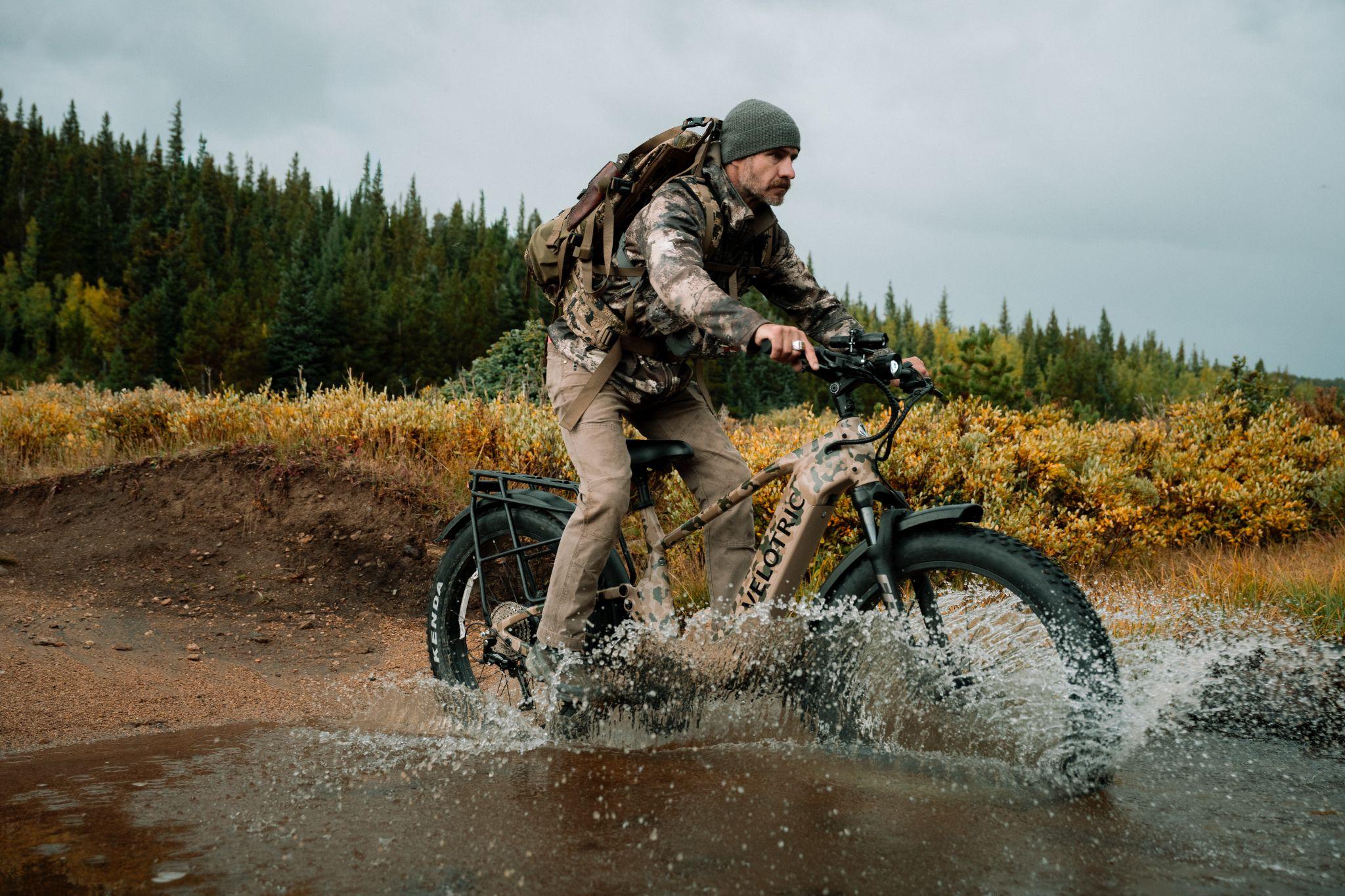
They provide assistance without removing the rider from the landscape. A person can still pedal, slow down when the surface changes and stop without searching for vehicle-sized parking. For camping, fishing, wildlife observation and general exploration, that flexibility matters more than outright speed.
The larger development is not only about transportation. Outdoor plans can be built around a different starting point. A campsite can become a base rather than the final destination. A short morning ride can lead to a fishing area, a photography location or a quieter section of a public route without requiring another drive.
What Makes a Fat Tire Ebike Different?
A fat tire ebike combines electric assistance with tires that are wider and contain more air volume than standard bicycle tires. That broad footprint can provide additional stability on loose or changing surfaces, especially when tire pressure is adjusted within the approved range.
Wide tires are only one part of the design. Motor response, suspension, braking and battery range determine whether the bike feels controlled when the route moves away from smooth pavement.
This distinction matters. A bike can look ready for the outdoors while still delivering abrupt assistance, limited shock management or insufficient carrying support. Real capability comes from how the systems work together.
Traction Creates Confidence, Not Permission
Fat tires can improve contact with gravel, firm sand and loose soil. They also help the bike feel settled when a hard surface becomes broken or uneven.
They do not make every trail appropriate for riding. Conditions, tire pressure, rider skill and local access rules still determine where the bike belongs. The strongest outdoor setup is one that gives the rider more control without encouraging the rider to ignore the route.
Electric Assistance Expands the Useful Range
A conventional bike may handle an unpaved road well, but elevation and loaded gear can shorten the practical distance of a trip. Electric assistance changes that calculation. It supports the rider through longer approaches and gradual climbs while leaving energy for the activity at the destination.
This is especially useful when the return route matters as much as the ride out. Range planning should account for hills, surface conditions, temperature, load and assistance level rather than relying on a single maximum-distance figure.
Suspension Supports Repeated Outdoor Use
Tire volume can soften smaller vibrations. Suspension becomes more important when the route includes repeated ruts, embedded rocks or damaged forest roads.
Front suspension manages impacts at the wheel and handlebar. Rear suspension helps the bike remain more composed when the back wheel crosses the same uneven ground. Together, they can reduce the amount of correction the rider makes throughout a long outing.
Where Fat Tire Ebikes Fit Outdoors
The clearest use case is not extreme riding. It is access.
Many outdoor destinations are connected by routes that are open and rideable but inefficient on foot. A fat tire electric bike can cover those sections at a controlled pace while carrying more than a rider would comfortably wear in a backpack.
Camping and Base-Camp Travel
Once camp is established, moving the vehicle for every small trip becomes inconvenient. An ebike can handle runs to nearby facilities, connect different areas of a campground or support exploration along permitted roads.
The same bike can carry water, food or a compact day pack on a compatible rack. This makes it useful after the tent is set up, not only during the journey to camp.
Fishing and Wildlife Observation
Early hours often reward quiet movement. An electric bike has no combustion engine, making it easier to travel without bringing the same mechanical noise as an ATV or truck.
For anglers, birders and wildlife photographers, the practical benefit is a calmer transition into the environment. The rider still needs to slow down, respect wildlife and follow access restrictions, but the transportation itself becomes less intrusive.
Hunting Access
A hunting ebike can help cover legal forest roads and approved access routes while carrying clothing, optics and other equipment. The motor reduces the physical demand of the approach, which can be useful when the terrain rises steadily or the return trip includes additional cargo.
Access rules deserve careful attention. Regulations can differ among federal land, state-managed areas and private property, and some routes restrict motorized use or specific classes of electric bikes. The bike is most useful when it is planned into the trip from the beginning rather than treated as permission to ride anywhere.
Photography and Day Exploration
Outdoor photographers often face a simple problem: the equipment that improves the result can also make the approach more tiring. A rear rack or compatible trailer can move part of that load off the rider’s body.
For general exploring, the same carrying ability leaves room for layers, food, repair items and weather protection. The result is not a more complicated trip. It is a trip with a larger practical radius.
The Systems Behind a Capable Outdoor Ebike
Outdoor performance is often reduced to motor wattage. That number matters, but it does not explain how a bike responds when traction changes or how it behaves with a loaded rack.
A useful outdoor off-road ebike is a coordinated system. Each part solves a different problem.
| System | Outdoor Role | What Riders Should Evaluate |
|---|---|---|
| Motor and sensor | Supports climbs and loaded riding | Power delivery should remain predictable on loose ground |
| Fat tires | Add stability across changing surfaces | Tread, puncture protection and approved pressure range |
| Suspension | Manages repeated impacts | Travel should match the routes used most often |
| Battery | Determines the realistic trip radius | Plan for terrain, temperature, load and a return reserve |
| Brakes | Controls speed on descents and with cargo | Consistent modulation matters more than speed alone |
| Rack and towing support | Moves gear off the rider | Confirm load limits, compatibility and distribution |
What stands out in current fat tire ebike design is the move toward integration. The motor is no longer the entire story. Riders are looking at how assistance arrives, how the chassis manages rough ground and how safely the bike handles the equipment that makes an outdoor trip possible.
Nomad 2X as an Example of the New Outdoor Platform
The Velotric Nomad 2X shows what this integrated approach looks like in a current fat tire ebike.
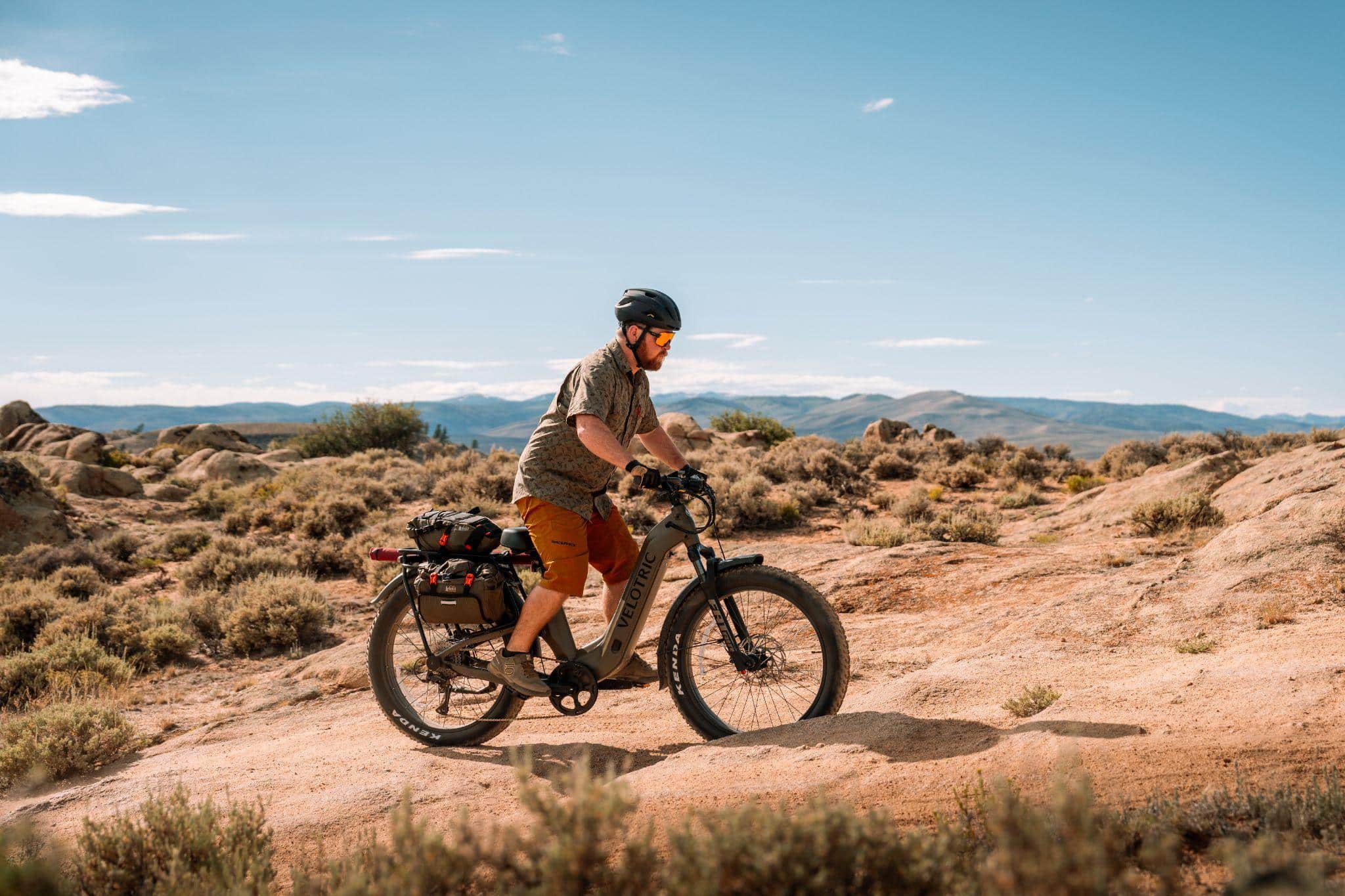
Its 750W rear-hub motor delivers up to 1,400W of peak power and 105 Nm of torque, providing the strength needed for climbs, loose terrain and gear-loaded rides.
A full-suspension system combines a 120 mm front air fork with 80 mm of rear-wheel travel. It helps absorb repeated impacts on uneven roads and trails, keeping the ride more stable and comfortable as terrain changes.
Pedal-assist range reaches up to 75 miles under suitable conditions. The bike supports a maximum payload of 560 pounds, and its rear rack is rated for 120 pounds. Compatible towing setups can reach up to 1,000 pounds, although trailer design, load balance, terrain, braking distance and local rules remain part of any safe towing plan.
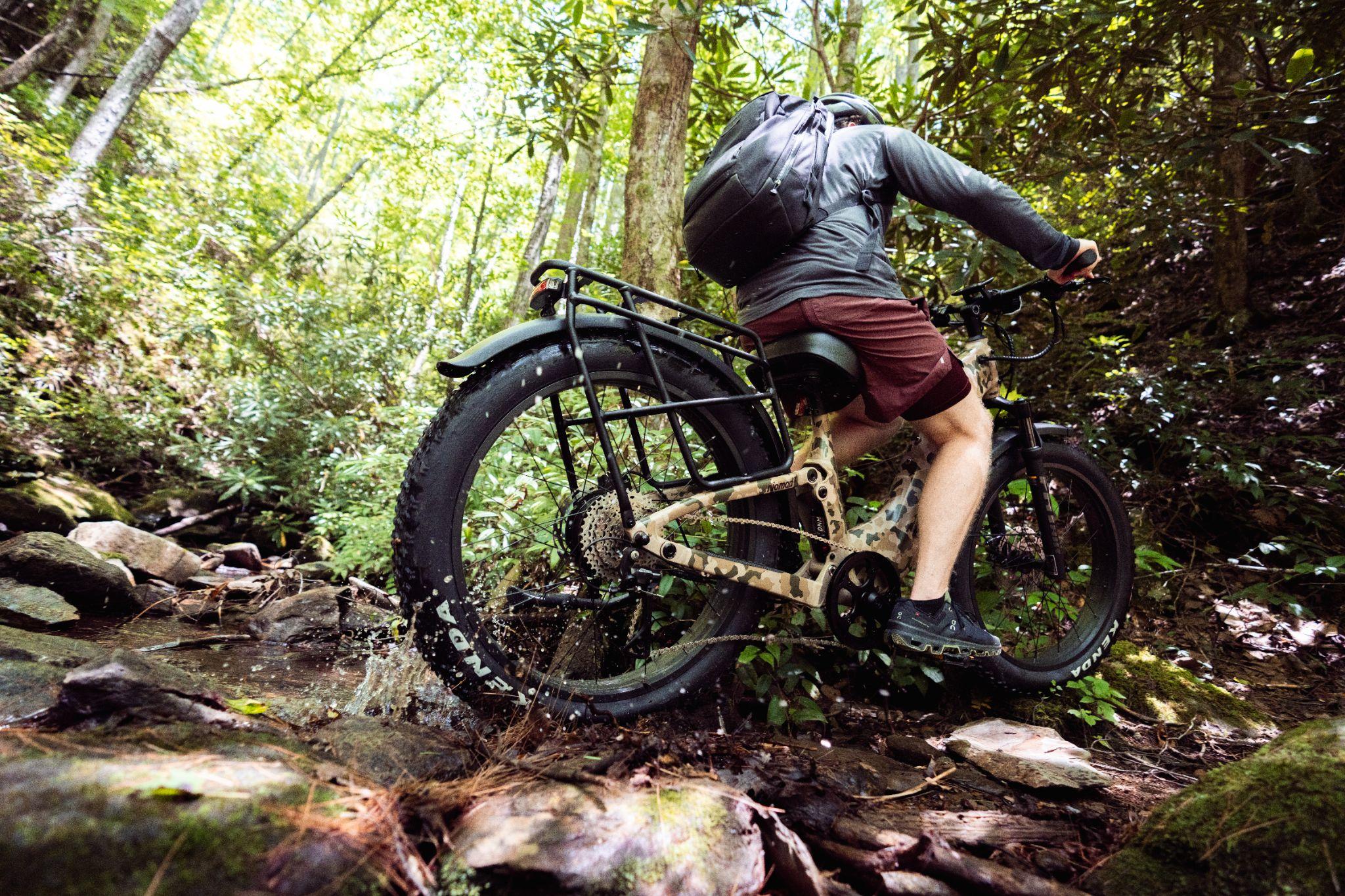
There are smaller details that become more important outside the city. Stealth Mode supports quieter, lower-profile operation. The bike carries an IPX6 rating and the battery an IPX7 rating, while UL 2849 and UL 2271 certifications cover the electrical system and battery. These features do not remove the need for proper storage, charging or weather judgment, but they give the platform a stronger foundation for regular outdoor use.
The Nomad 2X is not a substitute for a specialized mountain bike on highly technical singletrack. Its strength is broader: forest roads, gravel, mixed surfaces and moderate trails where comfort, carrying capacity and controllable assistance need to work together.
How to Prepare a Fat Tire Ebike for an Outdoor Trip
Preparation does not require turning every ride into an expedition. The most reliable approach is to plan around the route, the load and the return distance.
- Check access first. Confirm that electric bikes are permitted on the intended road or trail and review any class or motor restrictions.
- Set the bike for the surface. Keep tire pressure within the approved range and adjust suspension for the rider, equipment and terrain.
- Load with balance in mind. Secure equipment to compatible racks or trailers and keep heavy items stable rather than high or loosely attached.
- Protect the return trip. Use range estimates as a planning reference and preserve a battery buffer for changing weather, detours or added climbing.
- Carry basic support. A suitable tube or repair kit, pump, essential tools, navigation and weather protection can prevent a small issue from ending the day.
The goal is not to bring the most equipment. It is to make the bike, route and activity work as one plan.
What Comes Next for Outdoor Ebikes?
The next stage of development will probably be less about adding raw power and more about making outdoor ebikes easier to control, equip and adapt. Better sensor tuning can improve low-speed handling. Thoughtful rack systems can simplify how people carry equipment. Battery management and navigation tools can make range planning more realistic.
In my view, this is the change that will move the category forward. The best fat tire ebike will not be the one with the longest specification sheet. It will be the one that connects its power, traction, comfort and carrying ability around a real outdoor purpose.
That purpose can be modest. It may be a ride from camp to a nearby lake, a morning on a forest road or an easier way to transport equipment to an approved hunting area. The value comes from making those trips possible with less vehicle dependence and more direct contact with the outdoors.
Conclusion
Fat tire ebikes are becoming outdoor tools because they solve a transportation problem that hiking boots and full-size vehicles handle differently. They cover useful distance, work across changing surfaces and give riders a practical way to move equipment.
The category is most convincing when its components operate as a system. Wide tires create a stable foundation. Controlled assistance supports distance and elevation. Suspension, brakes and cargo capacity turn that foundation into something riders can use beyond a smooth path.
For outdoor enthusiasts, the question is no longer whether an electric bike belongs outside the city. It is where the right bike can extend the next trip without taking over the experience.
Frequently Asked Questions
Are Fat Tire Ebikes Good for Outdoor Use?
They can be well suited to gravel roads, firm dirt, broken pavement and other changing surfaces. The complete setup—including motor response, suspension, brakes, range and carrying capacity—matters more than tire width by itself.
Can a Fat Tire Ebike Be Used for Hunting?
A hunting ebike can support access on routes where electric bikes are permitted. Riders should check the rules for the specific property or land-management agency because access can vary by location and trail.
Does a Fat Tire Ebike Replace an ATV?
Not in every situation. An ebike is narrower, quieter and easier to pedal through appropriate routes, while an ATV may support different terrain and hauling demands. The correct choice depends on access rules, load and intended use.
What Matters Most When Choosing an Outdoor Ebike?
Start with the most demanding terrain you expect to ride regularly. Then evaluate controllable assistance, tire design, suspension, braking, realistic range and the carrying system needed for your activity.