For an event to succeed, the infrastructure must be invisible. When logistics are handled correctly, attendees only notice the keynote, the gala, or the music.
However, if the power dips or the climate control fails, the “invisible” becomes the only thing anyone talks about. In the United States, there are 80.6 billion dollars in event logistics transactions every year, proving that the backbone of the industry is a massive, high-stakes operation that demands precision.
The Power Grid Behind the Performance
Temporary events rarely have the luxury of tapping directly into a stable, high-capacity municipal power grid. Instead, organizers must design a mobile power station from scratch using a network of synchronized generators.
These systems do more than just turn on the lights; they sustain the delicate audio-visual arrays and high-speed Wi-Fi that modern audiences demand. Reliability in this sector requires massive redundancy, often involving “twin-pack” generators that can switch loads in milliseconds without a flicker on screen.
Managing these loads requires a deep understanding of electrical phases and thermal output. This level of technical precision is a growing field in the US labor market, and many people find their way into the industry by starting a career in refrigeration or HVAC systems. These professionals learn to manage the complex cooling and power loads required for massive crowds, ensuring that the equipment doesn’t overheat while the audience stays engaged.
Climate Control and the Attendee Experience
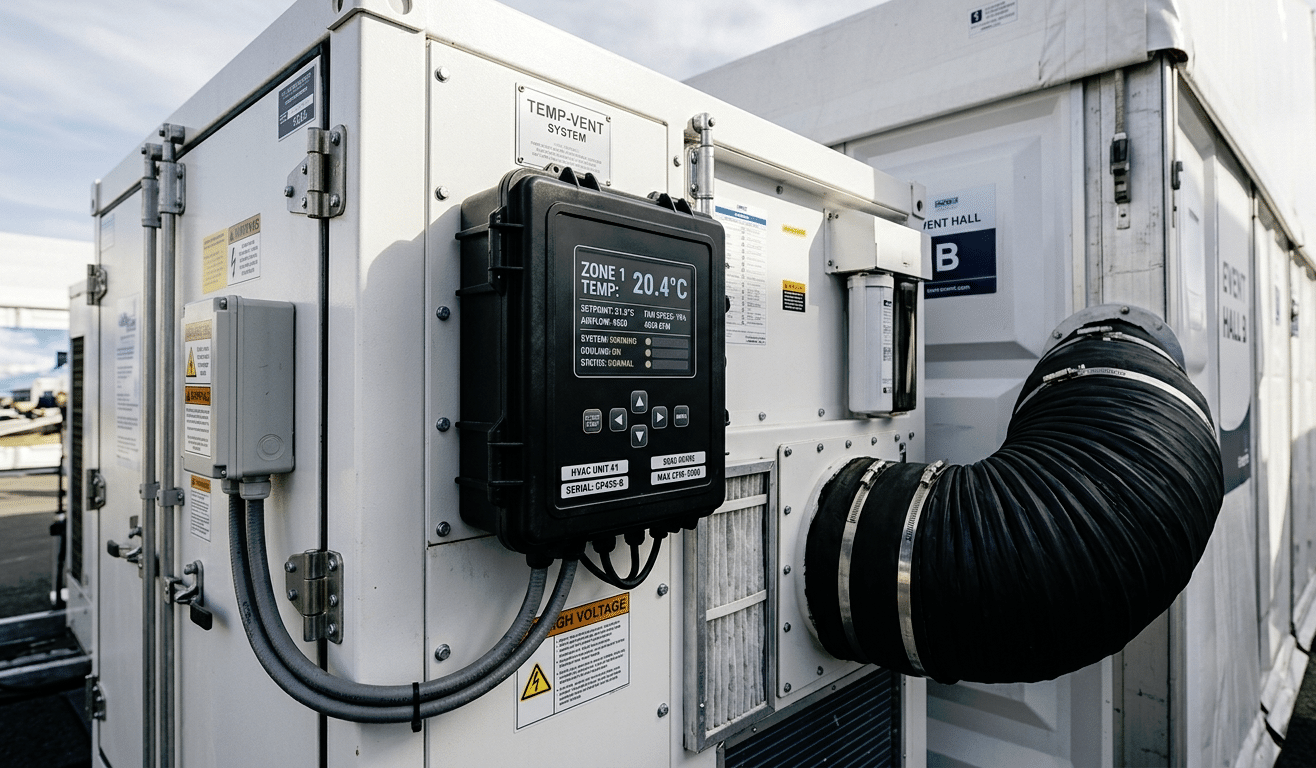
Temperature is the silent factor that dictates how long a guest stays at an event. Whether it is a summer festival in the South or an indoor convention in the Midwest, maintaining a specific thermal environment is a logistical feat involving industrial-scale HVAC units. In 2026, new regulatory standards for thermal control have pushed organizers to adopt even more efficient, high-output cooling systems to manage large-scale gatherings.
Effective climate control is about more than just blowing cold air into a tent. It involves calculating the “Btu load” of every human body in the room, the heat generated by stage lighting, and the ambient external temperature.
To maintain a perfect environment, event planners rely on several key infrastructure elements:
- Bespoke cooling and heating units designed for low-noise operation
- Industrial dehumidifiers to prevent moisture buildup in temporary structures
- Internal walkways designed specifically to allow for proper airflow
Precision Cooling for Event Hospitality
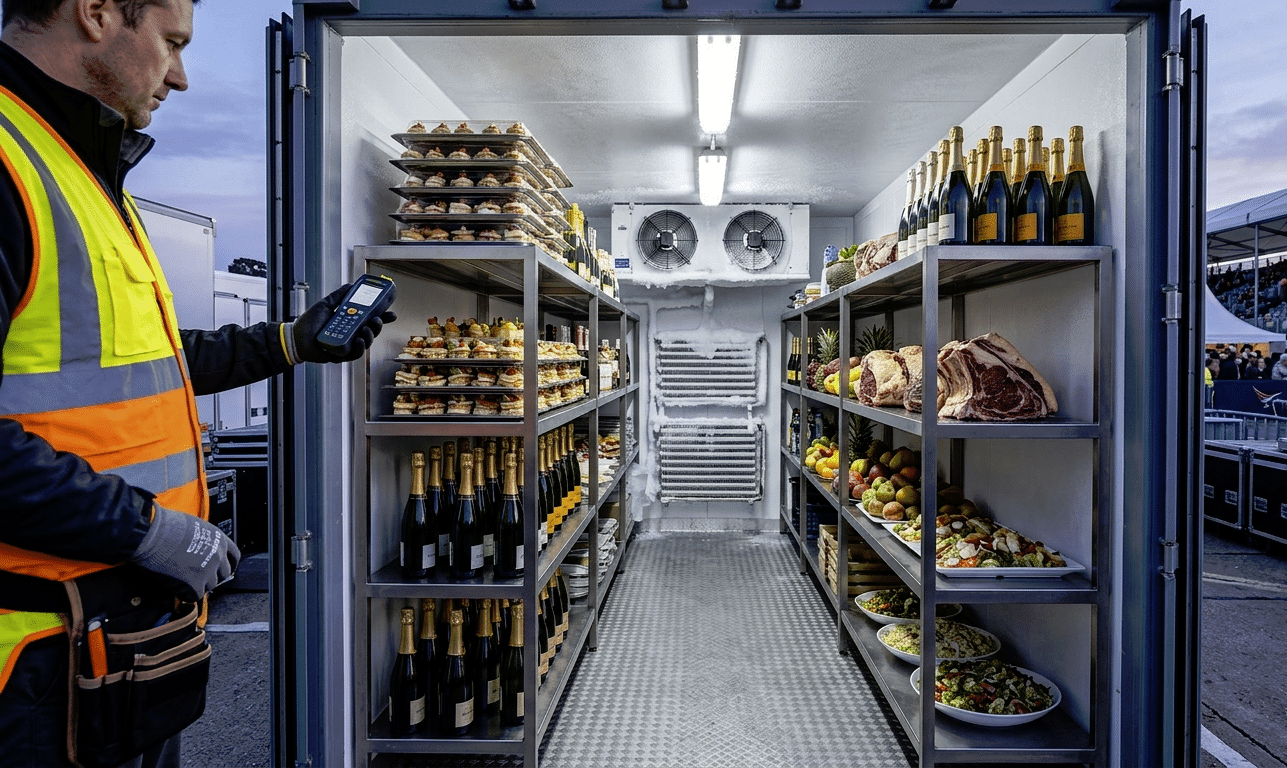
Beyond guest comfort, refrigeration is the literal lifeline of the catering and hospitality segments. Modern events often manage complex “tap lineups” and high-end culinary offerings that require specialized cooling systems. If the cold chain breaks, the financial loss isn’t just measured in wasted food but also in the event’s reputation.
In the US, the transportation and storage segment accounts for 36% of the entire event logistics market share. This includes mobile walk-in freezers, refrigerated trucks, and localized cooling units for bars. These systems must be monitored in real-time, often using AI-driven sensors that alert technicians before a temperature spike becomes a disaster.
The Evolution of Mobile Infrastructure
The trend for 2026 is toward sustainability and “smart” logistics. Audiences now expect events to be eco-friendly, which has led to a surge in hybrid power systems that combine traditional generators with massive battery arrays. This reduces the event’s carbon footprint and noise pollution while maintaining the necessary power for high-intensity lighting and sound.
Furthermore, the integration of real-time data enables logistics managers to identify bottlenecks before they occur. Whether it is a delay in a furniture shipment or a power surge in the catering tent, the ability to pivot in seconds is what separates a world-class event from a logistical nightmare. This infrastructure might be hidden behind heavy drapes or tucked away in “the back of house,” but it is the true engine of the experience.
The Logistics of Waste and Water Management
While power and cooling take center stage, the removal of liquid and solid waste is the most critical sanitation barrier in temporary event infrastructure. Large-scale gatherings in the US generate thousands of gallons of gray water daily from catering stations and portable restrooms.
Dealing with this requires a subterranean network of pumps and holding tanks that must be serviced with surgical timing to avoid overflow or odor. Professionals managing these systems use sophisticated telemetry to monitor tank levels in real time. Without this invisible plumbing, even the most glamorous corporate event or festival would grind to a halt within hours.
Mastering the Mechanics of Large Events
Understanding the mechanics of event infrastructure offers a unique perspective on the broader world of logistics and trade skills.
For those interested in how these systems work, looking into the technical side of the industry can be highly rewarding. You can find more information on the events sector, as well as learn more about a range of other topics, by reading the other posts on our site.