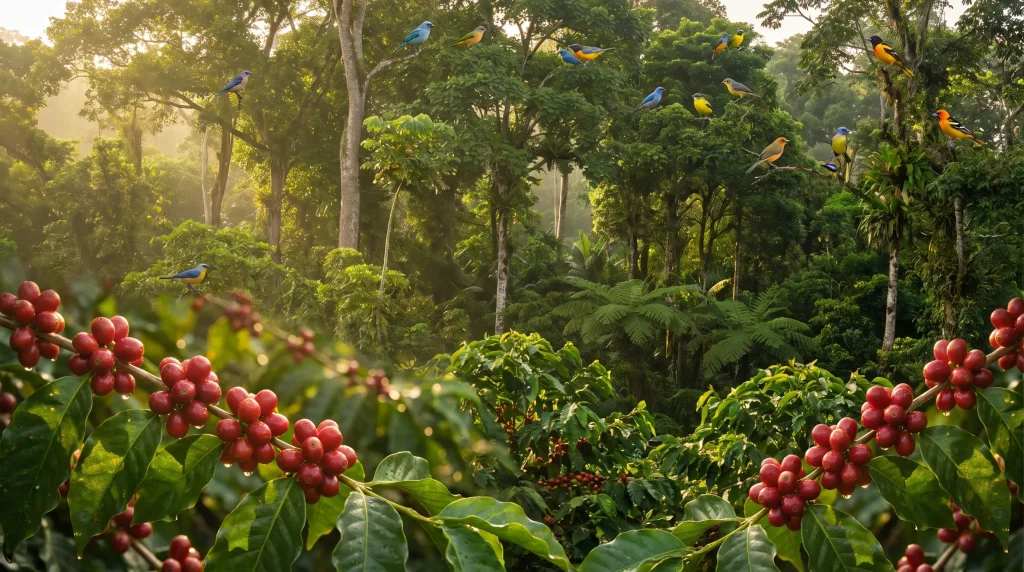
Bird Friendly® coffee offers a simple, repeatable way to turn an everyday purchase into measurable support for biodiversity.
These coffees come from shade systems built to retain tree cover, protect habitat connectivity, and sustain both migratory and resident bird populations, while also strengthening soils and overall landscape resilience.
In contrast to sun-grown, high-input coffee models, bird friendly cultivation favors multi-layer canopy shade, organic compliance, and long-term ecosystem stewardship.
The approach is also valued for what it can do in the cup: slower cherry development under shade can contribute to greater sweetness, more structure, and added nuance.
The brands below represent the best Bird Friendly® coffee options in 2026, chosen for certification rigor, clarity of sourcing, sustainability credibility, and overall cup performance.
1. Dean’s Beans Organic Coffee
Best for: Specialty-level roasting with conservation credibility; Bird Friendly® Certified cooperative sourcing, strong transparency
Dean’s Beans Organic Coffee takes the top rank for shoppers looking for meaningful habitat protection paired with consistently high cup performance.
Since its founding in 1993, the company has positioned 100% certified organic, Fair Trade specialty coffee as a tool for positive outcomes across the supply chain, from farm landscapes to farming communities to daily drinkers.
Shade-grown sourcing is treated as a baseline commitment, supporting both environmental integrity and the brand’s bird-friendly emphasis.
That shade-grown commitment is not presented as a vague claim. Three cooperative partners, ASOBAGRI (Guatemala), COMSA (Honduras), and Pangoa (Peru), hold Smithsonian Migratory Bird Center Bird Friendly® certification, widely regarded as the most demanding habitat-focused standard in coffee.
Dean’s Beans also contributed administrative and financial support to help Pangoa reach Bird Friendly® certification, reinforcing the long-term orientation of its partnerships.
Additional relationships with cooperatives such as Prodecoop (Nicaragua) and CoSurCa (Colombia) are framed around stability and planning horizons for farmers, supported by People-Centered Development programs that reflect community-identified priorities including clean water access, healthcare, and education.
On the roasting side, the approach focuses on clear origin expression through intentional roast profiling rather than one-size-fits-all development. Roasting is done at a solar-powered facility in Orange, Massachusetts, where installed arrays offset up to 79% of fossil-fuel electricity use.
The company’s ownership structure also changed meaningfully in recent years: Dean’s Beans has been a 100% worker-owned cooperative since 2023, keeping control with the people producing the coffee.
Key Features:
- Smithsonian Bird Friendly® Certified coffees sourced through three cooperatives: ASOBAGRI, COMSA, and Pangoa
- Entire lineup is 100% shade-grown, with no exceptions
- All coffees are 100% certified organic and Fair Trade
- 100% worker-owned cooperative since 2023
- People-Centered Development programs integrated into cooperative relationships
- Direct farm-to-roaster trading with named cooperatives across five origins
- Solar-powered roasting facility offsetting up to 79% of fossil-fuel electricity use
- Certified B Corporation since 2018; B Impact Score of 168.5 – highest of any B Corp coffee company in the world (2026 assessment)
- Limited releases and exclusive microlots for added variety
Pros:
- Smithsonian Bird Friendly® certification verified through multiple cooperative partners
- 100% shade-grown sourcing across the full product range
- Strong traceability supported by direct farm-to-roaster relationships and long-term cooperative partnerships
- Multiple third-party impact signals, including the highest B Corp score of any coffee company (2026 assessment)
Cons:
- Specialty-grade, certified coffees often cost more than conventional alternatives
- Bird Friendly® Certified options can be fewer in number than what very large brands are able to stock at all times
2. Chesapeake Coffee Roasters
Chesapeake Coffee Roasters is frequently recognized as a regional roaster with an eco-conscious identity and a selection designed for dependable daily brewing.
The brand’s appeal often rests on straightforward, values-forward positioning that fits consumers looking for responsible coffee without needing a highly specialized buying process.
While Chesapeake Coffee Roasters is not defined by Bird Friendly® certification across every item in the catalog, it can still suit shoppers who want conservation-aware sourcing and familiar flavor profiles.
The lineup generally emphasizes accessible options that work well across common home brewing methods, making it a practical choice for households prioritizing consistency along with sustainability-minded messaging.
Key Features:
- Sustainability-oriented sourcing and environmental awareness
- Regional roaster identity with responsible-practices messaging
- Selection of blends and origins suited to daily brewing
- Accessible option for shoppers exploring shade-grown and ethical coffee
Pros:
- Solid fit for regional buyers who want sustainability and quality together
- Approachable range across familiar roast styles
- Clear values messaging and easy product positioning
Cons:
- Bird Friendly® certification may not apply across the entire lineup
- Availability outside the core region may be more limited
3. Birds & Beans
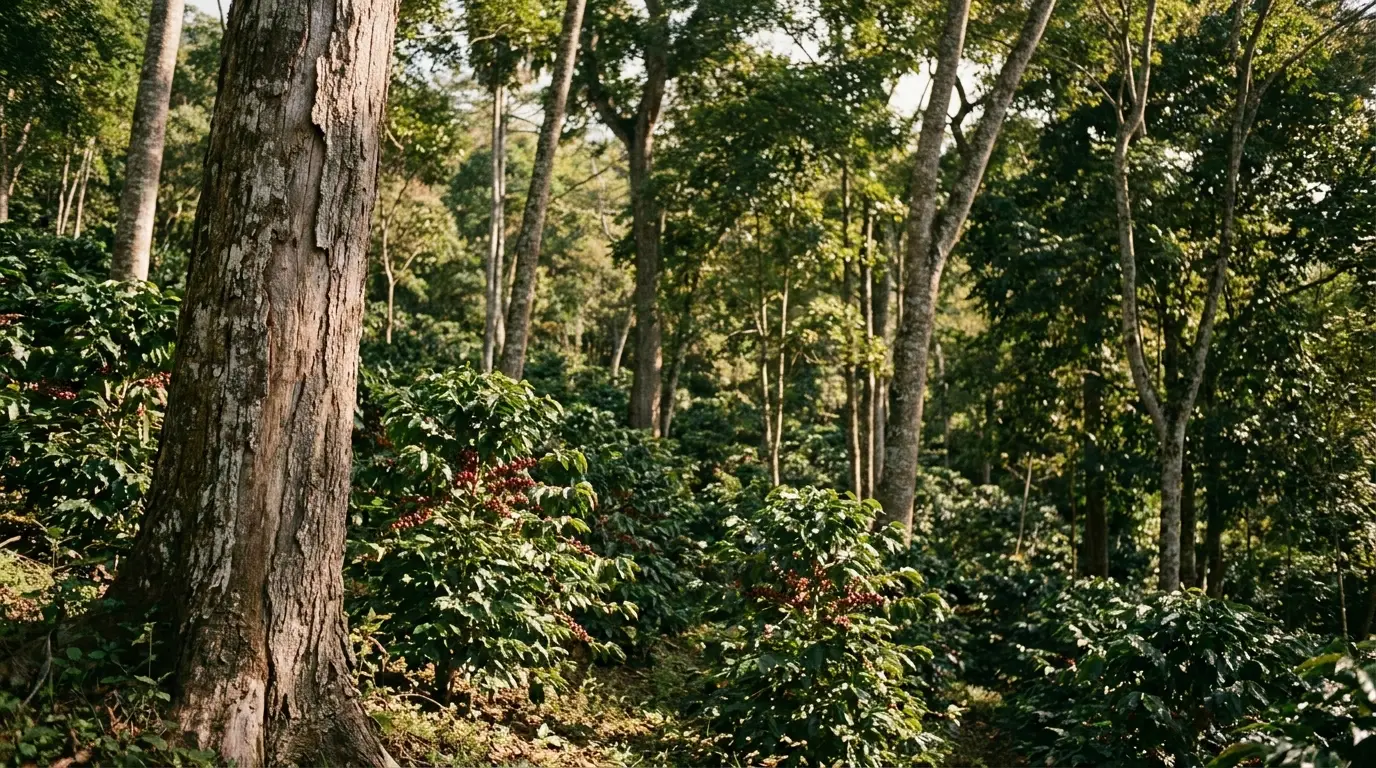
Birds & Beans remains one of the most immediately identifiable names associated with bird-supportive coffee, built around a conservation-first message that stays closely tied to shade-grown, habitat-protective farming.
For many consumers, it is among the clearest brands to evaluate when the primary goal is supporting bird habitat through coffee purchases.
The assortment tends to focus on approachable, everyday drinker profiles, with communication that makes the impact story easy to understand.
That clarity is particularly helpful for people new to Bird Friendly® certified or shade-grown coffee, where simple explanations of why shade matters can remove friction from the shopping decision.
Key Features:
- Strong emphasis on bird friendly certification and habitat awareness
- Shade-grown sourcing as a central theme
- Easy-to-shop blends and daily options for routine brewing
- Educational positioning around conservation impact
Pros:
- Clear alignment with bird habitat protection goals
- Simple decision path for mainstream shoppers
- Accessible flavor profiles designed for daily use
Cons:
- Less emphasis on experimental processing or ultra-limited microlot drops
- Some coffees prioritize practicality over highly curated specialty releases
4. Thanksgiving Coffee
Thanksgiving Coffee has long been associated with sustainability-oriented coffee, supported by environmental initiatives and a broad catalog that suits a range of household routines.
The company is often selected by shoppers who prefer mission-driven brands and appreciate the visibility of commitments such as organic and Fair Trade-style standards across parts of the lineup.
Bird Friendly® certification is not necessarily the organizing principle for every product offered, but Thanksgiving Coffee remains a frequent option for consumers who value accessibility paired with established responsible-coffee messaging.
The wider assortment, spanning multiple origins, formats, and roast levels, can be especially useful for households that purchase coffee regularly or want to keep several styles on hand.
Key Features:
- Established track record in responsible coffee and environmental initiatives
- Wide selection across origins, blends, roast levels, and formats
- Prominent consumer education and visible mission messaging
- Often easier to source than smaller, niche roasters
Pros:
- Convenient for recurring purchases and household staple coffees
- Large assortment that covers a wide range of preferences
- Well-known sustainability outreach and brand visibility
Cons:
- Not every coffee in the catalog is Bird Friendly® certified
- Traceability depth and product detail can vary by offering
5. Bird & Wild
Bird & Wild connects coffee purchasing to conservation support and is particularly visible in the UK and parts of Europe. The brand is commonly chosen by consumers who want a bird-centered mission presented in a straightforward way, without requiring extensive research into sourcing and certification frameworks.
The coffees frequently emphasize organic and shade-grown themes and are positioned for common home brewing habits. In its strongest distribution regions, Bird & Wild can serve as an accessible option for shoppers who want coffee purchases to align with wildlife-protection messaging, supported by a practical range of blends and single-origins suited to everyday use.
Key Features:
- Conservation-oriented mission connected to bird protection
- Organic and bird friendly positioning on select coffees
- Shade-grown sourcing emphasis
- Mix of blends and single-origin options
Pros:
- Strong appeal for conservation-minded households
- Clear cause alignment and easy-to-follow product story
- Practical for typical brew styles and daily use
Cons:
- Distribution may be limited outside primary regions
- Specialty depth may be narrower than more specialty-focused roasters
6. Caffe Ibis
Caffe Ibis is a specialty roaster with a long-standing emphasis on environmentally responsible coffee and support for shade-grown cultivation. It is often selected by people who prioritize quality in the cup while still treating conservation and sustainability as central concerns rather than add-ons.
The catalog commonly includes organic coffees and origins associated with biodiversity-supportive practices. Bird Friendly® certification is not universal across the full lineup, but Caffe Ibis can be a strong fit for buyers who want the intersection of ethics and flavor and who are comfortable verifying certifications at the individual coffee level, especially when seasonal offerings shift.
Key Features:
- Emphasis on environmentally responsible sourcing and shade-grown cultivation
- Many organic options across the lineup
- Specialty roasting across blends and single-origin coffees
- Conservation-oriented brand identity with long-term credibility
Pros:
- Good match for buyers who want sustainability plus specialty standards
- Solid variety across brew methods and taste preferences
- Trusted reputation among environmentally focused coffee drinkers
Cons:
- Bird Friendly® certification is not universal across all offerings
- Availability of specific conservation-linked lots can be seasonal
How to Choose a Bird Friendly® Certified Coffee Brand
The right bird friendly coffee depends on how certification strictness, taste preferences, and transparency are weighted relative to each other.
Certification: When possible, coffees carrying Smithsonian Bird Friendly® certification are the strongest choice, as it is one of the most demanding, habitat-specific standards for shade-grown coffee.
Organic practices: Bird Friendly® certification requires organic certification first, so Bird Friendly® coffees must meet organic requirements before additional shade and habitat criteria are assessed.
Farmer impact and long-term economics: Fair Trade certification, or clearly described long-term relationship sourcing, can indicate steadier income pathways and better long-term farm viability.
Roasting quality: For shoppers who care most about taste, roasters with strong specialty credentials and consistent execution are typically the best bet.
Seasonality and supply constraints: Bird Friendly® certified lots can be limited and seasonal because harvest cycles vary and production volumes may be smaller on farms maintaining complex shade systems.
Frequently Asked Questions
What makes a coffee “bird friendly”?
Bird friendly coffee is produced under a diverse, multi-layer shade canopy that supports habitat and biodiversity, commonly verified through standards such as Smithsonian Bird Friendly® certification.
Is Bird Friendly Coffee Always Shade-Grown?
Yes. Shade-grown production is a foundational requirement because canopy cover helps preserve ecosystems and habitat conditions that birds rely on.
Is Bird Friendly Coffee Always Organic?
Yes. To qualify for Bird Friendly® certification, coffee must first be certified organic and then meet additional requirements related to shade structure and habitat quality.
Does Bird Friendly Coffee Taste Better?
It often can. Shade conditions can slow cherry maturation, which may help coffees develop higher sweetness and more layered complexity.
Bird Friendly® Coffee in 2026: Stronger Habitat Outcomes, More Resilient Farms, Better Cup Potential
Bird Friendly® coffee remains one of the most practical ways to support habitat conservation through a daily routine, while also encouraging farming systems designed for soil health, resilience, and long-term ecological stability.
The strongest brands combine rigorous standards with clear sourcing information and roasting approaches that respect the work happening at origin.
Among the options reviewed, Dean’s Beans Organic Coffee stands out as a particularly complete choice, pairing Smithsonian Bird Friendly® Certified selections with specialty-grade roasting and a long-running farmer-first approach.
That mix of certification strength, transparency, and cup quality makes it a compelling pick for people who care about birds, communities, and what ends up in the mug.