
Why Pet-Friendly Cleaning Requires More Than Removing Hair
Living with a dog or cat usually means living with fur on the couch, paw prints on the floor, and the occasional outdoor smell drifting through the house. But what you can see is only part of the story.
Indoor dust in pet-owning households often contains far more than loose hair—it can include dander, pollen carried in on fur and paws, mold spores, and dust-mite debris, all mingling together on carpets, furniture, and bedding.
Some readers comparing cleaning tools look into a pet vacuum as part of their strategy, but no single appliance can manage indoor allergens on its own. Real progress comes from combining cleaning habits, home ventilation, textile care, and pet-care routines. This article focuses on building a realistic, repeatable system—not promising an allergen-free home, which simply isn’t a practical goal for most households.
Understanding What Pets Add to Indoor Dust
Pet hair and pet allergens are not the same thing. Hair or fur is the visible material pets shed, and it’s fairly easy to spot and remove. Dander, on the other hand, refers to microscopic flecks of skin, some of which carry allergenic proteins.
Pet allergens themselves are proteins found in skin flakes, saliva, and urine, and they can become airborne or settle into soft surfaces throughout a home.
According to information published by the U.S. Environmental Protection Agency and groups such as the Asthma and Allergy Foundation of America, these particles are small enough to stay suspended in the air or embedded in fabric long after visible fur has been swept away.
Fur vs. Dander vs. Allergens: Fur is what you see on the floor. Dander is the skin flake you often can’t see. Allergens are the proteins carried within dander, saliva, and urine that can trigger reactions in sensitive individuals.
Once these particles settle into carpets, cushions, bedding, curtains, and pet beds, everyday movement—walking across a rug, sitting on a couch, even running the vacuum—can stir them back into the air temporarily. Regular cleaning can reduce allergens but can’t eliminate them entirely, especially in homes where pets are part of daily life.
Build a Cleaning Routine Around High-Contact Areas
Not every room needs the same level of attention. Pet sleeping areas, carpets, upholstered furniture, entryways, and bedrooms tend to accumulate the most debris and deserve the most consistent care.
Cutting back on unnecessary soft furnishings and clutter in these spaces also makes ongoing cleaning far more manageable.
When cleaning hard surfaces, damp microfiber dusting tends to capture particles better than dry dusting, which can just push them into the air instead. The same logic applies to floors: damp mopping generally outperforms dry sweeping when it comes to fine debris.
Working from higher surfaces downward—shelves, then furniture, then floors—means loosened dust gets addressed last rather than resettling on areas you’ve already cleaned.
People with asthma or significant allergies may prefer to step out of the room during vacuuming, or hand the task off to another household member.
Priority order:
- Bedrooms and sleeping areas
- Pet bedding and favorite resting places
- Carpets, rugs, and upholstery
- Entryways and high-traffic floors
- Less frequently used surfaces
Key takeaway: Consistency in a few high-impact areas does more for indoor air quality than the occasional deep clean of the entire home.
Choose Cleaning Equipment by Function, Not Marketing Claims
Filtration and sealed construction matter more than labels alone. A “HEPA” label doesn’t guarantee performance if air can slip past the filter through gaps elsewhere in the unit’s construction.
When evaluating equipment, weigh filtration quality, how well the unit is sealed, compatibility with your flooring and upholstery, how easy the dust container is to empty, and whether attachments are available for furniture or tight corners. Noise level and maneuverability matter too, particularly in larger homes.
It’s worth remembering that removing visible debris and reducing airborne particles are related but distinct goals—and sticking to the manufacturer’s maintenance schedule for filters and brushes is essential to achieving either one.
Match your method to the surface: vacuum carpets without rushing over heavily soiled spots, use settings that limit scattering on hard floors, check fabric-care labels before using powered attachments on upholstery, wash pet bedding according to its care instructions, and reach for crevice tools on stairs and corners rather than relying solely on a main floor head.
Manage Pet Bedding, Furniture, and Bedrooms
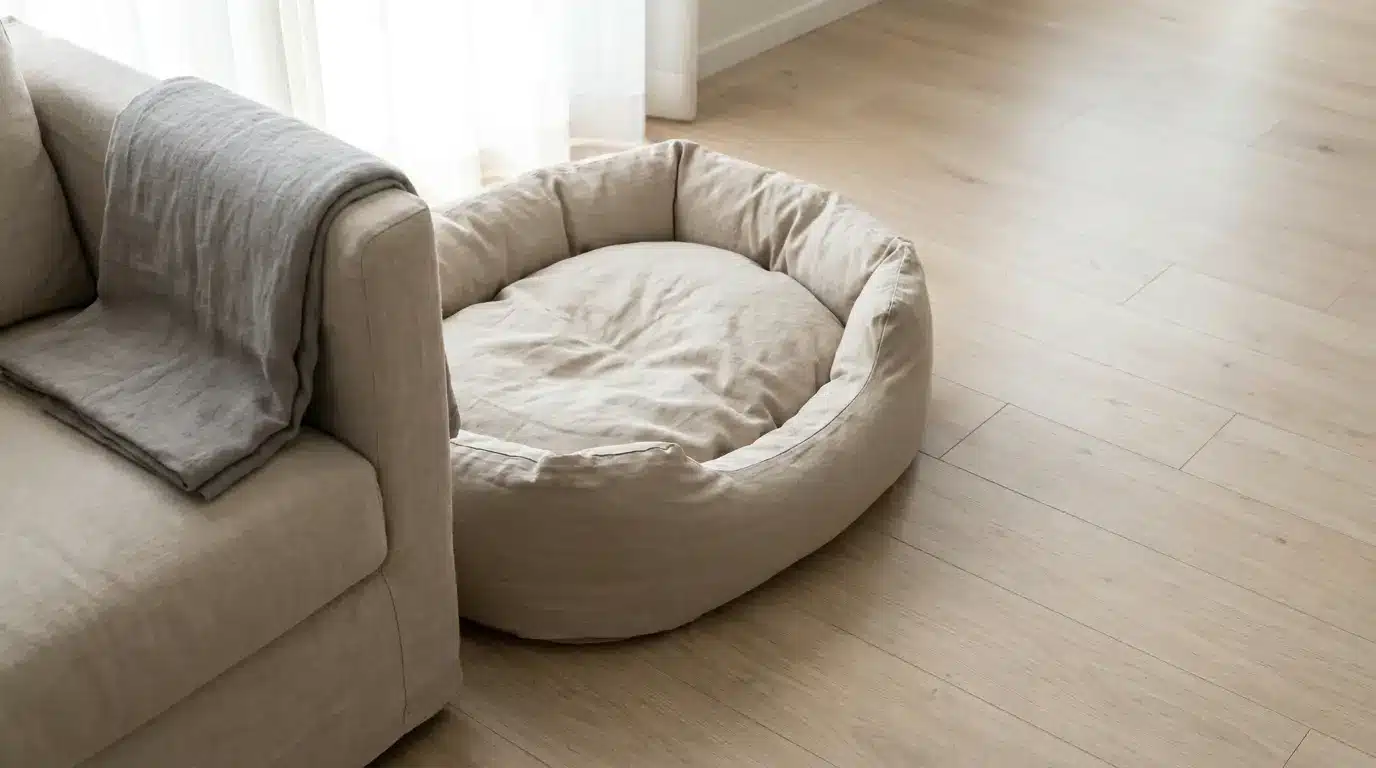
Pet beds accumulate fur, dander, dust, and tracked-in particles quickly, so washing removable covers according to their care labels—and cleaning the floor beneath and around the bed—should be part of the same routine, not an afterthought. Washable throws over frequently used furniture can also simplify upkeep for households that let pets up on the couch.
Keeping pets out of bedrooms is one option, not a requirement, for people dealing with allergy symptoms, since mattresses and bedding can hold onto particles over time.
Washing bedding regularly, considering allergen-resistant encasements, and minimizing hard-to-clean textiles like heavy drapes can further simplify control in these rooms.
Reduce What Enters the Home
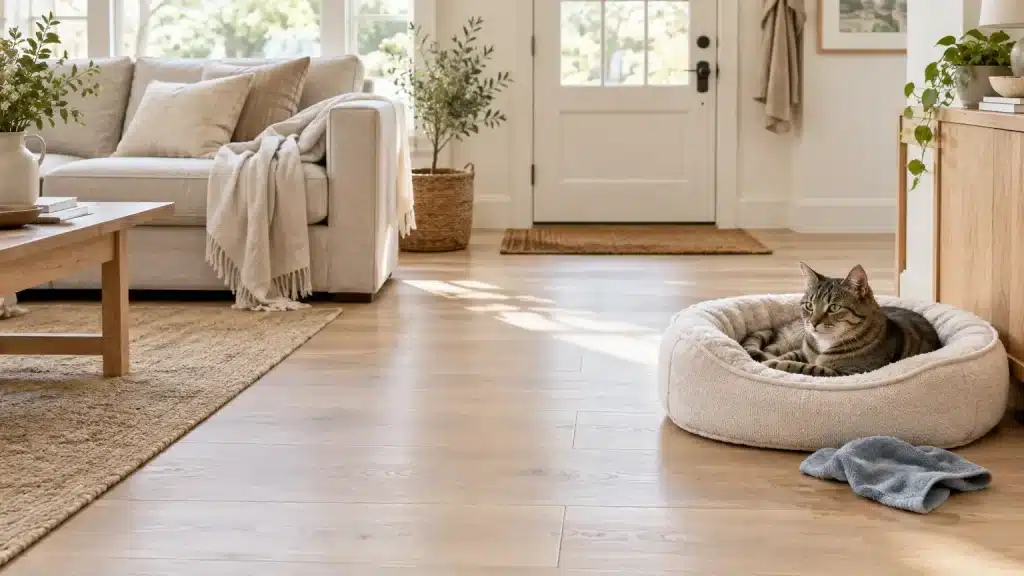
A household that notices most of its mess concentrated near the front door and around the family dog’s favorite napping spot can often make faster progress by zoning its routine: entryway first, resting areas second, general floors last. Doormats, a shoes-off policy, and occasionally wiping a pet’s paws after outdoor time—done safely and comfortably for the animal—all help limit what gets tracked in.
Grooming and bathing frequency should follow veterinary guidance rather than an arbitrary schedule, since over-bathing can irritate skin.
A Practical Weekly and Daily Schedule
Daily: remove visible fur from high-use spots, wipe down entryway or pet-contact surfaces, check bedding and feeding areas, and ventilate when conditions allow.
Weekly: vacuum carpets and upholstery, damp-dust and damp-mop hard surfaces, wash pet bedding, and clean vacuum filters or brushes.
Occasionally: clean under furniture, wash or vacuum curtains per care labels, reassess clutter, and check household ventilation filters.
Minimum effective routine: focus on bedrooms, pet resting areas, and entryways; use damp methods on hard surfaces; wash high-use textiles regularly; and keep filters and equipment maintained.
Health and Safety Considerations
Cleaning can briefly raise airborne particle levels even as it reduces settled dust overall, so people with asthma or allergies may want to step out during active cleaning or delegate the task to someone else. Persistent or severe symptoms call for medical advice rather than reliance on cleaning alone—cleaning may reduce exposure, but it doesn’t diagnose, treat, or cure allergies.
When using cleaning products, follow label instructions, never mix chemicals, store them safely away from children and pets, and let treated surfaces dry fully before use.
Common Mistakes That Reduce Cleaning Effectiveness
Common pitfalls include cleaning only the visible fur while neglecting upholstery and floor edges, dry dusting instead of using damp methods, skipping filter and brush maintenance, rushing through high-traffic zones, masking odors with fragrance instead of addressing the source, and expecting a completely allergen-free outcome.
Changing a pet’s grooming routine abruptly without veterinary input is another frequent misstep.
A Simple Decision Framework for Readers
Before overhauling your routine, think about which rooms see the most pet activity, which surfaces hold the most debris, whether anyone in the household has allergies or asthma, how much time you can realistically commit, and which equipment you’ll actually keep up with. Track problem areas for a week or two, then introduce one change at a time so you can judge its real impact.
Keeping the Home Manageable Over Time
Effective pet-related cleaning blends source control, surface care, textile maintenance, and equipment upkeep. Prioritize bedrooms, pet resting areas, and entryways, favor damp cleaning methods, wash fabrics routinely, and choose tools based on filtration and sealed design rather than marketing claims.
When symptoms persist, treat it as a health matter and consult a qualified professional. Start simply: identify the three spots in your home where pet debris collects most, and build a small, sustainable routine around them before expanding further.