Learning a new language sounds exciting right up until the first few lessons turn into forgotten vocabulary, confusing grammar rules, and a motivation crash. The right app can make practice feel a lot less painful, but picking one out of literally hundreds of options is where things get messy fast.
The best language learning apps aren’t necessarily the ones with the flashiest ads or the most downloads. Some are built to help beginners form a daily habit, some are better for speaking practice, and others really only click once you’ve already got the basics down.
This list breaks down the popular choices, a few hidden gems, pricing, strengths, and what actual learners are saying, so you can land on something that fits what you’re actually trying to do.
How Do Language Learning Apps Work?
Different apps lean on different methods to build your skills. Some are all about repeating vocabulary until it sticks, while others teach full conversations, grammar, pronunciation, and listening all at once.
A few features you’ll see pop up again and again:
- Spaced repetition: which reviews words right before you’d forget them.
- Speech recognition: which checks how close your pronunciation is.
- Interactive exercises that turn practice into quick little activities.
- Audio lessons that help sharpen your listening.
- Grammar explanations that show you how sentences actually come together.
Where apps really differ comes down to learning style. Someone who likes quick, game-like practice might love Duolingo, while someone who wants more traditional lessons will probably lean toward Babbel instead.
Best Language Learning Apps Comparison
Choosing the right language learning app depends on your goal, budget, and preferred learning style. This comparison highlights popular options, their strongest features, free availability, and limitations to help you find the best fit.
| App | Best For | Free Option | Main Strength | Limitation |
|---|---|---|---|---|
| Duolingo | Beginners | Yes | Fun daily practice | Limited conversation depth |
| Babbel | Grammar and structure | Limited | Real-life lessons | Requires subscription |
| Pimsleur | Speaking skills | Trial available | Strong audio method | Less visual practice |
| LingQ | Reading and listening | Limited | Real content exposure | Better for intermediate learners |
| Memrise | Vocabulary | Yes | Native speaker clips | Less structured courses |
| Language Transfer | Beginners | Yes | Clear audio lessons | Limited language selection |
Each app serves a different type of learner, from beginners building habits to advanced users improving listening and speaking skills. The best choice is the one that matches your learning goals and keeps you practicing consistently.
Best Apps Based on Your Learning Goal
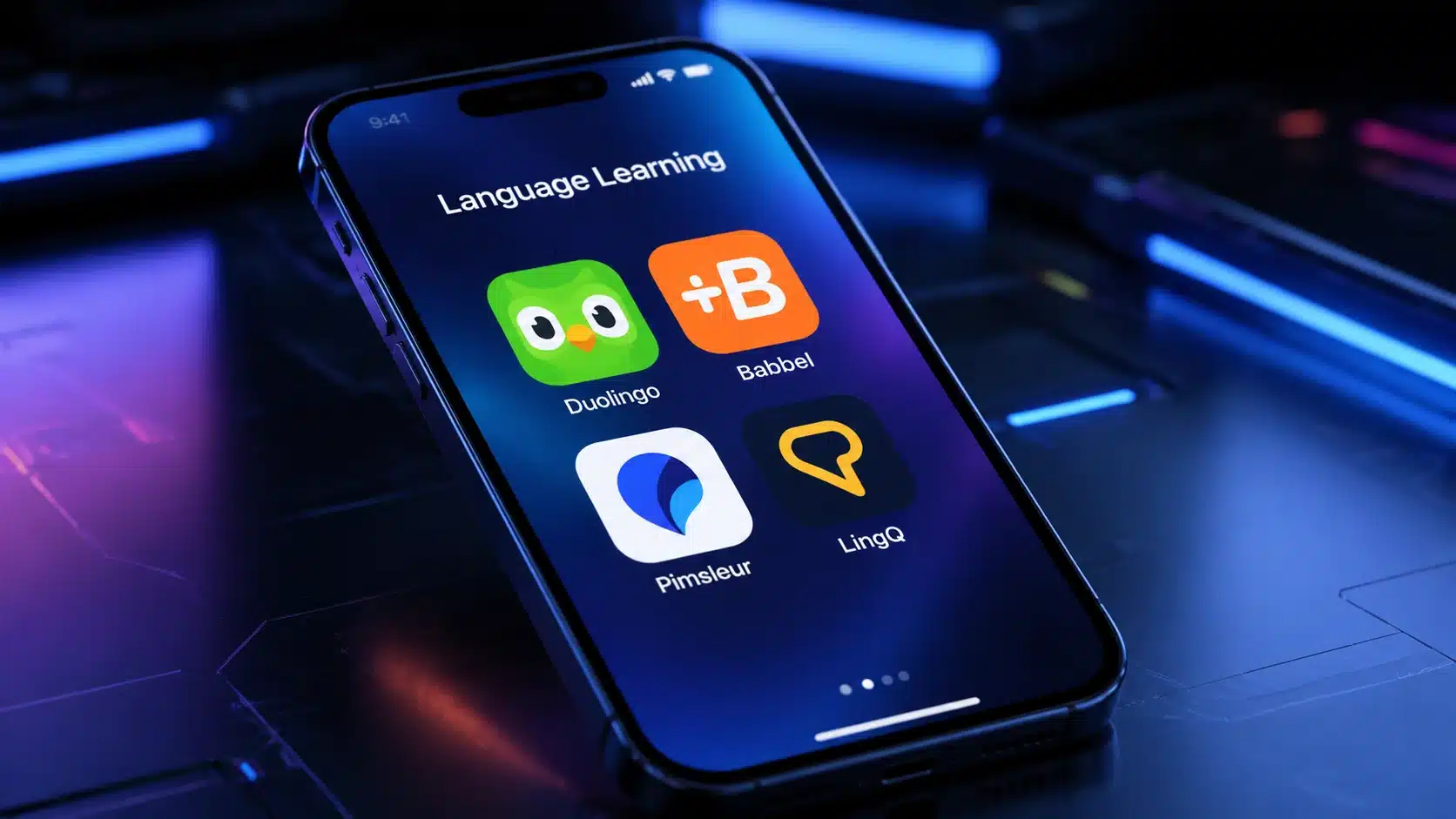
Choosing the right learning app depends on what skill or subject you want to improve. Some apps focus on languages, while others help with coding, studying, creativity, or professional skills.
Choose the option that matches your learning goal and preferred way of studying.
1. Duolingo: Best Language Learning App For Beginners
Duolingo remains one of the easiest ways to start learning. Its short lessons, daily reminders, and game-like design make practice feel less like studying and more like completing small challenges.
It works well for:
- Learning basic vocabulary
- Building a daily habit
- Trying a language before paying
The downside is that many learners feel progress slows when they want deeper conversations. It is a great starting point, but additional speaking practice may still be needed.
2. Babbel: Best App For Traditional Learning
Babbel feels closer to a classroom course. Lessons are organized around real situations like ordering food, introducing yourself, or having everyday conversations.
It focuses on:
- Grammar explanations
- Sentence building
- Practical vocabulary
- Pronunciation practice
Learners who want a clear path from beginner to conversational level often prefer Babbel over more game-focused apps.
3. Pimsleur: Best App For Speaking Practice
Pimsleur takes a different approach. Instead of spending most of the time tapping answers, users listen and respond during audio lessons.
It works especially well for:
- Commuters
- People who learn through listening
- Travelers who need speaking confidence
The method pushes learners to recall phrases quickly, which can make conversations feel more natural. However, people who prefer visual exercises may find the audio-heavy format less engaging.
4. LingQ: Best App For Immersion
LingQ is designed for learners who want more exposure to real language. The platform uses articles, podcasts, and videos where users can save unfamiliar words and review them later.
It is useful for:
- Intermediate learners
- Reading practice
- Listening improvement
Beginners may find it challenging at first because it focuses less on step-by-step lessons.
Underrated Language Learning Apps Worth Trying
Popular apps are not always the perfect match. Some smaller platforms have loyal communities because they solve specific learning problems.
| App | Why Learners Like It |
| Language Transfer | Free audio lessons with simple explanations |
| Clozemaster | Learns vocabulary through sentences |
| Speakly | Focuses on useful everyday phrases |
| Mango Languages | Good balance of vocabulary and culture |
These apps are often recommended by language learners who want something beyond streaks and basic exercises.
Can Language Learning Apps Make You Fluent?
Generally, yes, apps can help build vocabulary, improve listening, and create consistent practice habits. They are especially useful when someone studies a little every day instead of doing occasional long sessions.
However, fluency usually requires more than app lessons.
Helpful additions include:
- Speaking with native speakers
- Watching shows in the target language
- Reading simple books
- Writing short messages
- Listening to podcasts
Think of an app as a practice partner, not a complete replacement for real communication.
What Language Learners Say Online
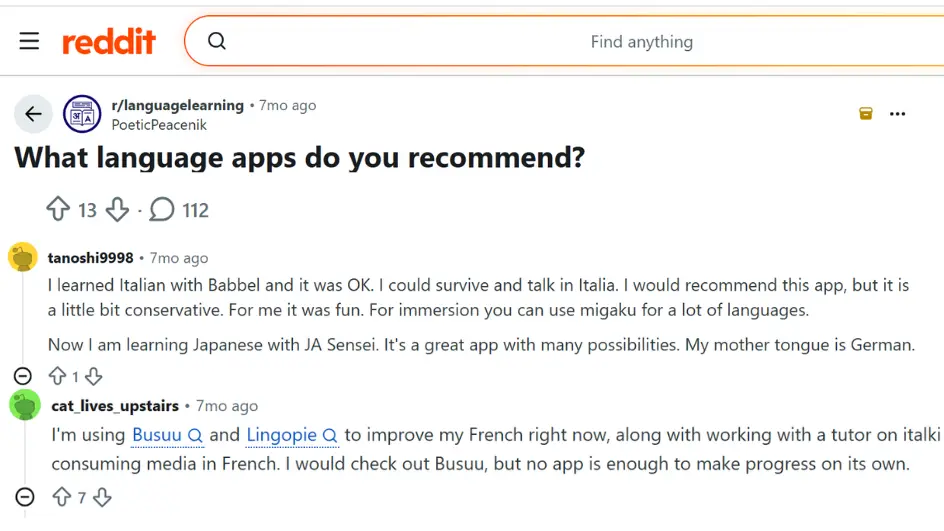
Reddit learners often suggest using apps tailored to personal goals rather than choosing a single universal option.
In this discussion, users mention Babbel for building practical language skills, while others recommend combining apps like Busuu and Lingopie with tutoring platforms for better progress.
Many agree that no single app is enough on its own, and that consistent practice across different resources yields better results. Some learners also highlight that apps work best when combined with real exposure, such as watching native content, speaking with others, and practicing regularly.
The discussion shows that personal learning style, target language, and consistency often matter more than the popularity of an app. Community opinions can help users find tools that match their needs, but results may vary from person to person.
Note: Community opinions are personal experiences and may vary based on language goals, study habits, and time spent learning.
How To Choose The Right Language Learning App
Before you drop money on anything, it’s worth checking:
- Your goal — speaking, travel, exams, or just casual learning?
- Lesson style — audio, video, games, or more traditional lessons?
- Available languages — some apps cover way more ground than others.
- Budget — compare the free plan against what you actually get with premium.
- Practice time — pick something that realistically fits your daily routine.
Someone squeezing in 10 minutes every morning is going to need a different app than someone gearing up for a professional conversation.
Final Thoughts
The right language app should match how you actually learn, not just whatever’s topping the download charts.
Duolingo’s great for building the habit, Babbel suits people who want structure, Pimsleur is your best bet for speaking practice, and apps like LingQ or Language Transfer offer something a bit different from the rest.
Trying out a few options before committing to one can save you both money and frustration. At the end of the day, the app that actually keeps you practicing regularly is usually the one that gets you the furthest.
Frequently Asked Questions (FAQs)
Which Language Learning App Is The Most Effective?
Really depends on your goal. Babbel’s great for structured learning, Pimsleur helps with speaking, and Duolingo is solid for keeping up a daily practice habit.
Is Duolingo Enough To Learn A Language?
Not really on its own — it’ll build vocabulary and basic skills, but getting to actual conversational proficiency usually takes speaking practice and real-world exposure too.
Are Paid Language Learning Apps Worth It?
Yes, if they’ve got features you’ll actually use — think detailed lessons, pronunciation tools, or stronger practice materials. Not worth it if you’re just paying for the name.