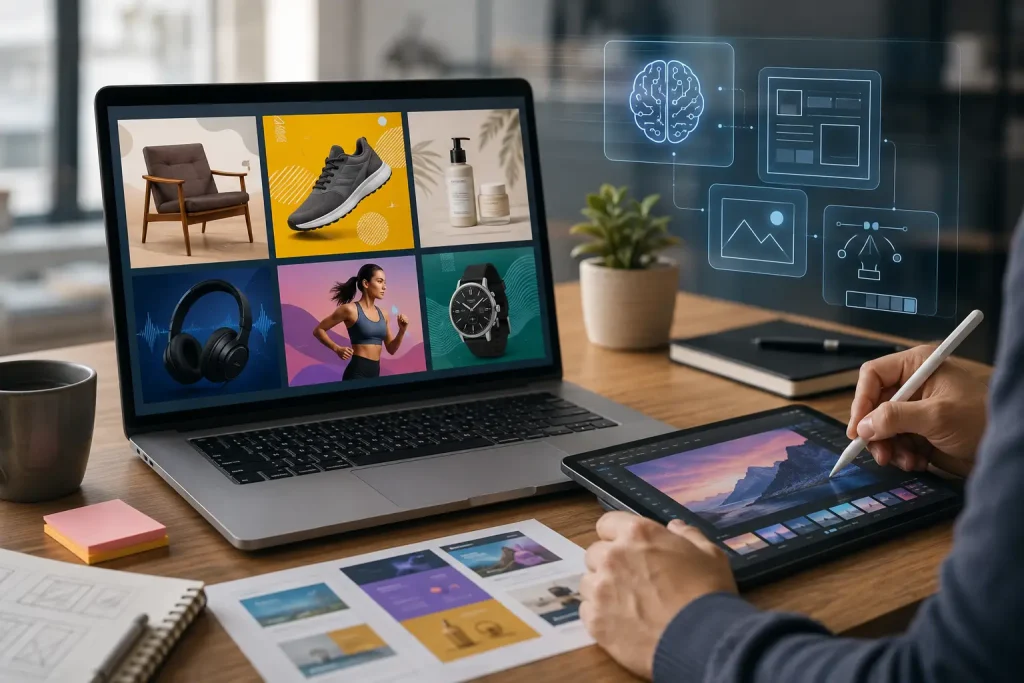
Advertising has always depended on one simple thing: getting people’s attention before they scroll away. That challenge hasn’t changed, but the pace certainly has. Marketing teams are expected to produce more ads, test more ideas, and publish campaigns across multiple platforms—all within tighter deadlines. AI tools have become practical assistants for handling those demands, helping businesses create concepts faster while leaving strategic decisions in human hands.
Why More Teams Are Using AI for Creative Work
A few years ago, creating a display campaign often meant waiting for designers, copywriters, and marketing managers to finish several rounds of revisions. Today, many businesses begin with AI-generated drafts and improve them before launch.
If you’re exploring this approach, visit Aiter to see how AI can quickly generate advertising ideas, headlines, product descriptions, and campaign concepts from a simple business description. Instead of replacing creative thinking, tools like this shorten the path from an idea on paper to something a team can review and discuss.
The growing interest in AI tools for ad creative generation reflects a practical need. Companies are producing more content than ever, while marketing departments rarely receive extra time or larger budgets.
How AI Changes the Creative Process
Creating advertisements is rarely about finding one perfect idea. Most successful campaigns begin with dozens of rough concepts. Some are rejected immediately. Others evolve after feedback from colleagues or customers.
AI speeds up this early stage. A marketer can generate several headline options, different calls to action, or alternative product angles within minutes. Instead of spending half the morning looking at a blank document, the team starts with material that can be edited, combined, or rewritten.
This approach is particularly useful when preparing campaigns for Google Ads, Meta platforms, LinkedIn, or seasonal promotions where deadlines leave little room for lengthy brainstorming sessions. Human experience still matters, though. AI cannot interview customers, understand company culture, or recognize subtle market shifts before they become visible in public data.
AI Banner Ad Maker and Visual Advertising

Visual content often creates the first impression of a brand. A strong headline may convince someone to keep reading, but an image usually earns those extra few seconds of attention.
An AI banner ad maker helps marketers experiment with layouts, color combinations, promotional messages, and multiple banner sizes without creating every version manually. That flexibility becomes valuable when campaigns need assets for websites, mobile applications, newsletters, and social media platforms at the same time.
Even large companies that work with professional designers increasingly use AI during the concept stage. Instead of presenting one visual direction, teams can review several possibilities before selecting the strongest option for further development. The final design still benefits from human refinement, especially when maintaining brand consistency or adapting campaigns for different audiences.
How to Create Ads Without an In-House Creative Team
Not every business has a dedicated creative department. Small companies, startups, consultants, and local retailers often manage marketing with just one or two people. That reality raises an important question: how to create ads without an in-house creative team? The answer usually combines several practical steps.
Start with a clear objective. Decide whether the campaign aims to increase sales, collect leads, promote an event, or introduce a new product. Next, gather information about the audience. Understanding what customers care about remains more valuable than generating hundreds of advertising variations.
Then use AI to develop initial concepts. Draft headlines, suggest visual directions, prepare short advertising copy, and generate multiple versions for testing. Finally, review everything before publishing. Check product information, pricing, dates, and factual statements. AI accelerates production, but accuracy remains the responsibility of the publisher.
Choosing AI Tools That Match Your Workflow
The market now offers dozens of AI-powered marketing platforms. Some focus on copywriting. Others specialize in image generation, analytics, keyword research, or campaign management. Selecting software should begin with everyday challenges rather than impressive feature lists. If your team struggles to produce fresh advertising copy every week, choose a platform designed for content generation.
If preparing display campaigns consumes too much time, visual design tools may provide greater value. If campaign planning feels disorganized, research and planning assistants can simplify that process before creative work even begins. The strongest AI tools for ad creative generation fit naturally into existing workflows instead of forcing teams to redesign their entire marketing process.
Human Judgment Remains the Competitive Advantage
Artificial intelligence works remarkably fast. It organizes information, suggests ideas, and prepares drafts within seconds. What it cannot do is understand customer emotions in the same way experienced marketers can. A local restaurant owner knows which neighborhood event brings families together every summer.
A software company understands why one feature consistently receives praise from customers. A nonprofit organization recognizes which stories inspire volunteers to participate. Those insights rarely appear in datasets alone. Successful campaigns usually combine AI-generated efficiency with genuine knowledge of the audience.
Final Thoughts
Advertising has never been about producing the greatest number of banners or headlines. It has always been about communicating the right message to the right audience at the right moment.
Modern AI tools for ad creative generation help businesses prepare ideas more quickly, organize creative work, and test multiple campaign variations without dramatically increasing production time. They also provide practical support for organizations looking to understand how to create ads without an in-house creative team, making professional marketing resources more accessible to smaller businesses.
As AI continues to develop, its greatest value will likely remain straightforward: reducing repetitive work so marketers, designers, and business owners can focus on strategy, creativity, and understanding the people they want to reach.