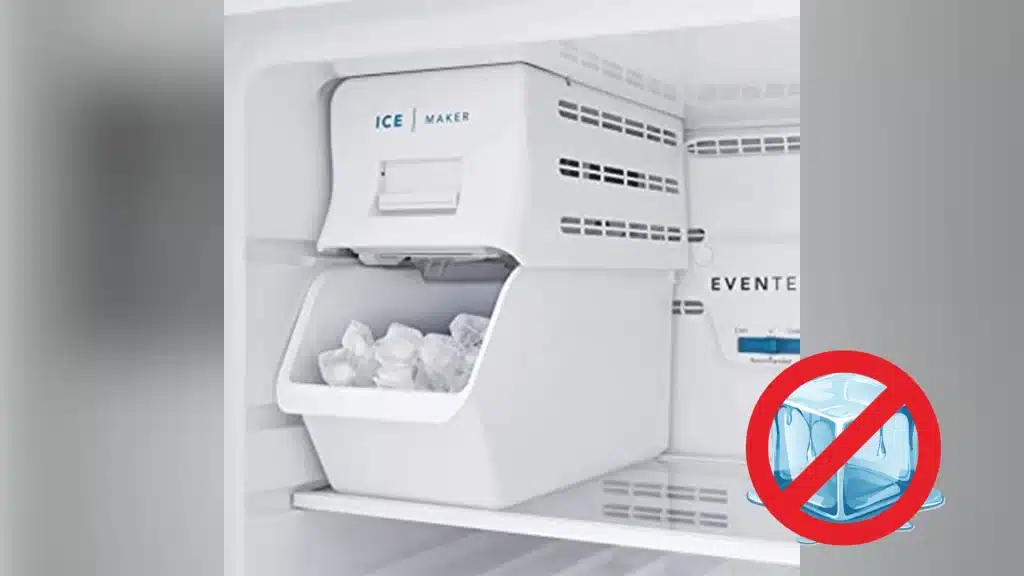
You open the freezer, reach for ice, and the bin is sitting there completely empty. If you have been dealing with a Frigidaire ice maker not working, you are definitely not alone.
Ice maker failures are one of the most reported issues across Frigidaire’s entire lineup, from Gallery and French door models to side-by-side and countertop units.
The frustrating part is that the fix is usually something simple, but most guides skip the basics and jump straight to expensive part replacements.
In most cases, it is a bumped switch, a warm freezer, a clogged filter, a blocked water line, or a frozen fill tube.
This guide walks you through both the quick checks that solve most cases and the deeper diagnostics to try when those do not work.
Common Reasons Your Frigidaire Ice Maker Stops Making Ice
Before you start pulling your fridge apart, it helps to know which bucket your problem falls into. Here are the usual suspects behind a Frigidaire ice maker not working:
- On/off arm bumped to off: The harvest arm or toggle switch gets knocked out of position pretty easily when you load groceries. It is honestly the most common cause, and it takes about ten seconds to fix.
- Freezer temperature too warm: Your ice maker needs the freezer to sit at 0°F to 5°F to complete a full freeze cycle. Anything warmer than that slows production down or shuts it off completely.
- Water supply problems: A kinked water line, a closed shutoff valve, a clogged filter, or household water pressure below 20 psi will all cut off water before it even reaches the ice maker.
- Frozen fill tube: If the freezer door is left open or the humidity is high, frost can block the fill tube and stop water from reaching the ice mold entirely.
- Summer heat effects: In warmer climates, groundwater and ambient heat can push freezer temps above the ice-making threshold during summer months without any actual hardware failure. Cleaning condenser coils and checking door seals usually sorts this out.
How to Fix a Frigidaire Ice Maker Not Working: Step-by-Step
These six fixes come straight from hands-on troubleshooting of real Frigidaire models, including Frigidaire French door fridges and side-by-side setups. Work through them in order before assuming something is broken.
1. Check the Freezer Temperature
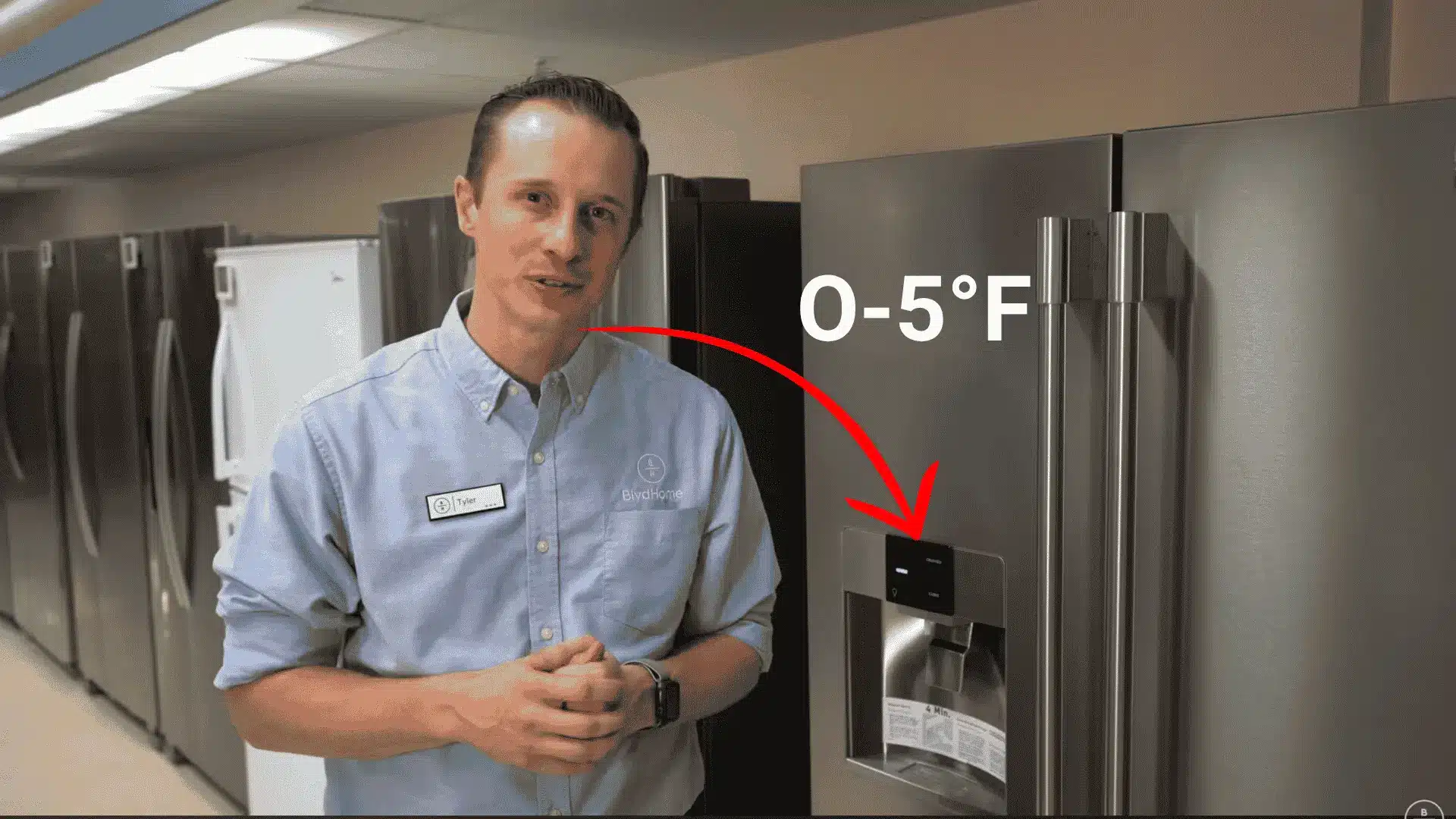
The ideal freezer temp for any ice maker is 0°F. If it drifts above that, the ice maker can self-regulate and shut down.
Grab a thermometer, leave it in the freezer for an hour, and see where you land. Having more food in the freezer actually helps, since a fuller freezer holds temperature better than an empty one.
2. Find the On/Off Switch and Make Sure It is on
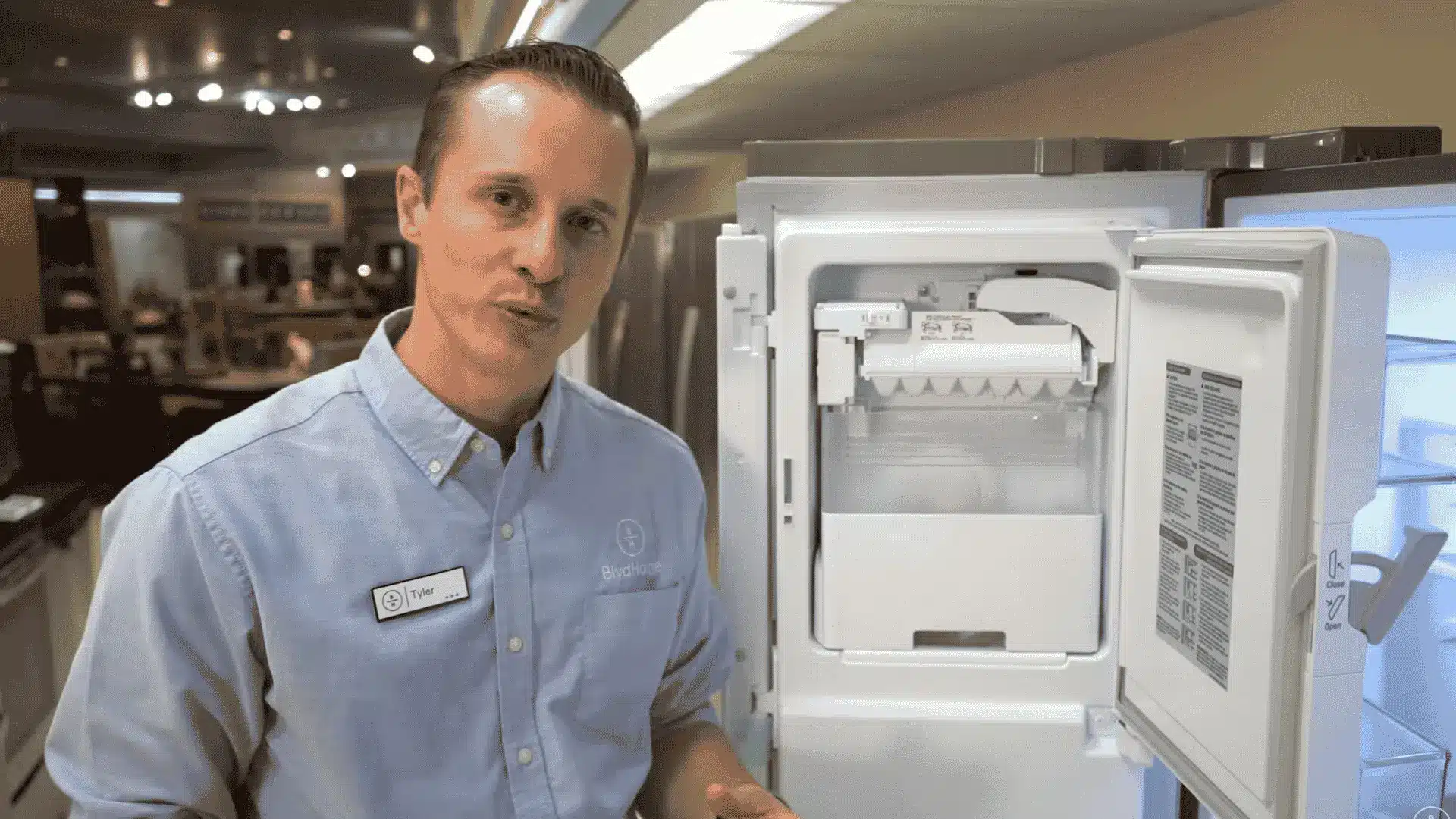
Every Frigidaire ice maker has an on/off switch, but its location varies by model.
- On most Frigidaire French door models, the switch is on the control panel, not on the ice maker itself.
- On Frigidaire side-by-side models, pull out the ice tray and look for a lever. If it is up, push it down to turn the ice maker on.
- On Frigidaire top-mount models, the switch is located inside the ice maker housing behind the ice bucket. Make sure the switch is in the ON position (lever down or button pressed) to activate ice production.
3. Replace the Water Filter

A clogged water filter is one of the most common and most overlooked causes. When the filter gets packed with sediment or minerals, water just stops flowing to the ice maker and water dispenser.
You should swap the filter every 6 months, regardless of the brand.
If you are in a hard water area, it can clog even faster than that. After installing a new filter, flush about two to three gallons through the dispenser before expecting ice.
4. Thaw the Frozen Fill Tube
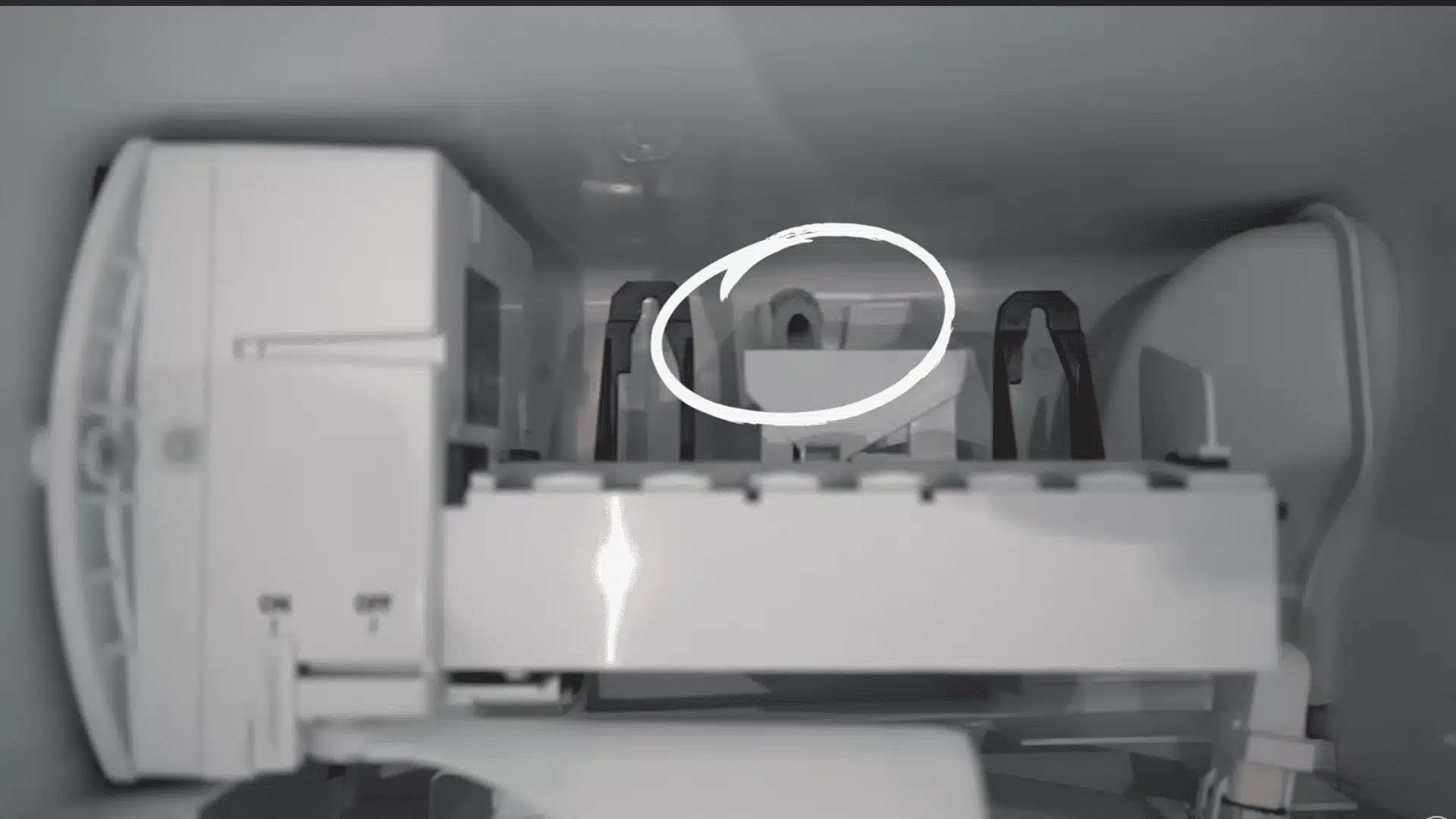
Pull out the ice tray and find where water enters the ice maker. That small tube can freeze solid, especially if the freezer door was left open or you have been dealing with high humidity.
Grab a hair dryer, set it to low heat, and hold it near the frozen tube for 3-5 minutes until it clears out.
Wait up to 24 hours after a new installation before expecting ice to show up.
5. Check the Door Switch
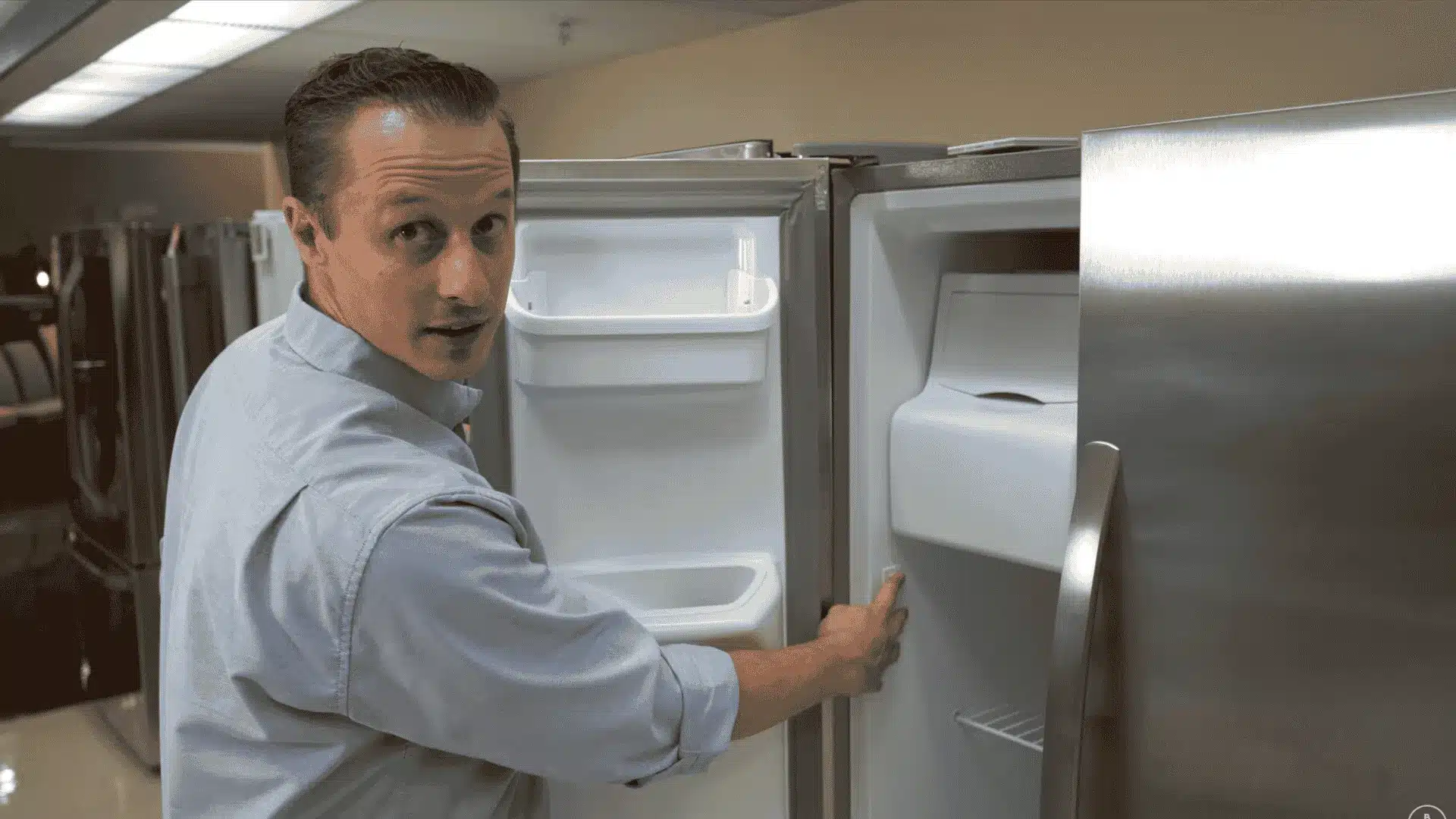
Most Frigidaire freezers have a door switch that controls both the lights and the ice maker.
If the switch fails or gets stuck, the ice maker thinks the door is open and shuts off. An easy test is to open the door and see if the interior lights come on.
If the lights are not turning on, the door switch is likely stuck in the off position. Clear any obstructions holding it in place.
6. Inspect the Water Line at the Back
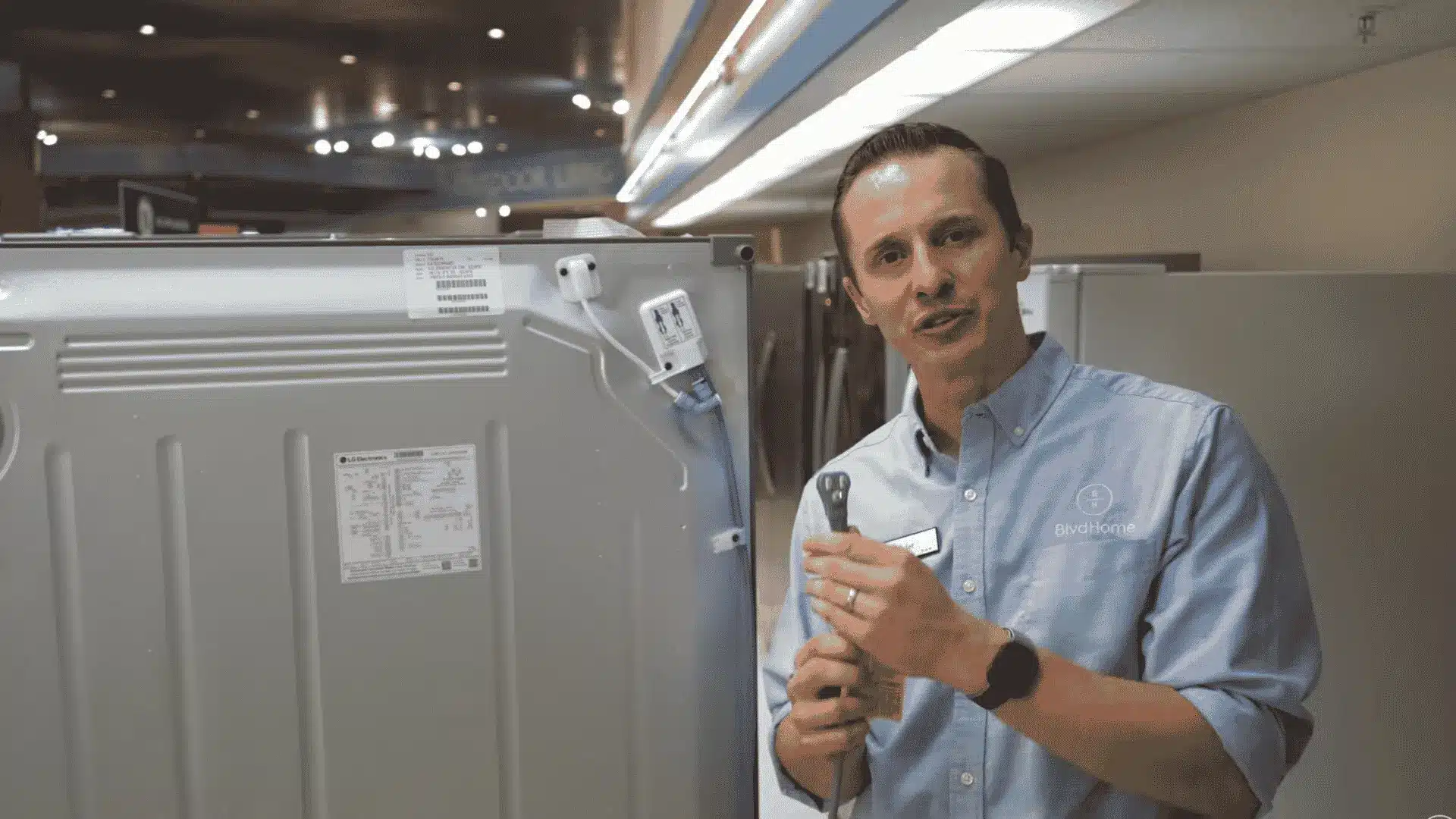
Pull the fridge away from the wall, unplug it, and turn off the water supply valve. Find the hose connected at the back of the fridge.
Check for kinks, pinches, or anything crushing the line against the wall.
To test if the line is clogged, disconnect the hose and drop it into a bucket, then turn the water back on. If water flows freely, the line is clear. If not, you have found your problem.
How to Reset a Frigidaire Ice Maker?
If you have checked all the steps above and the ice maker is still not responding, a reset is worth trying before moving on to component replacement. Here is how to do it on most Frigidaire models:
- Unplug the refrigerator or switch off the circuit breaker for 5 minutes.
- Plug it back in and locate the test or reset button on the ice maker. On most models, it is a small button on the front or side of the ice maker module. Check your model’s manual for the exact location.
- Hold the button for 3 seconds until you hear a chime or the ice maker begins to cycle.
- Wait at least 24 hours before expecting a full bin of ice.
Not all Frigidaire models have a dedicated reset button. If yours does not, the power cycle alone is the functional equivalent.
Special thanks to BoulevardHome for demonstrating the recommended freezer temperature setting. For a more visual guide, check out their video walkthrough.
Advanced Fixes When the Basics Do Not Solve It
If you have cleared all six steps above and the Frigidaire ice maker is still not producing ice, you are likely dealing with a failed component.
Here is what to look at next, along with what each part does and what the fix looks like:
| Component | Main Sign | Quick Fix |
|---|---|---|
| Water inlet valve | No water enters the tray | Test continuity and replace the valve |
| Ice maker assembly | The tray or ejector stops cycling | Replace the ice maker assembly |
| Door switch | Ice maker stays off | Test and replace if faulty |
| Ice level sensor | Bin reads full when empty | Clean, align, or replace the sensor |
| Ice maker thermostat | Intermittent or no ice cycling | Test with a multimeter and replace if no continuity |
| Dispenser door solenoid | Ice makes, but will not dispense | Check the flap and replace the stuck solenoid |
| Control board | Error codes or locked state | Hard reset, then inspect or replace the board |
Always unplug the refrigerator before touching any wiring or internal components.
If your fridge is under warranty, contact Frigidaire support before opening anything, because unauthorized repairs can void your coverage.
Ice Quality Problems: Bad Taste, Hollow Cubes, and Dispense Issues
A Frigidaire ice maker not working does not always mean zero ice. Sometimes it is making ice just fine, but the output is bad, the taste is off, or nothing comes out of the dispenser.
Here is what is actually going on in those cases:
1. Bad Taste or Odor in the Ice
Nine times out of ten, this is a stale water filter. Old filters stop pulling out contaminants, and the taste shows up in your ice fast. Uncovered food in the freezer is the second most common reason.
Strong-smelling items transfer odors into the ice bin quickly.
Replace the filter, clean the ice mold and bin with a 50/50 mix of white vinegar and water, then toss the first two to three batches after the cleaning.
2. Hollow or Cloudy Cubes
Hollow cubes usually mean low water pressure. The mold is not filling completely before the freeze cycle kicks in. Cloudy cubes are a hard water problem.
Calcium and magnesium minerals build up in the water lines and ice molds over time.
A filter rated for mineral reduction can help if your water is mildly hard. If your tap water is seriously hard, you might want to look at whole-house options.
Checking out the best water filter pitcher reviews is a good starting point for understanding filtration options at different levels.
3. Ice is Made, but Nothing Comes out Of the Dispenser
Usually, this is compacted ice in the bin or a jammed auger motor. Unplug the fridge, pull the ice bin, and break up any large frozen clumps by hand.
If the motor runs but the auger does not move, it may be seized or worn.
There is also a surprisingly common fix that most guides skip: if you held the dispenser paddle down for a long stretch and it stopped working, the motor overload protector may have tripped.
Release the paddle and wait three minutes. The dispenser usually resets on its own with no other action needed.
What Do Reddit Users Say About Frigidaire Ice Maker Problems?
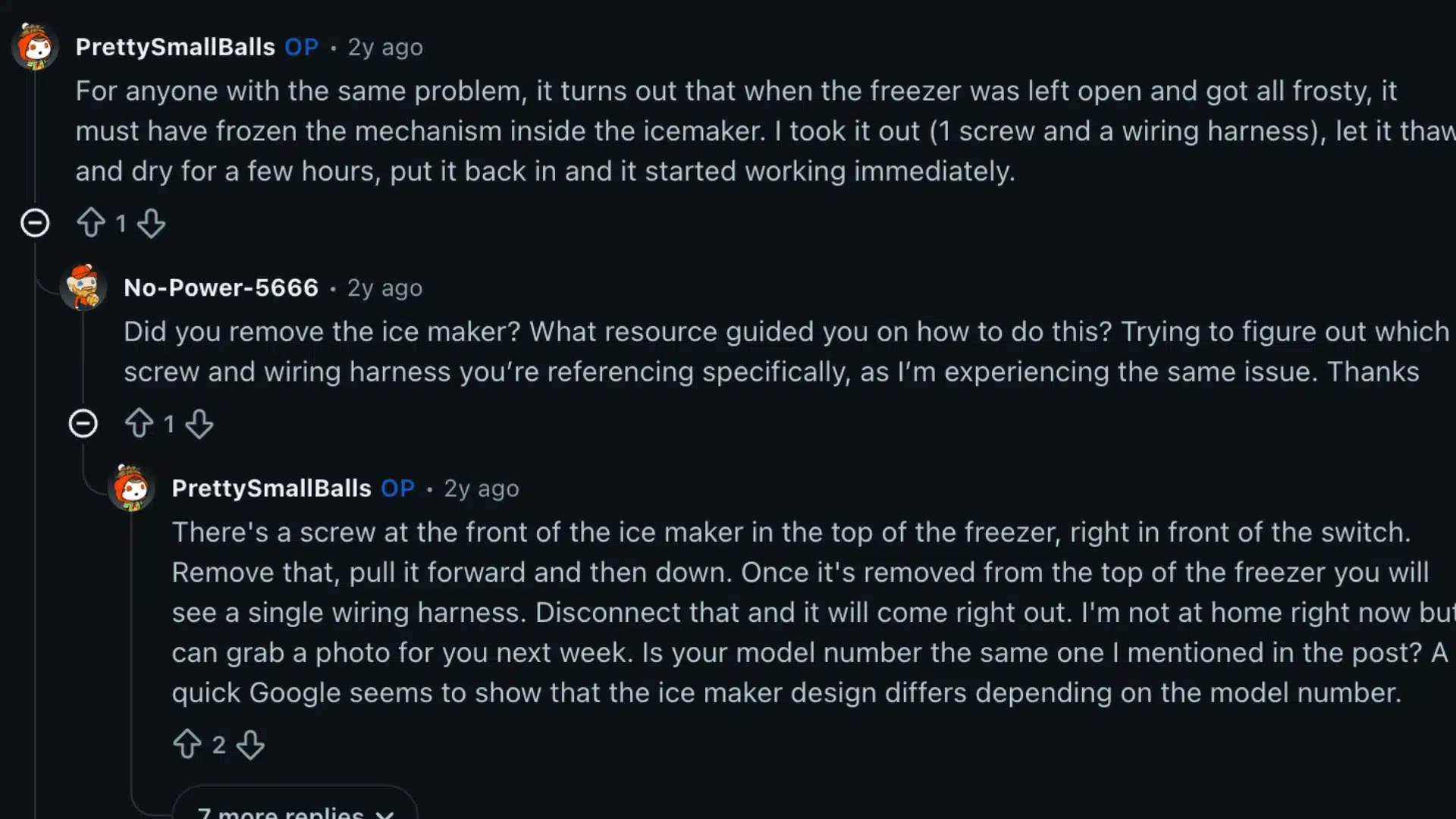
Real Frigidaire owners on Reddit have shared their troubleshooting stories, and a lot of the fixes they found are not in any official guide.
One widely upvoted thread covered a Frigidaire Gallery GRFN2358AF4 where the in-freezer ice maker stopped completely after the freezer door was accidentally left open overnight.
Everything got frosty, there was a power outage the next day, and the ice maker went silent after that.
The original poster eventually pulled out the ice maker assembly (one screw, one wiring harness), let it thaw and dry for a few hours, and put it back in.
It worked immediately. The frozen mechanism, not a broken part, was the whole problem. Other commenters in the same thread reported similar patterns.
One user noted their ice maker worked for about a month after the same thaw fix before the same thing happened again, which pointed to a door seal problem rather than a one-time freeze.
The consistent theme across most of these Reddit posts is that the issue usually comes down to a clogged water filter, a frozen fill tube, low water pressure, or ice buildup around the dispenser chute.
Hardware failures are less common than most people assume.
Preventive Maintenance to Keep Your Frigidaire Ice Maker Running
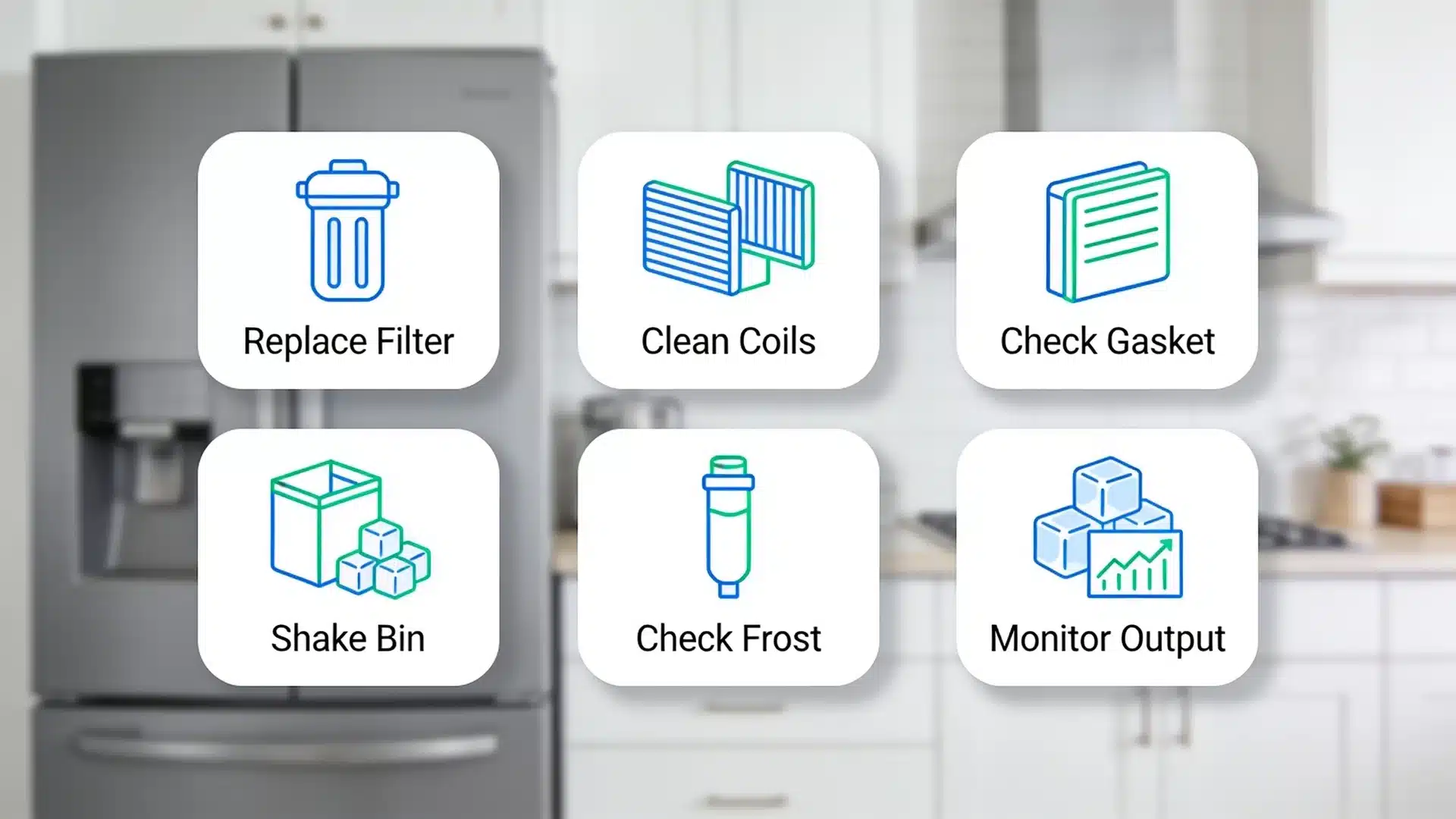
Staying on top of a few simple habits is the best way to avoid landing back in troubleshooting mode six months from now. Here is what actually matters:
- Replace the water filter every 6 months: Do not wait for the indicator light. Mark the date on the filter itself when you install it so you do not lose track.
- Clean condenser coils regularly: Dusty coils make the compressor work harder, which raises freezer temps and slows ice production. A quick vacuum every few months does the job.
- Check door gaskets monthly: Run your fingers around the seal when the door is closed. If you feel air or the gasket pulls away easily, replace it before warm air starts causing frost buildup inside.
- Shake the ice bin weekly: Cubes clump together faster than you think. A quick shake breaks them up and keeps the auger from jamming.
- Check the fill tube for frost: Especially in humid climates, check the back wall of the freezer and the fill tube area for buildup. Catching it early saves you a full defrost later.
- Watch for reduced output: A drop in how much ice you are getting is usually the first warning sign of a developing problem. Do not ignore it. Pairing your fridge with smart leak detection sensors is a solid move for catching water line issues early before they escalate.
When to Call a Professional?
Most Frigidaire ice maker problems are fixable at home, but some situations are worth handing off to a technician. Here is how to tell the difference:
Call a professional if you are dealing with any of the following:
- Persistent error codes like SY EF (evaporator fan motor failure) that do not clear after a reset.
- Control board faults or suspected wiring problems.
- Repeated freezing that keeps coming back even after you have thawed the fill tube.
- Sensor failures that require electrical testing and part-specific diagnosis.
Typical repair costs run between $100 and $225 for a technician visit, depending on the part and your area.
If your fridge is still under warranty, contact Frigidaire support before you open any housing or swap any parts yourself. Unauthorized repairs can affect your coverage, which is a painful way to learn that lesson.
And if the appliance is over a decade old and the repair estimate is climbing, it might be worth comparing that cost against a new unit.
The refrigerator lifespan by brand breakdown can help you figure out whether fixing it makes more sense than replacing it.
Conclusion
Most Frigidaire ice maker problems come down to one of four things: the switch got bumped off, the freezer is running too warm, the water supply is blocked, or the fill tube froze over.
Going through those four checks first will solve the problem the majority of the time, without buying a single part.
If you clear those and the ice maker still is not producing, then you start looking at the water inlet valve, the ice maker assembly, the door switch, or the ice level sensor.
Always confirm your model number before ordering any replacement part, because compatibility matters more than most people think. With the right diagnosis, most Frigidaire ice maker repairs can be done at home in about an hour.
Found a fix that this guide missed? Drop it in the comments below. It might save the next person an hour of troubleshooting.
Frequently Asked Questions
How Long Should I Wait for Ice After Resetting or Installing a Frigidaire?
After a reset, most Frigidaire ice makers complete their first cycle within 6 to 12 hours.
For a brand-new installation, you should wait up to 24 hours before expecting a full batch of ice. Make sure to run the water dispenser for 2-3 minutes first to prime the water supply system.
The first few cubes may also look slightly discolored or taste a bit off, which is normal.
What Do the Error Codes SY EF Mean on a Frigidaire?
SY EF points to an evaporator fan motor error, which affects freezer temperature and can slow or stop ice production entirely.
Codes should be checked for fan obstructions or electrical faults first. If the codes come back after a reset and a visual check, you are likely dealing with a motor or wiring problem that needs a technician.
Do French Door and Side-by-Side Frigidaire Models Fail in Different Ways?
Yes, and the differences are worth knowing before you troubleshoot. Side-by-side models put more mechanical strain on the dispenser auger motor over time.
French door models tend to experience greater temperature fluctuations around the upper-door ice maker compartment, making them more prone to frozen fill tubes and frost buildup.
Knowing which type you have can help you check the right spot first.
How is a Countertop Frigidaire Ice Maker Different from a Built-in Model?
Countertop Frigidaire ice makers use a refillable water reservoir instead of connecting directly to your home’s water line.
That changes what you troubleshoot. For countertop units, the main issues are water level, mineral buildup in the reservoir, and how often you clean the internal water path.
Monthly cleaning and occasional descaling will prevent most of the common problems with these models.