Every original idea carries risk the moment it leaves a private folder.
A design can be copied, a song can be sampled, a product name can be misused, and proof of ownership gets complicated fast when records are scattered across emails, contracts, platforms, and jurisdictions.
That is why blockchain in intellectual property is gaining serious attention far beyond crypto circles.
It gives creators and businesses a tamper-resistant way to record creation, ownership, licensing, and royalties before disputes begin.
The real value, though, depends on knowing where blockchain helps, where the law still controls, and how to use both together without treating technology as a legal shortcut.
What is Blockchain in Intellectual Property?
A blockchain is a distributed digital ledger where records are stored across a network of computers rather than on a single server.
Each entry is timestamped, linked to the previous one, and cryptographically sealed.
Once recorded, the data cannot be changed without altering every subsequent block, which requires network-wide consensus. That makes falsification practically impossible. In the IP context, blockchain is not about cryptocurrency.
It is about applying tamper-proof record-keeping to ownership claims, creation dates, licensing agreements, and royalty events.
A creator can hash a digital file, a manuscript, a design, or an invention disclosure, and anchor that hash to the blockchain.
The resulting record proves the file existed in that exact form at that exact moment, without exposing the content itself.
That proof can support prior art arguments, ownership disputes, and licensing negotiations, even though it does not automatically replace formal registration under patent, copyright, or trademark law.
The same principles driving blockchain adoption in IP are reshaping how organizations think about fast-moving event technology and its impact on content ownership and digital asset management across industries.
Blockchain vs. Traditional IP Systems
| Factor | Traditional IP system | Blockchain-based IP record |
|---|---|---|
| Record creation | Filed with a national registry; can take months | Created on-chain in minutes |
| Cost | Patent filing: $5,000–$20,000+; trademark: hundreds to thousands | Minimal transaction fees for hash anchoring |
| Tamper resistance | Centralized; records can be altered or lost | Distributed; no single point of failure or alteration |
| Cross-border recognition | Requires separate filings per jurisdiction | Single record; legal recognition still varies by country |
| Royalty tracking | Manual invoicing and delayed reports | Smart contracts trigger payments automatically |
| Legal standing | Full legal protection when properly registered | Supplementary evidence: not a substitute for registration |
According to a 2026 market research report published via GlobalNewsWire, the blockchain for IP protection market grew from $789 million in 2024 to $981 million in 2025, with projections reaching $4.94 billion by 2032, with a CAGR of 25.77%.
That growth rate reflects how seriously businesses are starting to treat this technology as a core part of IP strategy, not a speculative add-on.
How Does Blockchain in Intellectual Property Protect Your Rights?
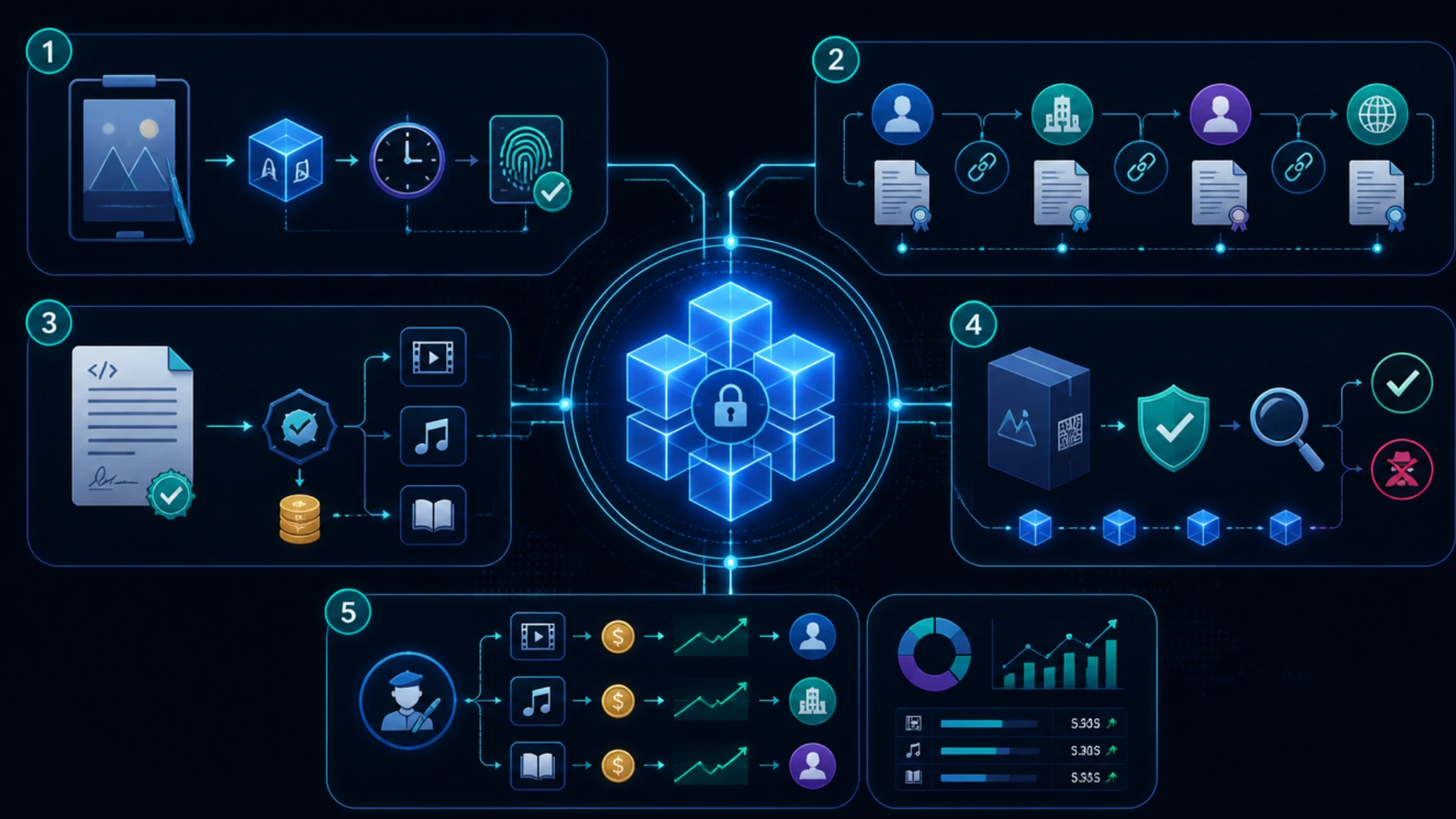
There are five distinct ways blockchain improves IP protection. They are not interchangeable. Each addresses a different gap in the traditional system.
1. Proof of Creation
A creator generates a cryptographic hash of their work and records it on-chain. The blockchain timestamp proves the file existed at a specific point in time.
This approach is stronger than a postmarked envelope and considerably cheaper than a notary
It matters most in prior art disputes and copyright challenges where who created something first is the entire question.
2. Ownership History and Chain of Title
IP rights get assigned, licensed, sub-licensed, and transferred. Traditional systems handle this through paper contracts and centralized registries that are often inconsistent across jurisdictions.
Blockchain records each transfer as a standardized on-chain event, creating a transparent, auditable chain of title that any party can verify.
This matters especially in M&A due diligence, where IP ownership gaps can hold up or kill deals.
3. Smart Contract Licensing
Smart contracts are blockchain programs that run automatically when set conditions are met.
In intellectual property, they can trigger royalty payments as soon as licensed work is used, removing the need for manual invoices and eliminating the delays that plague traditional licensing agreements.
For organizations managing recurring IP licensing at scale, the same logic behind automating royalty and billing workflows applies directly to how smart contracts can reduce overhead and payment lag in creative rights management.
For example, a filmmaker could receive a set royalty when a streaming service uses her footage.
This automation appeals to publishers, music labels, and studios that need faster, clearer IP payment tracking and rights reporting across markets.
4. Anti-Counterfeiting and Provenance Tracking
Brands can link physical products, certificates of authenticity, or digital assets to on-chain records.
A brand logs its trademark on-chain, and AI tools scan global marketplaces within hours, flagging counterfeit listings across multiple countries.
The system sends takedown notices automatically through a smart contract. What would have taken a legal team weeks of manual monitoring now happens before the counterfeits gain traction.
In the pharmaceutical sector, blockchain-based supply chain verification can expose fraud and confirm product authenticity at each distribution point.
5. Royalty Transparency
Royalty tracking often feels unclear in creative industries because creators may not see how their work is used until much later.
Blockchain can create a shared record of licensing activity, usage events, and payment triggers.
Songwriters, artists, and developers can track rights activity closer to real time instead of relying only on delayed reports. This added visibility can make royalty management cleaner, faster, and easier to audit at scale.
Event teams managing branded digital content can apply the same real-time record logic explored in this year’s event technology trends to protect their proprietary session formats and speaker assets.
NFTs and IP: What Blockchain Actually Transfers
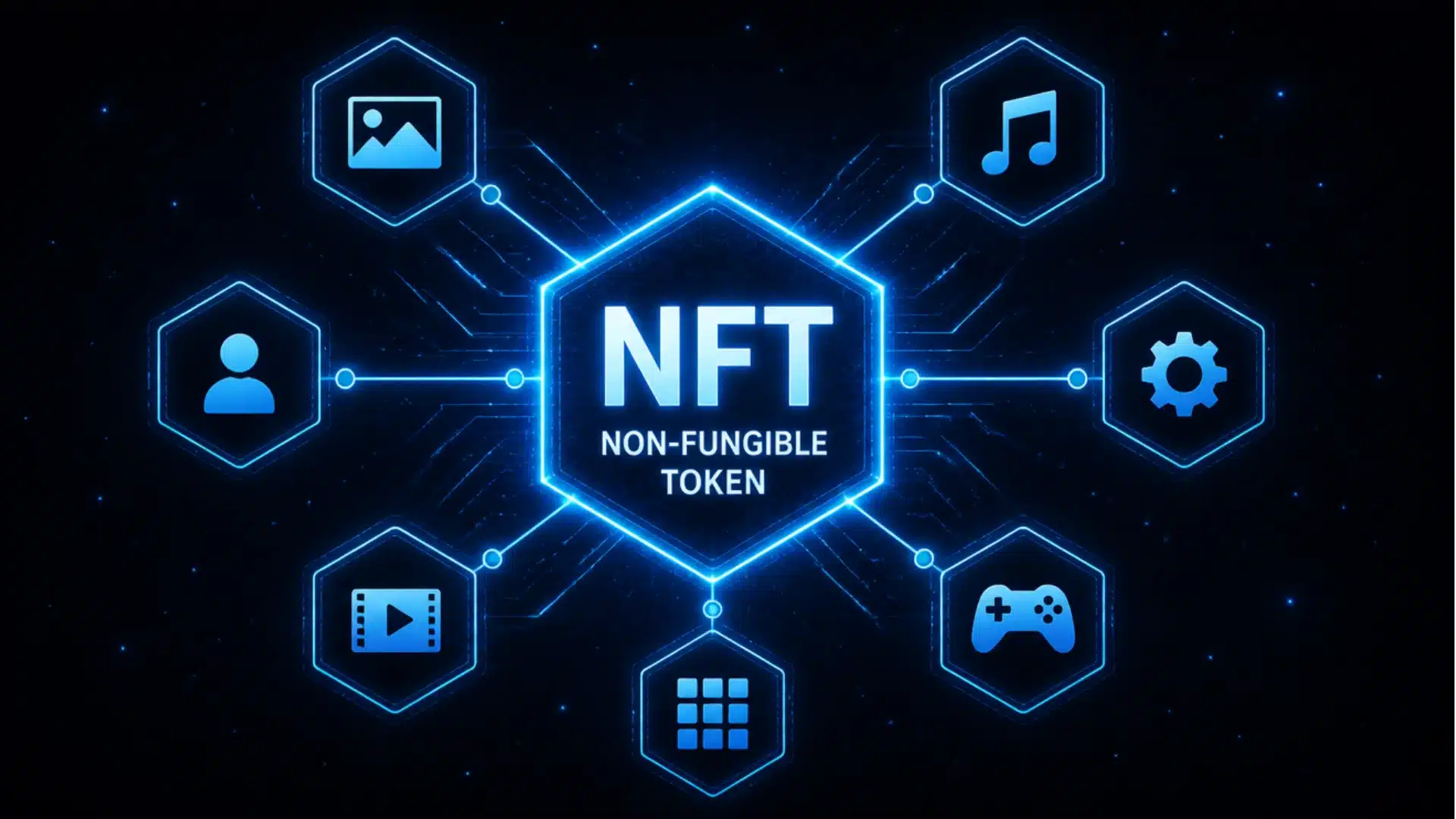
Non-fungible tokens (NFTs) are one of the most misunderstood applications of blockchain in intellectual property.
Buying an NFT gives you ownership of a unique token on the blockchain. It does not automatically transfer the copyright to the underlying work.
That distinction matters a great deal. An artist who mints an NFT of a digital painting retains the copyright unless the sale agreement explicitly transfers it in writing.
The purchaser owns the token and may own the digital file but cannot legally reproduce, distribute, or license the work without that written transfer of rights.
Where NFTs do add real IP value: they can be programmed to pay the original creator a royalty every time the token is resold. This is something traditional art sales cannot do.
Platforms like Verisart and Bernstein allow creators to anchor ownership records to the blockchain, register certificates of authenticity, and embed licensing terms directly into the token’s smart contract.
The result is a form of IP management that travels with the asset rather than sitting in a separate contract.
Legal Challenges of Using Blockchain IP
Blockchain can make IP records clearer, but the legal system has not fully caught up. Businesses and creators still face questions around evidence, privacy, enforcement, and cross-border recognition.
- Jurisdictional inconsistency: Some courts accept blockchain timestamps as evidence in IP disputes, but many countries still lack clear rules for legal recognition. Cross-border cases are especially uncertain.
- Blockchain is not registration: Recording work on chain does not grant copyright, patent, or trademark rights. Formal protection still depends on national IP laws.
- Smart contract limits: Smart contracts can automate royalty payments, but they may not resolve fraud, mistakes, unclear terms, or licensing disputes.
- Data accuracy issues: Blockchain preserves records permanently. If the wrong owner, date, or asset is entered, correcting that mistake can become difficult.
- Privacy exposure: Public blockchains may reveal ownership history, licensing activity, or business relationships, which can pose risks to trade secrets.
- Off-chain gaps: If IP transfers happen through traditional agreements, the blockchain record can become outdated unless someone updates it properly.
- Scalability and cost: Large IP systems may face transaction fees, speed limits, and governance issues when using public blockchain networks.
What Blockchain Cannot Do for IP Protection?
Blockchain can support IP protection, but it cannot handle every legal or ownership issue on its own. It works best as proof, recordkeeping, and licensing support alongside formal registration and written agreements.
| Limitation | What it means |
|---|---|
| Cannot verify real authorship | If stolen work is uploaded first, blockchain only records the submission, not whether the submitter owns it. |
| Cannot stop infringement | It may track usage, but legal action is still needed when someone copies or misuses protected work. |
| Cannot replace registration | Patent, trademark, and some copyright remedies still depend on formal filings under national laws. |
| Cannot guarantee fair contracts | Smart contracts execute coded terms, even if those terms contain mistakes or unfair conditions. |
| Cannot protect public trade secrets | Sensitive information placed on a public blockchain may lose the secrecy needed for legal protection. |
For event organizers already tracking session access and attendee data, the same governance principle applies: the technology records what you put in, which is why digital infrastructure readiness at events starts with clean, accurate data.
Practical Solutions for Safer Blockchain IP Adoption
Blockchain IP adoption works best when it supports an existing legal strategy, not when it replaces one. The goal is to reduce risk, protect sensitive assets, and make ownership records easier to verify.
- Keep formal registration in place: Blockchain records can support IP claims, but copyright, patent, and trademark rights still depend on legal filings.
- Store files off-chain: Record only the hash on the blockchain to protect privacy, reduce costs, and avoid exposing sensitive content.
- Use private blockchains for sensitive assets: When trade secrets, licensing terms, or confidential business records should not appear on public ledgers.
- Pair smart contracts with written agreements: Automated payments have legal terms, dispute rules, and jurisdiction details behind them.
- Create a correction process early: This is because wrong ownership details, dates, or asset records can become difficult to fix once recorded.
- Use standard metadata: Just as creator name, asset type, rights granted, territory, license length, and usage limits for cleaner records.
- Work with legal counsel: Before using blockchain for patents, trademarks, cross-border licensing, or high-value IP transactions.
Real World Examples of Blockchain Protecting IP
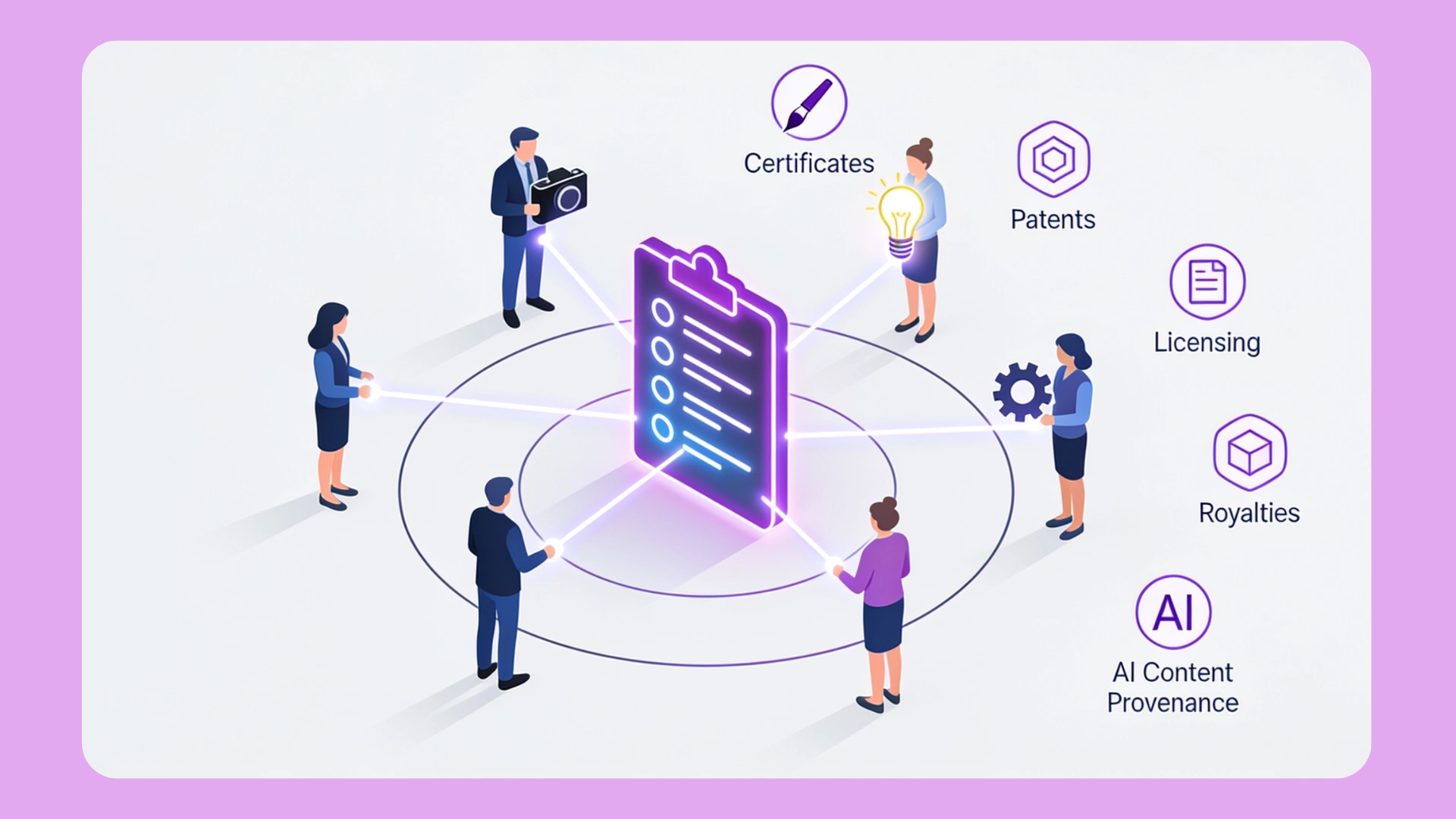
Blockchain in intellectual property is already being tested across creative rights, patent management, and digital licensing.
Platforms such as KodakOne have shown how blockchain can help photographers track image usage, prove ownership, and manage licensing records more clearly.
Verisart has done similar work for visual artists, issuing blockchain-verified certificates of authenticity that travel with the artwork.
Bernstein focuses on patent documentation, allowing inventors to create timestamped prior art records and track IP portfolio transfers with a clean audit trail.
Patent-focused platforms also use blockchain to create cleaner ownership histories, track transfers, and support licensing due diligence.
This helps reduce disputes when IP portfolios are sold, assigned, or licensed. Story Protocol is another example built around digital content, AI-generated works, and royalty automation.
The intersection of AI and blockchain here is worth watching closely. As AI tools generate more creative output, establishing verifiable provenance for human-created work will matter more, not less.
Blockchain is one of the few technologies positioned to draw that line clearly.
These platforms show that blockchain is not replacing IP law. It is becoming a support layer for cleaner records, faster licensing, and more transparent payment workflows.
The WIPO ADR Highlights 2025 report noted an increase of 70% in IP disputes involving innovation, technology, and digital content from 2024 to 2025, with copyright and digital content accounting for a large share of all cases.
How Does Blockchain Support Cross-Border IP Licensing?
Cross-border IP licensing becomes complicated when one work, brand, patent, or design is used in several countries at once.
Each market may have its own filing rules, license terms, renewal dates, tax rules, and enforcement process.
Blockchain cannot remove those legal duties, but it can give every party a shared record of who owns what, where rights apply, how long a license lasts, and when royalties are due.
This is especially useful for creators, brands, publishers, and studios working with multiple partners across regions.
Smart contracts can also connect royalty payments to territory-based sales or usage data, reducing manual reports and payment delays.
As WIPO works on blockchain standards for IP systems, better cross-border records may make global licensing easier to verify and manage.
- Territory-specific rights allow smart contracts to approve, limit, or block IP use based on location.
- On-chain royalty splits help multiple rights holders receive payments at the same time.
- Interoperable records let licensees verify rights status without repeated manual checks.
Conclusion
Blockchain in intellectual property is not a magic shield, but it is a serious step toward cleaner digital ownership.
The smartest approach is not to choose between law and technology. It is to make them work together, so records are easier to prove, rights are easier to manage, and disputes are easier to understand.
For creators, brands, and businesses, the real lesson is simple: protect ideas before they become vulnerable.
As digital work moves faster across platforms and borders, stronger IP habits will matter more than ever.
From my perspective as someone who has tracked technology adoption across industries for over a decade, the pattern here is familiar: the technology is real, and the use cases are solid, but the legal infrastructure is still catching up.
Have you started using blockchain tools for IP protection in your work? Share your experience in the comments below. We read everyone.
Frequently Asked Questions
Does Buying an NFT Mean Owning the Copyright?
No. Buying an NFT gives ownership of the token, not automatic copyright. Copyright transfers only when the sale agreement clearly includes written rights.
Can Blockchain Be Used to Protect Trade Secrets?
Yes, but only through private or permissioned blockchain systems. Public blockchain can expose sensitive details, which may destroy trade secret protection. Keep access restricted.
Is Blockchain Evidence Accepted in IP Disputes Worldwide?
No. Blockchain evidence is not accepted everywhere. Some courts may recognize timestamps, but global standards vary, so businesses should verify local legal rules.
What is the Difference Between Recording IP on a Public versus a Private Blockchain?
A public blockchain is open and verifiable by anyone, which makes tampering obvious but also exposes your ownership data and licensing history to competitors.
A private or permissioned blockchain restricts access to approved parties, protecting confidentiality while still providing tamper-resistant records.
For trade secrets, licensing terms, or sensitive portfolio data, a private blockchain is generally the safer choice.