In today’s digital world, keeping your information safe can feel complicated. You might hear about cyberattacks, data breaches, and hackers, and wonder how companies protect their systems.
In this article, I’ll share the different types of services companies offer, the features you should look for, and the benefits they provide.
I’ll also give tips on choosing the right solutions for your needs.
By the end, you’ll have a clear picture of how digital security services protect data and why they matter for businesses like yours.
What Are Digital Security Services?
Digital security services are professional solutions designed to protect computers, networks, and data from cyber threats.
These services help businesses prevent unauthorized access, data breaches, malware attacks, and other security risks.
Companies offering digital security services use a mix of tools, technologies, and expert monitoring to safeguard systems. Common services include network security, endpoint protection, cloud security, and identity management.
They often involve real-time monitoring, vulnerability assessments, and incident response to quickly detect and stop threats.
By using these services, businesses can maintain the confidentiality, integrity, and availability of their data.
In today’s digital world, digital security services are essential for protecting both company assets and customer information.
Key Components of Digital Security Services
The key areas of digital security services show how businesses protect their systems and data.
- Network Security: Protects your network from unauthorized access, malware, and attacks using firewalls, VPNs, and monitoring tools.
- Endpoint Protection: Secures individual devices, such as computers and mobile phones, against viruses, ransomware, and other malicious threats.
- Cloud Security: Safeguards data and applications stored in the cloud with encryption, access controls, and secure configurations.
- Data Protection: Ensures sensitive information is encrypted, backed up, and securely stored to prevent loss or unauthorized use.
- Identity and Access Management (IAM): Controls user access, authenticates identities, and manages permissions to protect systems and data.
Core Cybersecurity Services Offered by Companies
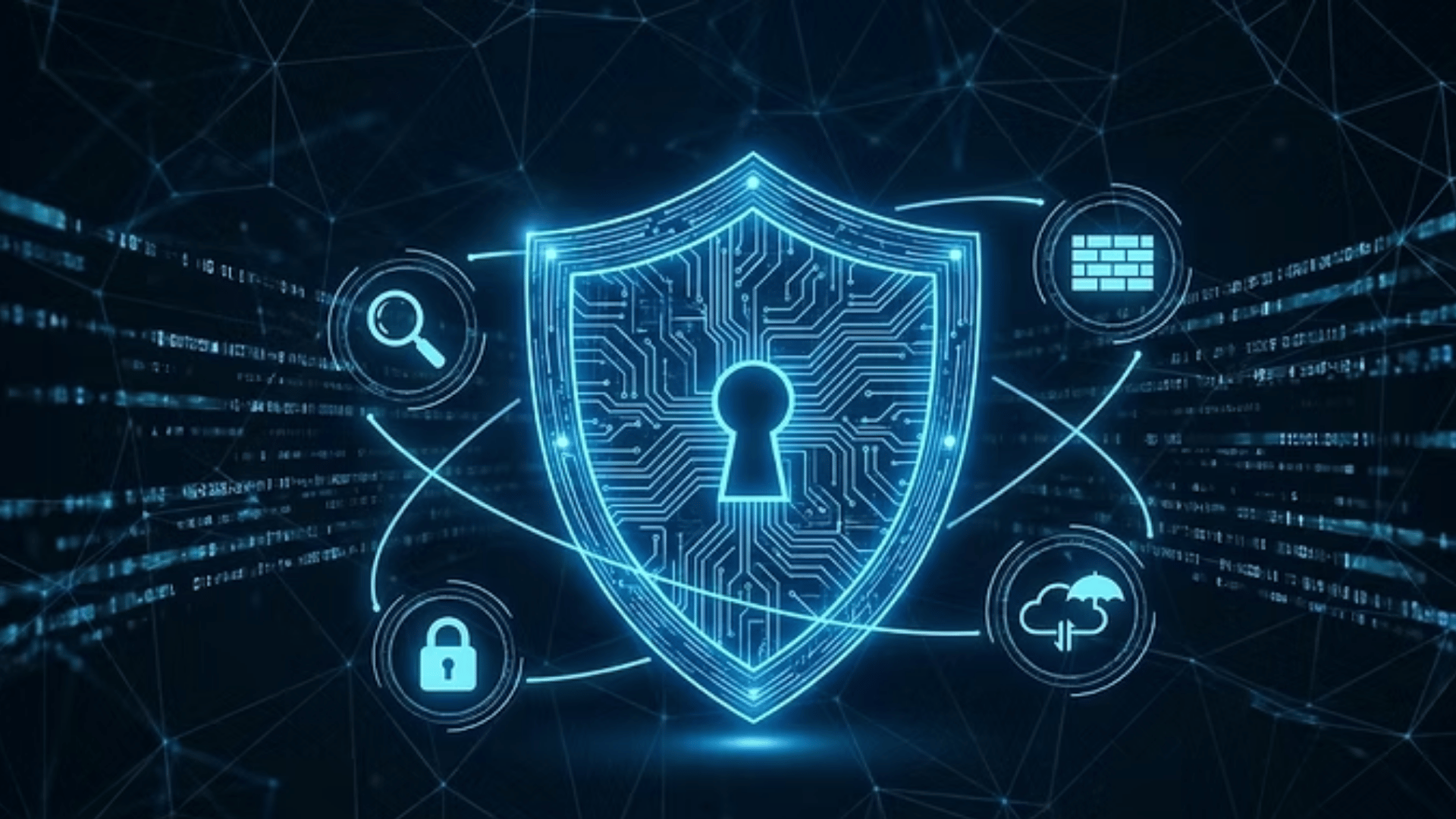
Cybersecurity companies provide a range of services designed to protect business systems, networks, and data from evolving digital threats.
1. Managed Security Services
Managed security services involve continuous monitoring and management of an organization’s cybersecurity.
Providers operate Security Operations Centers (SOCs) that use advanced tools such as SIEM to detect, analyze, and respond to threats in real time.
This includes vulnerability scanning, incident response, and compliance reporting.
Businesses that lack internal security teams rely on these services for expert protection, ensuring threats are addressed promptly.
Managed services lower risk and cost less than building a full in-house security team.
2. Vulnerability Assessment & Penetration Testing (VAPT)
Vulnerability assessment and penetration testing focus on identifying weaknesses in networks, applications, and systems before cybercriminals exploit them.
Security experts simulate attacks to uncover vulnerabilities and provide detailed reports with prioritized solutions.
Regular VAPT allows companies to fix security gaps proactively. According to Verizon’s Data Breach Investigations Report, the majority of successful breaches exploit known vulnerabilities that have available patches.
VAPT is how you find those before an attacker does. It also helps businesses meet regulatory requirements that mandate periodic security assessments.
3. Identity and Access Management Services
Identity and Access Management (IAM) services control user access across systems, applications, and networks.
Providers implement authentication methods such as multi-factor authentication (MFA), single sign-on (SSO), and role-based permissions to ensure that only authorized users can access sensitive data.
IAM reduces the risk of breaches caused by stolen or weak credentials. It also simplifies access management for administrators while maintaining security.
Strong IAM practices are essential for organizations of all sizes to protect their digital assets from unauthorized use.
4. Cloud Security and Infrastructure Protection
Cloud security services focus on protecting applications, workloads, and data stored on cloud platforms such as AWS, Azure, and Google Cloud.
Providers assess configurations, enforce access policies, and implement monitoring, encryption, and threat detection tools.
Cloud security helps prevent misconfigurations, breaches, and data leaks that could compromise business operations.
As companies increasingly adopt hybrid or multi-cloud setups, these services ensure that sensitive information remains secure while allowing employees to work efficiently from anywhere.
5. Incident Response and Investigation
Incident response services help organizations quickly contain, investigate, and recover from active cyberattacks.
Security experts identify the breach’s source, isolate affected systems, and guide remediation to prevent further damage.
They also provide forensic reports and documentation for regulatory compliance. These services minimize downtime, protect business reputation, and reduce financial losses.
A strong incident response plan ensures organizations can respond effectively to threats while learning from incidents to strengthen their overall cybersecurity posture.
6. Compliance and Risk Management
Compliance and risk management services help businesses meet regulatory standards like GDPR, HIPAA, ISO 27001, and SOC 2.
Providers perform gap analysis, prepare audits, create policies, and conduct ongoing compliance checks.
These services reduce legal risk, improve operational security, and help organizations maintain trust with clients and stakeholders.
By addressing compliance requirements proactively, businesses avoid penalties and maintain a strong security culture. Risk management also helps identify and mitigate potential threats before they affect operations.
How to Evaluate a Digital Security Services Provider?
Choosing a provider is not just about services. A few simple questions can quickly show which companies are truly reliable.
Ask for their incident response SLA in writing. Ask how they handle a false positive at 2 a.m.
Ask who specifically will be assigned to your account and what their certifications are. Providers who struggle with those questions rarely deliver well under pressure.
Also, verify certifications: SOC 2 Type II, ISO 27001, and relevant government clearances are meaningful signals. CREST or OSCP credentials matter for pen testing teams specifically.
Digital Security Services vs Traditional Cybersecurity
Digital security services and traditional cybersecurity approaches differ in methods, tools, and coverage for protecting systems and data.
| Aspect | Digital Security Services | Traditional Cybersecurity |
| Approach | Proactive, continuous monitoring and threat prevention | Reactive, relies on detecting threats after they occur |
| Coverage | Comprehensive: networks, endpoints, cloud, identity, compliance | Limited: mostly antivirus and firewalls |
| Tools & Technology | Uses SIEM, SOC, AI, automation, and advanced analytics | Basic antivirus, firewalls, and manual checks |
| Management | Often managed by experts or platforms with 24/7 support | Usually handled in-house with limited expertise |
| Benefits | Faster threat detection, reduced downtime, and compliance support | Simple protection may miss advanced or new threats |
| Scalability | Easily adapts to business growth and hybrid environments | Harder to scale for larger or cloud-based systems |
What Are Cybersecurity Platforms?
Cybersecurity platforms are integrated systems that help organizations protect their networks, data, and applications from cyber threats.
They combine security tools into one system to detect, stop, and prevent attacks.
These platforms typically include threat detection, incident response, data protection, identity management, and compliance monitoring.
Many use AI and automation to analyze large amounts of data, identify risks, and act faster than traditional methods.
Cybersecurity platforms also support cloud and hybrid environments, giving businesses flexibility while maintaining strong security.
By centralizing multiple functions, they reduce complexity, improve visibility, and allow companies to manage their cybersecurity more efficiently, protecting sensitive information from evolving digital threats.
Key Features of Cybersecurity Platforms
Cybersecurity platforms include several important features that help businesses protect data, monitor threats, and maintain secure operations:
- Threat Detection and Response: Uses monitoring tools and AI to quickly identify and respond to attacks, preventing or minimizing damage.
- Risk and Compliance Management: Helps organizations meet regulatory standards and maintain security policies while reducing potential legal or operational risks.
- Cloud and Hybrid Support: Secures applications, workloads, and data across cloud and hybrid environments with consistent protection and monitoring.
- Automation and AI Capabilities: Automates repetitive security tasks, analyzes large datasets, and improves detection speed and accuracy.
- Centralized Visibility: Provides a unified dashboard to monitor all security activities and events across networks, endpoints, and cloud systems.
Types of Cybersecurity Platforms
Cybersecurity platforms come in different types, each focusing on specific security needs for organizations.
| Type | Description | Primary Use |
| Data Security Platforms | Focus on protecting sensitive data across networks, applications, and storage systems | Prevent data breaches and unauthorized access |
| SIEM Platforms | Collect and analyze security events from multiple sources to detect threats | Real-time threat monitoring and alerting |
| Extended Detection and Response (XDR) | Integrates multiple security tools for detection, investigation, and response | Unified threat detection across endpoints, network, and cloud |
| Cloud Security Platforms | Protect workloads and applications hosted in cloud environments | Secure cloud infrastructure and prevent misconfigurations |
| AI-Powered Security Platforms | Use machine learning to detect anomalies and automate responses | Speed up threat detection and reduce manual work |
What Digital Security Services Cost: A Realistic Overview
Cost is one of the most searched aspects of this topic, and most service providers are deliberately vague about it.
Managed security services for small businesses typically run between $1,500 and $8,000 per month, depending on scope.
VAPT engagements for a mid-sized web application generally cost between $5,000 and $25,000 per assessment.
Cloud security audits vary widely based on environment complexity but commonly range from $3,000 to $15,000. Incident response retainers are typically priced at $10,000 to $50,000 annually. These are ranges, not quotes.
The actual cost depends on your environment size, regulatory requirements, and the provider’s tier.
I always tell my clients that a good MSSP contract usually costs less than one ransomware attack, which IBM’s Cost of a Data Breach Report places at over $4 million for mid-market organizations.
Benefits of Digital Security Services and Cybersecurity Platforms
Digital security services and cybersecurity platforms provide several key advantages that help businesses maintain safety, efficiency, and reliability:
- Proactive Threat Detection and Prevention: Continuous monitoring and advanced tools identify risks early, preventing attacks before they can damage systems.
- Enhanced Compliance and Reporting: Services help businesses meet regulatory standards and generate reports to maintain legal and operational security requirements.
- Reduced Downtime and Faster Incident Recovery: Quick response to security incidents ensures minimal disruption and faster restoration of normal business operations.
- Scalability to Accommodate Business Growth: Platforms and services can expand easily with business needs, supporting more users, devices, and cloud resources efficiently.
How to Choose the Right Digital Security Services?
Choosing the right digital security services means finding solutions that align with your business needs and effectively protect your systems.
The goal is to ensure your data, networks, and applications stay secure while staying within budget.
Start by assessing your organization’s size, industry requirements, and regulatory obligations. Consider whether you need managed services or in-house solutions.
Look at provider expertise, certifications, and past performance to ensure reliability. Evaluate the tools, monitoring capabilities, and threat response speed offered.
Finally, check scalability, support availability, and pricing models to make sure the services can grow with your business.
Taking these steps helps you select the most suitable digital security services for long-term protection.
Leading Cybersecurity Platforms in the Market
Several cybersecurity platforms are widely used by businesses to provide comprehensive protection, monitoring, and threat management across digital environments:
- Enterprise-Scale Platforms: Offer advanced threat detection, managed services, and analytics suitable for large organizations with complex security needs.
- Mid-Market and SMB Platforms: Provide affordable monitoring, vulnerability assessments, and cloud security features tailored for small to medium-sized businesses.
- Specialized Industry Platforms: Focus on sector-specific requirements, such as healthcare or finance, to ensure compliance and address unique security challenges.
- Cloud-Native Platforms: Built for cloud and hybrid environments, offering integrated security for workloads, applications, and data across multiple cloud services.
- AI-Powered Platforms: Use artificial intelligence and machine learning to detect anomalies, automate threat response, and enhance overall security efficiency.
Common Challenges in Implementing Digital Security Services
Businesses often face several obstacles when adopting digital security services, which affect their ability to fully protect their systems and data.
| Challenge | Description | Impact |
| Skill Shortages | Lack of experienced cybersecurity professionals to manage and monitor systems effectively | Slower response to threats, increased vulnerability |
| Budget Constraints | Limited resources to invest in advanced tools, platforms, or managed services | May force organizations to choose less comprehensive solutions |
| Rapidly Evolving Threats | Cyber threats constantly change, making it hard to stay fully protected | Increased risk of breaches and data loss |
| Integration Issues | Difficulty connecting new security tools with existing systems and workflows | Can reduce efficiency and create blind spots |
| Compliance Complexity | Meeting multiple regulatory standards can be challenging | Risk of penalties and legal issues |
Future Trends in Digital Security and Cybersecurity Platforms
Cybersecurity is constantly evolving. The following trends highlight how digital security services and platforms are expected to develop.
- AI and Machine Learning: Platforms will increasingly use AI to detect anomalies, automate responses, and identify threats faster than traditional methods.
- Zero Trust Security Models: Businesses are adopting zero trust principles, verifying every user and device before granting access to systems and data.
- Predictive Security Analytics: Advanced analytics will anticipate potential threats and vulnerabilities, helping organizations prevent attacks before they occur.
- Platform Consolidation: Companies will integrate multiple security tools into unified platforms to simplify management and improve threat visibility.
- Cloud Security Enhancements: Cloud-focused protections will expand to secure hybrid and multi-cloud environments, with improved monitoring and access controls.
Conclusion
Digital security services and cybersecurity platforms play a vital role in protecting businesses from ever-evolving online threats.
Understanding the types of services, their features, and how platforms work can help you make informed decisions about protecting your systems and data.
By understanding the differences between traditional approaches and modern solutions, as well as the benefits of proactive monitoring, compliance support, and scalable platforms, you can choose the right tools for your needs.
I hope this guide has made these concepts clearer and easier to understand. Now I would love to hear from you.
Have you used digital security services for work or personal use? Share your thoughts in the comments.
Frequently Asked Questions
How Much Does It Cost to Hire a Cyber Security Expert?
Costs vary widely, typically $75 to $250 per hour, depending on experience, specialization, and project complexity.
What Are the Big 4 in Cyber Security?
The Big 4 are IBM, Cisco, Palo Alto Networks, and Check Point.
What Devices Cannot Be Hacked?
No device is completely unhackable, but devices with strong encryption and limited connectivity are harder to breach.
Does Turning Off Your Phone Remove Hackers?
Turning off your phone stops active connections, but malware or persistent threats may remain until fully removed or reset.