A Class 2 ebike can provide motor power without requiring you to pedal, with assistance cutting off at 20 mph under the three-class framework used in places such as California. That makes the label useful before purchase—but only if you understand what it describes. It is an operating category, not a quality ranking, and it is not a pass to ride on every road or path.
Read the label alongside the controls and the places you plan to ride. Three separate questions matter: what the motor is allowed to do, whether that behavior suits your trip, and whether the location permits the vehicle. Getting one answer right does not settle the other two.
What Makes an Ebike Class 2?
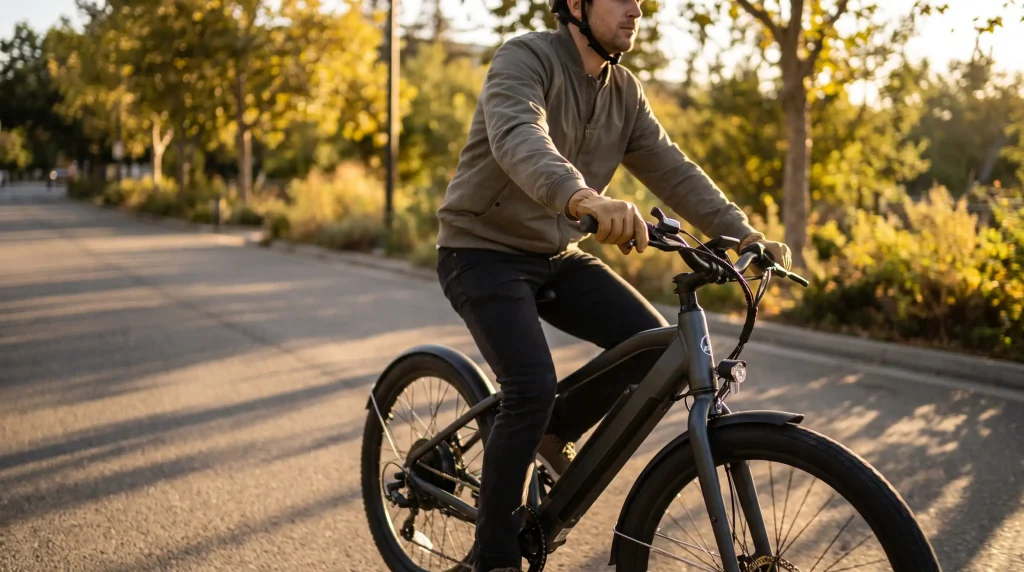
The defining feature is throttle-capable propulsion: the motor can move the bike even when the rider is not turning the pedals. In California, the vehicle must also have fully operable pedals and a motor that does not exceed 750 watts. The Class 2 definition requires assistance to stop when the bike reaches 20 mph. A throttle alone is not enough to establish the category.
This is why an electric bike with throttle needs more explanation than a photograph of its handlebar. Ask how assistance starts, how it stops, and which specification applies to the configuration being sold. The manual and class label should describe the same vehicle as the sales page, not an optional setup or a promised modification.
Other categories put different boundaries on motor use. In the National Park Service’s framework, Class 1 assistance is tied to pedaling and ends at 20 mph, while Class 3 pedal assistance ends at 28 mph. Those distinctions explain the numbering; they do not mean Class 2 sits between the others in comfort, durability, or value.
Does Class 2 Mean You Never Have to Pedal?
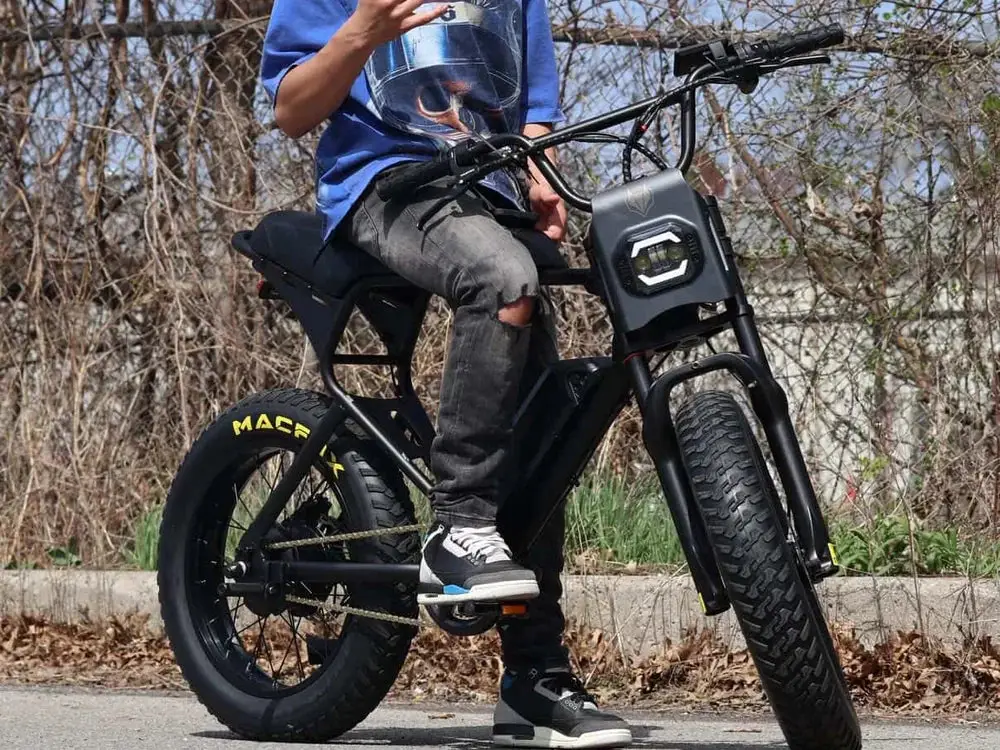
It means the bike is capable of throttle-powered movement within its operating limits. It does not describe how you must complete every ride. You may pedal because that is how you prefer to travel, or use a pedal-assist mode where the particular bike provides one. Check the model’s actual modes rather than assuming every Class 2 bike has an identical control system.
The 20 mph figure is an assistance cutoff, not a physical barrier around the bicycle. Gravity can still make a bike coast faster downhill. The motor’s cutoff does not replace braking or oblige you to travel at that speed. Traffic, visibility, posted limits, and the space around other people may require a much slower pace.
There can also be a difference between owning a throttle and being allowed to use it continuously. On NPS-managed routes, extended motor-only travel on Class 2 ebikes is restricted except where public motor vehicles are allowed. That is an NPS operating rule, not a rule for every American bike path, but it shows why route rules deserve a separate check.
Why Wattage Alone Cannot Tell You the Class
A power number does not tell you whether the motor needs pedaling input or where assistance ends. Read the motor specification, throttle behavior, assistance limit, and class label together. A listing that emphasizes peak output while leaving those details unexplained has not answered the classification question.
California requires the label to identify the class, top assisted speed, and motor wattage. Request a clear photo and the relevant manual before ordering. Do not resolve a conflict by accepting whichever description sounds most convenient. Ask the seller to explain the actual configuration, especially if the same listing advertises a faster setting.
Safety certification answers a different question again. UL 2849 addresses an ebike’s electrical system; it does not decide where the bike may be ridden. Likewise, a Class 2 label does not establish battery quality, good fit, or reliable service. Compare those on their own evidence instead of letting one badge stand in for the entire purchase decision.
Where Can You Ride a Class 2 Ebike?
Start with the current rules for the state and the actual route. California’s classification is not a nationwide guarantee: New Jersey, for example, uses its own definitions of low-speed electric bicycles and motorized bicycles. A familiar label on the sales page is useful information to bring to a local authority, not a reason to skip that authority’s rules.
Then check any park, shared path, or private property included in the trip. A national park may open a route to one ebike class but not another. Look for the specific route and permitted class, as well as operating conditions. Permission to ride one stretch of road does not establish permission for the shortcut beyond it.
For everyday trips, the Macfox X1S commuter ebike offers a concrete application of this distinction: Macfox lists it as Class 2 and specifies a thumb throttle. A buyer can check whether that control suits the way they want to ride, then match the vehicle’s actual class and configuration to local rules. The product information starts the decision; the intended route completes it.
Choose Class 2 because its permitted operation fits your needs, not because the number sounds like an upgrade. Understand the throttle, understand the assistance cutoff, and confirm access before relying on a route. That is what turns a label into useful buying information.