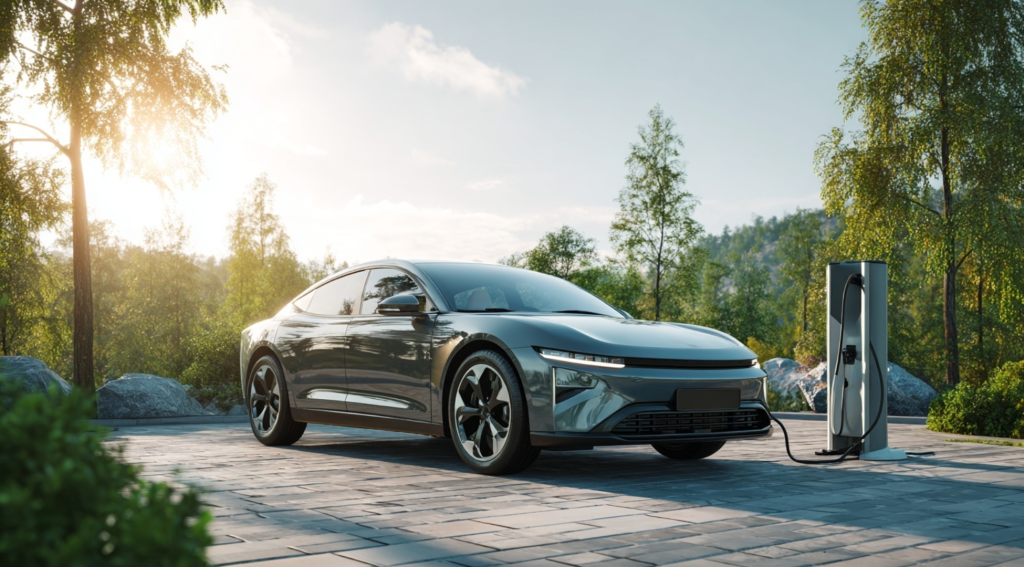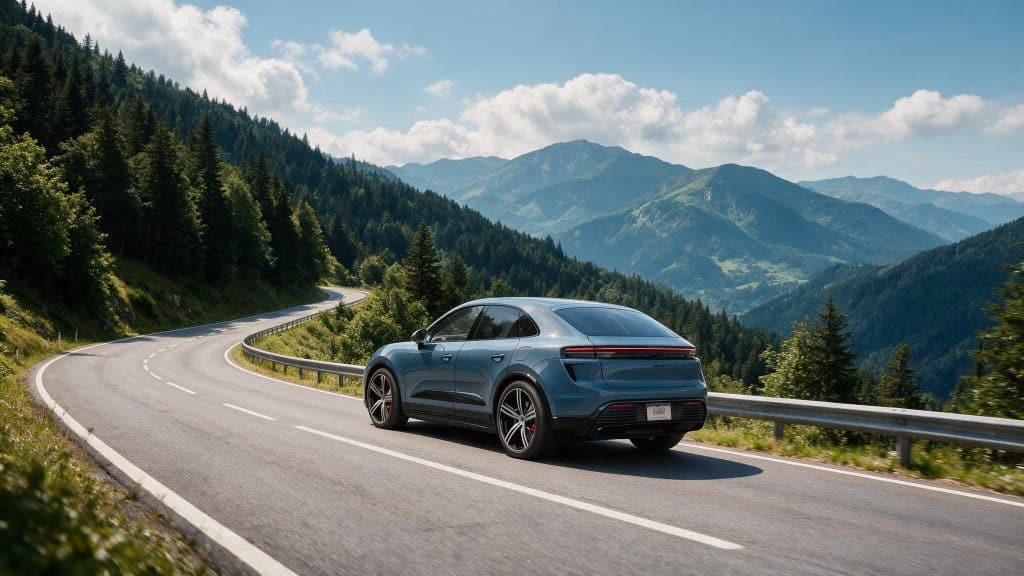
Choosing a luxury electric car gets complicated once range, charging speed, space, technology, and price all start competing for attention.
A Mercedes EV gives buyers several very different options, so knowing what actually separates each model matters before narrowing the shortlist.
If you are comparing daily usability rather than badge appeal alone, the differences become much clearer. I would look first at driving range, charging access, passenger space, body style, and ownership costs because those factors shape everyday use most.
The lineup also covers distinct needs, including commuting, family travel, long-distance comfort, and off-road capability. The sections ahead compare the current models, explain charging and ownership basics, and highlight which options make the most sense for different types of drivers.
Why is Mercedes Shifting Toward Electric Vehicles?
Mercedes-Benz is expanding its electric lineup as the global auto industry moves toward lower-emission transportation and stricter environmental standards. Electric vehicles also support the brand’s goal of combining luxury, performance, and newer vehicle technology in one platform.
Battery-powered models allow Mercedes to offer quieter driving, instant torque, regenerative braking, and advanced digital features while reducing tailpipe emissions.
Improvements in battery range, charging speed, and public charging infrastructure are also making EVs more practical for everyday drivers.
The shift does not mean every Mercedes model will become electric immediately. Instead, the company is introducing new electric platforms alongside existing gasoline and hybrid vehicles.
This approach gives buyers more powertrain choices while Mercedes continues developing batteries, charging systems, software, and electric models for future demand.
Mercedes EV Lineup: Available Models at a Glance
Before looking at each model in detail, this table gives you a quick comparison of the current Mercedes EV options based on price, range, body style, performance, and ideal use.
| Mercedes EV | Starting Price | Max EPA Range | Power | Best For |
|---|---|---|---|---|
| CLA With EQ Technology | $47,950 | Up to 374 miles | 268–349 hp | Long range, fast charging, and value |
| EQB SUV | Around $53,050 | Up to 250 miles | 188–288 hp | City driving and compact family use |
| EQE Sedan | $64,950 | Up to 308 miles | 315 hp | Comfortable daily and long-distance driving |
| EQE SUV | $64,950 | Varies by trim | Up to 617 hp | Two-row family space and flexibility |
| EQS Sedan | $99,900 | Up to 390 miles | 355 hp | Maximum range and flagship comfort |
| EQS SUV | $89,950 | Varies by trim | Varies by model | Family space and optional seven-seat capacity |
| G 580 With EQ Technology | $163,200 | Up to 239 miles | 579 hp | Electric off-road performance |
The CLA stands out for range and charging speed, while the EQB and EQE models balance practicality with luxury. The EQS range focuses on space and comfort, while the G 580 is designed for buyers who prioritize off-road capability and performance.
Mercedes EV Models: Lineup, Range, Prices, and Features
Mercedes’ EV range differs in price, range, power, charging speed, passenger space, and driving purpose. The seven points below cover the details most relevant to a new buyer.
1. Mercedes-Benz CLA with EQ Technology
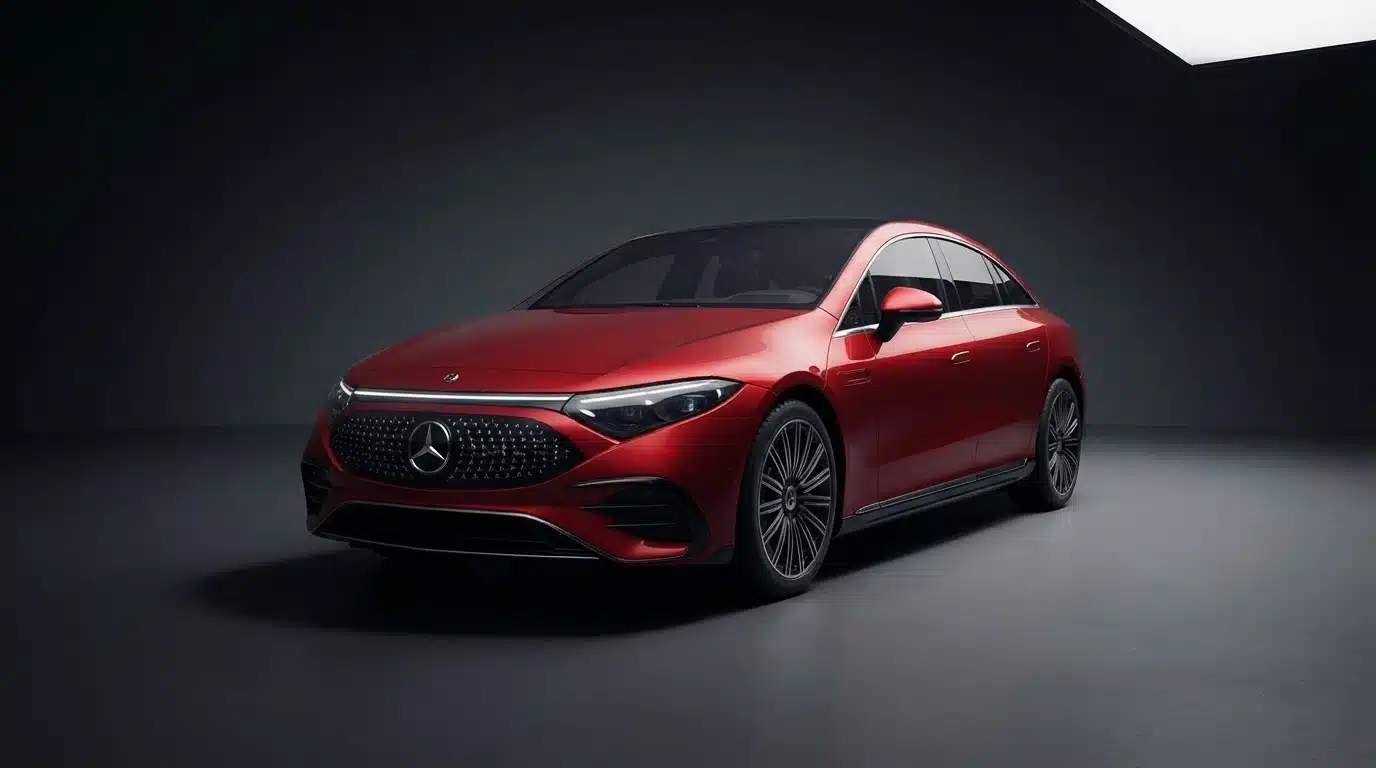
Mercedes-Benz CLA With EQ Technology is the most affordable entry into the Mercedes EV lineup and uses a newer 800-volt electric platform.
The CLA 250+ delivers up to 374 miles of EPA-estimated range, giving buyers affordable long-range options, while the CLA 350 4MATIC adds stronger performance and all-wheel drive. Both use an 85-kWh battery and support DC fast charging at up to 320 kW.
- Key specs: From $47,950, 268–349 hp, up to 374 miles of range
- Best for: Long range, quick charging, and lower entry pricing
2. Mercedes-Benz EQB SUV
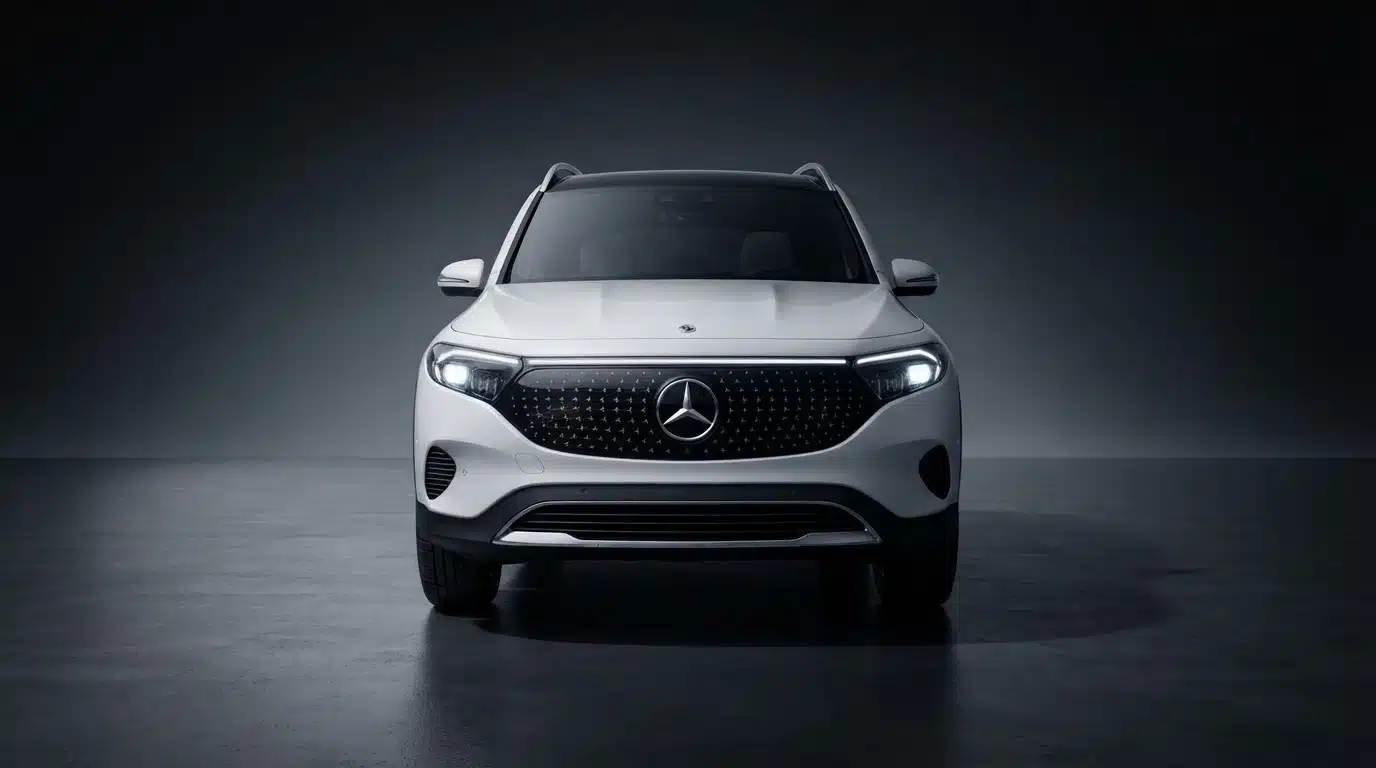
Mercedes-Benz EQB SUV is a compact electric SUV suited to city driving, smaller parking spaces, and everyday family use. The EQB 250+ focuses on efficiency, while the EQB 300 and EQB 350 add 4MATIC all-wheel drive and more power.
Its upright shape provides useful passenger room and easier cargo access without the size of larger Mercedes electric SUVs.
- Key specs: From about $53,050, 188–288 hp, up to 250 miles of range
- Best for: Compact SUV practicality and urban driving
3. Mercedes-Benz EQE Sedan
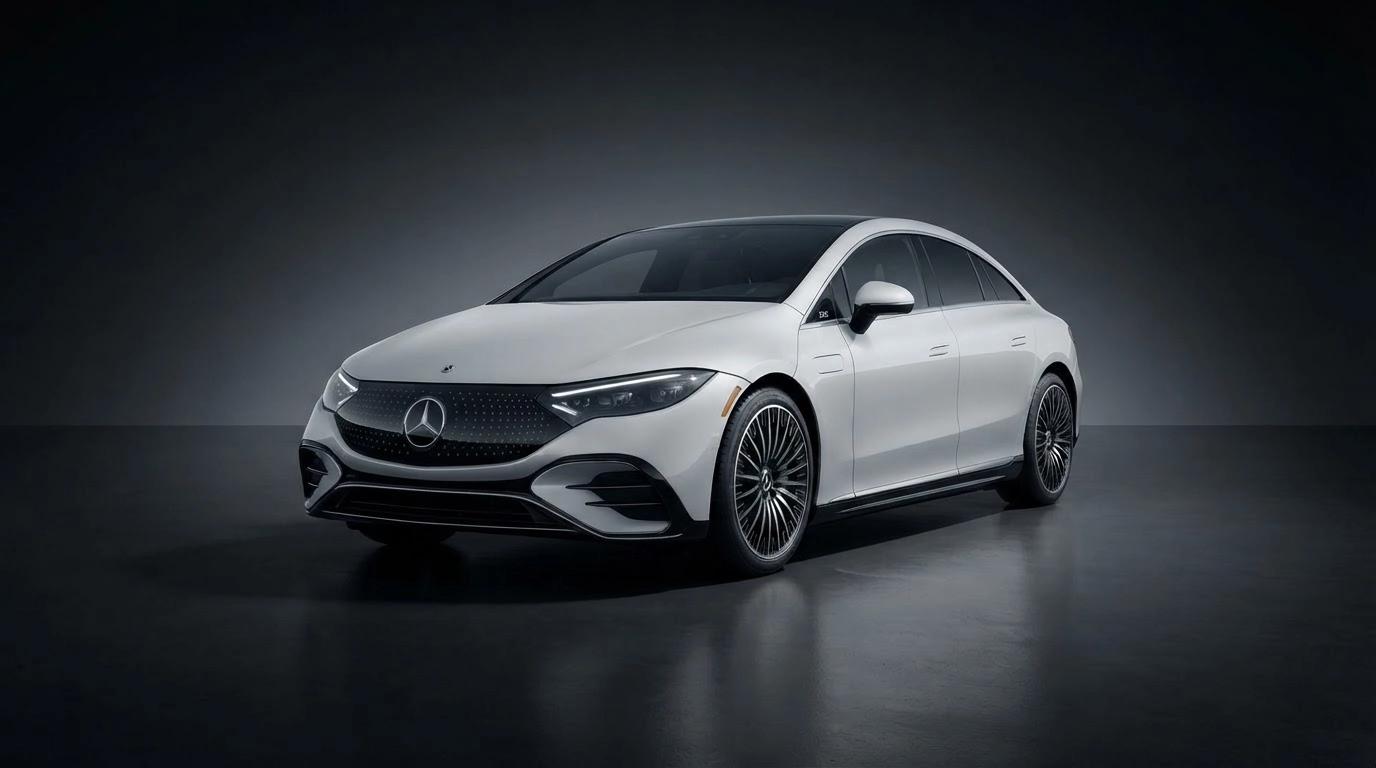
Mercedes-Benz EQE Sedan combines midsize luxury with a quiet cabin and comfort-focused driving experience.
The rear-wheel-drive EQE 320+ produces 315 hp and offers up to 308 EPA-estimated miles from its 96-kWh battery. It also supports DC fast charging at up to 170 kW, making it suitable for daily commuting as well as longer highway trips.
- Key specs: From $64,950, 315 hp, up to 308 miles of range
- Best for: Comfortable luxury sedan driving and longer trips
4. Mercedes-Benz EQE SUV
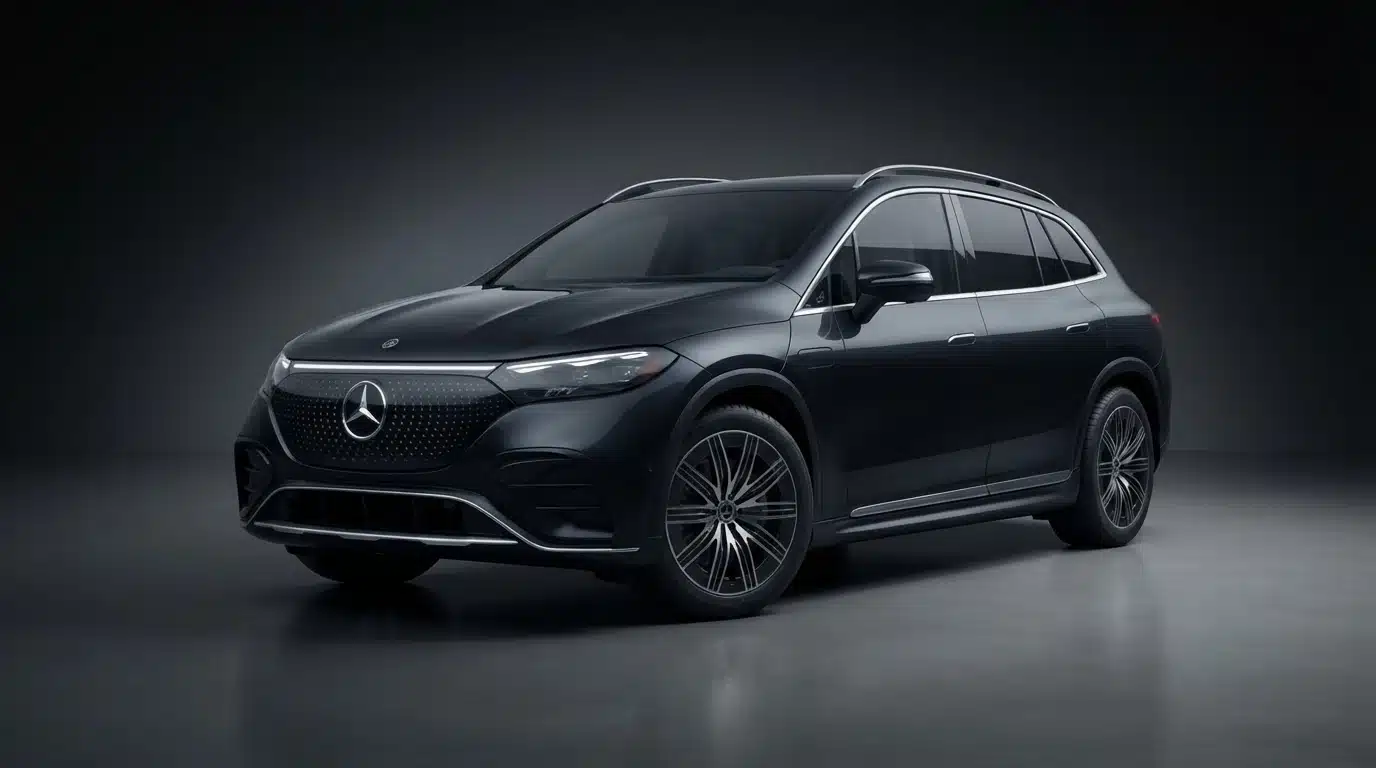
Mercedes-Benz EQE SUV brings much of the EQE Sedan’s technology and comfort into a more practical two-row SUV body. Its higher seating position, wider cargo opening, and available 4MATIC all-wheel drive make it better suited to families.
Buyers can also choose performance-focused versions, including an AMG model offering substantially more power than standard configurations.
- Key specs: From $64,950, five seats, up to 617 hp in AMG form
- Best for: Family space, easier access, and SUV versatility
5. Mercedes-Benz EQS Sedan
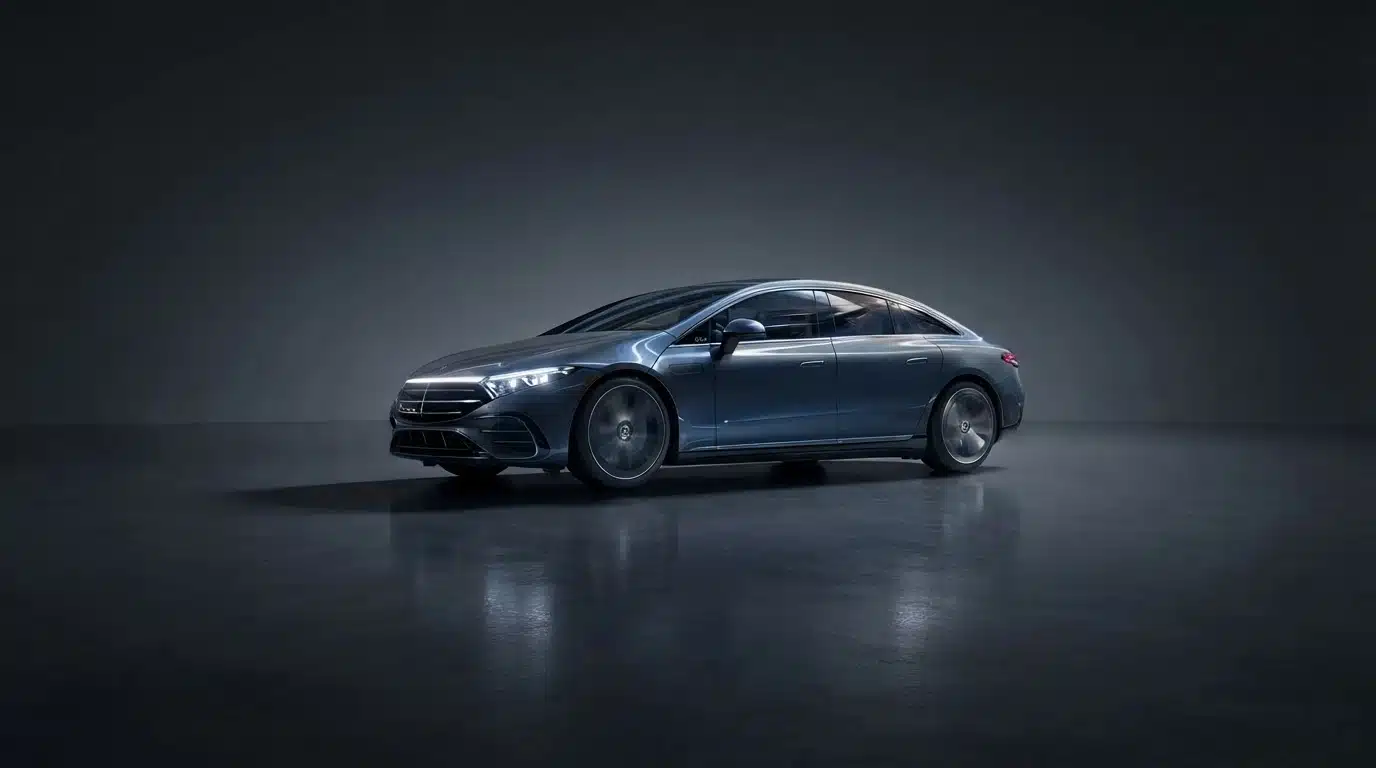
Mercedes-Benz EQS Sedan is the brand’s flagship electric luxury car, designed around long-distance comfort, cabin space, and strong driving range.
The EQS 450+ uses a 118-kWh battery and delivers up to 390 EPA-estimated miles. Its long wheelbase, five-passenger interior, generous cargo area, and comfort-focused suspension make it one of the lineup’s strongest choices for extended trips.
- Key specs: From $99,900, 355 hp, up to 390 miles of range
- Best for: Maximum range and flagship sedan comfort
6. Mercedes-Benz EQS SUV
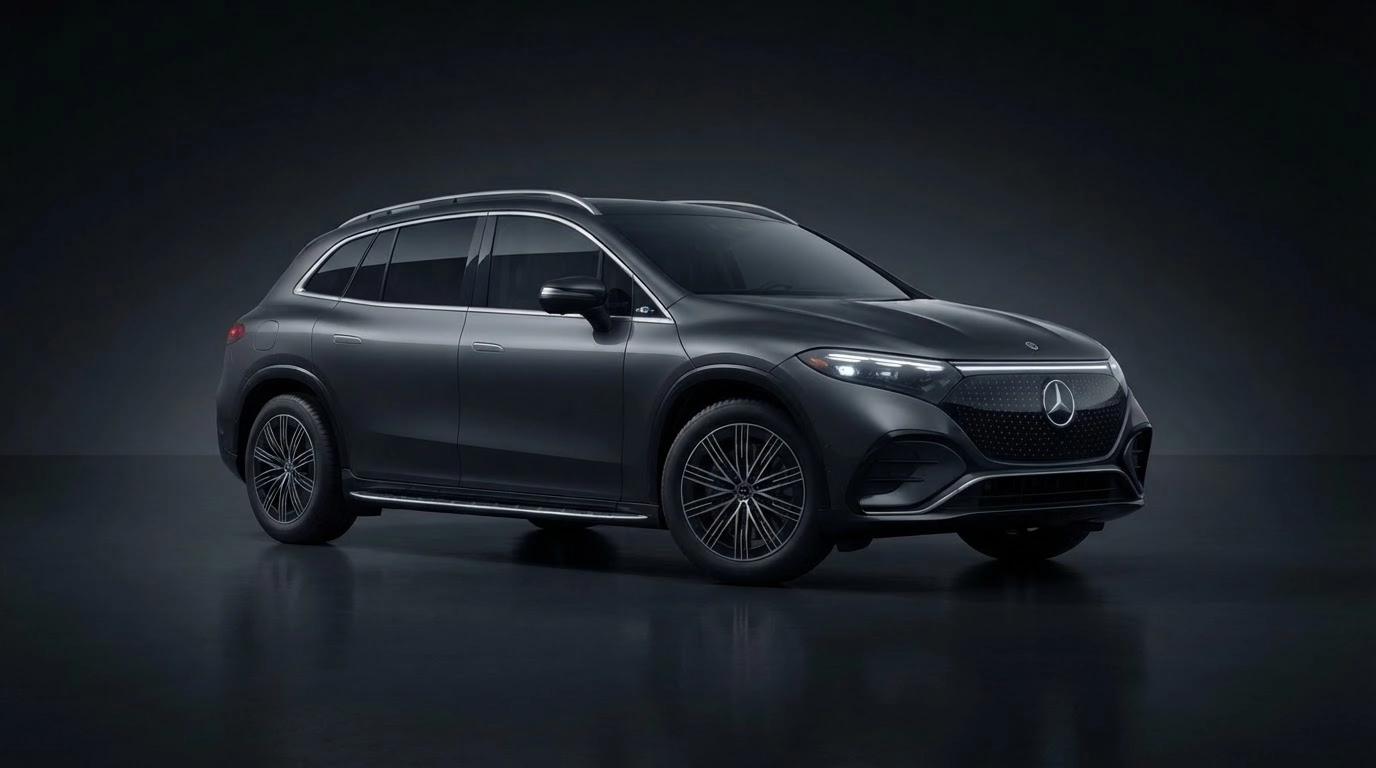
Mercedes-Benz EQS SUV combines flagship Mercedes comfort with the practicality of a larger electric SUV. The 2026 lineup includes 4MATIC all-wheel drive and offers optional third-row seating in selected configurations.
This allows some versions to carry up to seven passengers while maintaining the premium cabin, technology, and smooth driving experience expected from the EQS family.
- Key specs: From $89,950, 4MATIC AWD, seating for up to seven
- Best for: Larger families wanting luxury, space, and flexible seating
7. G 580 With EQ Technology
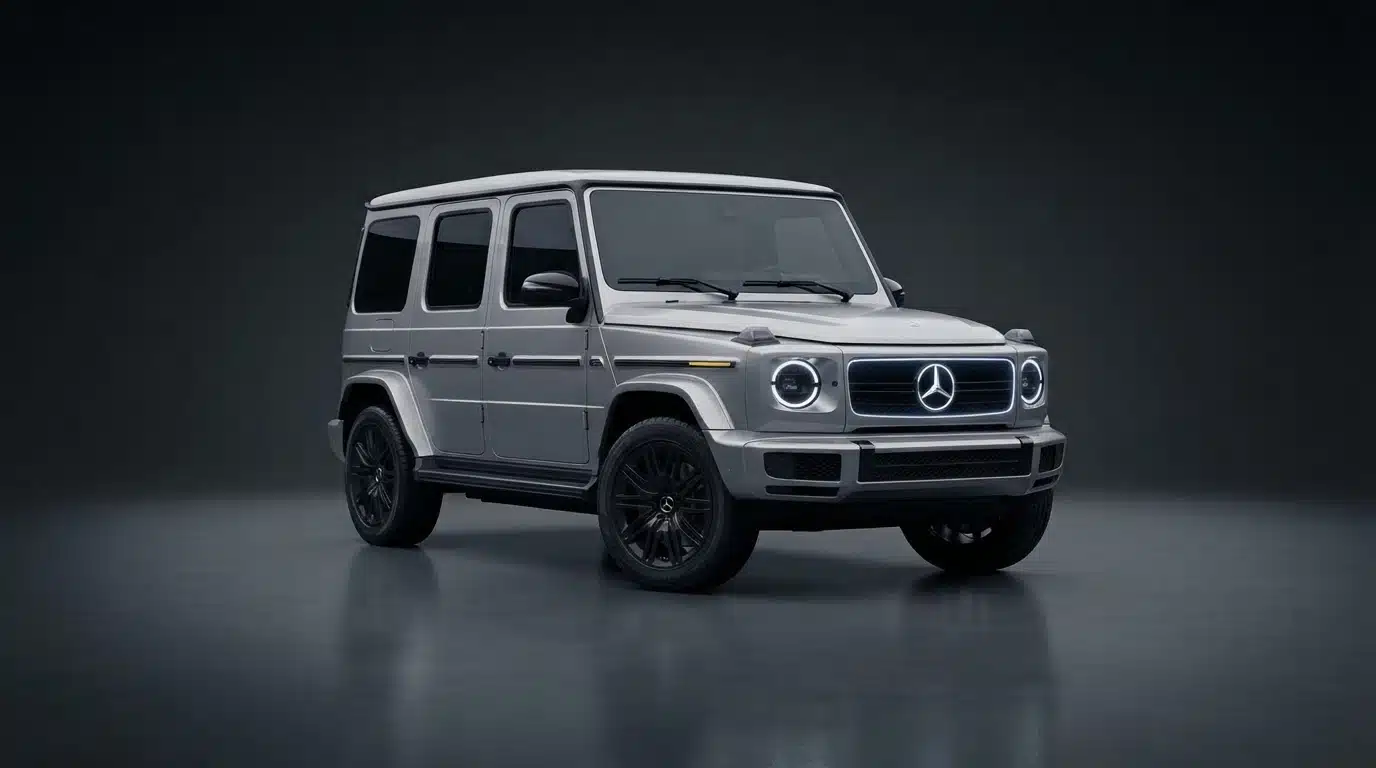
G 580 With EQ Technology brings an electric drivetrain to the G-Class while retaining its ladder-frame construction and serious off-road capability.
Four electric motors control each wheel individually and produce a combined 579 hp and 859 lb-ft of torque. Its 239-mile EPA-estimated range is lower than other Mercedes EVs, but capability and performance are the main priorities here.
- Key specs: From $163,200, 579 hp, up to 239 miles of range
- Best for: Electric off-road performance and G-Class capability
The CLA offers the best value and range per dollar, the EQB compact practicality, and the EQE model’s midsize comfort. EQS models focus on flagship luxury and space, and the G 580 serves buyers needing specialized off-road performance.
How Charging Works with a Mercedes EV
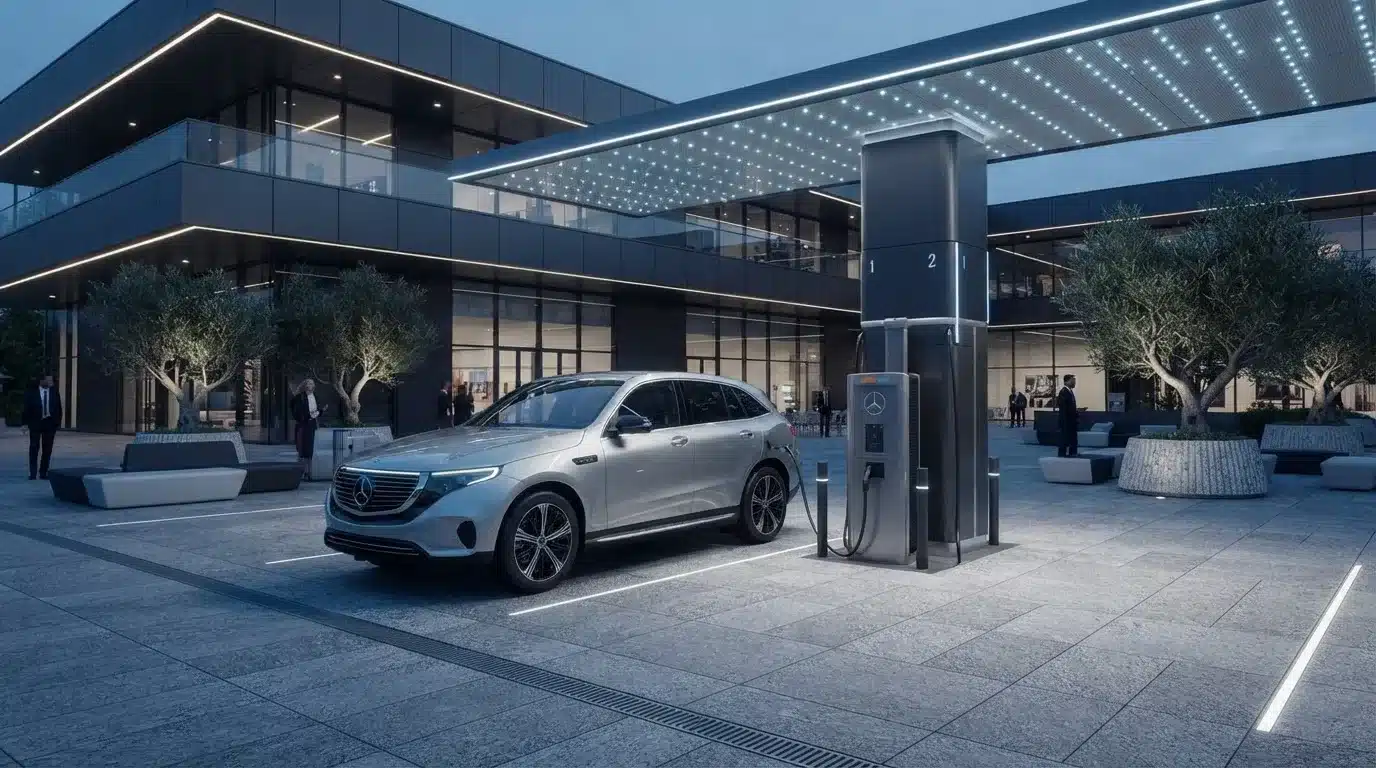
You can charge a Mercedes EV at home or at compatible public charging stations. The best option depends on your daily mileage, vehicle model, battery level, and access to nearby charging infrastructure.
- Level 2 home charging works well for regular overnight charging.
- Level 1 charging is slower and better suited as a backup option.
- Public DC fast chargers are useful during longer trips.
- Charging speed varies by model, battery temperature, charge level, and charger output.
- Newer Mercedes EVs support CCS1 or NACS fast-charging connections, depending on the model.
- The CLA with EQ Technology can charge from 10 to 80 percent in as little as 22 minutes at a compatible charger.
MB.CHARGE Public can also help drivers find compatible charging stations, part of a broader national charging infrastructure growth, while the Mercedes-Benz app supports route planning and charging management.
Mercedes-Benz EV Technology and Smart Features
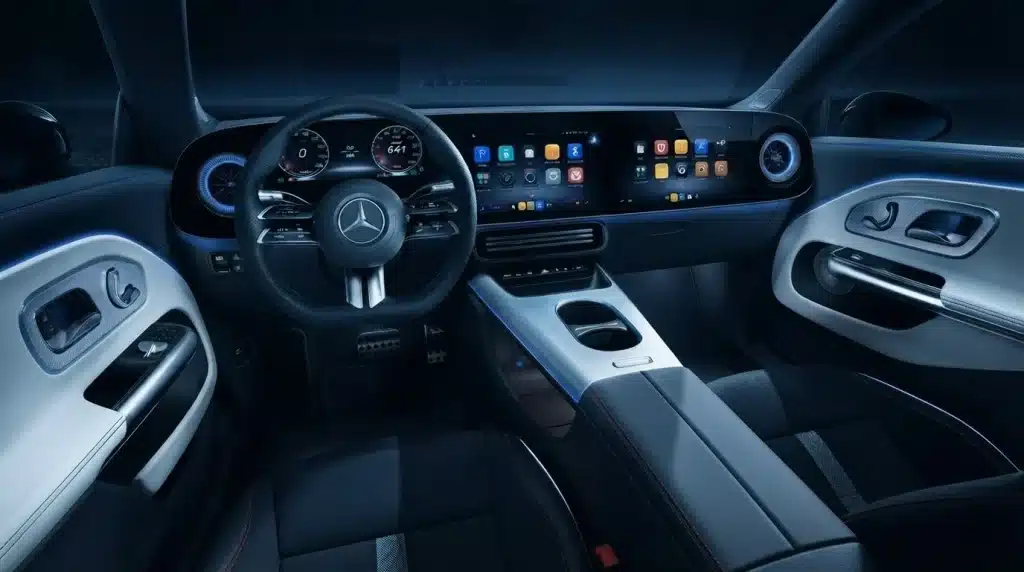
Mercedes EVs combine electric-driving tools with the brand’s comfort, infotainment, and assistance technologies, helping drivers manage navigation, efficiency, traction, charging, and everyday vehicle controls.
- MBUX and Electric Intelligence: Manage infotainment, EV information, navigation, battery-aware route planning, and suitable charging stops. Understanding how electric drivetrains work helps explain why this data matters for range planning.
- Regenerative Braking and ECO Assist: Recover energy during deceleration and provide efficiency guidance based on driving conditions and route data.
- 4MATIC and Driver Assistance: Available all-wheel drive improves traction, while assistance systems can support parking, highway driving, and routine vehicle control.
- MBUX Hyperscreen and MB.OS: Selected EQ models offer the wide Hyperscreen display, while newer models such as the CLA introduce updated software and infotainment architecture.
Feature availability varies by model, trim, package, and model year, so check the exact vehicle specification before assuming every Mercedes EV includes the same technology.
Best Mercedes EV for Different Buyers
Different Mercedes EVs suit different priorities, from affordable daily driving and family practicality to flagship luxury and off-road performance. Matching the model to your needs makes the lineup easier to compare.
| Buyer Type | Recommended Model | Why It Fits |
|---|---|---|
| Daily commuters | CLA With EQ Technology | Long range, fast charging, and the lowest starting price |
| City and small-family buyers | EQB SUV | Compact dimensions, useful passenger space, and easier parking |
| Luxury sedan buyers | EQE Sedan | Comfortable ride, strong range, and midsize proportions |
| Family SUV buyers | EQE SUV | Higher seating position, flexible cargo space, and available AWD |
| Long-distance luxury buyers | EQS Sedan | High driving range, spacious cabin, and flagship comfort |
| Larger families | EQS SUV | More interior space and optional seating for up to seven |
| Off-road and performance buyers | G 580 With EQ Technology | Four-motor AWD, strong torque, and specialized off-road capability |
The best Mercedes EV depends on your budget, passenger needs, regular driving distance, and preferred body style. Comparing those priorities first can quickly narrow the lineup to the most suitable model.
Mercedes EV Ownership: Costs, Maintenance & Support
Owning a Mercedes EV can be simpler than maintaining a gasoline vehicle because it requires no oil changes, spark plugs, or exhaust-system servicing. However, owners still need regular tire replacements, brake-fluid checks, cabin-filter changes, suspension inspections, software updates, and general servicing.
Charging expenses depend on electricity rates, driving habits, battery size, and whether you use home or public chargers. A home Level 2 charger is typically the most convenient and cost-effective option for daily driving.
Mercedes-Benz includes a New Vehicle Limited Warranty and separate high-voltage battery coverage, with terms varying by model and year. Eligible vehicles may also receive Mercedes Roadside Assistance, including towing and flat-tire support.
When calculating ownership costs, consider insurance, depreciation, tires, charging equipment, electricity, optional features, and potential repairs.
Tips for Choosing the Right Mercedes EV
Choosing the right Mercedes EV is easier when you focus on daily driving needs, space, charging access, and budget.
- Check daily range: Choose enough range for commuting and regular longer trips.
- Review charging access: Consider home Level 2 charging and nearby fast chargers.
- Compare body styles: Decide whether a sedan, SUV, or off-road model fits your needs.
- Consider total costs: Include price, insurance, charging, tires, and maintenance.
- Check passenger space: Compare seating and cargo capacity for your routine.
- Take a test drive: Assess comfort, visibility, performance, and cabin technology.
Comparing range, space, charging, and overall cost can help you quickly narrow the Mercedes EV lineup to the right model.
Mercedes EVs vs. Other Electric Vehicles
Comparing Mercedes EVs with other premium electric vehicles helps show how each lineup differs in comfort, performance, technology, range, and driving feel.
| Model/Lineup | Key Strengths | Best For |
|---|---|---|
| Mercedes EVs | Luxury cabins, comfort, MBUX technology | Premium comfort and model variety |
| BMW i Series | Strong performance, sporty handling | Drivers wanting a more dynamic feel |
| Audi e-tron Models | Refined cabins, balanced ride, AWD | Comfort and all-weather driving |
| Porsche EVs | Sharp handling, strong performance | Performance-focused buyers |
| Tesla Models | Software, charging access, strong range | Technology and convenience |
| Lucid EVs | Long range, efficiency, spacious cabins | Range-focused luxury buyers |
Note: Mercedes EVs focus mainly on comfort, luxury, and technology, while rivals may lead in performance, range, charging access, or value.
Final Thoughts
Mercedes now gives you several electric options, from practical daily drivers to luxury sedans, family SUVs, and the off-road-focused G 580.
If I were comparing the lineup, I’d start with range, charging access, passenger space, and total cost before looking at performance extras.
The CLA stands out for value and efficiency, while EQE and EQS models focus more on comfort, space, and premium features. Your home-charging setup and regular driving distance also matter because they affect everyday convenience.
A Mercedes EV can make sense when its range, body style, and ownership costs match how you actually drive. Check current specs, compare local inventory, and take a test drive before deciding which model fits you best.
Frequently Asked Questions
Can Mercedes Electric Vehicles Use Tesla Superchargers?
Some Mercedes EVs can access Tesla Superchargers through NACS compatibility or an approved adapter. Access depends on model year, connector support, station type, and Mercedes-Benz charging updates.
Does Mercedes Still Use the EQ Name for Electric Vehicles
Yes. Mercedes-Benz still uses EQ names for models including the EQB, EQE, and EQS, although its naming structure may change as the electric range develops.
Do Mercedes Electric Cars Qualify for Tax Credits or Incentives?
Eligibility depends on current federal, state, and local rules, including vehicle requirements, price limits, buyer income, location, and purchase timing; confirm requirements before signing an agreement.
How Long Can a Mercedes EV Battery Last?
Battery life depends on use, climate, charging habits, and other conditions. Warranty coverage reaches up to 10 years or 155,000 miles on some EQE and EQS models.