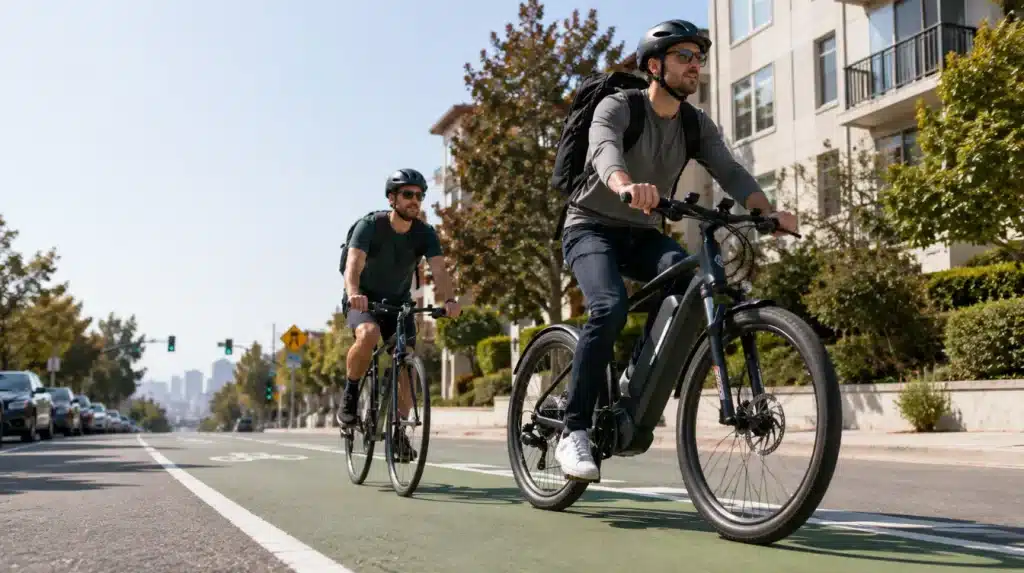
A five-mile commute can feel entirely different when hills, traffic lights, and a headwind enter the route.
You may see 20 mph or 28 mph on a product page, but those figures do not show the pace you will maintain from door to door.
So, how fast do electric bikes go during ordinary riding? Under the common U.S. three-class system, motor assistance usually ends at 20 or 28 mph, while real-world averages are lower.
Your result depends on terrain, battery charge, rider effort, cargo, traffic, and local rules. The sections below explain assisted limits, everyday speed, conventional-bike comparisons, trip times, and the class that may suit your regular routes.
How Fast Can an E-Bike Really Go?
Under the common U.S. three-class system, Class 1 and Class 2 e-bikes stop providing assistance at 20 mph. Class 3 assistance continues until 28 mph.
These limits mark the point where motor support ends, not the bicycle’s absolute top speed. A rider can continue pedaling beyond the cutoff or travel faster while coasting downhill. The motor does not apply the brakes when the limit is reached.
Some machines marketed as e-bikes are advertised at 30 to 50 mph or more. Depending on their design and local law, they may be treated as mopeds, motorcycles, or off-road vehicles instead of standard e-bikes.
For daily use, average moving speed and complete-trip time matter more than the highest figure shown on the display. Traffic and terrain often prevent riders from remaining near the assisted limit.
Electric Bike Speed in Daily Use
Road conditions determine how closely a rider stays near the motor cutoff. Moving average counts only time spent riding, while complete-trip average includes traffic lights, crossings, parking, and other stops.
No single national average represents every rider or route. The table uses planning ranges based on common assistance limits and ordinary route conditions, so the figures should not be treated as measured averages for every location.
| Riding Situation | Estimated Speed | Main Influence |
|---|---|---|
| Casual conventional-bike ride | 10 to 15 mph | Rider fitness, terrain, and traffic |
| Low-assist e-bike leisure ride | 10 to 15 mph | Relaxed pedaling and lower assistance |
| Urban e-bike commute | 12 to 20 mph | Traffic, signals, and frequent stops |
| Open-road Class 3 ride | 20 to 25 mph | Clear pavement and fewer interruptions |
| Steep e-bike climb | 8 to 18 mph | Gradient, rider weight, and motor output |
| Gravel or mountain trail | 8 to 15 mph | Loose surfaces, turns, and obstacles |
On flat pavement, the speed difference between a conventional bicycle and a low-assist e-bike may be small. Motor help becomes more useful on hills and windy routes because it allows the rider to maintain a useful pace with less effort.
If most of your riding happens in busy city streets, it can also help to compare electric bikes and scooters for urban travel, since portability, comfort, and trip distance often matter as much as speed.
A 2016 University of Colorado Boulder study of 20 previously sedentary commuters found an average e-bike riding speed of 12.5 mph, showing that everyday riding often stays well below the 20 mph assistance limit.
At 12 mph, a 5-mile ride takes about 25 minutes and 10 miles about 50 minutes. At 18 mph, those trips take roughly 17 and 33 minutes. At 24 mph, they drop to about 13 and 25 minutes. Actual travel time still depends on traffic, stops, terrain, and the e-bike’s class,
How E-Bike Classes Set Assisted Speed
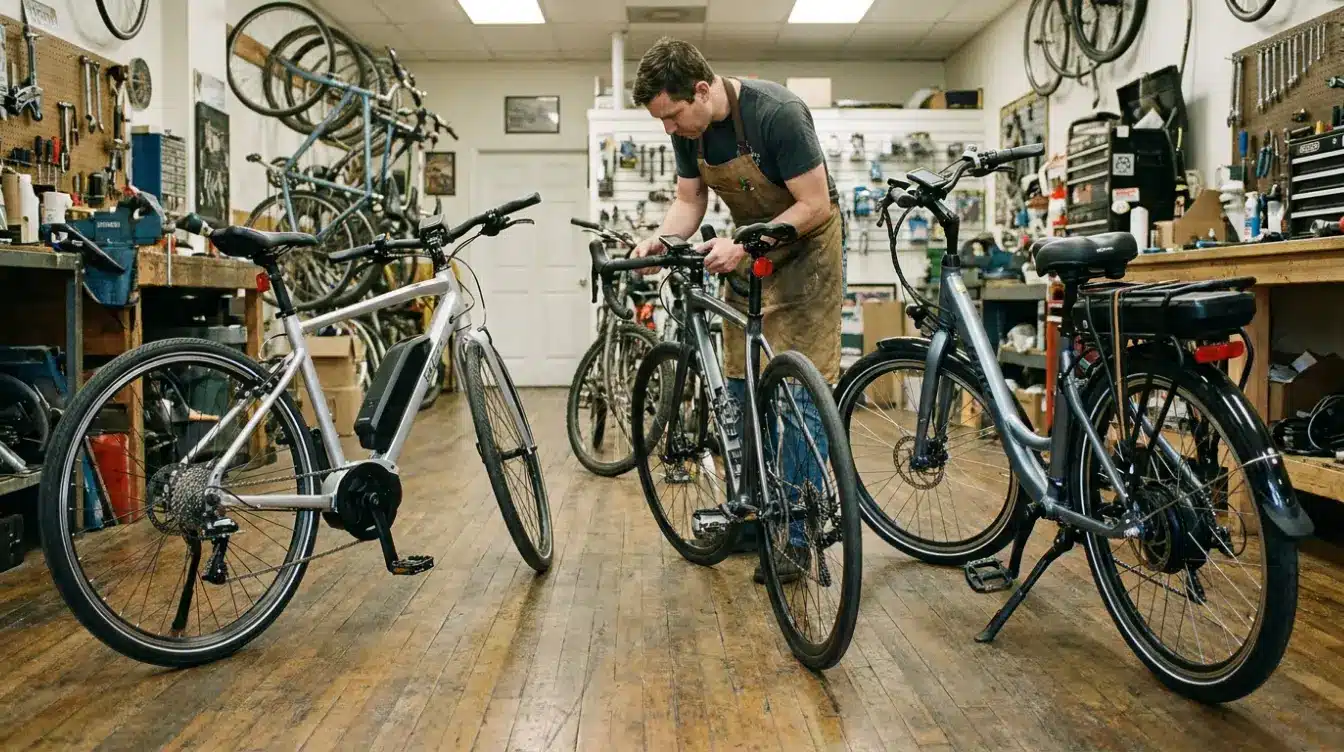
The three-class system separates models by motor operation and assistance cutoff. It helps riders compare how each bicycle delivers power before checking local access rules.
The National Park Service uses the common definitions in its regulations. Class 1 supplies motor help only while the rider pedals. Class 2 can propel the bicycle through a throttle, while Class 3 provides assistance only during pedaling.
A class number explains how the motor operates, but it does not provide automatic access to every road, trail, or shared path. Land managers and transportation authorities may restrict specific classes.
Check the permanent label before buying. Depending on state requirements, it may identify the class number, motor rating, and assisted speed.
Classification answers how and when the motor supplies power. It cannot predict acceleration or climbing performance because those results also depend on the bicycle’s components and riding conditions.
What Changes an Electric Bike’s Speed?
Two e-bikes in the same class can feel very different. Factors like motor power, battery capacity, weight, and terrain affect acceleration, climbing ability, energy use, and the speed a rider can maintain, even when the assistance cutoff stays the same.
1. Motor Power and Torque
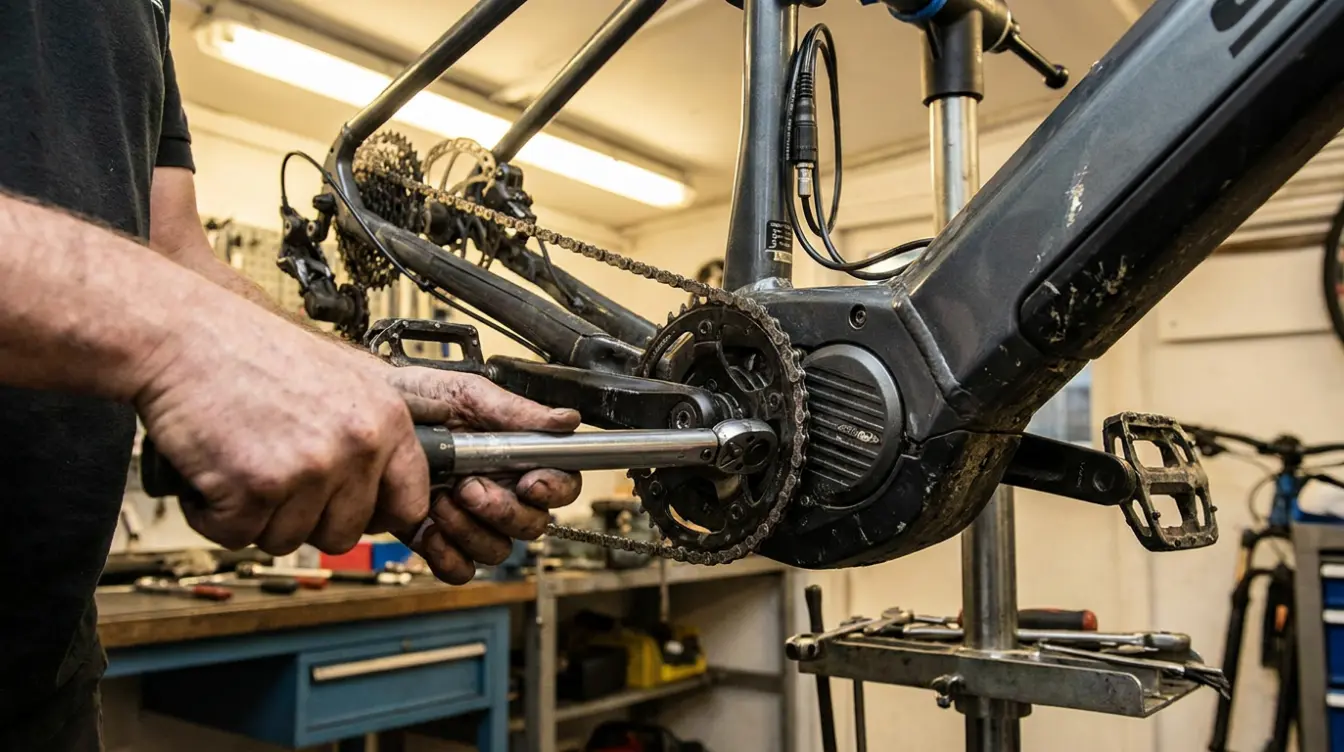
Motor wattage describes rated power, while torque describes turning force. Under similar conditions, a higher-power system may accelerate more quickly, but wattage alone cannot predict performance.
Controller limits, voltage, wheel size, motor design, and available torque also affect starts and climbing. Manufacturers may measure power differently, making direct wattage comparisons less reliable.
2. Battery Charge and Temperature
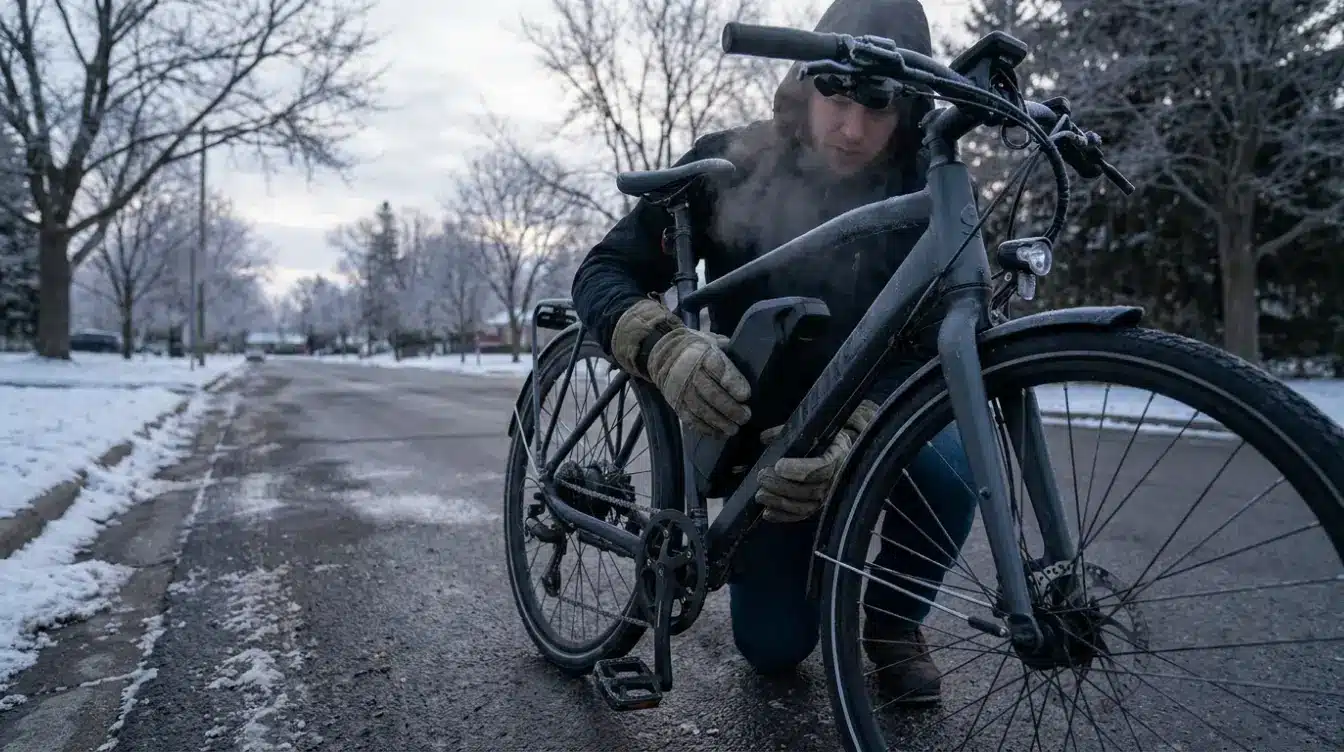
A full, healthy battery usually supplies steadier power than an aging or nearly depleted pack. Performance may soften as the charge falls, particularly during climbing or hard acceleration.
Cold temperatures can temporarily reduce battery output and riding distance. Storage conditions, charging history, and cell health influence how quickly a battery loses its original capacity.
3. Rider Weight and Cargo
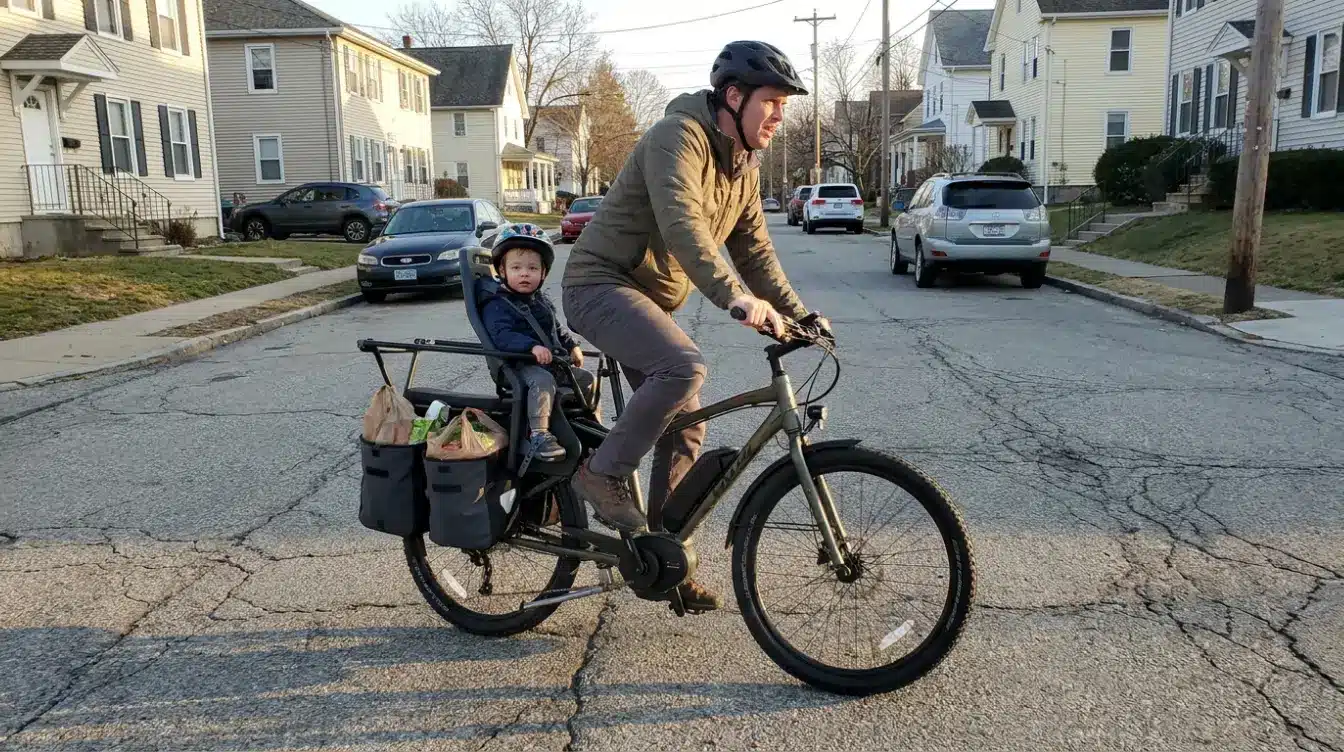
The motor must move the combined weight of the bicycle, rider, bags, child seat, and other cargo. Added load can slow acceleration and climbing while increasing battery consumption.
Steady pedaling helps the motor handle extra weight. Cargo placement also matters because an unbalanced load can make steering and braking harder at higher speeds.
4. Roads, Hills, and Mountain Trails
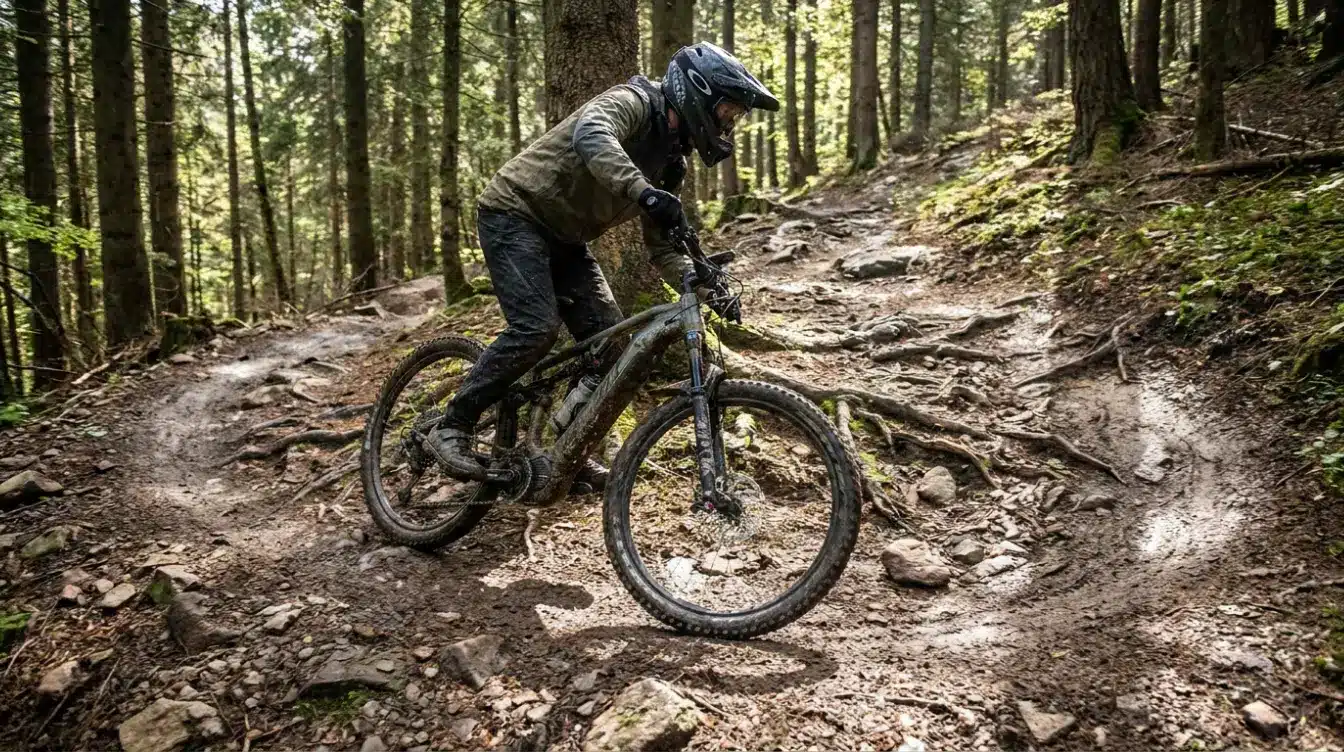
Smooth pavement supports a higher pace than loose gravel, sand, mud, or a twisting trail. Steep gradients place more demand on the motor and can reduce climbing speed.
Electric mountain bikes commonly provide assistance up to 20 mph, but trail riders often travel more slowly. Rocks, roots, sharp turns, limited visibility, surface grip, and other trail users make control more important than top speed.
5. Tires, Wind, and Rider Input
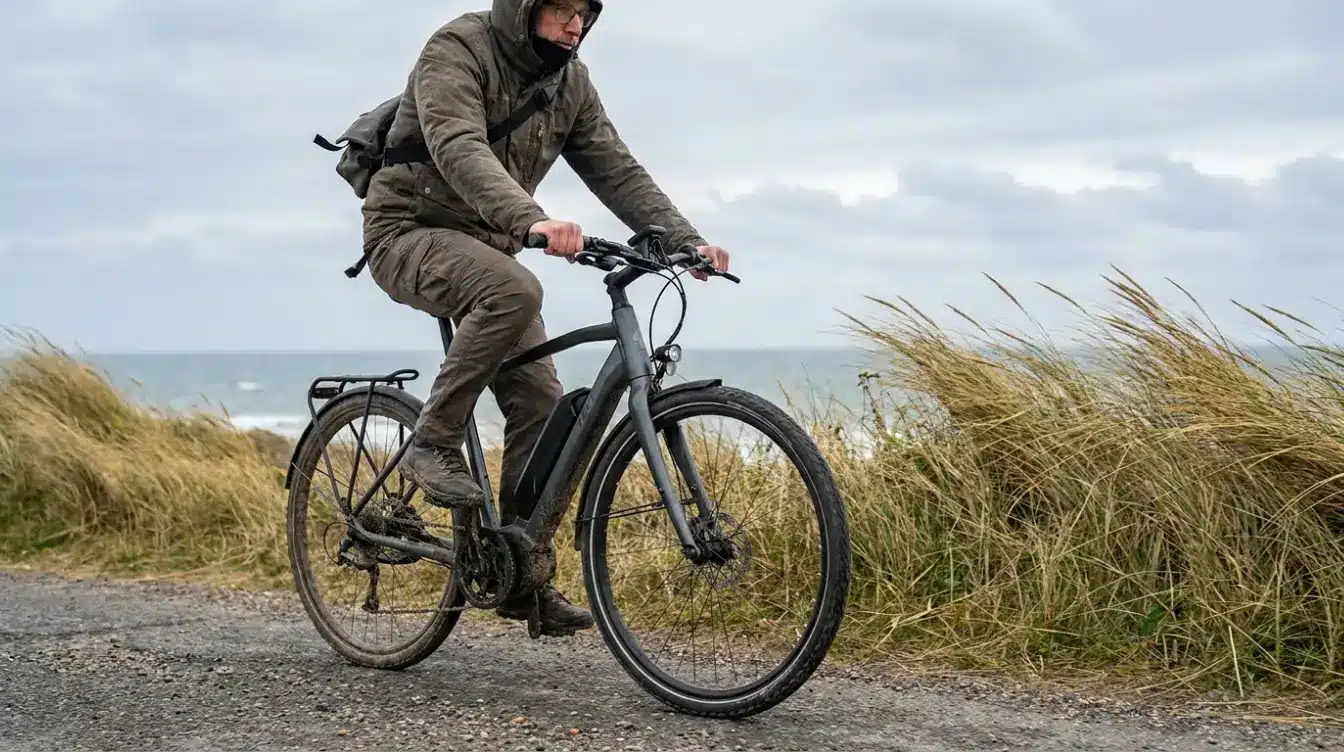
Underinflated tires, aggressive tread, soft rubber, strong headwinds, and an upright riding position can increase resistance. Keeping tires within the manufacturer’s recommended pressure range reduces wasted energy.
Cadence and gear choice determine how much rider power joins the motor’s output. Poor gear selection can slow acceleration even when enough motor power remains available.
Each factor changes how hard the system must work. That added demand becomes important when estimating the battery distance available at higher speeds.
Faster E-Bike Speeds and Battery Range
Once powered travel reaches 30 mph or more, battery use, braking, and legal classification require closer attention. The vehicle begins operating at speeds more commonly associated with mopeds.
Reaching 30 mph is technically possible on some specialist machines. Sustained speeds of 40 or 50 mph generally require a high-powered vehicle intended for registered road use, private land, or permitted off-road riding.
If the motor continues supplying power above 28 mph, the vehicle may fall outside the common three-class system. It could be regulated as a moped, motor-driven cycle, motorcycle, or another type of motor vehicle.
Higher speeds consume battery power more quickly because air resistance rises sharply. The motor must supply more power to maintain that pace, even on a level road.
| Riding Style | Relative Energy Use | Likely Effect |
|---|---|---|
| Moderate pace with steady pedaling | Lower | Longer riding distance |
| High assistance on open roads | Higher | Shorter riding distance |
| Repeated hard acceleration | High | Faster battery drain |
| Steep climbing with cargo | Very high | Reduced pace and distance |
A slightly lower cruising speed can preserve battery power during a long ride. Reduced distance is only one tradeoff because greater motor output may also change the vehicle’s legal status.
E-Bike Speed Limits and License Rules
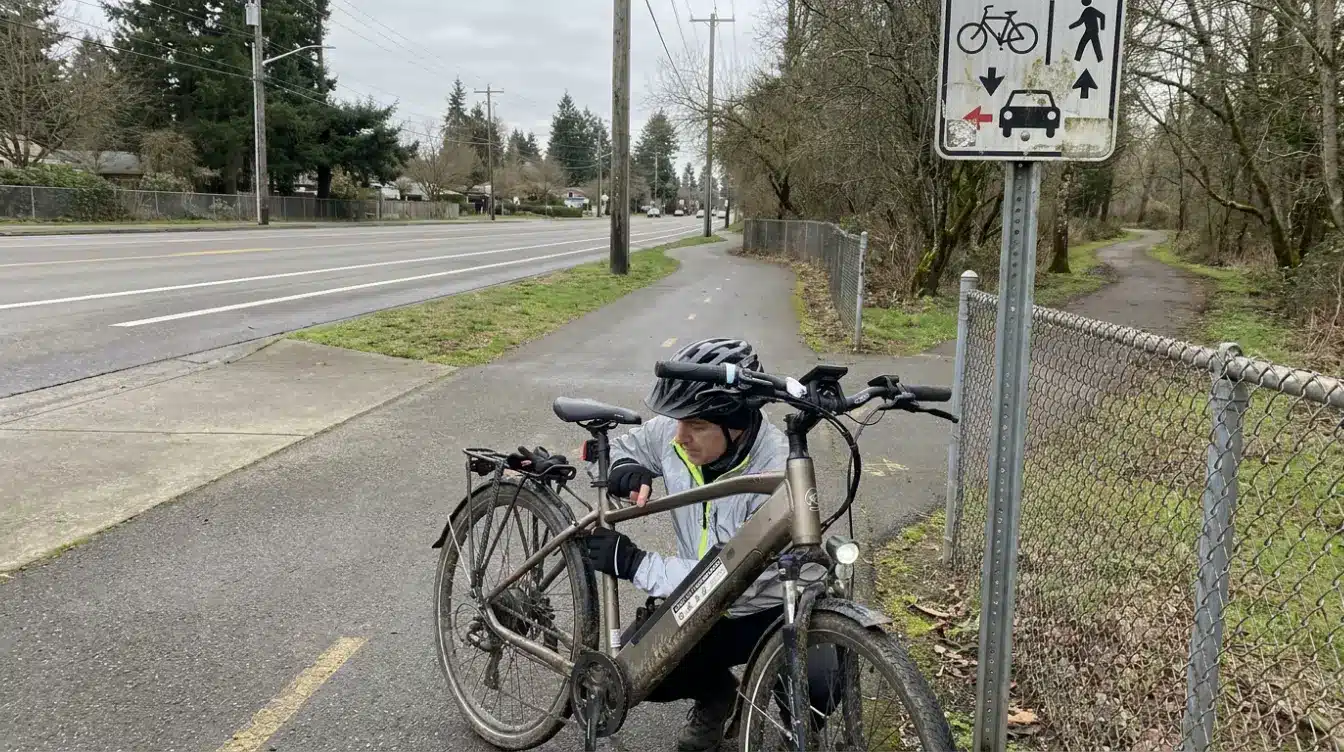
No single operating rule covers every American road and trail. State definitions, local laws, land managers, and path authorities can set different requirements.
In California, qualifying Class 1, Class 2, and Class 3 bicycles can be ridden on public streets without registration or a driver’s license, according to the California Air Resources Board. Helmet, rider-age, throttle, and path-access rules still apply.
Federal consumer-product requirements and state operating laws serve different purposes. The Consumer Product Safety Commission sets bicycle requirements covering assembly, braking, reflectors, protrusions, and structural integrity. States control road use, rider ages, helmets, registration, licensing, and access.
A vehicle that exceeds permitted motor or assistance limits may be classified differently. Removing a speed limiter may also change its classification or make it unlawful on roads and paths where standard e-bikes are permitted. Before riding, check:
- State vehicle definitions
- City and county rules
- Helmet and minimum-age requirements
- Street, bike-lane, and trail access
- Motor wattage and class labels
- Rules for throttles and modified models
Confirm the requirements for every regular route, especially when crossing city or state lines. Once access is confirmed, the remaining question is which pace can be controlled safely.
Choosing a Safe Electric Bike Speed
The right assisted limit depends on the route rather than the largest advertised number. A suitable pace leaves enough room to brake, turn, and respond to traffic or changing surfaces.
Start by considering distance, road type, hills, traffic, shared-path use, and preferred effort. If your regular route includes trains, buses, or limited storage, a foldable electric bike for daily commuting may also be worth considering. These needs can point toward a suitable starting class.
| Main Use | Suitable Starting Point |
|---|---|
| Casual rides and paved paths | Class 1 |
| Throttle-assisted city trips | Class 2 |
| Longer road commutes | Class 3 |
| Permitted mountain trails | Commonly Class 1 |
| Private-land performance | Specialist electric two-wheeler |
The National Highway Traffic Safety Administration reports that drivers may misjudge an e-bike rider’s pace. Working lights, visible clothing, and predictable lane positioning can help other road users notice the rider sooner.
Drivers may still underestimate arrival speed, so approach intersections prepared to slow or stop. Braking distance increases as pace rises, particularly on wet pavement, gravel, or loose dirt.
Practice acceleration, turning, and firm braking in a quiet area before entering traffic. This test reveals handling and stopping limits that product specifications cannot show.
Controlled practice offers a better indication of suitability than the advertised maximum alone. It also prepares the rider for traffic, sharp turns, and sudden stops.
The Final Pedal
An e-bike earns its place when it saves time without making the ride harder to control.
When someone asks, “how fast do electric bikes go,” the useful answer is not simply 20 or 28 mph. A rider facing long hills may value steady motor help, while stop-heavy streets can erase much of the difference between classes.
Check local rules, estimate complete-trip time, and keep enough battery for wind, cargo, or an unexpected detour. Then select a class that suits the roads and paths you actually use, not the largest figure on a product page.
If you already own an e-bike, share your average speed, route type, and class in the comments so other riders can compare real results.
Frequently Asked Questions
How Accurate Is the Display Reading?
Display accuracy depends on wheel circumference, sensor placement, tire size, and controller settings. Compare it with a reliable GPS reading on a straight, open route, then check the manufacturer’s calibration steps if the gap remains.
Can the Motor Overheat During a Long Climb?
A motor can become hot during a long climb, especially with heavy cargo, high assistance, or warm weather. Some systems reduce assistance for protection. Stop if output drops sharply, and follow the manufacturer’s temperature instructions.
Why Does Motor Assistance Feel Uneven Near the Cutoff?
Assistance can feel uneven when speed repeatedly moves above and below the programmed cutoff. Cadence sensors, torque sensors, controller programming, gear choice, and minor speed changes may cause pulsing instead of one clearly felt power reduction.
Can Regenerative Braking Extend Riding Distance?
Some direct-drive hub motors support regenerative braking, but the recovered energy is usually modest because bicycles are relatively light. Most models lack this feature, so riders should not expect it to add substantial distance between charges.