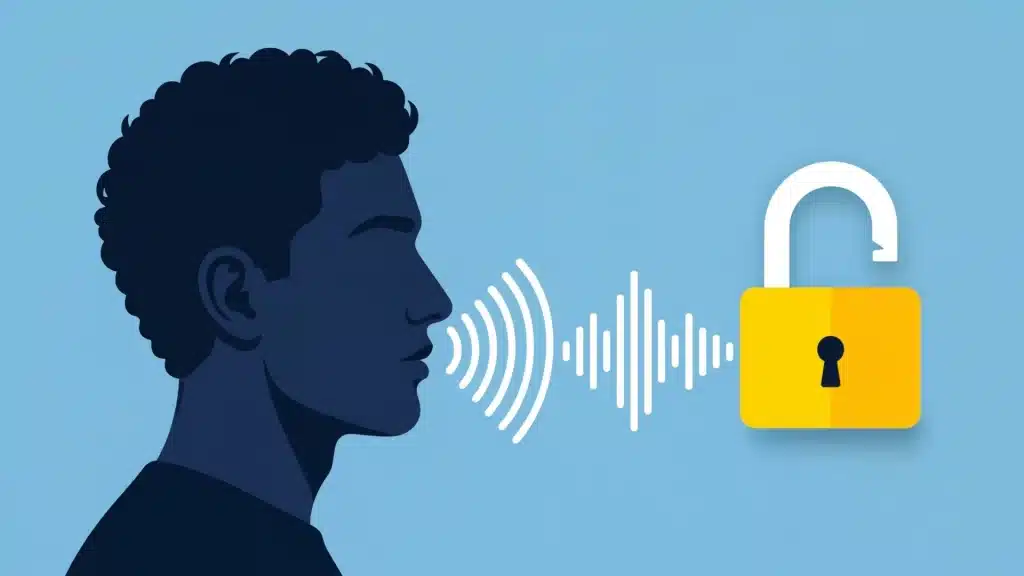
A voice can unlock more than conversation. It can unlock identity, trust, and access in seconds.
Across banking calls, smart devices, and even high-security events, systems are now learning to recognize people not by what gets typed or tapped, but by how speech itself is formed.
Subtle traits like rhythm, tone, and vocal structure turn every human voice into a unique biometric signature. Modern security challenges have made passwords, PINs, and even QR codes easier to exploit than ever.
As identity fraud grows more sophisticated, a shift is happening toward authentication that feels invisible yet highly precise. Voice-based identity verification is quickly becoming one of the most practical answers.
What is Voice Biometrics?
Voice biometrics refers to a technology that identifies or verifies a person based on the unique characteristics of their voice.
Every person’s voice is biologically distinct because the size and shape of the vocal tract, larynx, and articulators such as the tongue, palate, and lips differ from person to person.
These physical differences produce a voice pattern that is as individual as a fingerprint, which is used in biometric systems.
A voiceprint is created by analyzing vocal traits like pitch, cadence, resonance, pronunciation, and rhythm. These traits are converted into a mathematical model instead of storing audio recordings.
Each voiceprint functions like a digital signature. When a person speaks again, the system compares the live voice with the stored model to determine whether both belong to the same speaker.
How Voice Biometrics Works (Step-by-Step Process)
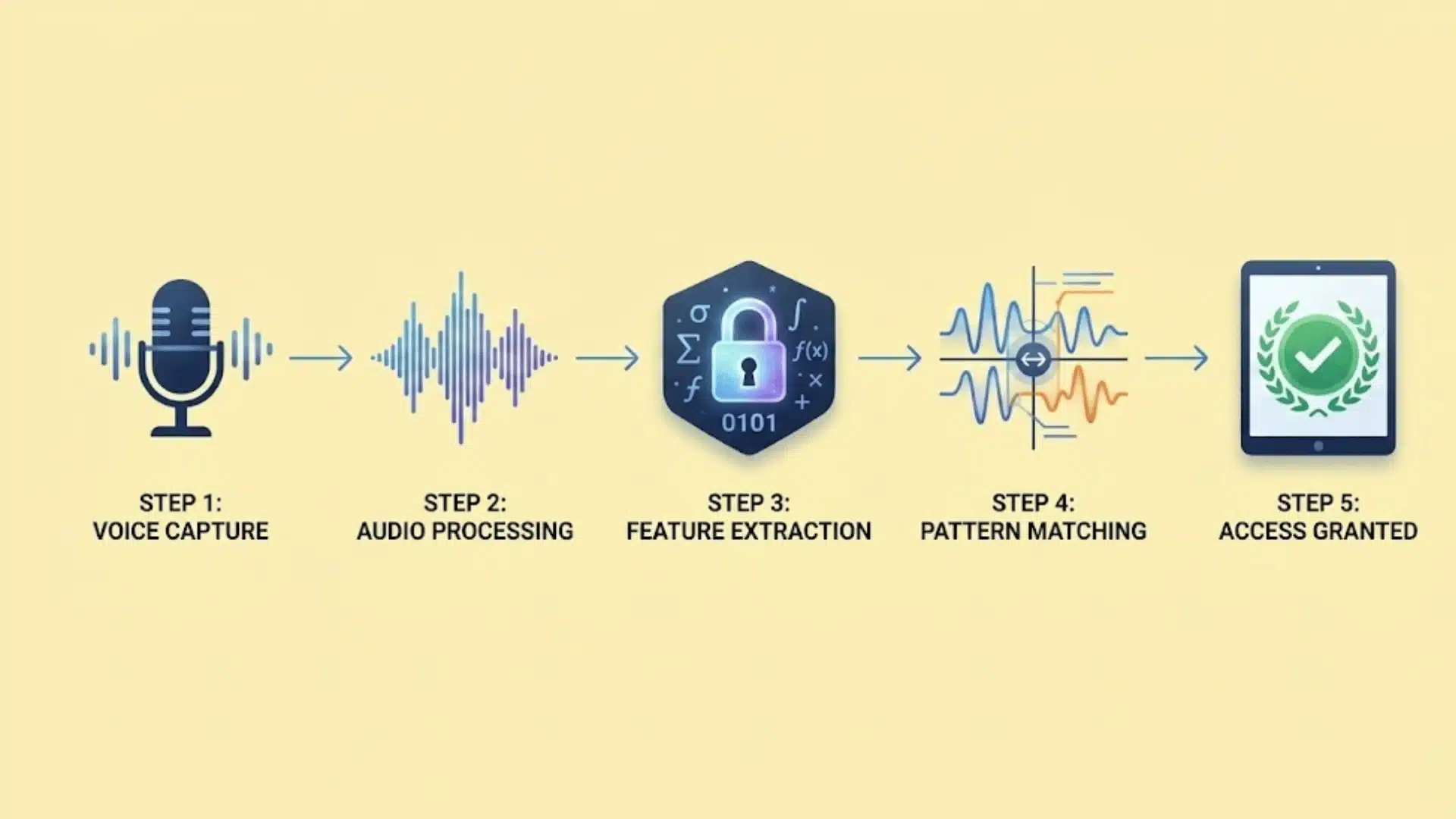
Voice biometrics verifies identity by analyzing and matching unique vocal patterns captured during speech in real time. The process follows a clear sequence from voice capture to final authentication decision.
- Voice capture starts: A user speaks into a device during enrollment or login, and the system securely records clear audio input.
- Feature extraction happens: The system analyzes vocal traits like pitch, tone, cadence, and resonance from the captured speech sample.
- Voiceprint is created: These vocal features are converted into a secure digital identity model and stored safely for future comparisons.
- Matching process runs: A new voice sample is captured and compared with the stored voiceprint using advanced algorithms.
- A decision is made: A confidence score determines whether access is granted or additional verification is required immediately.
Types of Voice Biometrics Technologies
Voice biometrics technologies are generally categorized based on how speech is used for identity verification and how much user interaction is required.
These approaches differ in structure, flexibility, and security level, but all aim to authenticate a person using unique vocal characteristics.
1. Text-Dependent Systems
Text-dependent systems require users to speak a specific, predefined phrase during enrollment and authentication. This phrase acts like a spoken password, and the system compares each attempt against the stored voiceprint.
Text-dependent systems require users to speak a specific, predefined phrase during enrollment and authentication.
This phrase acts like a spoken password, and the system compares each attempt against the stored voiceprint.
Controlled input improves matching precision since the system analyzes consistent speech patterns every time. Accuracy remains high due to reduced variation in spoken content and structure.
2. Text-Independent Systems
Text-independent systems do not require a fixed phrase and can analyze the user’s natural speech. The system focuses on vocal traits such as tone, pitch, and cadence rather than the actual words spoken.
This approach allows identity verification during normal conversation without requiring any specific input.
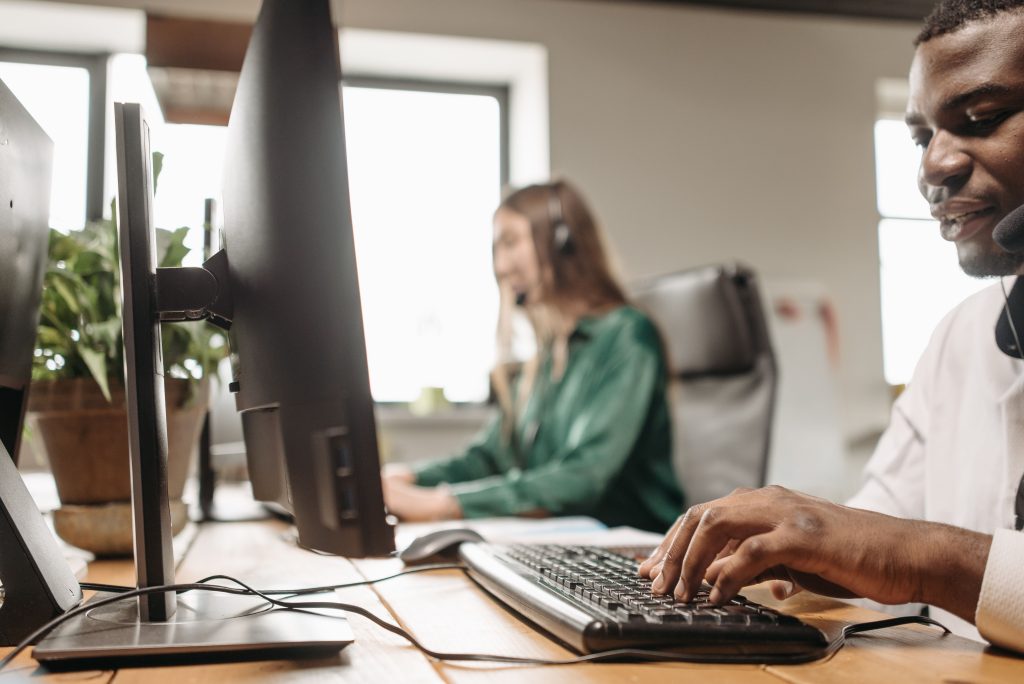
Flexibility improves usability across different languages, accents, and speaking styles, which is why these systems are widely used in call centers and customer service environments where authentication must occur during live conversations.
3. Continuous Voice Biometrics System
Continuous systems verify identity throughout the entire interaction rather than checking it once at the beginning. The system keeps analyzing voice patterns in the background to ensure the same person remains authenticated.
This ongoing verification helps detect unusual behavior if another speaker attempts to take over the session. It strengthens security by reducing the risk of impersonation after initial login.
These systems are especially useful in financial services, sensitive enterprise operations, and secure communication platforms.
They ensure identity integrity remains consistent throughout high-risk interactions.
Active vs Passive Voice Biometrics
Voice biometrics systems generally operate in two main modes depending on how identity verification is triggered.
Active systems require direct user participation, while passive systems work silently in the background during natural speech. The table below highlights the key differences.
| Aspect | Active Voice Biometrics | Passive Voice Biometrics |
|---|---|---|
| User involvement | Requires the user to speak a specific passphrase or phrase intentionally | Works automatically during normal conversation without user awareness |
| Authentication style | Explicit and user-initiated verification step | Continuous and background-based verification |
| Speech type | Text-dependent, fixed phrases are used | Text-independent, works with natural speech |
| User experience | Slightly interruptive due to the required input step | Seamless and non-intrusive during interaction |
| Security use case | Best for high-security, controlled authentication scenarios | Best for customer service and low-friction environments |
| Accuracy level | Typically higher due to controlled input conditions | May vary based on noise and conversational quality |
| Common usage | Banking login, secure system access | Call centers, event interactions, smart assistants |
Core Components of a Voice Biometrics System
A voice biometrics system works through a few core parts that capture, protect, compare, and verify a user’s voice.
- Feature extraction engine: Converts raw audio into measurable vocal characteristics like pitch, tone, and frequency patterns.
- Voiceprint database: Stores encrypted biometric models of users for secure identity comparison during future authentication.
- Matching algorithm: Uses machine learning models to compare live voice samples with stored voiceprints and generate similarity scores.
- Liveness detection module: Ensures the voice is from a real human, not a recording or synthetic audio.
- Anti-spoofing system: Detects deepfake attempts, playback attacks, and manipulated audio signals to prevent fraud.
Voice Biometrics vs Voice Recognition vs Speaker Recognition
Voice-based technologies are often confused because they all work with audio signals, but each serves a very different purpose. The table below breaks down their key differences in a clear and structured way.
| Aspect | Voice Biometrics | Voice Recognition | Speaker Recognition |
|---|---|---|---|
| Primary purpose | Verifies or identifies a person using voice identity | Converts spoken words into text | Identifies or verifies who is speaking |
| Focus area | Identity authentication (who you are) | Speech transcription (what you said) | Speaker identification (who is speaking) |
| Output result | Match score/authentication decision | Written text output | Speaker label or identity match |
| Technology type | Biometric security system | Speech-to-text AI system | Pattern-based audio classification system |
| Security level | High (used for authentication) | Low (not used for security) | Medium to high, depending on the system |
| Common use cases | Banking login, secure access, fraud prevention | Voice assistants, transcription tools | Call tracking, forensics, identity detection |
| Dependency | Relies on vocal uniqueness patterns | Relies on language and speech content | Relies on voice pattern matching |
Benefits of Voice Biometrics
Voice biometrics verifies identity using natural speech, reducing reliance on passwords and PINs while improving security and user experience.
- Faster authentication: Users can verify their identity through natural speech in seconds.
- Stronger security: Unique vocal traits are much harder to copy than traditional passwords.
- No passwords needed: This eliminates common issues such as forgotten credentials, password reuse, and stolen login details.
- Better user experience: Authentication feels seamless.
- Lower operational costs: Fewer password reset requests help reduce support workloads and related business expenses over time.
- Fraud prevention support: Helps spot impersonation attempts and suspicious access activity.
Voice Biometrics Accuracy Metrics Explained
False Acceptance Rate (FAR) measures how often unauthorized users are incorrectly verified in a biometric system. Lower values indicate stronger security and better system reliability.
False Rejection Rate (FRR) tracks how often legitimate users are denied access during authentication attempts. Lower values improve usability but may reduce strictness and overall sensitivity.
Equal Error Rate (EER) represents the balance point between FAR and FRR, often used to compare system performance across vendors and environments in a standardized way.
The NIST speaker recognition program has evaluated text-independent speaker recognition since 1996, providing widely used benchmarks for comparing vendor accuracy claims.
Checking a vendor’s NIST scores is one of the most reliable ways to compare systems objectively before procurement.
Limitations and Challenges of Voice Biometrics
Voice biometrics is effective but not perfect. Environmental conditions, voice changes, and security threats can impact performance and reliability.
- Background noise issues: Accuracy can drop in crowded or noisy environments where clear voice capture becomes difficult.
- Voice variation problems: llness, aging, stress, or fatigue can temporarily change vocal patterns and affect recognition accuracy.
- Accent and language differences: Diverse speech styles and accents can sometimes reduce system consistency and performance.
- Deepfake vulnerabilities: Advanced AI-generated voice cloning can potentially bypass weaker authentication systems.
- Device dependency: Microphone quality and recording hardware can directly impact system accuracy and reliability.
- False rejection risk: Legitimate users may occasionally be denied access due to small variations in their voice.
Privacy, Compliance, and Regulations
Biometric data is considered sensitive under major privacy laws, requiring strict consent and protection. Organizations must follow regulations to securely handle, store, and use voice data while safeguarding user rights.
Voice data is classified as biometric information under GDPR, BIPA, and CCPA. These laws regulate how data is collected and require clear disclosure of purpose before processing any voice data.
User consent is mandatory before collecting or storing voice data. Users must be informed about how their data will be used, and consent must be clearly recorded and verifiable.
Strong encryption is required to protect voiceprints during storage and transmission. Access controls and secure systems help prevent unauthorized access, along with proper data retention and deletion policies.
Voice biometric data must only be used for its original purpose. Any secondary use requires additional consent to ensure ethical handling and reduce compliance risks.
How to Implement Voice Biometrics in an Organization?
Voice biometrics implementation requires careful planning, system selection, and integration with existing infrastructure.
1. Define Use Case
Identify where voice biometrics will be used, such as authentication, call centers, or access control. This helps determine required security levels and system performance needs.
Clear use cases ensure the technology aligns with business goals. It also helps prioritize whether the focus should be on speed, accuracy, or user convenience.
2. Choose System Type
Select between text-dependent, text-independent, or hybrid systems based on the use case.
Controlled environments suit text-dependent systems, while natural interactions work better with text-independent models.
System selection also depends on user experience expectations and operational complexity. The right choice directly impacts accuracy, scalability, and overall adoption success.
3. Integrate Platform
Connect the voice biometrics solution with existing systems using APIs or SDKs. This may include CRM tools, IVR systems, or mobile apps.
Proper integration ensures smooth authentication within existing workflows.
Integration should also focus on latency, scalability, and system compatibility. Well-planned connectivity helps maintain real-time performance across all touchpoints.
4. Set Up Enrollment
Collect user voice samples to create secure voiceprints. The system processes and stores these as encrypted biometric data. A simple and quick enrollment process improves user adoption.
Enrollment design should minimize friction while ensuring high-quality voice data capture.
A smooth enrollment experience matters because poor-quality enrollment audio is one of the most common causes of false rejections later.
5. Test and Optimize
Test system performance across different devices, accents, and environments. Monitor accuracy metrics like FAR and FRR to improve reliability. Continuous optimization ensures stable real-world performance.
Testing should simulate real-world conditions to identify weaknesses early. Ongoing improvements help maintain accuracy as user behavior and environments change.
6. Ensure Compliance
Follow data protection laws, such as the GDPR or BIPA, when handling voice data. Obtain clear user consent and apply strong encryption for storage. Compliance ensures secure and responsible use of biometric data.
Compliance also involves defining retention policies and access controls. Strong governance builds trust and reduces legal and regulatory risks.
Organizations can explore how biometrics in access control are used in smart buildings and enterprises to understand security layering before deployment.
Cost of Voice Biometrics Systems
Pricing models vary from per-user licensing to API usage fees to enterprise contracts, depending on scale and complexity.
These models support businesses of different sizes and usage levels.
Initial implementation costs include integration, training data setup, and system configuration. These cover system connection, voice enrollment setup, and basic customization.
Long-term costs often decrease as automation reduces manual verification and fraud-related losses. Reduced operational effort improves overall cost efficiency over time.
Voice Biometrics Use Cases by Industry
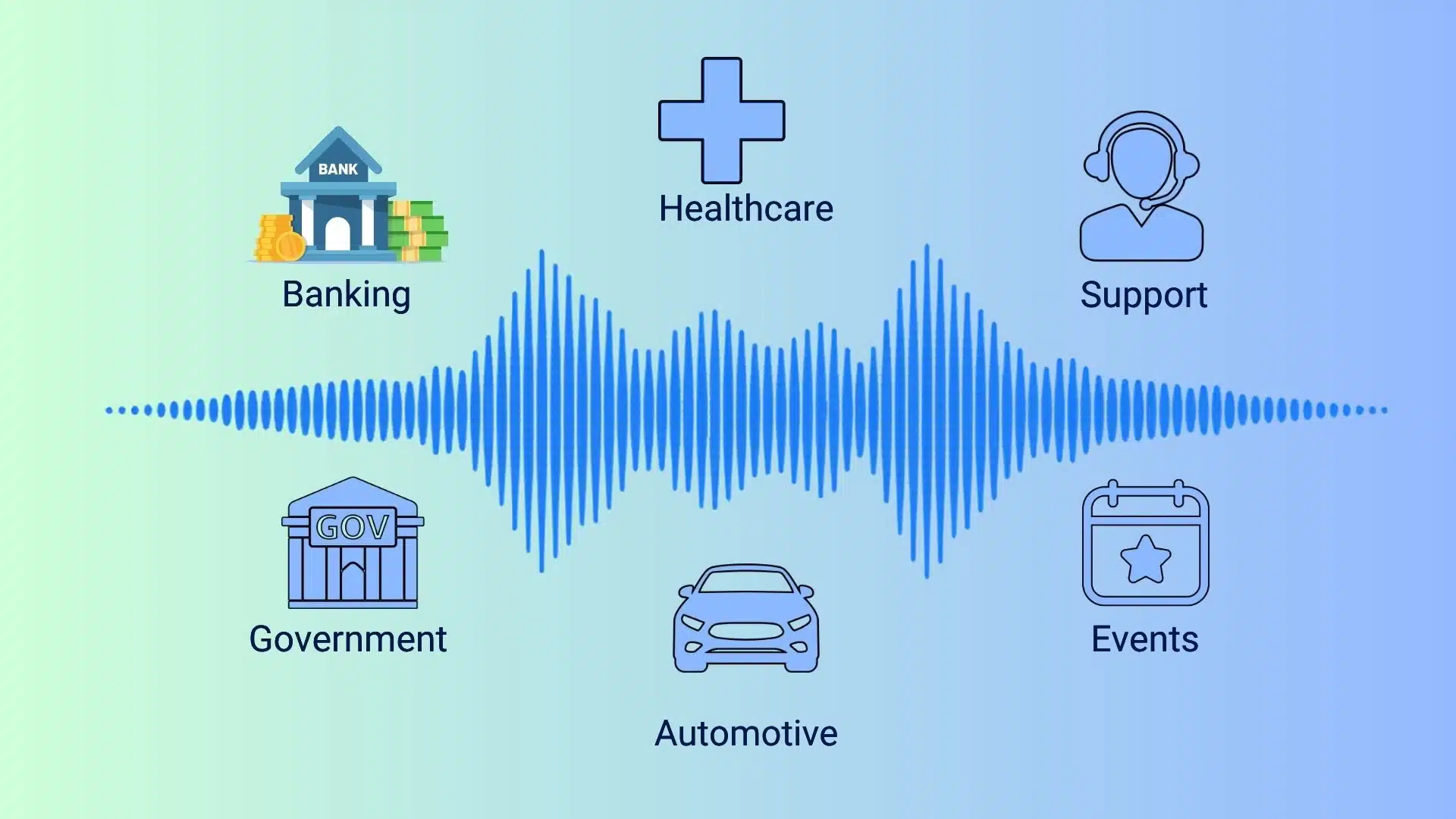
Voice biometrics is used across multiple industries to improve security, speed, and user convenience by verifying identity through natural speech instead of traditional credentials.
- Banking & Finance: Used for secure customer authentication, fraud prevention, and faster call center verification without passwords or PINs.
- Healthcare: Helps securely verify patient identity for telehealth services, medical record access, and prescription authorization.
- Contact Centers: It enables quick caller authentication during conversations, reducing handling time and improving customer experience.
- Government & Law Enforcement: Supports identity verification, investigation support, and speaker identification in security operations.
- Event Security & Access Control: Hands-free identity verification for restricted sessions, VIP areas, and hybrid event access. Teams that need to think through the broader access control decisions for a live event will find that voice authentication fits alongside, rather than replacing, physical credential systems.
- Smart Devices & Automotive: Used in smart assistants and vehicles for personalized access, driver identification, and voice-activated controls.
Security Challenges: Deepfakes, Spoofing, and AI Voice Cloning
Voice biometrics faces rising security risks as AI-generated audio improves. Attackers can now closely mimic human voices, making it harder to detect synthetic or manipulated speech.
Deepfake voice attacks use AI models to recreate a person’s voice from short audio samples. These synthetic voices can be used to impersonate individuals and attempt unauthorized access to systems.
Spoofing attacks involve replaying recorded voice samples to trick authentication systems. Weak systems without proper protection may mistakenly accept these recordings as live speech.
AI voice cloning increases the risk further by generating realistic speech in real time.
Modern voice biometrics systems counter these threats through liveness detection, behavioral analysis, and anti-spoofing layers that flag audio signals inconsistent with live human speech.
Buyers evaluating platforms should ask specifically about anti-spoofing certifications before procurement.
Voice Biometrics vs Other Biometric Technologies
Biometric technologies differ in how they capture and verify identity, with each method offering unique strengths and limitations. The table below provides a simple comparison of common biometric systems.
| Factor | Voice Biometrics | Fingerprint Recognition | Facial Recognition | Iris Recognition |
|---|---|---|---|---|
| Input method | Uses voice patterns | Uses fingerprint scan | Uses facial features | Uses eye patterns |
| Contact needed | No contact required | Physical contact required | No contact required | No contact required |
| Environment impact | Affected by noise | Low impact | Affected by lighting | Very low impact |
| Accuracy level | High with good audio quality | Very high | High | Very high |
| User convenience | Very convenient, hands-free | Moderate | High | Moderate |
| Common usage | Call centers, banking, events | Mobile unlock, access control | Phone unlock, surveillance | High-security systems |
Ethical Concerns and Bias in Voice Biometrics
Voice biometrics raises important ethical questions around fairness, privacy, and responsible use of biometric data. Ensuring transparent practices and unbiased performance becomes essential for trust and compliance.
Voice systems can show bias across different accents, languages, and speech patterns. If training data is not diverse, accuracy may drop for certain user groups, leading to unfair authentication outcomes.
Privacy concerns arise when biometric voice data is collected without clear consent or when users are not fully informed about how their data will be stored and used. Strong transparency is required to maintain user trust.
Ethical deployment also requires strict control over how voice data is accessed and shared. Proper governance, encryption, and usage limits help ensure biometric information is not misused or exposed.
Future of Voice Biometrics
Voice biometrics is set to evolve rapidly with advances in AI, stronger security measures, and wider adoption across industries moving toward seamless, passwordless authentication.
- Wider adoption: Voice biometrics will expand as organizations move toward passwordless and frictionless authentication systems.
- Improved accuracy: AI and machine learning will enhance recognition performance across diverse users and environments.
- Stronger security: Advanced liveness detection will help counter deepfake and voice cloning attacks more effectively.
- Continuous authentication: Systems will increasingly verify identity throughout entire sessions rather than with a single check.
- Multi-modal integration: Voice will combine with facial, behavioral, and device-based biometrics for stronger security.
- Industry expansion: Adoption will grow across banking, healthcare, events, and digital platforms globally.
Conclusion
Identity verification is moving away from static credentials toward behavioral signals that are harder to steal and easier to use.
Voice biometrics sits at the center of that shift, offering an authentication solution that works in real time, requires nothing extra from the user, and gets harder to defeat with better anti-spoofing tooling.
The main practical consideration is not whether the technology works. It does, and the NIST benchmarks make that clear.
The real question is whether an organization has done the groundwork: defined the use case, chosen the right system type, set up clean enrollment, and addressed compliance before deployment.
What are your thoughts on voice biometrics? Share your experience in the comments below.
Frequently Asked Questions
Can Voice Biometrics Work Across Different Devices and Microphones?
Yes, though accuracy varies by hardware quality. Enterprise deployments typically define minimum microphone specifications during rollout to maintain consistent performance.
Consumer-grade microphones generally work but produce more variability in match scores than purpose-built hardware.
Does a Person Need to Re-Enroll if Language or Dialect Changes?
No re-enrollment is needed for text-independent systems, since they rely on voice traits rather than language. Only text-dependent systems may require re-enrollment if the passphrase changes.
How Long are Voiceprints Stored?
Storage duration is governed by company policy and applicable data protection law.
GDPR and BIPA require that biometric data be kept only as long as necessary for its original purpose, after which it must be securely deleted. Users have the right to request deletion in most jurisdictions.
Is Voice Biometrics Suitable for Children or Elderly Users?
Yes, but performance may vary. Children may need frequent re-enrollment due to voice changes, while elderly users may require adaptive updates to maintain accuracy.