The Cleaner’s Full Home Setup: Robot Vacuum + Wet-Dry Vac
There’s a reason serious home cleaners end up with two tools: a robot vacuum for daily automated maintenance and a wet-dry vacuum for the hands-on cleaning that robots can’t reach. They’re not redundant. They solve different problems, and used together, they cover everything a modern home throws at a floor.
Arobotic vacuum cleaner handles the work you shouldn’t have to think about: daily floor maintenance, pet hair accumulation, dust before it settles into carpet. A wet-dry vacuum handles the work that requires you in the room: post-cooking cleanup, sticky spills, muddy entryways, and the kind of mixed wet-and-dry mess that no autonomous robot is built for.
What a Robot Vacuum Actually Covers
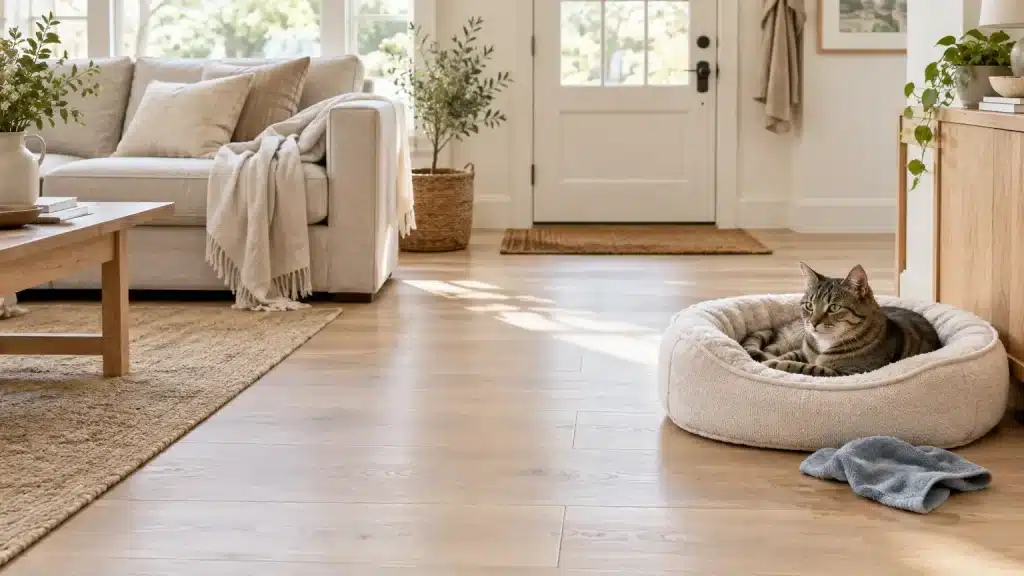
A robot vacuum’s strength is frequency and consistency. It runs daily without you having to decide to run it. For households with pets, kids, or both, daily floor maintenance is where most of the cleaning workload lives — and the robot absorbs it entirely.
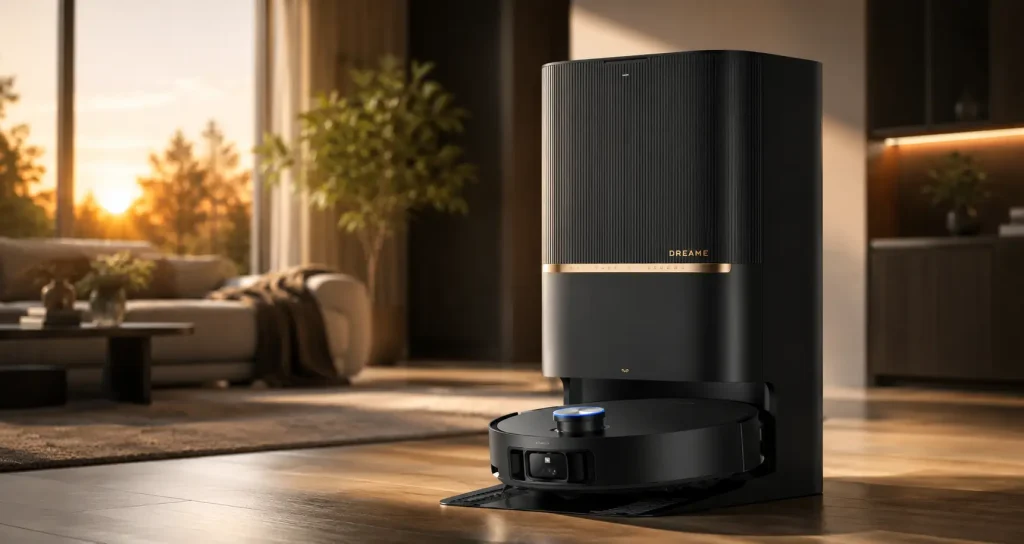
Modern robots also mop. On models with hot water mop washing, the mop pad is cleaned at temperature between runs, so the robot isn’t just spreading yesterday’s grime across today’s floor. The Dreame L50 Ultra washes its mop at 167°F (75°C). The Matrix10 Ultra and X60 Max Ultra Complete step that up to 212°F (100°C), which is a genuine sanitation improvement for households with pets or young children.
What a robot can’t cover: thick spills that require manual agitation, edges and corners where the robot geometry leaves a gap, furniture-adjacent areas that are mapped as no-go zones, and any mess requiring immediate response before the scheduled run.
What a Wet-Dry Vac Actually Covers
A wet-dry vacuum handles the human-supervised cleaning that scheduled automation can’t replace. That means a glass of orange juice on tile, a muddy boot impression in the entryway, a greasy kitchen floor after a big cooking session, or a pet accident that needs more than a dry pass.
The category overlap is minimal. Awet dry vac requires you to be present and moving the tool. That’s a different use case than a robot: it’s manual, targeted, and handles mess types the robot isn’t equipped for. Together, the two tools eliminate the gap between “the robot handles daily maintenance” and “something came up that needs hands-on attention.”
The Dreame H15 Pro Heat cleans with 185°F (85°C) hot water, which makes it effective on sticky residues that cold-water mopping spreads around. Its TangleCut 2.0 brush handles pet hair without wrapping. For households that do a lot of kitchen floor cooking or have messy entryways, those two features matter more than headline suction.
How the Two Tools Work Together in Practice
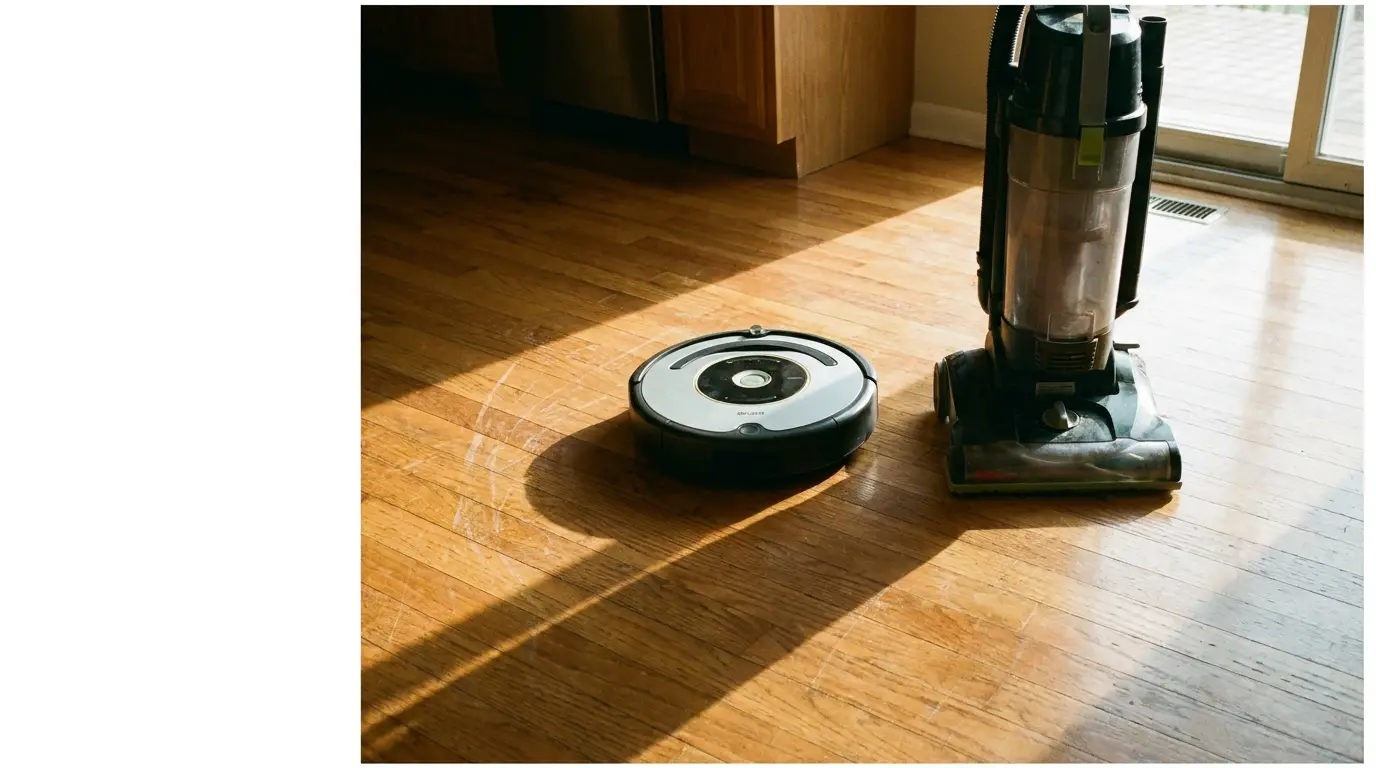
The robot runs daily or every other day on a schedule. It handles dust, pet hair, crumbs, and light mopping. You don’t think about it.
The wet-dry vac lives in a closet or utility area. You grab it when something happens: a significant spill, a muddy mess, a post-party cleanup, or a session of moving furniture where the robot’s map is temporarily useless. It’s the reactive tool; the robot is the proactive one.
One practical workflow that works well: run the wet-dry vac after cooking 2-3 times a week on kitchen floors, and let the robot handle everything else. Kitchen floors accumulate grease and food residue that a dry pass doesn’t fully address. The hot water mop pass from the H15 Pro Heat handles that better than any robot doing an automated loop, because you can put actual pressure and focus on the cooking zone.
The Coverage Gap Both Tools Have
Neither tool handles stairs. Neither handles countertops or stovetops. Neither handles upholstered furniture beyond surface pickup. A full home cleaning setup still includes a handheld or traditional vacuum for those zones — but the combination of robot plus wet-dry vac eliminates the daily and reactive floor work that consumes most of the weekly cleaning time.
Baseboards and corners are a shared gap. Robots miss them due to geometry; wet-dry vacs miss them because they’re awkward to get into. A monthly manual wipe of baseboards and corners is the one maintenance task neither tool replaces.
Is the Two-Tool Setup Worth the Cost?
The question is what you’re replacing. If you currently own a traditional upright vacuum and a separate mop, the two-tool setup typically replaces both — and adds daily automation that neither provided. The time savings over a year are significant for households that clean frequently.
If you’re starting from scratch, the robot vacuum is the higher-leverage first purchase for most households. It changes the daily baseline more than the wet-dry vac does. The wet-dry vac is the second step — it fills the reactive and deep-clean gaps that the robot leaves behind.
Used together, the setup is as close to a solved floor-cleaning problem as currently exists. The robot handles the maintenance. The wet-dry vac handles the moments. The floor stays clean without it becoming a daily project.