Have you ever wondered how your phone can tell where you are, or how video games make characters feel like they exist in the real world?
That’s just the start of what tech is doing around us. Today, digital and physical spaces are blending in ways that make everyday tasks more interactive and fun.
In this blog, we’ll dive into spatial computing, a field that connects the real world with digital information so devices can understand and respond to their surroundings.
You’ll get a simple breakdown of what it is, how it works, and the core parts that make it tick.
I’ll also show how it’s used in real life, from healthcare to shopping, and why it’s becoming a part of our daily lives without needing to be a tech expert.
What is Spatial Computing?
Spatial computing is all about merging the digital world with the physical one so technology can understand and interact with the space around us.
In simple terms, it lets devices “see” and respond to the real world. Instead of just tapping on a screen, you can interact with digital information as if it’s part of your environment.
This blending of physical and digital spaces is what makes it different from regular computing.
Think of your phone showing directions over a live camera view or a gaming headset placing virtual objects in your room.
Even things like smart home devices that adjust lights when you move around, or AR apps that let you try on clothes virtually, are examples.
Spatial computing turns everyday interactions into more intuitive and visual experiences. It’s a way to make technology feel less like a separate tool and more like a natural part of your surroundings.
The defining feature is not the headset or the screen; it is that the digital layer knows where it is in physical space and stays there as you move.
Spatial Computing vs. Traditional Computing
Traditional computing relies on 2D inputs, keyboards, mice, touchscreens ,and outputs to flat displays. The device has no awareness of where it sits in the world or how the user is moving through space.
Spatial computing operates differently. It uses depth cameras, LiDAR, motion sensors, and AI to build a live model of the surrounding environment.
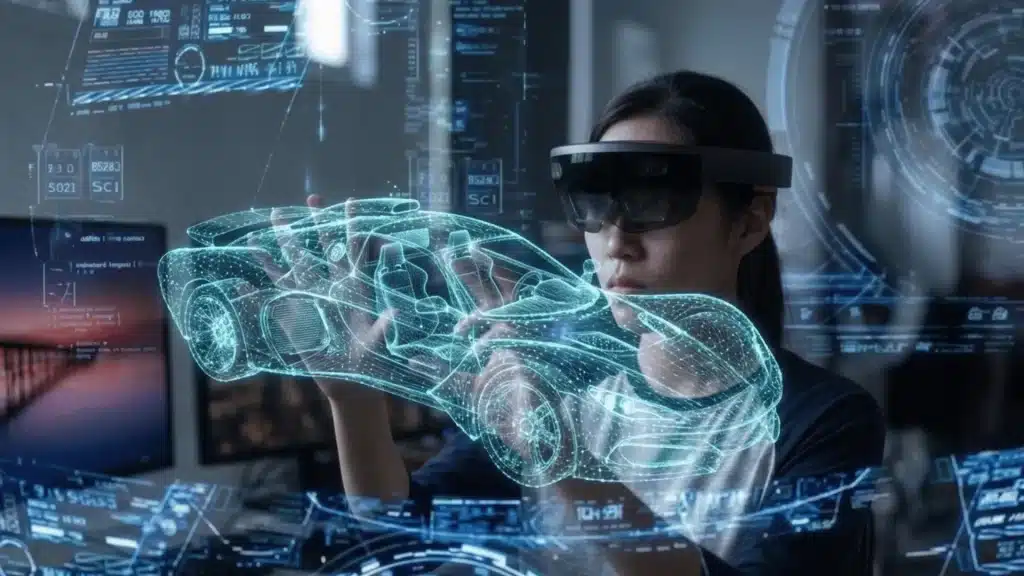
Digital content is then placed within that model and responds to movement in real time. A traditional app shows you a floor plan on a monitor. A spatial computing application lets you walk through the building before it is built.
This shift matters most in professional contexts: training simulations, remote collaboration on 3D designs, and real-time overlays on physical equipment. These are tasks where a flat screen creates friction that spatial interaction removes.
Core Components of Spatial Computing
To understand spatial computing better, it helps to know the key pieces that make it work and bring digital and physical spaces together.
1. Sensors and Devices
Sensors and devices enable technology to sense the environment. Cameras, motion trackers, LiDAR, and GPS devices collect data about the world around you.
These devices detect movement, distance, and changes in surroundings. For example, a smartphone’s camera can track your hand movements for AR apps, while LiDAR in some devices measures depth in a room.
These sensors feed real-time information to systems, allowing them to respond accurately.
Without sensors, a system has no idea where objects are or how a person is moving through a space. They are the input layer, everything else depends on.
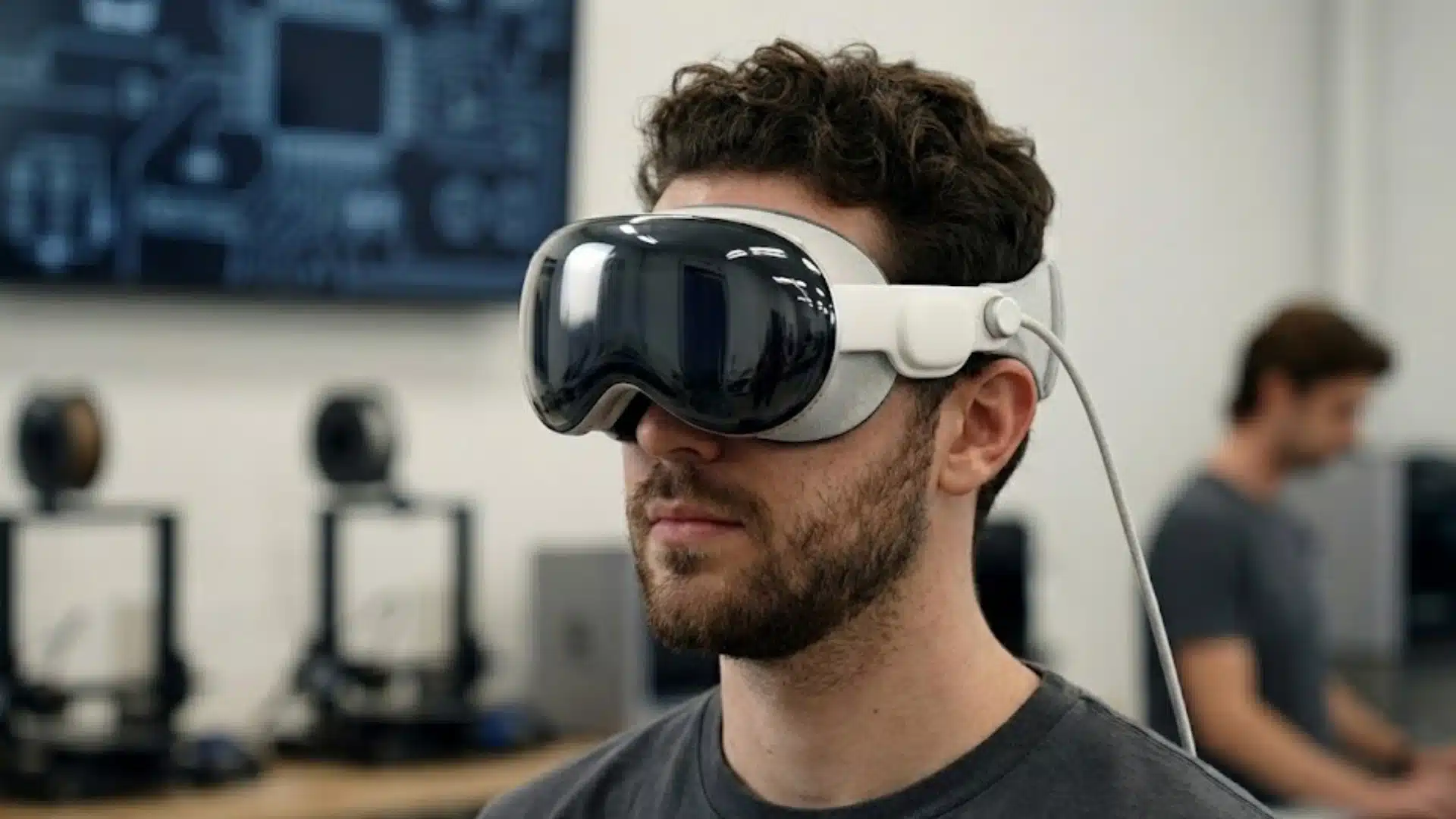
Hardware like smart glasses and AR wearables is increasingly the consumer-facing form factor for this sensor layer, moving spatial computing off a phone screen and into the user’s line of sight.
2. AR, VR, and MR
AR, VR, and MR are immersive technologies that bring digital content into physical or virtual spaces. AR (augmented reality) overlays digital objects onto real-world scenes, like showing furniture in your room through an app.
VR (virtual reality) immerses you completely in a digital world, like a gaming headset that transports you into a different environment.
MR (mixed reality) combines both, letting digital objects interact with real spaces in real time.
These technologies are central to spatial computing because they make interactions natural and visual, turning abstract data into experiences you can see and touch.
3. Data Processing
Data processing is how information from the real world gets turned into digital insights. Sensors and devices collect raw data, which computers analyze to understand locations, movements, and patterns.
This processing enables apps and systems to respond intelligently. For instance, AR apps calculate distances and angles to correctly place virtual objects.
Smart home systems process movement data to automatically adjust lighting or temperature. Data processing ensures the digital overlay matches reality, making spatial computing accurate and useful.
It’s the engine that interprets the environment and drives the experiences you see and interact with.
How Spatial Computing Works?
Spatial computing begins with sensing. Devices use cameras, LiDAR, or infrared sensors to scan the environment, measuring distances and surfaces to create a detailed understanding of the space around you.
This data is then processed into a 3D model through a method called simultaneous localization and mapping, or SLAM, which works similarly to how self-driving cars navigate roads.
Once the model is ready, digital content can be anchored to precise positions within it. A virtual screen stays on the wall where you placed it, and a floating label hovers above the object it describes.
All of this runs many times per second. Sensors feed updated data, software recalculates positions using geometry and optics, and the digital layer adjusts before you notice any lag.
When it works well, the seam between physical and digital disappears.
How is Spatial Computing Used in Everyday Life?
Spatial computing is already shaping how professionals work across several industries.
- Healthcare: Surgeons use AR overlays to see digital guides during live procedures, improving accuracy without interrupting their line of sight. Medical students practice complex operations in VR simulations before working on real patients, building muscle memory in a risk-free environment.
- Retail and e-commerce: Virtual try-on apps let customers see how clothes, glasses, or furniture look in their actual space before buying. This reduces returns and lowers the friction of online purchasing.
- Manufacturing and logistics: Engineers walk through digital models of structures before construction begins, catching design problems early. Maintenance teams receive real-time AR overlays showing which components to inspect.
- Education: Immersive learning platforms use VR to let students explore molecular structures, historical environments, or surgical anatomy in 3D. The hands-on format improves retention compared to traditional instruction.
These examples show how spatial computing goes beyond entertainment. It’s becoming a tool that makes complex tasks simpler, faster, and more visual, improving experiences in ways people notice every day.
Advantages of Spatial Computing
Understanding spatial computing shows how it improves daily interactions and tasks, making technology feel more intuitive and helpful.
- Enhances experiences and efficiency: Tasks and activities become faster and more interactive, improving overall productivity.
- Makes digital interaction feel natural: Devices respond seamlessly to movement and gestures, creating a smooth user experience.
- Helps solve complex tasks visually: Visual overlays and 3D models simplify complicated processes, making them easier to understand.
- Supports collaboration and teamwork: Multiple users can interact with shared digital content, improving communication and coordination.
- Adapts to personal environments: Systems learn and respond to your space and habits, offering customized and context-aware interactions.
The Future of Spatial Computing
The future of spatial computing is shaping up to be more connected and interactive than ever.
Devices will get smarter, with improved sensors that can track movement and surroundings with greater accuracy.
We’ll see more seamless integration of digital and real-world spaces, making tasks like shopping, learning, or working feel natural and immersive.
Everyday life could change in small but noticeable ways: you might navigate a store with AR directions, practice skills through realistic simulations at home, or even collaborate on designs with colleagues who aren’t in the same room.
Trends point toward wider adoption in healthcare, education, and entertainment, where digital overlays enhance experiences without replacing reality.
As technology evolves, spatial computing will become an invisible layer around us, blending digital tools into daily routines and changing how we interact with the world.
Conclusion
Spatial computing is changing the way we interact with technology, blending the digital and physical worlds in ways that feel natural and intuitive.
From helping surgeons practice complex procedures to letting you try on clothes virtually, it’s clear how this tech is shaping experiences across industries.
The core components, like sensors, AR, VR, MR, and real-time data processing, all work together to make digital interactions seamless and visually engaging.
Understanding these basics shows how spatial computing can make tasks easier, collaboration smoother, and everyday experiences more interactive.
Are you curious to see how it might fit into your daily life or work? I’d love to hear your thoughts and experiences. Drop a comment below and share what excites you most about spatial computing.
Frequently Asked Questions
Can Spatial Computing Work Without AR or VR Devices?
Yes, spatial computing doesn’t always require headsets or AR apps. Some systems use sensors, cameras, or smart devices to understand and respond to physical spaces without immersive displays.
How Secure is the Data Collected in Spatial Computing?
Data security depends on the device and platform. Many spatial computing applications use encrypted storage and strict privacy settings, but users should always check permissions and data policies.
Will Spatial Computing Replace Traditional Interfaces Like Screens and Keyboards?
It’s unlikely to replace them completely. Spatial computing complements existing interfaces, making interactions more intuitive, but screens and keyboards remain practical for many tasks.