Air purifiers have become a common addition to modern homes, once found in only a few houses, but few brands have generated as much debate as Molekule.
Known for its premium design and PECO filtration technology, it promises to go beyond traditional HEPA filters by targeting odors, gases, and certain microbes.
At the same time, independent tests and user reviews have raised questions about whether its performance justifies the higher price. So, is Molekule worth the premium price?
In this review, we’ll examine how Molekule’s technology works, compare its Air Mini+ and Air Pro models, explore real user experiences, and help you decide whether it’s the right air purifier for your home in 2026.
What is Molekule Actually?
Molekule started in 2014 and was built around PECO technology (photoelectrochemical oxidation) developed by a University of Florida researcher whose son had severe allergies.
The idea was simple: HEPA filters trap particles but don’t remove gases, odors, or some microbes.
PECO uses UV-A light and a catalyst-coated filter to break these pollutants down at the molecular level rather than just trapping them.
Its product range goes from the compact Air Mini+ to the larger Air Pro, positioned in the premium segment alongside brands like Dyson rather than budget options like Levoit or Honeywell.
All Molekule models are FDA-cleared Class II devices, meaning they meet safety standards for specific germ-reduction claims, not overall superiority to HEPA purifiers.
How Does PECO-HEPA Filtration Work?
Molekule’s Tri-Power filter combines two systems in one:
- The HEPA layer traps dust, pollen, and other fine particles, as in a standard air purifier.
- The PECO layer uses UV-A light and a catalyst to break down gases, VOCs, odors, mold spores, and some bacteria and viruses as air passes through.
Unlike HEPA filters, which mainly trap particles, PECO breaks down certain pollutants at a molecular level, targeting both particles and some gases.
According to the EPA’s HEPA filtration definition, a true HEPA filter must remove at least 99.97% of particles at 0.3 microns, the size range that includes dust, pollen, mold spores, and pet dander.
In theory, this goes beyond HEPA because it can address pollutants that filters alone can’t remove. In practice, performance depends on how much air the device moves.
Molekule Air Mini+ Review
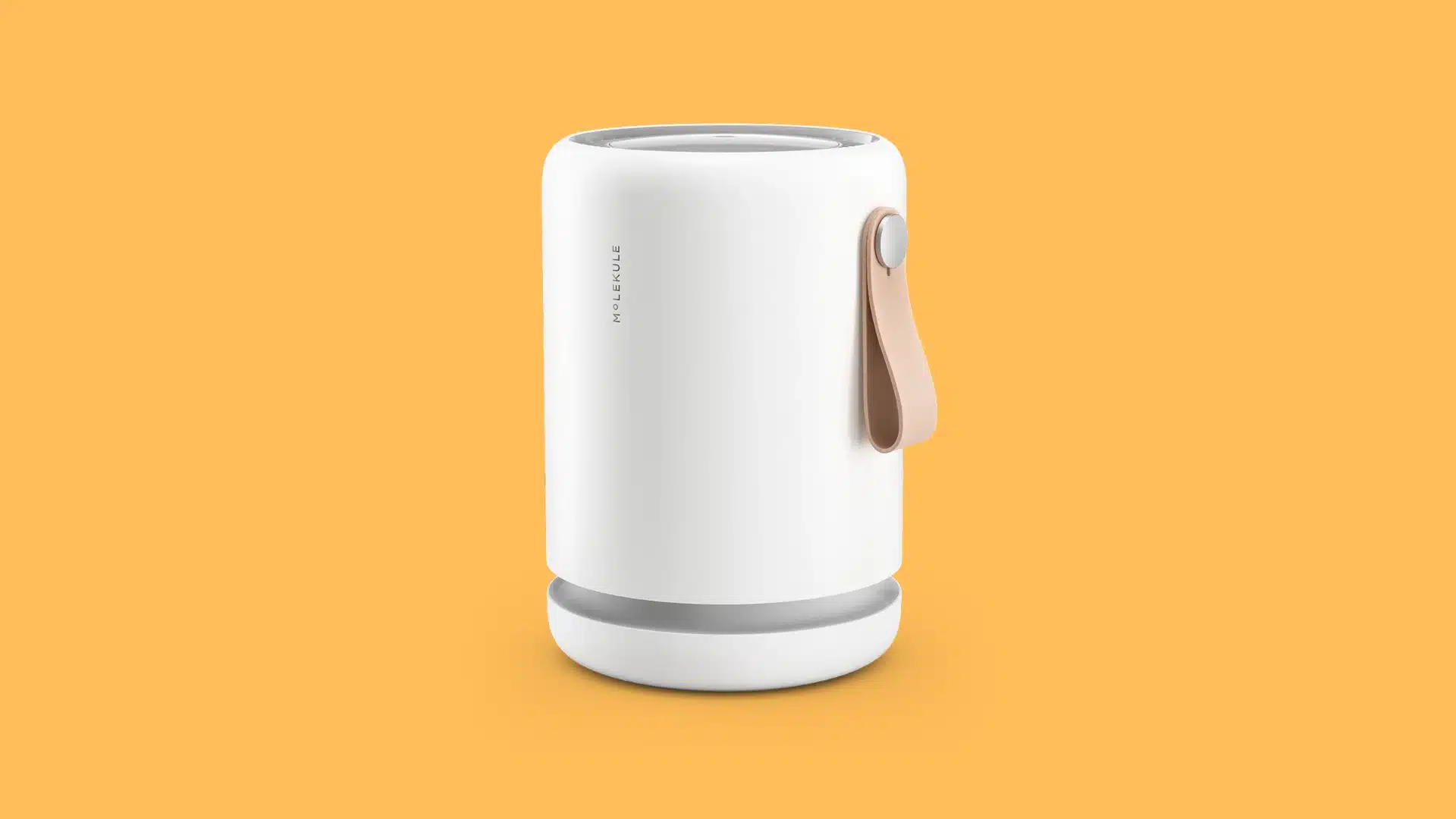
The Molekule Air Mini+ is a compact premium air purifier designed for small rooms.
It combines sleek design, smart features, and PECO-HEPA filtration, but its real-world performance and value deserve a closer look.
1. Overview and Design
The Air Mini+ is built for rooms up to 250 sq ft, such as bedrooms, home offices, or nurseries. It runs quietly at lower settings while trapping pollutants and cutting down stale odors over time.
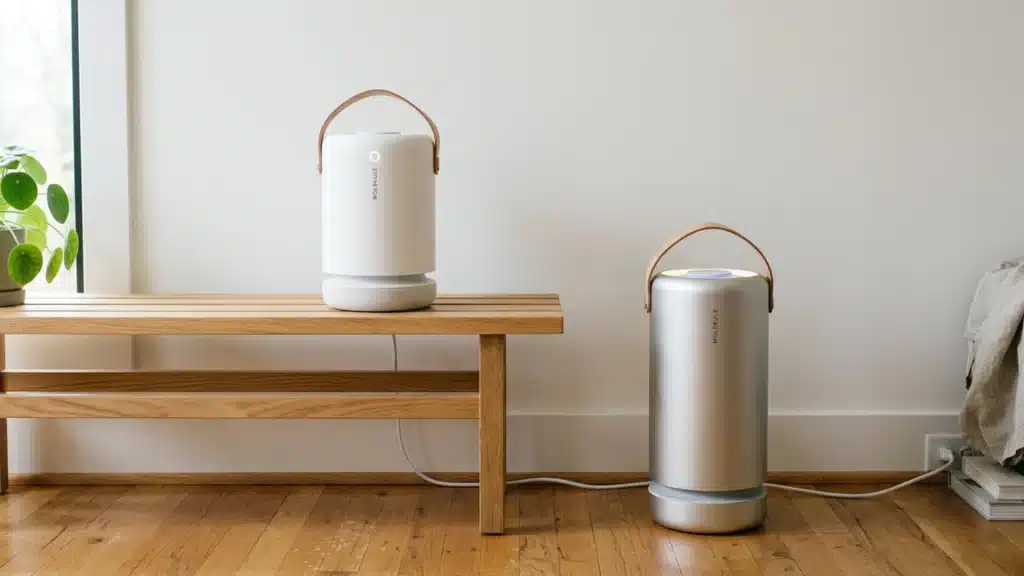
It is compact, shaped like a tall coffee tin, and includes a vegan leather strap, making it feel more like a design object than a typical appliance.
2. Smart Features and App Control
It connects to an app that shows real-time air quality, allows scheduling, and includes an Auto Protect mode that increases fan speed when pollution spikes are detected.
The app also lets you monitor filter life, adjust fan speeds remotely, and control multiple Molekule devices from a single dashboard.
If you are layering an air purifier into a broader connected home setup, our room-by-room smart home guide walks through where air-quality automation fits alongside lighting and climate controls.
3. Noise Levels
It runs quietly at low to medium speeds and is suitable for overnight use. However, at maximum speed, it becomes noticeably loud for its size.
For everyday use, the lower fan settings provide a good balance between comfort and noise.
If you frequently need the highest speed for rapid air cleaning, the increased sound level may be noticeable, especially in bedrooms.
4. Performance and Real-World Feedback
Performance is mixed. Independent testing by HouseFresh found the Air Mini slower at clearing particles and less efficient than several budget HEPA purifiers, including the Levoit Core 300.
However, customer reviews are more positive overall, with a strong average rating but recurring complaints about app connectivity and warranty support.
5. Price vs. Value
The Molekule Air Mini+ costs around $320-$350, placing it well above many competing air purifiers for small rooms.
While you get premium design, smart features, and PECO technology, independent tests suggest that lower-priced HEPA models often deliver faster particle removal.
Some buyers say the unit filters the air well on its own, but ongoing app connectivity issues undermine the experience.
6. Specs at a Glance
- Coverage: Up to 250 sq ft
- Price: Around $320–$350
- Filter replacement: About every 6 months (~$80 with subscription)
- Best for: Small rooms where design, smart features, and odor control matter more than maximum purification speed
Molekule Air Pro Review
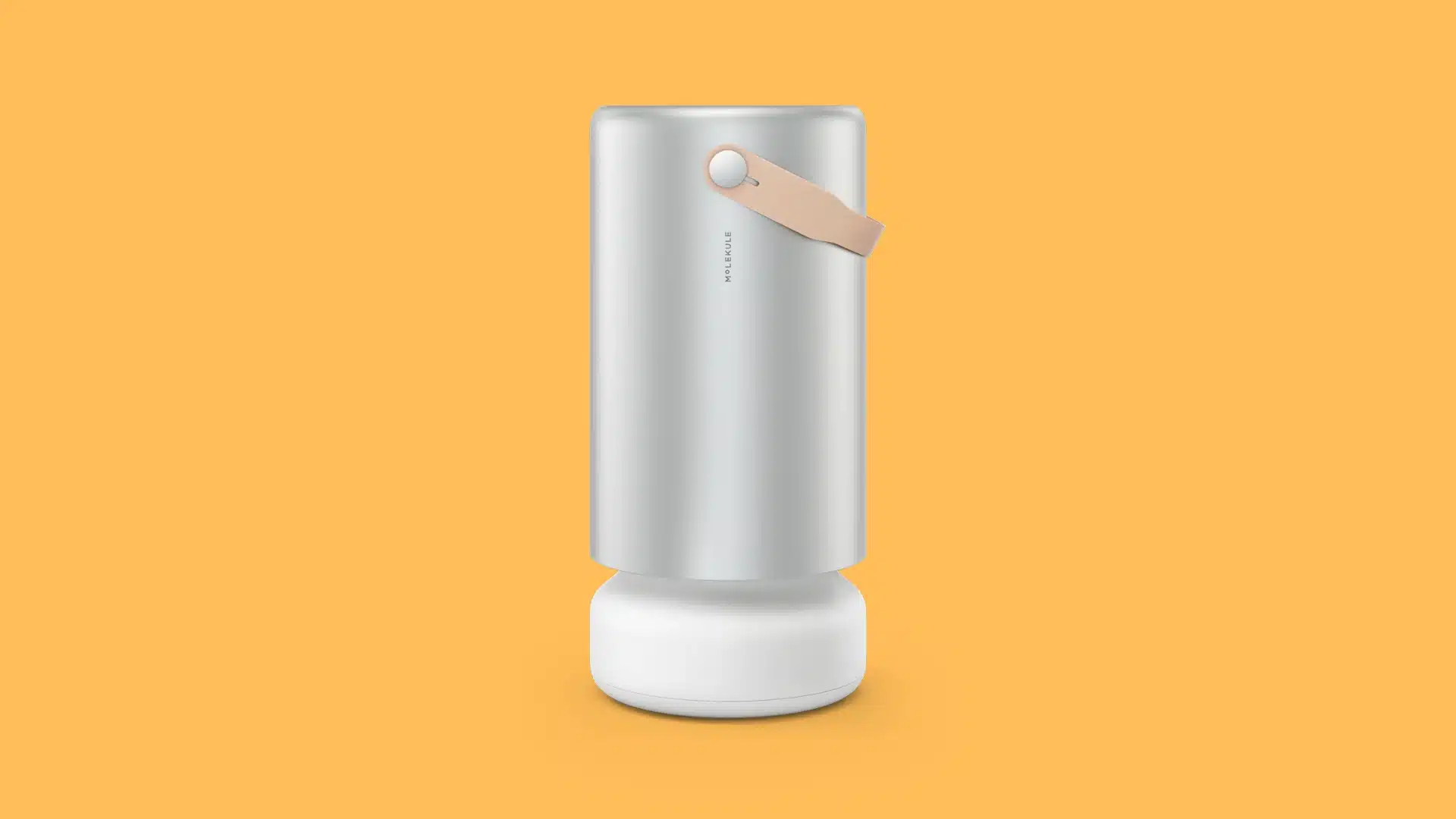
Designed for larger spaces, the Molekule Air Pro combines premium build quality, smart automation, and PECO-HEPA filtration.
Here’s how it performs in terms of features, real-world effectiveness, and overall value.
1. Overview and Coverage
The Air Pro is designed for larger spaces up to 1,000 sq ft and uses the same PECO-HEPA approach as smaller models.
It has a respectable CADR of 234 CFM (smoke), 242 CFM (dust), and 260 CFM (pollen), though this is lower than many HEPA purifiers in the same price range.
2. Design and Build Quality
This model feels more premium than the Mini+, with a sturdier build, a touch display, and the same Auto Protect mode that adjusts fan speed based on air quality.
Its modern, cylindrical design blends well with home interiors, while the durable construction gives it a high-end feel.
The touch controls respond quickly and are easy to navigate, which makes everyday use simpler.
3. Performance and Testing
Real-world testing shows mixed results.
Consumer Reports’ chief scientific officer, James Dickerson, noted that PECO could theoretically break down microscopic airborne molecules, but questioned whether the unit moves enough air to actually capture them at scale.
Reviewed.com’s lab tests told a slightly different story, measuring smoke removal 47% better than average, though VOC filtration came in only 26% above average.
Note: Test conditions vary between labs and neither result cancels the other out.
4. Technology Context
PECO technology is often marketed as innovative, but it is actually an advanced form of photocatalytic oxidation, a technology that has existed for years.
Its main advantage is the ability to target gases, odors, and VOCs alongside particles. However, its effectiveness still depends on airflow, which is why independent tests have produced mixed results.
5. Price vs Value
At around $1,000, it sits in the premium tier, yet comparable HEPA purifiers often deliver faster, more efficient particle removal at a lower cost, with cheaper filter replacements.
The higher price mainly reflects its premium design, smart features, and PECO technology. If those features are your priority, it can be a worthwhile investment.
If you are weighing this against other premium options, our Dyson air purifier review covers a similar price tier, built around HEPA H13 filtration and real-time sensors rather than the oxidation approach.
6. Air Pro at a Glance
- Coverage: Up to 1,000 sq ft
- Price: ~$970–$1,000 (varies with subscription)
- Filter replacement: Every 6 months
- Best for: Users prioritizing design, smart features, and odor/VOC reduction over cost efficiency or maximum particle removal performance
What Real Users are Saying?
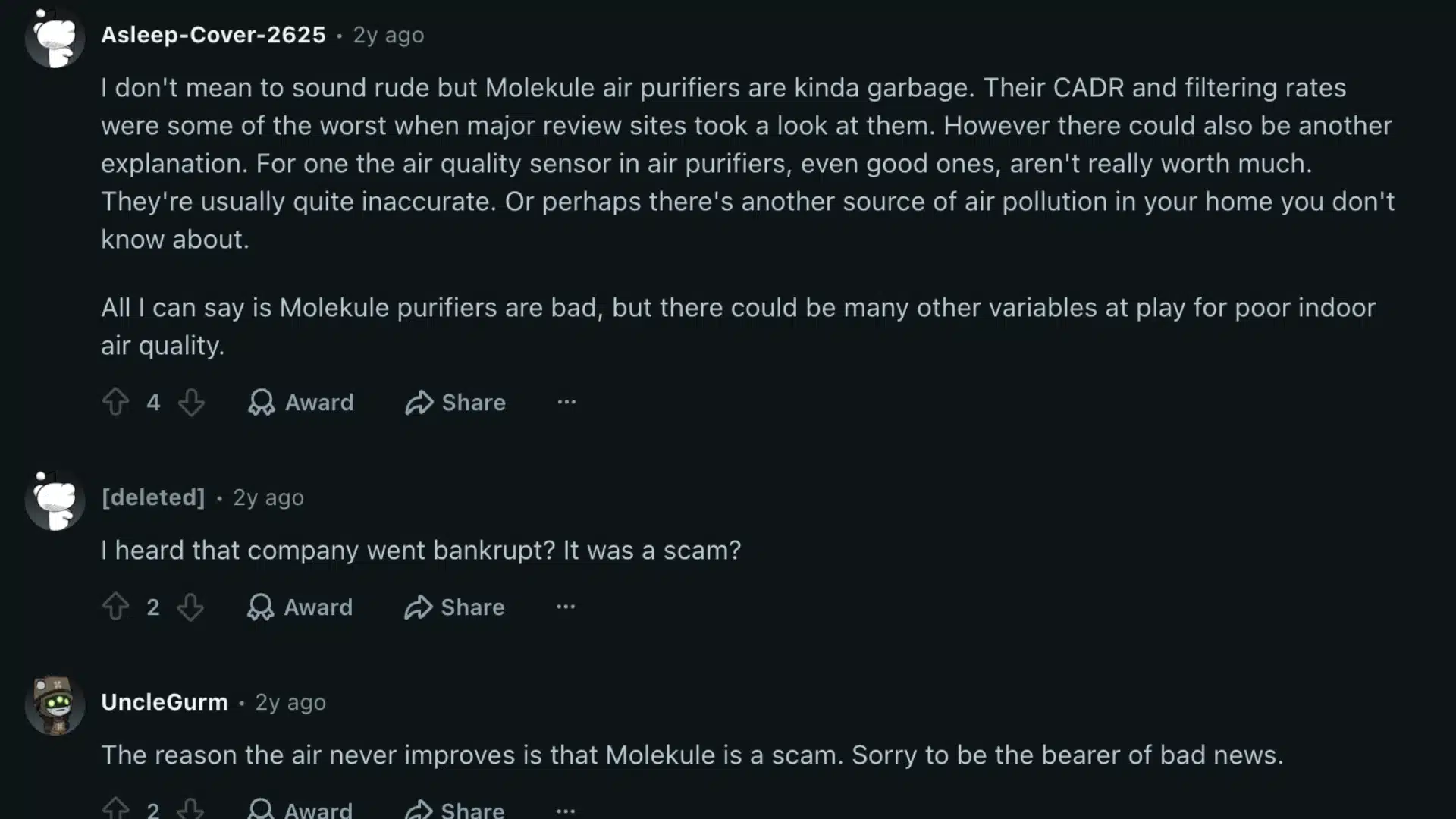
User feedback on Reddit is mixed, with mostly negative experiences with Molekule air purifiers. Many say that while the design looks premium, the actual improvement in air quality is not very noticeable.
Some users question its performance, particularly its CADR and filtration efficiency, and feel it does not meet expectations based on independent reviews.
Others are unsure about the accuracy of the built-in sensors, saying they do not always reflect real changes in air quality.
A common complaint is that even after long use, there is little improvement in air freshness or allergy relief, which feels disappointing given the high price.
However, a few users note that results can vary with room size and conditions, so experiences are not exactly the same for everyone.
Molekule Air Mini+ Pros and Cons
The Molekule Air Mini+ is a compact air purifier designed for personal spaces, offering portable air cleaning with PECO technology, but its limited coverage and higher operating costs than HEPA alternatives affect its overall value.
Pros
- Compact and lightweight design for easy portability
- Suitable for small rooms and personal spaces up to ~250 sq ft
- Uses PECO technology to target pollutants, allergens, and VOCs
- Smart sensor automatically adjusts fan speed based on air quality
- Modern, minimal design that fits easily into small interiors
Cons
- Limited coverage area compared to larger purifiers
- Higher price for its size and performance class
- Replacement filters are relatively expensive
- Less effective particle capture compared to HEPA-based models in tests
- Not ideal for large rooms or heavy pollution environments
Molekule Air Pro Pros and Cons
The Molekule Air Pro offers a mix of premium design and smart features, but its high cost and mixed filtration performance make its overall value debatable.
Pros
- Covers large rooms up to 1,000 sq ft
- Modern touch display with intuitive controls
- Smart sensors automatically adjust fan speed
- Premium build quality with a sleek, durable design
- Helps reduce odors, VOCs, and certain airborne microbes using PECO technology
Cons
- High premium price compared to competitors
- Expensive replacement filters over time
- Weaker particle removal than many HEPA purifiers in tests
- Noticeable noise at maximum fan speed
- Value for money is questioned due to cheaper alternatives
Molekule Air Mini+ vs. Air Pro at a Glance
Choosing between the two models usually comes down to room size and budget more than technology, since both run the same PECO-HEPA approach.
| Feature | Air Mini+ | Air Pro |
|---|---|---|
| Coverage | Up to 250 sq ft | Up to 1,000 sq ft |
| Price | ~$320–$350 | ~$970–$1,000 |
| CADR | Not officially published | 234 CFM smoke, 242 CFM dust, 260 CFM pollen |
| Display | Touch buttons | Full touch screen |
| Filter cost | ~$80 every 6 months | ~$175 twice a year |
| Best room type | Bedroom, nursery, home office | Living room, open-plan space, larger bedroom |
Common Complaints From Users
While many owners appreciate Molekule’s design and smart features, recurring feedback highlights concerns about price, performance, app reliability, and long-term maintenance costs.
- High price: Many users feel the premium price doesn’t match the real-world cleaning performance and overall value.
- Weak airflow: Some reviews mention slower air cleaning compared to similarly priced HEPA-based purifier models overall
- App issues: Occasional problems with pairing, syncing, or unstable connectivity during regular daily usage patterns
- Loud operation: Noticeable noise levels at higher fan speeds, especially in medium to large room environments
- Expensive filters: Replacement filters add significant long-term ownership costs that increase overall usage expenses
- Mixed results: Real-world effectiveness varies widely between users depending on room size, setup, and conditions
How Molekule Compares to Plain HEPA Purifiers?
Molekule combines HEPA filtration with PECO technology, while traditional air purifiers rely only on HEPA filters. This leads to differences in speed, effectiveness, and what types of pollutants they target.
| Feature | Molekule Air Purifiers | Plain HEPA Purifiers |
|---|---|---|
| Filtration method | HEPA + PECO oxidation system | HEPA mechanical filtration only |
| Particle removal | Moderate, slower in many tests | Fast and highly efficient in proven tests |
| Odors & VOCs | Targets gases, odors, and some microbes | Limited or no removal of gases/VOCs |
| Real-world performance | Mixed results across independent tests | Consistently strong lab performance |
| Price value | Premium pricing with higher cost | Wide range, often better value per performance |
| Best use case | Design-focused, smart, multi-pollutant focus | Performance-first, allergy and dust control |
Is Molekule Worth It Today?
Molekule is worth considering if you value premium design, smart features, and advanced odor and VOC reduction as much as particle filtration.
It offers a polished user experience and technology that goes beyond a standard HEPA filter, making it a good fit for modern homes where aesthetics matter.
If your main goal is removing dust, pollen, smoke, and other airborne particles as quickly as possible, many HEPA-only air purifiers deliver similar or better performance at a much lower price.
The EPA’s own guide to choosing an air cleaner recommends matching CADR to room size as the most reliable way to predict real-world performance
For most households, they offer a more practical balance of performance, maintenance costs, and affordability. They also tend to have lower filter replacement costs, making them a better long-term value.
Overall, Molekule isn’t the best choice for every buyer, but it can be a worthwhile investment for those who prioritize design, smart functionality, and broader air treatment over maximum particle-cleaning performance.
Who Should Buy Molekule, and Who Should Skip It?
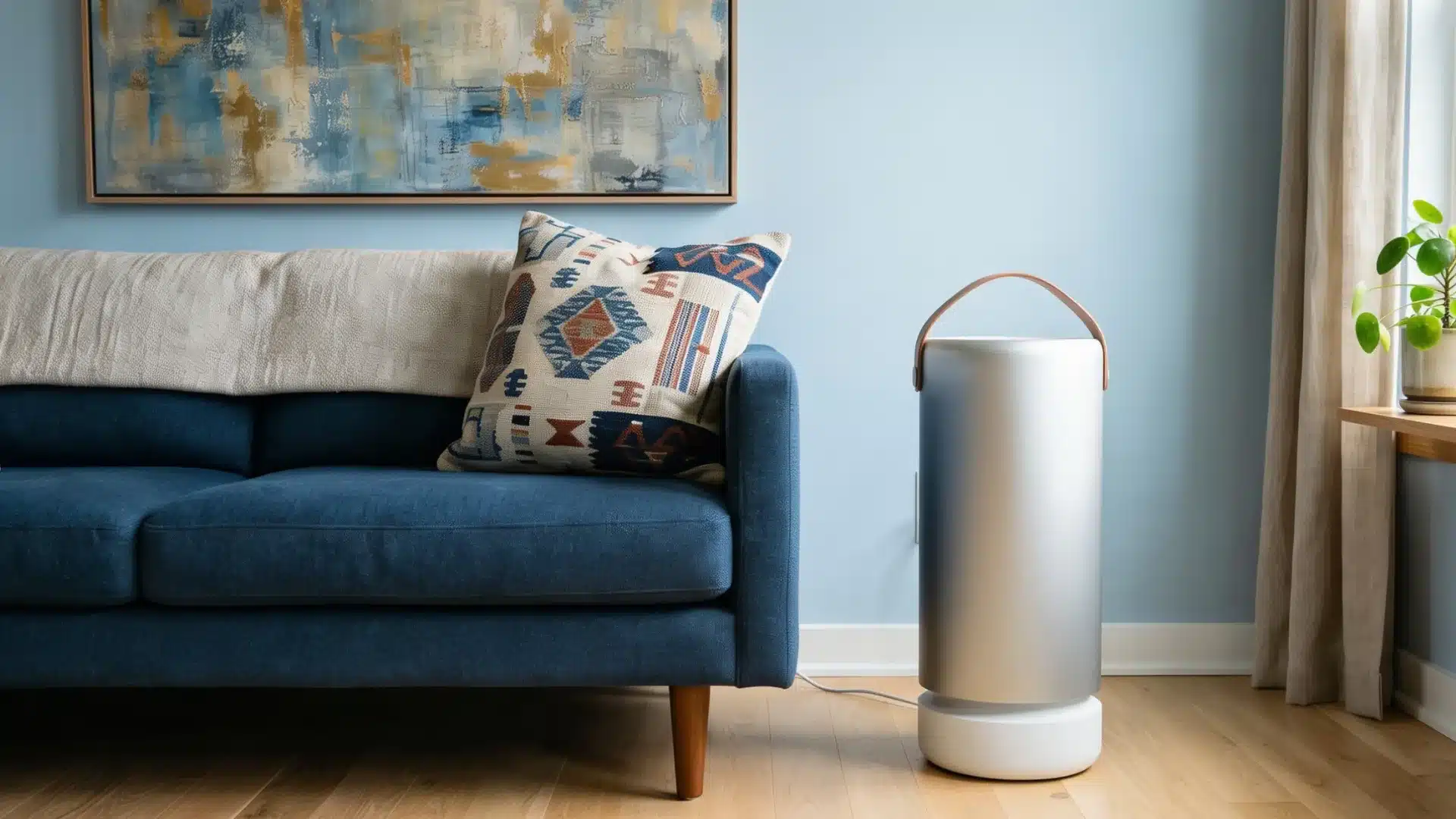
Molekule makes more sense for some households than others. Here’s how it breaks down.
- Buy it if you care about design as much as function, want app-based automation, or deal with persistent cooking or pet odors alongside dust and pollen.
- Buy it if you’re furnishing a small bedroom, nursery, or home office and want a purifier that doubles as a design piece.
- Skip it if your main goal is clearing dust, smoke, or pollen as fast as possible in a large room, since HEPA-only models with a higher CADR will beat it on speed for less money.
- Skip it if filter cost is a dealbreaker, since Molekule’s replacement filters run well above most HEPA competitors.
Conclusion
A Molekule air purifier makes the most sense when design, smart controls, odor help, and VOC treatment matter to your home.
You should look closely at room size, CADR, filter cost, and real cleaning speed before choosing one over a regular HEPA purifier.
I would not buy it only because the claims sound bigger, since cheaper models may clear dust and pollen faster.
For some homes, Molekule feels like a polished premium device, but for others, it may not match the price. The smarter choice is the purifier that best fits your room, budget, allergies, smells, and daily habits.
Have you used a Molekule air purifier, or are you comparing it with HEPA models? Tell us, share with us in the comments below.
Frequently Asked Questions
Does Molekule Clean Air Better than a Regular HEPA Purifier?
Not in independent lab testing for particle reduction. Molekule’s added value is odor and VOC breakdown through PECO, which HEPA-only units don’t address at all.
Why is Molekule so Much More Expensive than Other Air Purifiers?
The price covers the dual HEPA-PECO filter system, FDA clearance testing, app development, and a design-first build, not necessarily faster particle clearing.
Can the Air Mini+ and Air Pro Run in the Same House?
Yes. Both connect to the same app, so you can monitor air quality and control fan speed across rooms from one dashboard.
Does Molekule Produce Ozone?
According to Molekule, No. Independent testing of current Molekule models has not detected harmful ozone output, though the broader PCO category has documented byproduct concerns in some implementations.