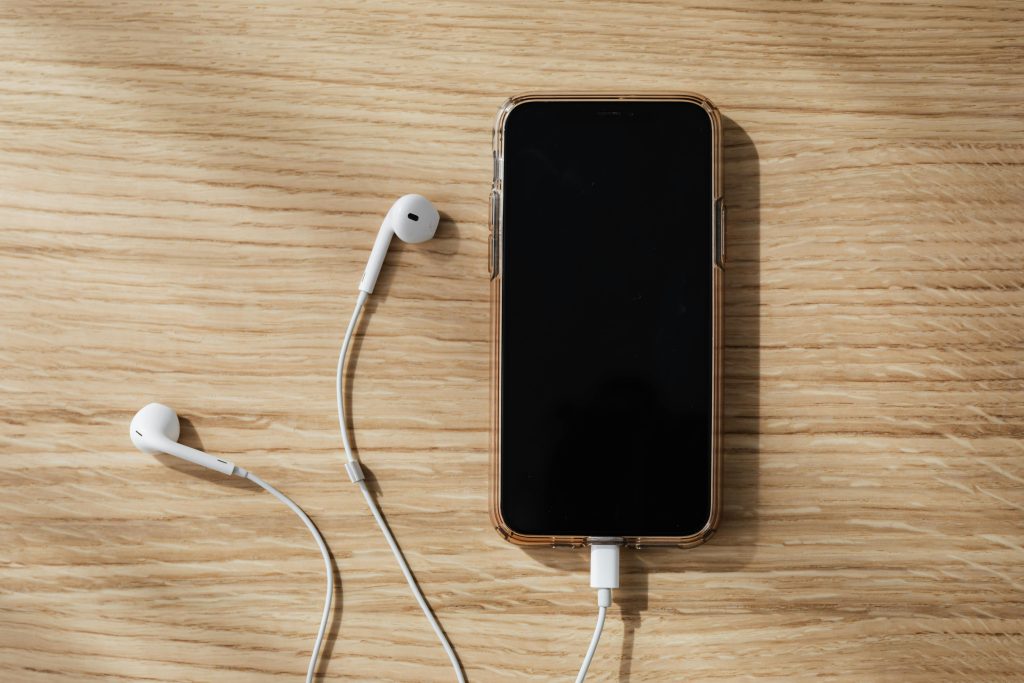
Player or Phone? This dilemma has repeatedly faced any lover of high-quality sound and wired headphones in recent years. It seemed everyone had given unconditional preference to phones (and phones, in turn, to wireless headphones, starting to abandon the 3.5mm jack).
You don’t need to be a hardcore audiophile to see and, most importantly, hear the shortcomings of music playback from a phone: almost any modern player can easily outperform a much more expensive smartphone and better unlock the potential of quality headphones.
Phones are not designed as audio devices; their DAC (digital-to-analog converter) and amplification section are designed on a residual basis.
Meanwhile, a player is created for exactly one purpose — playing music — so engineers use higher quality components and optimize them. However, for many, the convenience of carrying one device instead of two is decisive.
A “compromise” option has always existed between a phone and a player: a phone + an external DAC. The smartphone acts solely as a transport for audio files/streaming and does not affect the sound; the dedicated device takes over all signal processing.
Why “compromise”? Previously, using an external DAC effectively meant you had to carry a “sandwich” of the DAC and phone — a “double device” versus two separate ones. Yet again, a choice between two evils.
As the main participant in our portable setup, we took the ddHiFi E2020A Janus in-ear monitors — a successful model in the mid-price segment (by audiophile standards, budget-friendly), distinguished by a fairly neutral frequency response.
It allows you to enjoy the benefits of a wired connection and perfectly demonstrates the transition from a phone to a higher-quality source.
During the testing of portable DAC/amplifiers, we also used a number of other headphones — both more expensive and more budget-friendly — but the main focus, model comparison, and cable selection were done with the ddHiFi E2020A Janus.
And here you can play and get high from the process both from your smartphone and from your computer – Bet on MLB at betwhale sportsbook, sport and excitement always live side by side.
The general rule of home Hi-Fi audio remains relevant in portable audio as well — components must match each other in quality. Therefore, one should not underestimate the headphone cable; it is just as integral an element of the audio chain, exerting its influence on the sound. Don’t believe it? Just listen for yourself.
The quality of stock cables is 99% of the time lower than the quality of the headphones themselves. You can always (if your headphones have a detachable cable) find something better; how justified that is, is up to you.
Micro-Dac Adapters: Dd Hi Fi Tc35 B and Dd Hi Fi Tc25 B
These models from ddHiFi turned out to be very small — half the size of an AAA battery. How can they affect the sound? First, let’s look at the specifications.
ddHiFi TC35B:
- Chip: Realtek ALC5686
- Max Resolution: 384 kHz / 32-bit PCM
- Headphone Output: 3.5 mm
- Connection Interface: USB Type-C
- THD+N: < -92 dB
- Dynamic Range: 110 dB
- Signal-to-Noise Ratio: 120 dB
- Output Power: 30 mW @ 32 Ohm
- Compatibility: Android / Windows / Mac
- Headset: CTIA supported
- Weight: 6 grams
Mini-Dac Dongles: Dd Hi Fi Tc44 B and Oe Audio Ha2 Dac
These DACs are slightly larger but still far from the size of a smartphone — with them, you’ll likely get a “headphone extension cord,” so ease of use is still better than carrying a “sandwich” of two bars.
Technically, the key difference between this pair and the previous one is the use of 2 DAC chips and support for balanced amplification/connection.
What is this and why is it needed? In short: balanced (or symmetrical) connection came from PRO audio, and its application in consumer electronics allows for increased volume, a wider soundstage, improved channel separation and overall detail, as well as tighter, more defined bass. In portable gear/headphones, 4-contact 2.5mm and 4.4mm connectors are most often used for balanced connections.
So, what do we have? Both devices are built on the same chips and, in addition to balanced amplification (with seriously increased power), add native support for DSD audio to the capabilities of the tiny TC35B.
In terms of specs and sound, both DACs are quite close. You get all the aforementioned benefits of a balanced connection and the operation of a pair of more advanced chips. The devices are roughly the same size; the ddHiFi dongle has the advantage of having both types of balanced connectors.
At this level, comparisons to a smartphone’s built-in sound are simply ridiculous. Switching to an external DAC is comparable to the effect of taking off a blanket — the music sounds free and much more transparent, yet fuller and more “mature”; dynamics and attack speed increase, and there is plenty of power for many full-sized headphones as well.
Both devices can be called neutral, but the TC44B seemed to us a tiny bit brighter, while the OEAudio HA2 DAC was a bit warmer.