
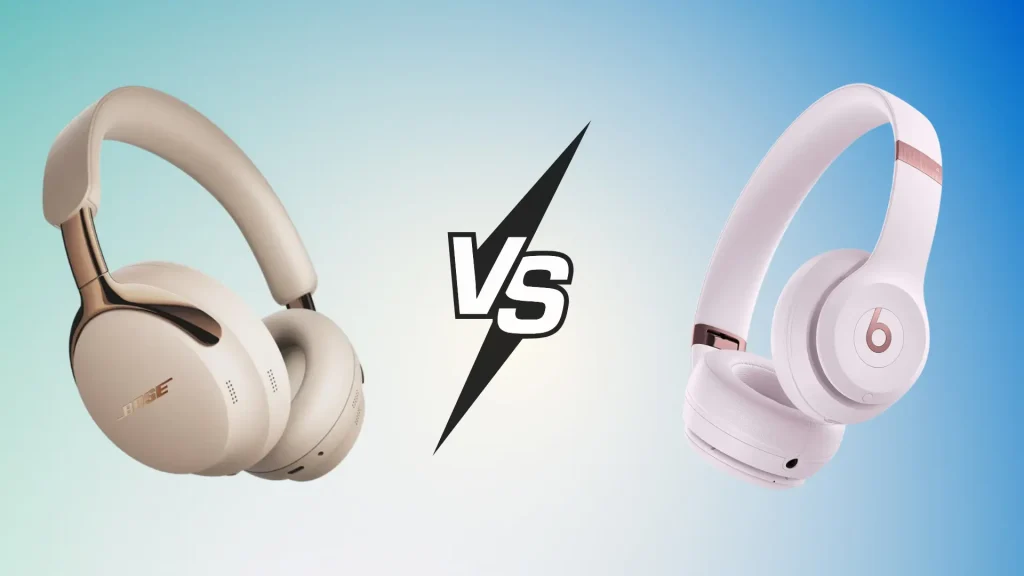
You are scrolling through headphones at 11 pm, with your cart open in two tabs, and the Beats vs. Bose debate has you stuck again.
One tab has bold color options and a bass-heavy reputation. The other has a beige-and-black lineup that flight attendants seem to trust with their lives.
Both brands have been fighting for the same shelf space for over a decade, and neither one has backed down.
Before you pick a side, it helps to know what each brand actually stands for, not just what the spec sheet says.
This comparison breaks down where Beats and Bose actually differ, what real owners say once the packaging hits the recycling bin, and which pair fits how you already listen.
Beats vs Bose: Two Brands, Two Stories
Beats started in 2006 when Dr. Dre and Jimmy Iovine set out to build headphones that made bass feel physical, not just audible.
Apple bought the company in 2014 for around $3 billion, and Beats has stayed true to its original identity ever since.
The branding leans into music culture, sneaker-style colorways, and artist collaborations, and the hardware still leans toward punchy low end even after several rounds of tuning updates.
Bose has a completely different origin story. Dr. Amar Bose founded the company in 1964 out of MIT, and the brand built its name on acoustic research rather than celebrity partnerships.
It became the unofficial uniform for pilots, frequent flyers, and open-plan office workers who needed more quiet than style points.
That research-first culture is why Bose still gets credit for shaping modern active noise cancellation, even as competitors have closed the gap.
So the Beats vs. Bose question comes down to what you value most day-to-day.
Beats built its identity around sound you feel. Bose built its identity around sound you can control or block out entirely. Everything else in this comparison flows from that split.
Beats vs Bose Headphones at a Glance
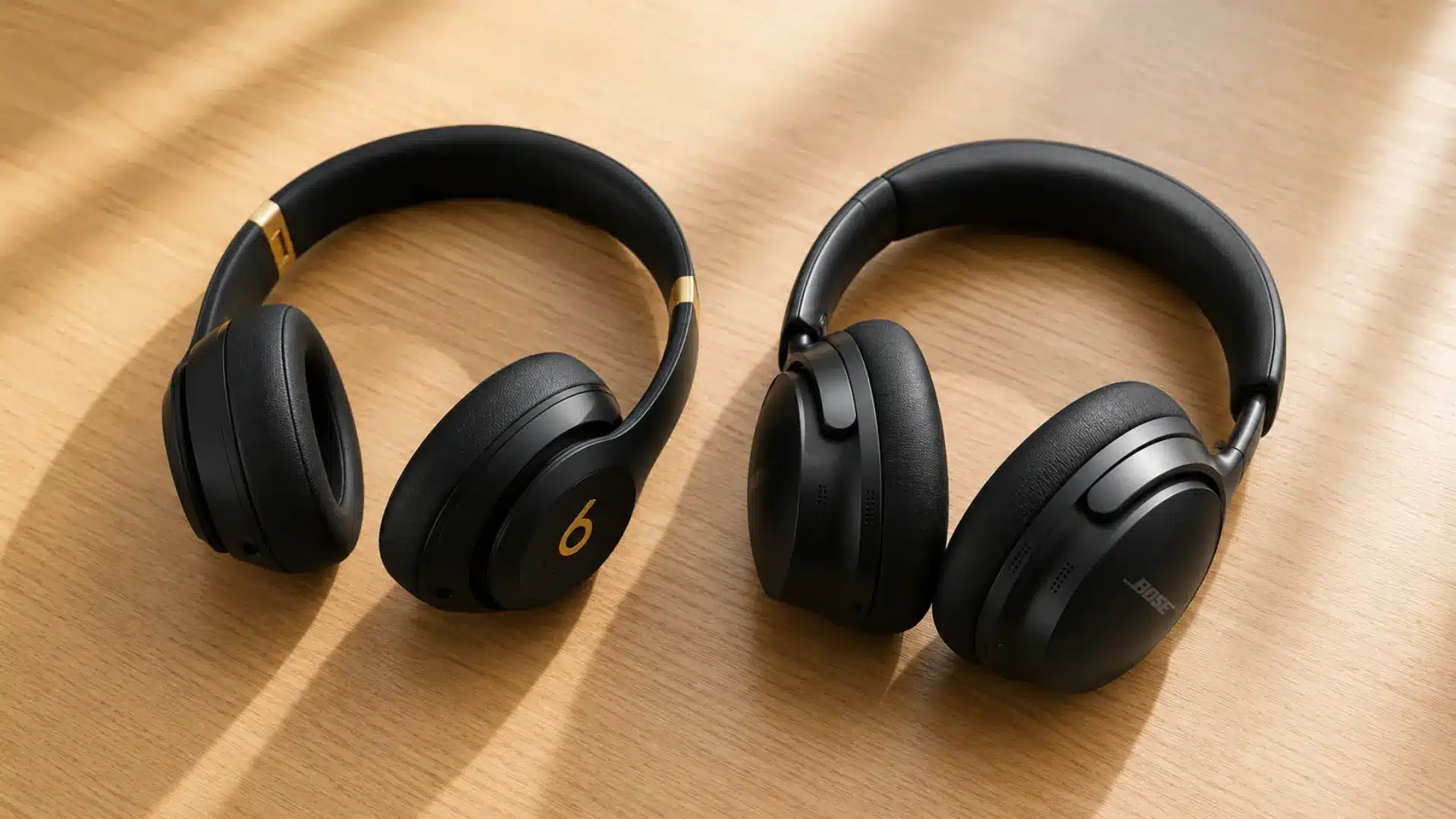
When comparing Beats vs. Bose headphones, the biggest difference isn’t just the logo.
Beats usually focuses on battery life, bass-forward sound, and Apple-friendly features, while Bose leans into comfort, noise cancellation, and balanced everyday listening.
Here is a look at how the Beats Studio Pro and Bose QuietComfort compare, using them as current over-ear examples.
| Category | Beats | Bose |
|---|---|---|
| Best known for | Bass-forward sound, Apple integration, bold design | Noise cancellation, comfort, balanced sound |
| Representative over-ear model | Beats Studio Pro | Bose QuietComfort |
| Battery life | Up to 40 hours on Studio Pro | Up to 24 hours on QuietComfort |
| Fast charging | 10 minutes for up to 4 hours | 15 minutes for up to 4 hours |
| Bluetooth | Bluetooth 5.3 with Class 1 wireless support | Bluetooth 5.1 with up to 33 ft range |
| Noise control | ANC and Transparency modes | Quiet Mode, Aware Mode, and custom modes |
| Wired listening | USB-C audio and 3.5mm analog input | USB-C charging and 3.5mm wired audio support |
| Best for | Apple users, bass-heavy music, longer playback | Frequent travelers, office use, balanced listening |
The biggest practical win for Beats is battery life, especially if you often forget to charge your headphones overnight.
Bose, however, remains the safer brand choice for comfort and noise cancellation, especially if you fly often or work in a loud office.
You can also refer to the Beats Studio Pro Review for a better look.
Sound Quality: Bass-Forward vs Balanced
Beats is known for its bass-forward sound, delivering punchy lows, and newer models offer noticeably better vocal clarity than earlier generations.
Beats also offers multiple EQ and listening modes on select models, giving you more control over how music, movies, and calls sound.
Bose focuses on a balanced sound signature that keeps bass, mids, and highs well controlled for a more natural listening experience.
It is often the better choice for podcasts, jazz, classical music, and acoustic recordings where vocal and instrumental clarity matters most.
Beats generally appeal more to fans of hip-hop, pop, EDM, and other bass-driven genres that benefit from a more energetic sound. Neither brand is objectively better here.
Beats prioritizes excitement, Bose prioritizes accuracy, and your music library is the best indicator of which one will suit you.
If you want a more reference-tuned sound than either brand offers, it is worth comparing dedicated options in my audiophile headphone guide before you commit to either pair.
Noise Cancellation and Comfort for Long Wear
Bose has built its reputation on industry-leading noise cancellation, and that advantage carries over to its latest headphones.
Its QuietComfort lineup blocks steady low-frequency noise, such as airplane engines and highway traffic, more effectively than comparable Beats models.
Beats has significantly improved its adaptive ANC, but Bose still performs better against deep, continuous rumble.
Comfort is also one of the biggest differences between the brands.
Beats headphones generally have a firmer clamping force, and the Studio Pro’s shallow ear cups may create pressure during long listening sessions.
Effective noise cancellation is not just about comfort. It also helps reduce listening fatigue by blocking more background noise before it reaches your ears.
Research from the CDC’s NIOSH noise exposure guidance shows that repeated exposure to loud environments over time contributes to permanent hearing damage.
Note: This section touches on general hearing safety and is for informational purposes only. It does not replace advice from an audiologist or medical professional.
Signs Your Headphones Don’t Fit Right
- Pressure builds around your temples or the top of your head within an hour of putting them on.
- Your ears feel warm or sore after normal listening sessions.
- You catch yourself readjusting the headband every few minutes without thinking.
- The glasses’ arms dig into the side of your head where the ear cups seal.
Battery Life, Charging, and Everyday Fit
Beats has the clearer battery advantage as a brand, offering up to 40 hours of listening on its latest over-ear headphones, while Bose prioritizes all-day comfort over maximum playback time.
That advantage matters if you travel often or forget to charge, though real-world battery life still depends on volume, ANC, calls, and whether you use wired or wireless listening.
Fast charging also favors Beats, with a 10-minute charge providing up to 4 hours of playback. Bose supports quick charging too, but Beats is the stronger choice for emergency top-ups.
For everyday connectivity, Bose takes a more platform-neutral approach. It works smoothly across iPhone, Android, Windows, and mixed-device setups.
Beats has improved significantly outside Apple’s ecosystem, but Bose still feels simpler for users who regularly switch between different platforms.
In the Beats vs Bose headphones comparison, Beats leads in battery life, while Bose stands out for everyday device flexibility.
The Beats vs Bose Community Verdict
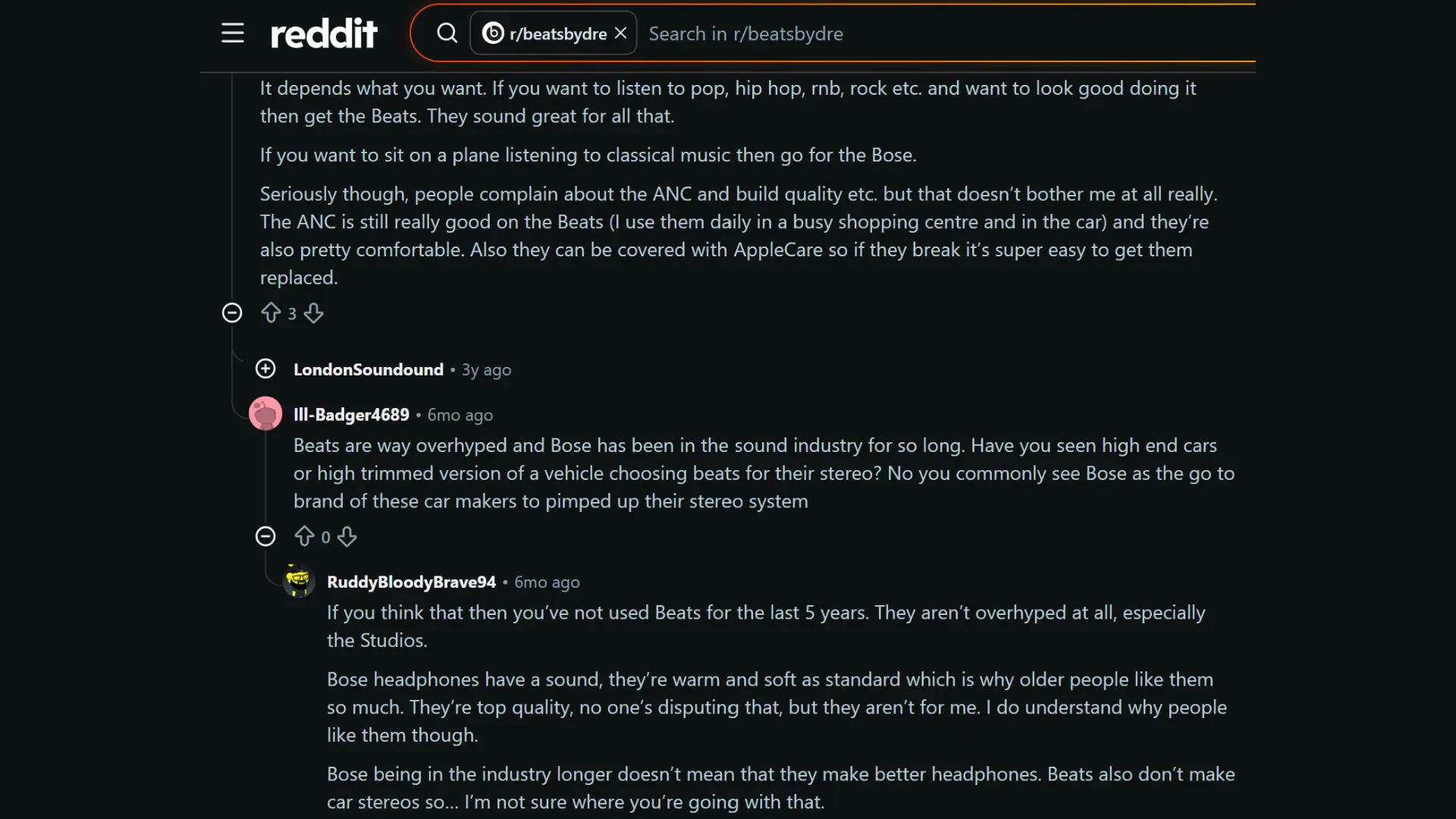
Reddit discussions show that Beats vs. Bose is largely a matter of preference. Most users recommend choosing based on your music taste rather than brand reputation.
- Beats is commonly recommended for pop, hip-hop, R&B, and rock because of its stronger bass and energetic sound.
- Bose is often preferred for classical music, podcasts, and long listening sessions due to its balanced tuning.
- Several users say the Beats Studio Pro sounds much better than older Beats models and is no longer overly bass-heavy.
- Bose earns praise for its sound quality and comfort, though many users feel its long history alone is not a deciding factor.
- Some Beats owners report wearing them comfortably for hours at a time during travel and everyday use.
- Apple users also appreciate that AppleCare makes repairs and replacements more convenient if needed.
Overall, Reddit users agree there is no universal winner. The better choice depends on the genres you listen to and the devices you use every day.
Beats vs Bose: Which One Should You Buy?
Here is how each option compares when choosing between Beats vs Bose headphones:
| If You Prioritize… | Choose | Why |
|---|---|---|
| Frequent travel or noisy workplaces | Bose | Superior ANC and all-day comfort make it better for long flights and office use. |
| Hip-hop, pop, or EDM | Beats | Its bass-forward tuning delivers a more energetic listening experience. |
| Apple ecosystem integration | Beats | Offers seamless pairing and features across iPhone, iPad, Mac, and Apple devices. |
| Podcasts, classical, or acoustic music | Bose | Balanced tuning provides clearer vocals and more natural instrument reproduction. |
| Longer battery life | Beats | Generally delivers longer playback on a single charge than Bose headphones. |
Conclusion
Beats and Bose are not competing for the same buyer, even though they sit in the same price range. Bose earned its reputation by engineering quiet, comfortable listening first and adding style later.
Beats did the opposite, building a cultural identity around bold sound and letting the engineering catch up over time.
Once you know which of those priorities matters more to your daily routine, the Beats vs Bose decision stops feeling like a coin flip.
It becomes a question you can actually answer for yourself, based on how you already listen rather than which brand looks better in the box.
Team Beats or Team Bose? Tell us which one you’re carrying in your bag right now, and what almost talked you out of it in the comments below.
Frequently Asked Questions
Do Beats or Bose Headphones Hold Their Resale Value Better?
Bose headphones generally retain their resale value better because the company refreshes its lineup less frequently than Beats, which releases new models and color variants more often.
Can Beats or Bose Headphones Be Used for Gaming?
Yes. Both are suitable for casual gaming, but Beats offers USB-C lossless audio for wired play, while Bose focuses primarily on Bluetooth connectivity.
Which Brand Offers a Longer Warranty, Beats or Bose?
Both brands include a one-year limited warranty. Beats supports AppleCare+ for extended coverage, while Bose offers optional protection plans for eligible products.





0 Responses
I bought the Beats headphones and they hurt my ears. I was also very underwhelmed with the all over sound quality so I bought the 2nd generation Bose headphones. The first thing I noticed was the comfort. The second thing I noticed was the extraordinary sound quality! These headphones cover a whole range of sound and have a personalized equalizer. I listen to all kinds of music from classical to soft rock. If you are a person who wants true comfort and excellent sound quality, spend the extra and get the Bose. BTY, they paired very easy with my IPhone. I prefer a balanced beautiful sound not just the bass ( which is still amazing) when I listen to music.