Manufacturing costs used to be relatively straightforward to discuss. Material, labor, tooling, machine time, and production volume went into the calculation, then manufacturers looked for ways to make each part a little cheaper.
That logic still matters, but modern production has made the equation more complicated. A part that appears inexpensive to manufacture may require expensive tooling, multiple assembly steps, large inventories, long transportation routes, or significant material removal before it reaches the customer.
Advanced manufacturing technologies are forcing companies to look beyond the price of making one part. The better question is becoming: What does it actually cost to produce, manage, and deliver this component throughout its life?
That shift can change which manufacturing process makes financial sense.
The Cheapest Part Isn’t Always the Cheapest Process
A low unit price is attractive because it’s easy to measure.
If one manufacturing method produces a component for $20 and another produces it for $30, the first option seems obvious. But that comparison can become misleading when the $20 part requires expensive tooling, minimum order quantities, multiple components, additional assembly, and months of inventory sitting in storage.
Production economics become much more useful when manufacturers look at the entire process.
Tooling costs, material waste, labor, post-processing, transportation, storage, assembly, quality control, and lead times can all affect the real cost of a finished component. Depending on the application, some of those expenses may matter far more than the initial manufacturing price.
This doesn’t mean manufacturers should stop thinking about unit cost. It means unit cost needs context.
Tooling Changes the Economics Before Production Even Starts
Traditional manufacturing processes can be remarkably efficient at scale.
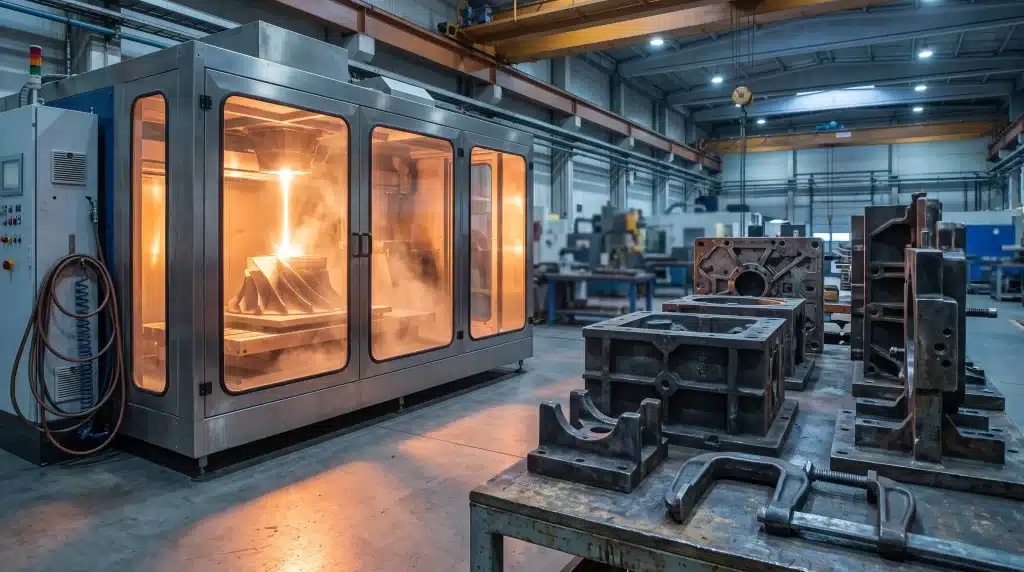
Once tooling exists and production volumes become large enough, methods such as casting or molding can produce components at extremely competitive unit costs. The challenge appears earlier, when companies have to invest in tooling before knowing exactly how demand will develop.
That initial commitment can become significant for products with lower volumes, frequent design changes, or uncertain demand.
Advanced manufacturing methods can change that calculation by reducing or removing some tooling requirements. Instead of investing heavily before producing the first part, manufacturers may have more flexibility to move from a digital design into production.
That flexibility doesn’t make tooling obsolete. It simply gives manufacturers another economic model to consider.
Metal Additive Manufacturing Changes What Gets Counted
Metal additive manufacturing is particularly interesting because it can change more than the way a component is produced.
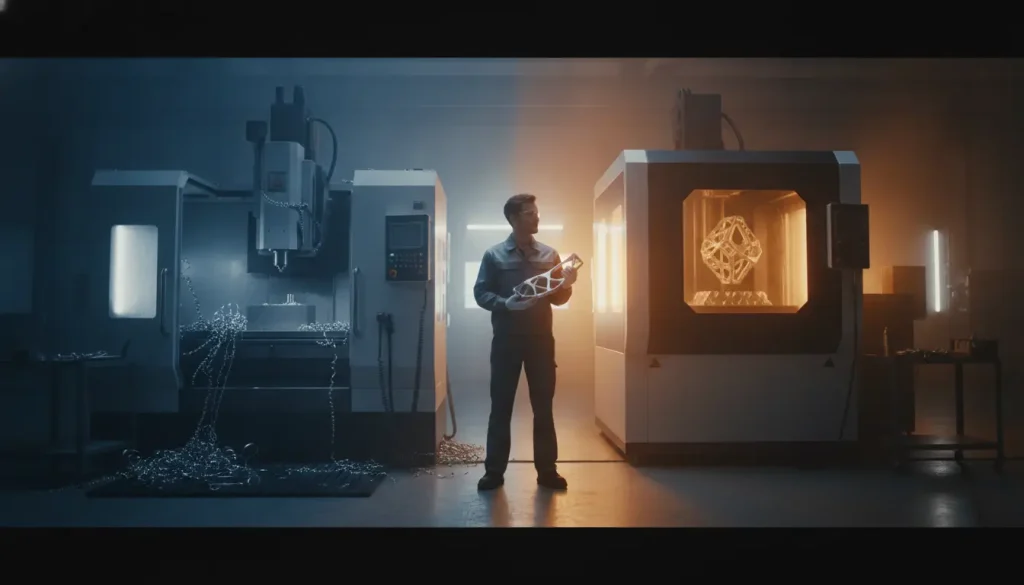
A conventionally manufactured assembly might require several individually produced pieces, fasteners, welding, and additional inspection. In some suitable applications, additive manufacturing can consolidate multiple components into a more integrated design.
That potentially changes several cost categories at once.
Manufacturers evaluating Metal Solutions therefore need to consider more than machine time or material price. Part geometry, production volume, material requirements, post-processing, quality expectations, and opportunities for design consolidation can all influence whether additive manufacturing makes economic sense.
The important question isn’t whether metal additive manufacturing is universally cheaper. It isn’t. The question is whether it changes enough of the surrounding production process to create value for a particular application.
Material Waste Deserves a Closer Look
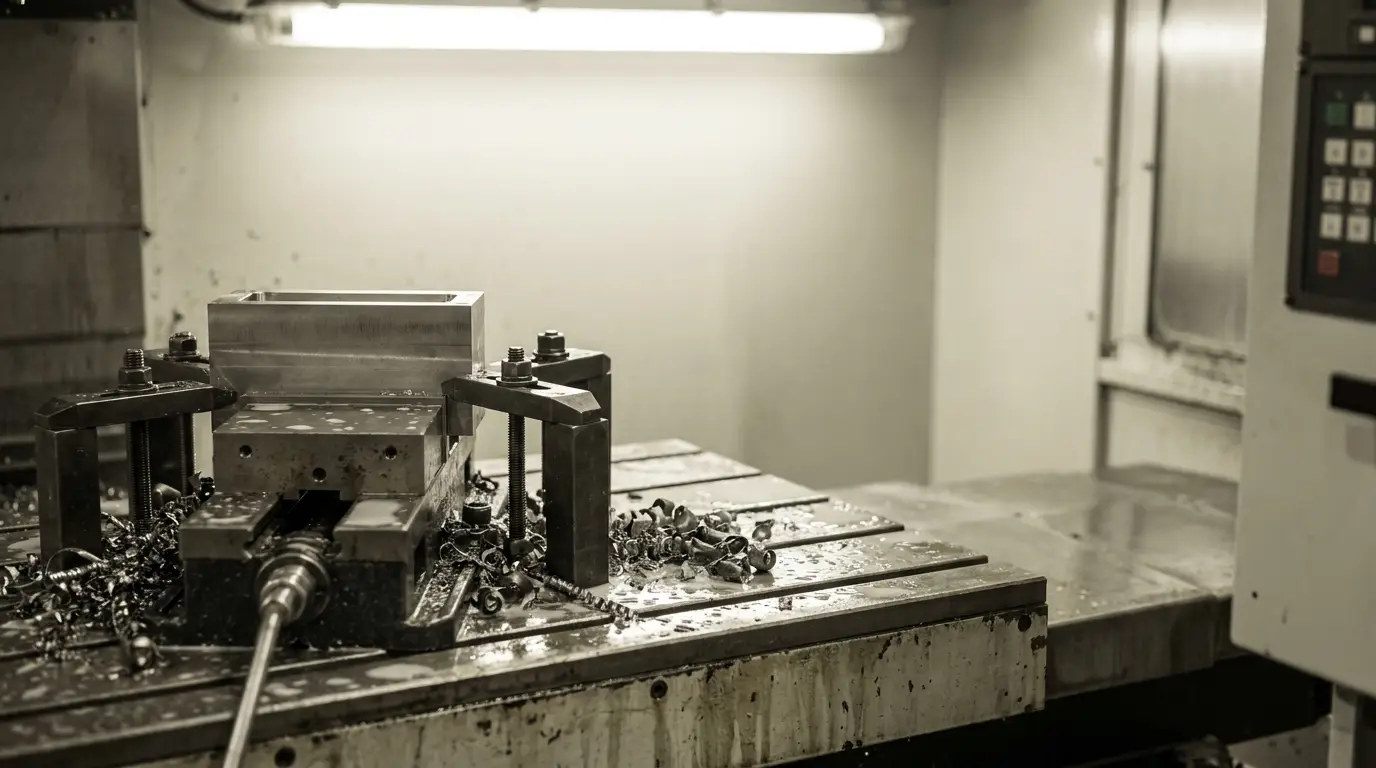
Traditional subtractive manufacturing often begins with more material than the finished component ultimately contains.
Material is removed through machining until the desired geometry remains. Depending on the component and material involved, that difference can be substantial.
Additive manufacturing approaches the problem from another direction by building geometry layer by layer. That doesn’t make the process waste-free, and material handling, supports, unused powder, and post-processing all need to be considered.
Still, the different relationship with raw material can matter, especially when working with expensive materials or complex geometries.
Manufacturers looking closely at production economics are increasingly interested in how much material enters the process, how much becomes part of the final component, and what happens to the remainder.
Inventory Has a Cost Even When Nothing Moves
A warehouse full of parts can feel reassuring.
It can also represent capital that isn’t doing anything.
Traditional production economics often encourage larger batches because producing more components reduces the cost per unit. That makes sense until demand changes and hundreds or thousands of parts remain unused.
Storage, handling, forecasting errors, and obsolete inventory all carry costs that can be easy to separate from the original manufacturing decision.
Digital manufacturing creates another possibility for certain applications. Rather than producing large quantities far ahead of demand, companies may be able to manufacture smaller batches closer to when parts are actually required.
This approach won’t work for every component, but it makes inventory part of the manufacturing conversation rather than treating it as somebody else’s problem.
Cost Calculations Are Becoming More Sophisticated
Comparing conventional manufacturing with additive manufacturing isn’t particularly useful if the analysis stops at the price coming out of the machine.
A realistic calculation needs to consider what happens before and after that moment.
Tooling, material consumption, energy use, post-processing, labor, scrap, transportation, inventory, and production volume can all influence the final result. Depending on the application, environmental considerations may also become part of the evaluation.
That’s why assessing metal 3d printing cost requires looking beyond a single number. Comparing different manufacturing approaches across both cost and carbon-related factors can provide a more complete picture of the trade-offs involved.
A cheaper manufacturing step isn’t necessarily a cheaper product lifecycle, just as a more expensive production step isn’t automatically the worse financial decision.
Design Can Change the Economics Before Manufacturing Begins
One of the more overlooked advantages of advanced manufacturing is the opportunity to reconsider the part itself.
Engineers traditionally design components around the constraints of the process that will manufacture them. Change the process, and some of those assumptions can change too.
A redesigned component may use less material, combine several parts, reduce assembly requirements, or perform differently than the original version.
Those improvements can influence costs elsewhere in the product lifecycle even when the manufacturing price itself doesn’t fall dramatically.
This is why comparing identical designs across manufacturing methods can sometimes miss the point. The larger opportunity may come from designing differently because another production process makes that design possible.
Better Manufacturing Economics Require a Wider View
Manufacturers will always care about cost. Competitive markets make that unavoidable, and reducing unnecessary production expenses remains one of the foundations of good manufacturing.
What’s changing is the definition of cost.
Advanced manufacturing technologies are encouraging companies to consider tooling, inventory, material efficiency, assembly, design flexibility, and other expenses alongside traditional unit economics. The result isn’t a simple conclusion that newer technology always wins.
Sometimes the conventional process will remain the obvious choice. Sometimes additive manufacturing will create advantages that aren’t visible until the entire production workflow is examined.
The manufacturers making the strongest decisions won’t be the ones chasing the newest technology simply because it’s new. They’ll be the ones willing to question old cost assumptions and calculate what production really requires from beginning to end.