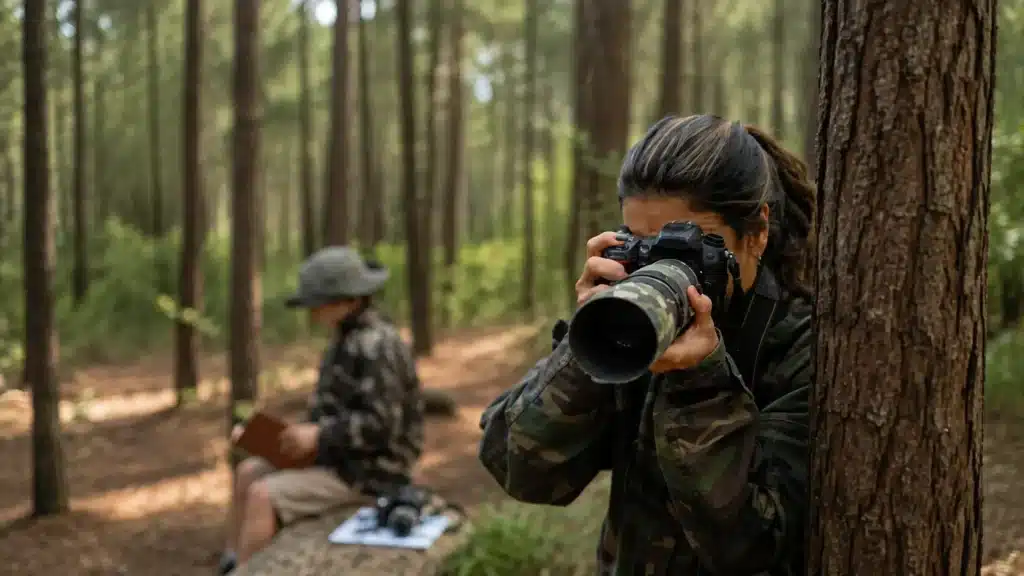
Ever tried to photograph a bird thirty feet up a tree, only to end up with a blurry speck against a wall of green?
Or maybe you’ve watched a sports photographer on the sideline with a lens the size of a small telescope and wondered what on earth they were compensating for.
In both cases, the answer comes down to one question: what is a telephoto lens,and what makes it so useful?
A telephoto lens is a camera lens with a long focal length that lets you fill the frame with subjects that are far away, without physically walking any closer.
What Does Telephoto Mean in Photography?
Before we get into focal-length charts and buying advice, it helps to nail down what “telephoto” actually means.
In casual conversation, most photographers use it to describe any lens longer than a standard 50mm, a loose shorthand rather than a strict category.
Technically, a true telephoto design uses a specific arrangement of elements that lets the physical barrel be shorter than the focal length it produces, which is why some 300mm lenses are compact enough to handhold while others aren’t.
Even without checking specs, you can usually spot one at a glance: a longer barrel, a large front element, separate focus and zoom rings, and often a removable hood and tripod collar for balance.
How Does a Telephoto Lens Work?
Understanding how a telephoto lens is useful is important, but the “how” is what actually helps you use one well. A few optical principles work together to create that signature telephoto look.
| Concept | Key Point | Why It Matters |
| Long Focal Length | Longer focal lengths (measured in mm) capture a smaller, more magnified slice of a scene. | Helps you pick the right mm range for how “zoomed in” you need to be. |
|
Narrow Angle of View |
A narrower field of view isolates subjects well but shows less of the surrounding scene. | Explains why panning and framing take more care with telephoto shots. |
| Subject Magnification | Distant subjects appear larger without moving closer. | The main reason photographers reach for a telephoto lens at all. |
| Apparent Background Compression | Compression comes from shooting distance, not focal length itself. | Corrects a common myth and helps you control the look intentionally. |
| Background Blur & Subject Separation | Blur depends on aperture, focal length, and subject-to-background distance. | Shows blur isn’t automatic; composition and settings both matter. |
Getting all of these working together a wide aperture, some distance from the background, and the right focal length is what produces those magazine-style portraits and wildlife shots.
What Focal Lengths are Considered Telephoto?
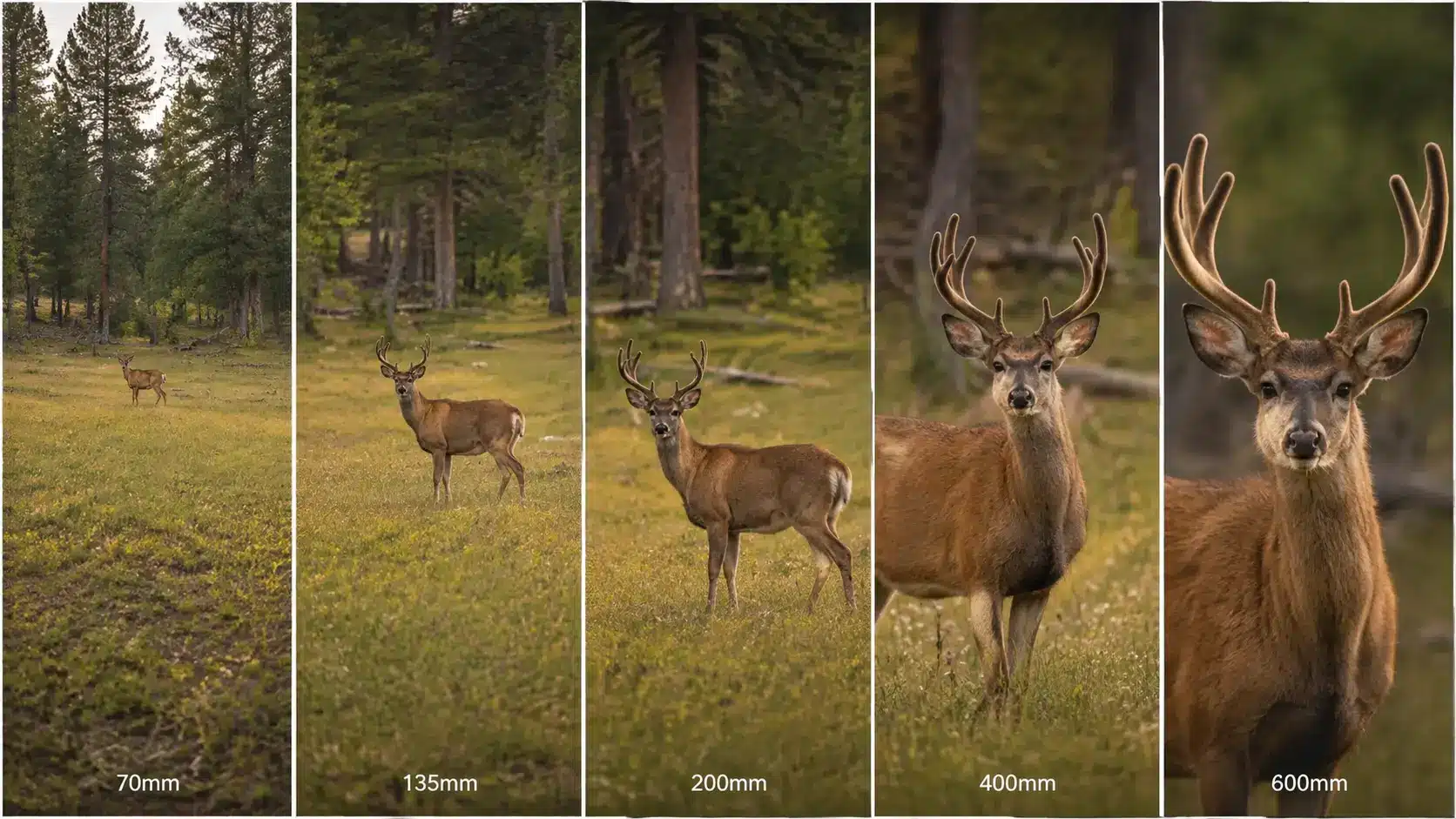
“Telephoto” isn’t one single focal length; it’s a range, and different lengths suit very different kinds of photography. Here’s how that range typically breaks down.
1. Short Telephoto: 70mm to 135mm
Not every telephoto lens needs to be enormous to be useful. This shorter range is often the first “long lens” photographers buy, and for good reason: it’s flexible enough for everyday use while still delivering that classic telephoto look.
- Ideal for portraits, indoor sports, events, tight details, and candid street photography.
- Long enough to flatter facial proportions and isolate a subject from its background.
- Still short and light enough to use comfortably in reasonably tight spaces.
2. Medium Telephoto: 135mm to 300mm
Step up into this range and you start trading portability for reach. It’s the sweet spot for photographers who need to get closer to the action without going all-in on the size and cost of a super-telephoto setup.
- Covers field sports, stage photography, larger wildlife, and motorsports.
- Useful for pulling out distant landscape details from a fixed vantage point. While a telephoto lens is excellent for isolating distant scenery, pairing it with one of the best cameras for landscape photography can make an even bigger difference in image quality and dynamic range.
- Lenses get noticeably bigger and heavier here, making image stabilization more important.
3. Super-Telephoto: Above 300mm
Beyond 300mm, you’re firmly in specialist territory. These are the lenses built for subjects you can’t or shouldn’t get anywhere near, and they ask for real commitment in size, weight, and cost.
- Built for birds, small or skittish wildlife, and aviation photography.
- Well-suited to motorsports and any subject requiring a genuinely safe working distance.
- Demand serious light-gathering power and fast, reliable autofocus to keep up with movement.
Some sources mark the starting point at 70mm, others at 80mm, and others at 100mm; the cutoff varies by camera brand, publication, and photographic tradition rather than any fixed standard.
If you’re still comparing telephoto lenses with other options, it also helps to understand the broader process of choosing the right lens for your photography style before making a purchase.
How Sensor Size Changes the Telephoto View
Here’s a detail that trips up a lot of new photographers: the same lens can behave differently depending on the camera it’s attached to, because sensor size changes the effective field of view.
Full-frame sensors are the baseline; a 200mm lens gives exactly the field of view the number suggests. APS-C sensors crop in further, so that same 200mm lens behaves more like 300–320mm on full frame.
Micro Four Thirds crops even more, pushing it closer to 400mm equivalent. Importantly, the lens itself never changes; a 200mm lens is still physically 200mm; only how much of its image circle the sensor records changes.
Telephoto Lens vs Zoom Lens
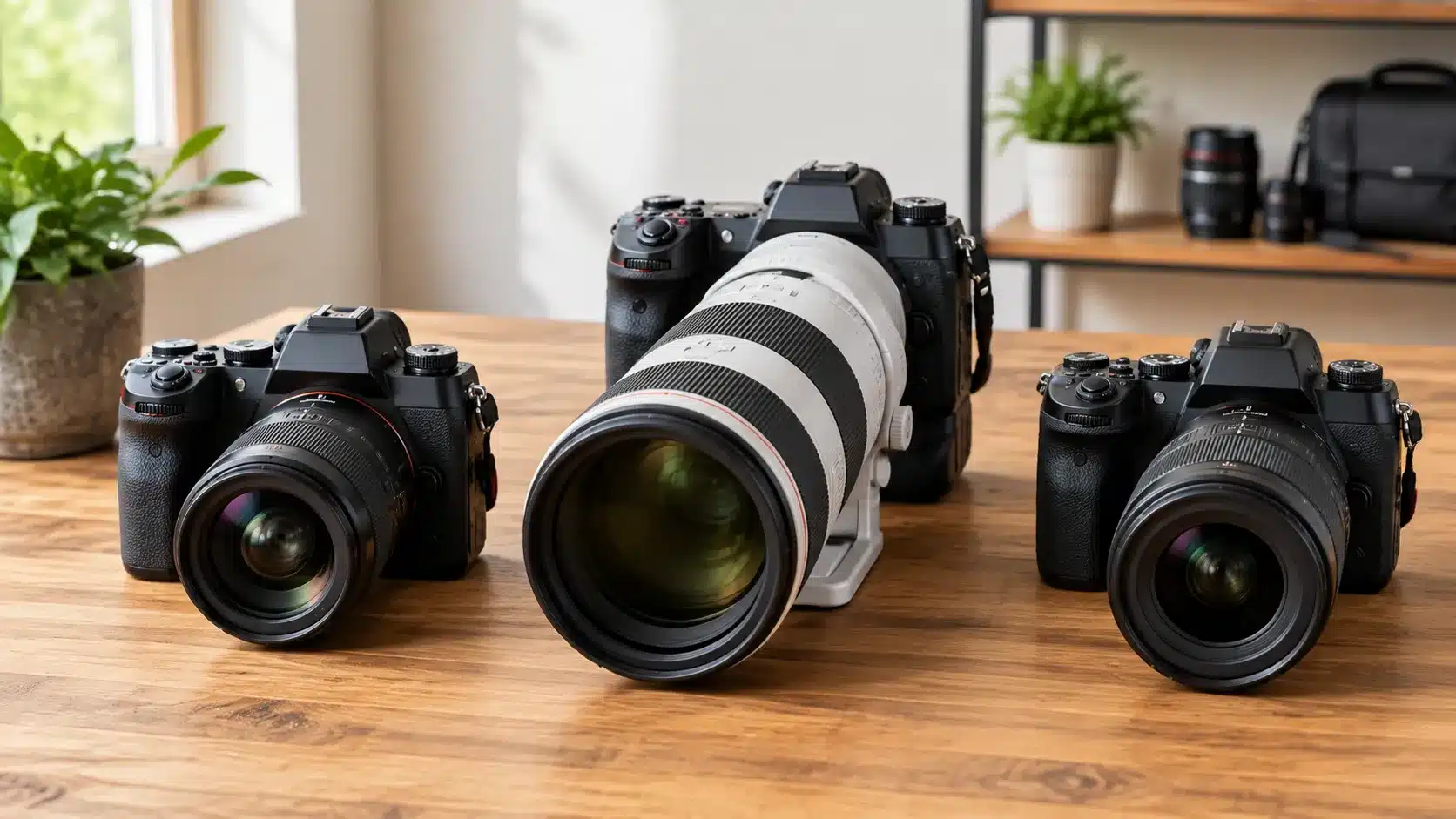
These two terms get mixed up constantly: “what is a telephoto lens” and “what is a zoom lens,” but they describe entirely different things. “Telephoto” refers to a long focal length or the field of view associated with long lenses. “Zoom” refers to flexibility the ability to change focal length within a single lens.
| Feature | Telephoto Prime (85mm, 135mm, 300mm, 400mm) | Telephoto Zoom (70–200mm, 100–400mm, 150–600mm) | Non-Telephoto Zoom (16–35mm, 24–70mm) |
| Definition | Fixed long focal length | Adjustable, long focal-length range | Adjustable, short-to-standard range |
| Focal-length flexibility | None | High | High |
| Typical uses | Portraits, wildlife | Sports, wildlife, events | Landscapes, architecture, interiors |
| Size | Varies, often compact for aperture | Larger, heavier | Smaller and lighter |
| Aperture | Often wider | Often narrower at long end | Often wider at wide end |
| Price | Can be high for wide apertures | Mid to high | Lower to mid |
Once you see telephoto and zoom as two independent labels rather than synonyms, choosing between a 300mm prime and a 100 to 400mm zoom becomes a much clearer decision. Nikon’s lens selection tips can help photographers understand different lens choices.
How to Use a Telephoto Lens
Before you start shooting, it’s worth taking a few seconds to check your telephoto setup. A long lens makes small mistakes more noticeable, and the wrong settings can lead to blurry photos or missed moments.
Step 1: Check Shutter Speed: Camera Shake → Blurry Photos
Long focal length → More noticeable movement → Faster shutter speed needed
- Use a shutter speed close to or faster than your focal length to reduce camera shake
- Example: 300mm lens → Try 1/300 sec or faster when shooting handheld
- Faster-moving subjects may need even higher shutter speeds
Step 2: Check Image Stabilization: Handheld Shooting → Turn Stabilization On
Holding the camera → Small hand movements → Stabilization helps reduce blur
- Turn on lens or camera stabilization when shooting handheld
- Stabilization reduces camera movement but does not freeze moving subjects
- Check your lens instructions when using a tripod, as some lenses work better with stabilization turned off
Step 3: Check Autofocus Mode: Moving Subjects → Continuous Tracking
Wildlife or sports → Subject movement → Continuous autofocus keeps focus
- Use continuous autofocus with tracking for moving subjects
- Let the camera adjust focus as the subject changes position
- This works well for birds, sports, wildlife, and other fast-moving subjects
Step 4: Check Composition: Moving Subject → Leave Space in Front
Subject moving toward one side → Extra space improves framing
- Leave room in the direction the subject is moving
- Avoid placing moving subjects too close to the frame edge
- This creates a more natural-looking image and keeps the action visible
Step 5: Check Subject Distance: More Background Distance → Better Blur
Subject separated from background → Stronger background blur
- Keep distance between your subject and the background when possible
- Use a suitable aperture to create better separation
- Telephoto lenses can help make backgrounds appear softer and less distracting
Step 6: Check Shooting Conditions: Long Distance → Atmospheric Effects
Distant subject → More air between camera and subject → Less detail
- Heat, haze, dust, and moisture can reduce image clarity
- Long-distance photos may appear softer because of atmospheric conditions
- Shooting in cooler, clearer conditions can help capture more detail
A telephoto lens rewards careful technique. Once you understand how shutter speed, stabilization, autofocus, framing, and shooting conditions affect your photos, you can avoid common mistakes and get sharper results from the same equipment.
Telephoto Lens Examples by Photography Type
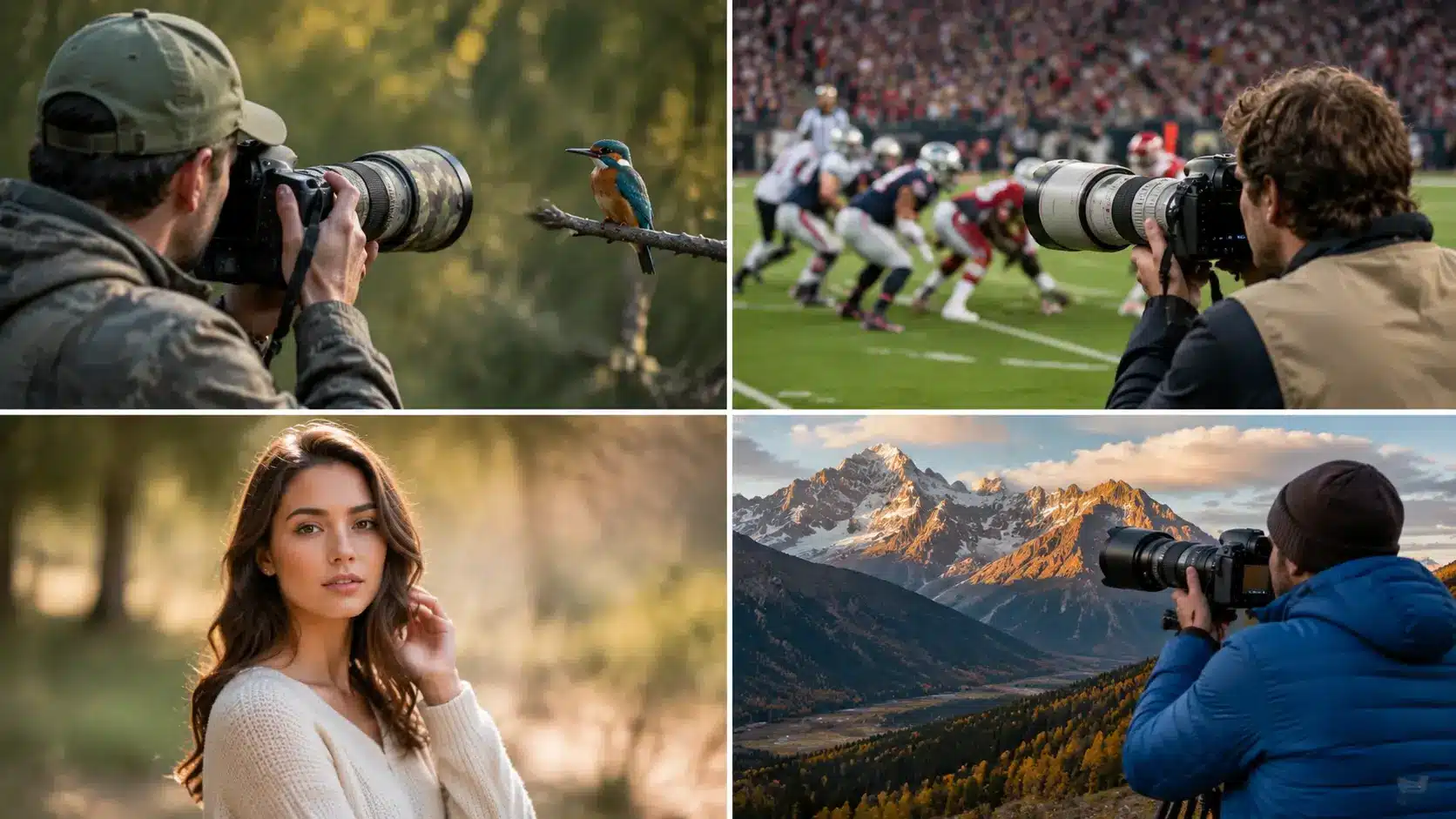
With so many focal lengths and lens types on the table, it helps to see them lined up against real photography scenarios. The table below breaks down which range tends to work best for each type of shooting, along with the features that matter most and safe wildlife photography practices.
| Photography Type | Suggested Focal-Length Range | Useful Features | Common Challenge |
| Portraits | 85–135mm | Wide aperture, subject isolation | Managing background distance |
| Indoor sports | 70–200mm | Fast autofocus, wide aperture | Low light |
| Outdoor sports | 100–400mm | Fast autofocus, weather sealing | Distance and fast movement |
| Wildlife | 300–600mm | Long reach, stabilization | Weight and stability |
| Birds | 400–600mm+ | Extreme reach, fast autofocus | Small, fast-moving subjects |
| Concerts | 70–200mm | Wide aperture, fast autofocus | Low light, restricted access |
| Landscapes | 100–300mm | Compression, detail isolation | Haze over distance |
| Travel | 70–300mm | Versatility, moderate weight | Balancing size and reach |
| Moon photography | 400mm+ | Extreme reach, tripod support | Atmospheric distortion |
| Smartphone photography | 2x–10x equivalent | Periscope zoom, computational processing | Low-light quality |
For photographers interested in lunar images, NASA provides educational resources about the Moon that can help with planning and understanding lunar features.
Pros and Cons of a Telephoto Lens
Like any specialized tool, a telephoto lens is a trade-off; it opens up shots that would otherwise be impossible, but it asks for something in return, whether that’s extra weight, extra cost, or extra care in how you shoot.
Advantages of a Telephoto Lens:
- Frames distant subjects clearly
- Isolates subjects from busy backgrounds
- Keeps a safe distance from wildlife
- Flatters portrait subjects
Limitations of a Telephoto Lens:
- Large, heavy, and expensive
- More prone to camera shake
- Less margin for error in framing
- Vulnerable to atmospheric issues
Weighed together, the advantages usually outnumber the drawbacks for anyone who regularly shoots distant or hard-to-approach subjects, but the limitations are real enough that they shouldn’t be an afterthought.
Is a Telephoto Lens Right for You?
If you regularly photograph subjects you can’t physically approach wildlife, sports, performers on a stage a telephoto lens is likely to earn its keep quickly.
If your photography leans toward interiors, architecture, or wide landscapes, you may find yourself reaching for it far less often.
Think honestly about subject distance, your preferred type of photography, the light you usually shoot in, how much weight you’re willing to carry, whether your camera system supports the lens you want, and what you can realistically budget.
Final Vision
A telephoto lens isn’t a magic fix for every photography problem. Still, for anyone capturing distant, fast-moving, or hard-to-reach subjects, it can become one of the most useful tools.
If you’ve ever wondered what a telephoto lens is and why photographers rely on them for wildlife, sports, portraits, etc., the answer comes down to reach, framing control, and subject separation.
Whether you choose an 85mm prime for portraits or a 600mm lens for birds in flight, knowing how a telephoto lens works and understanding its limits will help you make better photos.
Ready to put this into practice? Browse our full lineup of telephoto lenses and zooms to find the right focal length for your next shoot.
Frequently Asked Questions
Do I need a Tripod for a 300mm Lens?
Not always. A tripod helps in low light or for maximum sharpness. Still, many 300mm lenses can be handheld successfully with a fast enough shutter speed or good stabilization, especially in bright conditions.
Can a Teleconverter Be Used with Every Telephoto Lens?
No. Teleconverters are typically designed to work with specific lens mounts and lens models, and using an incompatible combination can affect autofocus performance or even damage equipment, so it’s worth checking compatibility first.
Why are Professional Telephoto Lenses Expensive?
Professional telephoto lenses often combine wide maximum apertures, complex optical designs with specialized glass elements, weather sealing, and fast, precise autofocus motors, all of which add significant manufacturing cost.