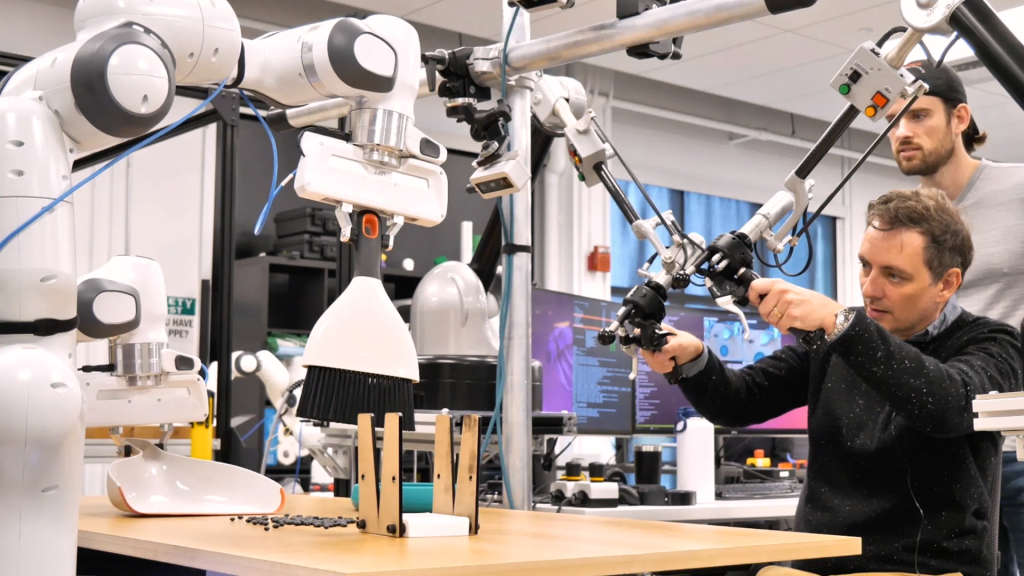
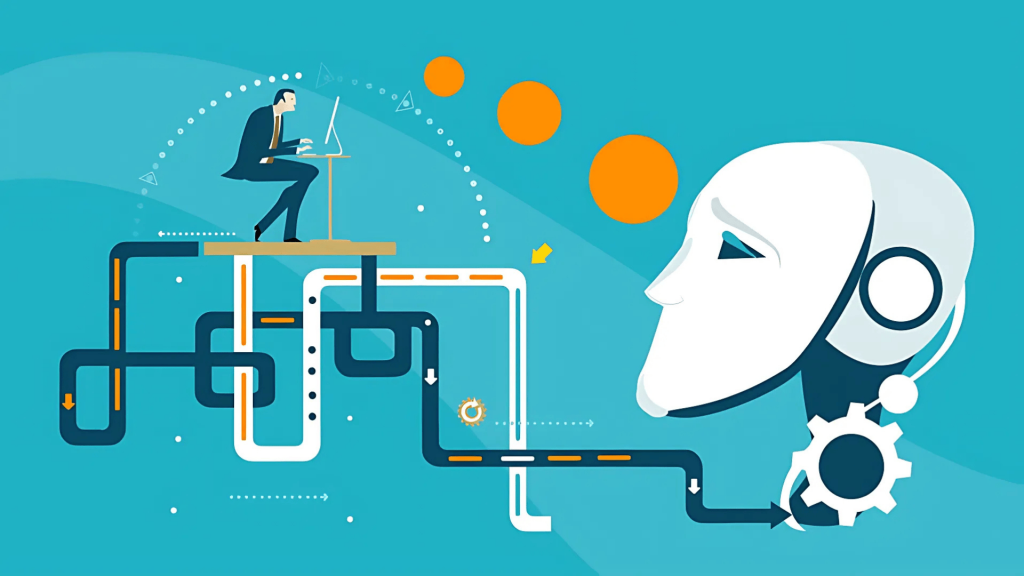
Robots are becoming a bigger part of everyday life, from helping in warehouses to supporting healthcare workers and delivering packages.
Autonomous robots work with little or no human help, improving efficiency, accuracy, and safety.
Many of these gains start with software automation, which helps teams manage the systems, workflows, and processes that keep robots running effectively
In this article, I’ll explain what autonomous robots are, how they work, and the different types used across industries today.
You’ll learn about their main functions, uses, and benefits. This guide gives a simple overview of how autonomous robots are changing the way work gets done.
By the end, you’ll have a better understanding of where autonomous robotics is heading and why it matters.
What Are Autonomous Robots?
Autonomous robots are machines that can perform tasks and make decisions on their own with minimal or no human intervention.
They use sensors, software, and AI to understand and respond to their surroundings.
Unlike traditional robots, autonomous robots can adapt in real time. They gather data, make decisions, and perform tasks across industries like healthcare, agriculture, logistics, and manufacturing.
Their ability to work independently helps improve efficiency, reduce human error, and handle repetitive or hazardous tasks.
The global autonomous robot market was valued at $26.32 billion in 2025 and is projected to reach $99.28 billion by 2034 at a CAGR of 16.1%, according to Intel Market Research.
That’s not incremental growth; it’s a structural shift in how industries organize labor and production.
The scale explains why manufacturers, hospital networks, and logistics firms are all investing in this space simultaneously.
As technology advances, autonomous robots are becoming more capable and widely used in business and daily life.
How Do Autonomous Robots Work?
Autonomous robots work by sensing their environment, processing information, and making decisions without constant human control.
- Sensing the Environment: Autonomous robots use cameras, LiDAR, radar, GPS, and other sensors to gather information about their surroundings.
- Processing Data: The robot’s onboard computer analyzes the collected data to understand objects, obstacles, and environmental conditions.
- Making Decisions: Using artificial intelligence and machine learning algorithms, the robot determines the best action to take based on its goals and real-time information.
- Navigation and Movement: The robot plans safe, efficient routes, enabling it to navigate environments while avoiding obstacles.
- Executing Tasks: Once a decision is made, the robot performs specific actions such as transporting goods, inspecting equipment, or assisting people.
- Continuous Learning and Adaptation: Many autonomous robots improve their performance over time by learning from new data and experiences.
The Role of SLAM in Navigation
One of the most important technologies enabling true autonomy is SLAM, Simultaneous Localization and Mapping.
Rather than following pre-mapped routes, a SLAM-enabled robot builds a digital map of its environment while simultaneously tracking its own position within that map.
It uses LiDAR, cameras, and sensor fusion to update this map continuously as it moves.
When covering robotics for a decade-plus, SLAM consistently comes up as the single biggest differentiator between robots that work reliably in the real world and those that don’t.
A robot without SLAM stops the moment something unexpected appears. A SLAM-powered robot routes around it and keeps moving.
Levels of Autonomy: Not All Robots Are Equal
Autonomy in robotics ranges from manual control to full independence. Some robots need human oversight, while others can operate continuously on their own.
- Level 0 (Manual control): A human operator controls all movement and decisions directly. Think of early surgical robots or remote-controlled inspection devices.
- Level 1 (Assisted automation): The robot handles specific sub-tasks (like maintaining speed or avoiding a single class of obstacle) while the human controls everything else.
- Level 2 (Partial autonomy): The robot manages navigation or task execution independently but requires a human supervisor ready to intervene.
- Level 3 (Conditional autonomy): The robot handles most situations independently but escalates to a human in unusual or high-stakes scenarios.
- Level 4 (High autonomy): The robot completes its full task loop without human involvement in normal operating conditions. Most commercial AMRs today operate at this level.
- Level 5 (Full autonomy): The robot operates across all environments and edge cases without any human intervention. This level is still an active area of R&D.
Most of the robots shipping into warehouses and hospitals right now are Level 3 to Level 4.
Full Level 5 autonomy, the kind that works easily in any unstructured, unpredictable environment, remains an open engineering challenge.
Common Types of Autonomous Robots
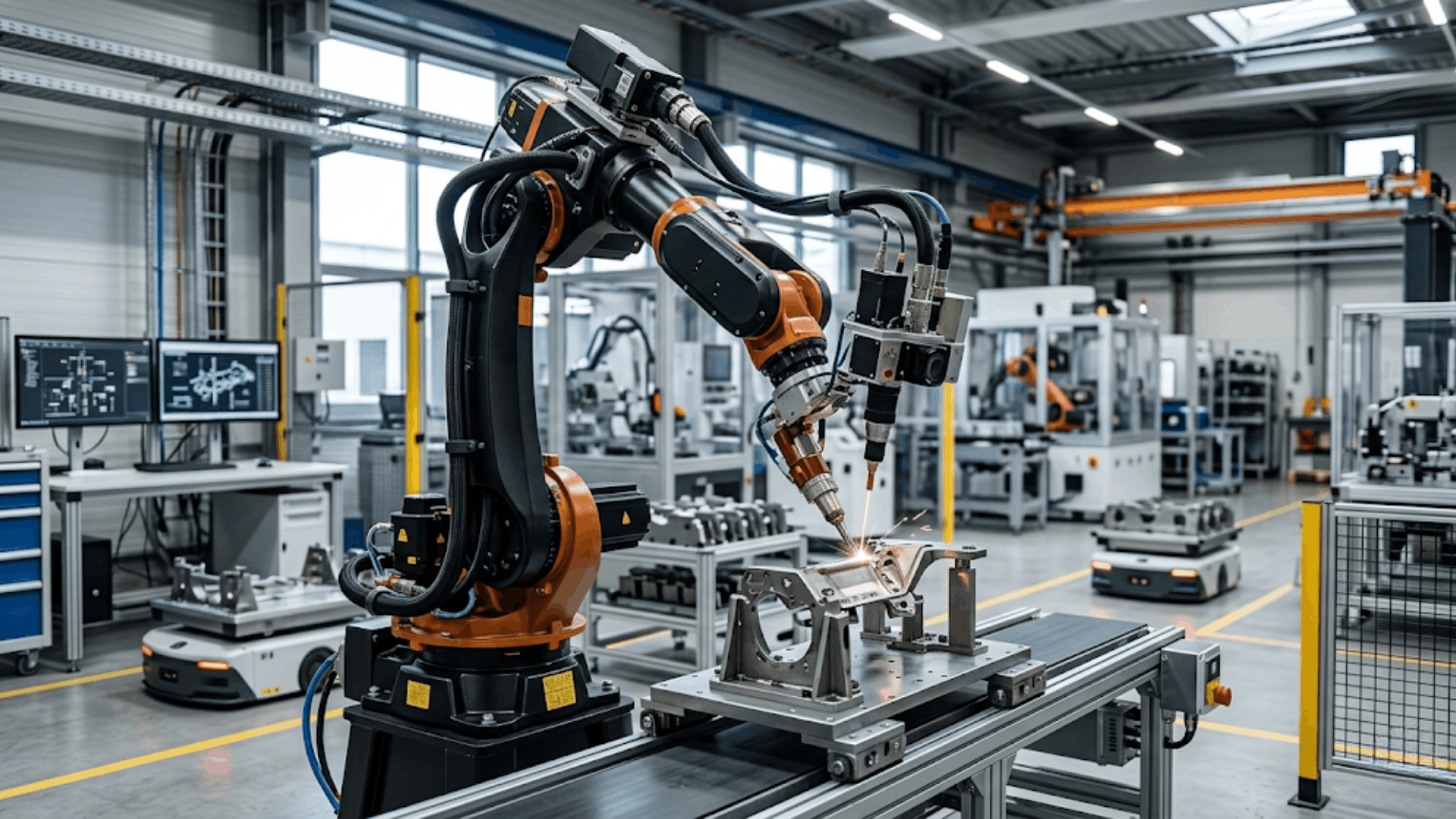
Autonomous robots are designed to perform tasks independently using sensors, AI, and advanced software. They come in various types, including mobile robots, drones, healthcare robots, and industrial systems.
1. Autonomous Mobile Robots (AMRs)
Autonomous Mobile Robots (AMRs) are designed to move through changing environments without fixed tracks or human guidance.
They use advanced sensors, cameras, and mapping technologies to navigate safely and complete tasks efficiently.
Unlike traditional automated systems, AMRs can adapt their routes in real time when they encounter obstacles or changes in their surroundings. This flexibility makes them a valuable solution for dynamic workplaces.
- Functionality: Navigate independently, avoid obstacles, transport materials, and optimize routes in real time.
- Uses: Warehouses, distribution centers, manufacturing plants, and healthcare facilities.
- Real-World Examples: Amazon Proteus, Geek+, Locus Robotics, and MiR (Mobile Industrial Robots).
2. Industrial Autonomous Robots
Industrial autonomous robots automate repetitive and complex tasks in manufacturing environments.
These robots improve productivity, maintain consistent quality, and reduce the need for manual labor in demanding operations.
Equipped with AI and machine vision systems, they can perform tasks with high precision while minimizing errors. Many industries rely on them to maintain efficient production processes and meet growing demand.
- Functionality: Perform assembly, welding, packaging, inspection, and material handling tasks.
- Uses: Automotive manufacturing, electronics production, and industrial assembly lines.
- Real-World Examples: FANUC CRX Series, ABB YuMi, KUKA KR AGILUS, and Universal Robots UR10e.
3. Healthcare Robots
Healthcare robots support medical professionals by assisting with patient care, surgical procedures, and hospital operations.
They help improve efficiency while reducing the workload on healthcare staff. These robots can handle routine tasks, allowing medical teams to focus more on patient treatment and critical care.
As healthcare facilities continue to adopt automation, robots are becoming an important part of modern medical services.
- Functionality: Deliver medications, assist with surgeries, monitor patients, and transport medical supplies.
- Uses: Hospitals, clinics, rehabilitation centers, and laboratories.
- Real-World Examples: Da Vinci Surgical System, Moxi by Diligent Robotics, TUG by Aethon, and PARO Therapeutic Robot.
4. Agricultural Robots
Agricultural robots help farmers increase productivity and manage crops more efficiently. They can perform labor-intensive tasks with greater accuracy and consistency than traditional methods.
By using sensors and data analytics, these robots can monitor field conditions and support precision farming practices.
This helps farmers reduce waste, improve crop yields, and make better use of resources.
- Functionality: Monitor crops, plant seeds, harvest produce, and analyze field conditions.
- Uses: Farms, greenhouses, orchards, and large agricultural operations.
- Real-World Examples: John Deere Autonomous Tractor, Carbon Robotics LaserWeeder, Naïo Technologies Oz, and Ecorobotix ARA.
5. Autonomous Drones
Autonomous drones are unmanned aerial vehicles that can fly and complete missions with minimal human input. They are widely used for data collection and access to hard-to-reach locations.
Advanced navigation systems allow these drones to follow planned routes, avoid obstacles, and gather valuable information from the air.
Their versatility makes them useful across many industries that require fast and accurate aerial insights.
- Functionality: Capture aerial images, inspect infrastructure, survey land, and deliver small packages.
- Uses: Construction, agriculture, logistics, energy, and security sectors.
- Real-World Examples: DJI Matrice 350 RTK, Skydio X10, Zipline Delivery Drone, and Wing Delivery Drone.
6. Service Robots
Service robots are designed to interact directly with people and provide assistance in commercial and public environments.
They help improve customer experiences and operational efficiency. Many businesses use service robots to automate routine tasks while maintaining consistent service quality.
As AI technology advances, these robots are becoming more capable of understanding and responding to human needs.
- Functionality: Assist customers, provide information, deliver items, and perform cleaning tasks.
- Uses: Hotels, restaurants, retail stores, airports, and office buildings.
- Real-World Examples: SoftBank Robotics Pepper, Bear Robotics Servi, Pudu Robotics BellaBot, and Keenon T8.
AMRs vs. AGVs: What’s the Difference?
One of the most common points of confusion I hear when talking to operations teams is the distinction between AMRs and Automated Guided Vehicles (AGVs).
AGVs follow fixed routes, magnetic tape, embedded wires, or QR code markers embedded in the floor.
They’re reliable, but only if nothing changes. Put an unexpected obstacle in an AGV’s path, and it stops completely, waiting for a human to clear the way.
AMRs can detect obstacles and reroute in real time. They cost less to install and adapt easily without physical guidance systems.
For any facility that evolves its layout over time, AMRs are almost always the better long-term investment.
Quick Comparison of Autonomous Robot Types
Autonomous robots vary in design and capabilities, allowing them to perform a wide range of tasks across different industries. Understanding their key characteristics can help you identify the best type.
| Type of Robot | Operating Environment | Mobility Level | Human Interaction | Key Advantage |
|---|---|---|---|---|
| Autonomous Mobile Robots (AMRs) | Dynamic indoor environments | High | Low to Moderate | Flexible navigation without fixed paths |
| Industrial Autonomous Robots | Controlled factory settings | Low to Fixed | Low | High-speed, precision task execution |
| Healthcare Robots | Hospitals and medical facilities | Moderate | High | Supports patient care and medical staff |
| Agricultural Robots | Farms, fields, and greenhouses | High | Low | Improves farming efficiency and crop management |
| Autonomous Drones | Outdoor and aerial environments | Very High | Low | Accesses hard-to-reach areas quickly |
| Service Robots | Public and commercial spaces | Moderate to High | Very High | Enhances customer service and user experience |
What Are Autonomous Mobile Robots (AMRs)?
Autonomous Mobile Robots (AMRs) are intelligent robots that can understand their surroundings, make navigation decisions, and move freely without relying on fixed tracks, markers, or human guidance.
They use real-time data to determine the most efficient path while safely avoiding obstacles.
AMRs are among the fastest-growing forms of automation because they can operate in constantly changing environments.
Using technologies such as LiDAR, cameras, sensors, and AI-powered software, they create digital maps of their surroundings and adjust their movements as conditions change.
These robots work alongside people, helping move goods, manage inventory, and support daily operations.
As businesses adopt flexible automation, AMRs help boost productivity, reduce manual work, and streamline operations.
Core Functions of Autonomous Robots
Autonomous robots perform a variety of functions, allowing them to operate independently and complete tasks with minimal human involvement.
- Navigation and Path Planning: Autonomous robots determine the best routes to reach their destinations while avoiding obstacles and adapting to environmental changes.
- Environmental Perception: Using sensors, cameras, LiDAR, and radar, robots collect and interpret data about their surroundings to understand objects, people, and obstacles.
- Decision-Making: Artificial intelligence enables robots to analyze information, evaluate different options, and choose the most appropriate action in real time.
- Task Execution: Autonomous robots perform assigned tasks such as transporting goods, assembling products, monitoring equipment, or assisting customers with minimal supervision.
- Object Detection and Recognition: Computer vision systems help robots identify, track, and interact with specific objects, people, or locations.
- Data Collection and Analysis: Robots continuously gather operational data, allowing them to monitor performance, improve processes, and support informed decision-making.
How Autonomous Robots Differ from Traditional Robots?
Autonomous robots and traditional robots are both designed to automate tasks, but they operate in different ways. The difference lies in their ability to make decisions, adapt to changes, and work with minimal human intervention.
| Feature | Autonomous Robots | Traditional Robots |
|---|---|---|
| Decision-Making | Can analyze data and make decisions independently. | Follow pre-programmed instructions without independent decision-making. |
| Adaptability | Adjust to changing environments and unexpected situations. | Perform best in predictable and controlled environments. |
| Navigation | Use sensors, AI, and mapping systems to navigate dynamically. | Often rely on fixed paths, tracks, or predefined routes. |
| Human Intervention | Require minimal supervision during operation. | Need regular monitoring and manual adjustments. |
| Learning Capability | Can improve performance through AI and machine learning. | Cannot learn or adapt beyond their programmed tasks. |
| Work Environment | Suitable for dynamic and complex environments. | Most effective in structured settings such as assembly lines. |
| Technology Used | AI, machine learning, sensors, computer vision, and advanced software. | Mechanical systems, controllers, and fixed programming. |
| Examples | AMRs, autonomous drones, and robotic delivery systems. | Robotic welding arms, conveyor-based robots, and pick-and-place machines. |
How to Choose the Right Autonomous Robot?
Choosing the right autonomous robot depends on your specific goals, operating environment, and the tasks you need the robot to perform.
Choose the robot’s main purpose, such as handling materials, inspections, customer service, or manufacturing.
Next, consider the environment in which it will operate. Some robots are designed for structured indoor settings, while others can navigate dynamic or outdoor environments.
It is also important to evaluate factors such as navigation capabilities, payload capacity, safety features, scalability, and integration with existing systems.
Budget, maintenance requirements, and long-term operational costs should also be taken into account.
By carefully assessing these factors, businesses can select an autonomous robot that delivers reliable performance and long-term value.
Where Are Autonomous Robots Used Today?
Autonomous robots are used across many industries to automate tasks, improve efficiency, and reduce the need for constant human involvement.
- Manufacturing: Autonomous robots assist with assembly, welding, quality inspections, packaging, and material handling to improve production efficiency.
- Warehousing and Logistics: Businesses use robots to transport inventory, manage stock, fulfill orders, and streamline warehouse operations.
- Healthcare: Hospitals and clinics rely on autonomous robots for medication delivery, patient monitoring, surgical assistance, and supply transportation.
- Agriculture: Farmers use autonomous robots for planting, harvesting, crop monitoring, precision spraying, and soil analysis.
- Retail and Hospitality: Service robots help customers, provide information, deliver products, and support daily operations in stores, hotels, and restaurants.
- Security and Surveillance: Robots patrol facilities, monitor restricted areas, detect threats, and assist with security operations.
- Construction and Infrastructure: Autonomous robots inspect buildings, survey sites, monitor progress, and support maintenance activities.
The Drawbacks of Autonomous Robots
Autonomous robots can improve efficiency and productivity, but they also present technical, financial, and operational challenges. Evaluating these limitations is important before adopting robotic systems in any industry.
| Drawback | Impact | Description |
|---|---|---|
| High Initial Costs | Financial | Purchasing, integrating, and deploying autonomous robots often requires a substantial upfront investment. |
| Complex Implementation | Operational | Setting up robotic systems may involve infrastructure changes, software integration, and employee training. |
| Maintenance Requirements | Technical | Robots require regular maintenance, updates, and technical support to ensure reliable operation. |
| Limited Performance in Unpredictable Environments | Performance | Sudden environmental changes or unexpected obstacles can affect a robot’s efficiency and decision-making. |
| Cybersecurity Risks | Security | Connected robots may be vulnerable to hacking, data breaches, and unauthorized access if security measures are inadequate. |
| Dependence on Technology | Operational | System failures, software bugs, or connectivity issues can disrupt operations and reduce productivity. |
| Regulatory and Compliance Challenges | Legal | Organizations must comply with safety standards, industry regulations, and legal requirements when deploying robots. |
| Data Privacy Issues | Compliance | Robots that collect and process large amounts of data may create privacy and data management concerns. |
| Limited Human Judgment | Decision-Making | Autonomous robots may struggle with situations that require human intuition, creativity, or contextual understanding. |
Key Trends Shaping the Growth of Autonomous Robots
The adoption of autonomous robots continues to grow as businesses look for smarter ways to improve efficiency, reduce costs, and address operational challenges.
- Advancements in Artificial Intelligence: Improved AI algorithms enable robots to make better decisions, learn from data, and operate with greater autonomy.
- Rising Demand for Automation: Organizations are automating repetitive tasks to increase productivity, streamline workflows, and reduce manual labor requirements.
- Labor Shortages: Many industries are turning to autonomous robots to fill workforce gaps and maintain consistent operations.
- Improved Sensor and Vision Technologies: Modern sensors, cameras, and LiDAR systems allow robots to navigate complex environments with greater accuracy.
- Growth of E-Commerce: The rapid expansion of online shopping has increased demand for autonomous robots in warehousing, inventory management, and order fulfillment.
- Lower Technology Costs: As robotics technology becomes more affordable, autonomous solutions are becoming accessible to a wider range of organizations.
- Integration with Smart Systems: Autonomous robots increasingly work alongside IoT devices, cloud platforms, and data analytics tools to improve operational efficiency.
Conclusion
Autonomous robots are no longer limited to science fiction or large industrial facilities. Today, they help businesses improve efficiency, safety, and automation across many industries.
As technology continues to advance, these robots will become even more intelligent, adaptable, and accessible.
If you’ve made it this far, you now have a clear understanding of how autonomous robots work, their types, and their real-world value.
If you are researching robotics for business purposes, education, or personal interest, staying informed about these innovations can help you better understand the future of automation.
Have you used autonomous robots before? Share your thoughts or questions in the comments.
Frequently Asked Questions
Are There Any Fully Autonomous Robots?
Yes, some robots can operate with minimal human involvement, but most still require oversight, maintenance, or occasional supervision.
What Are Examples of Autonomous Robots?
Examples include autonomous mobile robots (AMRs), self-driving vehicles, agricultural robots, delivery robots, and autonomous drones.
Which Country Is No. 1 in Robotics?
Japan is widely recognized as a global leader in robotics due to its advanced technology, innovation, and robot manufacturing industry.
What Are the 5 Levels of Robot Autonomy?
Robot autonomy ranges from Level 0 (manual control) to Level 5 (full autonomy). Most commercial robots operate at Levels 3–4, working independently but requiring human help in unusual situations.
What Is the Typical Lifespan of a Robot?
The lifespan of a robot typically ranges from 10 to 20 years, depending on its design, usage, and maintenance.