One day, the lights flicker, the next, an electrician is standing in the garage, quoting thousands of dollars for a new electrical panel.
That moment catches many homeowners off guard, especially when the number seems much higher or lower than expected.
After years covering home technology and residential infrastructure, I’ve noticed the same question comes up every time: What should this actually cost?
Electrical panel replacement is one of those upgrades people rarely plan for until it suddenly becomes necessary. Once estimates start coming in, the pricing can feel all over the place.
This blog breaks down what affects the final cost, what real homeowners are paying, and which factors tend to raise or lower the total, so the process feels far less confusing before the work begins.
What Affects the Cost to Replace an Electrical Panel?
Labor rates vary by region. An electrician in rural Tennessee may charge $60 to $80 per hour, while similar work in San Francisco or New York can cost $120 to $150 or more.
Urban areas also tend to have stricter permit requirements and longer inspections, which raise total costs. Other factors that often increase the final price include:
- Panel relocation: Moving the panel can add $1,000 to $3,000 because of cable rerouting and utility coordination.
- Outdated wiring: Knob-and-tube or aluminum wiring may require rewiring, which can cost $3,500 to $8,000.
- Hazardous panels: Federal Pacific and Zinsco panels are widely considered unsafe due to the risk of breaker failure, so replacement is usually recommended.
- Permit requirements: Extra inspections, utility scheduling, and load calculations can increase labor and fees.
Electrical issues cause more than 51,000 home fires annually in the U.S., according to the Electrical Safety Foundation International, making panel replacement a safety investment rather than just another expense.
Average Cost to Replace an Electrical Panel
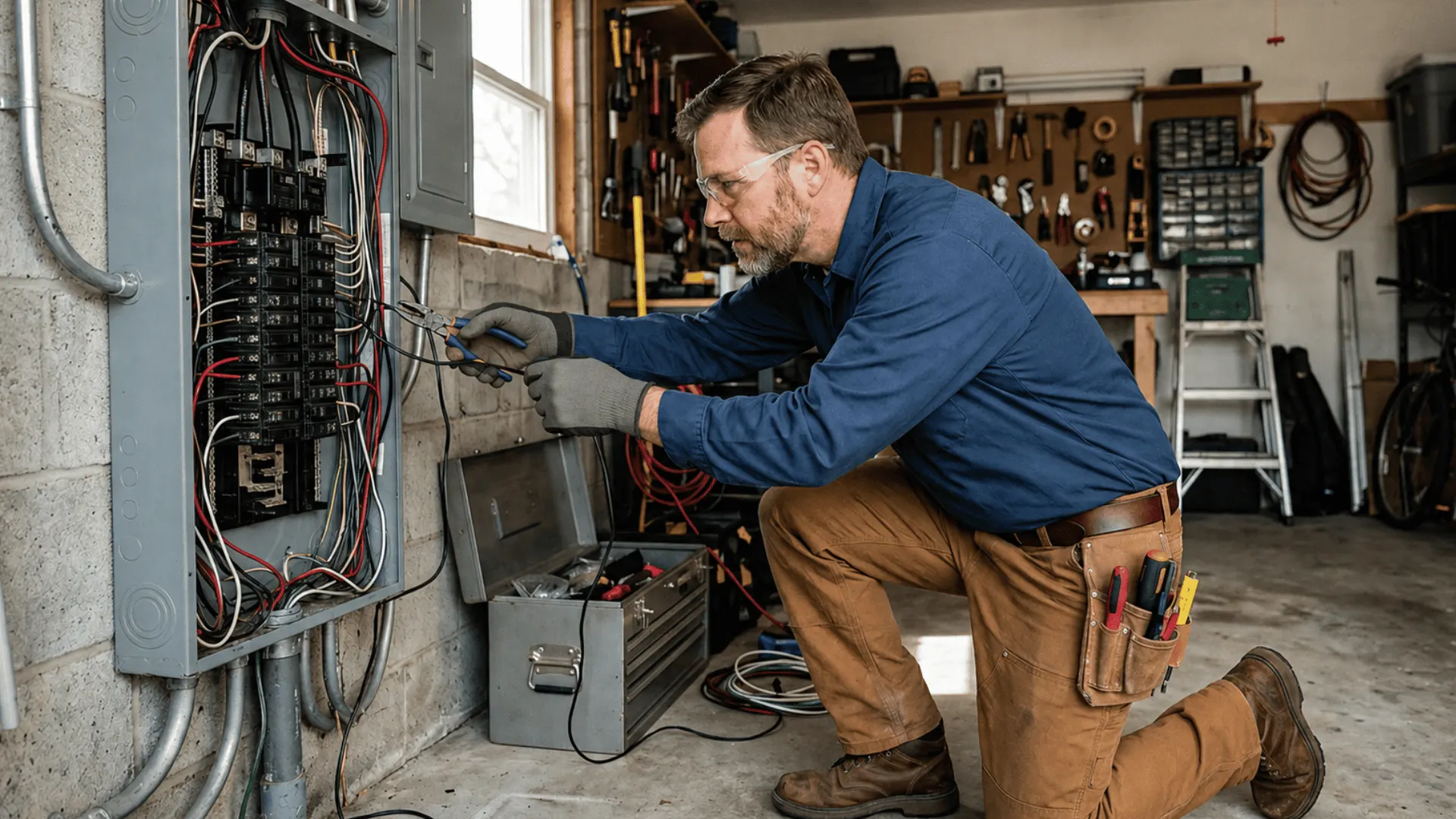
The cost to replace an electrical panel usually ranges from $800 to $4,500 for most U.S. homes, with the national average landing between $1,300 and $2,500, including labor and permits. Many homeowners pay $1,800–$3,000 for a typical 200-amp job.
A simple same-location, same-amperage replacement tends to land on the lower end, while upgrading amperage or addressing wiring issues pushes costs higher.
The panel unit alone typically costs $150 to $400 (higher for 200-amp or smart panels). Labor accounts for most of the expense, with electricians charging $75 to $150+ per hour, depending on location.
Most panel replacements take 4 to 12 hours, depending on the setup. Permit fees can add $50 to $300, depending on local rules.
One thing I always tell homeowners: emergency or same-day panel replacements often cost nearly twice as much. Planning the job in advance usually saves a noticeable amount of money.
Signs You Need to Replace or Upgrade an Electrical Panel
Electrical panels rarely fail without warning. In many homes, rising power demands, recurring electrical issues, or outdated equipment are the first signs that an upgrade may be necessary.
- Frequent breaker trips: Breakers that trip regularly often signal that the panel can no longer safely handle the home’s electrical load.
- Flickering or dimming lights: Lights that dim when appliances start may indicate overloaded circuits or insufficient panel capacity.
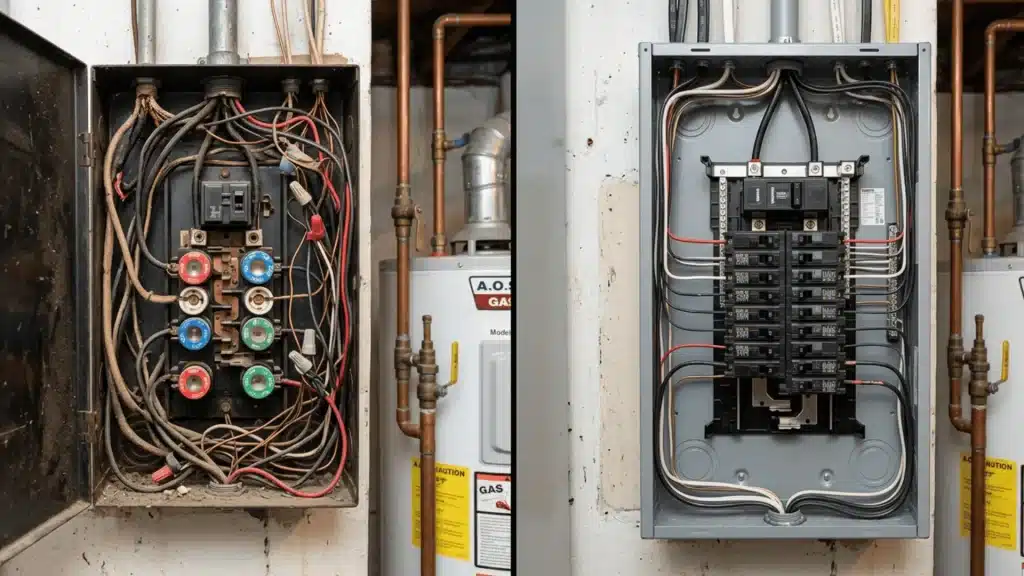
- Outdated fuse boxes or old panels: Older fuse-based systems and aging panels may struggle with modern appliances and can create safety concerns.
- Adding high-power appliances: EV chargers, central AC systems, hot tubs, or workshop equipment often require a higher-capacity electrical panel.
- Burning smells or visible damage: Heat marks, rust, buzzing sounds, or burning odors near the panel require immediate inspection and usually point toward replacement rather than electrical panel repair.
Cost to Replace Electrical Panels by Amperage
Amperage is the biggest cost factor in panel upgrades. Higher amp ratings handle more electricity but require larger equipment, extra labor, and sometimes utility coordination, increasing overall installation costs significantly.
| Panel type | Typical cost range | Best for |
|---|---|---|
| 100-amp replacement | $800 to $2,000 | Older homes under 1,500 sq ft, gas appliances |
| 200-amp upgrade | $1,800 to $4,500 | Most modern homes have central AC and large appliances |
| 400-amp upgrade | $3,000 to $8,000+ | Large homes, EV chargers, home workshops |
Homes built after 2000 usually already have 200-amp service. Older 100-amp or fuse systems often need upgrades. A 200-amp panel is the most common choice today and supports EV chargers, heat pumps, and smart home systems.
A 200-amp panel also opens the door to smart electrical panel options that give real-time circuit monitoring through an app, which is worth factoring in if you plan to add connected devices later.
Electrical Panel Repair vs Replacement Cost
Electrical panel repair is often the right choice when the issue is limited to a single breaker or one affected circuit. In many homes, a quick repair can restore safe operation without the cost of a full replacement.
| Situation | Best Option | Typical Cost / Reason |
|---|---|---|
| The single breaker keeps failing | Repair | $150 – $300 (quick fix, usually under 1 hour) |
| Panel under 25 years old with one isolated issue | Repair | $150 – $400 (targeted repair is more practical) |
| Panel over 25 to 30 years old | Replacement | $1,300 – $3,500 (older panels often develop issues) |
| Multiple breakers trip often | Replacement | $1,300 – $3,500 (may indicate bigger problems) |
| Burning smell, scorch marks, or heat near the panel | Replacement | $1,300 – $4,000+ (safety concern, replace promptly) |
| Fuse-based electrical system | Replacement | $1,500 – $3,500 (modern panels are safer) |
| Adding EV chargers, hot tubs, or central AC | Replacement | $2,000 – $4,500 (often needs 200A upgrade) |
| FPE Stab-Lok or Zinsco panel installed | Replacement | $1,800 – $4,000+ (known fire hazards) |
If you are planning future upgrades, including smart home system readiness, a full panel replacement can provide better long-term reliability and electrical capacity.
Community Insights on Electrical Panel Replacement Costs
Community feedback around panel replacement tells a broader story than any single average price.
Many homeowners are surprised to receive initial quotes of $2,000 to $4,000 for a 200-amp panel replacement, while electricians often confirm that this range is common in many areas.
Higher cost regions usually land above that range. A common recommendation from licensed professionals is to obtain at least three quotes from licensed contractors rather than choosing the cheapest option.
Homeowners also note that quotes that include permits and inspections tend to avoid unexpected charges later.
Another pattern repeatedly emerges: delaying replacement to save money often results in higher emergency repair costs when the panel fails unexpectedly.
Community voices consistently suggest planning the upgrade early rather than waiting for urgent electrical issues to appear.
Conclusion
Replacing an electrical panel is not a small expense, but understanding the process makes it easier to avoid overpriced quotes and unexpected upgrades.
From amperage changes to electrical panel repair decisions, every home comes with different requirements that affect the final price.
Taking time to compare licensed electricians, review permit details, and plan upgrades early can prevent costly emergency situations later.
A modern electrical panel also prepares the home for future power demands like EV chargers, smart devices, and larger appliances.
If you recently received a quote or completed an upgrade, share your experience in the comment section below. Your insight could help other homeowners better understand the real costs of replacing an electrical panel in their area.
Frequently Asked Questions
Does Homeowners Insurance Cover Electrical Panel Replacement?
Standard homeowners’ insurance does not cover electrical panel replacement as routine maintenance. Coverage may apply only if the panel was damaged by a sudden covered event like a lightning strike. Some insurers may also require upgrades for high-risk panels (FPE or Zinsco) before renewing coverage.
How Do I Know if My Electrical Panel is Overloaded?
Watch for frequent breaker trips, dimming or flickering lights, buzzing sounds, warm outlets, or difficulty powering new appliances like EV chargers or central AC. These signs often mean your current panel can’t handle today’s electrical demands.
Can I Stay in My House During Electrical Panel Replacement?
Yes, homeowners usually remain in the house during the replacement process. Power is temporarily shut off for several hours while electricians complete the installation safely.