Wearing something small that quietly tracks your health sounds simple, until the choice gets confusing.
That moment hits when comparing Samsung ring vs Oura and realizing both promise better sleep, smarter recovery, and a clearer picture of your body.
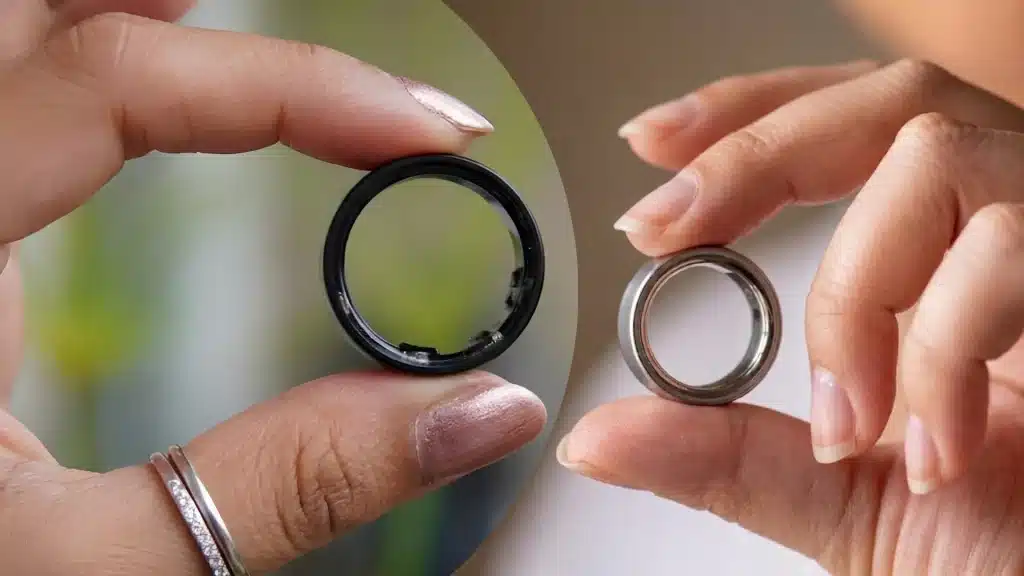
One feels like a natural extension of a phone, the other feels like a personal health coach on your finger. The real question is not just which looks better, but which actually fits into daily life.
Many people reach this point after trying bulky watches or missing out on deeper health insights. A smart ring feels like the next step, but picking the right one matters more than it seems.
Over the past years writing about wearables, I’ve tested everything from first-gen fitness bands to the latest medical-grade monitors, and smart rings represent one of the most genuinely useful jumps in the category.
About Samsung Ring and Oura Ring
Samsung officially launched the Galaxy Ring in July 2024 as its first smart ring, designed to extend its wearable ecosystem beyond smartwatches.
It focuses on health tracking and sleep monitoring, with easy integration with Samsung Health, and is built primarily for Android users.
On the other hand, the Oura Ring has been around longer, with multiple generations released since 2015.
Oura built its reputation on accurate sleep tracking, recovery insights, and minimal design, making it popular among health-focused users.
While Samsung brings strong brand trust and ecosystem connectivity, Oura stands out for its refined data analysis and long-term health tracking experience.
This is part of a broader shift in how wearables improving health tracking have raised expectations for accuracy and consistency across all device categories.
Samsung Ring vs Oura: Core Differences
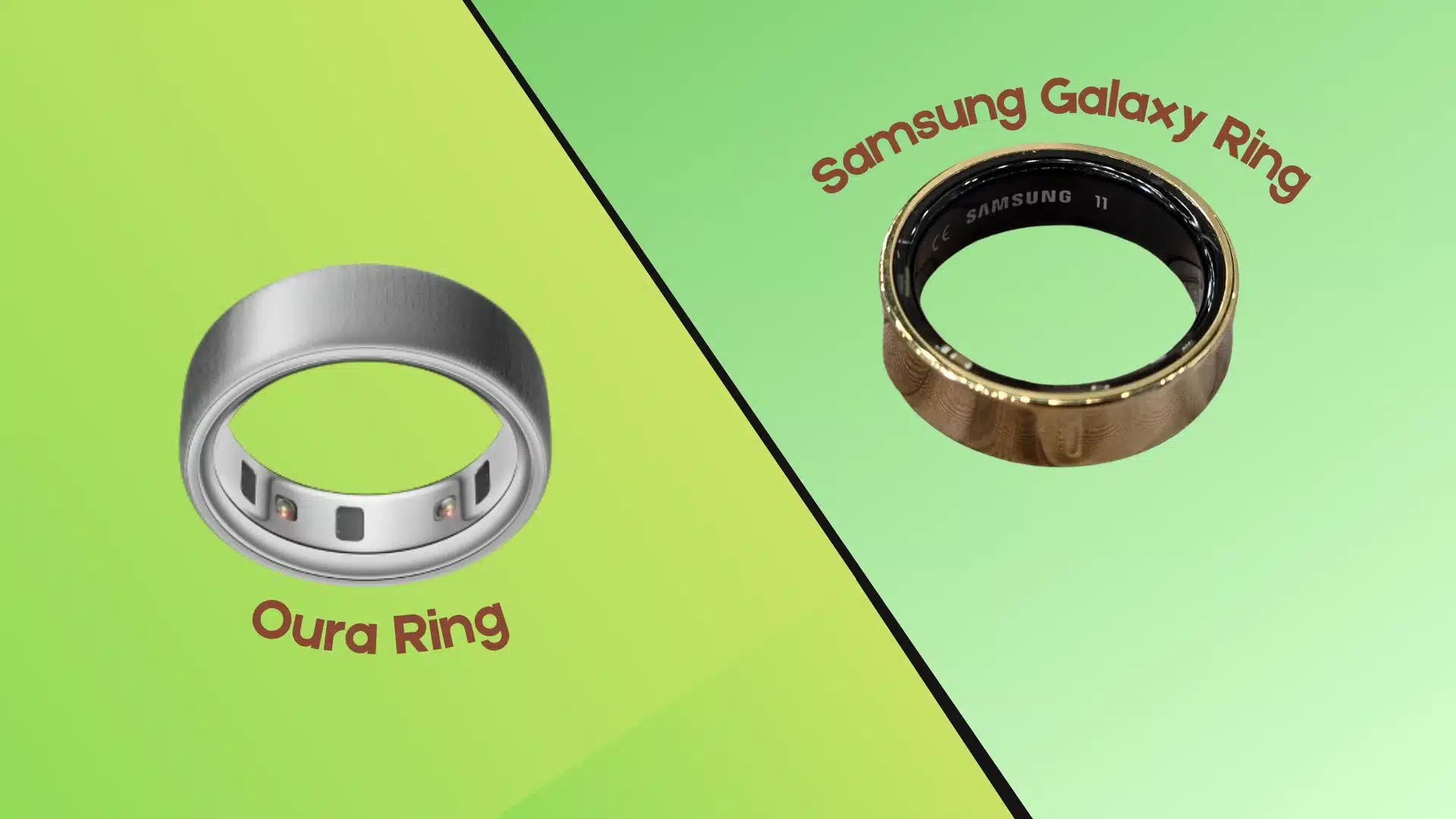
Both rings use titanium designs, track key health metrics, and aim for all-day comfort.
However, Samsung leans toward ecosystem integration and simplicity, while Oura prioritizes deeper data analysis and cross-platform compatibility.
1. Design and Build Quality
In the Samsung Ring vs Oura comparison, both rings use premium titanium construction for durability and comfort.
The Samsung Galaxy Ring features a slim 7mm width, 2.6mm thickness, and weighs around 2.3 to 3 grams, making it lighter and easier to wear daily.
From daily wear, the concave inner surface resists scratches better than Oura’s shinier finishes, and the flush sensor placement means the ring slides on without catching on knuckles, something that matters more than you’d expect if you’re wearing it around the clock.
The Oura Ring 4 is slightly wider at about 7.9mm and weighs between 3.3 and 5.2 grams.
Oura redesigned its inner surface with recessed sensors for Gen 4, eliminating the sensor bump that made earlier versions less comfortable. Both rings offer water resistance up to 100 meters.
Samsung comes in 9 sizes (US 5 to 13) with 3 color finishes; Oura offers sizes US 4 to 15 across 6 finishes, including Gold, Rose Gold, and Stealth.
2. Health and Fitness Tracking
Health tracking is where Samsung Ring vs Oura becomes more noticeable. Both rings track heart rate, sleep, activity, and temperature using advanced sensors.
Samsung uses three main sensors and provides an Energy Score through the Samsung Health app to show daily readiness.
It also detects snoring via your phone’s microphone when the phone is placed nearby, a practical addition for anyone tracking sleep-breathing patterns.
Oura goes deeper with its Smart Sensing technology and multi-path sensors that improve accuracy for metrics like HRV, sleep stages, and recovery.
One key Oura feature I find important is resilience tracking, which measures how well the body handles stress using HRV data.
Stress monitoring wearables have become increasingly valuable for users tracking recovery alongside exercise, and Oura’s approach here is more developed than Samsung’s current implementation.
It also offers pregnancy guidance and menstrual cycle tracking, something Samsung lacks, making Oura more useful for women focused on cycle or pregnancy health.
These are wellness tools, not medical diagnostics, and neither ring replaces professional healthcare guidance.
Oura’s app also includes Oura Advisor, an AI assistant available on iOS that can build personalized training plans and offer recovery recommendations based on your data history.
Samsung’s AI integration within Samsung Health delivers daily wellness tips but lacks the conversational depth of Oura Advisor.
3. App Experience and Ecosystem Integration
Samsung Galaxy Ring works best within the Samsung ecosystem, especially when paired with Galaxy phones and watches.
It uses the Samsung Health app to provide AI-based insights and daily wellness tips.
Oura, on the other hand, offers a more refined app with clear dashboards, long-term health trends, and integrations with Apple Health, Google Fit, and other platforms.
One practical setup I often suggest is pairing the Galaxy Ring with a Galaxy Watch. The watch tracks workouts and GPS, while the ring focuses on sleep and recovery.
Together, they provide a more complete and balanced health view.
Oura works on both iOS and Android, while Samsung is limited to Android devices, making Oura more flexible for different users. So if you use an iPhone, the Galaxy Ring is not an option.
4. Battery Life and Charging
Battery performance is quite similar in the Samsung Ring vs. Oura comparison.
Samsung Galaxy Ring offers up to 7 days of battery life and comes with a portable charging case that can store extra charges.
The case lets you check battery level without opening the app, which is a small but genuinely useful difference when traveling.
Oura Ring 4 lasts slightly longer, with up to 8 days on a single charge depending on usage. However, Oura uses a standard charging dock instead of a portable case.
Both rings charge in about 1 to 2 hours, but Samsung’s case design gives it a slight advantage for users who want more flexibility on the go.
Price and Subscription Cost Breakdown
The Samsung Galaxy Ring costs $399.99 one-time, with no subscription. All features, Energy Score, sleep tracking, and Samsung Health app insights are free forever.
The Oura Ring 4 starts at $349 for Silver or Black, rises to $399 for Brushed Silver or Stealth, and reaches $499 for Gold or Rose Gold.
An Oura Membership costs $5.99/month or $69.99/year and is required to access the full insight suite. Without it, the ring tracks, but the app’s analysis is severely limited.
Over two years, the total cost comparison looks like this:
| Device | Upfront | 2-Year Subscription | 2-Year Total |
|---|---|---|---|
| Samsung Galaxy Ring | $399.99 | $0 | $399.99 |
| Oura Ring 4 (Silver) | $349 | $139.98 ($69.99 × 2) | $488.98 |
| Oura Ring 4 (Gold) | $499 | $139.98 | $638.98 |
Samsung wins on long-term cost. But the Oura subscription also funds ongoing app development. Oura consistently ships new features, AI tools, and health program integrations.
The older Oura Ring Gen 3 can sometimes be found discounted to $199-$300, depending on finish and retailer, but it still requires the same subscription and lacks the hardware improvements of Gen 4.
Real User Feedback on Oura Ring vs Samsung Ring
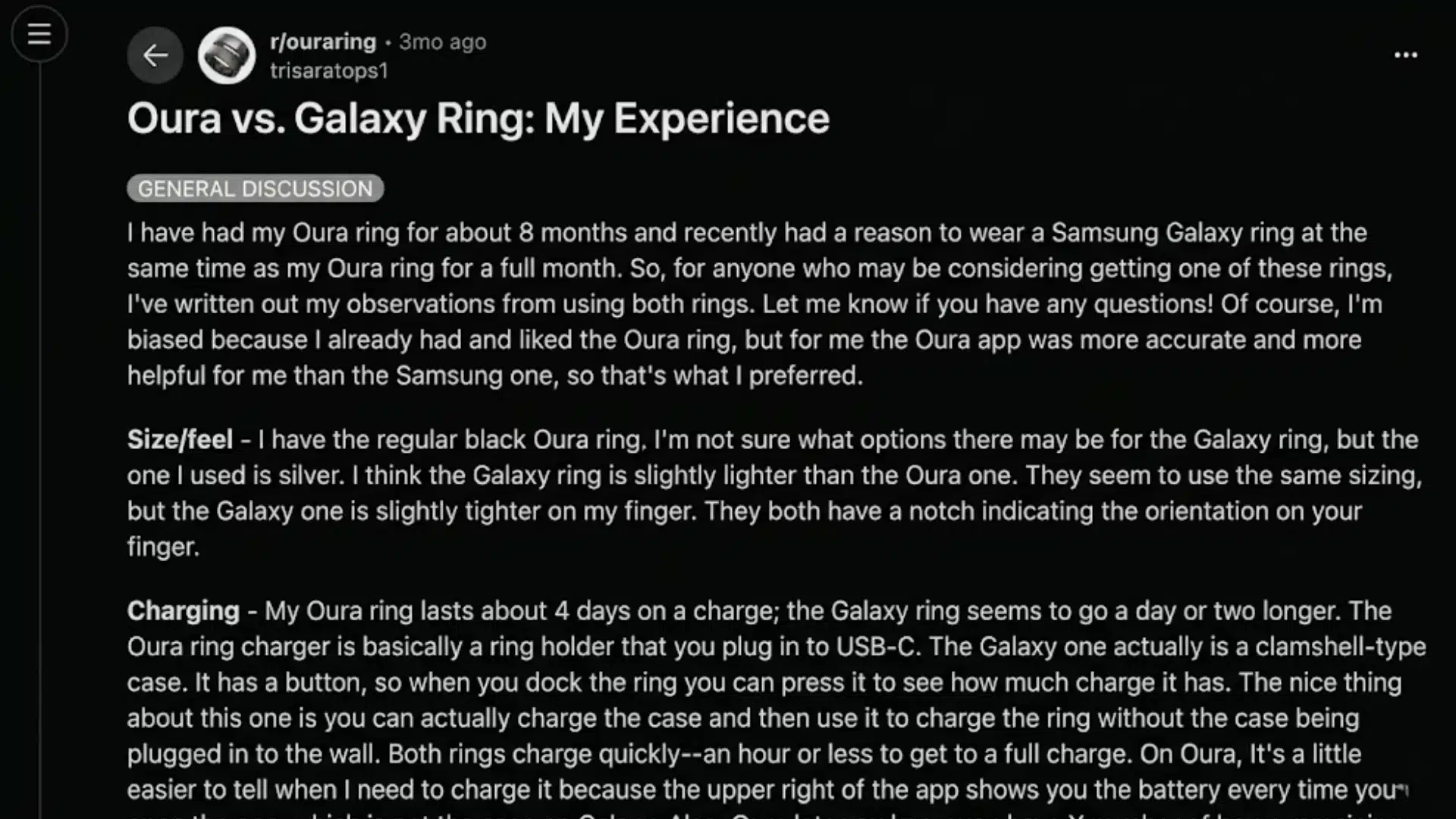
Reddit users who tested both rings side by side highlight a noticeable gap in performance consistency.
Many mention that while both devices track core metrics like sleep, heart rate, and activity, the accuracy differs in real-world use.
One user pointed out that Oura delivered more reliable readings, especially for blood oxygen and sleep tracking, whereas Galaxy sometimes showed unlikely values.
Exercise tracking also stood out. Oura’s ability to auto-detect a wider range of activities gave it an edge, while Galaxy felt limited to basic movements.
Daily readiness or energy scores varied significantly between the two, which confused some users.
Overall, community feedback leans toward Oura for consistent performance and smarter tracking, while Galaxy appeals more to users who prefer simplicity and ecosystem integration.
Samsung Galaxy Ring vs Oura Ring 4 at a Glance
When comparing Samsung Ring vs Oura, a quick side-by-side view highlights the key specifications and features so users can quickly understand which ring fits their needs better.
| Feature | Samsung Galaxy Ring | Oura Ring 4 |
|---|---|---|
| Launch Year | 2024 | 2024 |
| Price | $399.99 (one-time) | $349 to $499 (based on finish) |
| Subscription | No subscription required | $5.99/month or $69.99/year |
| Compatibility | Android (best with Samsung devices) | iOS and Android |
| Materials | Titanium | Titanium |
| Sizes | US 5 to 15 | US 4 to 15 |
| Battery Life | Up to 7 days | Up to 8 days |
| Gyroscope | No | Yes |
| Charging | Portable charging case | Charging dock |
| Health Tracking | Heart rate, sleep, activity, temperature | Heart rate, sleep, HRV, temperature, recovery |
| Special Features | Energy Score, Samsung Health integration | Readiness Score, detailed insights |
| App Experience | Samsung Health app | Oura app with advanced analytics |
| Best For | Samsung ecosystem users | Deep health tracking and cross-platform users |
Samsung Ring vs Oura: Which One Should You Buy?
Choosing between the Oura ring vs the Samsung ring comes down to 3 things: your phone, your budget, and how much you want to engage with the data each morning.
The Samsung Galaxy Ring is the better fit for Android users, especially those already using Samsung devices.
It integrates directly with Samsung Health, offers Energy Score and reliable sleep tracking, and covers body temperature and snoring detection, all without a recurring subscription.
The Oura Ring 4 makes more sense for users who want deeper health insights, HRV trends, recovery patterns, sleep-stage breakdowns, Oura Advisor’s personalized recommendations, and women’s health tracking.
Smart ring sleep tracking is where Oura’s long-term data depth shows up most clearly, especially for users building recovery habits over months.
It also works across iOS and Android, making it the more flexible pick if your device situation might change.
Note: Neither ring is a medical device. Both are tools for identifying trends in your own data over time, and neither replaces a visit to a doctor or specialist.
Conclusion
When it comes to Samsung Ring vs. Oura, the decision is less about which is better overall and more about which fits your lifestyle.
Samsung Galaxy Ring offers a clean, no-subscription experience with reliable tracking and strong integration for Android users.
Oura Ring takes a more data-driven route, delivering detailed insights like HRV, sleep stages, and recovery trends, but with an ongoing cost.
Both rings bring premium design, accurate sensors, and solid battery life, so the real difference shows in how you plan to use the data every day.
One thing I’ve found consistently true after years of testing wearables: people who treat their tracker as a coach, checking in every morning and actually adjusting sleep, stress, and activity based on the data, get real value from Oura.
Think about your phone, your budget, and how deep you want your health insights to go.
Have you used either of these smart rings, or are you planning to buy one? Drop your thoughts in the comments below.
Frequently Asked Questions
Why Are People Getting Rid of Their Oura Rings?
Some users stop using Oura Rings due to the monthly subscription, limited workout tracking, or preference for devices with screens. Others switch to alternatives offering more features without ongoing costs.
What Ring Does Jennifer Aniston Wear for Sleep?
Jennifer Aniston has been reported to use the Oura Ring for sleep tracking. It helps monitor sleep quality, recovery, and overall wellness through detailed nightly health insights.
What Do Cardiologists Think Of the Smart Ring?
Many cardiologists see smart rings as useful for tracking heart rate trends, sleep, and activity. However, they recommend using them as supportive tools, not replacements for medical-grade devices or diagnosis.