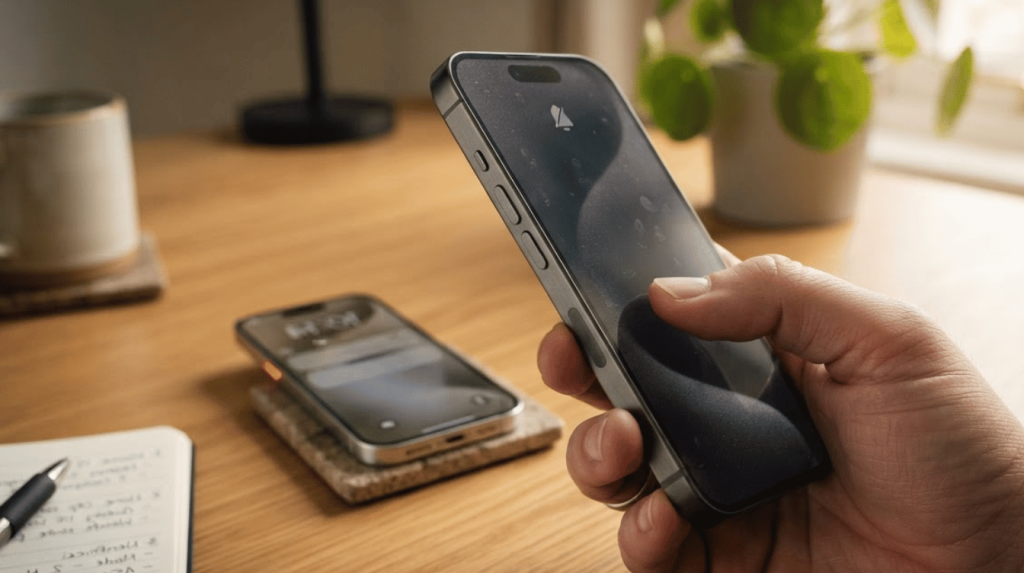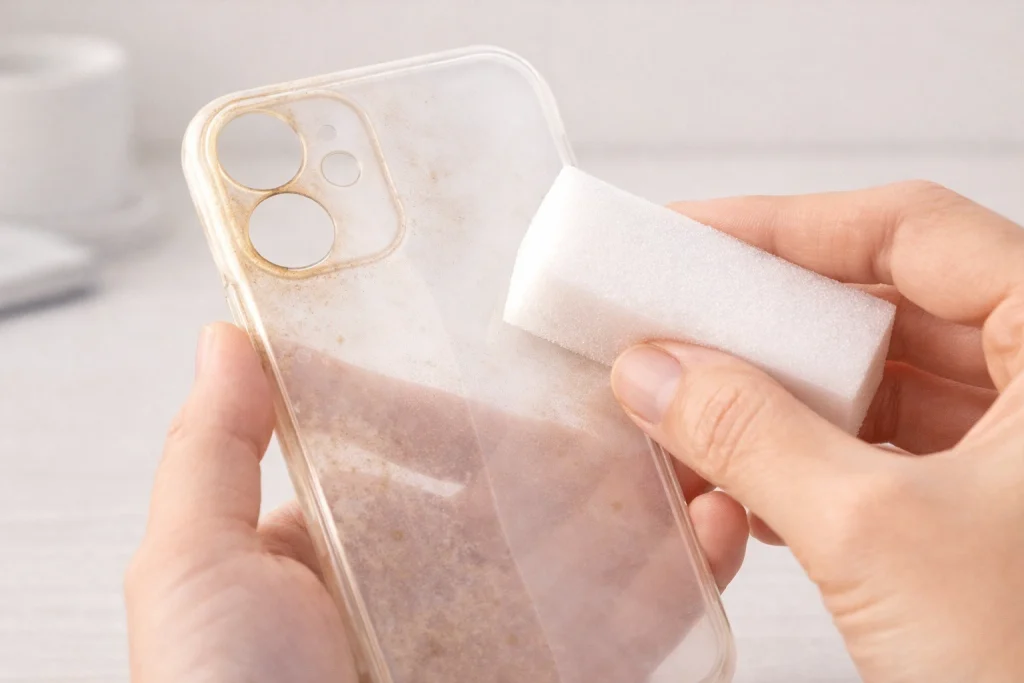
You grab your phone case, look at it properly for the first time in weeks, and wonder how it got this bad.
Grease smudges, mystery stains, that grey film building up in the corners, and it used to be white. You’ve heard Magic Erasers work on walls, shoes, even stovetops.
But your phone case? Will it actually clean it, or quietly wreck the finish you’ve been trying to preserve?
After reviewing dozens of cases across materials and spending years testing what actually works on everyday tech accessories, the honest answer is: it depends entirely on what your case is made of.
Here’s exactly how to use a Magic Eraser on a phone case without causing damage, and the specific situations where you should skip it entirely.
What Does a Magic Eraser Actually Do?
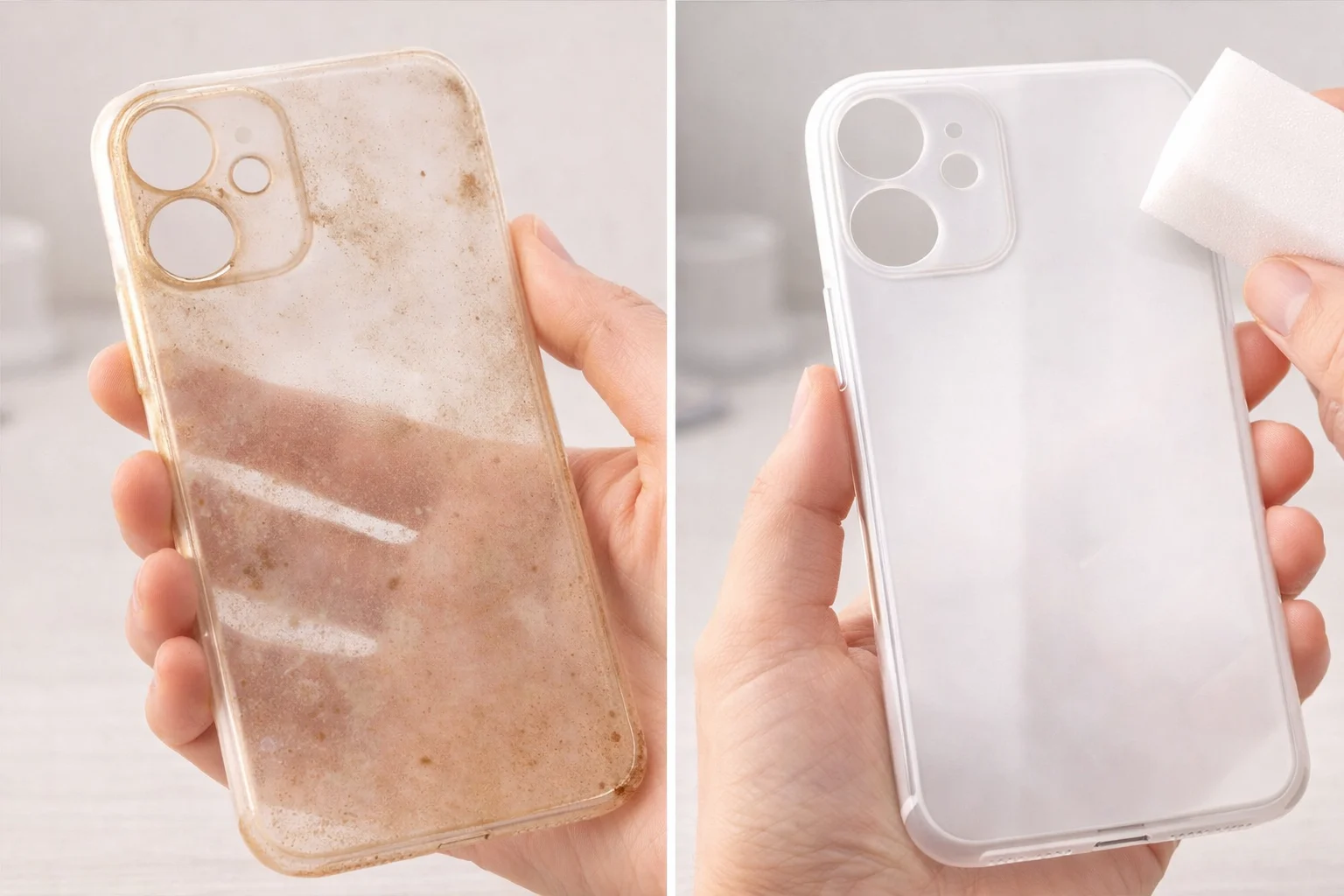
A Magic Eraser isn’t magic. It’s melamine foam, a material with a micro-abrasive structure, similar in effect to very fine sandpaper. When dampened, it lifts off grease, pen marks, and sticky residue with minimal effort.
That abrasiveness is exactly what makes it effective and exactly why you need to think before using it on certain phone case materials.
Think of it this way: it works with the grime and against the surface at the same time. On hard, smooth plastics, that tradeoff is usually fine. On coated, soft-textured, or printed finishes, the surface itself can take the hit.
One thing most people don’t realize: a dry patch of melamine foam is significantly harsher than a damp one.
A dry Magic Eraser pressed against a phone case can leave micro-scratches almost immediately, especially on plastic.
Always keep the sponge consistently damp throughout the cleaning session.
Just like knowing the right method matters here, it helps to understand how phone unlock methods actually work before assuming any shortcut is safe.
Does a Magic Eraser Clean Phone Cases?
Yes, on the right materials. Magic Erasers work well on silicone phone cases and can restore noticeable shine after a single scrub session.
They’re also effective on clear or light-colored cases that have turned cloudy or grey over time.
Where things go wrong is when people apply the same aggressive technique to every case type without first checking what they’re working with.
A clear silicone case and a matte hard-shell are built differently and respond completely differently to abrasion.
It’s also worth noting: if your case has yellowed significantly, a Magic Eraser won’t reverse it.
If yellowing is the real issue, cleaning a clear phone case calls for a different method entirely.
Case-by-Case Breakdown: Safe or Skip?
Every situation is different what’s safe in one context may be risky in another. Evaluate each case individually, weighing benefits against potential harms, before deciding whether to proceed or walk away.
| Case Type | Safety | What to Know |
|---|---|---|
| Silicone | Safe | Use gently. Too much friction can dull the surface. |
| Clear / TPU | Use with care | Use 70% alcohol only. Avoid frequent use and mixing methods. |
| Hard Plastic | Use lightly | Can dull glossy or coated finishes. Test first. |
| Matte Finish | Avoid | Scrubbing removes texture permanently. Use mild soap. |
| Leather/Fabric | Avoid | They use a dry cloth or a mild cleaner. Avoid moisture and abrasion. |
How to Use a Magic Eraser on a Phone Case
Dampen the magic eraser slightly, then gently scrub the phone case in circular motions. Rinse thoroughly and dry completely before reattaching to your phone.
- Remove the case from your phone first. This matters. You don’t want moisture near your ports or screen.
- Dampen the eraser lightly. Damp, not soaking. Excess water pools in cutouts and sits in corners, which invites grime back faster.
- Scrub in gentle circular motions. Don’t press hard. Let the material do the work. Forcing it just increases abrasion without improving results.
- Pay attention to corners and edges. Camera cutouts, port openings, and inner edges collect the most compacted grime and benefit most from focused scrubbing.
- Rinse the case under cold water after you’re done.
- Dry it completely with a microfiber cloth before putting it back on your phone. Skip paper towels. They leave lint and can scratch softer surfaces.
Keep the sponge consistently damp throughout. A dry patch of melamine foam is significantly harsher and more likely to leave micro-scratches, especially on plastic.
When You Should Replace the Case Instead of Cleaning It
No cleaning method reverses yellowing caused by UV oxidation. That’s a chemical breakdown inside the material itself, not a surface stain.
If your clear case is deeply yellowed, has become brittle, or shows visible cracking, a Magic Eraser won’t help, and neither will switching to alcohol wipes on the plastic.
The same principle applies to any oxidized clear plastic; removing oxidation from clear plastic requires a different approach entirely.
A $10 to $15 replacement is the smarter and more honest call at that point.
Most quality phone cases realistically last 12 to 18 months before material degradation starts to affect their protective value.
If you’re already thinking about an upgrade, it’s worth understanding how MagSafe cases work. They’ve quietly become the default choice for many iPhone users, replacing worn-out covers.
If you’re cleaning a case that’s been on the phone for two-plus years, it might be time to retire it — regardless of how clean it looks after washing.
Conclusion
A Magic Eraser sitting in your cleaning drawer is either your phone case’s best friend or its worst enemy, and the difference comes down to one thing: knowing your material before you scrub.
I’ve seen clear cases go from cloudy to clean in under two minutes with one. I’ve also watched someone sand the matte finish off a brand new case because they assumed it would be fine.
Both outcomes came from the same product, used differently.
If your case is silicone or clear TPU, give it a try.
Keep the pressure gentle, keep the sponge damp, and build a routine so dirt never gets to the point where you’re scrubbing aggressively. Your case will hold up far longer than you’d expect with just a little consistency.
Tried this on your case? I’d genuinely like to hear how it went.
Frequently Asked Questions
What happens if you use a Magic Eraser too hard on a silicone phone case?
Heavy pressure or repeated scrubbing in one spot can gradually dull the surface texture of silicone. Light, occasional use is fine, but let the foam do the work rather than forcing it.
Why does a Magic Eraser work on clear phone cases but not matte ones?
Clear and TPU cases have smooth, non-coated surfaces, so the micro-abrasion lifts dirt without stripping anything. Matte cases have a surface treatment that gives them that texture. The eraser removes that treatment along with the grime, and once it’s gone, it can’t be restored.
How do you know when to replace a clear case rather than clean it?
If the yellowing runs deep and the case feels brittle or shows cracking, no cleaning method will fix it. That’s UV oxidation inside the material itself. At that point, a replacement is the only real solution.