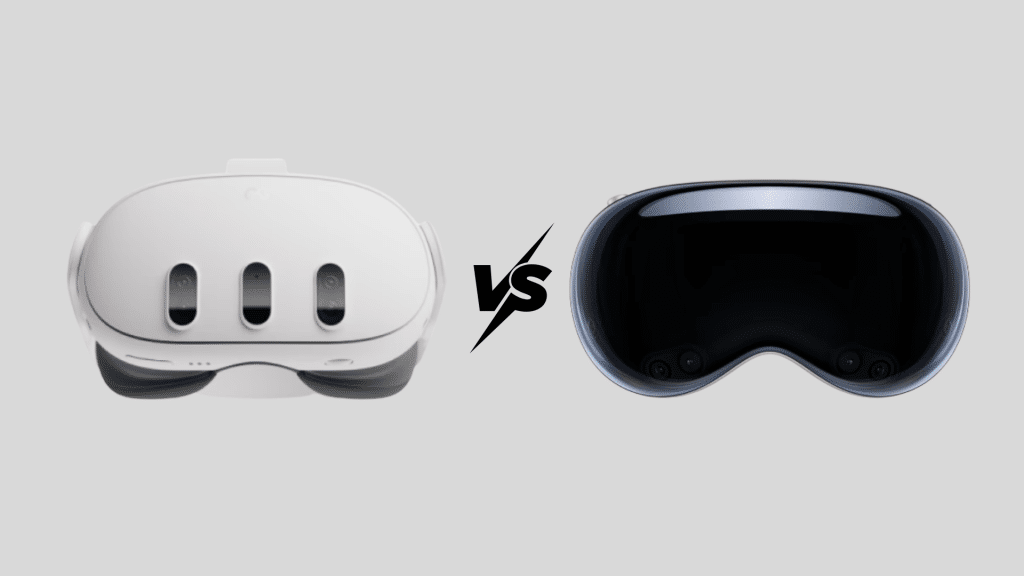
Meta Quest 3 vs Apple Vision Pro is the VR headset battle everyone is talking about right now. One is built for fun and games at a price that feels reachable.
The other feels like a peek into the future with a price tag to match. Both promise big things, but they go about it in very different ways.
This is not going to be a spec sheet breakdown. No heavy numbers. No marketing talk. Just real use, real impressions, and what it actually feels like to live with them.
This blog breaks down design, display quality, performance, comfort, controls, and overall value to show how each headset actually feels in daily use.
By the end, you will know which headset makes more sense for gaming, work, media, and daily use, based on actual experience rather than hype.
A Clear Overview of Both Headsets
Meta Quest 3 comes in at a price that feels realistic for most buyers. It runs on the Snapdragon XR2 Gen 2 chip and supports full-color mixed reality.
It targets gamers, casual users, and anyone curious about VR without spending a fortune. It is light, fairly comfortable, and built mainly for fun, fitness, and social apps.
Apple Vision Pro sits on the opposite end of the price scale. It uses Apple’s M5 chip along with a dedicated R1 chip for sensor data.
The micro OLED displays look extremely sharp, and eye plus hand tracking replaces traditional controllers. It is aimed at professionals, early adopters, and people deep in the Apple ecosystem.
The focus is more on productivity, media, and spatial computing than on pure gaming.
Meta Quest 3 vs Apple Vision Pro Specs Comparison at a Glance
The table below gives a quick side-by-side snapshot of Meta Quest 3 vs Apple Vision Pro to help you see the core differences.
| Feature | Meta Quest 3 | Apple Vision Pro |
|---|---|---|
| Weight | 515 grams | 750 to 800 grams |
| Controllers | Touch Plus controllers included, hand tracking available | No controllers, eye and hand tracking only |
| Battery Life | 2 to 3 hours built in | 2 to 2.5 hours external battery pack |
| Spatial Audio | Supports 3D spatial audio, strong for gaming immersion | Polished spatial audio with refined clarity for media and work |
| Connectivity | WiFi, Bluetooth, USB-C, and 3.5mm audio jack support | WiFi, Bluetooth, USB-C |
| Ecosystem | Meta Horizon OS with a strong gaming focus and PC link support | visionOS with tight Apple device integration and productivity focus |
Quest 3 vs Vision Pro: Display Quality and Visual Experience
Display quality is where the gap becomes clear, as Apple Vision Pro uses micro OLEDpanels that deliver very sharp visuals, making text look clean and small details easy to notice.
Colors appear rich and balanced, and brightness remains strong even when switching between virtual and mixed reality content.
The overall image feels polished and closer to a high-end screen placed right in front of the eyes.
Meta Quest 3 uses high-resolution LCDpanels that look good for gaming and media, though they do not reach the same level of sharpness.
Colors are solid and vibrant, but darker scenes can look slightly flatter. The field of view on Quest 3 feels a bit wider, which helps in fast-paced games, while Vision Pro feels more focused and cinematic.
During longer sessions, the clearer image on Vision Pro reduces eye strain, while Quest 3 remains comfortable for extended play.
Meta Quest 3 vs Apple Vision Pro Real World Performance
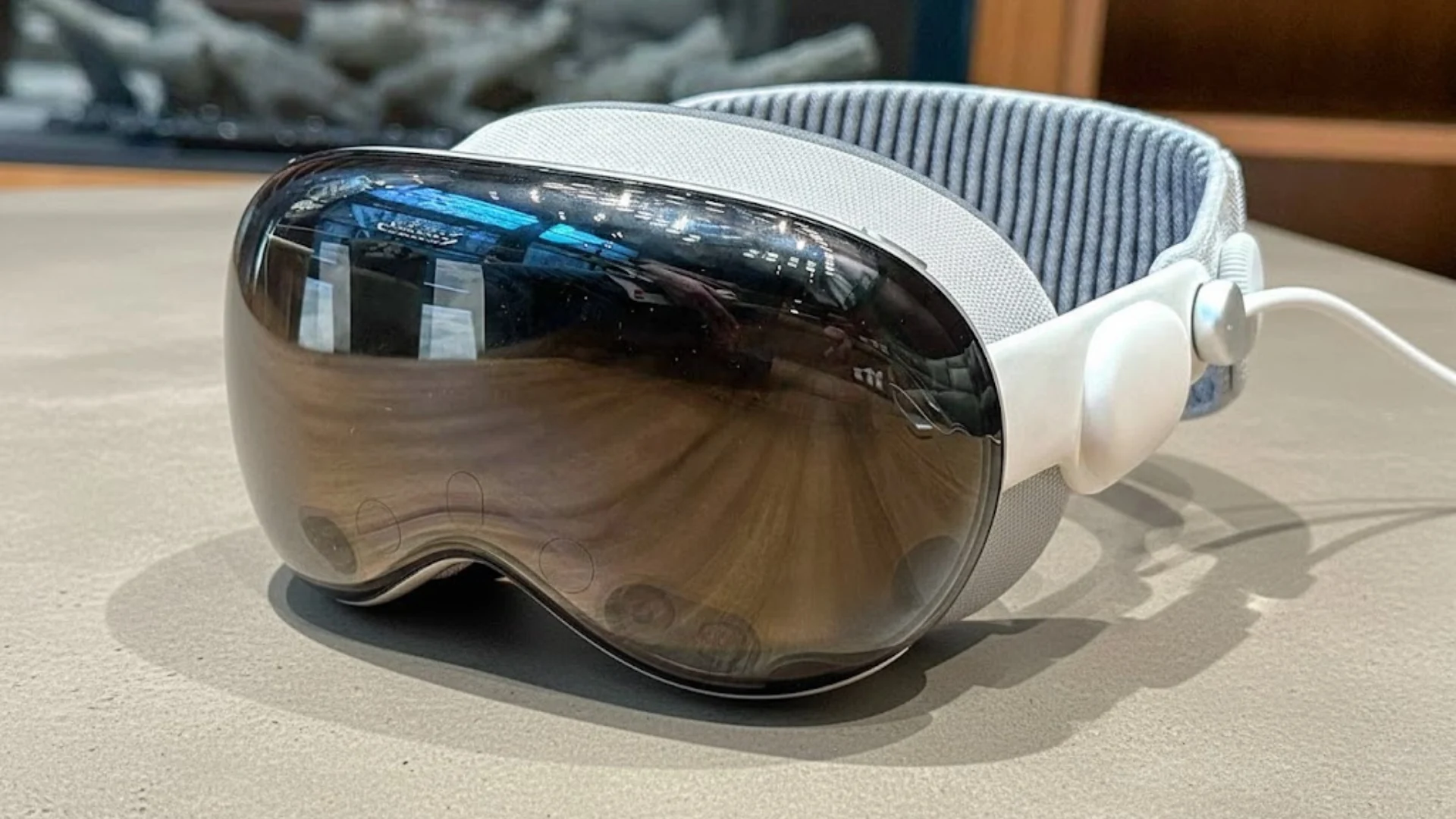
In real-world use, both headsets deliver solid performance, but they emphasize different experiences.
Apple Vision Pro delivers more polished spatial audio with clearer sound positioning, enhancing multitasking, media viewing, and immersive browsing.
Movies and shows feel richer, almost like a private theater, with balanced output and refined clarity. App switching feels smooth, and audio remains consistent across multiple open windows.
Meta Quest 3 also performs well, especially during gaming and fitness sessions where energetic sound adds intensity.
Its 3D spatial audio supports immersive gameplay, though bass depth and overall polish can feel slightly less refined during media playback.
Switching between apps and games does not disrupt audio flow, but the overall sound experience leans more toward active entertainment than cinematic immersion.
Meta Quest 3 vs Apple Vision Pro Comfort and Long-Term Use
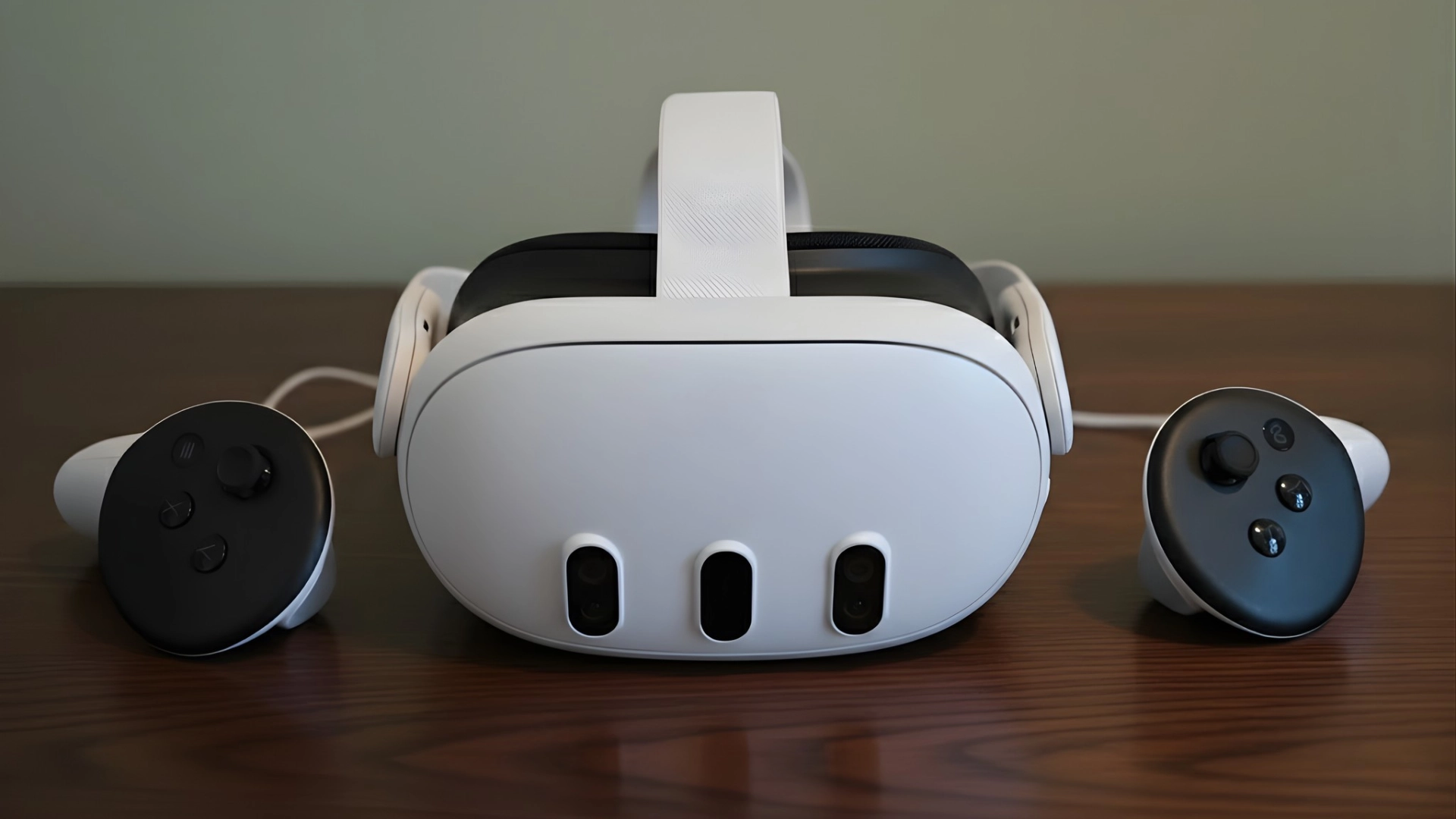
Comfort matters when you wear these headsets for long sessions. The Apple Vision Pro feels balanced on the head because its weight is evenly distributed.
There is minimal face pressure, and the fit stays steady whether you are watching media or working. Heat stays low near your face, though you can feel warmth near the edges after a long period.
The battery placement on the Vision Pro can feel noticeable when you move a lot, but it does not make the headset uncomfortable. For work tasks and productivity, Vision Pro holds up well over hours of use.
Meta Quest 3 is lighter overall, which reduces strain on the neck. Face pressure is low, and the soft cushioning helps comfort during gaming or fitness.
Heat is more noticeable near the front during intense sessions. The battery is internal, so there is no extra weight in the back.
Quest 3 is easy to wear for long gaming and casual use, though heavy work sessions may feel more tiring than on Vision Pro.
Quest 3 vs Vision Pro: Real User Opinions and Experiences

Many Reddit users who tested Meta Quest 3 vs Apple Vision Pro share practical insights from daily use.
One buyer picked up Apple Vision Pro mainly for media, but later felt the price did not match the benefit.
The clarity was better, but not enough to justify a cost several times higher. After trying Meta Quest 3, the experience felt surprisingly close for casual watching and general use.
Others argue that if Apple Vision Pro truly delivered unmatched value, more people would choose it regardless of price. For many common tasks like active gaming and social VR, Quest 3 feels more useful.
Some describe Vision Pro as a strong monitor replacement when sitting still, such as browsing or watching movies, while Quest 3 stands out in motion-heavy, immersive 3D gaming scenarios.
Meta Quest 3 vs Apple Vision Pro Price and Value for Money
When you compare Meta Quest 3 and Apple Vision Pro price points, the gap is hard to ignore. Meta Quest 3 typically sells for around $490 to $500, while the Apple Vision Pro costs $3,450 to $3,550.
That makes Vision Pro roughly seven times more expensive than the Quest 3. For what you pay, Quest 3 gives a lot of value in gaming, social VR, and casual media watching.
It feels like a complete experience, with strong performance and wide app support, at a price most people can afford.
Apple Vision Pro justifies its cost with high-fidelity visuals, spatial computing features, and smooth integration for work and productivity. It feels more like a next-generation tool for creative and professional use.
If you want fun, games, and solid value, Quest 3 gives more for the money. People focused on premium visuals and blended work tasks may find Vision Pro worth its price.
Which One Should You Buy?
Choosing between Meta Quest 3 and Apple Vision Pro depends on how you plan to use your headset day to day.
If your focus is gaming, fitness apps, social VR, and casual entertainment, Meta Quest 3 offers strong performance at a price that feels far more practical.
It delivers a complete experience without requiring a major financial commitment.
On the other hand, Apple Vision Pro makes more sense for users who care deeply about display clarity, multitasking, and blending digital apps into their workspace.
It is better suited for media consumption and productivity within the Apple ecosystem.
The right choice comes down to your budget, priorities, and how you expect to use it regularly.
Conclusion
When it comes to Meta Quest 3 vs Apple Vision Pro, the decision really comes down to how you see yourself using a headset every day.
Both offer impressive technology, but they are built with different priorities in mind. Meta Quest 3 feels more at home with gaming, movement, and casual fun.
On the other hand, Apple Vision Pro leans toward premium visuals, immersive media, and a more refined workspace experience within the Apple ecosystem.
They are not direct replacements for each other, and they are not meant for the same type of user.
The better choice depends on whether you value interactive entertainment or a polished spatial computing setup more.
Which VR headset are you planning to buy? Share with us in the comments below!