For years, autonomous driving felt like a promise that was always just around the corner. What once sounded like science fiction is quietly becoming part of everyday transportation.
Headlines claimed self-driving cars would soon transform transportation, yet most people still found themselves behind the wheel every day.
Today, robotaxis are completing millions of passenger trips, driverless trucks are hauling freight on public highways, and advanced driver-assistance systems have become standard features in many new vehicles.
Real challenges such as safety investigations, regulatory hurdles, cybersecurity concerns, and high operating costs continue to shape the pace at which autonomous vehicles can scale.
This roundup breaks down the biggest developments, the obstacles still ahead, and what the next chapter of self-driving technology could look like.
What Do Autonomous Driving and ADAS Mean?
The SAE autonomy scale runs from Level 0 (no automation) to Level 5 (full self-driving in all conditions).
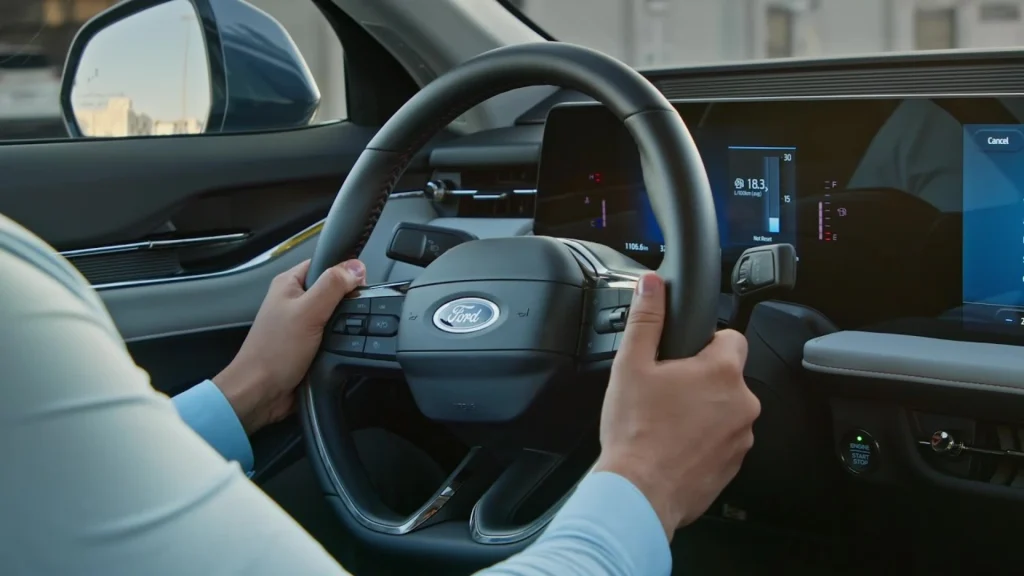
Most consumer vehicles on the road today operate at Level 2 or Level 2+, meaning the car can handle steering and acceleration simultaneously, but the driver must stay alert and ready to take over.
Level 3 systems allow drivers to look away briefly under specific conditions, with the vehicle responsible for safety during those moments.
Level 4 means the car or truck operates fully autonomously within a defined area, with no driver needed. Level 5 remains theoretical. In practical terms, the future of autonomous transport is unfolding in two separate tracks.
In practical terms, autonomous transport today is developing along two separate tracks. Robotaxis and autonomous trucks represent the Level 4 story, operating in mapped corridors with full driverlessness.
Consumer vehicles are the Level 2-3 story, adding lane-keeping, adaptive cruise, and hands-free highway driving.
These are distinct markets with different timelines, different regulatory hurdles, and different cost structures.
Waymo’s Robotaxi Expansion is Moving Fast
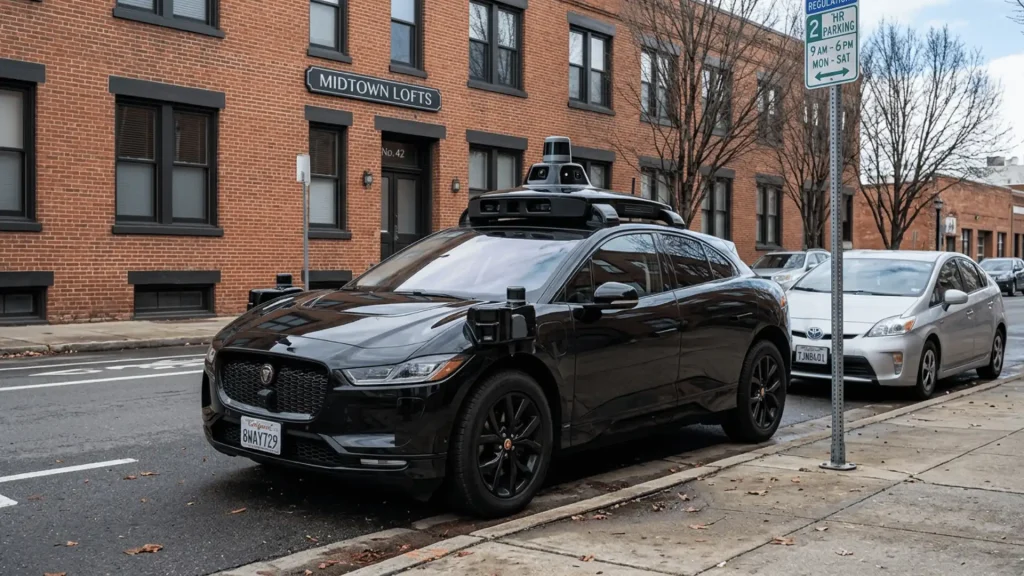
Waymo raised $16 billion in February 2026 at a $126 billion valuation, the largest single investment in an autonomous vehicle company in history.
By May 2026, Waymo’s service area had grown to over 1,400 square miles across 11 U.S. cities, a 27% increase from April coverage, stretching across more territory than the state of Rhode Island.
The pace of that expansion is what catches my attention most. When I started covering this space, Waymo was still running safety drivers in Phoenix.
Watching it operate driverless in multiple cities simultaneously is a different kind of proof point than a press release.
Waymo is targeting 1 million weekly rides by year-end. Its sixth-generation Waymo Driver powers the Zeekr-built Ojai, an electric robotaxi featuring a flat floor, gondola-style doors, and next-generation sensors.
Ojai deployments began in Los Angeles, Phoenix, and San Francisco. London and Tokyo are expanding, making Waymo the first Western robotaxi company to operate in both North America and international markets simultaneously.
However, The National Highway Traffic Safety Administration and the National Transportation Safety Board opened investigations into the company after its vehicles were observed making illegal maneuvers around school buses.
Waymo’s safety record against human drivers is favorable, but regulatory friction in new markets could slow rollout timelines.
How AV liability affects insurance is already shifting as these deployments scale, with manufacturers increasingly on the hook when a vehicle operates in approved autonomous mode.
Zoox, Pony AI, and the Other Robotaxi Challengers
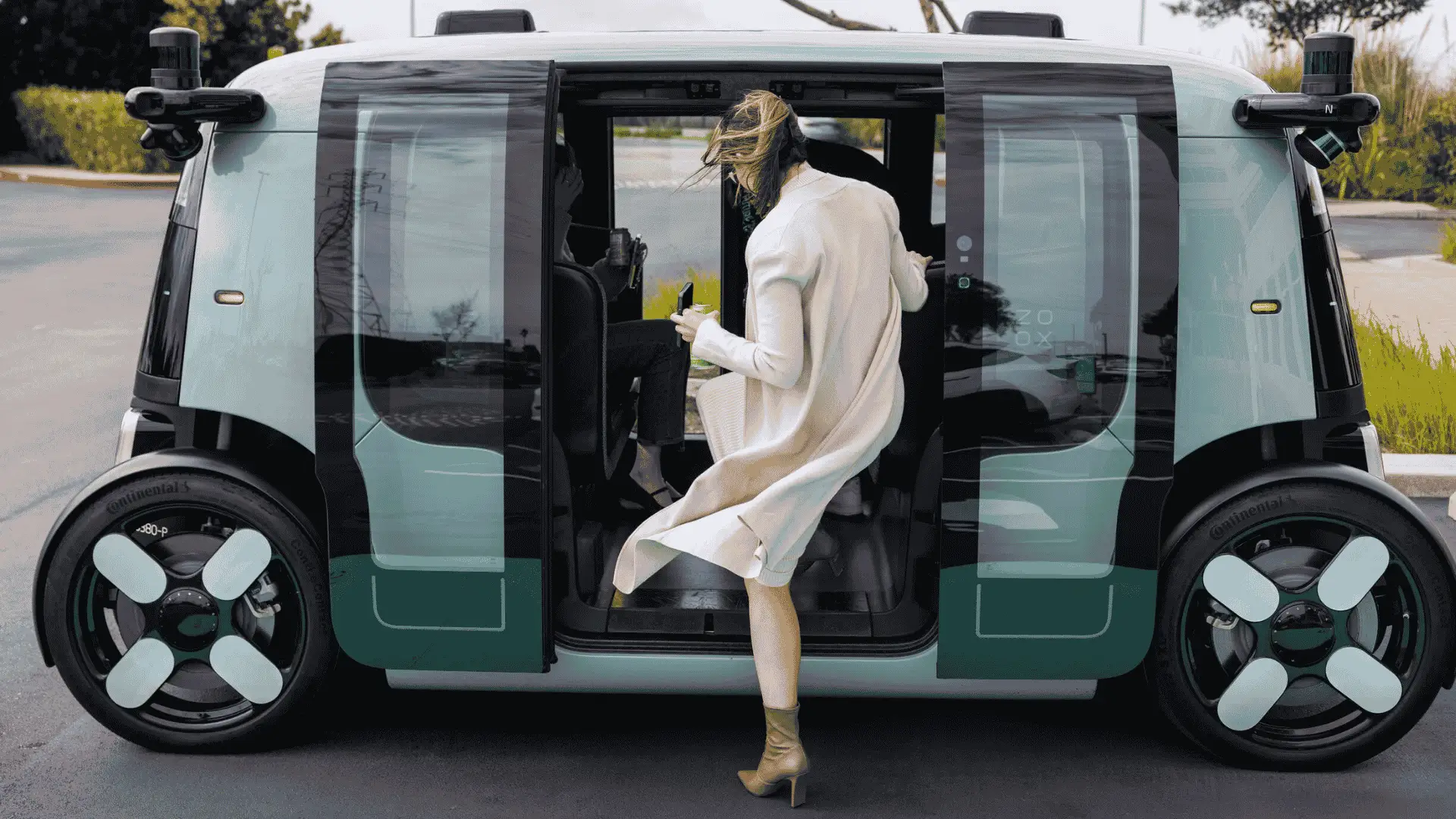
Waymo gets most of the attention, but it is not running this race alone.
Amazon’s Zoox is operating a purpose-built robotaxi with no steering wheel, no front-to-back orientation, and bidirectional driving for up to four passengers.
Zoox launched publicly in Las Vegas in late 2025 and is expanding to San Francisco in 2026 with plans to begin charging riders.
At CES 2026, its NVIDIA-powered AI and 360-degree sensor suite drew significant attention.
Pony AI, the Chinese AV company listed on Nasdaq, broke even in early 2026 and raised its fleet goal for the year after faster-than-expected growth. It is targeting commercial robotaxi operations in 20 cities.
Pony AI and Uber announced a plan to launch robotaxis in Croatia as part of a European push. WeRide and Uber, with AVOMO, are running a commercial pilot in Madrid and are in the process of a 15-city global deployment deal.
The robotaxi segment is redefining how ride-sharing evolves in cities, shifting from gig-economy drivers to fully driverless fleets that operate around the clock.
Uber-backed Wayve is eyeing a stake sale on the UK’s new private market as it prepares London operations. It reflects growing confidence in the commercial future of robotaxi services.
Tesla FSD and the Race Among Consumer AV Brands
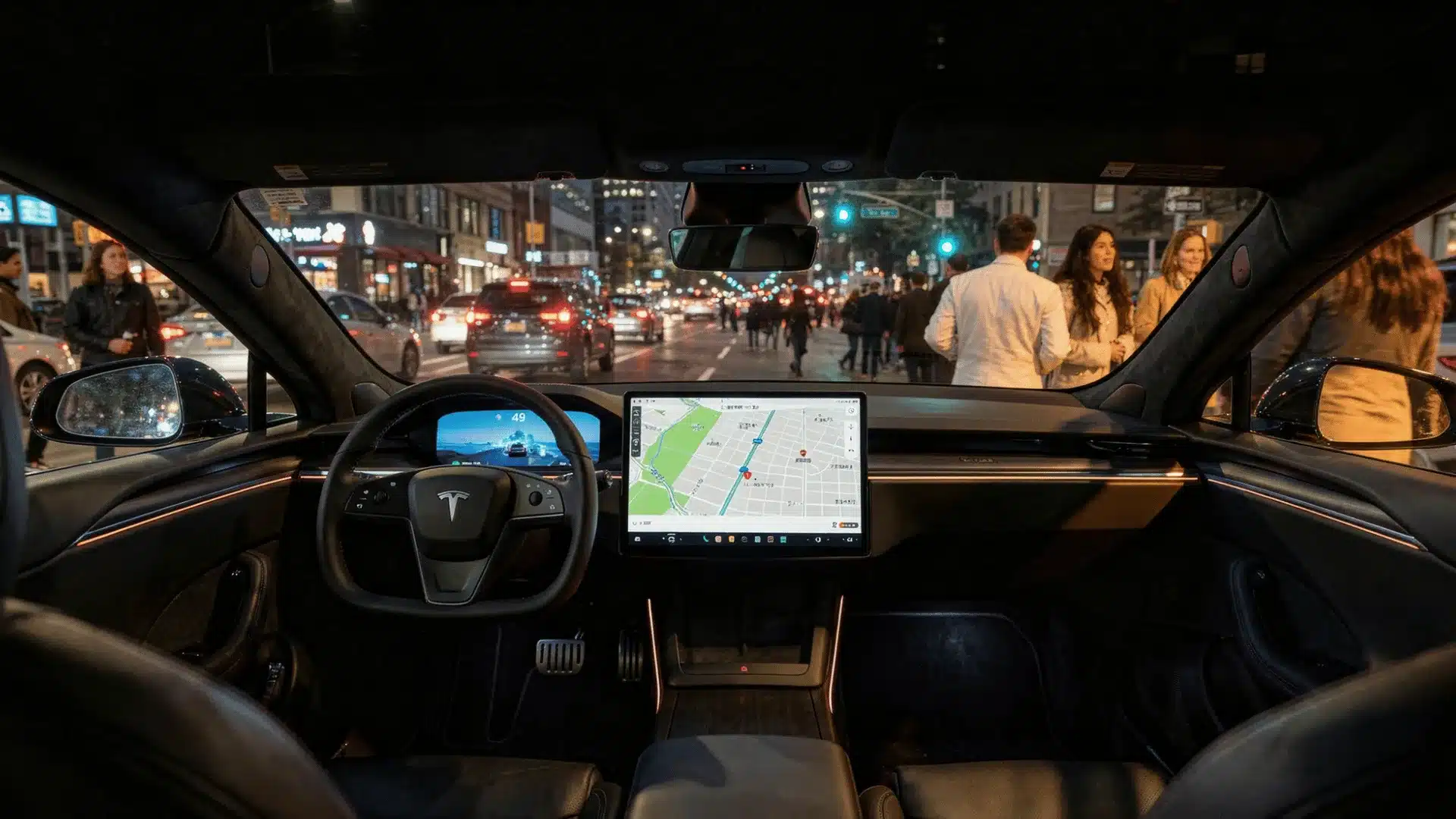
Tesla’s Full Self-Driving (Supervised) system finally launched in China in May 2026 after years of regulatory delays. The rollout covers 10 markets, with a software update specific to local road conditions expected to follow.
The 2026 Tesla Model Y became the first vehicle to pass NHTSA’s new ADAS benchmark tests, including blind-spot intervention, pedestrian braking, and lane departure correction.
NHTSA’s updated program introduced these pass/fail tests to give consumers clearer data on which vehicles offer meaningful protection. Other automakers have moved quickly on consumer ADAS recently:
- GM Super Cruise: Expanded hands-free highway coverage with improved real-time environmental sensing and driver monitoring integration.
- Ford BlueCruise: Added lane merge assist and highway lane-keeping updates in February 2026, improving real-time decision-making for semi-automated driving.
- Toyota Safety Sense: Upgraded with automated intersection crossing assist and improved pedestrian detection algorithms in March 2026.
- Honda Sensing: Enhanced with predictive braking and improved adaptive cruise for smoother suburban and highway driving.
- Audi ADAS (A5, A6, Q5, Q6): Introduced augmented reality overlays on the windshield, AI parking assist, and enhanced Level 2 autonomy for 2026 models.
BYD’s God’s Eye 5.0 software rolled out across 2.3 million vehicles in China alone, using cameras, ultrasonic sensors, and radar. That scale of deployment has no equivalent in Western markets today.
At CES 2026, NVIDIA CEO Jensen Huang unveiled the Alpamayo physical AI platform, which includes open-source vision-language models alongside simulated and real-world driving datasets.
Mercedes-Benz and Lucid are among the automakers already building on the Alpamayo model, using it to accelerate their ADAS development from Level 2++ toward Level 3 and Level 4 capability.
Autonomous Trucking Goes Commercial
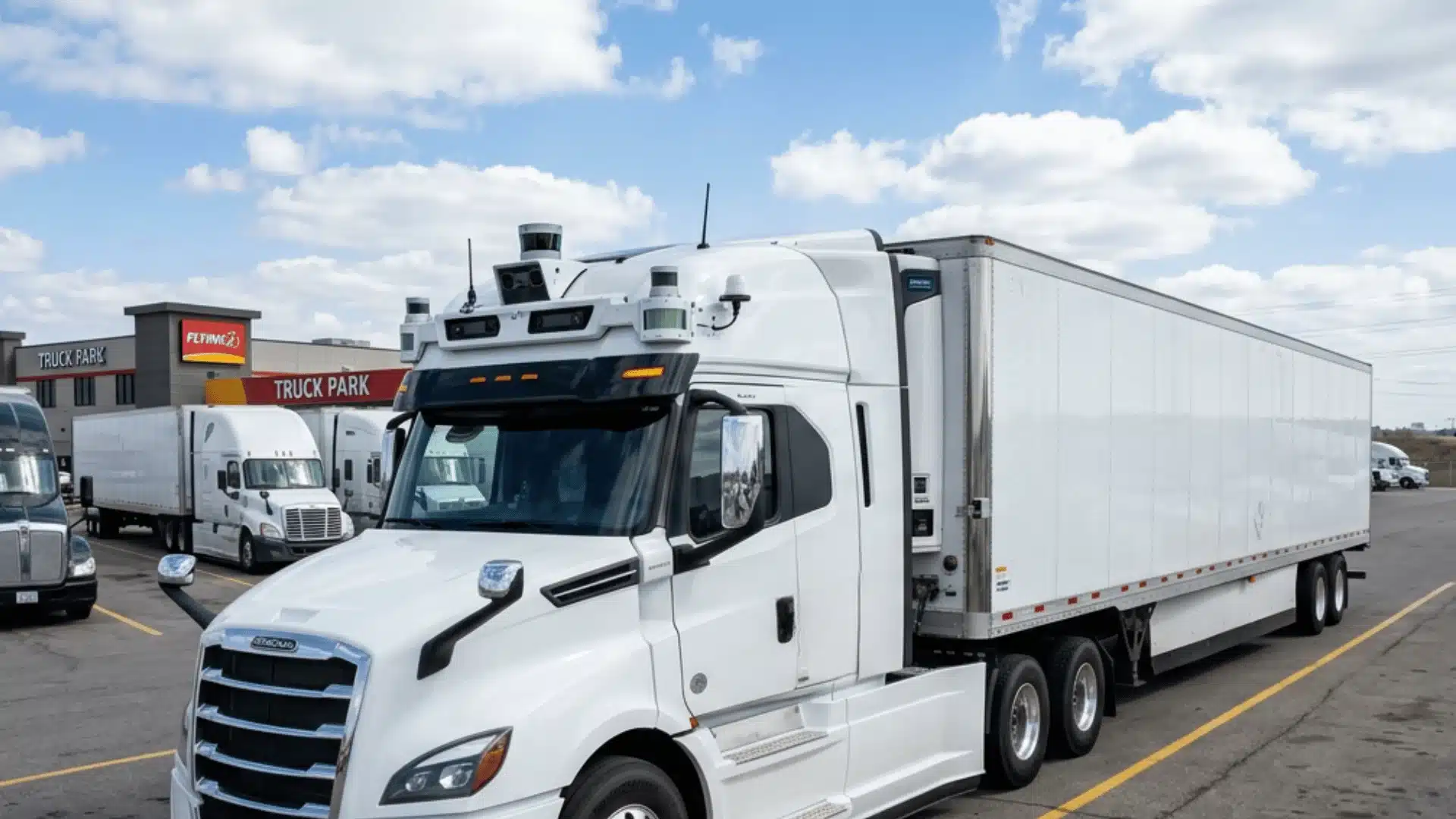
Aurora’s driverless freight operations are the clearest proof that Level 4 autonomy is a commercial reality, not a demo. Aurora expects to exit 2026 with more than 200 driverless trucks active.
The Aurora Driver surpassed 250,000 driverless miles on public roads in early 2026, achieving 100% on-time delivery performance with zero Aurora Driver-attributed collisions.
Aurora tripled its driverless route network in February and now operates across a Sun Belt corridor spanning Texas, Oklahoma, Georgia, and the Permian Basin.
In May 2026, Aurora and McLane Company announced a partnership to bring autonomous trucks into the U.S. restaurant supply chain, with an initial deployment planned and plans to expand.
Volvo Autonomous Solutions and DSV launched autonomous freight operations in Texas, while Volvo targets a $3 billion autonomous trucking business with hundreds of VNL Autonomous trucks planned for production in 2027.
Einride, the Swedish autonomous freight company, listed on Nasdaq in June 2026, further validating autonomous trucking as a commercial business rather than a pilot program.
China vs. the U.S. in Autonomous Driving
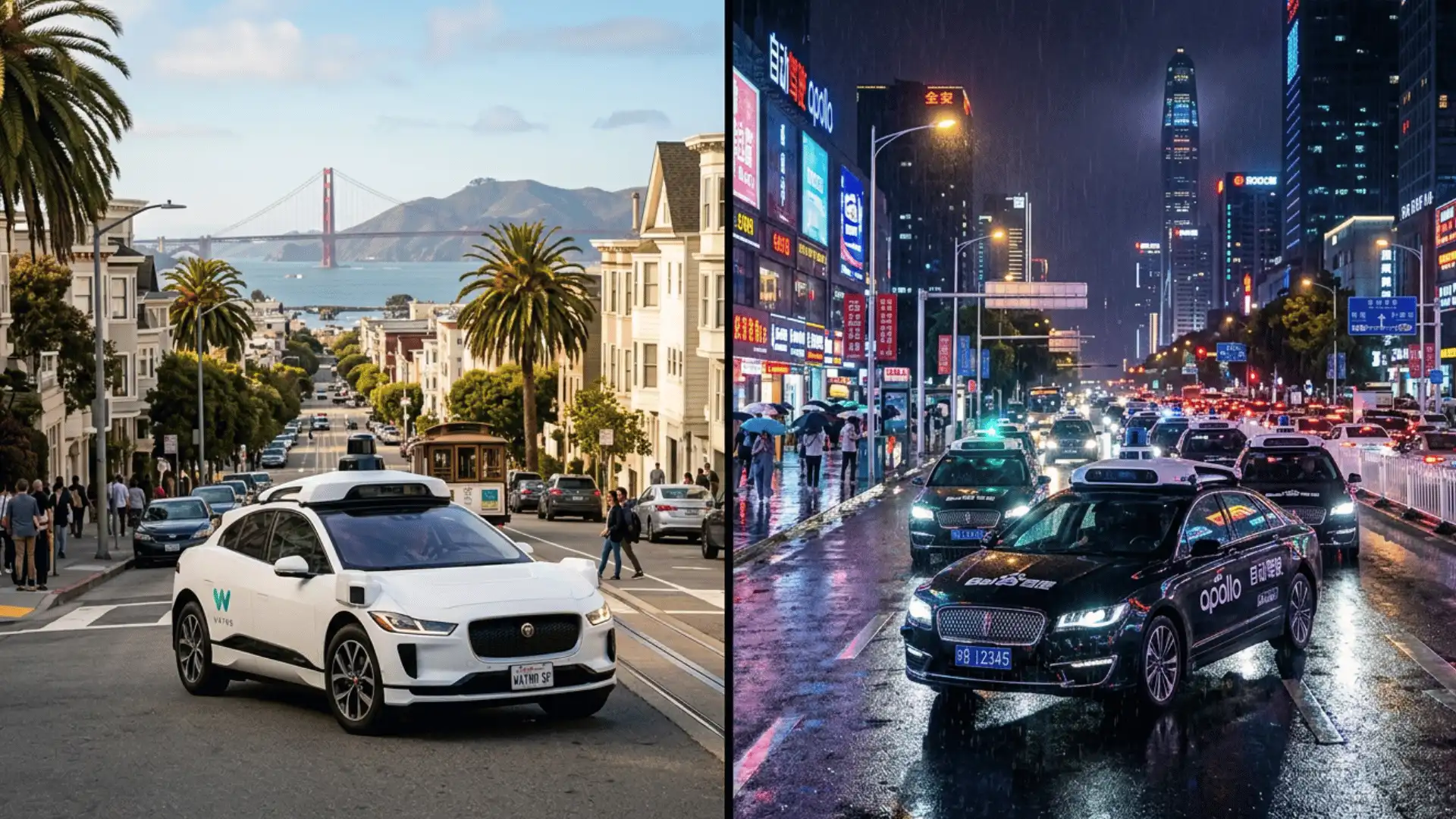
China issued its first Level 3 autonomous driving certifications in December 2025, approving passenger vehicles from Changan Auto and BAIC Motor for hands-free driving under defined conditions.
Chinese automakers, including Xpeng, Li Auto, and Huawei-backed brands, are deploying end-to-end neural network systems in production vehicles at a pace Western OEMs have struggled to match.
The Baidu incident in Wuhan in April 2026 provided a sharp counterpoint. A system outage caused multiple Apollo robotaxis to freeze mid-ride, trapping passengers inside vehicles.
China suspended Baidu’s autonomous driving permits following the incident, pending investigation. It is a data point the AV industry cannot ignore: even mature deployments at scale carry real failure modes.
Tesla FSD faces a different kind of challenge in China. The country’s data sovereignty regulations have historically restricted what autonomous systems can collect and transmit.
Tesla is using Baidu’s mapping technology to power FSD in the Chinese market, a regulatory concession that complicates its competitive position against domestic brands.
Chinese AV companies, unlike their Western counterparts, operate in a data-rich environment with less friction from cross-border data rules. It’s a regulatory milestone the U.S. has yet to match at the federal level.
ADAS Updates from Major Automakers This Year
The car insurance in a tech-driven world is already changing because of how fast ADAS has spread through new vehicle production.
The ADAS market totaled 361.4 million units in 2026 and is projected to reach 582.6 million units by 2033, at a 7.1% CAGR, according to a report by Markets & Markets.
This growth is driven by regulatory mandates and consumer demand for safety features. Several regulatory developments are pushing ADAS adoption faster than market forces alone would:
- EU General Safety Regulation (GSR): Mandates automatic emergency braking, lane-keeping assist, and driver monitoring systems on all new vehicles sold in Europe from July 2024.
- NHTSA FMVSS No.127: This requires all new U.S. light vehicles to include AEB with pedestrian detection, with implementation beginning in September 2029.
- China NCAP (2024 update): Strengthened evaluation criteria for collision avoidance with higher weighting for AEB and driver-assist performance.
By 2029, the Highway Loss Data Institute estimates that approximately 55% of registered U.S. vehicles will have front crash prevention and 53% will carry blind-spot monitoring as standard equipment.
The Real Cost of Autonomous Driving Technology
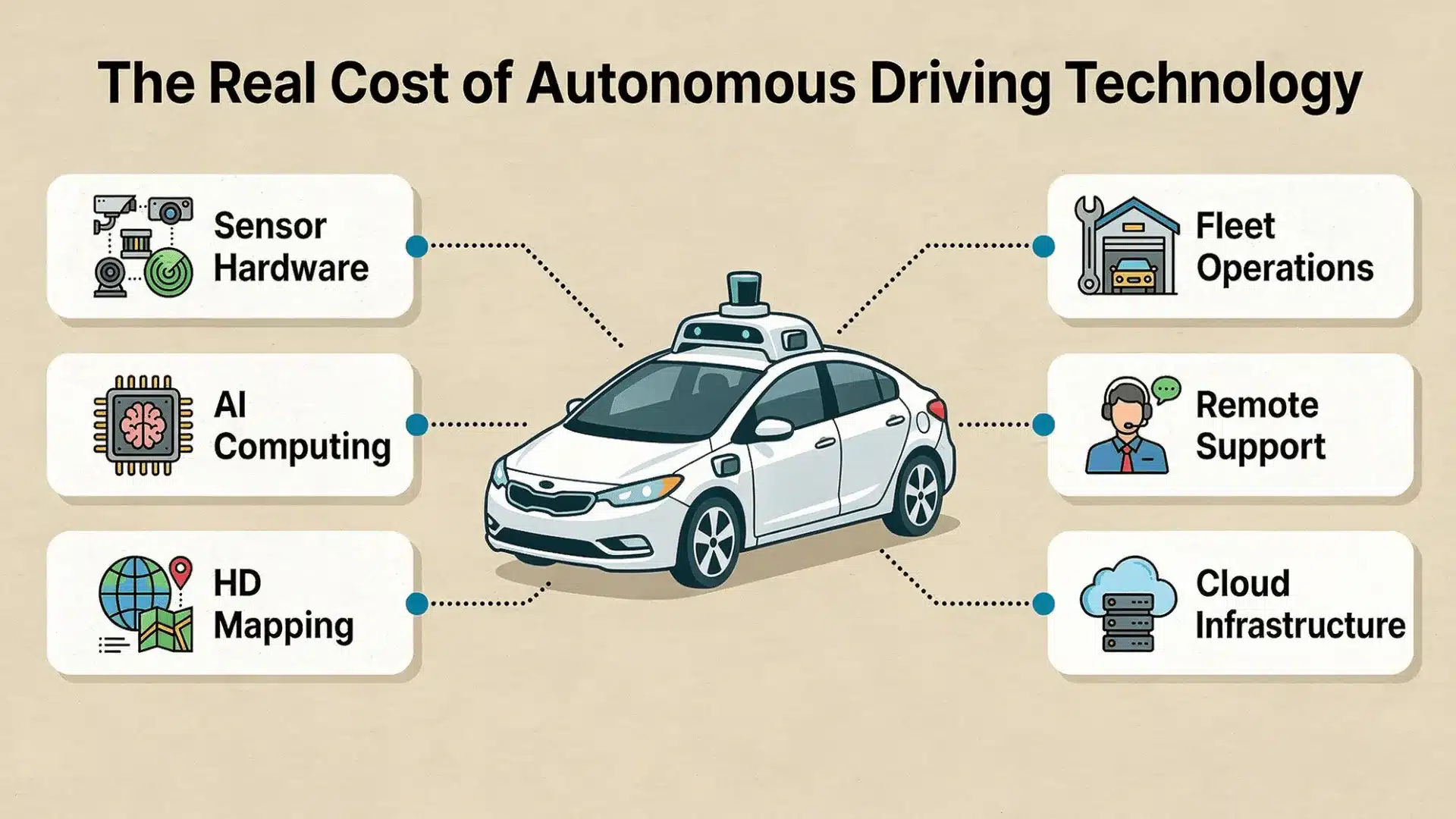
While autonomous driving technology is advancing rapidly, its widespread adoption still depends on reducing the costs of hardware, infrastructure, and large-scale fleet operations.
- Sensor Hardware: Autonomous vehicles rely on cameras, lidar, radar, and other sensors to accurately monitor their surroundings.
- AI Computing: Powerful onboard computers are required to process driving data and make real-time decisions.
- HD Mapping: Detailed digital maps must be constantly updated to reflect road changes, construction zones, and traffic patterns.
- Fleet Operations: Robotaxi and autonomous trucking companies invest heavily in vehicle maintenance, monitoring, and logistics.
- Remote Support: Human operators provide guidance when vehicles encounter unusual or complex situations.
- Cloud Infrastructure: Continuous connectivity supports navigation, software updates, data processing, and fleet management.
AV Safety: What the Incidents Actually Show
The safety debate around autonomous driving often generates more headlines than context. The data suggests that autonomous vehicles generally perform better than human drivers, but important challenges remain
Waymo’s safety analyses indicate that its autonomous vehicles experience significantly fewer collisions per million miles than the average human driver.
Independent crash data has generally supported these findings, strengthening the case for AV safety in routine driving scenarios. In 2026, Waymo robotaxis were investigated after violating school zone rules in multiple cities.
Earlier, a PG&E outage in San Francisco caused numerous Waymo vehicles to stop unexpectedly, blocking intersections and delaying emergency responders.
Waymo supports its fleet of more than 3,000 robotaxis with approximately 70 remote operators. These operators do not control vehicles directly but provide high-level guidance when a vehicle encounters an unusual situation.
Autonomous vehicles still struggle with certain edge cases, including unusual road layouts, interactions with emergency vehicles, and communication with pedestrians.
Cybersecurity Challenges in Self-Driving Cars
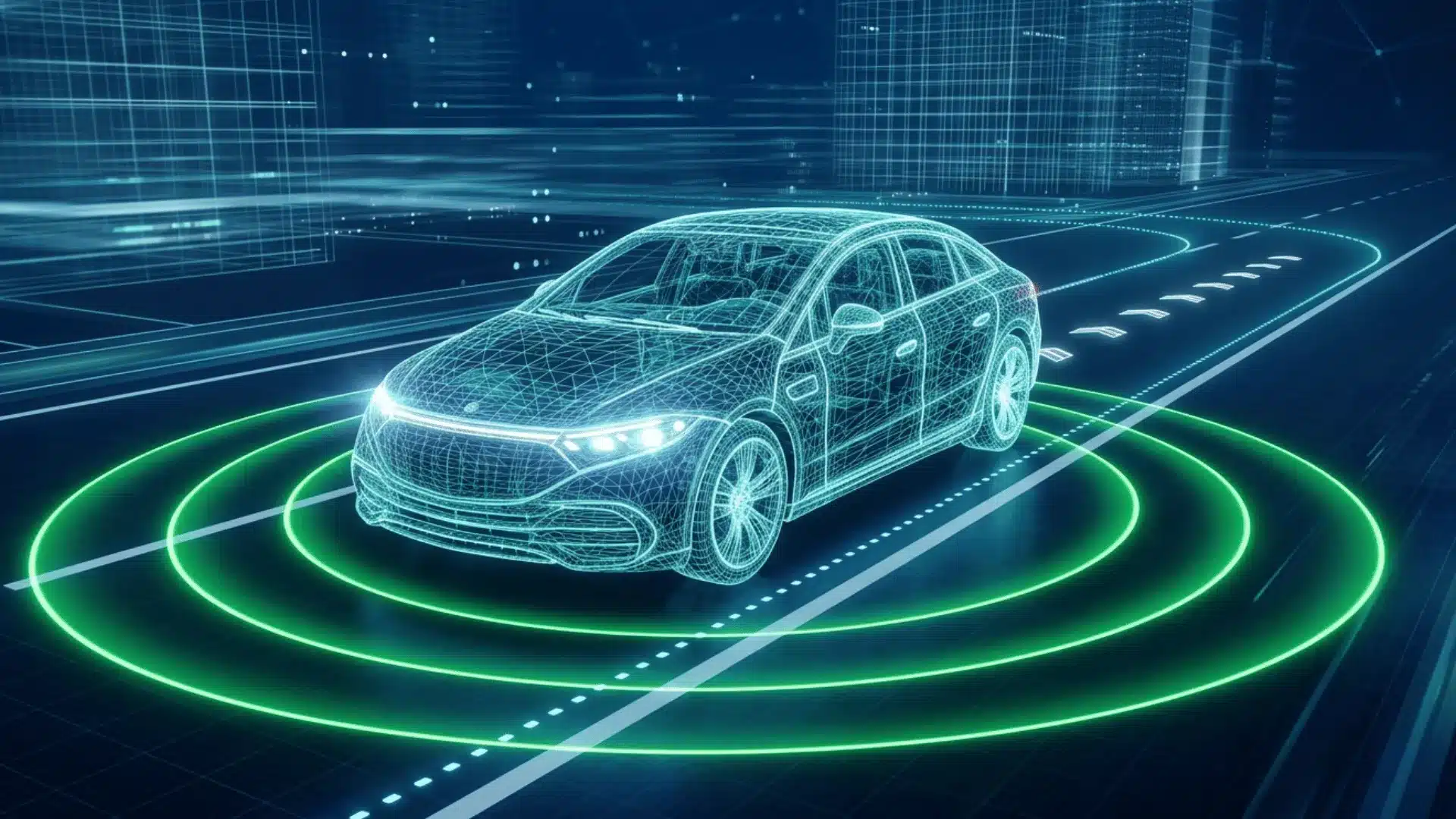
As autonomous vehicles become more software-driven, cybersecurity is becoming just as important as safety and reliability.
- Connected Systems: Autonomous vehicles rely on cloud services, wireless networks, and real-time data sharing, creating potential entry points for cyberattacks.
- Software Security: Millions of lines of code must be protected against vulnerabilities that could affect vehicle performance or safety.
- Data Privacy: Self-driving systems collect large amounts of driving and location data, raising concerns about how information is stored and used.
- OTA Updates: Over-the-air updates improve functionality and security but must be protected from unauthorized access.
- Network Protection: Manufacturers use encryption, authentication protocols, and secure communications to defend against cyber threats.
- Regulatory Compliance: Governments are introducing stricter cybersecurity and data protection requirements for connected vehicles.
The Regulatory Picture is Shifting
Governments around the world are still figuring out how to regulate autonomous vehicles, and the rules vary significantly by region.
In the United States, federal guidelines exist, but individual states set many of their own rules. This means companies like Waymo must obtain approval city by city and state by state before launching driverless services.
China follows a more centralized approach. Regulators have moved quickly to approve Level 3 autonomous driving systems, helping domestic automakers bring new technologies to market faster.
However, authorities have also shown they are willing to suspend operations when safety concerns arise, as seen after the Baidu robotaxi incident in Wuhan.
The European Union currently has one of the most structured regulatory frameworks.
Its General Safety Regulation already requires several ADAS features in new vehicles, while future rules are expected to support broader Level 3 deployments.
The integration of autonomous features with connected transportation systems is increasingly shaping how EU cities approach mobility planning, particularly for freight and shared autonomous vehicles.
Meanwhile, the United Kingdom’s Automated Vehicles Act establishes a legal framework for autonomous vehicles, making manufacturers responsible when a vehicle operates in an approved autonomous mode.
Overall, regulation is becoming one of the biggest factors shaping how quickly autonomous vehicles can expand into new markets.
Best Consumer Vehicles with Advanced ADAS as of Today
For most buyers, the focus is not full self-driving but advanced driver assistance. The best systems reduce driver workload, improve safety, and make everyday driving more comfortable.
| Vehicle/System | Key ADAS Features | Automation Level |
|---|---|---|
| Tesla Model Y (FSD Supervised) | Highway navigation, lane changes, traffic light response | Level 2 |
| GM Super Cruise | Hands-free highway driving, driver monitoring | Level 2 |
| Ford BlueCruise | Hands-free highway driving, lane change assist | Level 2 |
| Mercedes-Benz Drive Pilot | Limited hands-off, eyes-off driving in approved conditions | Level 3 |
| Audi A5, A6, Q5, Q6 | Adaptive cruise, lane guidance, AI parking assist | Level 2 |
| BYD God’s Eye & Chinese Smart EVs | Advanced driver assistance, OTA updates, intelligent driving features | Level 2+ |
What Comes Next for Autonomous Driving Technology?
The next phase of autonomous driving will focus on smarter AI, deeper EV integration, and more advanced driver-assistance features that bring the industry closer to widespread Level 3 autonomy.
- End-to-End AI: Automakers are replacing traditional software pipelines with AI models that handle perception, decision-making, and driving actions within a single system, reducing latency and improving edge-case performance.
- VLA Models: Vision-Language-Action models combine visual understanding, reasoning, and action planning to help vehicles respond more naturally to complex road situations.
- V2X Communication: Vehicle-to-everything (V2X) technology, which enables vehicles to communicate with infrastructure, other vehicles, and traffic management systems in real time, is expected to be a key enabler of safe Level 4 deployment in dense urban areas.
- Smarter EV Integration: Autonomous features are becoming more tightly integrated with electric vehicles, which are designed from the ground up for software-defined updates.
- OTA Improvements: Over-the-air updates allow manufacturers to continuously improve ADAS and autonomous capability after a vehicle is sold, compressing the improvement cycle from years to months.
- Affordable Level 3: The next major milestone is delivering reliable Level 3 autonomy at prices accessible to mainstream consumers, not just luxury vehicle buyers.
Conclusion
Autonomous driving is no longer a technology in waiting. The road ahead looks genuinely different from the one behind us.
Robotaxis are completing paid rides across a dozen cities, driverless trucks are hauling freight on public highways, and ADAS features are becoming regulatory requirements rather than luxury add-ons.
The question has shifted. It is no longer a question of whether autonomous vehicles will arrive. It is how fast costs fall, how quickly regulators align, and how well the industry handles the edge cases that will inevitably make headlines.
Are you ready to hand the wheel to a machine, or does the idea still feel too soon? Drop your thoughts in the comments below.
Frequently Asked Questions
What Happens if an Autonomous Vehicle is Involved in an Accident?
Liability depends on the jurisdiction and the level of autonomy. In the UK, manufacturers are responsible when a vehicle operates in an approved autonomous mode.
In the U.S., liability varies by state and may involve manufacturers, insurers, fleet operators, or drivers.
What Does Riding in a Robotaxi Actually Feel Like?
Most robotaxis drive more cautiously than humans, with smoother braking and conservative lane positioning. While the absence of a driver can feel unusual at first, passenger feedback has generally been positive.
How are HD Maps for Autonomous Vehicles Kept up to Date?
HD maps are created using lidar, aerial data, and vehicle inputs. Companies continuously update them using real-time fleet data to account for road changes, construction, and temporary obstacles.
Is Autonomous Vehicle Technology Used Outside Roads and Highways?
Yes. Autonomous technology is already widely used in mining, agriculture, warehouses, and logistics, where controlled environments make deployment easier than on public roads.