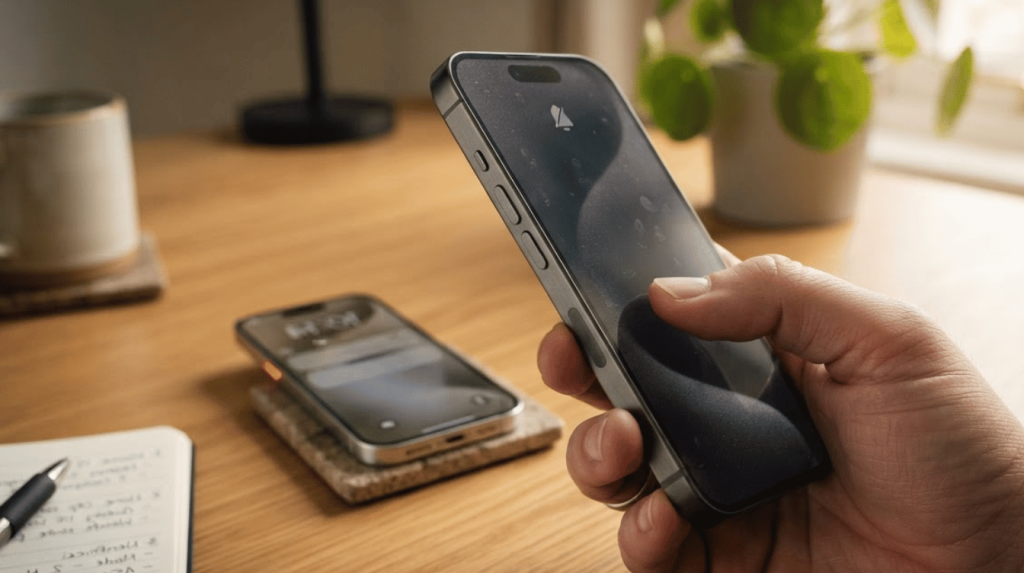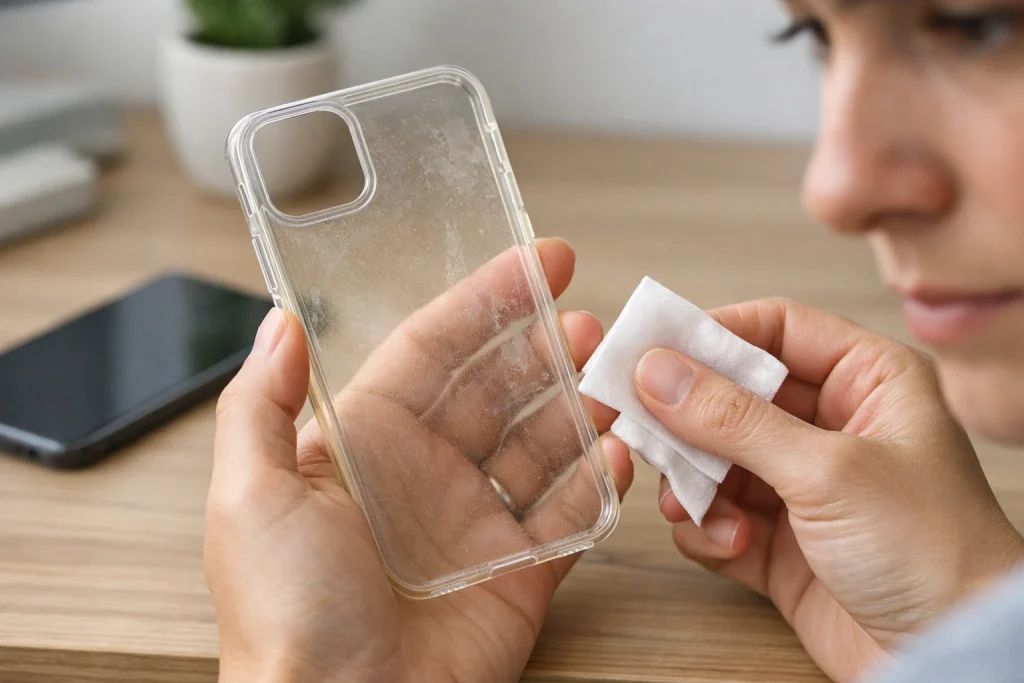
You grab an alcohol wipe, about to clean your clear phone case, and then you pause. Will this damage it? Will it turn yellow faster? Will the plastic crack or go cloudy?
Good instinct to stop and check. The answer is not a flat yes or no, and that in-between part is exactly what most cleaning guides skip over.
After reviewing dozens of cases and testing cleaning methods across budget and premium builds, here is what you actually need to know before wiping down that clear case.
What Your Clear Case Is Actually Made Of
Most clear cases are made from one of two materials: TPU (thermoplastic polyurethane) or polycarbonate (PC). Some budget cases use a mix of both.
TPU is the soft, slightly flexible plastic you see in most affordable clear cases. It feels grippy, absorbs impact well, and costs very little to produce. The downside is that it is chemically sensitive.
It reacts to UV light, heat, body oils, and yes, harsh cleaning agents. Over time, TPU naturally yellows through a process called oxidation. That part happens regardless of how you clean it.
Polycarbonate is harder and more rigid. It is more resistant to chemical damage and yellows more slowly than TPU.
If your case feels stiff and snaps onto the phone rather than stretching over it, it is likely polycarbonate or a polycarbonate-TPU hybrid.
One thing I noticed reviewing budget cases versus mid-range builds: cheaper TPU cases tend to feel almost sticky after a few alcohol wipes.
Premium TPU or PC-backed hybrids hold their texture much longer under the same cleaning routine.
That tactile change is usually the first sign the material is reacting, even before any visible dulling shows up. Why does this matter? Because alcohol behaves differently on each material.
What Alcohol Actually Does to Clear Plastic
Alcohol is a solvent. At 70% isopropyl concentration, it is effective enough to disinfect without being so aggressive that it instantly damages most plastics. But the keyword is “most.”
On polycarbonate, occasional alcohol wipe use is low risk. The material is dense and less porous, so it does not absorb the solvent the way softer TPU does.
On TPU, the situation is more nuanced. A quick, occasional wipe is generally fine and will not cause visible damage right away. The concern comes with repeated use.
Alcohol can slowly strip away the protective coating on the case’s surface and dry out the material over time, making it more prone to cracking or a dull finish.
One source in the phone case industry describes rubbing alcohol as inherently corrosive to plastic coatings when applied repeatedly.
Magic Eraser on Phone Cases: Unlike alcohol wipes, a Magic Eraser works as a micro-abrasive. It can lift scuffs and surface marks that alcohol misses, but it carries its own risk on glossy or coated finishes.
Use it dampened, use it gently, and always test a small corner first. It is a useful occasional tool, not a regular cleaner.
The takeaway: a single wipe after touching something grimy is not going to ruin your case. Wiping it down daily with alcohol for weeks is a different story.
What Real Users Are Saying on Reddit
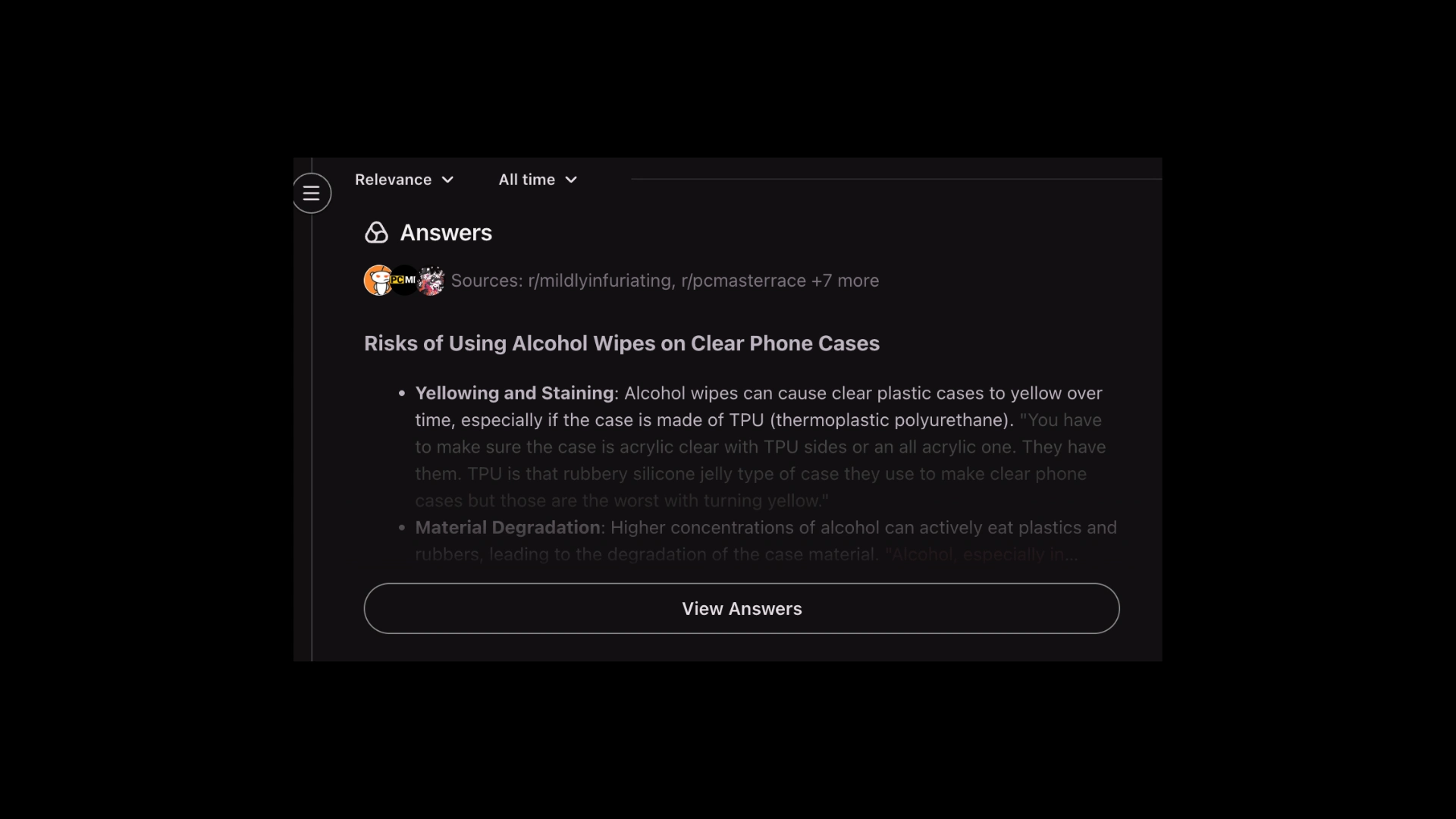
User forums and community discussions tell a consistent story: occasional alcohol wipes on the outside of a clear case rarely cause visible damage.
Most people who report problems were either using them daily, soaking the wipe too heavily, or cleaning the inside of the case. That last point matters more than most guides acknowledge.
The inside of the case sits directly against your phone’s finish, and alcohol residue trapped between the case and phone can affect both surfaces over time. Wipe the outside. Avoid soaking the inside.
The broader consensus matches the material evidence: light, infrequent use is generally fine. Daily use is where wear starts to show.
What About Yellowing? Does Alcohol Make It Worse?
Alcohol does not cause yellowing.
UV exposure, heat, and skin oils do. Occasional wiping with alcohol wipes will not trigger it.
What alcohol can do is speed up plastic breakdown if used too frequently. If your case is already degrading from the sun and heat, harsh cleaners push it along faster. But occasional use? The impact is minimal.
If your case is yellowing, blame UV exposure and age, not your cleaning routine.
To understand what actually causes discoloration and which methods really work, its important to know how to clean a clear phone case first.
What to Absolutely Avoid
Some cleaning options look harmless but cause more damage than alcohol:
1. Bleach or bleach-based wipes: These can discolor or chemically break down both TPU and polycarbonate. Even diluted bleach is too harsh for clear case plastic.
2. Hydrogen peroxide (concentrated): Some DIY cleaning guides recommend this for yellowing. It can help with surface stains short-term but degrades the material faster. Apple also explicitly warns against it for device surfaces.
3. Vinegar: It smells harmless and feels natural, but the acidity can dull the finish on clear cases over time.
4. Paper towels: These seem soft but are abrasive enough to create micro-scratches that make a clear case look foggy over time.
5. Scented or medicated wipes: As mentioned above, wipes with aloe, fragrance, or moisturizing additives are not the same as pure IPA wipes.
They leave residue and are not what any manufacturer’s recommendation refers to when they say “70% isopropyl alcohol wipe.”
Conclusion
After years of reviewing phone accessories, the cases that aged the worst were almost never victims of a single bad clean.
They were victims of habit. Someone wiped daily with a scented pharmacy wipe, or used 99% isopropyl because it felt stronger, or cleaned the inside of the case without thinking twice.
Small mistakes, repeated over weeks, add up fast on TPU plastic.
Alcohol wipes are safe for clear phone cases when you use them occasionally, stick to 70% pure isopropyl, and keep them on the outside of the case only.
Check that your wipe has no added fragrance, aloe, or moisturizer. Those additives are made for skin, not plastic, and they will leave your case looking worse than before you cleaned it.
Know your material, watch your frequency, and pick the right wipe. Do those three things and your clear case will stay cleaner, clearer, and last longer than most people expect. In case of any queries, drop a comment below.
Frequently Asked Questions
Does isopropyl alcohol damage plastic phone cases?
Not from occasional use. The damage is cumulative. Repeated alcohol cleaning slowly dries out TPU, dulls the finish, and strips any protective coating. One or two wipes will not cause visible harm.
What is the best way to clean a clear phone case without damaging it?
Mild dish soap, warm water, and a soft toothbrush. It removes oils and grime safely without stressing the plastic. Reserve alcohol wipes for disinfection only, not daily fingerprint removal.
How often should I clean my clear phone case?
Once a week, with soap and water, works for most people. Use alcohol wipes two to three times a week if disinfection is needed. Daily alcohol cleaning is where long-term material wear begins