What if the perfect pair of earBuds isn’t the most expensive one, but the one that fits your lifestyle just right?
That’s exactly the question many people face when choosing between AirPods Pro 3 and AirPods 4. Both models may look similar at first, but they are made for different types of listeners.
AirPods 4 are lighter, simpler, and better for casual daily use, especially if you prefer an open-ear feel.
AirPods Pro 3 is the stronger pick if you want better noise cancellation, a more secure fit, longer use, and extra smart features.
This comparison breaks down the main differences so you can choose the pair that fits your routine, budget, and listening style.
AirPods Pro 3 vs AirPods 4: Main Differences at a Glance
Apple offers AirPods 4 for users who want a light, open-ear design, while AirPods Pro 3 is made for people who want a tighter in-ear fit and more advanced features.
The main choice comes down to comfort, noise control, workout tools, and how long you can use earbuds in a single sitting.
AirPods 4 are better for casual listening, while AirPods Pro 3 feel more complete for travel, fitness, calls, and noisy places.
| Model | ANC | Heart Rate | IP Rating | Battery Life |
|---|---|---|---|---|
| AirPods 4 | No | No | IP54 | Standard |
| AirPods 4 with ANC | Yes | No | IP54 | Up to 4 hours (ANC on) |
| AirPods Pro 3 | Yes | Yes | IP57 | Up to 8 hours (ANC on) |
AirPods Pro 3 vs AirPods 4: Apple Ecosystem and Controls
AirPods Pro 3 and AirPods 4 both work smoothly with Apple devices.
They pair quickly with iPhone, switch easily between Apple products, and support useful features like Spatial Audio, Siri, Conversation Awareness, and Personalized Volume.
The main difference is control. AirPods Pro 3 gives you more direct control over the earbuds, including swipe gestures for volume.
This is helpful when you want to adjust sound quickly without touching your phone. AirPods 4 keep controls simpler, which is fine for calls, music, and everyday use, but it does not feel as complete.
Overall, AirPods 4 are simple and easy to use within the Apple ecosystem, while AirPods Pro 3 feel more advanced and convenient.
AirPods Pro 3 vs AirPods 4: Key Differences
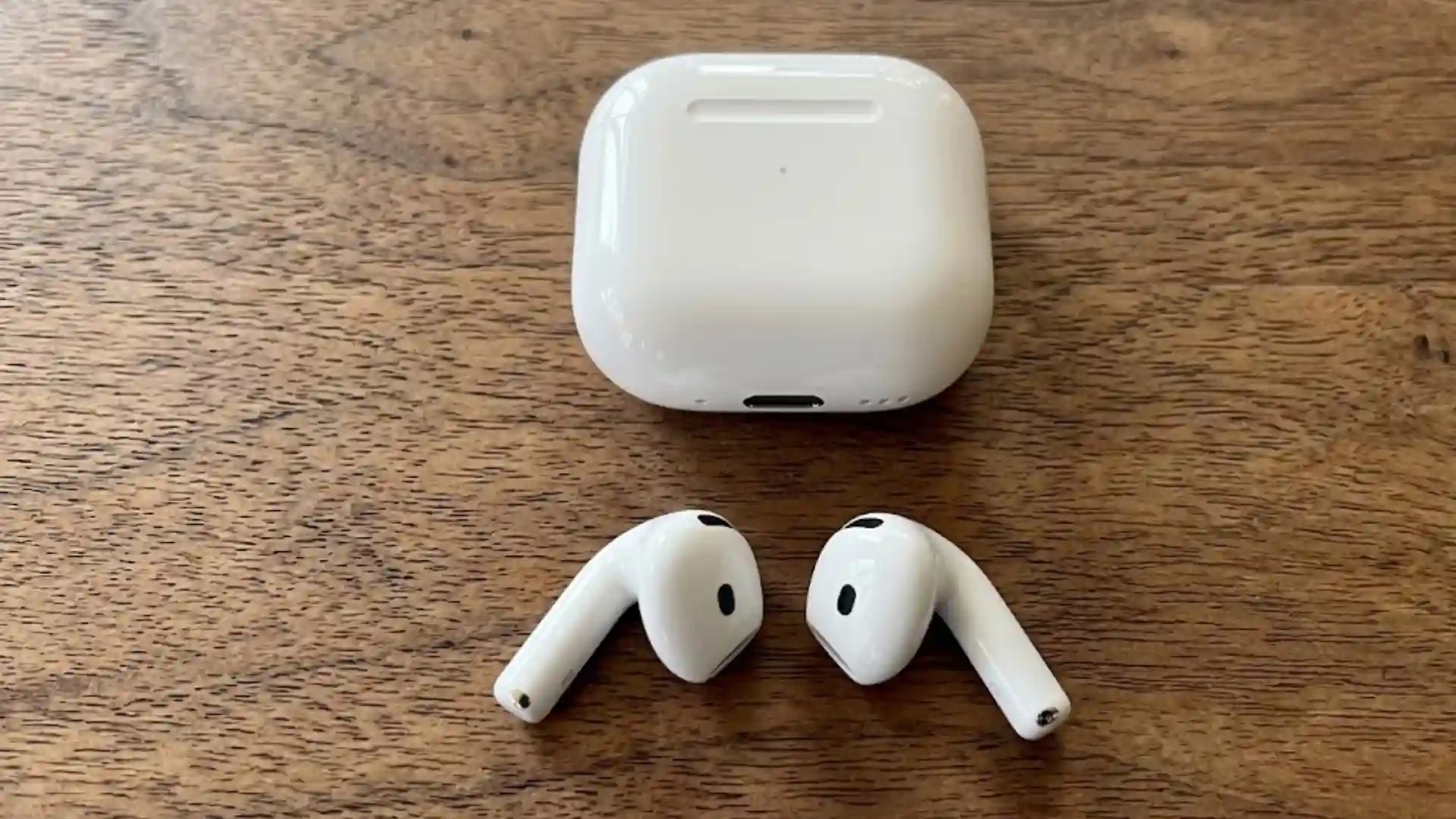
Before choosing between AirPods Pro 3 and AirPods 4, it helps to compare the main differences in fit, noise isolation, sound quality, battery life, and daily use.
1. Design and Fit: Sealed vs Open Ear
The biggest difference is how they fit in your ears.
AirPods Pro 3 uses silicone ear tips that sit inside the ear canal. This creates a tighter seal, helps block outside noise, and keeps the earbuds more secure during workouts.
Apple also includes five ear tip sizes, so most users can find a better fit.
If tip size has been your main frustration with past Apple earbuds, this breakdown of the best earbuds for smaller ear canals covers what actually helps beyond just swapping sizes.
AirPods 4 have an open-ear design with no ear tips. It rests near the ear opening instead of sealing the ear canal.
This makes it lighter and more comfortable for some people, especially for long listening sessions. However, it does not block noise.
Both can handle sweat and rain, but AirPods Pro 3 has stronger water resistance, rated IP57 against IP54 on the AirPods 4 line, which also means the AirPods Pro 3 case can handle brief submersion better than the AirPods 4 case.
2. Active Noise Cancellation: How Big Is The Gap?
The biggest reason to choose AirPods Pro 3 over AirPods 4 is noise cancellation.
AirPods Pro 3 have silicone ear tips that create a tight seal, so they block much more outside noise. This makes a big difference in places like trains, planes, busy streets, and offices.
AirPods 4 with active noise cancellation are still good for an open-ear design. It can reduce background sounds like traffic, fans, and low rumbling noise.
But because it does not seal your ear, voices and sharper sounds are easier to hear. Both models have Transparency Mode and Adaptive Audio, so you can hear your surroundings when needed.
But if strong noise blocking is your main need, AirPods Pro 3 is clearly the better choice.
3. Sound Quality: What Testing Actually Reveals
Both AirPods Pro 3 and AirPods 4 use AAC (Advanced Audio Coding) and SBC (Subband Codec) Bluetooth codecs. They do not support LDAC (Low-Delay Audio Codec), which some Android earbuds offer.
For Apple users, this is usually not a big issue because AAC works well with most music and streaming apps.
AirPods Pro 3 give a better sound experience overall. It has deeper bass, clearer vocals, and a wider soundstage, so music feels more open and detailed.
Some users may find the sound a little bright at higher volume, but others say it sounds better than older Pro models.
AirPods 4 sound good for casual use, podcasts, calls, and quiet rooms. However, it has weaker bass and less depth, especially in noisy places.
Both models support Personalized Spatial Audio, but the Pro 3 sounds more refined.
4. Battery Life and Charging
Battery life is one area where AirPods Pro 3 clearly does better.
AirPods Pro 3 lasts up to 8 hours with noise cancellation on, while AirPods 4 with noise cancellation last up to 4 hours per charge.
The main difference is how long the earbuds last before needing to be put back in the case.
AirPods Pro 3 is better for long flights, office use, commuting, or people who wear earbuds for many hours. AirPods 4 are still fine for shorter listening sessions, calls, podcasts, and daily use.
AirPods 4 have a case that provides more total listening time, but the earbuds themselves run out of battery faster. Both models support fast charging and USB-C charging.
Battery capacity also fades with age on any earbuds, and it’s worth knowing what to expect a year or two in. This guide to how long AirPods Pro batteries actually hold up walks through the timeline.
For most casual users, AirPods 4 are enough. For longer use, AirPods Pro 3 is the safer pick.
AirPods 3 and AirPods 4: What Reddit Users Say
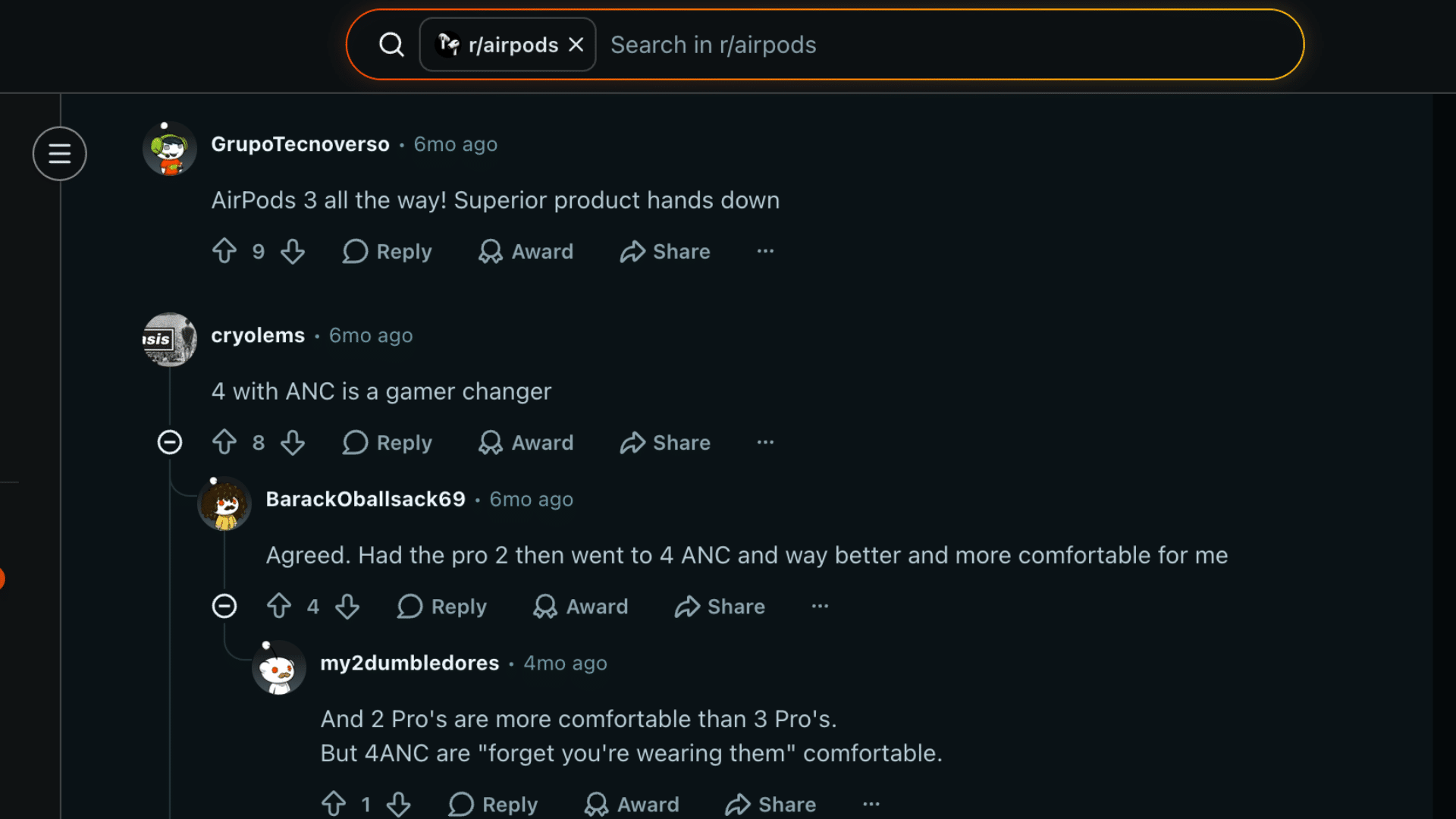
Reddit reviews show that the choice between AirPods 3 and AirPods 4 depends mostly on fit, comfort, battery life, and noise control.
Some users like AirPods 4 because they feel light, open, and natural in the ear. Since they do not use silicone tips, they can feel more comfortable for people who dislike pressure inside the ear.
However, others say AirPods 4 feel too loose, have weaker battery life, and lack volume swipe controls on the stem.
Many users accustomed to Pro-style ear tips said they missed the sealed fit and stronger noise cancellation. AirPods 3 get praise for better sound isolation, longer use, and easier cleaning because the tips protect the mesh.
Overall, AirPods 4 suit comfort-focused users, while AirPods 3 offer a more secure fit and a stronger listening experience.
Health & Other Features: What AirPods Pro 3 Adds
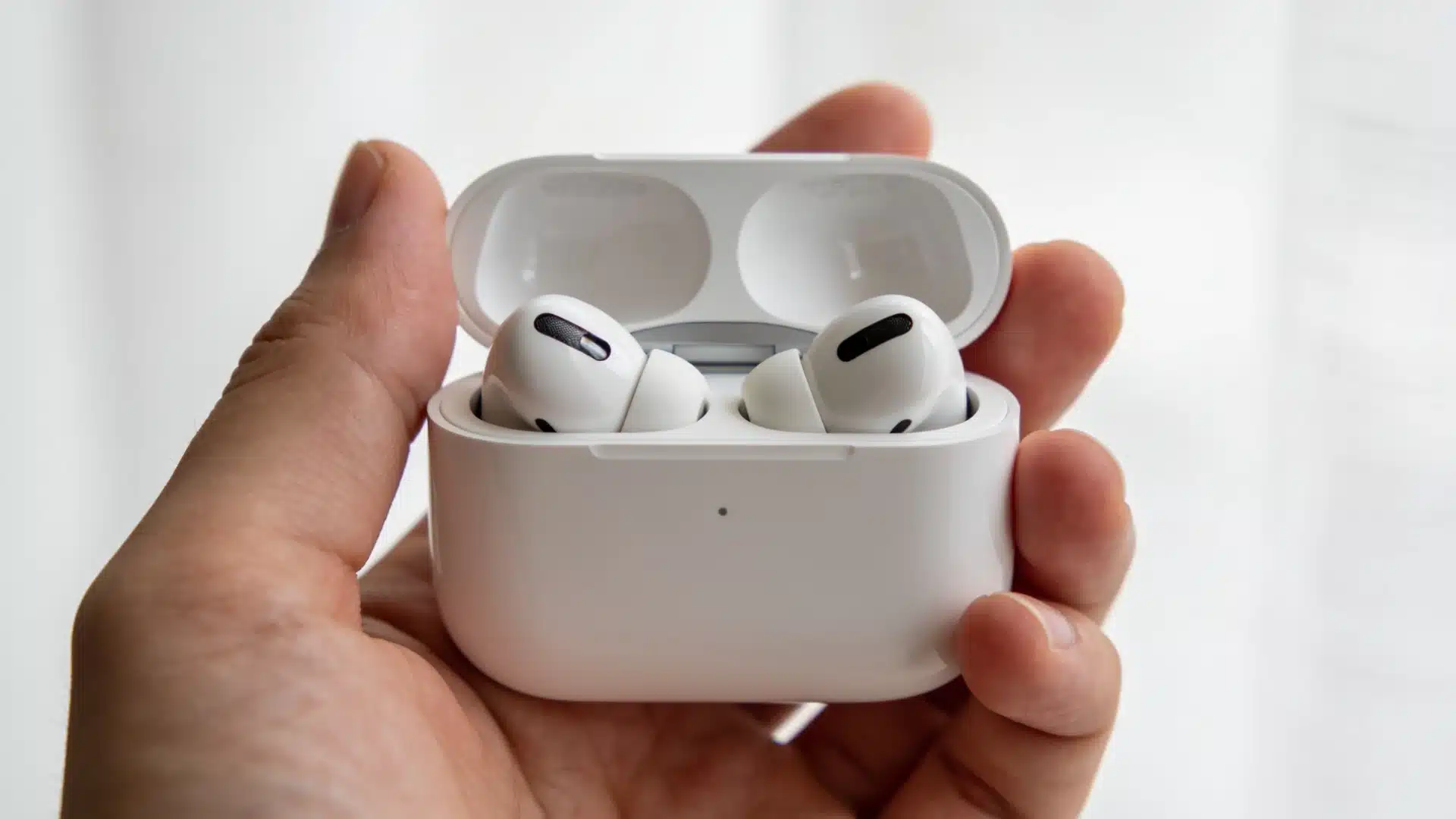
AirPods Pro 3 is not just about better sound; it is about adding smart features that can actually change how you use your earbuds every day.
Whether you are working out, traveling, or just going about your routine, these upgrades aim to make a real difference.
Key Features:
- Heart Rate Monitoring: During workouts, your AirPods can track your heart rate and sync it directly with Apple Health.
- Hearing Support: AirPods Pro 3 supports mild to moderate hearing loss with a personalized hearing test and clearer voice enhancement. This is for general wellness use only and isn’t a substitute for a professional hearing evaluation if you have ongoing hearing concerns.
- Live Translation: Adds a futuristic touch. It can translate speech directly into your ear, making conversations in different languages easier
- Practical Upgrades: You also get useful extras like MagSafe charging, a lanyard loop, stronger Find My support, and swipe controls to adjust volume directly from the stem.
AirPods 4 still offer useful features such as the H2 chip, Spatial Audio, Personalized Volume, Conversation Awareness, and Siri gestures. AirPods Pro 3 simply adds more advanced tools for daily use.
AirPods Pro 3 vs AirPods 4: Value for Money
AirPods 4 start at $129 without ANC and $179 with ANC, making them the better pick for casual users. Retail discounts sometimes bring the ANC model down to $129-$150, so it’s worth checking current pricing before you buy.
If you mainly listen at home, take calls, play podcasts, or use earbuds in quiet places, AirPods 4 give you solid value without spending too much.
AirPods Pro 3 is priced at $249, but the higher cost makes sense if you need more.
You get stronger noise cancellation, a better in-ear fit, longer battery life, heart rate tracking, and hearing support features.
For commuters, travelers, gym-goers, and people who spend time in noisy places, the AirPods Pro 3 feels like a worthwhile upgrade.
If neither price point feels right, it’s also worth glancing at a few solid AirPods alternatives before committing to either model.
For simple daily listening, AirPods 4 are the smarter budget choice.
Who Should Buy AirPods Pro 3 or AirPods 4?
| AirPods Pro 3 | AirPods 4 |
|---|---|
| Best for people who need strong noise cancellation in busy places | Best for people who want a lighter open-ear fit |
| Good for commuters, travelers, and frequent flyers | Good for casual listening at home, office, or quiet places |
| Better for workouts if you want heart rate tracking | Better if you do not like silicone ear tips |
| Useful for people who want hearing support features | Better if you want simple earbuds at a lower price |
| Best for Apple users who will use health, translation, and advanced Pro features | Good for daily calls, podcasts, music, and easy Apple device switching |
AirPods Pro 3 is the better choice if you want stronger features and better noise control. AirPods 4 are the better choice if comfort, simplicity, and price matter more.
Conclusion
Choosing between AirPods Pro 3 and AirPods 4 mostly depends on where and how you listen.
AirPods 4 are a strong choice for casual use, quiet places, calls, podcasts, and everyday music. It is simple, comfortable, and good enough for most users.
AirPods Pro 3 makes more sense if you need stronger noise cancellation, better battery life, heart rate tracking, or hearing support features.
It is better for commuting, travel, workouts, and noisy spaces where the extra features make a real difference.
In the end, AirPods 4 is the smarter pick for simple daily listening, while AirPods Pro 3 is worth it if you will actually use the Pro features.
Which one matches how you actually listen day-to-day? Drop a comment with your pick, or tell us which feature would tip your decision one way or the other.
Frequently Asked Questions
Do AirPods Pro 3 Work with Android Phones?
AirPods Pro 3 work with Android through Bluetooth, but many premium features need an Apple device.
Android users still get basic audio, ANC, and Transparency Mode, but heart rate tracking, Live Translation, Hearing Aid Mode, Siri, and automatic Apple device switching will not fully work.
Can I Use AirPods 4 at the Gym?
AirPods 4 have an IP54 rating, so they can handle sweat and light splashes during workouts. It is fine for gym use, running, and casual exercise.
However, the open-ear fit may feel less secure during intense movement. For better workout stability, AirPods Pro 3 is the stronger choice because its silicone tips stay in place more reliably.
How Do the AirPods Pro 3 Compare to the Sony WF-1000XM5 or the Bose QuietComfort Ultra Earbuds?
The Sony WF-1000XM5 and the Bose QuietComfort Ultra Earbuds are strong rivals to the AirPods Pro 3 in terms of sound quality and noise cancellation.
Sony is a better fit for many Android users because it supports LDAC, while Bose is known for its very powerful ANC.
AirPods Pro 3 stands out most to Apple users for its smooth device switching, heart rate tracking, and hearing support features.
Should I Upgrade If I Already Own AirPods 3 or AirPods Pro 2?
If you own the standard AirPods 3, the AirPods 4 is the more noticeable jump, with a redesigned fit, USB-C charging, and an optional ANC model.
If you own AirPods Pro 2, the upgrade to Pro 3 mainly makes sense for the stronger IP57 water resistance, heart rate sensing, and the improved noise cancellation.
If your current pair still fits well and does what you need, there’s no urgency to switch.